
1. Search Result
Search Result
Results for "

statins

" in MedChemExpress (MCE) Product Catalog:

17

Inhibitors & Agonists

1

Peptides

1

Inhibitory Antibodies

5

Natural
Products

3

Isotope-Labeled Compounds

Cat. No. Product Name Target Research Areas Chemical Structure
  • HY-112490
    Atorvastatin calcium hydrate
    Maximum Cited Publications
    65 Publications Verification

    HMG-CoA Reductase (HMGCR) Cardiovascular Disease Others
    Atorvastatin calcium salt trihydrate is a drug belonging to the statin class of drugs used to lower blood cholesterol levels. Atorvastatin calcium salt trihydrate has unique chemical properties that make it an effective tool in controlling high levels of low-density lipoprotein (LDL) cholesterol and triglycerides in the body, reducing the risk of heart attack and stroke. Atorvastatin calcium salt trihydrate works by inhibiting HMG-CoA reductase, the enzyme responsible for producing cholesterol in the liver.
    Atorvastatin calcium hydrate
  • HY-17408
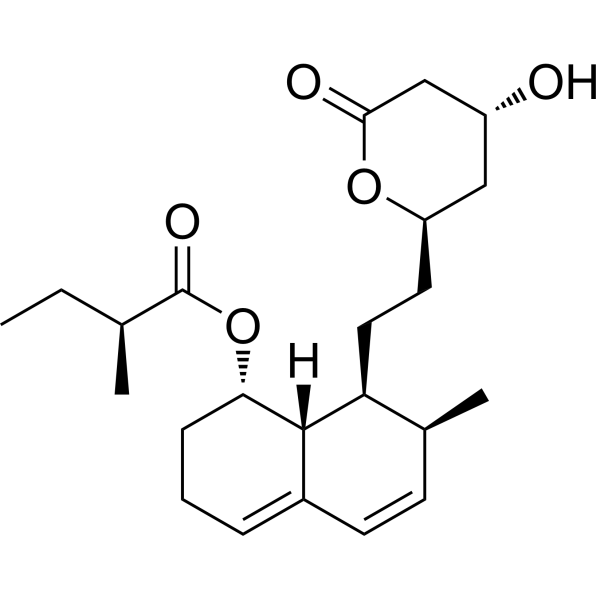
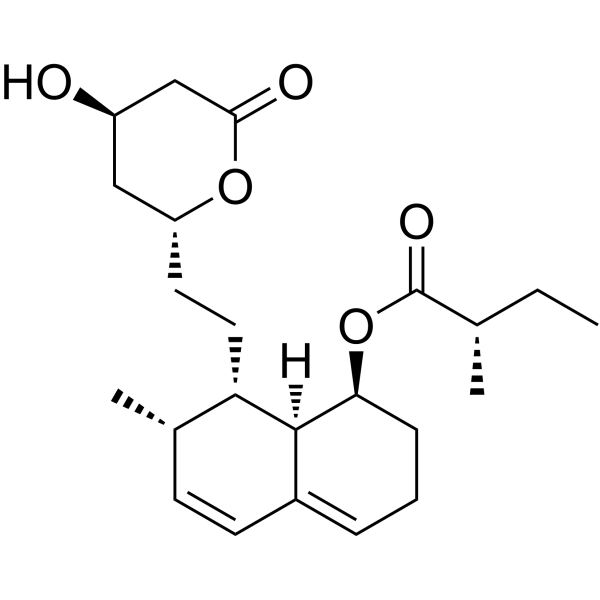
    Mevastatin
    Maximum Cited Publications
    7 Publications Verification

    Compactin; ML236B

    HMG-CoA Reductase (HMGCR) Bacterial Autophagy Apoptosis Antibiotic Infection Cardiovascular Disease Neurological Disease Metabolic Disease Cancer
    Mevastatin (Compactin) is a first HMG-CoA reductase inhibitor that belongs to the statins class. Mevastatin is a lipid-lowering agent, and induces apoptosis, arrests cancer cells in G0/G1 phase. Mevastatin also increases endothelial nitric oxide synthase (eNOS) mRNA and protein levels. Mevastatin has antitumor activity and has the potential for cardiovascular diseases treatment .
    Mevastatin
  • HY-109523
    Cerivastatin sodium
    2 Publications Verification

    HMG-CoA Reductase (HMGCR) Ferroptosis Cardiovascular Disease Cancer
    Cerivastatin sodium is a synthetic lipid-lowering agent and a highly potent, well-tolerated and orally active HMG-CoA reductase inhibitor, with a Ki of 1.3 nM/L. Cerivastatin sodium reduces low-density lipoprotein cholesterol levels. Cerivastatin sodium also inhibits proliferation and invasiveness of MDA-MB-231 cells, mainly by RhoA inhibition, and has anti-cancer effect .
    Cerivastatin sodium
  • HY-107855
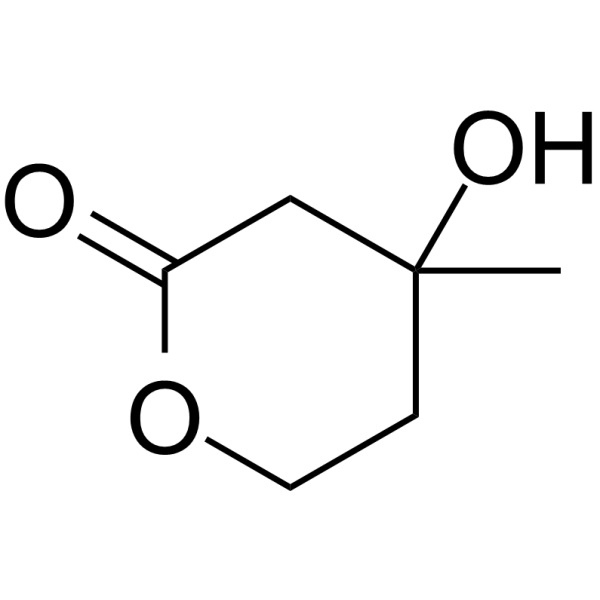
    DL-Mevalonolactone
    1 Publications Verification

    (±)-Mevalonolactone; Mevalolactone

    Endogenous Metabolite Metabolic Disease Inflammation/Immunology
    DL-Mevalonolactone ((±)-Mevalonolactone;Mevalolactone) is the δ-lactone form of mevalonic acid, a precursor in the mevalonate pathway. DL-Mevalonolactone is orally active against HMGCR mutation and statin caused myopathy . DL-Mevalonolactone induces inflammation and oxidative stress response with decreased mitochondrial membrane potential (MMP) and induces mitochondrial swelling [2][4].
    DL-Mevalonolactone
  • HY-14925
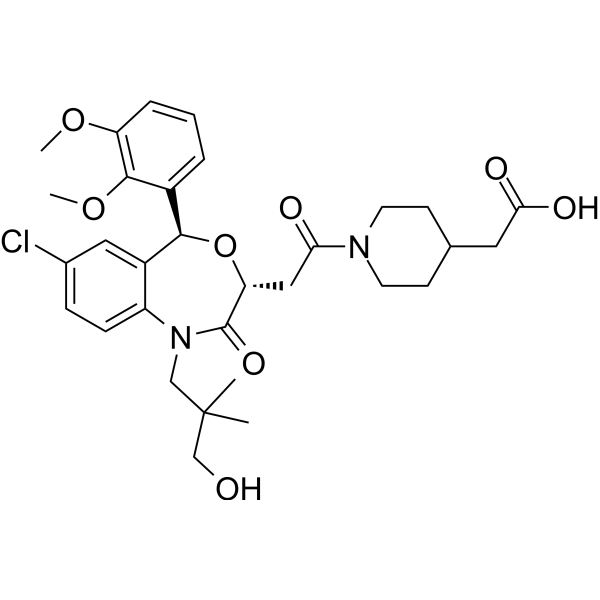
    Lapaquistat
    2 Publications Verification

    T-91485

    Endogenous Metabolite Drug Metabolite Metabolic Disease
    Lapaquistat (T-91485), a cholesterol biosynthesis inhibitor, is the active metabolite of Lapaquistat acetate (HY-16274). Lapaquistat can decrease statin-induced myotoxicity in lipid-lowering therapy .
    Lapaquistat
  • HY-P99284
    Dalotuzumab
    1 Publications Verification

    MK-0646; h7C10

    IGF-1R Apoptosis Cancer
    Dalotuzumab (MK-0646) is a recombinant humanized monoclonal antibody (IgG1 type) targeting IGF-1R. Dalotuzumab acts by inhibiting IGF-1- and IGF-2-mediated tumor cell proliferation, IGF-1R autophosphorylation, and Akt phosphorylation. Dalotuzumab also induces apoptosis and cycle arrest. Dalotuzumab in combination with other anticancer agents such as statins can enhance the antitumor activity of Dalotuzumab in vitro and in vivo .
    Dalotuzumab
  • HY-114316

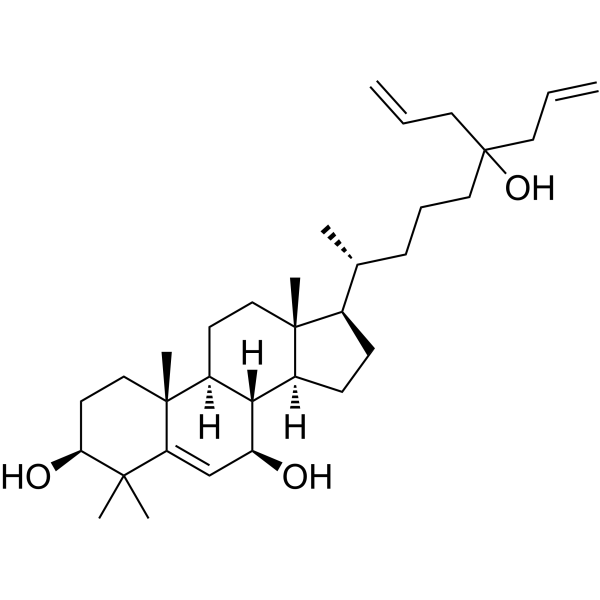
    HMG-CoA Reductase (HMGCR) Autophagy Cardiovascular Disease Metabolic Disease
    HMG499 is a potent and selective HMG-CoA reductase inhibitor with an IC50 of 0.41 μM. HMG499 can prevent statins-induced accumulation of HMGCR, reduce serum cholesterol levels and decrease atherosclerosis .
    HMG499
  • HY-135700

    Calcineurin Ras HMG-CoA Reductase (HMGCR) Metabolic Disease Inflammation/Immunology
    Mevalonolactone is an intermediate metabolite in the eukaryotic mevalonate pathway, serving as the stable δ-lactone form of mevalonate with oral activity. Mevalonolactone exhibits binding affinity for ZNF384 (Ka = 12.6 μM) and inhibitory activity against aconitase (aconitase). Mevalonolactone promotes the nuclear localization of ZNF384 and enhances its binding to the GGPPS promoter. Mevalonolactone induces insulin resistance, disrupts glucose and lipid metabolism, enhances the isoprenylation of K-Ras, and inhibits the activation of the insulin signaling pathway. Mevalonolactone inhibits polypeptide synthesis of HMG-CoA reductase in isolated rat hepatocytes, promotes its degradation, and reduces its enzymatic activity. Mevalonolactone impairs mitochondrial function in rat brains. Mevalonolactone promotes the development of metabolically unhealthy obesity. Mevalonolactone can be used in research related to metabolically abnormal obesity, mevalonic aciduria, HMGCR-related limb-girdle myopathy, and statin-induced myopathy .
    Mevalonolactone
  • HY-129458

    HMG-CoA Reductase (HMGCR) Ferroptosis Cardiovascular Disease Cancer
    Cerivastatin is a synthetic lipid-lowering agent and a highly potent, well-tolerated and orally active HMG-CoA reductase inhibitor, with a Ki of 1.3 nM/L. Cerivastatin reduces low-density lipoprotein cholesterol levels. Cerivastatin also inhibits proliferation and invasiveness of MDA-MB-231 cells, mainly by RhoA inhibition, and has anti-cancer effect .
    Cerivastatin
  • HY-17408R

    Compactin(Standard); ML236B (Standard)

    Reference Standards HMG-CoA Reductase (HMGCR) Bacterial Autophagy Apoptosis Antibiotic Infection Cardiovascular Disease Neurological Disease Metabolic Disease Cancer
    Mevastatin (Standard) is the analytical standard of Mevastatin. This product is intended for research and analytical applications. Mevastatin (Compactin) is a first HMG-CoA reductase inhibitor that belongs to the statins class. Mevastatin is a lipid-lowering agent, and induces apoptosis, arrests cancer cells in G0/G1 phase. Mevastatin also increases endothelial nitric oxide synthase (eNOS) mRNA and protein levels. Mevastatin has antitumor activity and has the potential for cardiovascular diseases treatment .
    Mevastatin (Standard)
  • HY-107855R

    (±)-Mevalonolactone (Standard); Mevalolactone (Standard)

    Endogenous Metabolite Reference Standards Metabolic Disease Inflammation/Immunology
    DL-Mevalonolactone (Standard) is the analytical standard of DL-Mevalonolactone. This product is intended for research and analytical applications. DL-Mevalonolactone ((±)-Mevalonolactone;Mevalolactone) is the δ-lactone form of mevalonic acid, a precursor in the mevalonate pathway. DL-Mevalonolactone is orally active against HMGCR mutation and statin caused myopathy . DL-Mevalonolactone induces inflammation and oxidative stress response with decreased mitochondrial membrane potential (MMP) and induces mitochondrial swelling .
    DL-Mevalonolactone (Standard)
  • HY-120757

    Virus Protease Others
    LP-130 is a statin-based inhibitor that is a universal inhibitor with nanomolar inhibitory activity against all tested retroviral proteases. Crystal structure studies of its binding to different retroviral proteases have shown that it can adapt to different active site regions to achieve inhibition.
    LP-130
  • HY-138166S

    Isotope-Labeled Compounds Potassium Channel Drug Metabolite NO Synthase Cardiovascular Disease
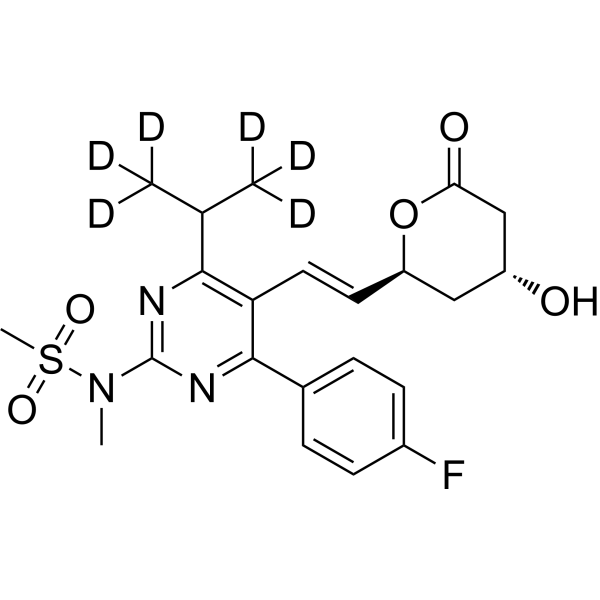
    Rosuvastatin lactone-d6 is the deuterium labeled Rosuvastatin lactone. Rosuvastatin lactone is a metabolite of Rosuvastatin (HY-17504A), a statin lipid-lowering agent and HMG-CoA inhibitor. Rosuvastatin lactone exhibits endothelium-independent and HMG-CoA reductase-independent vasorelaxant activity in rat aortic rings, and its vasorelaxant effect is jointly mediated by NO produced by inducible nitric oxide synthase (iNOS) located in vascular smooth muscle and activation of potassium channels. Rosuvastatin lactone itself has no lipid-lowering effect .
    Rosuvastatin lactone-d6
  • HY-109523S

    Ferroptosis HMG-CoA Reductase (HMGCR) Isotope-Labeled Compounds Cardiovascular Disease Cancer
    Cerivastatin-d3 sodium is deuterated labeled Cerivastatin sodium (HY-109523). Cerivastatin sodium is a synthetic lipid-lowering agent and a highly potent, well-tolerated and orally active HMG-CoA reductase inhibitor, with a Ki of 1.3 nM/L. Cerivastatin sodium reduces low-density lipoprotein cholesterol levels. Cerivastatin sodium also inhibits proliferation and invasiveness of MDA-MB-231 cells, mainly by RhoA inhibition, and has anti-cancer effect .
    Cerivastatin-d3 sodium
  • HY-138166R

    Reference Standards Potassium Channel Drug Metabolite NO Synthase Cardiovascular Disease
    Rosuvastatin lactone (Standard) is the analytical standard of Rosuvastatin lactone. This product is intended for research and analytical applications. Rosuvastatin lactone is a metabolite of Rosuvastatin (HY-17504A), a statin lipid-lowering agent and HMG-CoA inhibitor. Rosuvastatin lactone exhibits endothelium-independent and HMG-CoA reductase-independent vasorelaxant activity in rat aortic rings, and its vasorelaxant effect is jointly mediated by NO produced by inducible nitric oxide synthase (iNOS) located in vascular smooth muscle and activation of potassium channels. Rosuvastatin lactone itself has no lipid-lowering effect .
    Rosuvastatin lactone (Standard)
  • HY-W752587

    (±)-Mevalonolactone-d4; Mevalolactone-d4

    Isotope-Labeled Compounds Endogenous Metabolite Metabolic Disease Inflammation/Immunology
    DL-Mevalonolactone-d4 ( (±)-Mevalonolactone-d4) is the deuterium labeled DL-Mevalonolactone (HY-107855). DL-Mevalonolactone ((±)-Mevalonolactone;Mevalolactone) is the δ-lactone form of mevalonic acid, a precursor in the mevalonate pathway. DL-Mevalonolactone is orally active against HMGCR mutation and statin caused myopathy . DL-Mevalonolactone induces inflammation and oxidative stress response with decreased mitochondrial membrane potential (MMP) and induces mitochondrial swelling .
    DL-Mevalonolactone-d4
  • HY-18778B

    TA-8995 potassium; DEZ-001 potassium; AMG-899 potassium

    Apolipoprotein CETP LPL Receptor LDLR Metabolic Disease
    Obicetrapib (TA-8995; DEZ-001) potassium is an orally active cholesteryl ester transfer protein (CETP) inhibitor. Obicetrapib potassium potently reduces atherogenic lipoproteins (such as LDL-C, ApoB, Lp (a)) and increases HDL-C. Obicetrapib potassium can be used for the research of dyslipidemia and atherosclerotic cardiovascular disease (ASCVD) .
    Obicetrapib potassium

Inquiry Online

Your information is safe with us. * Required Fields.

Salutation


Country or Region *

Applicant Name *


Organization Name *

Department *


Email Address *


Product Name *

Cat. No.


Requested quantity *

Phone Number *


Remarks

Inquiry Online

Inquiry Information

Product Name:
Cat. No.:
Quantity:
MCE Japan Authorized Agent:

