Search Result
Results for "
tissue samples
" in MedChemExpress (MCE) Product Catalog:
3
Biochemical Assay Reagents
| Cat. No. |
Product Name |
Target |
Research Areas |
Chemical Structure |
-
- HY-112697
-
|
|
Biochemical Assay Reagents
|
Others
|
|
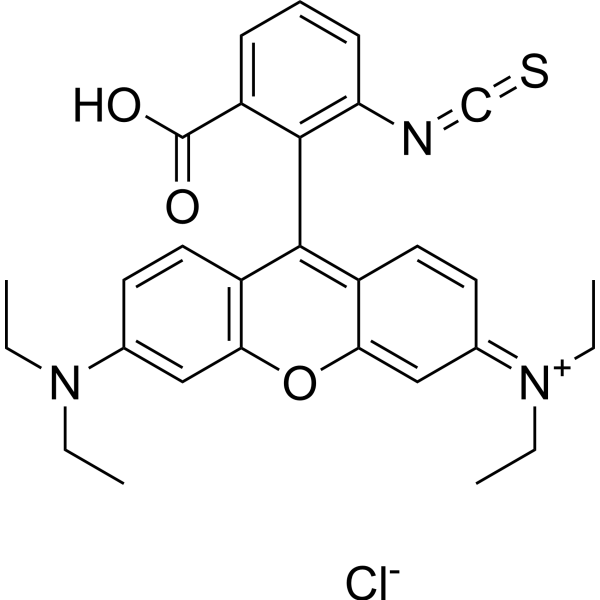
Rhodamine B isothiocyanate (RBITC) is a fluorescent dye commonly used in biological imaging and labeling applications. It has an isothiocyanate functional group that can be covalently attached to amino groups on proteins and other biomolecules, making it useful for fluorescent labeling of cells and tissues. RBITC fluoresces bright orange-red under green light excitation, which makes it easy to detect and track labeled molecules in complex samples. Due to its stability and sensitivity, RBITC has been widely used in various research fields, including cell biology, immunology, and neurobiology.
|
-
-
- HY-131146
-
AMOZ
1 Publications Verification
3-Amino-5-morpholinomethyl-2-oxazolidone
|
Drug Metabolite
|
Infection
|
|
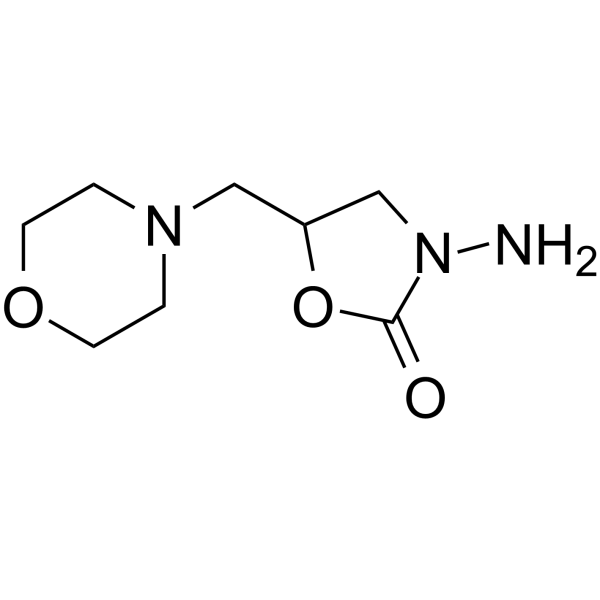
AMOZ is a carcinogenic metabolite of Furaltadone (HY-B1148A), which forms stable tissue residues by covalently binding to proteins as a hapten. AMOZ can be coupled with carrier proteins (such as BSA/OVA) to induce immune response and is released after acid hydrolysis. AMOZ residues can be detected by competitive ELISA method, and the detection limit in the monoclonal antibody 2E5.1 test is as low as 0.16 μg/kg (shrimp sample). AMOZ can be used as a typical marker to monitor drug residues in animal-derived foods in the field of food safety[1][2].
|
-
-
- HY-Y1219H
-
|
|
Biochemical Assay Reagents
|
Others
|
|
Silica gel, high-purity grade, 200-400 mesh is a biologically inert matrix and desiccant with high water retention capacity and low regeneration temperature. Silica gel, high-purity grade, 200-400 mesh prevents DNA degradation by absorbing water from plant leaves, and is suitable for preserving field-collected samples for subsequent DNA extraction, restriction endonuclease digestion, PCR amplification and gene sequencing. Silica gel, high-purity grade, 200-400 mesh can be regenerated and reused after water absorption saturation. Silica gel, high-purity grade, 200-400 mesh provides a non-toxic, inert aqueous environment for embedded cells, allows free diffusion of nutrients, oxygen and metabolic wastes, blocks external contamination, and thus maintains the viability of fibroblasts and epithelial cells. Silica gel, high-purity grade, 200-400 mesh serves as an ideal candidate material for tissue culture scaffolds and implantable bioreactors .
|
-
-
- HY-D2186
-
|
|
Biochemical Assay Reagents
|
Others
|
|
BTD probe-1 is a benzothiazine-based chemoproteomic probe and selective protein S-sulfenic acid (Cys-SOH) labeling agent. BTD probe-1 labels protein S-sulfenic acids in vitro in cell and tissue samples, and in situ in intact cells, enabling detection or enrichment of modified proteins/peptides. BTD probe-1 exhibits no cytotoxicity in cells at concentrations ≤1 mM. BTD probe-1 enables global, site-specific mapping and quantification of cysteine S-sulfenylation in complex proteomes with lower input material .
|
-
-
- HY-P10943
-
|
|
Fluorescent Dye
|
Inflammation/Immunology
Cancer
|
|
APO-15 is a phosphatidylserine-binding fluorescent probe and apoptosis imaging reagent. APO-15 exhibits high chemical stability under proteolytic and oxidative conditions, enables quantification and imaging of drug-induced apoptosis in preclinical mouse models, and is applicable to fixed tissue samples and multiple in vivo administration routes (Ex = 488 nm; Em = 525 nm). APO-15 can be used in studies related to acute lung injury and breast cancer .
|
-
-
- HY-131490
-
|
Violet tetrazolium
|
Biochemical Assay Reagents
|
Others
|
|
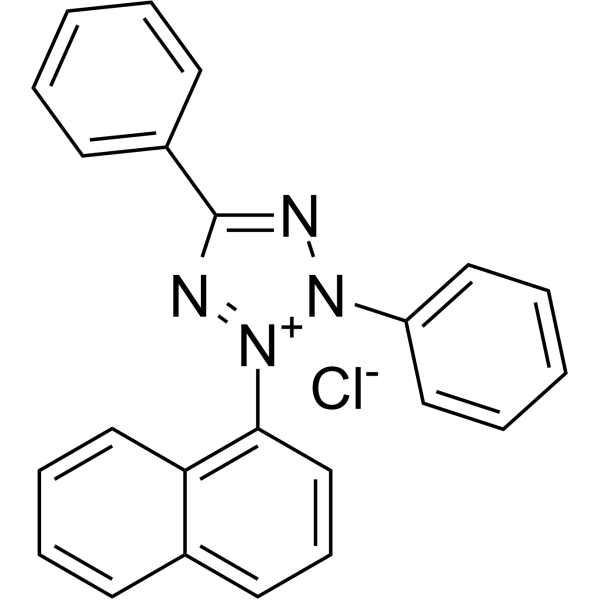
Tetrazolium violet is a redox indicator commonly used in various biochemical assays to measure cell viability and metabolic activity. Tetrazolium Violet has unique chemical properties that allow it to be reduced by cellular enzymes such as dehydrogenases to form a purple formazan product that can be detected spectrophotometrically. This makes it a useful tool for assessing cell health and growth in culture or tissue samples.
|
-
-
- HY-137872
-
|
|
Biochemical Assay Reagents
|
Others
|
|
L-Leucyl-4-nitroanilide hydrochloride is a commonly used substrate in various biochemical assays to measure the activity of enzymes that cleave peptide bonds, such as proteases. L-Leucine p-nitroanilide hydrochloride has unique chemical properties that allow it to be cleaved by these enzymes to form a yellow product called p-nitroaniline. This makes it a useful tool for detecting and quantifying protease activity in biological samples such as blood or tissue extracts.
|
-
-
- HY-112636
-
|
|
Amyloid-β
|
Others
|
|
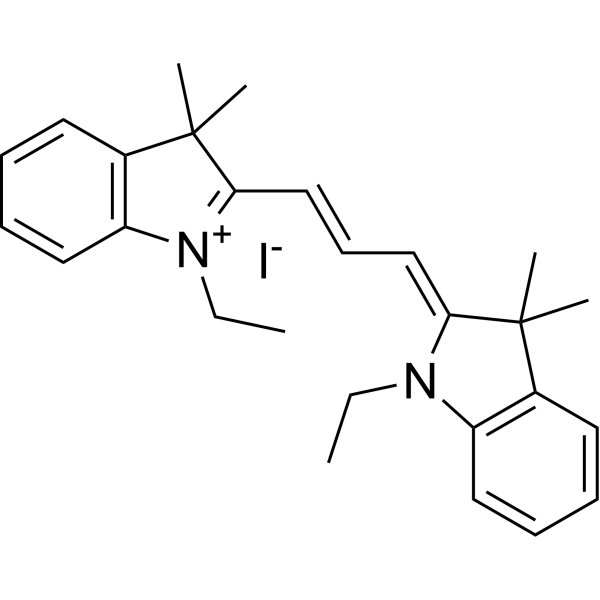
Astrophloxine is a fluorescent imaging probe capable of targeting antiparallel dimers. Astrophloxine can be used to detect aggregated Aβ in brain tissue and cerebrospinal fluid samples of Alzheimer's disease (AD) mice .
|
-
-
- HY-116234
-
-
-
- HY-W075283
-
|
1-(4-Aminophenyl)-1,2,2-triphenylethene
|
|
Others
|
|
4-(1,2,2-Triphenylvinyl)aniline (1-(4-Aminophenyl)-1,2,2-triphenylethene) is a tetraphenylethene-based aggregation-induced luminescent molecule. 4-(1,2,2-Triphenylvinyl)aniline exhibits weak or no fluorescence in dilute solution/dispersed state, and strong fluorescence with increased quantum yield when aggregated into nanoparticles .
|
-
-
- HY-D3411
-
|
|
Fluorescent Dye
|
Others
|
|
Rhobo6 is a cell-impermeable glycan-binding, fluorescence turn-on imaging agent with a Kd of 53 µM for glycans. Rhobo6 reversibly binds target glycans and enables wash-free live ECM visualization. Rhobo6 can be used for fluorescent labeling of ECM in living samples or decellularized tissues (Ex/Em = 488/561 nm) .
|
-
-
- HY-W585926
-
|
|
Reactive Oxygen Species (ROS)
|
Others
|
|
Disperse Polyester Dark Blue is a chemical compound extensively employed in scientific research. It serves as a redox-active agent and functions as a probe for identifying reactive oxygen species (ROS) in cells and tissues. By accepting electrons from ROS and undergoing oxidation, Disperse Polyester Dark Blue demonstrates its redox activity. Consequently, a chemiluminescent signal is generated, which can be measured using a luminometer. The intensity of the signal directly correlates with the quantity of ROS detected within the sample.
|
-
| Cat. No. |
Product Name |
Type |
-
- HY-112697
-
|
|
Fluorescent Dye
|
|
Rhodamine B isothiocyanate (RBITC) is a fluorescent dye commonly used in biological imaging and labeling applications. It has an isothiocyanate functional group that can be covalently attached to amino groups on proteins and other biomolecules, making it useful for fluorescent labeling of cells and tissues. RBITC fluoresces bright orange-red under green light excitation, which makes it easy to detect and track labeled molecules in complex samples. Due to its stability and sensitivity, RBITC has been widely used in various research fields, including cell biology, immunology, and neurobiology.
|
-
- HY-D2186
-
|
|
Fluorescent Dye
|
|
BTD probe-1 is a benzothiazine-based chemoproteomic probe and selective protein S-sulfenic acid (Cys-SOH) labeling agent. BTD probe-1 labels protein S-sulfenic acids in vitro in cell and tissue samples, and in situ in intact cells, enabling detection or enrichment of modified proteins/peptides. BTD probe-1 exhibits no cytotoxicity in cells at concentrations ≤1 mM. BTD probe-1 enables global, site-specific mapping and quantification of cysteine S-sulfenylation in complex proteomes with lower input material .
|
-
- HY-116234
-
|
|
Fluorescent Dye
|
|
Solvent Green 3 is an anthraquinone-based fluorescent dye. Solvent Green 3 can be used for staining of cell, bacterial and tissue samples .
|
-
- HY-D3411
-
|
|
Fluorescent Dye
|
|
Rhobo6 is a cell-impermeable glycan-binding, fluorescence turn-on imaging agent with a Kd of 53 µM for glycans. Rhobo6 reversibly binds target glycans and enables wash-free live ECM visualization. Rhobo6 can be used for fluorescent labeling of ECM in living samples or decellularized tissues (Ex/Em = 488/561 nm) .
|
-
- HY-W585926
-
|
|
Fluorescent Dye
|
|
Disperse Polyester Dark Blue is a chemical compound extensively employed in scientific research. It serves as a redox-active agent and functions as a probe for identifying reactive oxygen species (ROS) in cells and tissues. By accepting electrons from ROS and undergoing oxidation, Disperse Polyester Dark Blue demonstrates its redox activity. Consequently, a chemiluminescent signal is generated, which can be measured using a luminometer. The intensity of the signal directly correlates with the quantity of ROS detected within the sample.
|
| Cat. No. |
Product Name |
Type |
-
- HY-Y1219H
-
|
|
Biochemical Assay Reagents
|
|
Silica gel, high-purity grade, 200-400 mesh is a biologically inert matrix and desiccant with high water retention capacity and low regeneration temperature. Silica gel, high-purity grade, 200-400 mesh prevents DNA degradation by absorbing water from plant leaves, and is suitable for preserving field-collected samples for subsequent DNA extraction, restriction endonuclease digestion, PCR amplification and gene sequencing. Silica gel, high-purity grade, 200-400 mesh can be regenerated and reused after water absorption saturation. Silica gel, high-purity grade, 200-400 mesh provides a non-toxic, inert aqueous environment for embedded cells, allows free diffusion of nutrients, oxygen and metabolic wastes, blocks external contamination, and thus maintains the viability of fibroblasts and epithelial cells. Silica gel, high-purity grade, 200-400 mesh serves as an ideal candidate material for tissue culture scaffolds and implantable bioreactors .
|
-
- HY-131490
-
|
Violet tetrazolium
|
Biochemical Assay Reagents
|
|
Tetrazolium violet is a redox indicator commonly used in various biochemical assays to measure cell viability and metabolic activity. Tetrazolium Violet has unique chemical properties that allow it to be reduced by cellular enzymes such as dehydrogenases to form a purple formazan product that can be detected spectrophotometrically. This makes it a useful tool for assessing cell health and growth in culture or tissue samples.
|
-
- HY-137872
-
|
|
Biochemical Assay Reagents
|
|
L-Leucyl-4-nitroanilide hydrochloride is a commonly used substrate in various biochemical assays to measure the activity of enzymes that cleave peptide bonds, such as proteases. L-Leucine p-nitroanilide hydrochloride has unique chemical properties that allow it to be cleaved by these enzymes to form a yellow product called p-nitroaniline. This makes it a useful tool for detecting and quantifying protease activity in biological samples such as blood or tissue extracts.
|
| Cat. No. |
Product Name |
Target |
Research Area |
-
- HY-P10943
-
|
|
Fluorescent Dye
|
Inflammation/Immunology
Cancer
|
|
APO-15 is a phosphatidylserine-binding fluorescent probe and apoptosis imaging reagent. APO-15 exhibits high chemical stability under proteolytic and oxidative conditions, enables quantification and imaging of drug-induced apoptosis in preclinical mouse models, and is applicable to fixed tissue samples and multiple in vivo administration routes (Ex = 488 nm; Em = 525 nm). APO-15 can be used in studies related to acute lung injury and breast cancer .
|
-
- HY-K1000
-
4 Publications Verification
|
|
MCE WB/IP Lysis Buffer is a lysis buffer used to lyse cell or tissue samples under non-denaturing conditions to prepare protein samples. The lysed cell or tissue samples can be used for PAGE, Western Blot, Immunoprecipitation (IP), Co-Immunoprecipitation (Co-IP), ELISA, and other assays.
|
-
- HY-K6012
-
|
|
|
MCE Tissue Dissociation Solution is able to gently and efficiently dissociate tissue samples into cell suspensions or cell aggregates, which can then be used for the subsequent construction of tumor organoids.
|
-
- HY-K6011
-
|
|
|
MCE Tumor Tissue Dissociation Solution is able to gently and efficiently dissociate tumor tissue samples into cell suspensions or cell aggregates, which can then be used for the subsequent construction of tumor organoids.
|
-
- HY-K2001
-
1 Publications Verification
|
|
MCE Bradford Protein Assay Kit is suitable for detecting the total protein content in samples such as serum, plasma, animal tissues, and cells.
|
-
- HY-K6010
-
1 Publications Verification
|
|
MCE Tissue Storage Solution is designed for the short-term storage or transportation of primary tissue samples. It effectively prevents cell apoptosis, necrosis, and other detrimental processes during storage or transport, thereby preserving the functionality and vitality of stem cells.
|
-
- HY-K0314
-
Maximum Cited Publications
28 Publications Verification
|
|
MCE ATP Assay Kit provides a rapid method to measure intracellular ATP. The kit is suitable for ATP determination in cells, tissue, and other biological samples.
|
-
- HY-K0319
-
|
|
|
MCE Lipid Peroxidation (MDA) Assay Kit is suitable for measuring MDA levels in a variety of samples including plasma, serum, urine, tissues or cell lysates.
|
-
- HY-K0350
-
1 Publications Verification
|
|
MCE Mouse Neutrophil Negative Selection Kit can isolate neutrophils from single-cell suspensions of mouse bone marrow or other tissue samples.
|
-
- HY-K1501
-
2 Publications Verification
|
|
MCE NADP+/NADPH Assay Kit (WST-8) is a colorimetric assay that conveniently detects the oxidized (NADP+) and reduced (NADPH) forms of coenzyme II within cells, tissues, and other samples.
|
-
- HY-K0313
-
2 Publications Verification
|
|
MCE NAD+/NADH Assay Kit (WST-8) is a colorimetric assay that conveniently detects the oxidized (NAD+) and reduced (NADH) forms of coenzyme Ⅰ within cells, tissues, and other samples.
|
-
- HY-K3010
-
1 Publications Verification
|
|
MCE Red Blood Cell Lysis Buffer (10×) primarily contains ammonium chloride and is a ready-to-use solution designed for rapid and effective lysis and removal of anucleated red blood cells from human or mouse blood and tissue samples without affecting white blood cells, normal tissues, or tumor cells.
|
-
- HY-K0536
-
|
|
|
MCE Mouse Tissue Direct PCR Kit – Pro (with Dye) is specifically designed for direct PCR amplification from tissue samples. It enables rapid, one-step release of genomic DNA from various mouse tissues (such as tail, ear, toe, and muscle), which can be directly used for downstream PCR amplification and analysis without the need for conventional DNA extraction and purification steps, thereby significantly simplifying the experimental workflow.
|
-
- HY-K0534
-
|
|
|
MCE Mouse Tissue Direct PCR Kit (with Dye) is specifically designed for direct PCR amplification from tissue samples. It enables rapid, one-step release of genomic DNA from various mouse tissues (such as tail, ear, toe, and muscle), which can be directly used for downstream PCR amplification and analysis without the need for conventional DNA extraction and purification steps, thereby significantly simplifying the experimental workflow.
|
-
- HY-K0535
-
|
|
|
MCE Mouse Tissue Direct PCR Plus Kit is specifically designed for direct PCR amplification from tissue samples. It enables rapid, one-step release of genomic DNA from various mouse tissues (such as tail, ear, toe, and muscle), which can be directly used for downstream PCR amplification and analysis without the need for conventional DNA extraction and purification steps, thereby significantly simplifying the experimental workflow.
|
-
- HY-K0538
-
|
|
|
MCE Animal Tissue Direct PCR Kit (with Dye) is specifically designed for direct amplification from a variety of animal tissue samples. It enables rapid release of genomic DNA from animal tissues (such as insect legs/wings, mouse tails, ears, toes, skin, and internal organs) in a single step, allowing the lysate to be used directly for downstream PCR amplification without the need for conventional DNA extraction and purification procedures, thereby significantly simplifying the workflow.
|
-
- HY-K0005
-
|
|
|
MCE Mouse Tissue Lysis Buffer formulated with a highly efficient lysis buffer system, enabling rapid disruption of various mouse tissue samples (e.g., tail, ear, toe, muscle) and efficient release of genomic DNA. The lysate can be directly used as a template in PCR reactions without the need for additional extraction or purification steps, ensuring a simple and streamlined workflow.
|
-
- HY-K0324
-
|
|
|
MCE MCE Total Superoxide Dismutase (SOD) Activity Colorimetric Assay Kit (Xanthine Oxidase-NBT Method) is based on the xanthine oxidase–NBT chromogenic system and quantitatively determines total SOD activity in various biological samples by measuring the inhibition of NBT reduction to formazan in the xanthine/xanthine oxidase–generated superoxide system at 560 nm. It is suitable for the determination of SOD activity in cell or tissue homogenate supernatants, whole blood, erythrocyte extracts, serum, and other biological samples.
|
-
- HY-K0539
-
|
|
|
MCE Plant Tissue Direct PCR Kit (with Dye) is specifically designed for direct amplification from various plant leaf samples. The kit enables rapid release of genomic DNA from plant tissues (such as rice, maize, tobacco, rapeseed, etc.) in a single step. The resulting lysate can be directly used for downstream PCR amplification without the need for conventional DNA extraction and purification, thereby significantly simplifying the experimental workflow.
|
-
- HY-K3033
-
|
|
|
Hanks’ Balanced Salt Solution (HBSS) is widely used in various cell culture applications, including washing cells prior to dissociation, transporting cells or tissue samples, diluting cells for cell counting, and preparing a variety of reagent solutions. Formulations without calcium and magnesium are suitable for washing chelating agents prior to cell dissociation procedures. The 500 mL is defined as the base specification. All larger sizes correspond to incremental volumes of this base.
|
-
- HY-K3031
-
|
|
|
Hanks’ Balanced Salt Solution (HBSS) is widely used in various cell culture applications, including washing cells prior to dissociation, transporting cells or tissue samples, diluting cells for cell counting, and preparing a variety of reagent solutions. Formulations without calcium and magnesium are suitable for washing chelating agents prior to cell dissociation procedures. The 500 mL is defined as the base specification. All larger sizes correspond to incremental volumes of this base.
|
-
- HY-K3032
-
|
|
|
Hanks’ Balanced Salt Solution (HBSS) is widely used in various cell culture applications, including washing cells prior to dissociation, transporting cells or tissue samples, diluting cells for cell counting, and preparing a variety of reagent solutions. Formulations without calcium and magnesium are suitable for washing chelating agents prior to cell dissociation procedures. The 500 mL is defined as the base specification. All larger sizes correspond to incremental volumes of this base.
|
-
- HY-K3034
-
|
|
|
Hanks’ Balanced Salt Solution (HBSS) is widely used in various cell culture applications, including washing cells prior to dissociation, transporting cells or tissue samples, diluting cells for cell counting, and preparing a variety of reagent solutions. Formulations without calcium and magnesium are suitable for washing chelating agents prior to cell dissociation procedures. The 500 mL is defined as the base specification. All larger sizes correspond to incremental volumes of this base.
|
-
- HY-KD1004A
-
|
|
|
Multiplex immunohistochemistry is also known as Tyramide Signal Amplification (TSA, Tyramide dignal amplification). It has been used for more than 20 years as an enzymatic assay for high-density in situ labelling of target proteins or nucleic acids by horseradish peroxidase (HRP). The method is based on multiple cis-immunostaining with tyramide signal amplification, which allows the detection of multiple target sites in cell or tissue samples in situ, and elucidation of their interaction mechanism through the study of the combination and positional relationship of these target sites.
|
Your information is safe with us. * Required Fields.
Inquiry Information
- Product Name:
- Cat. No.:
- Quantity:
- MCE Japan Authorized Agent:

