1. Search Result
Search Result
Results for "

triphenylphosphonium

" in MedChemExpress (MCE) Product Catalog:

22

Inhibitors & Agonists

1

Biochemical Assay Reagents

4

Peptides

2

Natural
Products

2

Isotope-Labeled Compounds

Cat. No. Product Name Target Research Areas Chemical Structure
  • HY-126124
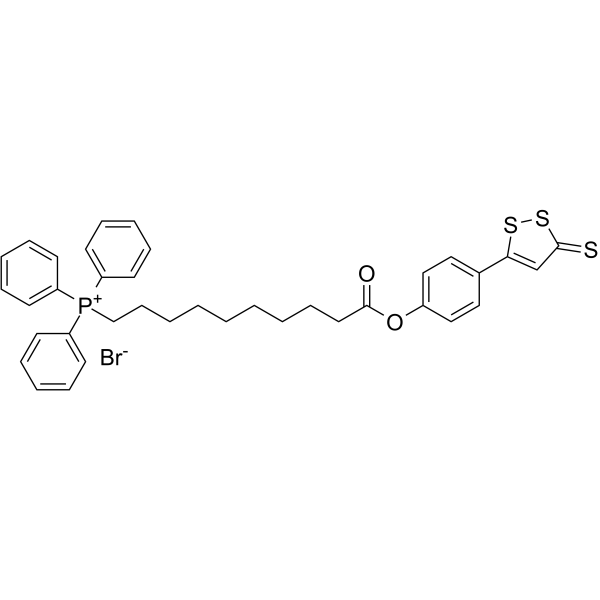
    AP39
    5+ Cited Publications

    Reactive Oxygen Species (ROS) Cardiovascular Disease Neurological Disease
    AP39 is a triphenylphosphonium derivatised anethole dithiolethione and mitochondria-targeting hydrogen sulfide (H2S) donor. AP39 increases intracellular H2S levels. AP39 exerts cytoprotective effects and maintains mitochondrial DNA integrity under oxidative stress conditions. AP39 protects against myocardial reperfusion injury in mice model and has the potential for Alzheimer's disease research .
    AP39
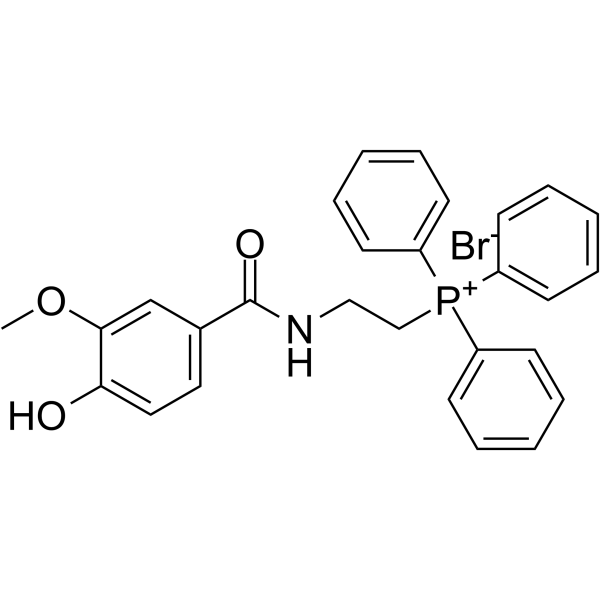
  • HY-135869
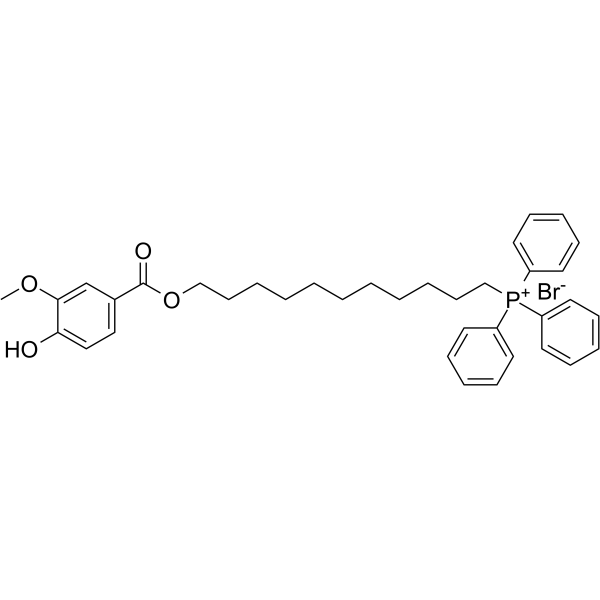
    Mito-apocynin (C11)
    3 Publications Verification

    Mitochondrial Metabolism Neurological Disease
    Mito-apocynin (C11), an orally active mitochondria-targeted triphenylphosphonium (TPP)-based compound, is synthesized by conjugating the Apocynin moiety with a TPP + cation. Mito-apocynin (C11) selectively targets mitochondria, and shows neuroprotective effect. Mito-apocynin (C11) prevents hyposmia and corrects deficits in motor function .
    Mito-apocynin (C11)
  • HY-147696

    HSP AMPK Reactive Oxygen Species (ROS) Cancer
    SMTIN-T140 (compound 6a) is a potent TRAP1 (tumor-necrosis-factor-receptor associated protein 1) inhibitor, with an IC50 of 1.646 μM. SMTIN-T140 shows anticancer activity. SMTIN-T140 leads to mitochondrial dysfunction, increases mitochondrial ROS production and activates AMPK. SMTIN-T140 potently suppressed tumor growth without any noticeable in vivo toxicity in a mouse model xenografted with PC3 prostate cancer cells .
    SMTIN-T140
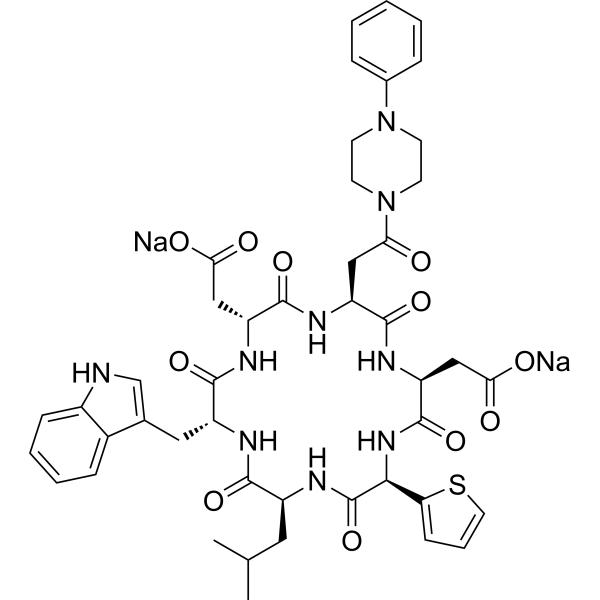
  • HY-P10563

    BHV-1100

    CD38 Cancer
    Noraramtide (BHV-1100) is an antibody recruitment molecule. Noraramtide can specifically bind to CD38 molecules to recruit natural killer (NK) cells. Noraramtide enhances the ability of NK cells to kill tumor cells through antibody-dependent cellular cytotoxicity (ADCC). This mechanism allows NK cells to more effectively recognize and eliminate tumor cells while avoiding mutual killing between NK cells. Noraramtide can be used for the study of autologous cancer immunity .
    Noraramtide
  • HY-I0607A

    Biochemical Assay Reagents Others
    (1-Ethoxy-1-oxopropan-2-yl)triphenylphosphonium bromide is an important raw material and intermediate in organic synthesis, pharmaceuticals, agrochemicals, and dyes. (1-Ethoxy-1-oxopropan-2-yl)triphenylphosphonium bromide is widely used as an organophosphorus catalyst .
    (1-Ethoxy-1-oxopropan-2-yl)triphenylphosphonium bromide
  • HY-P3350

    Bacterial Infection
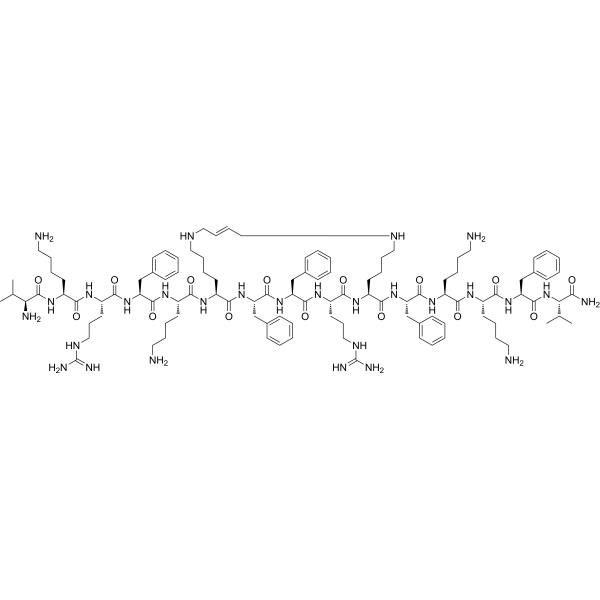
    LS-BF1 is a stable and low toxic cationic antimicrobial peptide. LS-BF1 displays broad spectrum of antibacterial activity, including the challenging ESKAPE pathogens, by cell membrane disruptive mechanism. LS-BF1 shows good in vivo efficacy for elimination of bacteria in a mouse infection model[1].
    LS-BF1
  • HY-N15837

    Biochemical Assay Reagents Others
    DSPE-PEG(2000)-N-Triphenylphosphonium is functionalized PEG lipid that can be used to synthesize lipid nanoparticles for drug delivery.
    DSPE-PEG(2000)-N-Triphenylphosphonium
  • HY-173549

    CPPA-triphenylphosphonium

    Drug Intermediate Cancer
    CPPA-TPP (CPPA-Triphenylphosphonium) is a compound conjugated to the mitochondria-targeting moiety triphenylphosphonium (TPP). CPPA-TPP can be used in the synthesis of nanoparticles that release Camptothecin (HY-16560) in a reactive oxygen species dependent manner, leading to cancer cell death .
    CPPA-TPP
  • HY-N16300

    Fluorescent Dye Others
    Mito-laurdan bromide, a derivative of Laurdan (HY-D0080), is a fluorescent probe. Mito-laurdan bromide contains a cationic triphenylphosphonium moiety, which accumulates at the inner mitochondrial membrane due to its negative membrane potential, connected via a 3 carbon linker .
    Mito-laurdan bromide
  • HY-186012

    Drug Intermediate Others
    TPP@CUR is the product formed by the esterification reaction between Curcumin (HY-N0005) and (5-hydroxy-5-oxopentyl)triphenylphosphonium bromide (TPP). TPP@CUR can be used to synthesize Ser@TPP@CUR (HY-151342), which can then be used in studies of acute kidney injury .
    TPP@CUR
  • HY-W010882S

    Isotope-Labeled Compounds Others
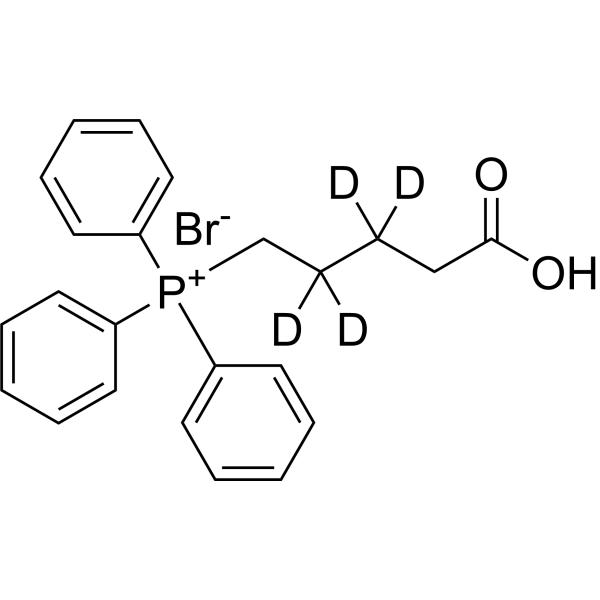
    (4-Carboxybutyl-d4)triphenylphosphonium (bromide) is the deuterium labeled (4-Carboxybutyl)triphenylphosphonium bromide .
    (4-Carboxybutyl-d4)triphenylphosphonium bromide
  • HY-105168

    Endothelin Receptor Cardiovascular Disease
    TAK 044 is an antagonist of Endothelin Receptor. TAK 044 strongly inhibits ET-induced deterioration in various animal models. TAK 044 can be used in study ET-related diseases such as acute myocardial infarction,acute renal failure, acute hepatic malfunction, and subarachnoid hemorrhage .
    TAK 044
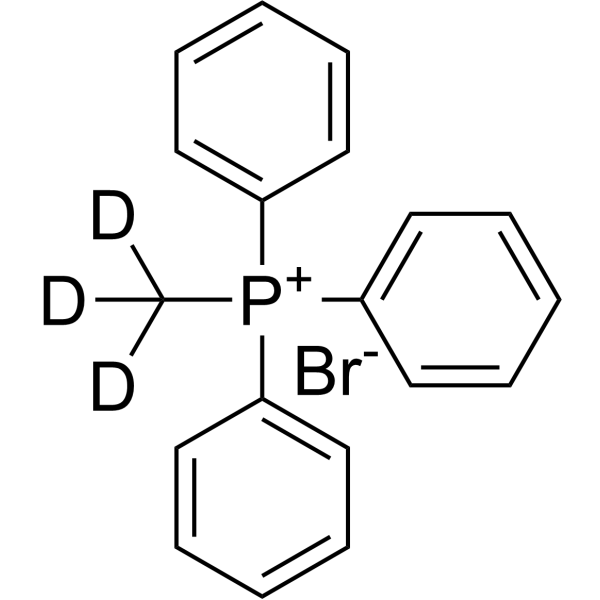
  • HY-Y1033S

    Phosphonium, methyltriphenyl-, bromide (8CI,9CI)-d3; M 0779-d3; MTPPB-d3; Phosphonium,methyltriphenyl-,bromide-d3; Methyltriphenylphosphonium bromide-d3

    Isotope-Labeled Compounds Others
    Methyl-triphenylphosphonium-d3 (bromide) is the deuterium labeled Methyl-triphenylphosphonium bromide .
    Methyl-triphenylphosphonium-d3 bromide
  • HY-158918

    4-CF3-triphenylphosphonium-DC

    Biochemical Assay Reagents Others
    4-CF3-TPP-DC (4-CF3-Triphenylphosphonium-DC) is an inert mitochondrial targeting carrier, that delivers target drugs and probes to mitochondria without causing mitochondrial depolarization and cytotoxicity in cell C2C12 .
    4-CF3-TPP-DC
  • HY-129303

    Endogenous Metabolite Metabolic Disease
    AP39 (Item No. 17100) is a compound used to increase the levels of hydrogen sulfide (H2S) within mitochondria. It consists of a mitochondria-targeting motif (triphenylphosphonium) coupled to an H2S-donating moiety (dithiolethione) by an aliphatic linker. AP219 is a control compound for AP39, containing the triphenylphosphonium scaffold but lacking the H2S-releasing portion.
    AP219
  • HY-135868

    Mitochondrial Metabolism Neurological Disease
    Mito-apocynin (C2), an orally active mitochondria-targeted triphenylphosphonium (TPP)-based compound, is synthesized by conjugating the Apocynin moiety with a TPP + cation. Mito-apocynin (C2) exhibits antineuroinflammatory effect .
    Mito-apocynin (C2)
  • HY-163073

    Bacterial Infection
    Anti-MRSA agent 9 (compound 39) shows antibacterial effects against clinically isolated methicillin-resistant Staphylococcus aureus (MRSA) with MIC values of 1 μg/ml. Anti-MRSA agent 9 also shows anti-MRSA efficacy in vivo .
    Anti-MRSA agent 9
  • HY-176775

    Oxidative Phosphorylation Mitochondrial Metabolism Apoptosis Neurological Disease
    TPP-IOA is a cytochrome c peroxidase inhibitor. TPP-IOA inhibits apoptosis by preventing cardiolipin oxidation and cytochrome c release to the cytosol. TPP-IOA disrupts oxidative phosphorylation in isolated mitochondria. TPP-IOA inhibits cell death in SH-SY5Y cells grown in glucose, but not galactose. TPP-IOA causes mitochondrial depolarization and network fragmentation. TPP-lOA mitigates radiation induced death in mice .
    TPP-IOA
  • HY-149067

    Fungal Infection
    Antifungal agent 47 (compound 3b) shows the highest and broad-spectrum fungicidal activity, strong respiratory inhibition activity, and adenosine 5′-triphosphate synthesis inhibition activity. Antifungal agent 47 is potential as a fungicide .
    Antifungal agent 47
  • HY-151556

    Fungal Infection
    Antifungal agent 45 is with fungicidal activities. Antifungal agent 45 shows excellent characteristics superior to Kresoxim-methyl (HY-125776), in which the activity enhancement against Phytophthora capsici was the most remarkable, with an EC50 value of about 5 μM .
    Antifungal agent 45
  • HY-W103952R

    Reference Standards
    ((2-Cyclopropyl-4-(4-fluorophenyl)quinolin-3-yl)methyl)triphenylphosphonium bromide (Standard) is the analytical standard of ((2-Cyclopropyl-4-(4-fluorophenyl)quinolin-3-yl)methyl)triphenylphosphonium bromide. This product is intended for research and analytical applications.
    ((2-Cyclopropyl-4-(4-fluorophenyl)quinolin-3-yl)methyl)triphenylphosphonium bromide (Standard)
  • HY-P4948

    Biochemical Assay Reagents Others
    Coumarin-phalloidin is a kind of phalloidin labeled with Coumarin (HY-N0709). Coumarin-phalloidin is a new type of actin probe that can be used for triple immunofluorescence microscopic observation of the cell skeleton .
    Coumarin-Phalloidin

Inquiry Online

Your information is safe with us. * Required Fields.

Salutation


Country or Region *

Applicant Name *


Organization Name *

Department *


Email Address *


Product Name *

Cat. No.


Requested quantity *

Phone Number *


Remarks

Inquiry Online

Inquiry Information

Product Name:
Cat. No.:
Quantity:
MCE Japan Authorized Agent:

