

33 Results for "

wakefulness

" in MedChemExpress (MCE) Product Catalog:
Products (33)

33 Results for "wakefulness" in MCE Product Catalog:

6
6 Publications Verification
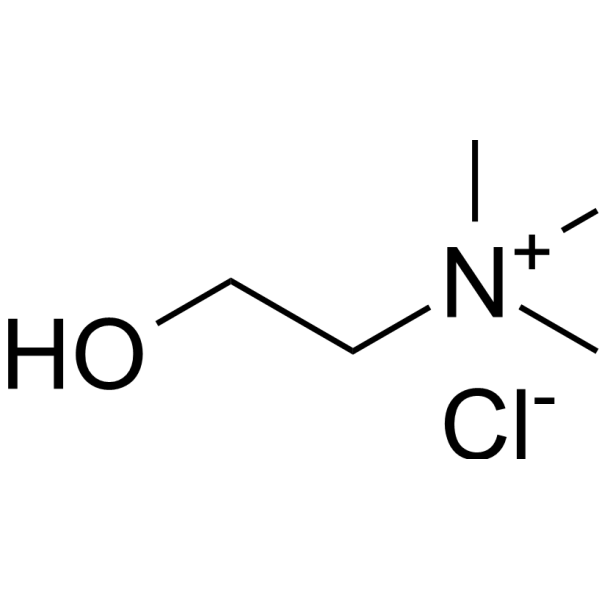
Cat. No.: HY-B1337
CAS No.: 67-48-1
Choline chloride is an orally active methylxanthine derivative. Choline chloride exhibits weak antihistaminic and anticholinergic activities and potentiates the effects of histamine and acetylcholine. Choline chloride relaxes bronchial smooth muscle, dilates coronary and peripheral blood vessels, increases urine output and electrolyte excretion, stimulates locomotor activity in the central nervous system, and induces transient hypotension following a pressor phase. Choline chloride modulates sleep architecture by increasing wakefulness time and reducing slow-wave sleep, without altering the frequency or severity of nocturnal hypoxemia, apnea, or hypopnea events. Choline chloride is used in studies of bronchospasm, nocturnal asthma, and chronic asthma .
loading...
    loading...
6
6 Publications Verification
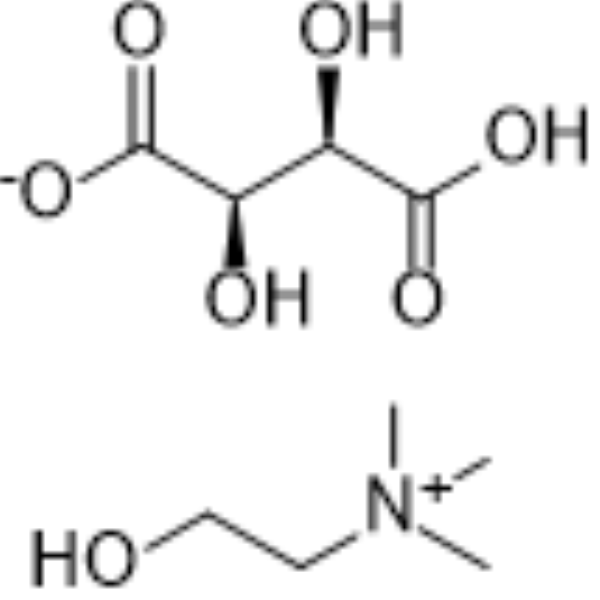
Cat. No.: HY-101036
CAS No.: 87-67-2
Purity:  ≥98.0%
Choline bitartrate (Oxtriphylline) is an orally active methylxanthine-derived choline salt of theophylline. Choline bitartrate exhibits weak antihistaminic and anticholinergic activities and can enhance the effects of histamine and acetylcholine. Choline bitartrate relaxes bronchial smooth muscle, dilates coronary and peripheral blood vessels, increases urine output and electrolyte excretion, stimulates central nervous system motor activity, and induces transient hypotension following a pressor phase. Choline bitartrate modulates sleep architecture by increasing wakefulness time and reducing slow-wave sleep, without altering the frequency or severity of nocturnal hypoxemia, apnea, or hypopnea events. Choline bitartrate is used in studies of bronchospasm, nocturnal asthma, and chronic asthma .
loading...
    loading...
6
6 Publications Verification
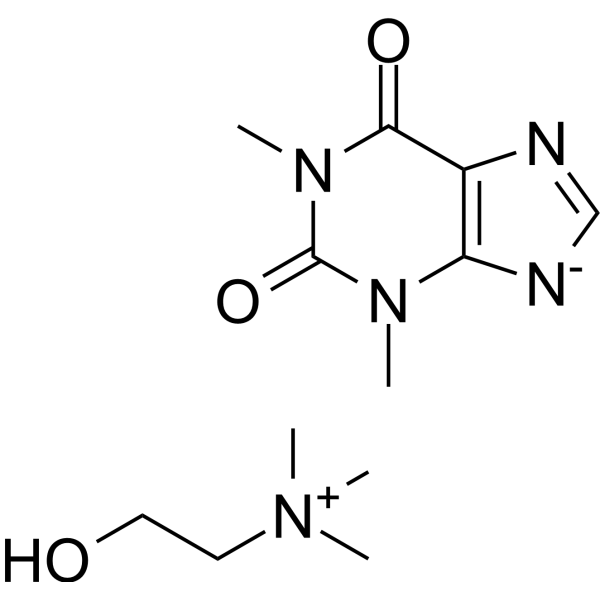
Cat. No.: HY-B1718
CAS No.: 4499-40-5
Synonyms: Oxtriphylline
Choline theophyllinate (Oxtriphylline) is an orally active methylxanthine derivative. Choline theophyllinate exhibits weak antihistaminic and anticholinergic activities and potentiates the effects of histamine and acetylcholine. Choline theophyllinate relaxes bronchial smooth muscle, dilates coronary and peripheral blood vessels, increases urine output and electrolyte excretion, stimulates locomotor activity in the central nervous system, and induces transient hypotension following a pressor phase. It modulates sleep architecture by increasing wakefulness time and reducing slow-wave sleep, without altering the frequency or severity of nocturnal hypoxemia, apnea, or hypopnea events. Choline theophyllinate is used in studies of bronchospasm, nocturnal asthma, and chronic asthma .
loading...
    loading...
3
3 Cited Publications
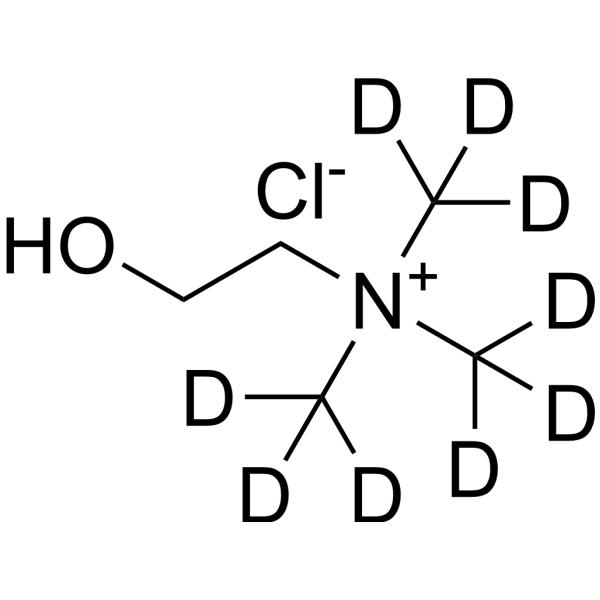
Cat. No.: HY-B1337S1
CAS No.: 61037-86-3
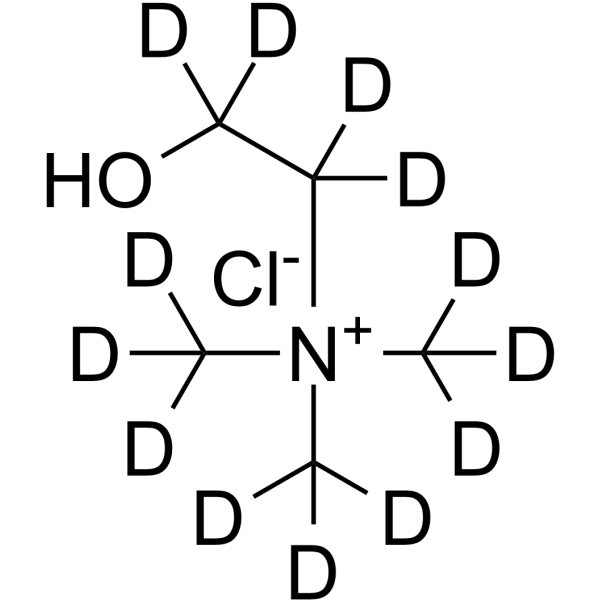
Choline-d9 chloride is the d9-labeled Choline chloride (HY-B1337). Choline chloride is an orally active methylxanthine derivative. Choline chloride exhibits weak antihistaminic and anticholinergic activities and potentiates the effects of histamine and acetylcholine. Choline chloride relaxes bronchial smooth muscle, dilates coronary and peripheral blood vessels, increases urine output and electrolyte excretion, stimulates locomotor activity in the central nervous system, and induces transient hypotension following a pressor phase. Choline chloride modulates sleep architecture by increasing wakefulness time and reducing slow-wave sleep, without altering the frequency or severity of nocturnal hypoxemia, apnea, or hypopnea events. Choline chloride is used in studies of bronchospasm, nocturnal asthma, and chronic asthma .
loading...
    loading...
2
2 Cited Publications
Cat. No.: HY-B1337S4
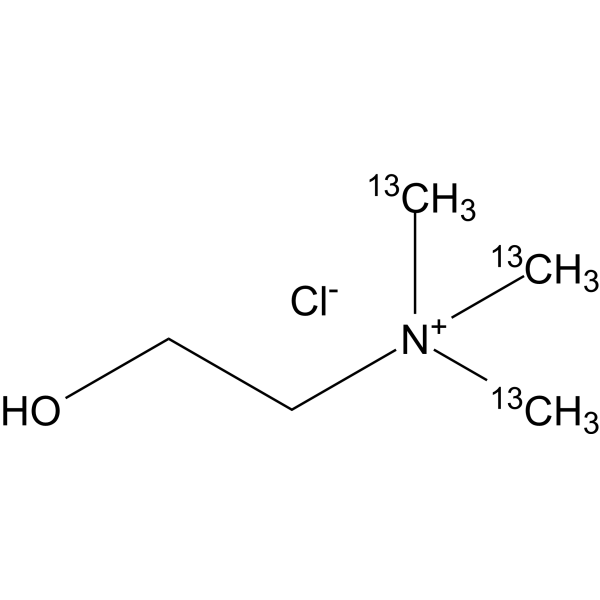
Choline Chloride- 13C3 is the 13C-labeled Choline chloride (HY-B1337). Choline chloride is an orally active methylxanthine derivative. Choline chloride exhibits weak antihistaminic and anticholinergic activities and potentiates the effects of histamine and acetylcholine. Choline chloride relaxes bronchial smooth muscle, dilates coronary and peripheral blood vessels, increases urine output and electrolyte excretion, stimulates locomotor activity in the central nervous system, and induces transient hypotension following a pressor phase. Choline chloride modulates sleep architecture by increasing wakefulness time and reducing slow-wave sleep, without altering the frequency or severity of nocturnal hypoxemia, apnea, or hypopnea events. Choline chloride is used in studies of bronchospasm, nocturnal asthma, and chronic asthma .
loading...
    loading...
2
2 Cited Publications
Cat. No.: HY-P1339B
Synonyms: Human orexin B acetate
Orexin B, human acetate is the acetate form of Orexin B, human (HY-P1339). Orexin B, human acetate is the agonist for Orexin Receptor, with Ki of 420 nM and 36 nM for OX1 and OX2. Orexin B, human acetate participates in the regulation of appetite, wakefulness, cardiovascular function and neuroendocrine .
loading...
    loading...
2
2 Cited Publications
Cat. No.: HY-P1349A
Synonyms: Rat orexin B TFA; Orexin B (mouse) TFA
Orexin B, rat, mouse (Rat orexin B) TFA is an endogenous orexin receptor agonist. Orexin B, rat, mouse TFA binds and activates two closely related orphan G protein-coupled receptors OX1-R and OX2-R. Orexin B, rat, mouse TFA stimulates food intake and energy expenditure and plays a significant role in sleep-wakefulness regulation .
loading...
    loading...
1
1 Cited Publications
Cat. No.: HY-B1337S
CAS No.: 285979-70-6
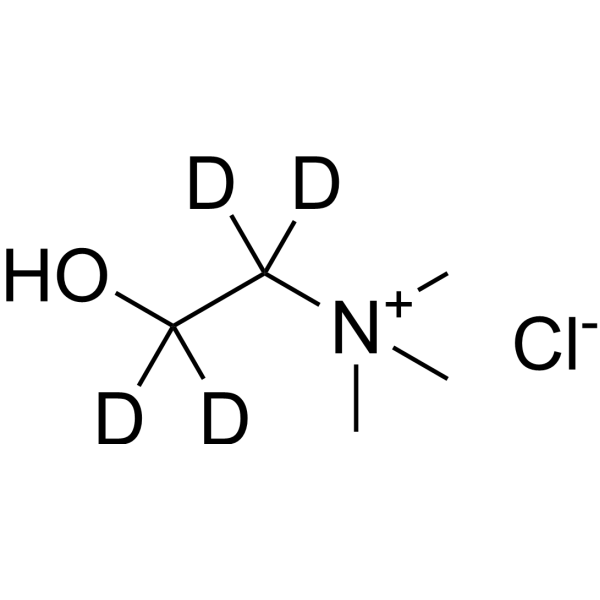
Choline-d4 chloride is the d4-labeled Choline chloride (HY-B1337). Choline chloride is an orally active methylxanthine derivative. Choline chloride exhibits weak antihistaminic and anticholinergic activities and potentiates the effects of histamine and acetylcholine. Choline chloride relaxes bronchial smooth muscle, dilates coronary and peripheral blood vessels, increases urine output and electrolyte excretion, stimulates locomotor activity in the central nervous system, and induces transient hypotension following a pressor phase. Choline chloride modulates sleep architecture by increasing wakefulness time and reducing slow-wave sleep, without altering the frequency or severity of nocturnal hypoxemia, apnea, or hypopnea events. Choline chloride is used in studies of bronchospasm, nocturnal asthma, and chronic asthma .
loading...
    loading...
Cat. No.: HY-B1337S5
CAS No.: 202190-49-6
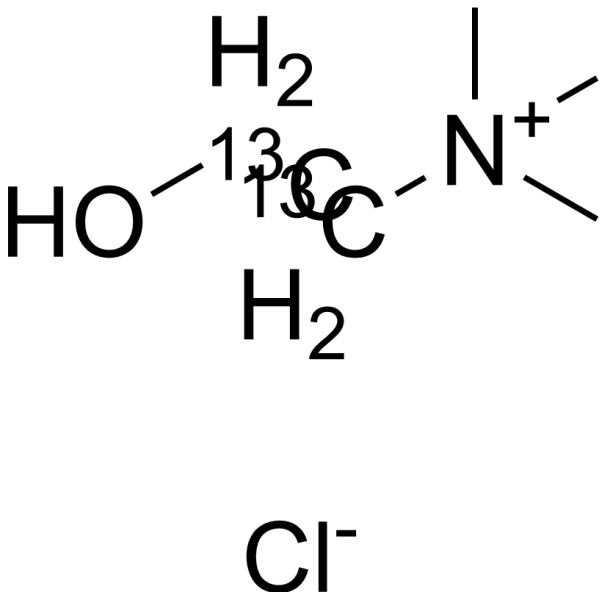
Choline- 13C2 chloride is the 13C-labeled Choline chloride (HY-B1337). Choline chloride is an orally active methylxanthine derivative. Choline chloride exhibits weak antihistaminic and anticholinergic activities and potentiates the effects of histamine and acetylcholine. Choline chloride relaxes bronchial smooth muscle, dilates coronary and peripheral blood vessels, increases urine output and electrolyte excretion, stimulates locomotor activity in the central nervous system, and induces transient hypotension following a pressor phase. Choline chloride modulates sleep architecture by increasing wakefulness time and reducing slow-wave sleep, without altering the frequency or severity of nocturnal hypoxemia, apnea, or hypopnea events. Choline chloride is used in studies of bronchospasm, nocturnal asthma, and chronic asthma .
loading...
    loading...
Cat. No.: HY-137440A
CAS No.: 2861934-86-1
Purity:  99.94%
Synonyms: TAK-994
Research Areas:  

Neurological Disease

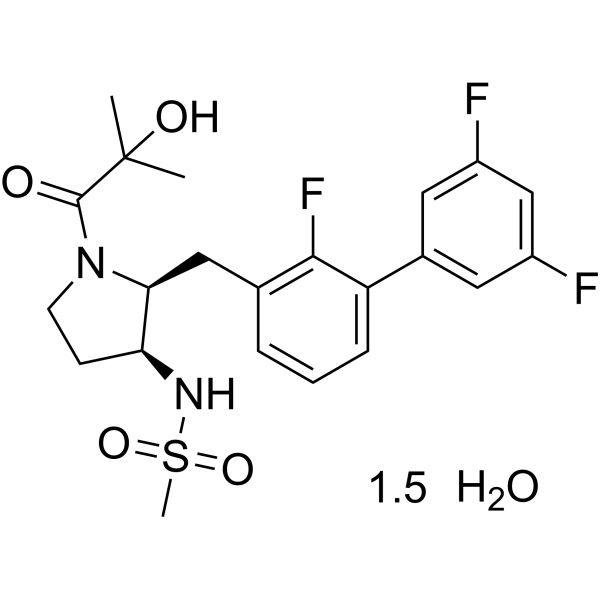
Firazorexton hydrate (TAK-994) is an orally active and brain-penetrant orexin type 2 receptor (OX2R) selective agonist. Firazorexton hydrate can promote wakefulness and has the potential to improve narcolepsy-like symptoms in mice .
loading...
    loading...
Cat. No.: HY-P3538
CAS No.: 9015-71-8
Synonyms: CRH (Sheep)
Target:  

Inhibitory Antibodies

Research Areas:  

Neurological Disease

Corticotropin-releasing factor (CRH) (Sheep) is a brain-penetrant hypothalamic releasing factor and a peptide hormone with analgesic and arousal-inducing activity. Corticotropin-releasing factor (Sheep) mediates stress effects, including stress-induced analgesia. Corticotropin-releasing factor (Sheep) increases wakefulness, reduces slow wave sleep, alters EEG frequency content, stimulates ACTH and β-endorphin release, activates locomotor activity. Corticotropin-releasing factor (Sheep) can be used for the research of neurological disease .
loading...
    loading...
Cat. No.: HY-111178
CAS No.: 90280-13-0
Purity:  99.18%
Synonyms: BisfluoroModafinil; CRL-40940; NLS-4
Target:  

Dopamine Transporter

Research Areas:  

Neurological Disease

Lauflumide (BisfluoroModafinil) is a selective dopamine reuptake inhibitor and wake-promoting agent. Lauflumide inhibits the dopamine transporter (DAT). Lauflumide induces sustained wakefulness without eliciting hyperlocomotion, stereotypy or abnormal behaviors in Mus musculus (house mice). Lauflumide reduces non-rapid eye movement (NREM) sleep rebound in rats, modulates electroencephalogram (EEG) spectral composition, and produces anti-aggressive effects. Lauflumide alleviates circadian rhythm disturbances in rats, increases spontaneous activity in fatigued rats, and facilitates their recovery from severe fatigue. Lauflumide can be used in research related to excessive daytime sleepiness as well as chronic severe fatigue/chronic fatigue syndrome (CFS) .
loading...
    loading...
Cat. No.: HY-B1337S3
CAS No.: 352438-97-2
Choline-d13 chloride is the d13-labeled Choline chloride (HY-B1337). Choline chloride is an orally active methylxanthine derivative. Choline chloride exhibits weak antihistaminic and anticholinergic activities and potentiates the effects of histamine and acetylcholine. Choline chloride relaxes bronchial smooth muscle, dilates coronary and peripheral blood vessels, increases urine output and electrolyte excretion, stimulates locomotor activity in the central nervous system, and induces transient hypotension following a pressor phase. Choline chloride modulates sleep architecture by increasing wakefulness time and reducing slow-wave sleep, without altering the frequency or severity of nocturnal hypoxemia, apnea, or hypopnea events. Choline chloride is used in studies of bronchospasm, nocturnal asthma, and chronic asthma .
loading...
    loading...
Cat. No.: HY-108015
CAS No.: 1357266-05-7
Purity:  98.87%
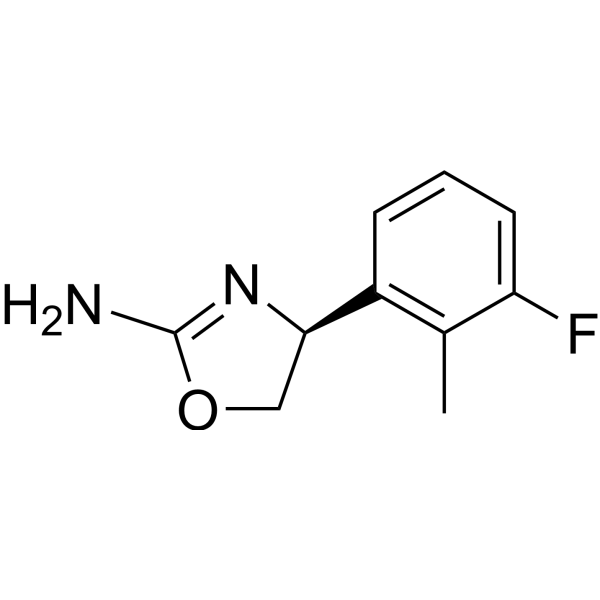
RO5263397 is a potent, selective, and orally available TAAR1 agonist, with EC50s of 17 and 35 nM for human TAAR1 and rat TAAR1, respectively. RO5263397 regulates wakefulness and EEG spectral composition. Antidepressant-like effect .
loading...
    loading...
Cat. No.: HY-137440
CAS No.: 2274802-95-6
Purity:  99.94%
Synonyms: TAK-994 free base
Research Areas:  

Neurological Disease

Firazorexton (TAK-994 free base) is an orally active and brain-penetrant orexin type 2 receptor (OX2R) selective agonist. Firazorexton (TAK-994 free base) can promote wakefulness and has the potential to improve narcolepsy-like symptoms in mice .
loading...
    loading...
Cat. No.: HY-B1337R
CAS No.: 67-48-1
Choline chloride (Standard) is the analytical standard of Choline chloride (HY-B1337). This product is intended for research and analytical applications. Choline chloride is an orally active methylxanthine derivative. Choline chloride exhibits weak antihistaminic and anticholinergic activities and potentiates the effects of histamine and acetylcholine. Choline chloride relaxes bronchial smooth muscle, dilates coronary and peripheral blood vessels, increases urine output and electrolyte excretion, stimulates locomotor activity in the central nervous system, and induces transient hypotension following a pressor phase. Choline chloride modulates sleep architecture by increasing wakefulness time and reducing slow-wave sleep, without altering the frequency or severity of nocturnal hypoxemia, apnea, or hypopnea events. Choline chloride is used in studies of bronchospasm, nocturnal asthma, and chronic asthma .
loading...
    loading...
Cat. No.: HY-118075
CAS No.: 606-06-4
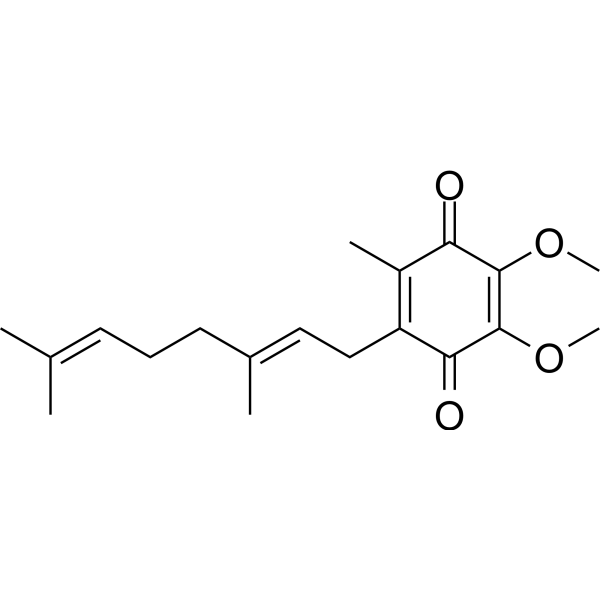
Coenzyme Q2 is a benzoquinone electron carrier in the mitochondrial electron transport chain and a p53-dependent apoptosis inducer. Coenzyme Q2 induces p53 phosphorylation at Ser15, promoting p53 accumulation and functional activation. Coenzyme Q2 induces ROS generation, caspase-3 activation, DNA fragmentation, phosphatidylserine externalization, mitochondrial permeability transition pore opening, and oxidative phosphorylation uncoupling. Coenzyme Q2 inhibits Complex I, Complex III, and Complex IV activities, disrupting electron transport and membrane potential generation. Coenzyme Q2 induces excessive mitochondrial proton leak in forebrain mitochondria. Coenzyme Q2 causes loss of righting reflex in mice, accompanied by slow-wave delta EEG activity and reversible loss of wakefulness. Coenzyme Q2 inhibits lipid peroxidation and scavenges superoxide radicals. Coenzyme Q2 is used in research on leukemia, myocardial ischemia-reperfusion injury, and mitochondrial encephalomyopathy .
loading...
    loading...
Cat. No.: HY-101036R
CAS No.: 87-67-2
Choline bitartrate (Standard) is the analytical standard of Choline bitartrate (HY-101036). This product is intended for research and analytical applications. Choline bitartrate is an orally active methylxanthine-derived choline salt of theophylline. Choline bitartrate exhibits weak antihistaminic and anticholinergic activities and can enhance the effects of histamine and acetylcholine. Choline bitartrate relaxes bronchial smooth muscle, dilates coronary and peripheral blood vessels, increases urine output and electrolyte excretion, stimulates central nervous system motor activity, and induces transient hypotension following a pressor phase. Choline bitartrate modulates sleep architecture by increasing wakefulness time and reducing slow-wave sleep, without altering the frequency or severity of nocturnal hypoxemia, apnea, or hypopnea events. Choline bitartrate is used in studies of bronchospasm, nocturnal asthma, and chronic asthma .
loading...
    loading...
Cat. No.: HY-162712
CAS No.: 2460722-03-4
OX-201 is an orally active, blood-brain barrier-permeable OX2R agonist with an EC50 of 8.0 nM. OX-201 activates OX2R to induce wakefulness and neuronal activation. OX-201 promotes the release of neuron activity-dependent tau protein from neurons into the interstitial fluid of hippocampal tissues. OX-201 is applicable to research related to Alzheimer's disease and tauopathies .
loading...
    loading...
Cat. No.: HY-172672
Research Areas:  

Neurological Disease

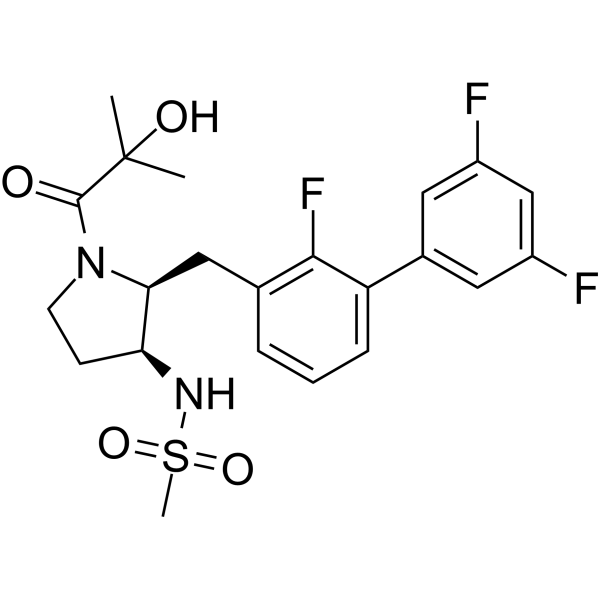
Orexin 2 Receptor Agonist 3 (Compound 57) is an orally active and brain-penetrant orexin receptor type-2 (OX2) agonist (EC50: 2.5 nM). Orexin 2 Receptor Agonist 3 increases wakefulness in the orexin/ataxin-3 NT1 mouse model and healthy beagle dogs. Orexin 2 Receptor Agonist 3 can be used in the study of narcolepsy .
loading...
    loading...

