
33 Results for "

yeast form

" in MedChemExpress (MCE) Product Catalog:
Products (33)

33 Results for "yeast form" in MCE Product Catalog:

3
3 Cited Publications
Cat. No.: HY-N10473
CAS No.: 957-86-8
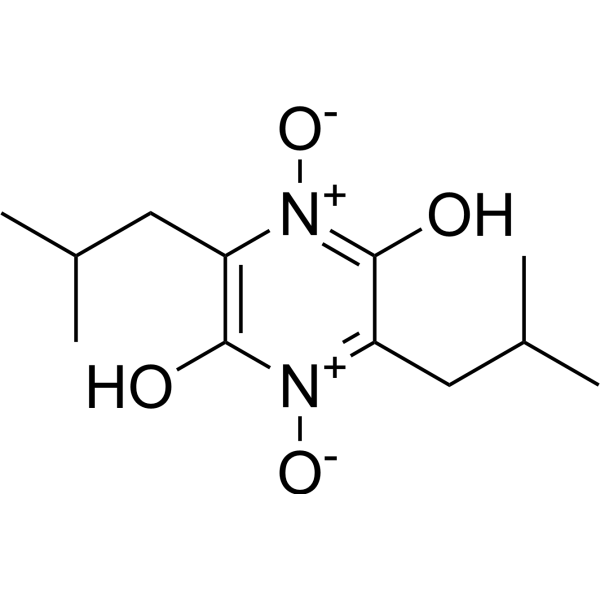
Pulcherriminic acid is a cyclic dipeptide antimicrobial agent with high affinity for Fe 3+, found mainly in Bacillus and yeast. Pulcherriminic acid chelates iron ions through a non-enzymatic reaction to form the extracellular red pigment pulcherrimin, which competes for iron nutrition and thus achieves an antibacterial effect. Pulcherriminic acid has great applications in food, agriculture and medical industries .
loading...
    loading...
2
2 Cited Publications
Cat. No.: HY-N2024
CAS No.: 69-79-4
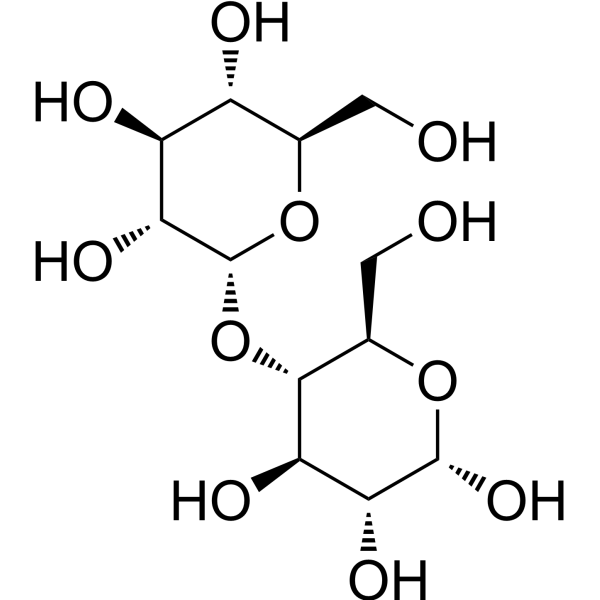
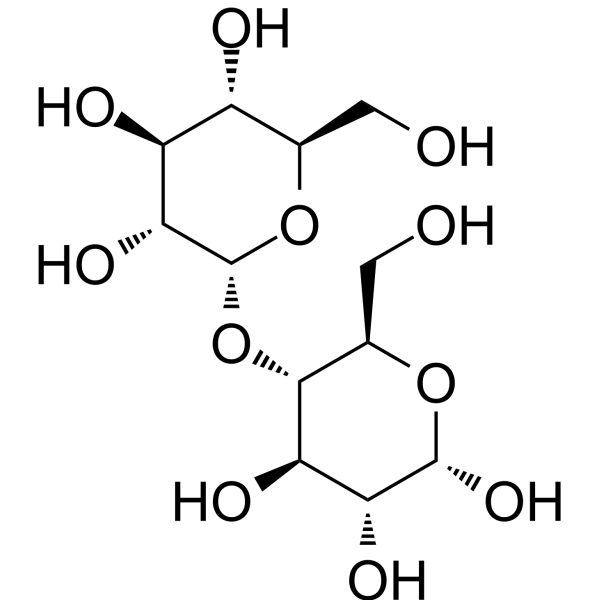
Maltose is a disaccharide composed of two glucose molecules linked together. Maltose is an endogenous metabolic product in plants, yeast, or bacteria, and it participates in carbon source storage and metabolism. Maltose is a key core metabolite and main transport form in the temporary starch degradation, carbon output, and subsequent sucrose synthesis metabolism of the night chloroplast. In X. dendrorhous, maltose can act as a sugar donor and is converted into isomaltulose by α-glucosidase). Maltose can act as a osmotic agent, supporting continuous capillary ultrafiltration and preventing severe metabolic disorders .
loading...
    loading...
2
2 Cited Publications
Cat. No.: HY-N2024A
CAS No.: 6363-53-7
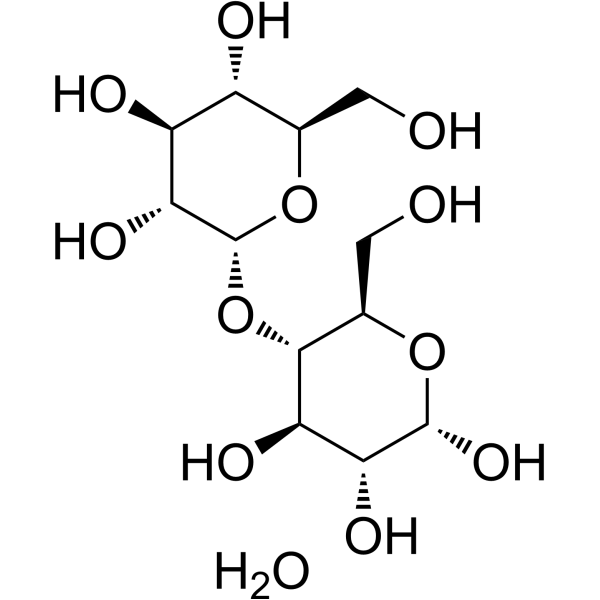
Maltose monohydrate is a disaccharide composed of two glucose molecules linked together. Maltose monohydrate is an endogenous metabolic product in plants, yeast, or bacteria, and it participates in carbon source storage and metabolism. Maltose monohydrate is a key core metabolite and main transport form in the temporary starch degradation, carbon output, and subsequent sucrose synthesis metabolism of the night chloroplast. In X. dendrorhous, maltose can act as a sugar donor and is converted into isomaltulose by α-glucosidase. Maltose monohydrate can act as a osmotic agent, supporting continuous capillary ultrafiltration and preventing severe metabolic disorders .
loading...
    loading...
2
2 Cited Publications
Cat. No.: HY-K1052

MCE Amphotericin B, Sterile (250 μg/mL) is a filtered and sterilized antibiotic solution that can be used directly in cell culture. Amphotericin B is a polyene antifungal antibiotic produced by Streptomyces nodosus. It can bind with sterols to form transmembrane channels, resulting in the leakage of intracellular substances, thus inhibiting fungal and yeast contamination.

loading...
    loading...
1
1 Cited Publications
Cat. No.: HY-N6742
CAS No.: 7184-60-3
Synonyms: Treponemycin
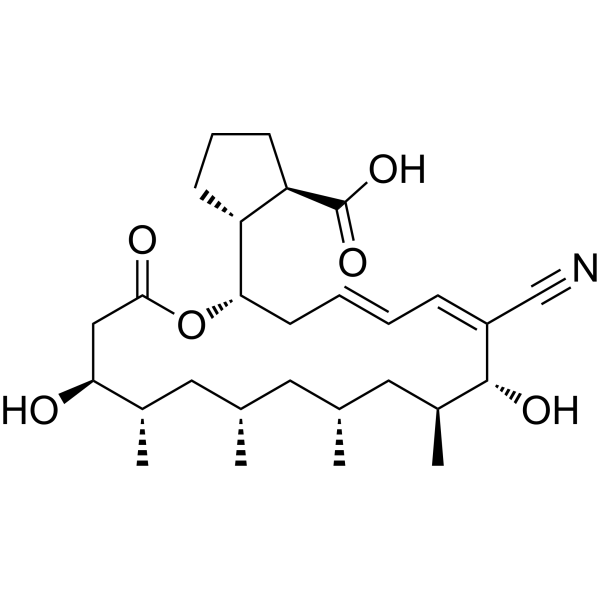
Borrelidin (Treponemycin) is a bacterial and eukaryal threonyl-tRNA synthetase inhibitor which is a nitrile-containing macrolide antibiotic isolated from Streptomyces rochei . Borrelidin is an inhibitor of Cdc28/Cln2 of the budding yeast, with an IC50 of 24 μM . Borrelidin is a potent angiogenesis inhibitor, with an IC50 of 0.8 nM. Borrelidin induces apoptosis in the tube-forming cells . Borrelidin has strong antimalarial activities, with IC50s of 1.9 nM and 1.8 nM against K1 and FCR3 strains of Plasmodium falciparum, respectively .
loading...
    loading...
Cat. No.: HY-W250308
CAS No.: 28211-04-3
Synonyms: Epsilon-polylysine (MW 3800-4200); ε-Polylysine (MW 3800-4200); ε-PL (MW 3800-4200)
Target:  

Bacterial

Research Areas:  

Others

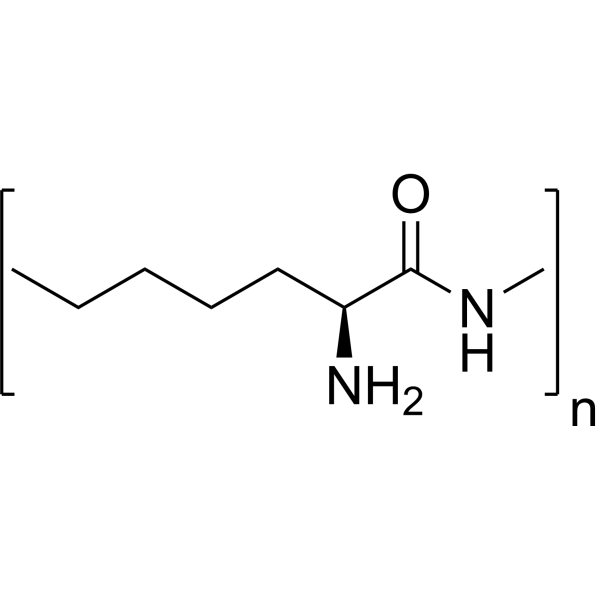
Epsilon-polylysine is an antimicrobial peptide that can be produced by bacteria such as Streptomyces. Epsilon-polylysine inhibits the growth of microorganisms such as bacteria, yeasts and molds and is therefore often used as a green food additive and preservative in various food and beverage products. Epsilon-polylysine has a variety of properties, including thermal stability, resistance to acidic conditions, and broad-spectrum antimicrobial activity. Epsilon-polylysine can be loaded on other materials to form nanoparticles or form nanofiber membranes for targeted delivery to exert sustained antibacterial efficacy. Epsilon-polylysine is also used as a liposome stabilizer .
loading...
    loading...
Cat. No.: HY-N2024AS1
Maltose monohydrate- 13C12 is the 13C labeled isotope of Maltose monohydrate. Maltose monohydrate is a disaccharide composed of two glucose molecules linked together. Maltose monohydrate is an endogenous metabolic product in plants, yeast, or bacteria, and it participates in carbon source storage and metabolism. Maltose monohydrate is a key core metabolite and main transport form in the temporary starch degradation, carbon output, and subsequent sucrose synthesis metabolism of the night chloroplast. In X. dendrorhous, maltose can act as a sugar donor and is converted into isomaltulose by α-glucosidase. Maltose monohydrate can act as a osmotic agent, supporting continuous capillary ultrafiltration and preventing severe metabolic disorders.
loading...
    loading...
Cat. No.: HY-P10304
CAS No.: 74838-83-8
Synonyms: Cyclo(Pro-Arg)
Target:  

Fungal

Research Areas:  

Others

Cyclo(Arg-Pro) (Cyclo(Pro-Arg)) is an inhibitor for chitinase. Cyclo(Arg-Pro) inhibits cell separation of Saccharomyces cerevisiae, without affecting its growth. Cyclo(Arg-Pro) inhibits the morphological change of Candida albicans from yeast form to filamentous form .
loading...
    loading...
Cat. No.: HY-W016819B
CAS No.: 220141-70-8
Synonyms: 5-Fluorouracil-6-carboxylic acid Monohydrate; 5-FOA; 5-fluoro OA
Research Areas:  

Infection

5-Fluoroorotic acid monohydrate is the monohydrate salt form of 5-Fluoroorotic acid (HY-W016819). 5-Fluoroorotic acid monohydrate is the inhibitor for thymidylate synthase that acts as a selective agent in yeast molecular genetics. 5-Fluoroorotic acid monohydrate exhibits antimalarial activity .
loading...
    loading...
Cat. No.: HY-N2024R
CAS No.: 69-79-4
Maltose (Standard) is the analytical standard of Maltose. This product is intended for research and analytical applications. Maltose is a disaccharide composed of two glucose molecules linked together. Maltose is an endogenous metabolic product in plants, yeast, or bacteria, and it participates in carbon source storage and metabolism. Maltose is a key core metabolite and main transport form in the temporary starch degradation, carbon output, and subsequent sucrose synthesis metabolism of the night chloroplast. In X. dendrorhous, maltose can act as a sugar donor and is converted into isomaltulose by α-glucosidase (α-Glucosidase). Maltose can act as a osmotic agent, supporting continuous capillary ultrafiltration and preventing severe metabolic disorders.
loading...
    loading...
Cat. No.: HY-P2822
CAS No.: 9001-83-6
Synonyms: PGK
Phosphoglycerate kinase (PGK), yeast is a monomeric glycolytic/gluconeogenic enzyme that can be found in Saccharomyces cerevisiae. Phosphoglycerate kinase, yeast catalyzes phosphoryl-group transfer from 1,3-bisphosphoglycerate to ADP to form 3-phosphoglycerate and ATP, binds 3PGA, ATP, and Mg 2+, and adopts a closed conformation. Phosphoglycerate kinase, yeast is commonly used in biochemical research .
loading...
    loading...
Cat. No.: HY-P10304A
Synonyms: Cyclo(Pro-Arg) TFA
Target:  

Fungal

Research Areas:  

Infection

Cyclo (Arg-Pro) TFA is a chitinase inhibitor. Cyclo (Arg-Pro) TFA disrupts cell separation and morphological transition of yeast by inhibiting chitinase activity. Cyclo (Arg-Pro) TFA prevents cell separation of Saccharomyces cerevisiae, leading to the formation of grape-like cell clusters, without inhibiting cell growth. Cyclo (Arg-Pro) TFA blocks the morphological transition of Candida albicans from yeast form to hyphal form, without inhibiting cell growth .
loading...
    loading...
Cat. No.: HY-125863B
CAS No.: 9001-40-5
Synonyms: G6PD (yeast, recombinant)
Glucose 6-phosphate dehydrogenase (yeast, recombinant) (G6PD (yeast, recombinant)) is a recombinant enzyme requiring NADP + as a coenzyme. Glucose 6-phosphate dehydrogenase (yeast, recombinant) catalyzes the oxidative dehydrogenation of glucose-6-phosphate to form 6-phosphoglucono-δ-lactone, as well as the reduction of NADP + to NADPH. Glucose 6-phosphate dehydrogenase (yeast, recombinant) relies on the amino acid Arg-52 to bind NADP +. Glucose 6-phosphate dehydrogenase (yeast, recombinant) undergoes competitive inhibition by NADPH and strong inhibition by zinc ions (Zn 2+). Glucose 6-phosphate dehydrogenase (yeast, recombinant) is an enzyme in the pentose phosphate pathway, which is one of the glucose metabolic pathways. Glucose 6-phosphate dehydrogenase (yeast, recombinant) can be used for the quantitative detection of ATP, glucose and creatine kinase .
loading...
    loading...
Cat. No.: HY-N2024AS
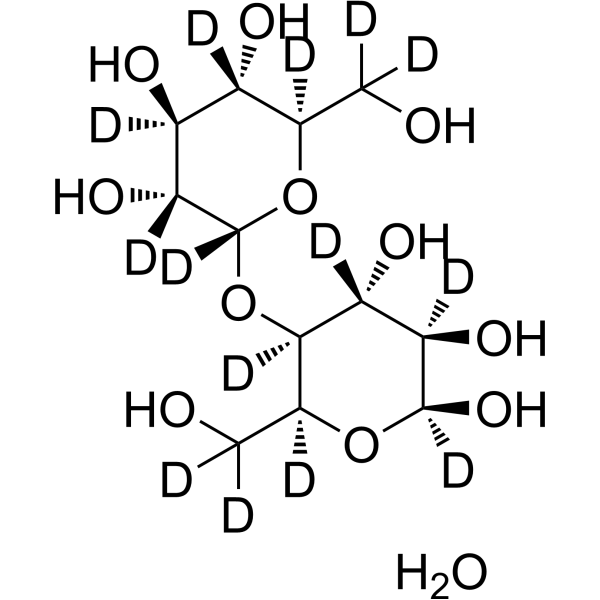
Maltose monohydrate-d14 is the deuterium labeled Maltose monohydrate. Maltose monohydrate is a disaccharide composed of two glucose molecules linked together. Maltose monohydrate is an endogenous metabolic product in plants, yeast, or bacteria, and it participates in carbon source storage and metabolism. Maltose monohydrate is a key core metabolite and main transport form in the temporary starch degradation, carbon output, and subsequent sucrose synthesis metabolism of the night chloroplast. In X. dendrorhous, maltose can act as a sugar donor and is converted into isomaltulose by α-glucosidase. Maltose monohydrate can act as a osmotic agent, supporting continuous capillary ultrafiltration and preventing severe metabolic disorders.
loading...
    loading...
Cat. No.: HY-N2024B
CAS No.: 69-79-4
Maltose solution, 20% in H2O is a 20% aqueous maltose solution. Maltose is a disaccharide composed of two glucose molecules linked together. Maltose is an endogenous metabolic product in plants, yeast, or bacteria, and it participates in carbon source storage and metabolism. Maltose is a key core metabolite and main transport form in the temporary starch degradation, carbon output, and subsequent sucrose synthesis metabolism of the night chloroplast. In X. dendrorhous, maltose can act as a sugar donor and is converted into isomaltulose by α-glucosidase. Maltose can act as a osmotic agent, supporting continuous capillary ultrafiltration and preventing severe metabolic disorders .
loading...
    loading...
Cat. No.: HY-127160
CAS No.: 19379-90-9
Purity:  99.73%
Research Areas:  

Infection

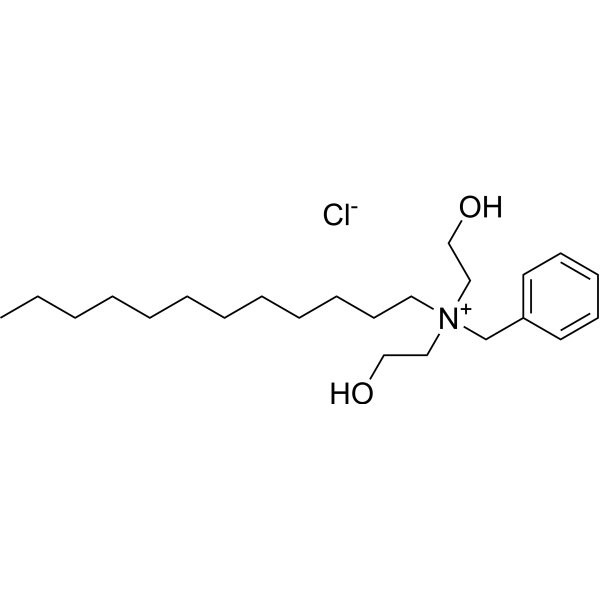
Benzoxonium chloride is an anti-leishmanial agent. Benzoxonium chloride inhibits bacteria, certain protozoa, yeasts and non-spore forming organisms .
loading...
    loading...
Cat. No.: HY-161103
CAS No.: 6247-64-9
Target:  

Endogenous Metabolite

Research Areas:  

Cancer

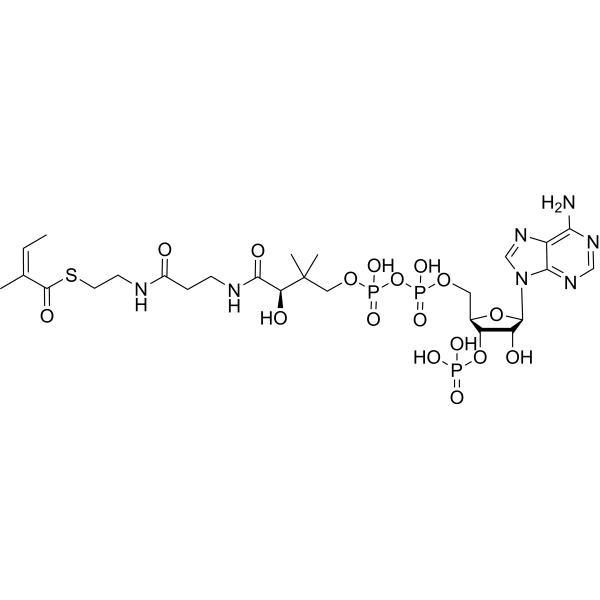
Angeloyl-CoA is a CoA-activated form of angelic acid and has anticancer activity. Angeloyl-CoA can be produced based on yeast .
loading...
    loading...
Cat. No.: HY-N11772
CAS No.: 875455-92-8
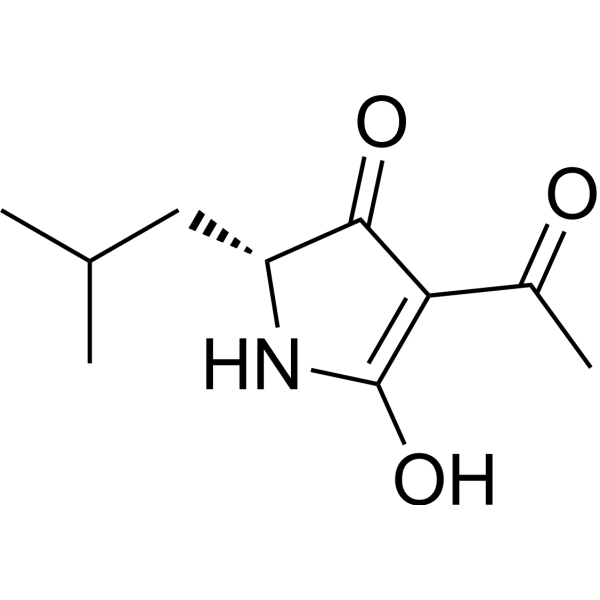
Mutanocyclin is a potent antifungal agent. Mutanocyclin inhibits Candida albicans (C. albicans) filamentation. Mutanocyclin decreases the mRNA expression of HWP1, ECE1, FLO8, TEC1. Mutanocyclin inhibits yeast-form in ex vivo mouse .
loading...
    loading...
Cat. No.: HY-N2024AR
CAS No.: 6363-53-7
Maltose monohydrate (Standard) is the analytical standard of Maltose monohydrate. This product is intended for research and analytical applications. Maltose monohydrate is a disaccharide composed of two glucose molecules linked together. Maltose monohydrate is an endogenous metabolic product in plants, yeast, or bacteria, and it participates in carbon source storage and metabolism. Maltose monohydrate is a key core metabolite and main transport form in the temporary starch degradation, carbon output, and subsequent sucrose synthesis metabolism of the night chloroplast. In X. dendrorhous, maltose can act as a sugar donor and is converted into isomaltulose by α-glucosidase. Maltose monohydrate can act as a osmotic agent, supporting continuous capillary ultrafiltration and preventing severe metabolic disorders.
loading...
    loading...
Cat. No.: HY-17525
CAS No.: 163269-30-5
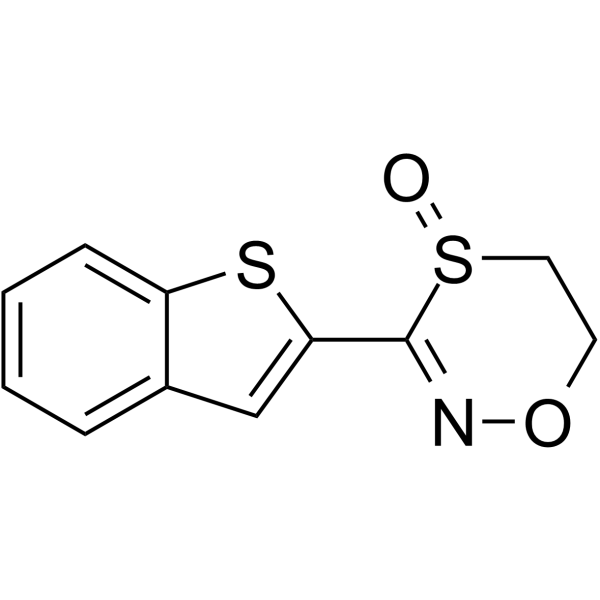
Bethoxazin is a yeast DNA topoisomerase II inhibitor with an IC50 of 5.3 μM, and also a broad-spectrum industrial microbicide and covalent adduct-forming agent. Bethoxazin inhibits the catalytic activity of yeast DNA topoisomerase II by reacting with the key free cysteine thiol group on the enzyme. Bethoxazin forms covalent adducts with molecules containing free thiol groups. Bethoxazin inhibits the growth of yeast cells. Bethoxazin can be used in studies related to the growth of fungi, molds and algae .
loading...
    loading...

