



Secukinumab
Based on 13 publication(s) in Google Scholar
Secukinumab (AIN457) is a high affinity, human monoclonal antibody targeted against interleukin (IL)-17A. Secukinumab is the first-in-class anti-IL-17 agent used for the research of plaque psoriasis, ankylosing spondylitis and psoriatic arthritis.
For research use only. We do not sell to patients.
- Purity : 98.9%
- CAS No.: 1229022-83-6
- Molecular Weight:147.82 kDa
-
Storage:
Please store the product under the recommended conditions in the Certificate of Analysis.


To place orders, for customer services and technical support, please contact: MedChemExpress USA
Tel: 609-228-6898 E-mail: [email protected] [email protected]


-
 Biological Activity
-
Chemical Information
- Protocols
- Purity & Documentation
- References
-
 Help & FAQs


-

HY-P9925
BrodalumabAnti-IL-17R mAb -

HY-P9924
IxekizumabIL-17A Antagonist -

HY-P9926
DupilumabIL-4Rα Inhibitor -

HY-P9956
SiltuximabAnti-IL-6 mAb -

HY-P9917
TocilizumabIL-6R Neutralizing Antibody -

HY-P9909
Ustekinumab -

HY-P99280
BimekizumabAnti-IL17A/IL17F Antibody -

HY-108810
CanakinumabAnti-IL-1β Monoclonal Antibody -

HY-P9908
AdalimumabTNF-α Inhibitor -

HY-P99397
SonelokimabAnti-IL-17A/F Antibody -

HY-P99187
BococizumabAnti-human PCSK9 Antibody -

HY-P9945
MepolizumabIL-5 Inhibitor
Publications Citing Use of MedChemExpress (MCE) Secukinumab
More- Cell. 2024 Aug 8;187(16):4305-4317.e18. [Abstract]
- Cell Mol Immunol. 2026 May;23(5):491-504. [Abstract]
- Nat Commun. 2025 Jul 22;16(1):6753. [Abstract]
- Cell Death Discov. 2026 Jul 7.
- Int J Biol Macromol. 2026 May 8:152476. [Abstract]
- J Invest Dermatol. 2025 Nov 4:S0022-202X(25)03517-1. [Abstract]
- Int Immunopharmacol. 2024 Oct 16;143(Pt 2):113399. [Abstract]
- Toxics. 2025 Apr 9;13(4):287. [Abstract]
- Eur J Med Res. 2025 Nov 26;30(1):1187. [Abstract]
- Cell Signal. 2025 Jul:131:111706. [Abstract]
- Clin Cosmet Investig Dermatol. 2025 Dec 25:18:3589-3603. [Abstract]
- Biochem Biophys Res Commun. 2025 Jul 12:770:152031. [Abstract]
- SSRN. 2026 Jun 21.
 Customer Validation & Images

-
Cell Proliferation/Viability Assay
-
RT-PCR
-
Histological Imaging/Staining
-
Cell Proliferation/Viability Assay
-
Cell Imaging/Staining


Biological Activity
Description
Isotype
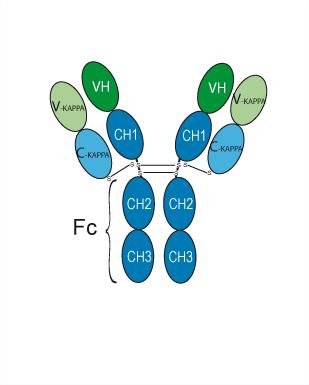
Human IgG1 kappa
Recommend Isotype Controls
Species Reactivity
Human
IC50 & Target
[1]|
IL-17A |
In Vitro
Secukinumab is a fully human monoclonal antibody that selectively binds to and neutralizes interleukin-17A[2].
Secukinumab (1 nM, 10 nM, and 100 nM) inhibits IL17A and IL17A/TNF a-induced increase in protein levels of IL6 in human astrocytes[3].
MedChemExpress (MCE) has not independently confirmed the accuracy of these methods. They are for reference only. Further protocols information, click here.
Clinical Trial
| NCT Number | Sponsor | Condition | Start Date |
Phase

|
|---|---|---|---|---|
| NCT01329991 | Plexxikon| | 2011-05 | PHASE1 |
Gene ID
Accession
Conjugated
Unconjugated
Reconsititution
The product can be reconstituted/diluted with sterile PBS or saline.
Format
-
Human IgG1 kappa
Application
ELISA, FACS, Functional assay
Verified Bioactivity
-
 Immobilized IL-17A Protein, Human (HEK293, His, HY-P70527) can bind Secukinumab. The EC50 for this effect is 16.2 ng/mL.
 -
 Flow cytometric analysis of 1X10⁶ Jurkat cells with Secukinumab (HY-P9927, red). Cells were fixed with 4% paraformaldehyde and permeabilised with 90% methanol. Then stained with the primary antibody at 1/200 dilution for an hour at 4℃. Alexa Fluor 488-conjugated AffiniPure Goat Anti-Human IgG H&L (HY-P83776) was used as the secondary antibody at 1/1,000 dilution for 30 minutes at 4℃. Human IgG1 kappa Isotype Control (HY-P99001, blue) was used as the isotype control, cells without incubation with primary antibody were used as the unlabeled control (black).


Chemical Information
-
CAS No. 1229022-83-6
-
Appearance Liquid
-
Molecular Weight 147.82 kDa
-
Color Colorless to light yellow
-
SMILES
[Secukinumab]
-
Synonyms
AIN457
-
Formulation
Please refer to the lot-specific COA for specific buffer information.
-
Storage
Please store the product under the recommended conditions in the Certificate of Analysis.


Publications (13)
-
Journal Impact Factor
-
Most Recent
-
Cell
2024 Aug 8;187(16):4305-4317.e18. PMID: 38936360 -
Cell Mol Immunol
MAIT cell plasticity generates CD4+ MAIT cells that promote HCC progression via metabolic crosstalk with tumor cells. [Abstract]2026 May;23(5):491-504. PMID: 41974917 -
Nat Commun
Transdifferentiation of tongue muscle cells into cancer-associated fibroblasts in response to tongue squamous cell carcinoma. [Abstract]2025 Jul 22;16(1):6753. PMID: 40695868
Secukinumab purchased from MedChemExpress. Usage Cited in: Nat Commun. 2025 Jul 22;16(1):6753. [Abstract]
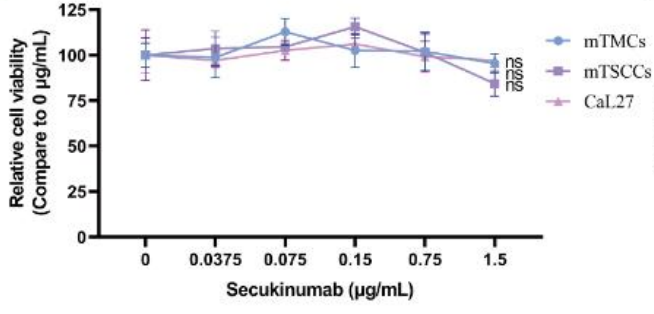
The growth curve showed Secukinumab (IL-17a inhibitor, 0.0375-1.5 μg/mL; 48 h) had no impact on mouse tongue muscle cells (mTMCs), mouse tongue squamous cell carcinoma (mTSCC) cells and CaL27 cells proliferation.
Secukinumab purchased from MedChemExpress. Usage Cited in: Nat Commun. 2025 Jul 22;16(1):6753. [Abstract]
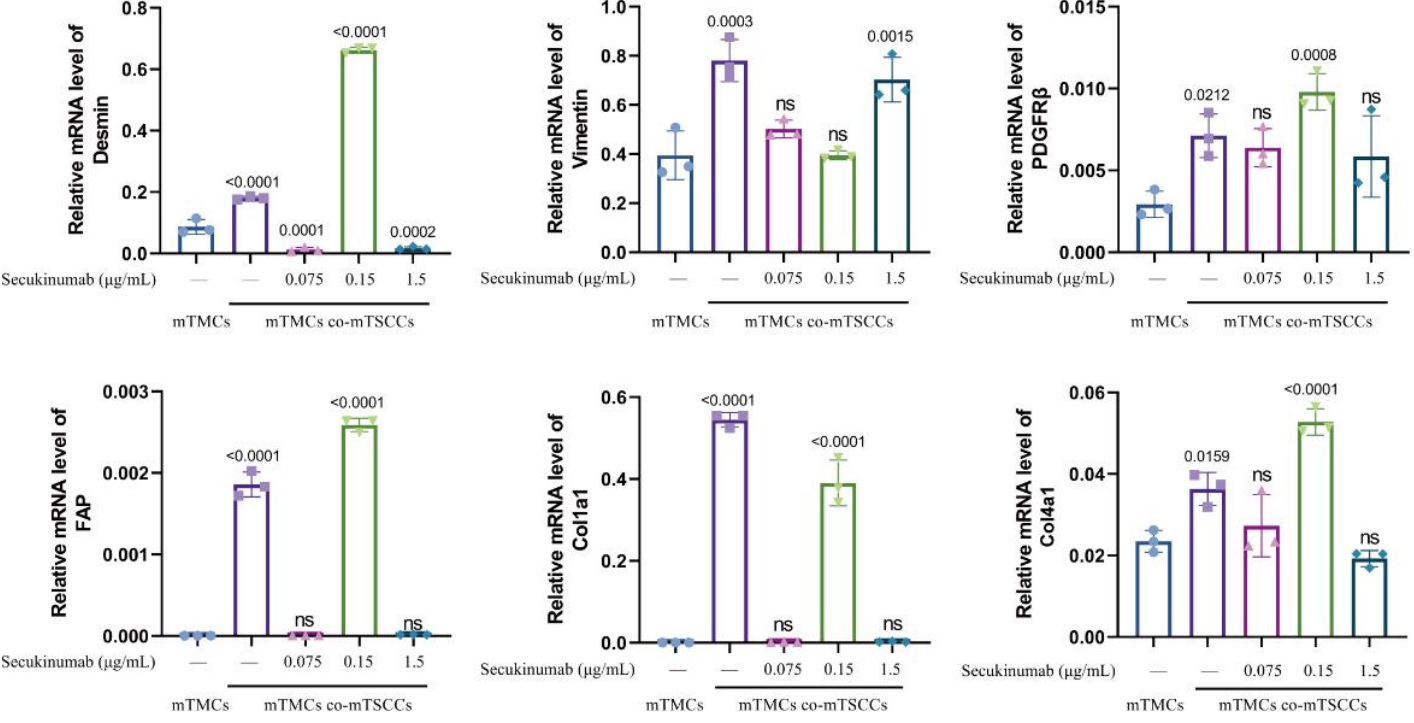
Detecting the mRNA level of Desmin for skeletal marker, Col1a1, PDGFRβ, Vimentin and fibroblast activated protein (FAP) for CAFs marker by qRT-PCR to determine the optimal concentration of Secukinumab (0.075-1.5 μg/mL; 48 h) treated.
Secukinumab purchased from MedChemExpress. Usage Cited in: Nat Commun. 2025 Jul 22;16(1):6753. [Abstract]
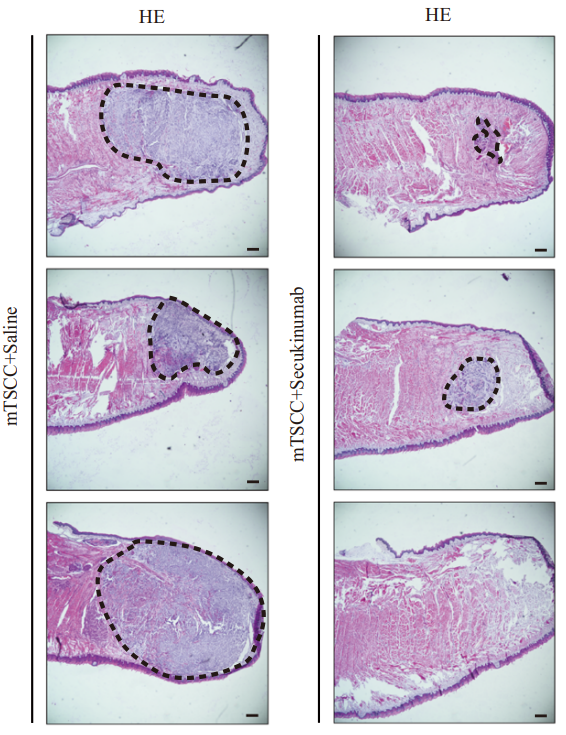
Representative H&E staining displayed the tumor size in saline-treated TSCC (n = 3 mice/group) and Secukinumab (10 mg/kg; i.p.; once weekly for 5 weeks)-treated TSCC (n = 3 mice/group, left panel). The tumor boundary is marked by black dashed lines. Scale bar = 100 μm. The results showed that Secukinumab significantly impeded tumor growth, resulting in markedly smaller tumor volumes.
-
-
Int J Biol Macromol
Hemin activates interleukin-17 signaling and CCAAT/enhancer-binding protein beta to promote neuroinflammation and blood-brain barrier disruption. [Abstract]2026 May 8:152476. PMID: 42107562 -
J Invest Dermatol
MRGPRX2-Mediated Mast Cell Activation Promotes Malignant Progression of Cutaneous Squamous Cell Carcinoma through IL-17A Release. [Abstract]2025 Nov 4:S0022-202X(25)03517-1. PMID: 41197765 -
Int Immunopharmacol
CARD9 promotes cholangiocarcinoma by regulating the IL-17A/Hedgehog and the THEM4/AKT/mTOR signaling pathways. [Abstract]2024 Oct 16;143(Pt 2):113399. PMID: 39418733 -
Toxics
Mechanistic Studies on the Role of IL-17/NLRP3 in Arsenic-Induced Activation of Hepatic Stellate Cells Through Hepatocyte Proptosis. [Abstract]2025 Apr 9;13(4):287. PMID: 40278603 -
Eur J Med Res
Polyethylene glycol loxenatide reduces NETosis and immunofluorescence hyperactivation in Behçet's disease. [Abstract]2025 Nov 26;30(1):1187. PMID: 41299760 -
Cell Signal
Paeoniflorin-6'-O-benzene sulfonate inhibits keratinocyte proliferation by restoring GRK2-JAK1 colocalization in mouse model of psoriasis. [Abstract]2025 Jul:131:111706. PMID: 40037425 -
Clin Cosmet Investig Dermatol
Exploration of Targets Potentially Linked to IL-17A Inhibitor Response in Psoriasis Using Machine Learning. [Abstract]2025 Dec 25:18:3589-3603. PMID: 41473417 -
Biochem Biophys Res Commun
KIF20A promotes triple-negative breast cancer progression via activation of the IL-17 signaling pathway. [Abstract]2025 Jul 12:770:152031. PMID: 40393105
Secukinumab purchased from MedChemExpress. Usage Cited in: Biochem Biophys Res Commun. 2025 Jul 12:770:152031. [Abstract]
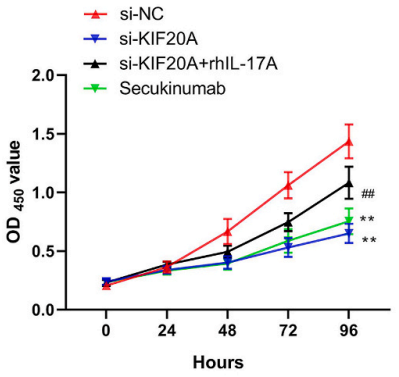
CCK-8 assay for cell viability in MDA-MB-231 cells treated with si-NC, si-KIF20A, si-KIF20A + rhIL-17A (100 μg/L), or Secukinumab (10 μg/mL). RhIL-17A treatment rescued cell viability in si-KIF20A cells, while Secukinumab alone significantly reduced viability compared to si-NC.
Secukinumab purchased from MedChemExpress. Usage Cited in: Biochem Biophys Res Commun. 2025 Jul 12:770:152031. [Abstract]
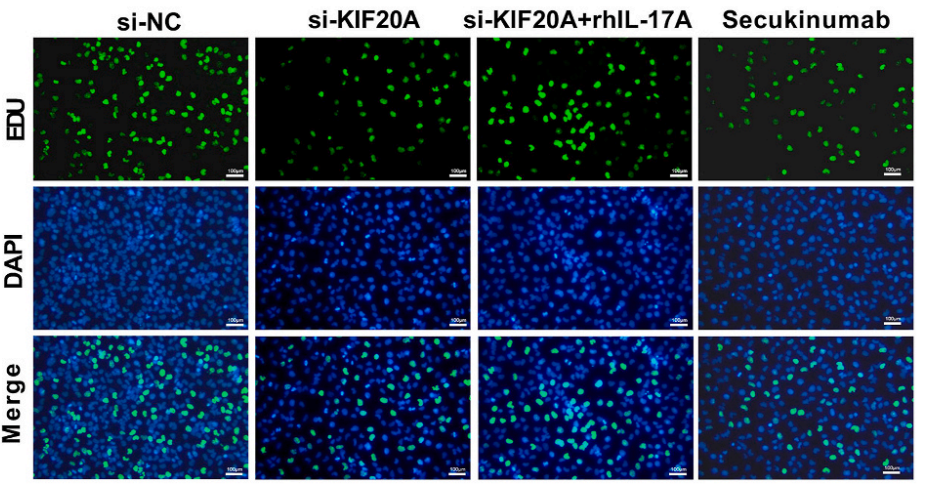
The proliferation level of MDA-MB-231 cells was determined by the Edu staining assay (scale bars = 100 μm). RhIL-17A restored EdU-positive cell numbers in si-KIF20A cells, whereas Secukinumab (10 μg/mL; 24 h) decreased proliferation.
Secukinumab purchased from MedChemExpress. Usage Cited in: Biochem Biophys Res Commun. 2025 Jul 12:770:152031. [Abstract]
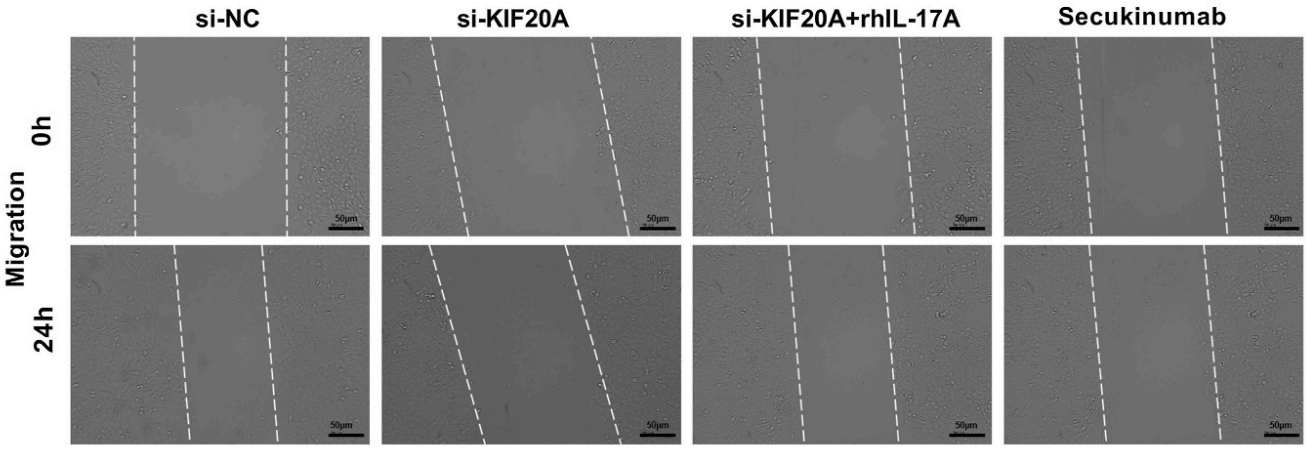
The migration of MDA-MB-231 cells was detected by wound healing assay (scale bars = 50 μm). si-KIF20A + rhIL-17A exhibited increased wound closure compared to si-KIF20A, while Secukinumab (10 μg/mL; 24 h)-treated cells showed reduced migration.
Secukinumab purchased from MedChemExpress. Usage Cited in: Biochem Biophys Res Commun. 2025 Jul 12:770:152031. [Abstract]
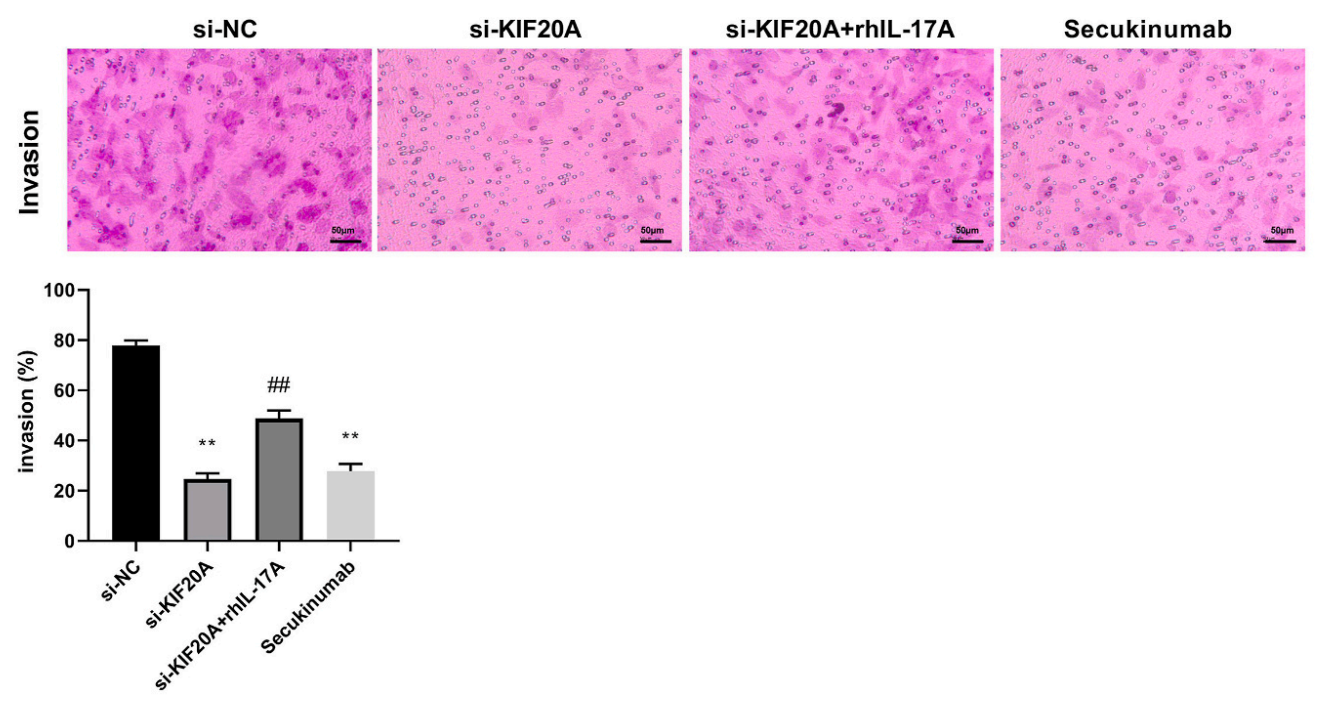
Transwell invasion assay (scale bars = 50 μm). RhIL-17A reversed the si-KIF20A-mediated reduction in invasive cells, and Secukinumab (10 μg/mL; 24 h) alone suppressed invasion similarly to si-KIF20A.
-

Protocols
-
Collagen-Induced Arthritis
Collagen-induced arthritis (CIA) is an autoimmune murine model of rheumatoid arthritis in which immunization with type II collagen (CII) emulsified in an adjuvant induces a T cell- and autoantibody-driven inflammatory arthritis characterized by synovial hyperplasia, immune cell infiltration, and joint destruction. The model typically relies on genetically susceptible mouse strains (e. g. , DBA/1) and reproduces key features of human rheumatoid arthritis, including anti-collagen immune responses and progressive joint inflammation. Disease onset generally occurs within ~3-4 weeks after immunization, depending on antigen/adjuvant combinations and protocol variation. The immunopathology is driven by adaptive immune activation against CII, leading to systemic and local joint inflammation mediated by pro-inflammatory cytokines and effector immune cells, making CIA a standard preclinical platform for evaluating immunomodulatory and anti-arthritic interventions.
-
Imiquimod-Induced Psoriasiform Dermatitis
Imiquimod (IMQ)-induced psoriasiform dermatitis is a widely used murine model in which topical application of IMQ, a Toll-like receptor 7 (TLR7) agonist, triggers innate immune activation in the skin and induces a psoriasis-like inflammatory cascade characterized by epidermal hyperplasia, immune cell infiltration, and cytokine production dominated by the IL-23/IL-17 axis. This inflammatory response is mediated through activation of dendritic cells and downstream induction of IL-23, IL-17A, IL-22, and related pro-inflammatory mediators, recapitulating key features of human plaque psoriasis and enabling mechanistic and therapeutic studies. The model is commonly induced using Aldara (5% IMQ cream) applied topically to murine skin, resulting in rapid onset of erythema, scaling, and thickening that can be quantified as disease severity indices and validated histologically.


Purity & Documentation
-
Data Sheet (260 KB)
-
SDS (251 KB)
- English - EN (251 KB)
- Français - FR (251 KB)
- Deutsch - DE (251 KB)
- Norwegian - NO (251 KB)
- Español - ES (251 KB)
- Swedish - SV (251 KB)
- Italian - IT (251 KB)
- Korean - KR (251 KB)
- Portuguese - PT (251 KB)
-
Inhibitory Antibodies User Guide (603 KB)
References
[1]. Shirley M, et al. Secukinumab: A Review in Psoriatic Arthritis. Drugs. 2016;76(11):1135-1145. [Content Brief]
[2]. Reich K, et al. Secukinumab dosing optimization in patients with moderate-to-severe plaque psoriasis: results from the randomized, open-label OPTIMISE study. Br J Dermatol. 2020;182(2):304-315. [Content Brief]
[3]. Elain G, et al. The selective anti-IL17A monoclonal antibody secukinumab (AIN457) attenuates IL17A-induced levels of IL6 in human astrocytes. Glia. 2014;62(5):725-735. [Content Brief]

Calculators
Concentration (start) × Volume (start) = Concentration (final) × Volume (final)


Secukinumab Related Classifications
HY-P9927 Related Classifications
 Powered by Bioz