



Sodium chloride, United States Pharmacopeia (USP) Reference Standard
Based on 3 publication(s) in Google Scholar
Sodium chloride, United States Pharmacopeia (USP) Reference Standard is an orally active salt. Sodium chloride, United States Pharmacopeia (USP) Reference Standard induces the expression of ATP1A1. Sodium chloride, for cell culture induces the pro-inflammatory cytokines IL-2, TNFα, IL-9 and several chemokines. Sodium chloride, United States Pharmacopeia (USP) Reference Standard enhances the anti-tumor activities of Digoxin (HY-B1049) against small cell lung cancer. Sodium chloride, United States Pharmacopeia (USP) Reference Standard drives autoimmune disease by the induction of pathogenic Th17 cells.
For research use only. We do not sell to patients.
- CAS No.: 7647-14-5
- Formula: ClNa
- Molecular Weight:58.44
-
Storage:
Please store the product under the recommended conditions in the Certificate of Analysis.


To place orders, for customer services and technical support, please contact: MedChemExpress USA
Tel: 609-228-6898 E-mail: [email protected] [email protected]


-
 Biological Activity
-
Chemical Information
- Protocols
- Purity & Documentation
- References
-
 Help & FAQs


-

HY-Y0344D
Sodium chloride, for cell cultureBiochemical Assay Reagent -

HY-Y0344I
Sodium chloride, meets analytical specification of Ph. Eur. BP USP, ≤0.00002% AlBiochemical Reagent -

HY-Y0344J
Sodium chloride, for molecular biologyInorganic Salt -
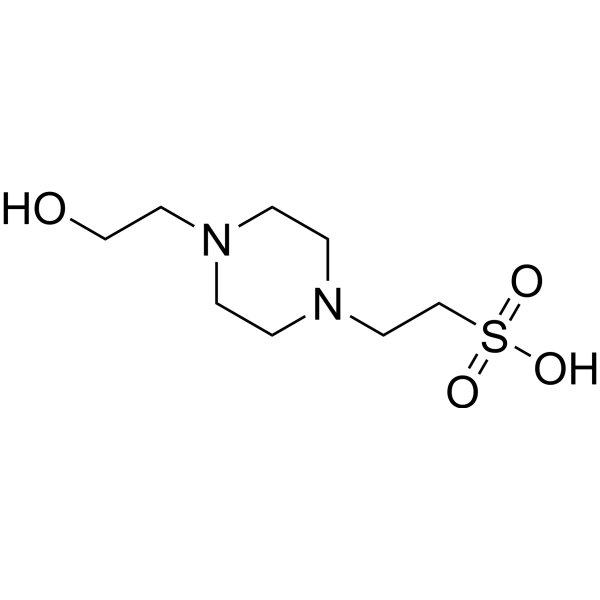
HY-D0857
HEPESZwitterionic Buffer -

HY-Y0537
Potassium chloride, AR, 99.5%Potassium Supplement -

HY-Y0537E
Potassium chloride, for cell cultureInorganic Salt -
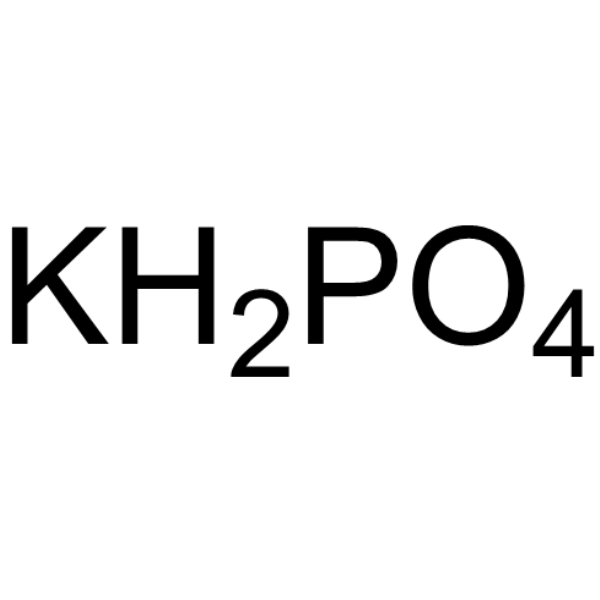
HY-Y0332B
Potassium dihydrogen phosphate, AR,99.5%Cell Culture Reagent -
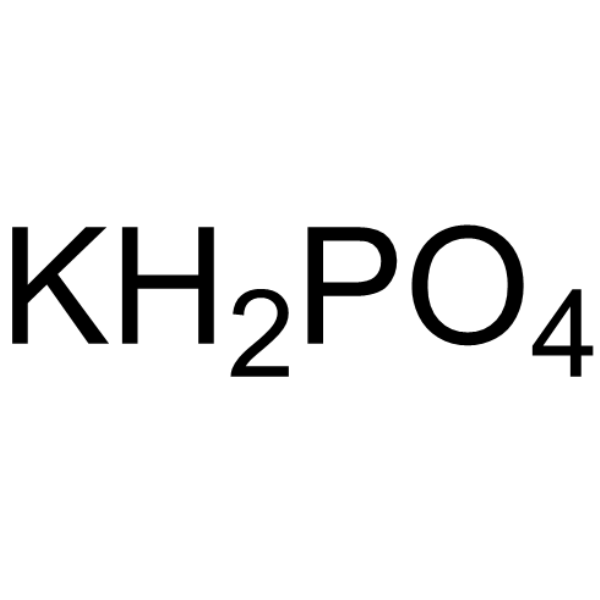
HY-Y0332K
Potassium dihydrogen phosphate, for cell cultureCell Culture Reagent -

HY-Y0537B
Potassium chloride, for molecular biologyPotassium Chloride -

HY-Y0537C
Potassium chloride, ≥99.99% trace metals basisPotassium chloride -
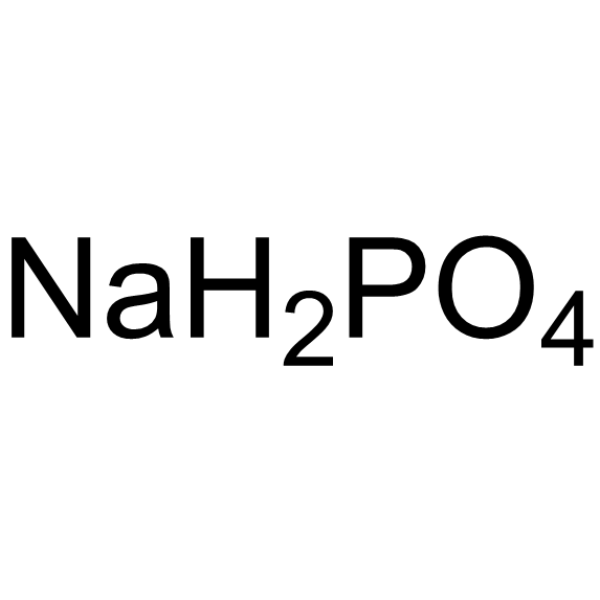
HY-B2243D
Anhydrous sodium dihydrogen phosphate, for cell cultureAnhydrous sodium dihydrogen phosphate, Cell level
Publications Citing Use of MedChemExpress (MCE) Sodium chloride, United States Pharmacopeia (USP) Reference Standard
More

Biological Activity
Description
|
IL-2 |
IL-9 |
In Vitro
Sodium chloride (10-70 mM; 72 h) enhances the anti-tumor activity of Digoxin (HY-B1049) in SCLC cell lines[1].
Sodium chloride (40 mM) specifically promote the generation of a highly pathogenic Th17 cell type[2].
MedChemExpress (MCE) has not independently confirmed the accuracy of these methods. They are for reference only. Further protocols information, click here.
In Vivo
Sodium chloride (1%-4%; p.o.; chow containing 4% NaCl and tap water containing 1% NaCl) induces Th17 cells and exacerbates experimental autoimmune encephalomyelitis in mice[2].
MedChemExpress (MCE) has not independently confirmed the accuracy of these methods. They are for reference only.
-
Animal Model:Small cell lung cancer mice[1]
-
Dosage:3%
-
Administration:p.o. and i.v.; given by drinking water for 6 h before treatment and i.v. with 200 μL 3% NaCl
-
Result:Did not induce significant tumor growth inhibition.
Reduced tumor volume when combination with Digoxin.


Chemical Information
-
CAS No. 7647-14-5
-
Molecular Weight 58.44
-
Formula ClNa
-
SMILES
[Na]Cl
-
Synonyms
Halite (Pharmaceutical primary standard, USP)
-
Shipping
Room temperature in continental US; may vary elsewhere.
-
Storage
Please store the product under the recommended conditions in the Certificate of Analysis.


Publications (3)
-
Journal Impact Factor
-
Most Recent
-
Nat Microbiol
ATG5 suppresses type I IFN-dependent neutrophil effector functions during Mycobacterium tuberculosis infection in mice. [Abstract]2025 Jun;10(6):1323-1339. PMID: 40374743 -
-
Biochem Pharmacol
The C-terminal region regulates the constitutive signaling activity of GPR119: G protein recruitment. [Abstract]2025 Nov:241:117095. PMID: 40617490

Protocols
-
RNA extraction experimental
By lysing cells, releasing RNA, and removing impurities such as proteins and DNA, high-purity RNA products are finally obtained. The commonly used traditional method is the guanidine isothiocyanate/phenol/chloroform method (Trizol), which is suitable for a variety of animal materials including animal tissues, microorganisms, cultured cells, etc., and most plant materials.
-
LPS-Induced Endotoxemia/Systemic Inflammation
Lipopolysaccharide (LPS)-induced endotoxemia is a widely used in vivo model of acute systemic inflammation in which LPS, a Gram-negative bacterial endotoxin, activates innate immune signaling primarily through TLR4, leading to rapid and transient induction of pro-inflammatory cytokines such as TNF-α, IL-6, and IL-1β in circulation and tissues. This cytokine surge is commonly used as a measurable readout of systemic inflammatory activation and immune dysregulation, and is typically assessed within hours after intraperitoneal LPS administration in mouse models of endotoxemia. The model captures key features of systemic inflammatory response syndrome, including cytokine release, immune cell activation, and downstream tissue responses, and has been used to evaluate anti-inflammatory interventions such as cytokine modulation, lipid mediators, and immune cell-targeting therapies.
-
Naïve CD4+ T-cell subset differentiation/polarization
Naïve CD4+ T-cell subset differentiation/polarization is an in vitro assay in which purified naïve CD4+ T cells are activated through TCR and CD28 costimulation and cultured with defined cytokines and neutralizing antibodies to generate Th0, Th1, Th2, Th17, or induced Treg-like populations. Differentiation is detected by subset-associated cytokines and transcription factors: IFN-γ/T-bet for Th1, IL-4/GATA3 for Th2, IL-17A/RORγt for Th17, and Foxp3 for induced Treg cells. The assay readout is usually generated by intracellular cytokine staining after restimulation, transcription-factor staining by flow cytometry, ELISA of secreted cytokines, or gene-expression analysis. The result reflects cytokine-directed lineage commitment or polarization rather than antigen-specific immune protection by itself.
-
Research Protocol for Inflammation-related Diseases
The NLRP3 inflammasome is a cytosolic innate immune signaling platform that integrates priming signals and danger-signal activation to promote caspase-1 activation, maturation of IL-1β and IL-18, and gasdermin D-mediated pyroptotic cell death. The core experimental logic is to determine whether inflammatory disease phenotypes are driven by increased NLRP3 expression, ASC-containing inflammasome assembly, caspase-1 cleavage, GSDMD cleavage, and extracellular release of IL-1β/IL-18 rather than by nonspecific cell injury alone. The pathway is strongly linked to inflammation-related disease phenotypes because monosodium urate crystals activate NALP3/NLRP3 inflammasome signaling in gout-like crystal inflammation, cholesterol crystals activate NLRP3 inflammasomes in atherogenesis models, and DSS-induced intestinal inflammation has been reported to involve NLRP3 inflammasome activity. However, experimental colitis studies also show context-dependent protective effects of NLRP3 inflammasome co


Purity & Documentation
-
Data Sheet (276 KB)
-
SDS (252 KB)
- Français - FR (252 KB)
- Deutsch - DE (252 KB)
- Norwegian - NO (252 KB)
- Español - ES (252 KB)
- Swedish - SV (252 KB)
- Italian - IT (252 KB)
- Korean - KR (252 KB)
- Portuguese - PT (252 KB)
-
Handling Instructions (2659 KB)
References
[1]. Deng K, et al. Sodium chloride (NaCl) potentiates digoxin-induced anti-tumor activity in small cell lung cancer. Cancer Biol Ther. 2019;20(1):52-64. [Content Brief]
[2]. Kleinewietfeld M, et al. Sodium chloride drives autoimmune disease by the induction of pathogenic TH17 cells. Nature. 2013 Apr 25;496(7446):518-22. [Content Brief]

Calculators
Concentration (start) × Volume (start) = Concentration (final) × Volume (final)


Sodium chloride, United States Pharmacopeia (USP) Reference Standard Related Classifications
HY-Y0344H Related Classifications
 Powered by Bioz