



SP-100030
Based on 1 publication(s) in Google Scholar
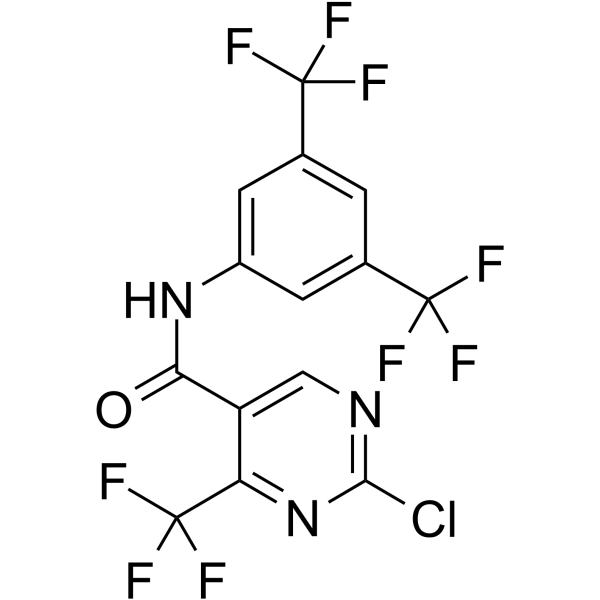
SP-100030 is a potent NF-κB and activator protein-1 (AP-1) double inhibitor (IC50s=50 and 50 nM, respectively). SP-100030 inhibits IL-2, IL-8, and TNF-alpha production in Jurkat and other T cell lines. SP-100030 decreases murine collagen-induced arthritis (CIA).
For research use only. We do not sell to patients.
- Purity : 99.57%
- CAS No.: 154563-54-9
- Formula: C14H5ClF9N3O
- Molecular Weight:437.65
-
Storage:Powder -20°C, 3 years , 4°C, 2 years ; In solvent -80°C, 6 months , -20°C, 1 month

To place orders, for customer services and technical support, please contact: MedChemExpress USA
Tel: 609-228-6898 E-mail: [email protected] [email protected]


-
 Biological Activity
-
Chemical Information
-
Solvent & Solubility
- Protocols
- Purity & Documentation
- References
-
 Help & FAQs


-
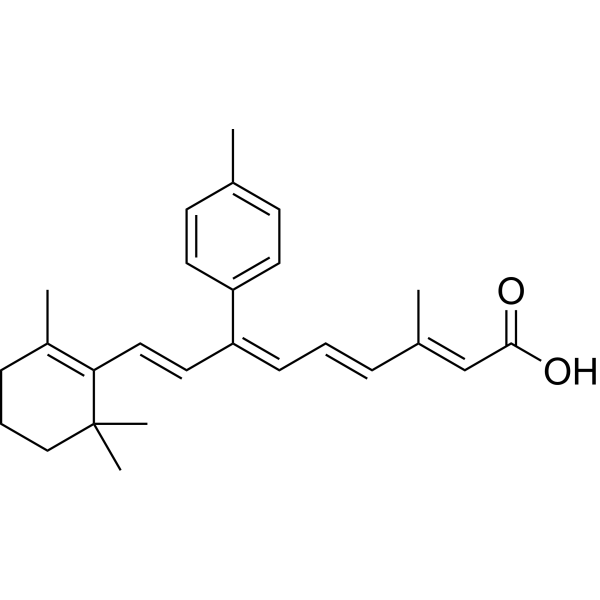
HY-15870
SR 11302AP-1 Inhibitor -
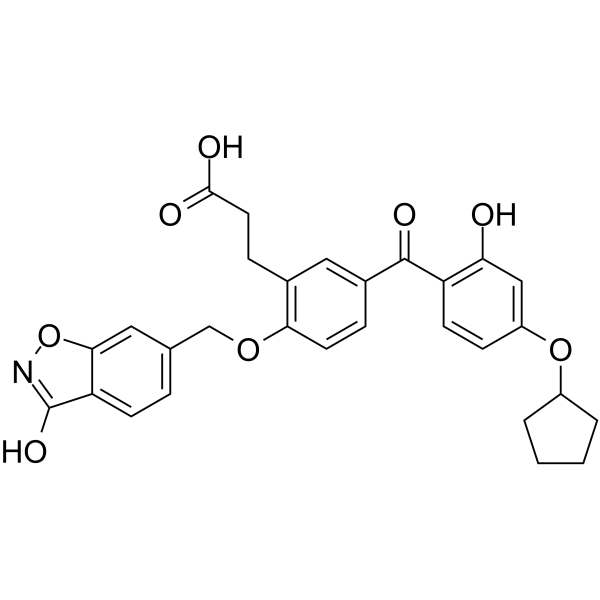
HY-12270
T-5224c-Fos/AP-1 Inhibitor -
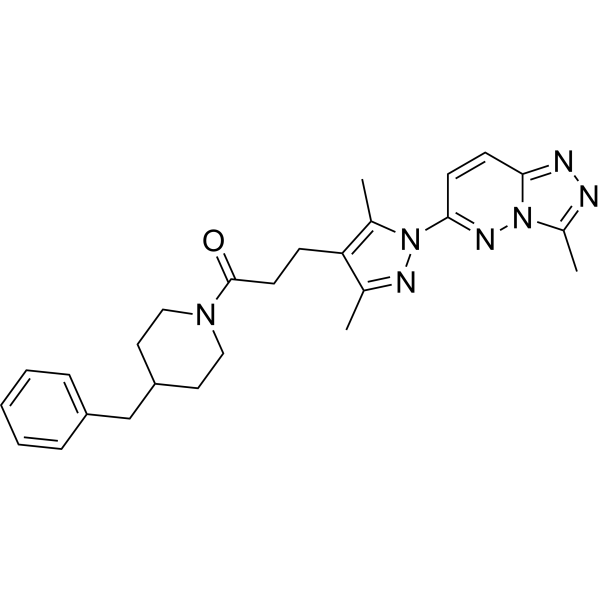
HY-120934
C25-140TRAF6-Ubc13 Inhibitor -
HY-N2065
Withaferin ANF-κB Inhibitor -
HY-10087
NavitoclaxBcl-2 Inhibitor -
HY-D1300
LysoTracker RedCell Death Indicator -
HY-134476
NF-κΒ activator 1NF-κB Activator -
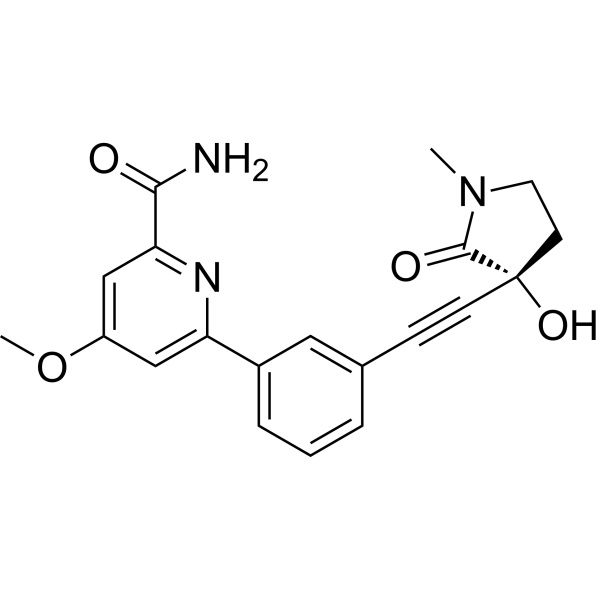
HY-112433
NIK SMI1NF-κB Inhibitor -
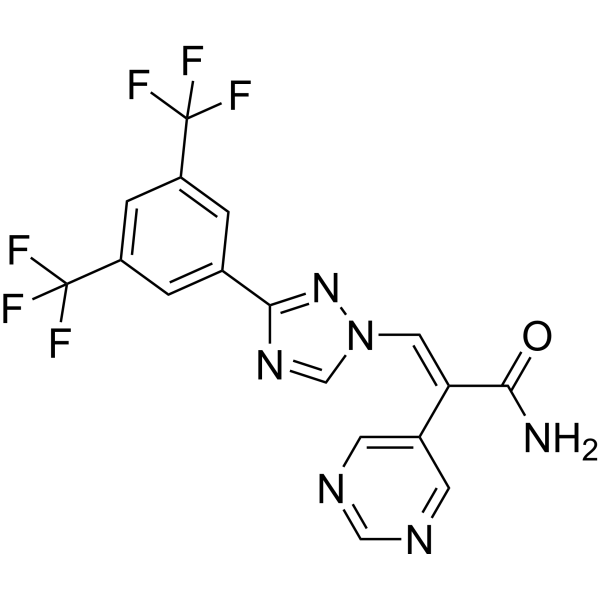
HY-100423
EltanexorXPO1 Inhibitor -
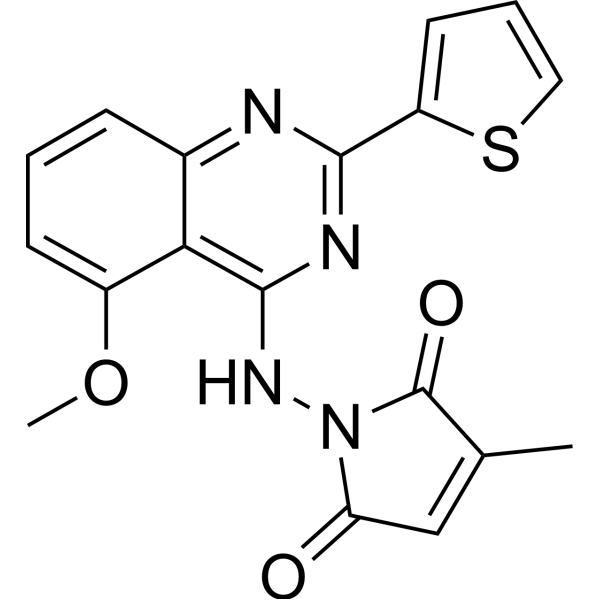
HY-10072
SPC 839AP-1/NF-κB Activation Inhibitor -
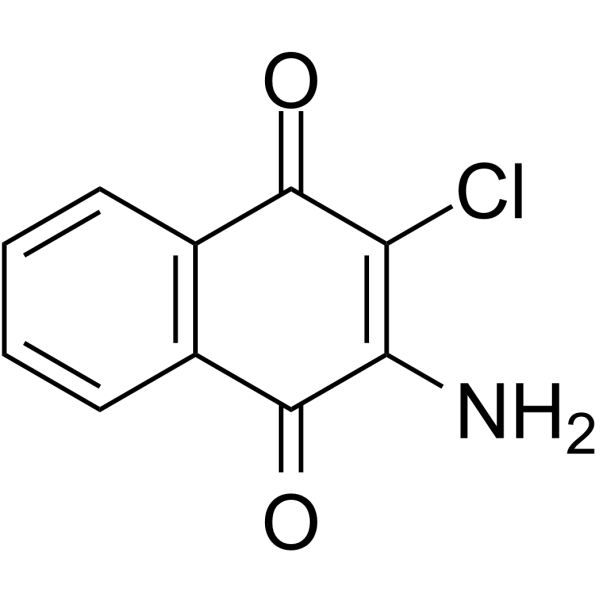
HY-121632
QuinoclamineNF-κB Inhibitor -
HY-134477
NF-κΒ activator 2NF- B Activator
Publications Citing Use of MedChemExpress (MCE) SP-100030
More

Biological Activity
Description
Cellular Effect
|
Cell Line

|
Type | Value | Description | References |
|---|---|---|---|---|
| Jurkat | EC50 |
550 nM
Compound: 6; SP100030
|
Cytotoxicity against human Jurkat cells incubated for 24 hrs by celltiter glo assay
Cytotoxicity against human Jurkat cells incubated for 24 hrs by celltiter glo assay
|
[PMID: 39005064] |
| Jurkat | IC50 |
0.05 μM
Compound: 1, SP100030
|
Inhibition of AP-1-mediated transcriptional activation in human Jurkat cells by luciferase reporter gene assay
Inhibition of AP-1-mediated transcriptional activation in human Jurkat cells by luciferase reporter gene assay
|
[PMID: 24831826] |
| Jurkat | IC50 |
0.05 μM
Compound: 1, SP100030
|
Inhibition of NF-kappaB-mediated transcriptional activation in human Jurkat cells by luciferase reporter gene assay
Inhibition of NF-kappaB-mediated transcriptional activation in human Jurkat cells by luciferase reporter gene assay
|
[PMID: 24831826] |
| Jurkat | IC50 |
0.05 μM
Compound: 1
|
Concentration required to inhibit activator protein-1(AP-1) mediated transcriptional activation in human Jurkat T-cells
Concentration required to inhibit activator protein-1(AP-1) mediated transcriptional activation in human Jurkat T-cells
|
[PMID: 11052805] |
| Jurkat | IC50 |
0.05 μM
Compound: 1
|
Concentration required to inhibit nuclear factor-kappa B) mediated transcriptional activation in human Jurkat T-cells.
Concentration required to inhibit nuclear factor-kappa B) mediated transcriptional activation in human Jurkat T-cells.
|
[PMID: 11052805] |
| Jurkat | IC50 |
0.05 μM
Compound: 28
|
In vitro inhibitory activity against human Jurkat T-Cells stably transfected with activating transcription factor 1
In vitro inhibitory activity against human Jurkat T-Cells stably transfected with activating transcription factor 1
|
[PMID: 9484492] |
| Jurkat | IC50 |
0.05 μM
Compound: 28
|
In vitro inhibitory activity against human Jurkat T-Cells stably transfected with an Nuclear factor kappa B transcription factor
In vitro inhibitory activity against human Jurkat T-Cells stably transfected with an Nuclear factor kappa B transcription factor
|
[PMID: 9484492] |
In Vitro
SP-100030 blocks the production of IL-2 and IL-8 in Jurkat T-cells at the same concentrations as seen in the luciferase assay (IC50≈30 nM)[1].
?
ELISA and RT-PCR confirmed that IL-2, IL-8, and TNF-alpha production by activated Jurkat and other T cell lines were inhibited by SP100030[2].
MedChemExpress (MCE) has not independently confirmed the accuracy of these methods. They are for reference only. Further protocols information, click here.
In Vivo
MedChemExpress (MCE) has not independently confirmed the accuracy of these methods. They are for reference only.
-
Animal Model:Six- to 8-wk-old male DBA/1J mice (immunized with type II collagen)[2]
-
Dosage:10 mg/kg
-
Administration:I.p.; daily, starting at day 21 to the end of the study on day 34
-
Result:Significantly decreased arthritis scores compared with controls; Histologic evaluation of the paws from mice treated from day 20 to 34 showed a trend toward decreased inflammation.


Chemical Information
-
CAS No. 154563-54-9
-
Appearance Solid
-
Molecular Weight 437.65
-
Formula C14H5ClF9N3O
-
Color Off-white to light yellow
-
SMILES
FC(F)(F)C1=CC(C(F)(F)F)=CC(NC(C2=CN=C(Cl)N=C2C(F)(F)F)=O)=C1
-
Shipping
Room temperature in continental US; may vary elsewhere.
-
Storage
Powder -20°C 3 years 4°C 2 years In solvent -80°C 6 months -20°C 1 month


Publications (1)
-
Journal Impact Factor
-
Most Recent
-
Sci Adv
Noncanonical role of Golgi-associated macrophage TAZ in chronic inflammation and tumorigenesis. [Abstract]2025 Jan 24;11(4):eadq2395. PMID: 39841821


Solvent & Solubility
In Vitro:
DMSO : 50 mg/mL (114.25 mM; Need ultrasonic; Hygroscopic DMSO has a significant impact on the solubility of product, please use newly opened DMSO)
Please refer to the solubility information to select the appropriate solvent. Once prepared, please aliquot and store the solution to prevent product inactivation from repeated freeze-thaw cycles.
Storage method and period of stock solution: -80°C, 6 months; -20°C, 1 month. When stored at -80°C, please use it within 6 months. When stored at -20°C, please use it within 1 month.
Please refer to the solubility information to select the appropriate solvent. Once prepared, please aliquot and store the solution to prevent product inactivation from repeated freeze-thaw cycles.
Storage method and period of stock solution: -80°C, 6 months; -20°C, 1 month. When stored at -80°C, please use it within 6 months. When stored at -20°C, please use it within 1 month.
Concentration (start) × Volume (start) = Concentration (final) × Volume (final)

Protocols
-
Collagen-Induced Arthritis
Collagen-induced arthritis (CIA) is an autoimmune murine model of rheumatoid arthritis in which immunization with type II collagen (CII) emulsified in an adjuvant induces a T cell- and autoantibody-driven inflammatory arthritis characterized by synovial hyperplasia, immune cell infiltration, and joint destruction. The model typically relies on genetically susceptible mouse strains (e. g. , DBA/1) and reproduces key features of human rheumatoid arthritis, including anti-collagen immune responses and progressive joint inflammation. Disease onset generally occurs within ~3-4 weeks after immunization, depending on antigen/adjuvant combinations and protocol variation. The immunopathology is driven by adaptive immune activation against CII, leading to systemic and local joint inflammation mediated by pro-inflammatory cytokines and effector immune cells, making CIA a standard preclinical platform for evaluating immunomodulatory and anti-arthritic interventions.
-
Research Protocol for Inflammation-related Diseases
The NLRP3 inflammasome is a cytosolic innate immune signaling platform that integrates priming signals and danger-signal activation to promote caspase-1 activation, maturation of IL-1β and IL-18, and gasdermin D-mediated pyroptotic cell death. The core experimental logic is to determine whether inflammatory disease phenotypes are driven by increased NLRP3 expression, ASC-containing inflammasome assembly, caspase-1 cleavage, GSDMD cleavage, and extracellular release of IL-1β/IL-18 rather than by nonspecific cell injury alone. The pathway is strongly linked to inflammation-related disease phenotypes because monosodium urate crystals activate NALP3/NLRP3 inflammasome signaling in gout-like crystal inflammation, cholesterol crystals activate NLRP3 inflammasomes in atherogenesis models, and DSS-induced intestinal inflammation has been reported to involve NLRP3 inflammasome activity. However, experimental colitis studies also show context-dependent protective effects of NLRP3 inflammasome co
-
Research Protocol for Cancer Immunology
Cancer immunology studies how the immune system recognizes, suppresses, edits, or fails to eliminate malignant cells through tumor antigen release, antigen presentation, T-cell priming, immune trafficking, tumor-cell killing, and feedback inhibition in the tumor microenvironment. The cancer-immunity cycle links tumor antigenicity, dendritic-cell priming, CD8+ T-cell infiltration, cytotoxic function, and immune-checkpoint regulation to tumor rejection or immune escape. Immune-checkpoint pathways such as PD-1/PD-L1 and CTLA-4 suppress antitumor T-cell activity and can be therapeutically blocked, but many tumors remain resistant because of poor antigen presentation, weak T-cell infiltration, suppressive myeloid cells, regulatory T cells, and tumor-intrinsic immune-exclusion programs. Unresolved questions include which immune-cell states predict response, how tumor-intrinsic pathways exclude immune cells, how myeloid suppression limits checkpoint blockade, and which combination strategies


Purity & Documentation
-
Data Sheet (276 KB)
-
SDS (252 KB)
- English - EN (252 KB)
- Français - FR (252 KB)
- Deutsch - DE (252 KB)
- Norwegian - NO (252 KB)
- Español - ES (252 KB)
- Swedish - SV (252 KB)
- Italian - IT (252 KB)
- Korean - KR (252 KB)
- Portuguese - PT (252 KB)
-
Handling Instructions (2659 KB)
References
[1]. Sullivan RW, et al. 2-Chloro-4-(trifluoromethyl)pyrimidine-5-N-(3',5'- bis(trifluoromethyl)phenyl)-carboxamide: a potent inhibitor of NF-kappa B- and AP-1-mediated gene expression identified using solution-phase combinatorial chemistry. J Med Chem. 1998;4 [Content Brief]
[2]. Gerlag DM, et al. The effect of a T cell-specific NF-kappa B inhibitor on in vitro cytokine production and collagen-induced arthritis. J Immunol. 2000;165(3):1652-1658. [Content Brief]


Complete Stock Solution Preparation Table
Please refer to the solubility information to select the appropriate solvent. Once prepared, please aliquot and store the solution to prevent product inactivation from repeated freeze-thaw cycles.
Storage method and period of stock solution: -80°C, 6 months; -20°C, 1 month. When stored at -80°C, please use it within 6 months. When stored at -20°C, please use it within 1 month.
| Optional Solvent | Concentration Solvent Mass | 1 mg | 5 mg | 10 mg | 25 mg |
|---|---|---|---|---|---|
| DMSO | 1 mM | 2.2849 mL | 11.4247 mL | 22.8493 mL | 57.1233 mL |
| 5 mM | 0.4570 mL | 2.2849 mL | 4.5699 mL | 11.4247 mL | |
| 10 mM | 0.2285 mL | 1.1425 mL | 2.2849 mL | 5.7123 mL | |
| 15 mM | 0.1523 mL | 0.7616 mL | 1.5233 mL | 3.8082 mL | |
| 20 mM | 0.1142 mL | 0.5712 mL | 1.1425 mL | 2.8562 mL | |
| 25 mM | 0.0914 mL | 0.4570 mL | 0.9140 mL | 2.2849 mL | |
| 30 mM | 0.0762 mL | 0.3808 mL | 0.7616 mL | 1.9041 mL | |
| 40 mM | 0.0571 mL | 0.2856 mL | 0.5712 mL | 1.4281 mL | |
| 50 mM | 0.0457 mL | 0.2285 mL | 0.4570 mL | 1.1425 mL | |
| 60 mM | 0.0381 mL | 0.1904 mL | 0.3808 mL | 0.9521 mL | |
| 80 mM | 0.0286 mL | 0.1428 mL | 0.2856 mL | 0.7140 mL | |
| 100 mM | 0.0228 mL | 0.1142 mL | 0.2285 mL | 0.5712 mL |


SP-100030 Related Classifications
HY-110177 Related Classifications
 Powered by Bioz