



Food Testing Standards
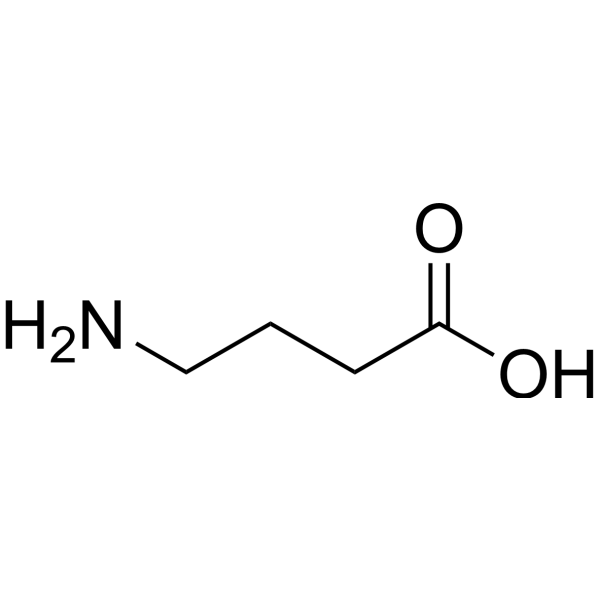
- Formula: C4H9NO2
- Molecular Weight: 103.12
γ-Aminobutyric acid (Standard) is the analytical standard of γ-Aminobutyric acid. This product is intended for research and analytical applications. γ-Aminobutyric acid (4-Aminobutyric acid) is a major inhibitory neurotransmitter in the adult mammalian brain, binding to the ionotropic GABA receptors (GABAA receptors) and metabotropic receptors (GABAB receptors. γ-Aminobutyric acid shows calming effect by blocking specific signals of central nervous system.
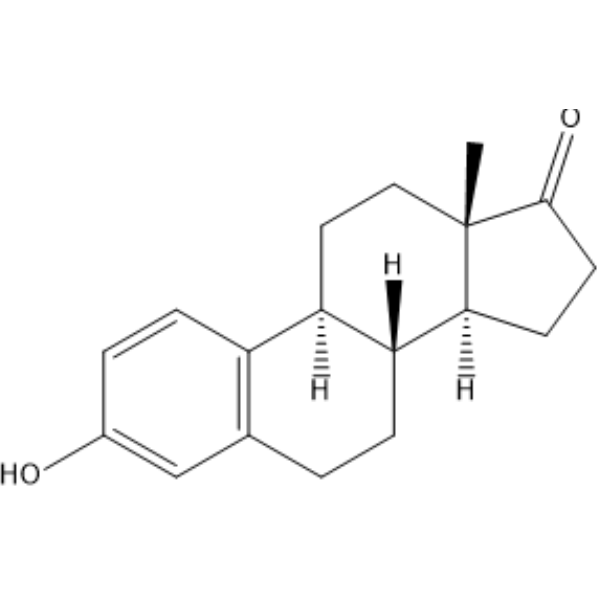
- Formula: C₁₈H₂₂O₂
- Molecular Weight: 270.37
Estrone (Standard) is the analytical standard of Estrone. This product is intended for research and analytical applications. Estrone (E1) is a natural estrogenic hormone. Estrone is the main representative of the endogenous estrogens and is produced by several tissues, especially adipose tissue. Estrone is the result of the process of aromatization of androstenedione that occurs in fat cells.

- Formula: C₆₃H₈₈CoN₁₄O₁₄P
- Molecular Weight: 1355.37
Vitamin B12 (Standard) is the analytical standard of Vitamin B12. This product is intended for research and analytical applications. Vitamin B12 is a vitamin. Vitamin B12 plays a key role in the normal functioning of the brain and nervous system, and for the formation of blood.

- Formula: C17H20N4O6
- Molecular Weight: 376.36
Riboflavin (Standard) is the analytical standard of Riboflavin. This product is intended for research and analytical applications. Riboflavin, an orally active and easily absorbed micronutrient, is a precursor of flavin mononucleotide (FMN) and flavin adenine dinucleotide (FAD), which serve as coenzymes for numerous enzymatic reactions and perform key metabolic functions by mediating the transfer of electrons in biological oxidation-reduction reaction.

- Formula: C4H7NO4
- Molecular Weight: 133.10
L-Aspartic acid (Standard) is the analytical standard of L-Aspartic acid (HY-N0666). This product is intended for research and analytical applications. L-Aspartic acid is a NMDA receptor agonist and acidic amino acid. L-Aspartic acid has no independent analgesic activity. L-Aspartic acid can antagonize the analgesic effects of D-Aspartic acid and Morphine. L-Aspartic acid regulates polymorph transformation, crystal growth/aggregation and nucleation processes of calcium carbonate, and can serve as a biomineralization template. L-Aspartic acid promotes burst firing of central neurons. L-Aspartic acid can be used in studies related to cerebral ischemia and epilepsy.
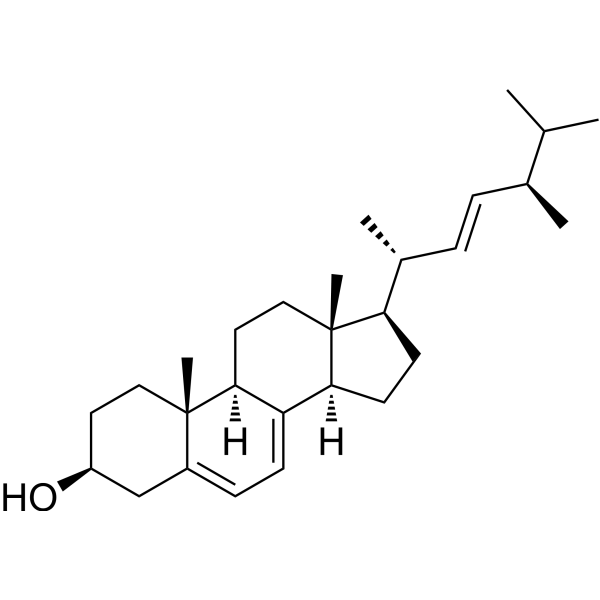
- Formula: C28H44O
- Molecular Weight: 396.65
Ergosterol (Standard) is the analytical standard of Ergosterol. This product is intended for research and analytical applications. Ergosterol is the primary sterol found in fungi, with antioxidative, anti-proliferative, and anti-inflammatory effects.

- Formula: C4H4O5
- Molecular Weight: 132.07
Oxaloacetic acid (Standard) is the analytical standard of Oxaloacetic acid. This product is intended for research and analytical applications. Oxaloacetic acid (2-Oxosuccinic acid) is a metabolic intermediate involved in several ways, such as citric acid cycle, gluconeogenesis, the urea cycle, the glyoxylate cycle, amino acid synthesis, and fatty acid synthesis, whereby Oxaloacetic acid facilitates the clearance of reactive oxygen species (ROS) and improves mitochondrial function.
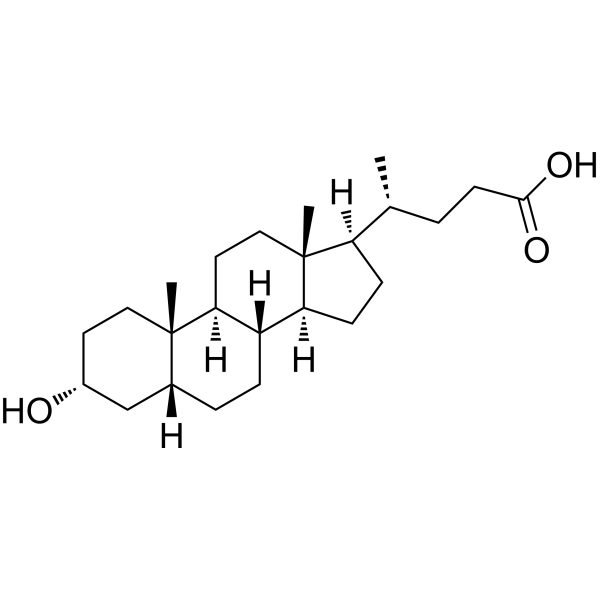
- Formula: C24H40O3
- Molecular Weight: 376.57
Lithocholic acid (Standard) is the analytical standard of Lithocholic acid. This product is intended for research and analytical applications. Lithocholic acid is a toxic secondary bile acid that can promote intrahepatic cholestasis and promote tumorigenesis. Lithocholic acid is also a FXR antagonist and a PXR/SXR agonist.
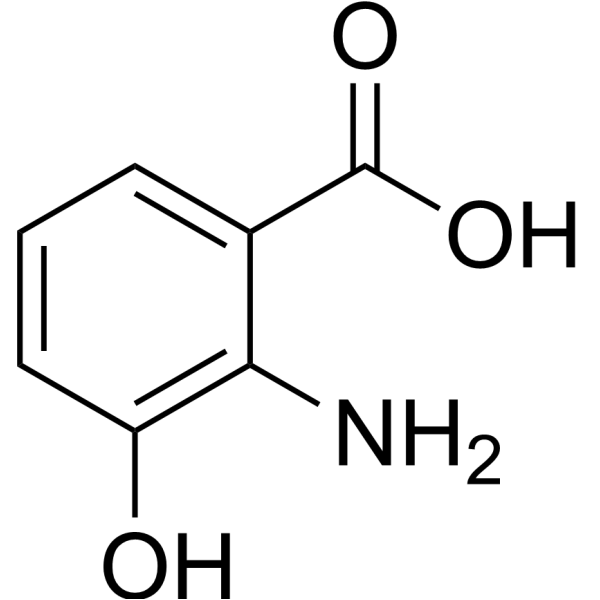
- Formula: C7H7NO3
- Molecular Weight: 153.14
3-Hydroxyanthranilic acid (Standard) is the analytical standard of 3-Hydroxyanthranilic acid. This product is intended for research and analytical applications. 3-Hydroxyanthranilic acid is a tryptophan metabolite in the kynurenine pathway.

- Formula: C6H12O6
- Molecular Weight: 180.16
i-Inositol (Standard) is the analytical standard of i-Inositol. This product is intended for research and analytical applications. i-Inositol (myo-Inositol) is a compound of sugar alcohols. i-Inositol is involved in a series of biological processes such as insulin signal transduction and cytoskeletal transduction. i-Inositol mainly exists in glial cells and plays an osmotic role.

- Formula: C21H26N7Na4O17P3
- Molecular Weight: 833.35
NADPH tetrasodium salt (Standard) is the analytical standard of NADPH tetrasodium salt (HY-F0003). This product is intended for research and analytical applications. NADPH tetrasodium salt functions as an important cofactor in a variety of metabolic and biosynthetic pathways. NADPH tetrasodium salt is an endogenous inhibitor of ferroptosis. NADPH tetrasodium salt plays a vital role in the biosynthesis of agents, chiral alcohols, fatty acids and biopolymers, while also being required for lipid biosynthesis, biomass formation, and cell replication.

- Formula: C₅H₈O₃
- Molecular Weight: 116.12
3-Methyl-2-oxobutanoic acid (Standard) is the analytical standard of 3-Methyl-2-oxobutanoic acid. This product is intended for research and analytical applications. 3-Methyl-2-oxobutanoic acid is a precursor of pantothenic acid in Escherichia coli.
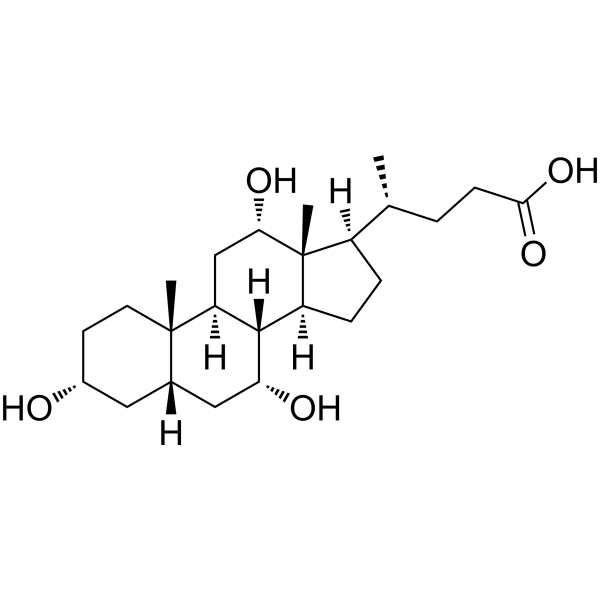
- Formula: C24H40O5
- Molecular Weight: 408.57
Cholic acid (Standard) is the analytical standard of Cholic acid. This product is intended for research and analytical applications. Cholic acid is a major primary bile acid produced in the liver and usually conjugated with glycine or taurine. It facilitates fat absorption and cholesterol excretion. Cholic acid is orally active.

- Formula: C10H12N4O5
- Molecular Weight: 268.23
Inosine (Standard) is the analytical standard of Inosine. This product is intended for research and analytical applications. Inosine is an endogenous purine nucleoside produced by catabolism of adenosine. Inosine has anti-inflammatory, antinociceptive, immunomodulatory and neuroprotective effects. Inosine is an agonist for adenosine A1 (A1R) and A2A (A2AR) receptors. In Vitro:Inosine dose-dependently stimulates cAMP production mediated through the A2AR.
Inosine dose-dependently induces hA2AR-mediated ERK1/2 phosphorylation.
Inosine (100 μM; 24 hours) reduces oxidative stress in MES 23.5 cells cultured with astrocytes.
In Vivo:Inosine (10-100 mg/kg; i.p.) exhibits antinociceptive effect in mice.
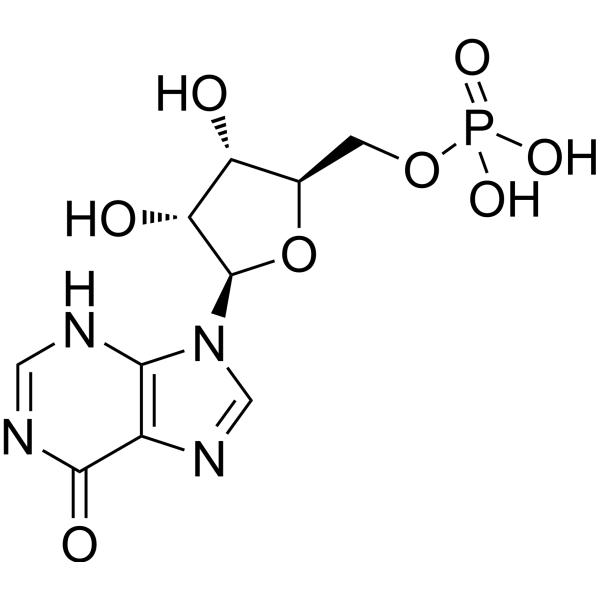
- Formula: C10H13N4O8P
- Molecular Weight: 348.21
Inosinic acid (Standard) is the analytical standard of Inosinic acid. This product is intended for research and analytical applications. Inosinic acid is an endogenous metabolite. Inosinic acid is an endogenous metabolite. Inosinic acid is used as umami tastant, or as the dietary supplement to improve the yield and meat quality of pigs.
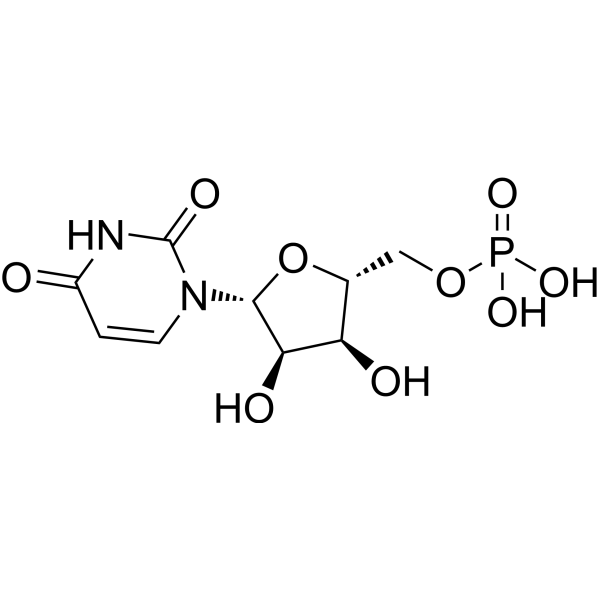
- Formula: C9H13N2O9P
- Molecular Weight: 324.18
Uridine 5'-monophosphate (Standard) is the analytical standard of Uridine 5'-monophosphate. This product is intended for research and analytical applications. Uridine 5'-monophosphate (5'-Uridylic acid) is an orally active mitochondrial ATP-dependent potassium channel activator that has a protective effect on the heart. Uridine 5'-monophosphate can promote the synthesis of CDP-choline and induce apoptosis in intestinal epithelial cells, which is beneficial for gut development and reduces diarrhea.
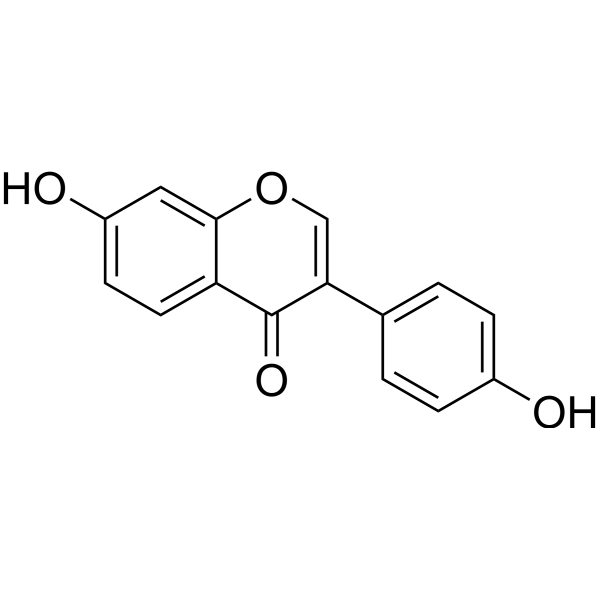

- Formula: C₄H₇N₃O
- Molecular Weight: 113.12
Creatinine (Standard) is the analytical standard of Creatinine. This product is intended for research and analytical applications. Creatinine (NSC13123) is an orally active, blood-brain barrier-permeable modulator of GABAA and NMDA receptors, with activities of antioxidation and metabolic regulation. Creatinine is generated via non-enzymatic conversion of creatine and phosphocreatine in muscle. Creatinine serum levels correlate with muscle mass, glomerular filtration rate, and extrarenal clearance, serving as an evaluation biomarker for renal function, muscle mass, and clinical outcomes, and used for perioperative renal risk assessment. In addition, Creatinine can induce specific Cryptococcus species to produce creatinine deiminase and act as their nitrogen source, while it can be secreted via renal tubules. Creatinine is widely used in research related to various diseases such as neurodegenerative diseases, psychiatric disorders, acute kidney injury, chronic kidney disease, and renal failure.

- Formula: C20H32N6O12S2
- Molecular Weight: 612.63
Glutathione oxidized (Standard) is the analytical standard of Glutathione oxidized. This product is intended for research and analytical applications. Glutathione oxidized (L-Glutathione oxidized) is produced by the oxidation of glutathione. Detoxification of reactive oxygen species is accompanied by production of glutathione oxidized. Glutathione oxidized can be used for the research of sickle cells and erythrocytes.

- Formula: C11H15N5O4
- Molecular Weight: 281.27
N6-Methyladenosine (Standard) is the analytical standard of N6-Methyladenosine. This product is intended for research and analytical applications. N6-Methyladenosine is the most prevalent internal (non-cap) modification present in the messenger RNA (mRNA) of all higher eukaryotes. N6-Methyladenosine can modifies viral RNAs and has antiviral activities. In Vitro: N6-methyladenosine (m6A) is selectively recognized by the human YTH domain family 2 (YTHDF2) protein to regulate mRNA degradation. N6-methyladenosine (m6A), a prevalent internal modification in the messenger RNA of all eukaryotes, is post-transcriptionally installed by m6A methyltransferase (e.g., MT-A70) within the consensus sequence of G(m6A)C (70%) or A(m6A)C (30%). N6-methyladenosine (m6A)-containing RNAs are greatly enriched in the YTHDF-bound portion and diminished in the flow-through portion. N6-methyladenosine (m6A), the most abundant internal RNA modification, functions in diverse biological processes, including regulation of embryonic stem cell self-renewal and differentiation. N6-methyladenosine (m6A) is a large protein complex, consisting in part of methyltransferase-like 3 (METTL3) and methyltransferase-like 14 (METTL14) catalytic subunits.



