



Triacetylresveratrol
Based on 1 publication(s) in Google Scholar
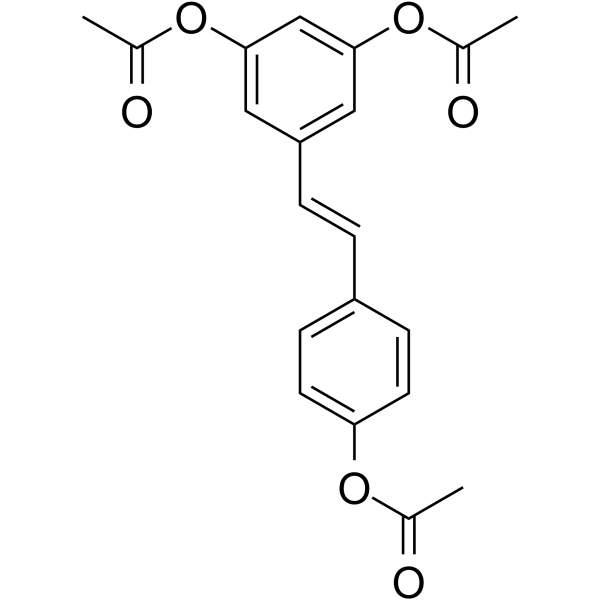
Triacetylresveratrol, an acetylated analog of Resveratrol. Triacetylresveratrol decreases the phosphorylation of STAT3 and NF-κB in a dose- and time- dependent manner in PANC-1 and BxPC-3 cells. Anticancer effects.
For research use only. We do not sell to patients.
- Purity : 99.11%
- CAS No.: 42206-94-0
- Formula: C20H18O6
- Molecular Weight:354.35
-
Storage:Powder -20°C, 3 years , 4°C, 2 years ; In solvent -80°C, 2 years , -20°C, 1 year

To place orders, for customer services and technical support, please contact: MedChemExpress USA
Tel: 609-228-6898 E-mail: [email protected] [email protected]


-
 Biological Activity
-
Chemical Information
-
Solvent & Solubility
- Protocols
- Purity & Documentation
- References
-
 Help & FAQs


-
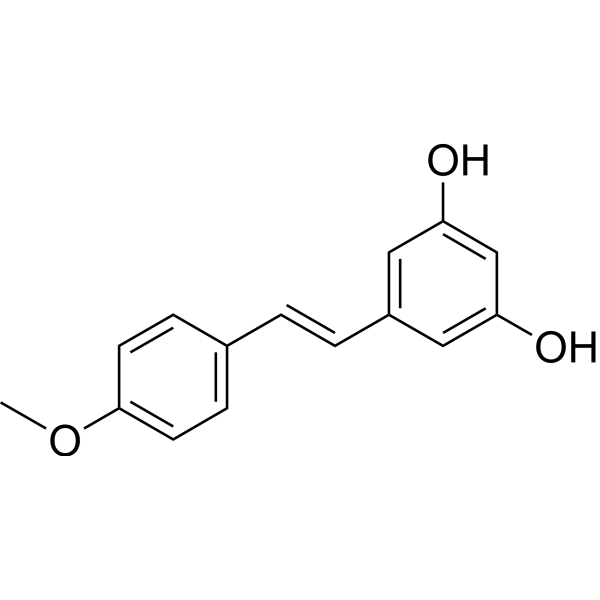
HY-N2485
4'-MethoxyresveratrolNOD-like Receptor (NLR) Activator -
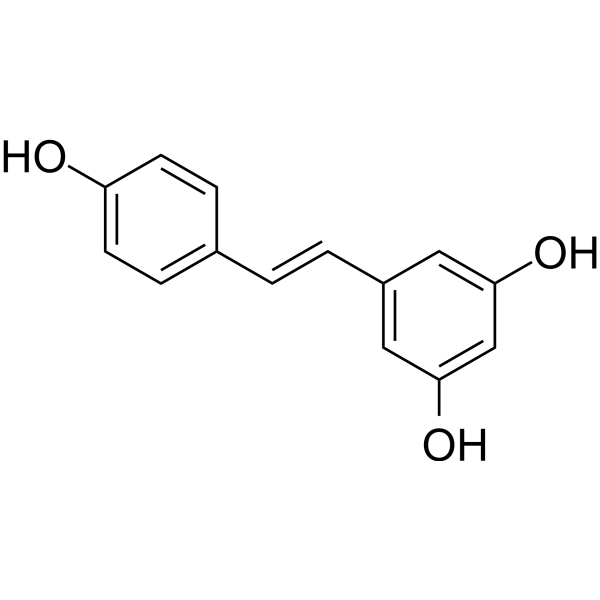
HY-16561
ResveratrolPolyphenolic Phytoalexin -
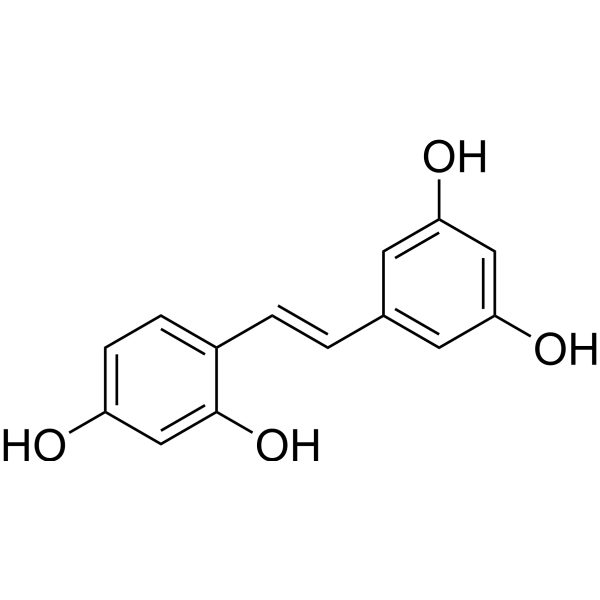
HY-N1430
OxyresveratrolAutophagy Inducer -
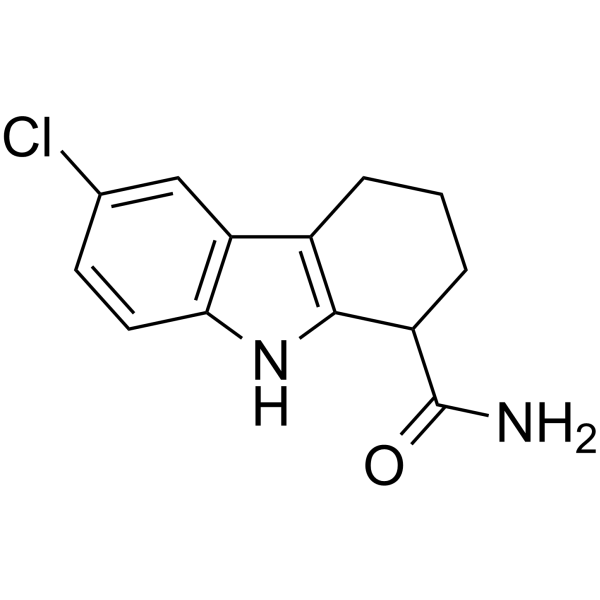
HY-15452
SelisistatSirT1/Sir2 Inhibitor -

HY-N1410R
Triacetylresveratrol (Standard)STAT3/NF-κB Inhibitor -
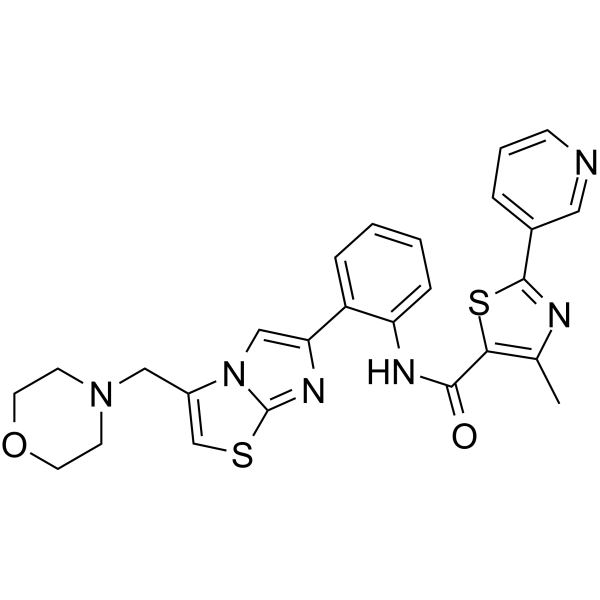
HY-15262
SRT 2104SIRT1 Activator -
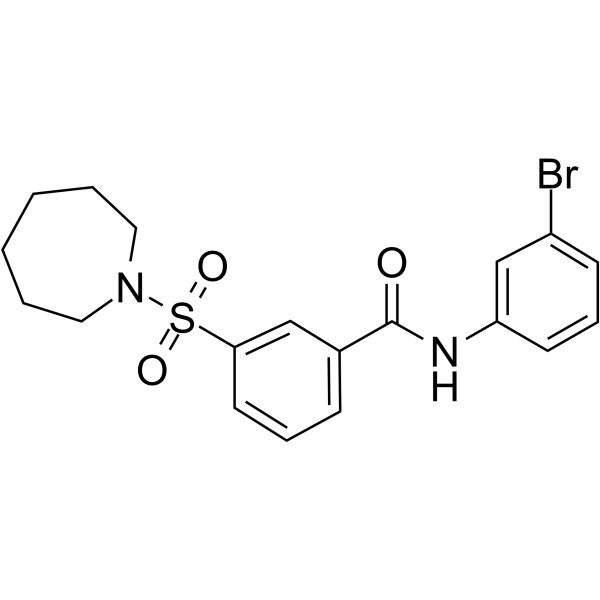
HY-16691
AK-7Sirtuin Inhibitor -

HY-15452R
Selisistat (Standard)SirT1/Sir2 Inhibitor -
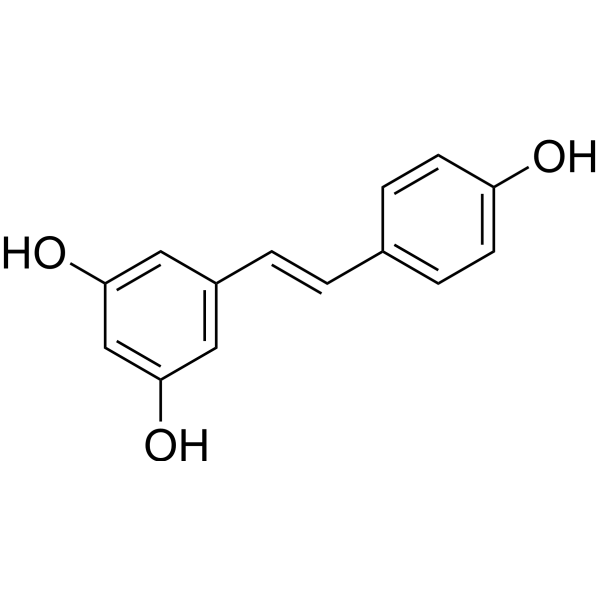
HY-16561R
Resveratrol (Standard) -
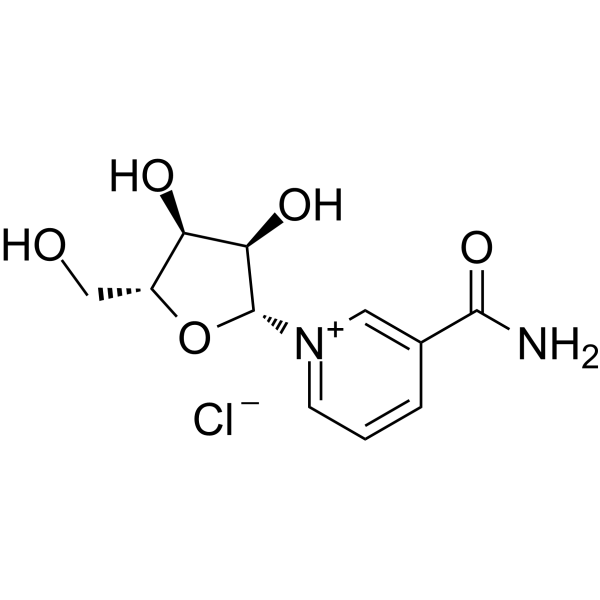
HY-123033A
Nicotinamide riboside chlorideEndogenous Metabolite -

HY-100585
SplitomicinSir2p Inhibitor -
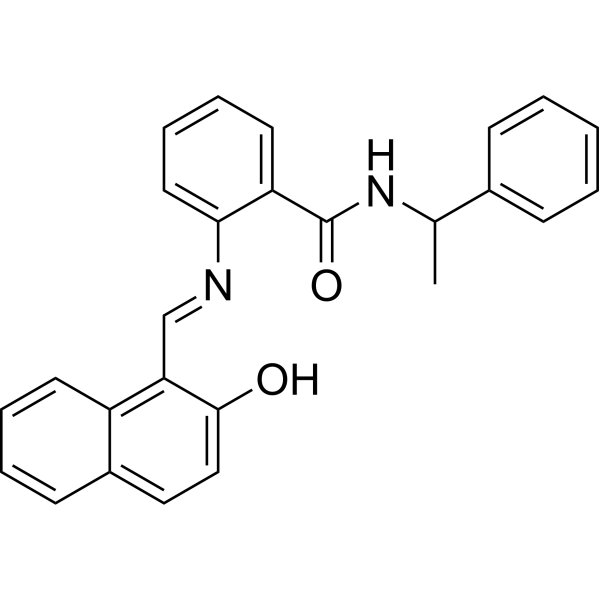
HY-13515
SirtinolSirtuin Inhibitor
Publications Citing Use of MedChemExpress (MCE) Triacetylresveratrol
More

Biological Activity
Description
IC50 & Target
[1]|
NF-κB |
STAT3 |
Cellular Effect
|
Cell Line

|
Type | Value | Description | References |
|---|---|---|---|---|
| HEK293 | EC50 |
7.5 μM
Compound: 18
|
Agonist activity at rat TRPA1 expressed in HEK293 cells assessed as induction of intracellular calcium level
Agonist activity at rat TRPA1 expressed in HEK293 cells assessed as induction of intracellular calcium level
|
[PMID: 26750258] |
| HEK293 | IC50 |
>10 μM
Compound: 18
|
Antagonist activity at human TRPV1 expressed in HEK293 cells assessed as inhibition of allyl isothiocyanate-induced increase of intracellular calcium level
Antagonist activity at human TRPV1 expressed in HEK293 cells assessed as inhibition of allyl isothiocyanate-induced increase of intracellular calcium level
|
[PMID: 26750258] |
| HEK293 | IC50 |
11.8 μM
Compound: 18
|
Antagonist activity at rat TRPA1 expressed in HEK293 cells assessed as inhibition of allyl isothiocyanate-induced increase of intracellular calcium level
Antagonist activity at rat TRPA1 expressed in HEK293 cells assessed as inhibition of allyl isothiocyanate-induced increase of intracellular calcium level
|
[PMID: 26750258] |
| HeLa | IC50 |
3.4 μM
Compound: 92
|
Anticancer activity against human HeLa cells assessed as cell growth inhibition measured after 72 hrs by MTT assay
Anticancer activity against human HeLa cells assessed as cell growth inhibition measured after 72 hrs by MTT assay
|
[PMID: 32485531] |
In Vitro
Triacetylresveratrol significantly down-regulates anti-apoptotic Bcl-2 family protein Mcl-1 and up-regulates pro-apoptotic Bcl-2 family proteins Bim and Puma. Triacetylresveratrol inhibits cell viability, and induces apoptosis of pancreatic cancer cells in a concentration and incubation time-dependent manner[1].
MedChemExpress (MCE) has not independently confirmed the accuracy of these methods. They are for reference only. Further protocols information, click here.


Chemical Information
-
CAS No. 42206-94-0
-
Appearance Solid
-
Molecular Weight 354.35
-
Formula C20H18O6
-
Color White to off-white
-
SMILES
O=C(OC1=CC=C(/C=C/C2=CC(OC(C)=O)=CC(OC(C)=O)=C2)C=C1)C
-
Structure Classification
-
Initial Source
-
Shipping
Room temperature in continental US; may vary elsewhere.
-
Storage
Powder -20°C 3 years 4°C 2 years In solvent -80°C 2 years -20°C 1 year


Publications (1)
-
Journal Impact Factor
-
Most Recent
-
J Agric Food Chem
Resveratrol Analog ResA1 Targeting MoYpk1 Exhibits Broad-Spectrum Antifungal Activity against Rice Blast. [Abstract]2026 Jun 3;74(21):16299-16311. PMID: 42172023


Solvent & Solubility
In Vitro:
DMSO : 125 mg/mL (352.76 mM; Need ultrasonic; Hygroscopic DMSO has a significant impact on the solubility of product, please use newly opened DMSO)
Please refer to the solubility information to select the appropriate solvent. Once prepared, please aliquot and store the solution to prevent product inactivation from repeated freeze-thaw cycles.
Storage method and period of stock solution: -80°C, 2 years; -20°C, 1 year. When stored at -80°C, please use it within 2 years. When stored at -20°C, please use it within 1 year.
Please refer to the solubility information to select the appropriate solvent. Once prepared, please aliquot and store the solution to prevent product inactivation from repeated freeze-thaw cycles.
Storage method and period of stock solution: -80°C, 2 years; -20°C, 1 year. When stored at -80°C, please use it within 2 years. When stored at -20°C, please use it within 1 year.
Concentration (start) × Volume (start) = Concentration (final) × Volume (final)

Protocols
-
Kinase activity and phosphorylation assays
Kinase activity assays measure the ability of kinases to transfer phosphate groups from ATP to specific substrates, while phosphorylation assays detect the presence and levels of phosphorylated proteins. Common methods include radiolabeled ATP incorporation (e. g. ,), ADP release detection via bioluminescence (e. g. ,[3]), enzyme-linked immunosorbent assays (ELISA) for phospho-specific epitopes (e. g. ,[6]), and microtiter-based formats for high-throughput screening (e. g. ,[8]). The ADP-Glo assay quantifies kinase activity by measuring ADP produced during phosphorylation using a luciferase-based system. Radiometric assays involve autoradiography or scintillation counting after incorporation of 32P-labeled ATP into substrate proteins. ELISA-based approaches rely on phospho-specific antibodies to detect activated kinases in cell lysates or purified samples.
-
Western Blot
Western blotting (WB) is a commonly used experimental method in molecular biology, biochemistry, and immunogenetics for identifying and quantifying target proteins. It combines gel electrophoresis with immunoassay, enabling researchers to analyze protein expression, post-translational modifications, and molecular weight.
-
Protocol for Kinase activity and phosphorylation assays
Kinase activity assays measure transfer of phosphate from ATP to a protein or peptide substrate, generating phosphorylated substrate, ADP, or incorporated radiolabeled phosphate as the readout; phosphorylation assays measure site-specific phosphorylation in cells or tissues as a proxy for kinase-pathway activation, inhibition, or substrate regulation. Phosphorylation can be detected by phospho-specific Western blot, immunoprecipitation kinase assay, phospho-immunofluorescence, phospho-flow cytometry, luminescent ADP detection, radiolabeled ATP incorporation, or reporter-based pathway assays, and these readouts can be applied to cancer cells, primary neurons, mouse tumors, organoids, inflammatory macrophages, ferroptosis studies, and mitophagy studies when the kinase target is biologically relevant.
-
Research Protocol for Inflammation-related Diseases
The NLRP3 inflammasome is a cytosolic innate immune signaling platform that integrates priming signals and danger-signal activation to promote caspase-1 activation, maturation of IL-1β and IL-18, and gasdermin D-mediated pyroptotic cell death. The core experimental logic is to determine whether inflammatory disease phenotypes are driven by increased NLRP3 expression, ASC-containing inflammasome assembly, caspase-1 cleavage, GSDMD cleavage, and extracellular release of IL-1β/IL-18 rather than by nonspecific cell injury alone. The pathway is strongly linked to inflammation-related disease phenotypes because monosodium urate crystals activate NALP3/NLRP3 inflammasome signaling in gout-like crystal inflammation, cholesterol crystals activate NLRP3 inflammasomes in atherogenesis models, and DSS-induced intestinal inflammation has been reported to involve NLRP3 inflammasome activity. However, experimental colitis studies also show context-dependent protective effects of NLRP3 inflammasome co


Purity & Documentation
-
Data Sheet (272 KB)
-
SDS (560 KB)
- English - EN (560 KB)
- Français - FR (560 KB)
- Deutsch - DE (560 KB)
- Norwegian - NO (560 KB)
- Español - ES (560 KB)
- Swedish - SV (560 KB)
- Italian - IT (560 KB)
- Korean - KR (560 KB)
- Portuguese - PT (560 KB)
-
Handling Instructions (2659 KB)
References


Complete Stock Solution Preparation Table
Please refer to the solubility information to select the appropriate solvent. Once prepared, please aliquot and store the solution to prevent product inactivation from repeated freeze-thaw cycles.
Storage method and period of stock solution: -80°C, 2 years; -20°C, 1 year. When stored at -80°C, please use it within 2 years. When stored at -20°C, please use it within 1 year.
| Optional Solvent | Concentration Solvent Mass | 1 mg | 5 mg | 10 mg | 25 mg |
|---|---|---|---|---|---|
| DMSO | 1 mM | 2.8221 mL | 14.1103 mL | 28.2207 mL | 70.5517 mL |
| 5 mM | 0.5644 mL | 2.8221 mL | 5.6441 mL | 14.1103 mL | |
| 10 mM | 0.2822 mL | 1.4110 mL | 2.8221 mL | 7.0552 mL | |
| 15 mM | 0.1881 mL | 0.9407 mL | 1.8814 mL | 4.7034 mL | |
| 20 mM | 0.1411 mL | 0.7055 mL | 1.4110 mL | 3.5276 mL | |
| 25 mM | 0.1129 mL | 0.5644 mL | 1.1288 mL | 2.8221 mL | |
| 30 mM | 0.0941 mL | 0.4703 mL | 0.9407 mL | 2.3517 mL | |
| 40 mM | 0.0706 mL | 0.3528 mL | 0.7055 mL | 1.7638 mL | |
| 50 mM | 0.0564 mL | 0.2822 mL | 0.5644 mL | 1.4110 mL | |
| 60 mM | 0.0470 mL | 0.2352 mL | 0.4703 mL | 1.1759 mL | |
| 80 mM | 0.0353 mL | 0.1764 mL | 0.3528 mL | 0.8819 mL | |
| 100 mM | 0.0282 mL | 0.1411 mL | 0.2822 mL | 0.7055 mL |


Triacetylresveratrol Related Classifications
HY-N1410 Related Classifications
 Powered by Bioz