



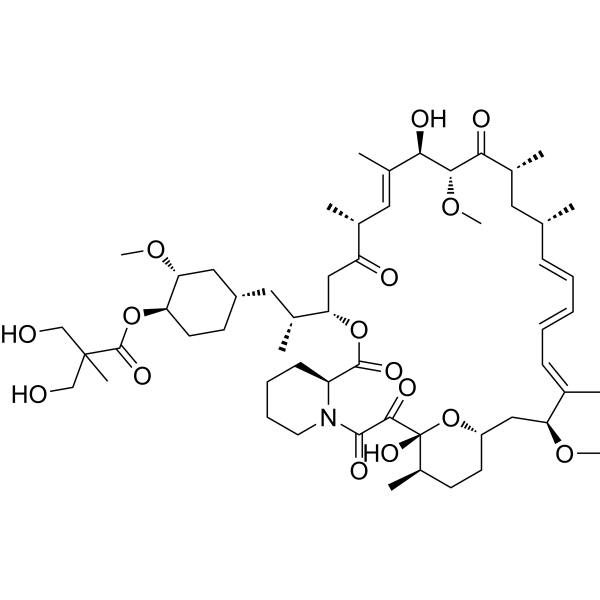
Temsirolimus
Based on 35 publication(s) in Google Scholar
Temsirolimus is an inhibitor of mTOR with an IC50 of 1.76 μM. Temsirolimus activates autophagy and prevents deterioration of cardiac function in animal model.
For research use only. We do not sell to patients.
- Purity : 99.51%
- CAS No.: 162635-04-3
- Formula: C56H87NO16
- Molecular Weight:1030.29
-
Storage:
4°C, protect from light, stored under nitrogen
* In solvent : -80°C, 1 year; -20°C, 6 months (protect from light, stored under nitrogen)

To place orders, for customer services and technical support, please contact: MedChemExpress USA
Tel: 609-228-6898 E-mail: [email protected] [email protected]


-
 Biological Activity
-
Chemical Information
-
Solvent & Solubility
- Protocols
- Purity & Documentation
- References
-
 Help & FAQs


-
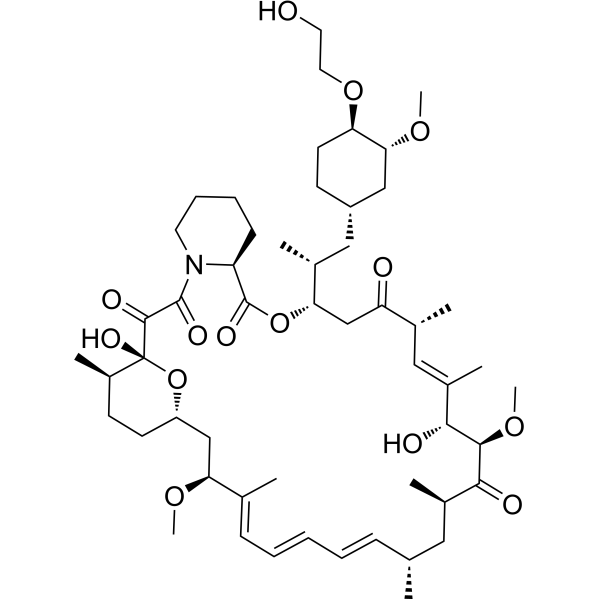
HY-10218
EverolimusmTORC Inhibitor -
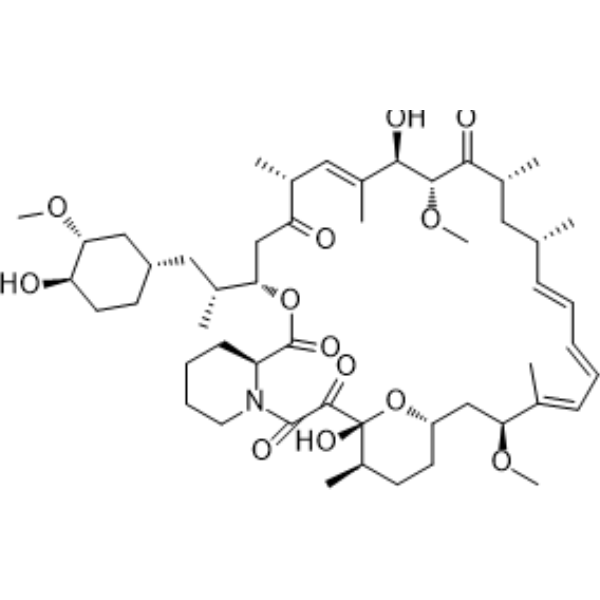
HY-10219
RapamycinmTOR Inhibitor -
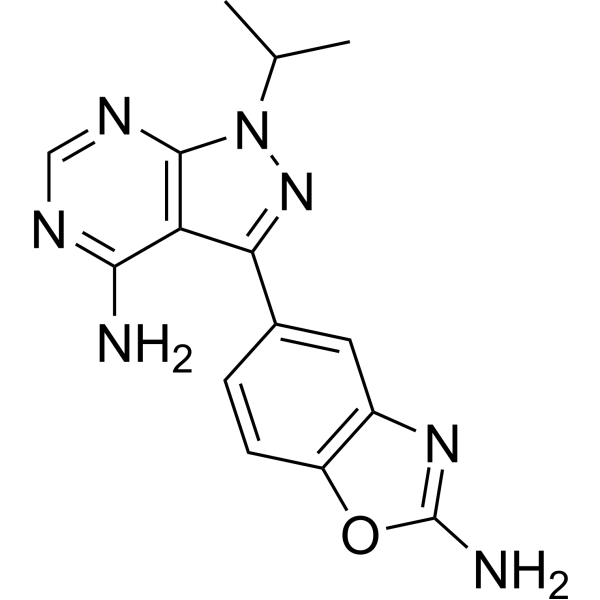
HY-13328
SapanisertibmTORC1/mTORC2 Inhibitor -
HY-B0795
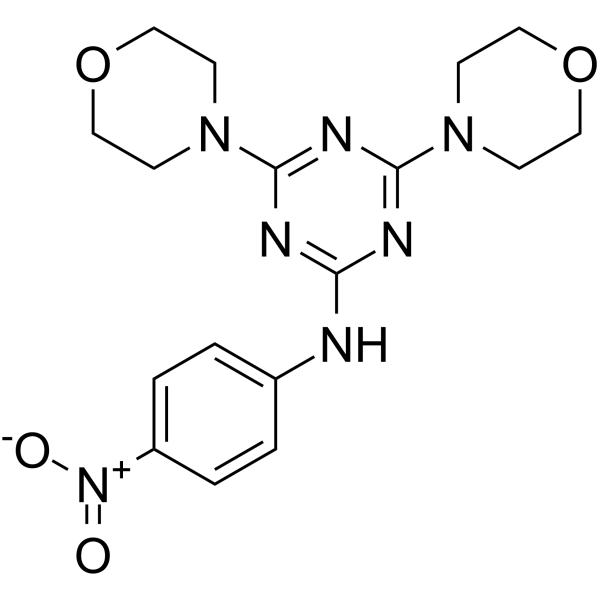
MHY1485mTOR Activator -
HY-10422
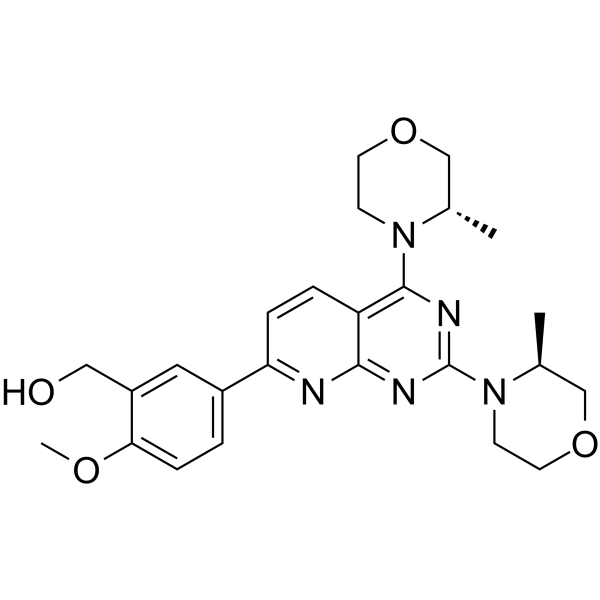
AZD-8055mTOR Inhibitor -
HY-13003
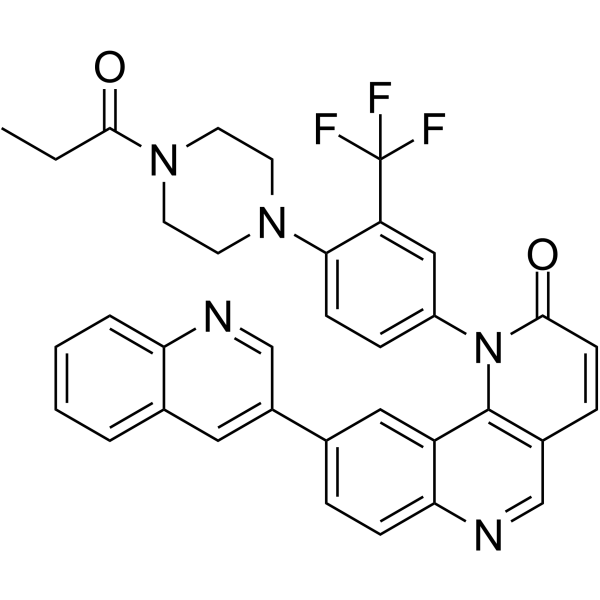
Torin 1mTOR Inhibitor -
HY-50908
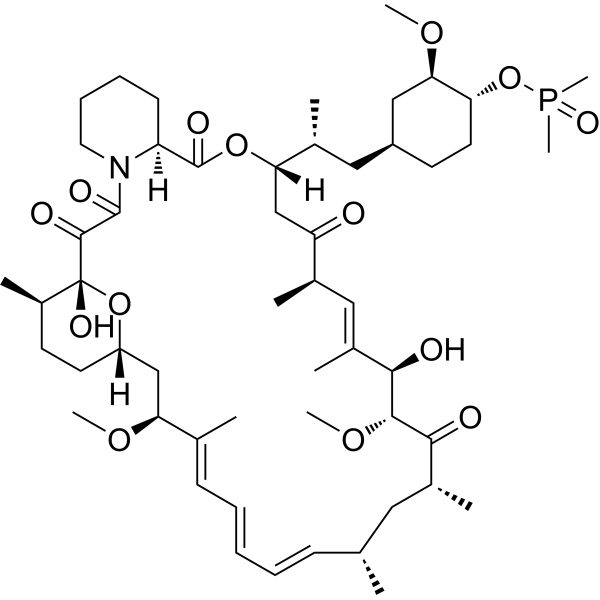
RidaforolimusmTOR Inhibitor -
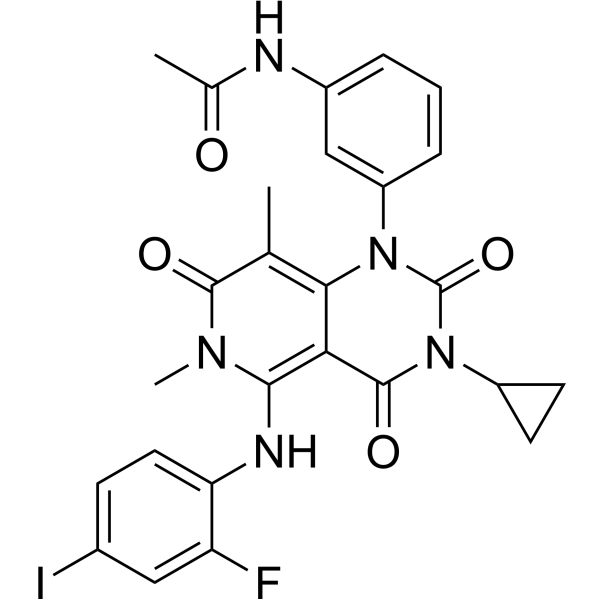
HY-10999
TrametinibMEK Inhibitor -
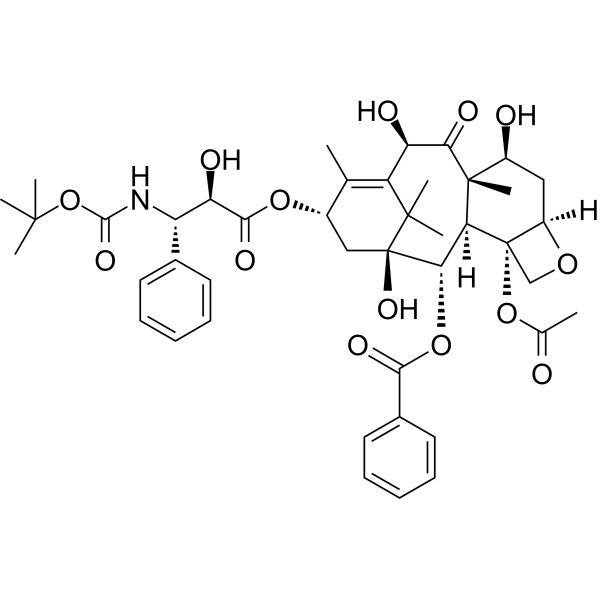
HY-B0011
DocetaxelTubulin Stabilizer -
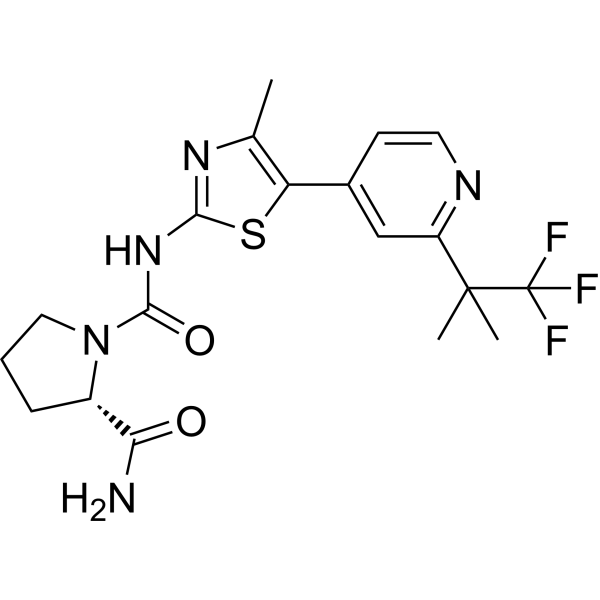
HY-15244
AlpelisibPI3Kα Inhibitor -
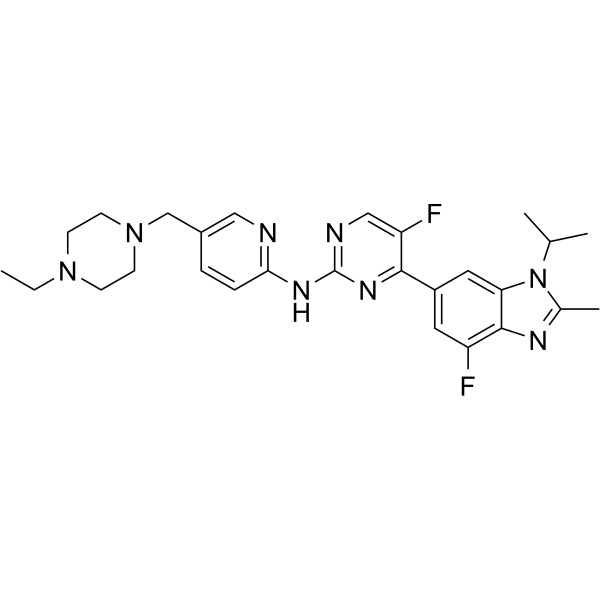
HY-16297A
AbemaciclibCDK4/6 Inhibitor -
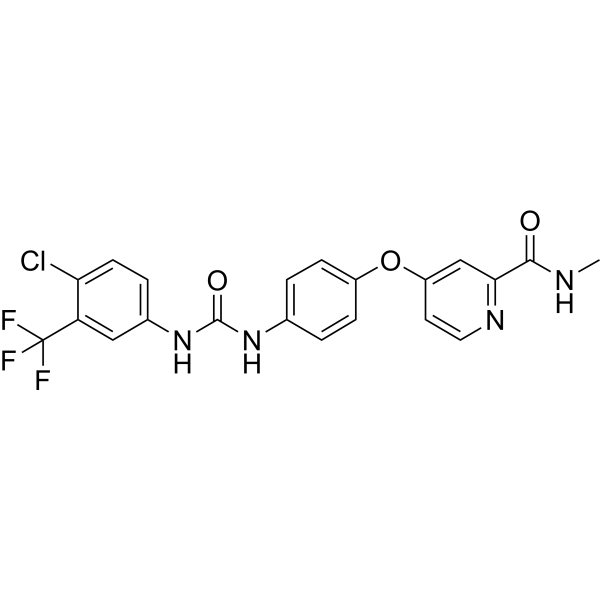
HY-10201
SorafenibMultikinase Inhibitor
Publications Citing Use of MedChemExpress (MCE) Temsirolimus
More- Mol Cancer. 2025 Jul 19;24(1):199. [Abstract]
- Bone Res. 2026 Aug 27;14(1):91.
- Autophagy. 2019 Jun;15(6):998-1016. [Abstract]
- Mol Cell. 2025 Aug 7;85(15):2973-2987.e6. [Abstract]
- Sci Transl Med. 2018 Jul 18;10(450):eaaq1093. [Abstract]
- J Exp Clin Cancer Res. 2024 Jan 11;43(1):18. [Abstract]
- Cell Rep Med. 2025 Apr 15;6(4):102053. [Abstract]
- Engineering. 2025 Oct 31.
- Cancer Lett. 2022 Feb 1:526:352-362. [Abstract]
- Genome Med. 2016 Oct 31;8(1):116. [Abstract]
- Cell Death Discov. 2026 Feb 25;12(1):111. [Abstract]
- Oncogene. 2024 Nov;43(45):3335-3347. [Abstract]
- Apoptosis. 2025 Jun;30(5-6):1331-1350. [Abstract]
- Cell Rep. 2021 Aug 24;36(8):109568. [Abstract]
- Mol Cancer Ther. 2020 Jun;19(6):1351-1362. [Abstract]
- PLoS Biol. 2019 May 21;17(5):e3000252. [Abstract]
- Life Sci. 2021 Oct 1:282:119847. [Abstract]
- Cell Rep Methods. 2026 Jun 15;6(6):101339. [Abstract]
- Int J Mol Sci. 2026 Jun 26;27(13):5775.
- Front Pharmacol. 2020 Nov 11:11:580407. [Abstract]
- Molecules. 2020 Apr 23;25(8):1980. [Abstract]
- Transl Oncol. 2022 Dec:26:101540. [Abstract]
- J Cell Mol Med. 2026 Apr;30(7):e71101. [Abstract]
- RSC Med Chem. 2024 Aug 17;15(10):3460-3468. [Abstract]
- Bioengineering (Basel). 2025 Oct 19;12(10):1121. [Abstract]
- Cell Cycle. 2022 Dec;21(24):2590-2601. [Abstract]
- Cancer Med. 2026 Jul;15(7):e72089.
- Exp Cell Res. 2020 Aug 1;393(1):112054. [Abstract]
- Int Immunol. 2021 Aug 23;33(9):491-504. [Abstract]
- PLoS One. 2024 Nov 1;19(11):e0308647. [Abstract]
- Acta Trop. 2020 Dec:212:105708. [Abstract]
- Biochem Biophys Res Commun. 2023 Nov 19:682:180-186. [Abstract]
- Biotechnol Appl Biochem. 2019 Jul;66(4):555-563. [Abstract]
- bioRxiv. 2026 Jan 9.
- Contrast Media Mol Imaging. 2022 Jul 31:2022:3357694. [Abstract]
 Customer Validation & Images

-
WB
-
WB
-
WB


Biological Activity
Description
IC50 & Target
[1]|
mTOR 1.76 μM (IC50) |
Cellular Effect
|
Cell Line

|
Type | Value | Description | References |
|---|---|---|---|---|
| A498 | IC50 |
0.5 μM
Compound: Tem
|
Cytotoxicity against human A498 cells assessed as inhibition of cell viability after 6 days by MTT assay
Cytotoxicity against human A498 cells assessed as inhibition of cell viability after 6 days by MTT assay
|
[PMID: 23360104] |
| A498 | IC50 |
34.3 μM
Compound: Temsirolimus
|
Cytotoxicity against human A498 cells after 72 hrs by MTT assay
Cytotoxicity against human A498 cells after 72 hrs by MTT assay
|
[PMID: 23489626] |
| A498 | IC50 |
0.35 μM
Compound: Tem
|
Cytotoxicity against human A498 cells after 72 hrs by MTT assay
Cytotoxicity against human A498 cells after 72 hrs by MTT assay
|
[PMID: 25124114] |
| A549 | IC50 |
11.81 μM
Compound: Temsirolimus
|
Antiproliferative activity against human A549 cells assessed as reduction in cell viability incubated for 24 hrs by MTT assay
Antiproliferative activity against human A549 cells assessed as reduction in cell viability incubated for 24 hrs by MTT assay
|
[PMID: 33862514] |
| HEK293 | IC50 |
1.76 μM
Compound: 2
|
Inhibition of FKBP12-independent human recombinant mTOR expressed in HEK293 cells using His6-S6K1 as a substrate by DELFIA assay
Inhibition of FKBP12-independent human recombinant mTOR expressed in HEK293 cells using His6-S6K1 as a substrate by DELFIA assay
|
[PMID: 21438579] |
| LNCaP | IC50 |
0.0005 μM
Compound: 2
|
Antiproliferative activity against human LNCAP cells after 3 days by MTS assay
Antiproliferative activity against human LNCAP cells after 3 days by MTS assay
|
[PMID: 21438579] |
| LNCaP | IC50 |
0.5 nM
Compound: 2
|
Antiproliferative activity against human LNCAP cells after 3 days by MTS assay
Antiproliferative activity against human LNCAP cells after 3 days by MTS assay
|
[PMID: 21438579] |
| MDA-MB-231 | IC50 |
17.57 μM
Compound: Temsirolimus
|
Antiproliferative activity against human MDA-MB-231 cells assessed as reduction in cell viability incubated for 24 hrs by MTT assay
Antiproliferative activity against human MDA-MB-231 cells assessed as reduction in cell viability incubated for 24 hrs by MTT assay
|
[PMID: 33862514] |
| MDA-MB-468 | IC50 |
0.008 μM
Compound: 2
|
Antiproliferative activity against human MDA468 cells after 3 days by MTS assay
Antiproliferative activity against human MDA468 cells after 3 days by MTS assay
|
[PMID: 21438579] |
| MDA-MB-468 | IC50 |
10.89 μM
Compound: Temsirolimus
|
Antiproliferative activity against human MDA-MB-468 cells assessed as reduction in cell viability incubated for 24 hrs by MTT assay
Antiproliferative activity against human MDA-MB-468 cells assessed as reduction in cell viability incubated for 24 hrs by MTT assay
|
[PMID: 33862514] |
In Vitro
Temsirolimus potently inhibits mTOR kinase activity with IC50 of 1.76 μM, similar to that of rapamycin with IC50 of 1.74 μM in the absence of FKBP12. Temsirolimus (10 nM to <5 μM) displays a modest and selective antiproliferative activity via FKBP12-dependent mechanism, but can completely inhibit the proliferation of a broad panel of tumor cells at low micromolar concentrations (5-15 μM), involving FKBP12-independent suppression of mTOR signaling. Temsirolimus treatment at micromolar but not nanomolar concentrations (20 μM) causes a marked decline in global protein synthesis and disassembly of polyribosomes, accompanied by rapid increase in the phosphorylation of translation elongation factor eEF2 and the translation initiation factor eIF2A[1]. Temsirolimus inhibits the phosphorylation of ribosomal protein S6, more potently in PTEN-positive DU145 cells than in PTEN-negative PC-3 cells, and inhibits cell growth and clonogenic survival of both cells in a concentration-dependent manner[2]. Temsirolimus (100 ng/mL) potently inhibits proliferation and induces apoptosis in primary human lymphoblastic leukemia (ALL) cells[3].
MedChemExpress (MCE) has not independently confirmed the accuracy of these methods. They are for reference only.
In Vivo
MedChemExpress (MCE) has not independently confirmed the accuracy of these methods. They are for reference only.
Clinical Trial
| NCT Number | Sponsor | Condition | Start Date |
Phase
|
|---|---|---|---|---|
| NCT01329991 | Plexxikon| | 2011-05 | PHASE1 |


Chemical Information
-
CAS No. 162635-04-3
-
Appearance Solid
-
Molecular Weight 1030.29
-
Formula C56H87NO16
-
Color White to off-white
-
SMILES
O=C([C@@]1(O)[C@@H](CC[C@@H](C[C@@H](/C(C)=C/C=C/C=C/[C@H](C[C@@H](C)C([C@@H]([C@@H](/C(C)=C/[C@H]2C)O)OC)=O)C)OC)O1)C)C(N3CCCC[C@H]3C(O[C@@H](CC2=O)[C@@H](C[C@H]4C[C@H]([C@H](OC(C(C)(CO)CO)=O)CC4)OC)C)=O)=O
-
Synonyms
CCI-779
-
Shipping
Room temperature in continental US; may vary elsewhere.
-
Storage
4°C, protect from light, stored under nitrogen
* In solvent : -80°C, 1 year; -20°C, 6 months (protect from light, stored under nitrogen)


Publications (35)
-
Journal Impact Factor
-
Most Recent
-
Mol Cancer
CircABCA1 promotes ccRCC by reprogramming cholesterol metabolism and facilitating M2 macrophage polarization through IGF2BP3-mediated stabilization of SCARB1 mRNA. [Abstract]2025 Jul 19;24(1):199. PMID: 40684174 -
-
Autophagy
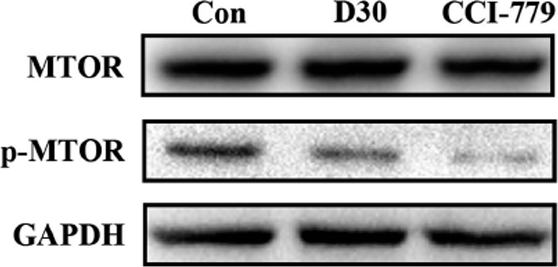
Restoring autophagic flux attenuates cochlear spiral ganglion neuron degeneration by promoting TFEB nuclear translocation via inhibiting MTOR. [Abstract]2019 Jun;15(6):998-1016. PMID: 30706760
Temsirolimus purchased from MedChemExpress. Usage Cited in: Autophagy. 2019 Jun;15(6):998-1016. [Abstract]
The p-MTOR level is significantly suppressed in the experimental group after the mice are treated with CCI-779.
-
Mol Cell
2025 Aug 7;85(15):2973-2987.e6. PMID: 40712585 -
Sci Transl Med
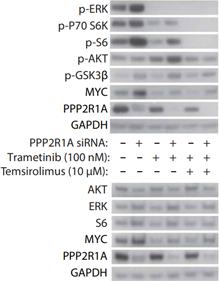
PP2A inhibition is a druggable MEK inhibitor resistance mechanism in KRAS-mutant lung cancer cells. [Abstract]2018 Jul 18;10(450):eaaq1093. PMID: 30021885
Temsirolimus purchased from MedChemExpress. Usage Cited in: Sci Transl Med. 2018 Jul 18;10(450):eaaq1093. [Abstract]
Western blot analysis of selected MAPK and AKT/mTOR pathway components in Trametinib- and Temsirolimus-treated cells.
-
J Exp Clin Cancer Res
Marinopyrrole derivative MP1 as a novel anti-cancer agent in group 3 MYC-amplified Medulloblastoma. [Abstract]2024 Jan 11;43(1):18. PMID: 38200580 -
Cell Rep Med
CAN-Scan: A multi-omic phenotype-driven precision oncology platform identifies prognostic biomarkers of therapy response for colorectal cancer. [Abstract]2025 Apr 15;6(4):102053. PMID: 40187357 -
-
Cancer Lett
Jolkinolide B sensitizes bladder cancer to mTOR inhibitors via dual inhibition of Akt signaling and autophagy. [Abstract]2022 Feb 1:526:352-362. PMID: 34798195 -
Genome Med
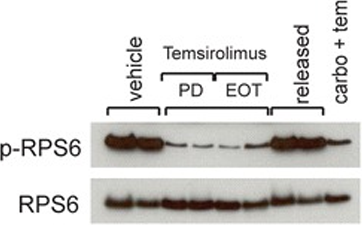
A case study of an integrative genomic and experimental therapeutic approach for rare tumors: identification of vulnerabilities in a pediatric poorly differentiated carcinoma. [Abstract]2016 Oct 31;8(1):116. PMID: 27799065
Temsirolimus purchased from MedChemExpress. Usage Cited in: Genome Med. 2016 Oct 31;8(1):116. [Abstract]
Phosphorylation level of RPS6 upon Temsirolimus treatment. The effective target engagement is confirmed in Temsirolimus-treated tumors by showing reduced phosphorylation of downstream mTOR targets, RPS6 and 4EBP1, and an associated increase in autophagy (LC3A/B).
-
Cell Death Discov
The protective up-regulation of metallothionein-2A in intervertebral disc degeneration inhibits nucleus pulposus cell ferroptosis through activation of the PI3K/AKT/mTOR pathway. [Abstract]2026 Feb 25;12(1):111. PMID: 41741409 -
Oncogene
SGK1 suppresses ferroptosis in ovarian cancer via NRF2-dependent and -independent pathways. [Abstract]2024 Nov;43(45):3335-3347. PMID: 39306614 -
Apoptosis
Bushen Jianpi Tiaoxue Decoction (BJTD) inhibits the LIF-mTOR signaling axis to regulate mitochondrial function and alleviate cyclophosphamide-induced diminished ovarian reserve. [Abstract]2025 Jun;30(5-6):1331-1350. PMID: 40042747 -
Cell Rep
Organoid-based drug screening reveals neddylation as therapeutic target for malignant rhabdoid tumors. [Abstract]2021 Aug 24;36(8):109568. PMID: 34433038 -
Mol Cancer Ther
A Novel Combination Approach Targeting an Enhanced Protein Synthesis Pathway in MYC-driven (Group 3) Medulloblastoma. [Abstract]2020 Jun;19(6):1351-1362. PMID: 32371591 -
PLoS Biol
2019 May 21;17(5):e3000252. PMID: 31112550 -
Life Sci
2021 Oct 1:282:119847. PMID: 34293399 -
Cell Rep Methods
Tumor immune microenvironment reconstitution in patient-derived organoids enables therapy modeling for NSCLC. [Abstract]2026 Jun 15;6(6):101339. PMID: 42134319 -
-
Front Pharmacol
CC-223, NSC781406, and BGT226 Exerts a Cytotoxic Effect Against Pancreatic Cancer Cells via mTOR Signaling. [Abstract]2020 Nov 11:11:580407. PMID: 33343350 -
Molecules
In Vitro and in Vivo Activity of mTOR Kinase and PI3K Inhibitors Against Leishmania donovani and Trypanosoma brucei. [Abstract]2020 Apr 23;25(8):1980. PMID: 32340370 -
Transl Oncol
2022 Dec:26:101540. PMID: 36115073 -
J Cell Mol Med
2026 Apr;30(7):e71101. PMID: 41896195 -
RSC Med Chem
SLL-1A-16 suppresses proliferation and induces autophagy in non-small-cell lung cancer cells via the AKT/mTOR signaling pathway. [Abstract]2024 Aug 17;15(10):3460-3468. PMID: 39246748 -
Bioengineering (Basel)
Precision Oncology for High-Grade Gliomas: A Tumor Organoid Model for Adjuvant Treatment Selection. [Abstract]2025 Oct 19;12(10):1121. PMID: 41155119 -
Cell Cycle
Cancer-associated fibroblast-released extracellular vesicles carrying miR-199a-5p induces the progression of gastric cancer through regulation of FKBP5-mediated AKT1/mTORC1 signaling pathway. [Abstract]2022 Dec;21(24):2590-2601. PMID: 36005478 -
-
Exp Cell Res
Network-based analysis with primary cells reveals drug response landscape of acute myeloid leukemia. [Abstract]2020 Aug 1;393(1):112054. PMID: 32376287 -
Int Immunol
Helicobacter urease suppresses cytotoxic CD8+ T-cell responses through activating Myh9-dependent induction of PD-L1. [Abstract]2021 Aug 23;33(9):491-504. PMID: 34297096 -
PLoS One
A novel small molecule screening assay using normal human chondrocytes toward osteoarthritis drug discovery. [Abstract]2024 Nov 1;19(11):e0308647. PMID: 39485774 -
Acta Trop
Tacrolimus, a rapamycin target protein inhibitor, exerts anti-cystic echinococcosis effects both in vitro and in vivo. [Abstract]2020 Dec:212:105708. PMID: 32956634 -
Biochem Biophys Res Commun
PECAM-1 mediates temsirolimus-induced increase in neutrophil transendothelial migration that leads to lung injury. [Abstract]2023 Nov 19:682:180-186. PMID: 37820453 -
Biotechnol Appl Biochem
Cilostazol protects against myocardial ischemia and reperfusion injury by activating transcription factor EB (TFEB). [Abstract]2019 Jul;66(4):555-563. PMID: 30994947 -
-
Contrast Media Mol Imaging
Toll-Like Receptor 4 Exacerbates Mycoplasma pneumoniae via Promoting Transcription Factor EB-Mediated Autophagy. [Abstract]2022 Jul 31:2022:3357694. PMID: 35965629


Solvent & Solubility
In Vitro:
DMSO : ≥ 70 mg/mL (67.94 mM; Hygroscopic DMSO has a significant impact on the solubility of product, please use newly opened DMSO)
* "≥" means soluble, but saturation unknown.
Please refer to the solubility information to select the appropriate solvent. Once prepared, please aliquot and store the solution to prevent product inactivation from repeated freeze-thaw cycles.
Storage method and period of stock solution: -80°C, 1 year; -20°C, 6 months (protect from light, stored under nitrogen). When stored at -80°C, please use it within 1 year. When stored at -20°C, please use it within 6 months.
Please refer to the solubility information to select the appropriate solvent. Once prepared, please aliquot and store the solution to prevent product inactivation from repeated freeze-thaw cycles.
Storage method and period of stock solution: -80°C, 1 year; -20°C, 6 months (protect from light, stored under nitrogen). When stored at -80°C, please use it within 1 year. When stored at -20°C, please use it within 6 months.
Concentration (start) × Volume (start) = Concentration (final) × Volume (final)
In Vivo:
The following protocol is derived from the literature and is for reference only. It is recommended to first try a small sample.
In Vivo Dissolution Calculator
Please enter the basic information of animal experiments:
-
-
-
-
Recommended: Prepare an additional quantity of animals to account for potential losses during experiments.
Working solution concentration: 0.22 mg/mL


Purity & Documentation
-
Data Sheet (303 KB)
-
SDS (396 KB)
- English - EN (396 KB)
- Français - FR (396 KB)
- Deutsch - DE (396 KB)
- Norwegian - NO (396 KB)
- Español - ES (396 KB)
- Swedish - SV (396 KB)
- Italian - IT (396 KB)
- Korean - KR (396 KB)
- Portuguese - PT (396 KB)
-
Handling Instructions (2659 KB)
References
[1]. Shor B, et al. A new pharmacologic action of CCI-779 involves FKBP12-independent inhibition of mTOR kinase activity and profound repression of global protein synthesis. Cancer Res, 2008, 68(8), 2934-2943. [Content Brief]
[2]. Wu L, et al. Effects of the mammalian target of rapamycin inhibitor CCI-779 used alone or with chemotherapy on human prostate cancer cells and xenografts. Cancer Res, 2005, 65(7), 2825-2831. [Content Brief]
[3]. Teachey DT, et al. The mTOR inhibitor CCI-779 induces apoptosis and inhibits growth in preclinical models of primary adult human ALL. Blood, 2006, 107(3), 1149-1155. [Content Brief]
[4]. Geoerger B, et al. Antitumor activity of the rapamycin analog CCI-779 in human primitive neuroectodermal tumor/medulloblastoma models as single agent and in combination chemotherapy. Cancer Res, 2001, 61(4), 1527-1532. [Content Brief]
[5]. Ravikumar B, et al. Inhibition of mTOR induces autophagy and reduces toxicity of polyglutamine expansions in fly and mouse models of Huntington disease. Nat Genet. 2004 Jun;36(6):585-95. Epub 2004 May 16. [Content Brief]
[6]. Frost P, et al. In vivo antitumor effects of the mTOR inhibitor CCI-779 against human multiple myeloma cells in a xenograft model. Blood. 2004 Dec 15;104(13):4181-7. Epub 2004 Aug 10. [Content Brief]
[7]. Dela Cruz FS, et al. A case study of an integrative genomic and experimental therapeutic approach for rare tumors: identification of vulnerabilities in a pediatric poorly differentiated carcinoma. Genome Med. 2016 Oct 31;8(1):116. [Content Brief]
[8]. Jason C. Choi, et al. Temsirolimus activates autophagy and ameliorates cardiomyopathy caused by lamin A/C gene mutation. Sci Transl Med. 2012 Jul 25; 4(144): 144ra102. [Content Brief]


Complete Stock Solution Preparation Table
Please refer to the solubility information to select the appropriate solvent. Once prepared, please aliquot and store the solution to prevent product inactivation from repeated freeze-thaw cycles.
Storage method and period of stock solution: -80°C, 1 year; -20°C, 6 months (protect from light, stored under nitrogen). When stored at -80°C, please use it within 1 year. When stored at -20°C, please use it within 6 months.
| Optional Solvent | Concentration Solvent Mass | 1 mg | 5 mg | 10 mg | 25 mg |
|---|---|---|---|---|---|
| DMSO | 1 mM | 0.9706 mL | 4.8530 mL | 9.7060 mL | 24.2650 mL |
| 5 mM | 0.1941 mL | 0.9706 mL | 1.9412 mL | 4.8530 mL | |
| 10 mM | 0.0971 mL | 0.4853 mL | 0.9706 mL | 2.4265 mL | |
| 15 mM | 0.0647 mL | 0.3235 mL | 0.6471 mL | 1.6177 mL | |
| 20 mM | 0.0485 mL | 0.2427 mL | 0.4853 mL | 1.2133 mL | |
| 25 mM | 0.0388 mL | 0.1941 mL | 0.3882 mL | 0.9706 mL | |
| 30 mM | 0.0324 mL | 0.1618 mL | 0.3235 mL | 0.8088 mL | |
| 40 mM | 0.0243 mL | 0.1213 mL | 0.2427 mL | 0.6066 mL | |
| 50 mM | 0.0194 mL | 0.0971 mL | 0.1941 mL | 0.4853 mL | |
| 60 mM | 0.0162 mL | 0.0809 mL | 0.1618 mL | 0.4044 mL |


Temsirolimus Related Classifications
HY-50910 Related Classifications
 Powered by Bioz