



Vibozilimod

Based on 1 Customer Validation
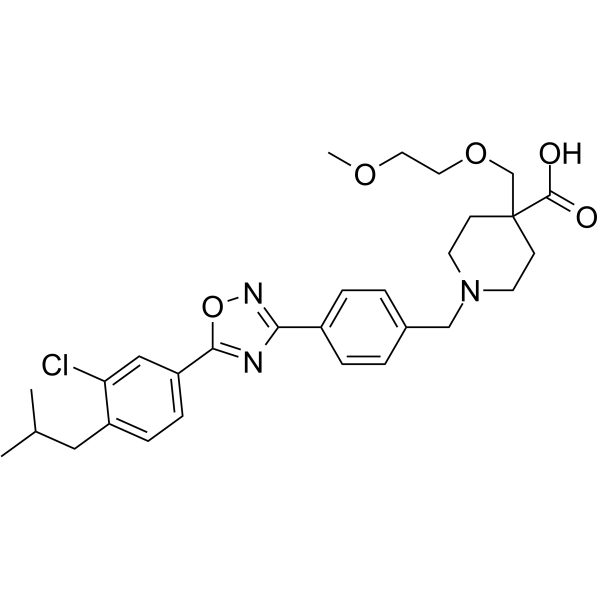
Vibozilimod (SCD-044) is an oral S1P1/EDG1 receptor-selective agonist with an EC50 of <1 nM. Vibozilimod promotes S1P1/EDG1 receptor internalization, inhibits lymphocyte migration, induces lymphopenia and reduces lymphocyte counts. Vibozilimod is used for the research of inflammatory diseases such as psoriasis and atopic dermatitis.
For research use only. We do not sell to patients.
- Purity : 99.52%
- CAS No.: 1403232-33-6
- Formula: C29H36ClN3O5
- Molecular Weight:542.07
-
Storage:Powder -20°C, 3 years , 4°C, 2 years ; In solvent -80°C, 6 months , -20°C, 1 month

To place orders, for customer services and technical support, please contact: MedChemExpress USA
Tel: 609-228-6898 E-mail: [email protected] [email protected]


-
 Biological Activity
-
Chemical Information
-
Solvent & Solubility
- Protocols
- Purity & Documentation
- References
-
 Help & FAQs


-
HY-12355
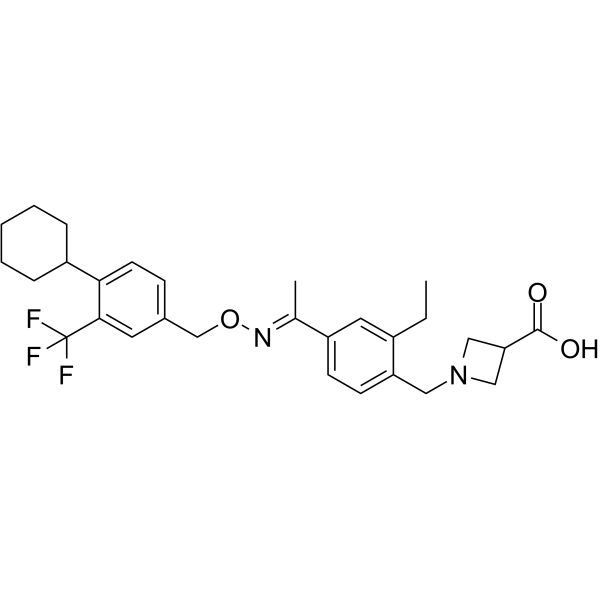
SiponimodS1P1/S1P5 Agonist -
HY-19736
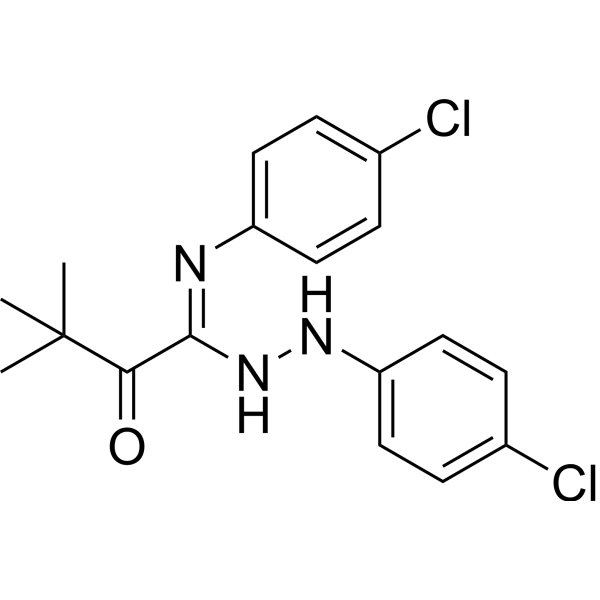
TY-52156LPL Receptor Antagonist -
HY-10569
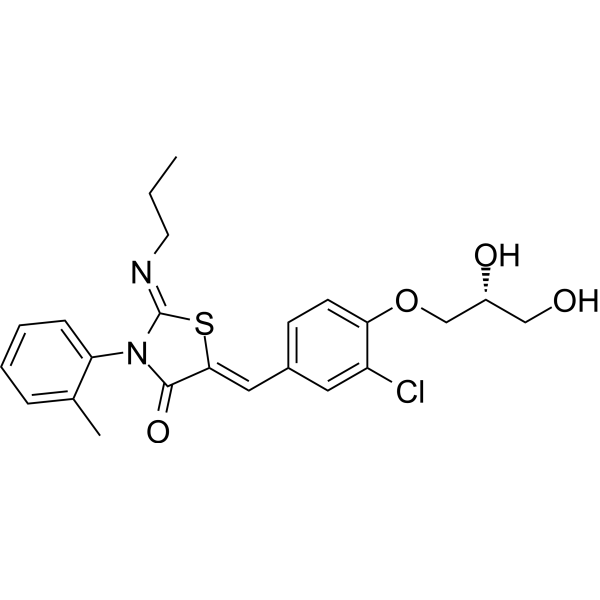
PonesimodS1P1 Agonist -
HY-115831
SAR247799S1P1 Agonist -
HY-12288A
Ozanimod hydrochlorideS1P Receptor Modulator -
HY-16734A
Amiselimod hydrochlorideS1PR1 Modulator -
HY-12288
OzanimodS1P Receptor Modulator -
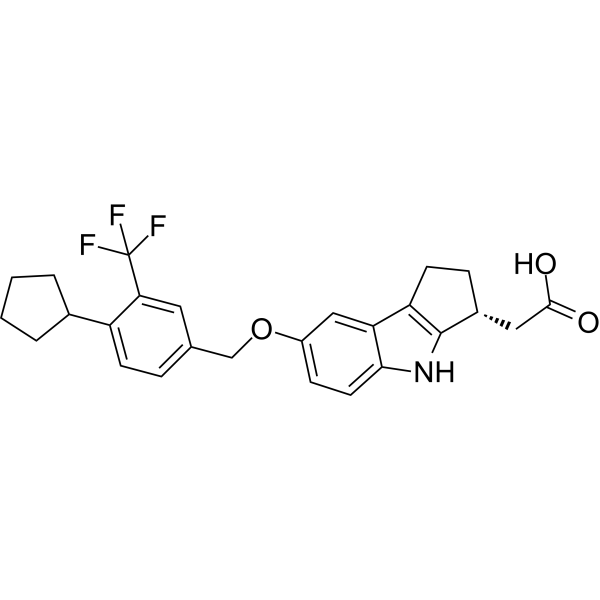
HY-12789
EtrasimodS1P1 Receptor Antagonist -
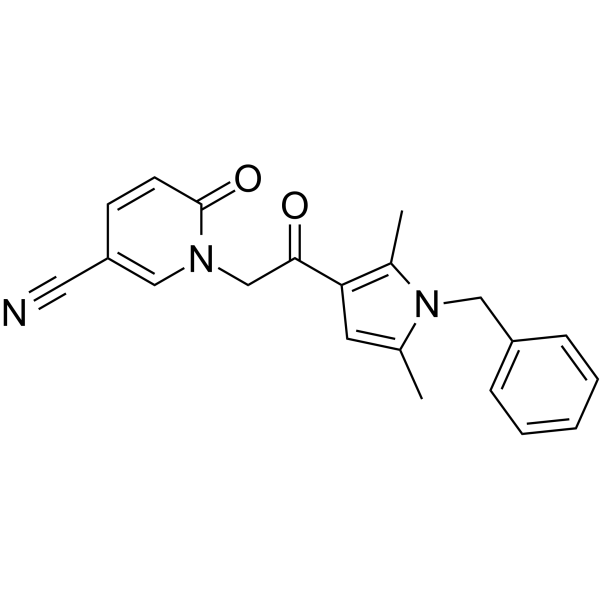
HY-100953
CYM-5520S1PR2 Agonist -
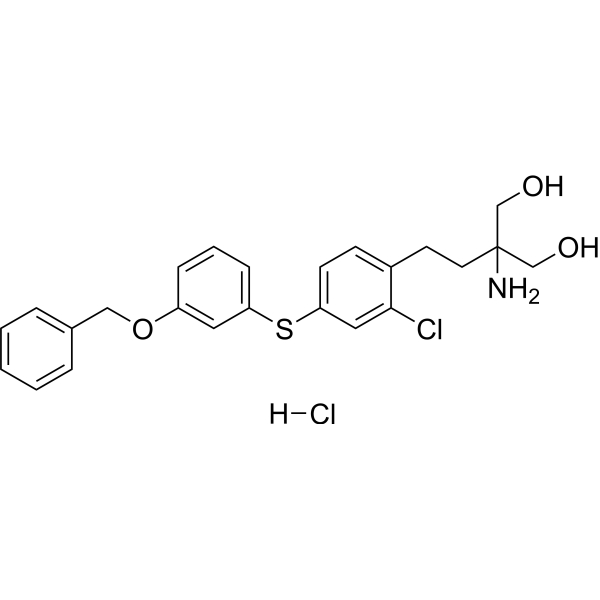
HY-13660
Mocravimod hydrochlorideS1PR Regulator -
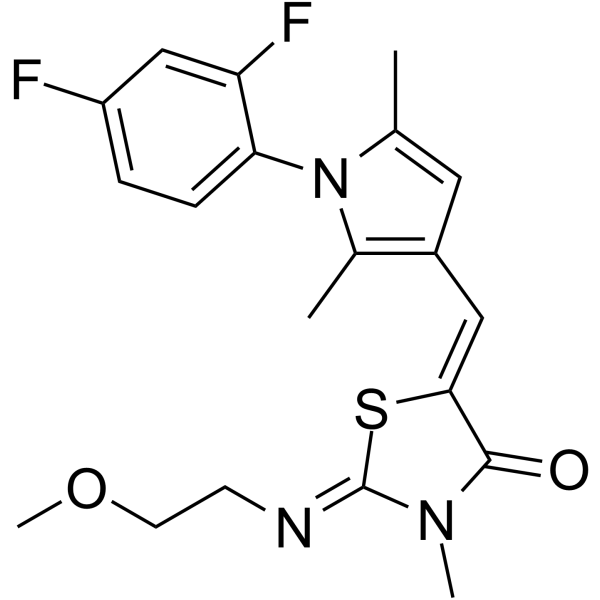
HY-108495
CYM50308S1P4 Receptor Agonist -
HY-108490
VPC 23019S1P1/3 Antagonist


Biological Activity
Description
IC50 & Target
|
S1PR1 <1 nM (EC50) |
In Vitro
Vibozilimod (Example 33) potently agonizes the human EDG1 receptor, with an EC50 of <1 nM[1].
MedChemExpress (MCE) has not independently confirmed the accuracy of these methods. They are for reference only.


Chemical Information
-
CAS No. 1403232-33-6
-
Appearance Solid
-
Molecular Weight 542.07
-
Formula C29H36ClN3O5
-
Color White to off-white
-
SMILES
O=C(C1(COCCOC)CCN(CC2=CC=C(C3=NOC(C4=CC=C(CC(C)C)C(Cl)=C4)=N3)C=C2)CC1)O
-
Synonyms
SCD-044
-
Shipping
Room temperature in continental US; may vary elsewhere.
-
Storage
Powder -20°C 3 years 4°C 2 years In solvent -80°C 6 months -20°C 1 month


Solvent & Solubility
In Vitro:
Ethanol : 1.92 mg/mL (3.54 mM; ultrasonic and warming and adjust pH to 5 with HCl and heat to 60°C)
Please refer to the solubility information to select the appropriate solvent. Once prepared, please aliquot and store the solution to prevent product inactivation from repeated freeze-thaw cycles.
Storage method and period of stock solution: -80°C, 6 months; -20°C, 1 month. When stored at -80°C, please use it within 6 months. When stored at -20°C, please use it within 1 month.
Please refer to the solubility information to select the appropriate solvent. Once prepared, please aliquot and store the solution to prevent product inactivation from repeated freeze-thaw cycles.
Storage method and period of stock solution: -80°C, 6 months; -20°C, 1 month. When stored at -80°C, please use it within 6 months. When stored at -20°C, please use it within 1 month.
Concentration (start) × Volume (start) = Concentration (final) × Volume (final)


Purity & Documentation
-
Data Sheet (271 KB)
-
SDS (252 KB)
- English - EN (252 KB)
- Français - FR (252 KB)
- Deutsch - DE (252 KB)
- Norwegian - NO (252 KB)
- Español - ES (252 KB)
- Swedish - SV (252 KB)
- Italian - IT (252 KB)
- Korean - KR (252 KB)
- Portuguese - PT (252 KB)
-
Handling Instructions (2659 KB)
References


Complete Stock Solution Preparation Table
Please refer to the solubility information to select the appropriate solvent. Once prepared, please aliquot and store the solution to prevent product inactivation from repeated freeze-thaw cycles.
Storage method and period of stock solution: -80°C, 6 months; -20°C, 1 month. When stored at -80°C, please use it within 6 months. When stored at -20°C, please use it within 1 month.
| Optional Solvent | Concentration Solvent Mass | 1 mg | 5 mg | 10 mg | 25 mg |
|---|---|---|---|---|---|
| Ethanol | 1 mM | 1.8448 mL | 9.2239 mL | 18.4478 mL | 46.1195 mL |


Vibozilimod Related Classifications
HY-132847 Related Classifications
 Powered by Bioz