



1-Decanol

Based on 1 Customer Validation
1-Decanol (Decyl alcohol) is a nematicidal agent derived from Houttuynia cordata, with an LC50 of 31.5 μg/mL against potato cyst nematodes (PCN). 1-decanol directly damages nematode surface structures, induces cellular apoptosis, and disrupts the oxidative stress regulation system, while also downregulating defense-related metabolic pathways in potato, thereby promoting the reallocation of metabolic resources from defense to growth. 1-Decanol can be used for the research of potato cyst nematode infestation.
For research use only. We do not sell to patients.
- Purity : 99.79%
- CAS No.: 112-30-1
- Formula: C10H22O
- Molecular Weight:158.28
-
Storage:
Store at room temperature 3 years.
In solvent -80°C, 2 years , -20°C, 1 year


To place orders, for customer services and technical support, please contact: MedChemExpress USA
Tel: 609-228-6898 E-mail: [email protected] [email protected]


-
 Biological Activity
-
Chemical Information
-
Solvent & Solubility
- Protocols
- Purity & Documentation
- References
-
 Help & FAQs


-
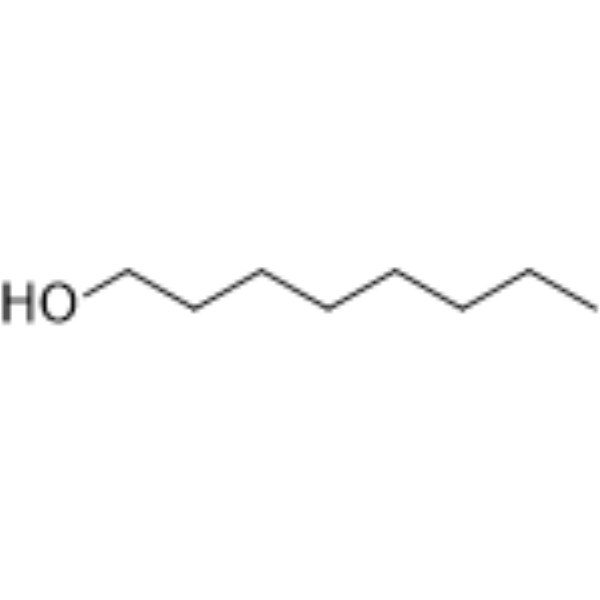
HY-W032013
1-OctanolT-channels Inhibitor -

HY-Y1004R
1-Decanol (Standard)Biochemical Assay Reagent -
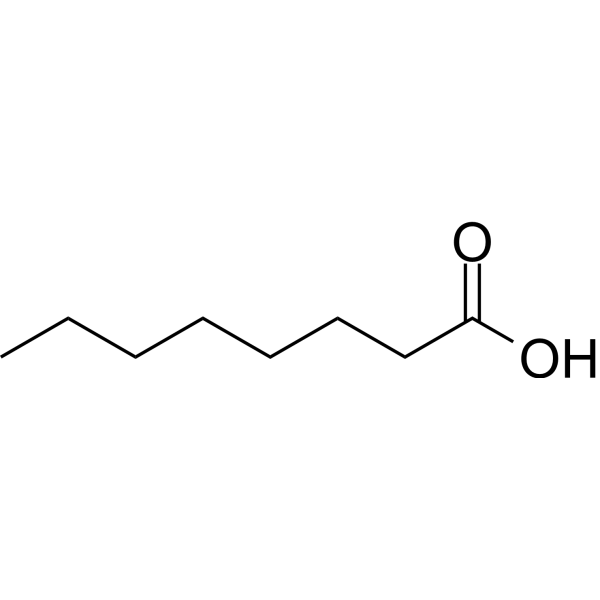
HY-41417
Octanoic acidAntibacterial Agent -
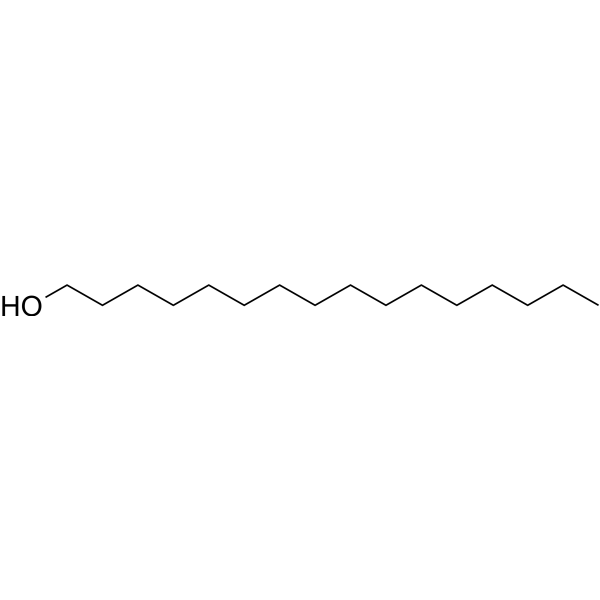
HY-B1465
1-HexadecanolEndogenous Metabolite -
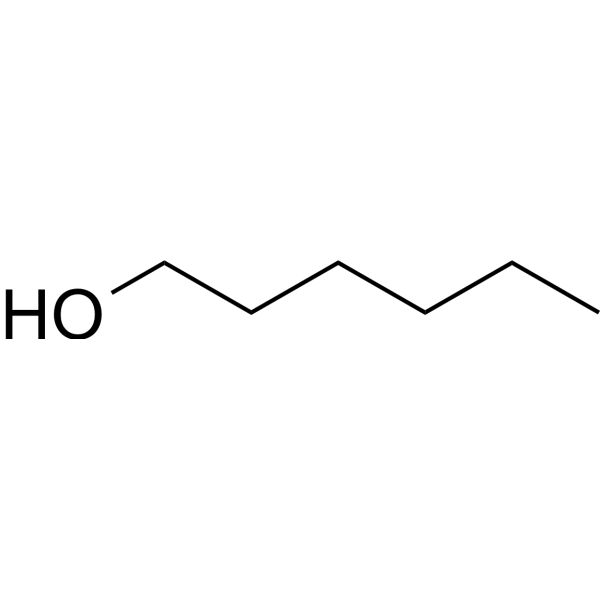
HY-W032022
1-HexanolPrimary Alcohol -
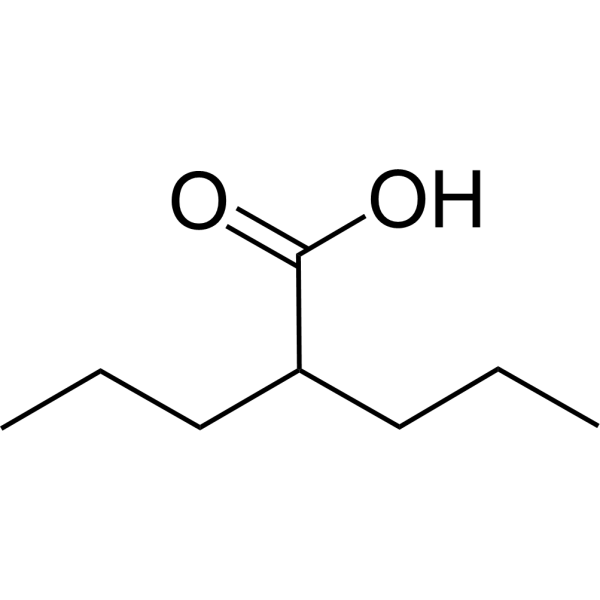
HY-10585
Valproic acidHDAC Inhibitor -
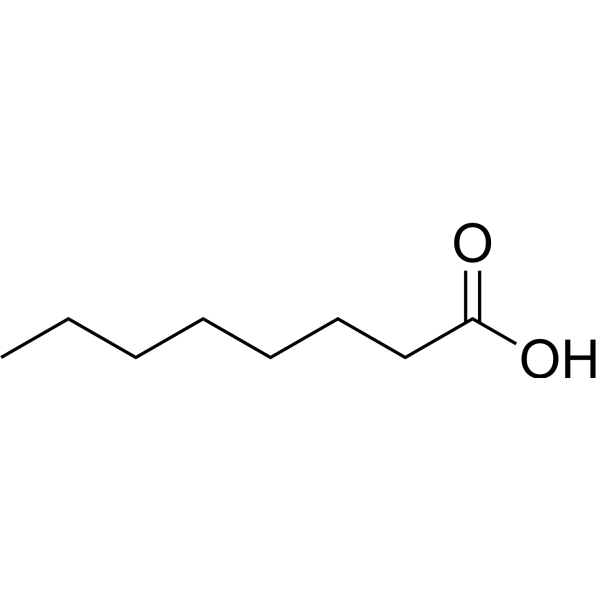
HY-41417R
Octanoic acid (Standard) -

HY-B1465R
1-Hexadecanol (Standard)Endogenous Metabolite -
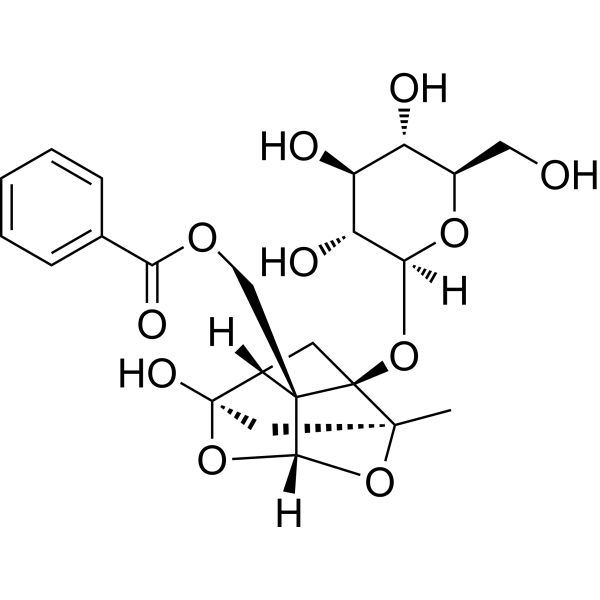
HY-N0293
PaeoniflorinHSP Activator -
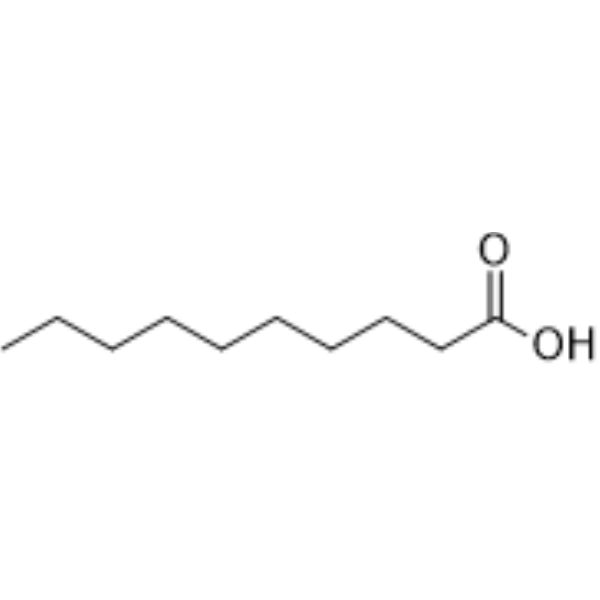
HY-W015309
Decanoic acidTyrosinase Inhibitor; Melanosome Inhibitor; mTORC1 Signaling Inhibitor -
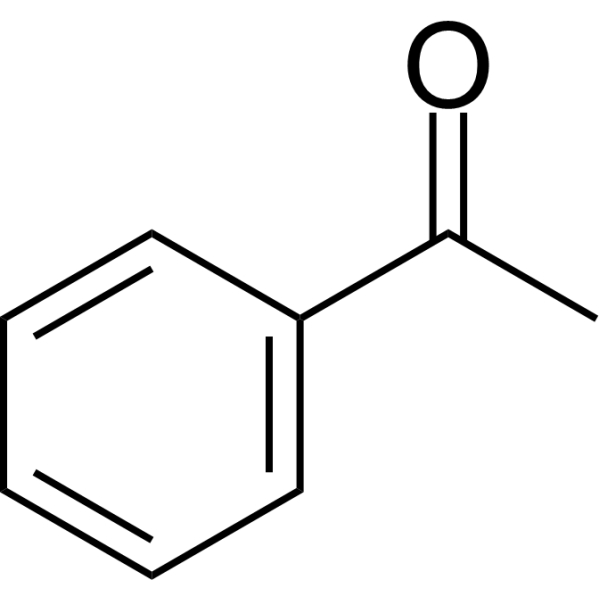
HY-Y0989
AcetophenoneOrganic Compound -
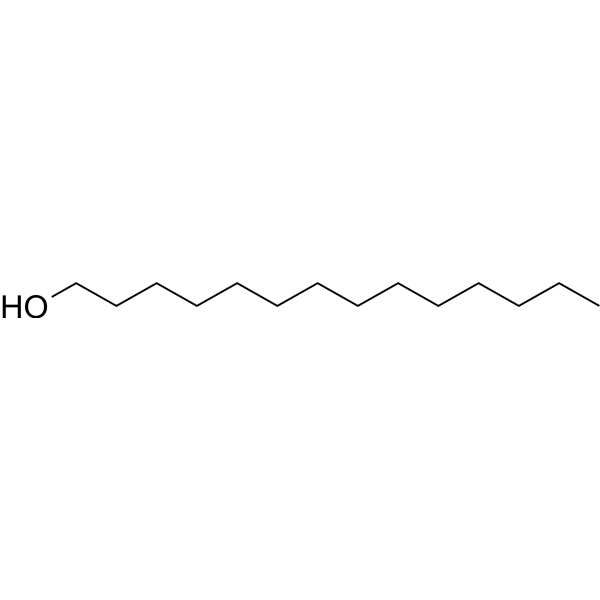
HY-W004294
1-TetradecanolAntibacterial Agent
All Parasite Isoforms
More

Biological Activity
Description
In Vitro
In Vivo
MedChemExpress (MCE) has not independently confirmed the accuracy of these methods. They are for reference only.
-
Animal Model:Sprague-Dawley rats (female, pregnant, sperm-positive, gestation day 0, ~15 animals per group)[2]
-
Dosage:100 mg/m3
-
Administration:inhalation; 7 h/day; 19 days (gestation days 1-19)
-
Result:Showed no significant differences compared to a composite control group in maternal weight (gestation days 0, 7, 14, 20; overall weight gain), feed consumption (weekly and overall), water intake (weekly and overall), number of corpora lutea per litter, number of resorptions per litter, number of female or male fetuses per litter, or mean female/male fetal weights.
Detected no treatment-related external, visceral, or skeletal malformations or variations.


Chemical Information
-
CAS No. 112-30-1
-
Appearance Liquid (Density: 0.8±0.1 g/cm3)
-
Molecular Weight 158.28
-
Formula C10H22O
-
Color Colorless to light yellow
-
SMILES
CCCCCCCCCCO
-
Synonyms
Decyl alcohol
-
Structure Classification
-
Initial Source
-
Shipping
Room temperature in continental US; may vary elsewhere.
-
Storage
Store at room temperature 3 years
In solvent -80°C 2 years -20°C 1 year


Solvent & Solubility
In Vitro:
DMSO : 200 mg/mL (1263.58 mM; Need ultrasonic; Hygroscopic DMSO has a significant impact on the solubility of product, please use newly opened DMSO)
Please refer to the solubility information to select the appropriate solvent. Once prepared, please aliquot and store the solution to prevent product inactivation from repeated freeze-thaw cycles.
Storage method and period of stock solution: -80°C, 2 years; -20°C, 1 year. When stored at -80°C, please use it within 2 years. When stored at -20°C, please use it within 1 year.
Please refer to the solubility information to select the appropriate solvent. Once prepared, please aliquot and store the solution to prevent product inactivation from repeated freeze-thaw cycles.
Storage method and period of stock solution: -80°C, 2 years; -20°C, 1 year. When stored at -80°C, please use it within 2 years. When stored at -20°C, please use it within 1 year.
Concentration (start) × Volume (start) = Concentration (final) × Volume (final)


Purity & Documentation
-
Data Sheet (270 KB)
-
SDS (598 KB)
- English - EN (598 KB)
- Français - FR (598 KB)
- Deutsch - DE (598 KB)
- Norwegian - NO (598 KB)
- Español - ES (598 KB)
- Swedish - SV (598 KB)
- Italian - IT (598 KB)
- Korean - KR (598 KB)
- Portuguese - PT (598 KB)
-
Handling Instructions (2659 KB)
References
[1]. Zhang Q, et al. Interspecific allelopathy suppresses potato cyst nematodes by 1-decanol derived from Houttuyniacordata. Plant Commun. 2026;7(3):101679. [Content Brief]
[2]. Nelson BK, et al. Developmental toxicology of industrial alcohols: a summary of 13 alcohols administered by inhalation to rats. Toxicol Ind Health. 1990 May-Jul;6(3-4):373-87. [Content Brief]


Complete Stock Solution Preparation Table
Please refer to the solubility information to select the appropriate solvent. Once prepared, please aliquot and store the solution to prevent product inactivation from repeated freeze-thaw cycles.
Storage method and period of stock solution: -80°C, 2 years; -20°C, 1 year. When stored at -80°C, please use it within 2 years. When stored at -20°C, please use it within 1 year.
| Optional Solvent | Concentration Solvent Mass | 1 mg | 5 mg | 10 mg | 25 mg |
|---|---|---|---|---|---|
| DMSO | 1 mM | 6.3179 mL | 31.5896 mL | 63.1792 mL | 157.9479 mL |
| 5 mM | 1.2636 mL | 6.3179 mL | 12.6358 mL | 31.5896 mL | |
| 10 mM | 0.6318 mL | 3.1590 mL | 6.3179 mL | 15.7948 mL | |
| 15 mM | 0.4212 mL | 2.1060 mL | 4.2119 mL | 10.5299 mL | |
| 20 mM | 0.3159 mL | 1.5795 mL | 3.1590 mL | 7.8974 mL | |
| 25 mM | 0.2527 mL | 1.2636 mL | 2.5272 mL | 6.3179 mL | |
| 30 mM | 0.2106 mL | 1.0530 mL | 2.1060 mL | 5.2649 mL | |
| 40 mM | 0.1579 mL | 0.7897 mL | 1.5795 mL | 3.9487 mL | |
| 50 mM | 0.1264 mL | 0.6318 mL | 1.2636 mL | 3.1590 mL | |
| 60 mM | 0.1053 mL | 0.5265 mL | 1.0530 mL | 2.6325 mL | |
| 80 mM | 0.0790 mL | 0.3949 mL | 0.7897 mL | 1.9743 mL | |
| 100 mM | 0.0632 mL | 0.3159 mL | 0.6318 mL | 1.5795 mL |


1-Decanol Related Classifications
HY-Y1004 Related Classifications
 Powered by Bioz
Keywords
- 1-Decanol
- 112-30-1
- Decyl alcohol
- Biochemical Assay Reagents
- Apoptosis
- Parasite
- nematicidal agent
- Houttuynia cordata
- potato cyst nematodes
- beneficial microbiota
- oxidative stress disruptor
- apoptosis inducer
- Sprague-Dawley rats
- potato defense-related metabolic pathways
- pathogen growth inhibitor
- potato rhizosphere
- Inhibitor
- inhibitor
- inhibit