



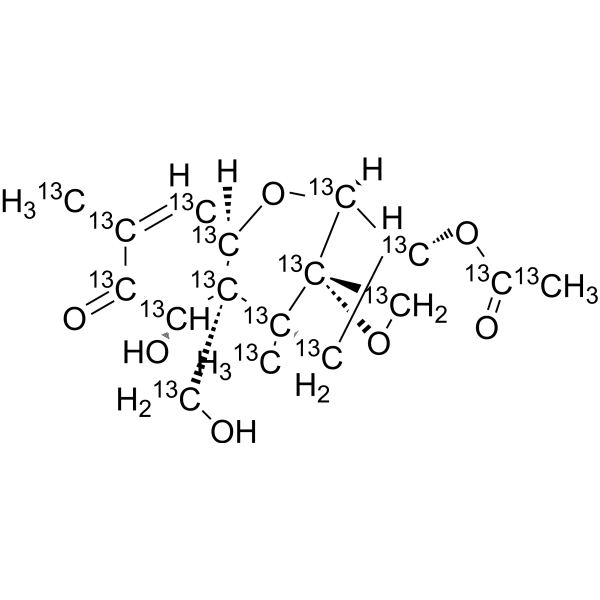
3-Acetyldeoxynivalenol-13C17

Based on 1 Customer Validation
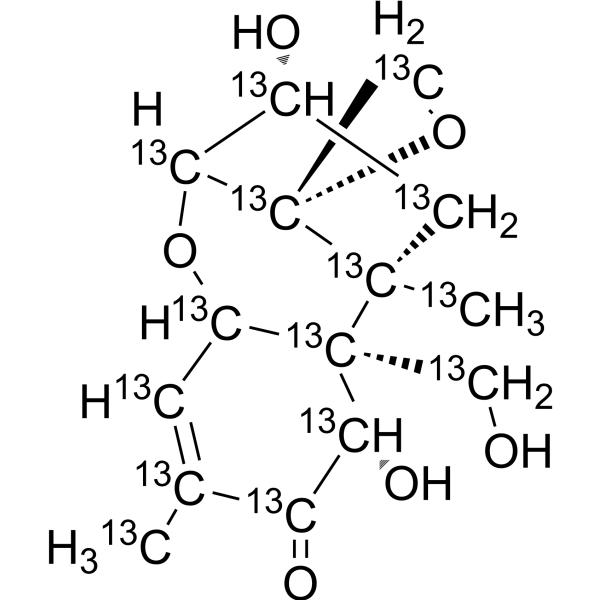
3-Acetyldeoxynivalenol (3-AcDON; 3ADON)-13C17 is the 13C labeled 3-Acetyldeoxynivalenol (HY-N6685). 3-Acetyldeoxynivalenol, a trichothecene mycotoxin deoxynivalenol (DON) acetylated derivative, is a brain-penetrant Fusarium mycotoxin. 3-Acetyldeoxynivalenol induces mRNA expression and production of inflammatory chemokine IL-8 in intestinal cells.
For research use only. We do not sell to patients.
- Purity : 99.0%
- CAS No.: 1217476-81-7
- Formula: 13C17H22O7
- Molecular Weight:355.23
-
Storage:
Solution, -20°C, protect from light, 2 years

To place orders, for customer services and technical support, please contact: MedChemExpress USA
Tel: 609-228-6898 E-mail: [email protected] [email protected]


-
 Biological Activity
-
Chemical Information
- Protocols
- Purity & Documentation
- References
-
 Help & FAQs


-
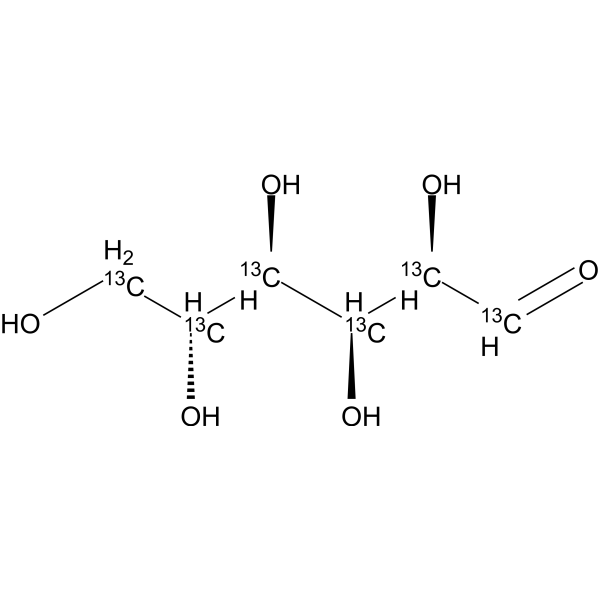
HY-B0389A
D-Glucose-13C6Endogenous Metabolite -
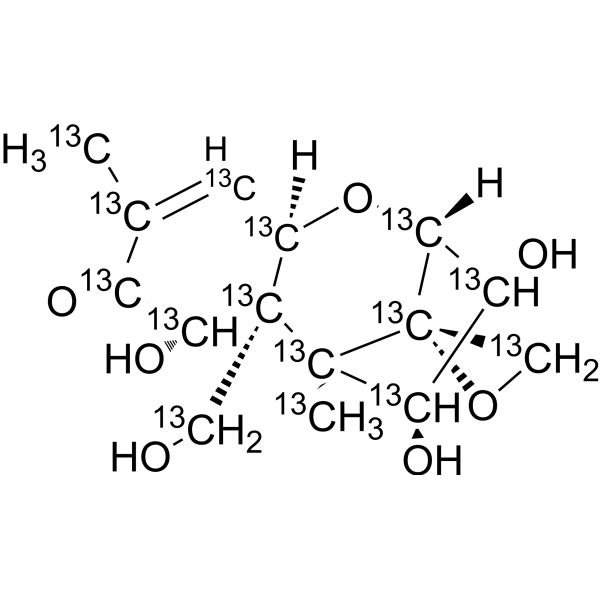
HY-N6801S
Nivalenol-13C15Stable Isotope -
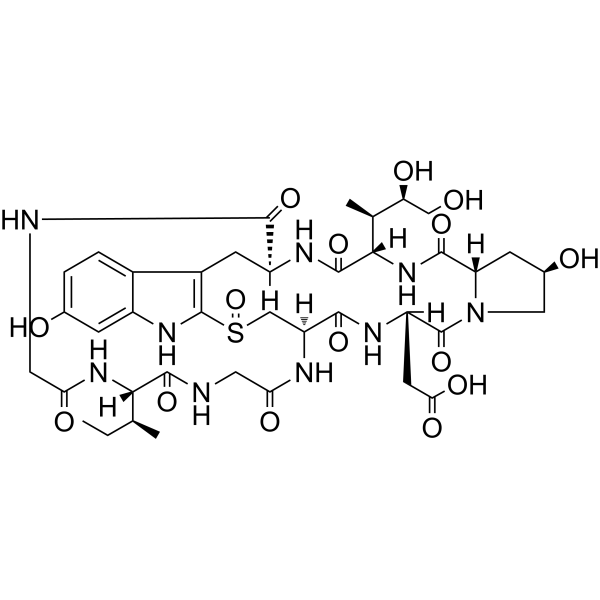
HY-125586
β-AmanitinRNA Polymerase II/III Inhibitor -
HY-D0203
Basic green 4Cationic Dye -
HY-123647
Satratoxin HRibosome Binding Agent\nApoptosis Inducer\nGenotoxin -
HY-N7719
OosporeinMicrobial Metabolite -
HY-103447S1
Zearalenone-13C18Mycotoxin Compound -
HY-152072S
Deoxynivalenol-13C15 -

HY-126051
ViriditoxinMycotoxin
All Endogenous Metabolite Isoforms
More

Biological Activity
Description
IC50 & Target
[1]|
IL-8 |
In Vitro
Stable heavy isotopes of hydrogen, carbon, and other elements have been incorporated into drug molecules, largely as tracers for quantitation during the drug development process. Deuteration has gained attention because of its potential to affect the pharmacokinetic and metabolic profiles of drugs[1].
MedChemExpress (MCE) has not independently confirmed the accuracy of these methods. They are for reference only. Further protocols information, click here.
Application
1. This compound can be used as a tracer
2. This compound can be used as an internal standard for quantitative analysis by NMR, GC-MS, or LC-MS.


Chemical Information
-
CAS No. 1217476-81-7
-
Unlabeled CAS 50722-38-8
-
Appearance Liquid
-
Molecular Weight 355.23
-
Formula 13C17H22O7
-
Color Colorless to light yellow
-
SMILES
[13CH3][13C@]12[13C@@]3([13C@@]([H])([13C@H](O[13C]([13CH3])=O)[13CH2]2)O[13C@]4([13C@]1([13CH2]O)[13C@H](O)[13C]([13C]([13CH3])=[13CH]4)=O)[H])[13CH2]O3
-
Synonyms
3-AcDON-13C17; 3-ADON-13C17
-
Shipping
Room temperature in continental US; may vary elsewhere.
-
Storage
Solution, -20°C, protect from light, 2 years

Protocols
-
RT-PCR
Reverse transcription technology uses RNA as a template to synthesize DNA. RT-PCR is simple, specific and sensitive, and can be used to detect gene expression levels and expression differences in cells; detect RNA virus content; clone cDNA sequences of specific genes.
-
RNA extraction experimental
By lysing cells, releasing RNA, and removing impurities such as proteins and DNA, high-purity RNA products are finally obtained. The commonly used traditional method is the guanidine isothiocyanate/phenol/chloroform method (Trizol), which is suitable for a variety of animal materials including animal tissues, microorganisms, cultured cells, etc., and most plant materials.
-
Real Time qPCR (Q-PCR)
Real-time quantitative PCR (qPCR) quantifies an amplifiable nucleic-acid target by monitoring fluorescence during PCR cycling rather than measuring product only after amplification. The increase in fluorescence tracks accumulation of PCR product, and the quantification cycle (Cq; historically also Ct/CP) is related to the initial amount of target: samples containing more starting target generally reach the defined fluorescence threshold in fewer cycles.


Purity & Documentation
-
Data Sheet (278 KB)
-
SDS (605 KB)
- English - EN (605 KB)
- Français - FR (605 KB)
- Deutsch - DE (605 KB)
- Norwegian - NO (605 KB)
- Español - ES (605 KB)
- Swedish - SV (605 KB)
- Italian - IT (605 KB)
- Korean - KR (605 KB)
- Portuguese - PT (605 KB)
-
Handling Instructions (2659 KB)
References
[1]. Kadota T, et al. Comparative study of deoxynivalenol, 3-acetyldeoxynivalenol, and 15-acetyldeoxynivalenolon intestinal transport and IL-8 secretion in the human cell line Caco-2. Toxicol In Vitro. 2013 Sep;27(6):1888-95. [Content Brief]
[2]. Behrens M, et al. Blood-Brain Barrier Effects of the Fusarium Mycotoxins Deoxynivalenol, 3Acetyldeoxynivalenol, and Moniliformin and Their Transfer to the Brain. PLoS One. 2015 Nov 23;10(11):e0143640. [Content Brief]

Calculators
Concentration (start) × Volume (start) = Concentration (final) × Volume (final)


3-Acetyldeoxynivalenol-13C17 Related Classifications
HY-N6685S1 Related Classifications
 Powered by Bioz