



Apramycin (sulfate)
Based on 5 publication(s) in Google Scholar
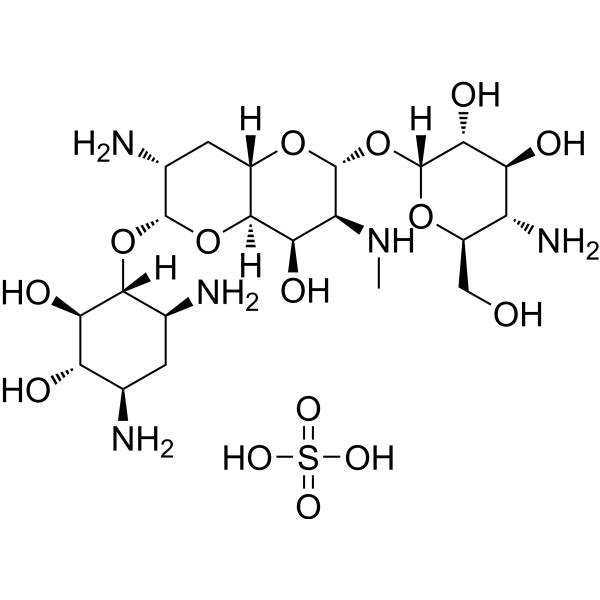
Apramycin (EBL 1003) sulfate is an orally active, acidic pH tolerant and aminoglycoside-modifying-enzymes-tolerant aminoglycoside antibiotic which inhibits protein biosynthesis by targeting the bacterial ribosome. Apramycin sulfate is a potential anti-drug-resistance antibiotic.
商品は「研究用試薬」です。人や動物の医療用・臨床診断用・食品用の製品ではありません。
研究用途以外に使用した場合、当社は一切の責任を負いかねます。
- 純度 : 98.0%
- CAS 番号: 65710-07-8
- 分子式: C21H43N5O15S
- 分子量:637.66
-
保管条件:
4°C, sealed storage, away from moisture
* In solvent : -80°C, 6 months; -20°C, 1 month (sealed storage, away from moisture)

To place orders, for customer services and technical support, please contact: MedChemExpress USA
Tel: 609-228-6898 E-mail: [email protected] [email protected]


-
 生物活性
生物活性
-
化学情報
-
溶剤 & 溶解度
- 純度とドキュメンテーション
- 参考文献
-
 Help & FAQs


-
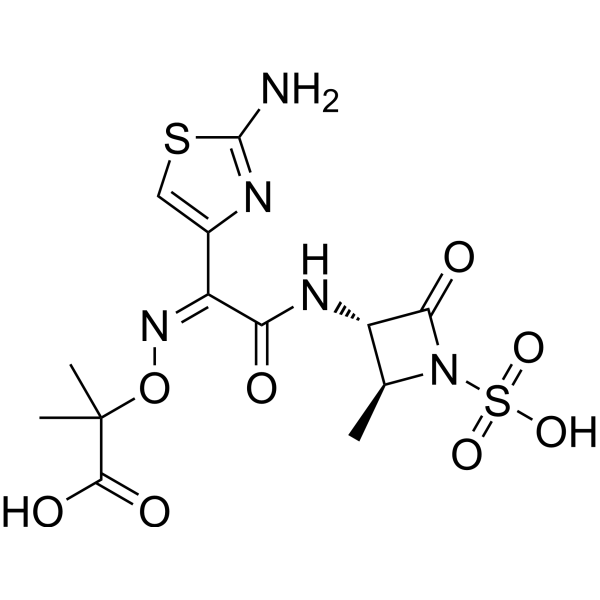
HY-B0129
AztreonamBacterial Inhibitor -
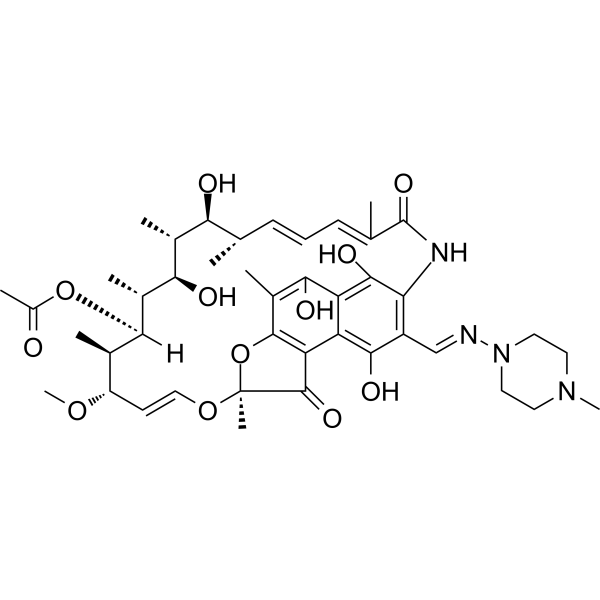
HY-B0272
RifampicinAntivirus Agent -
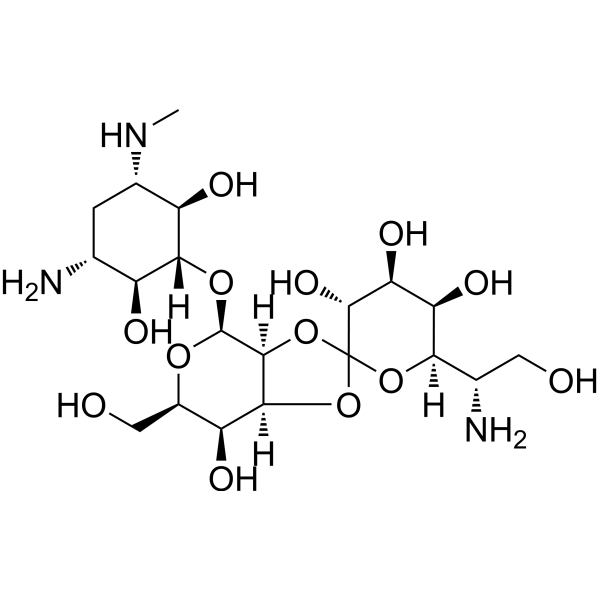
HY-B0490
Hygromycin BAntibiotic -
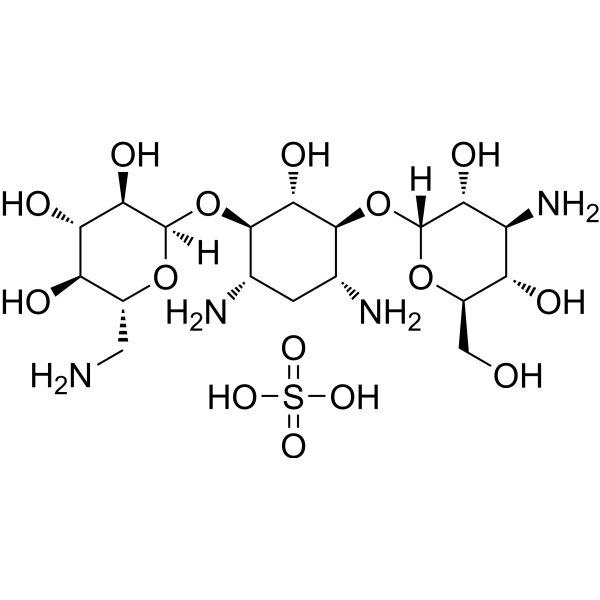
HY-16566A
Kanamycin sulfateAntibacterial Agent -
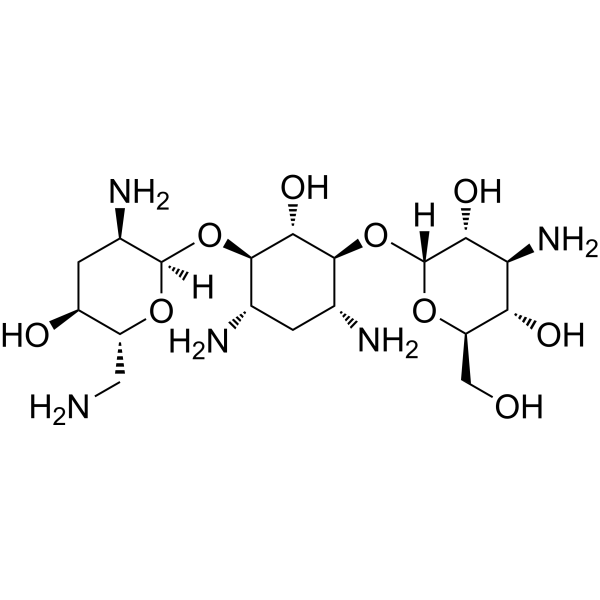
HY-B0441
TobramycinBacterial Inhibitor -
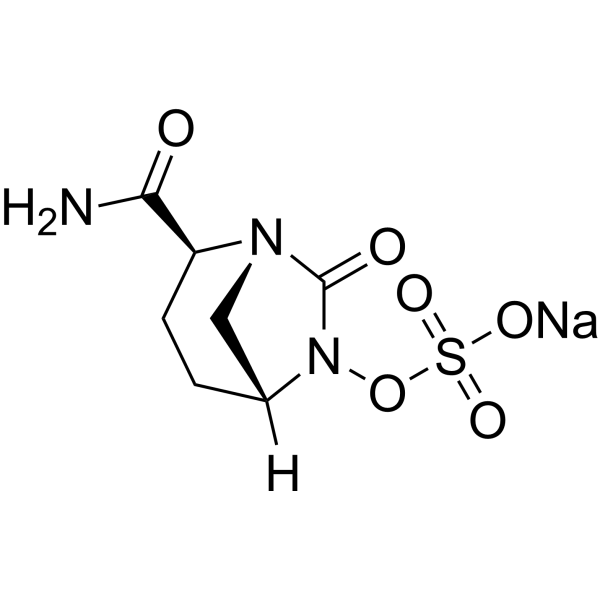
HY-14879A
Avibactam sodiumBeta-lactamase Inhibitor -
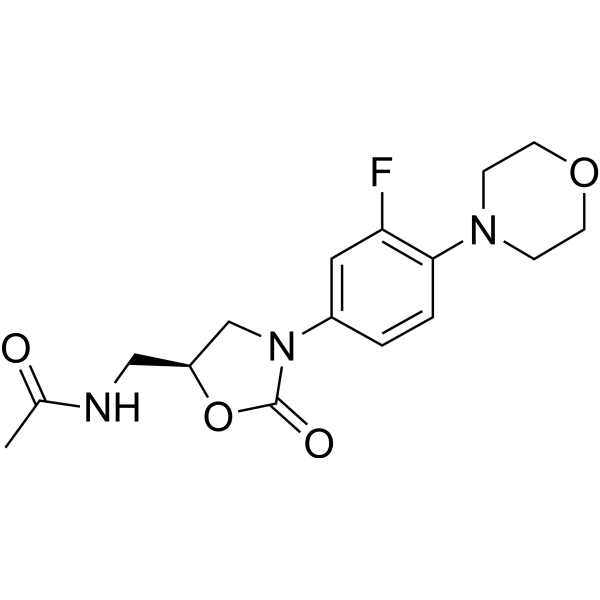
HY-10394
LinezolidAntibiotic -
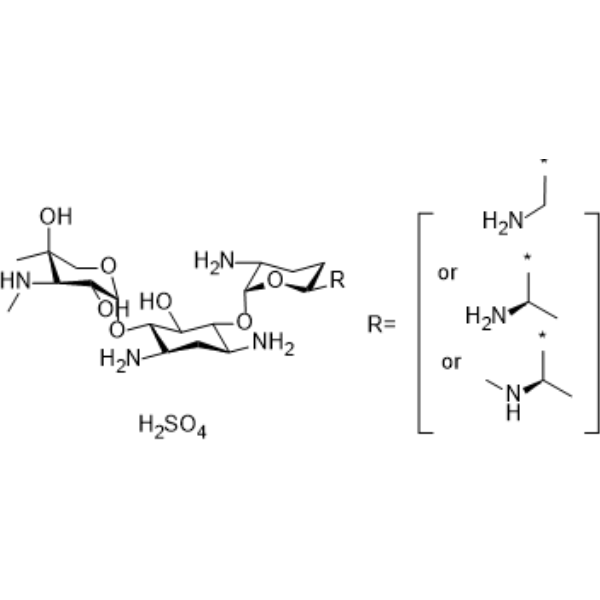
HY-A0276
Gentamicin sulfateAminoglycoside Antibiotic -
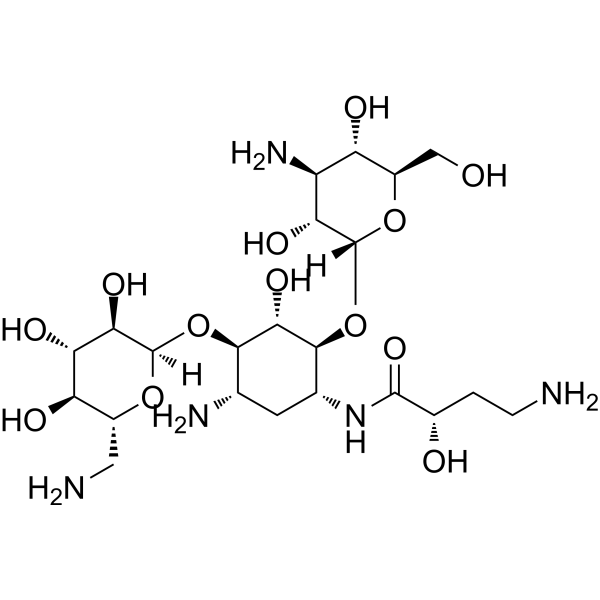
HY-B0509A
AmikacinAntibiotic -
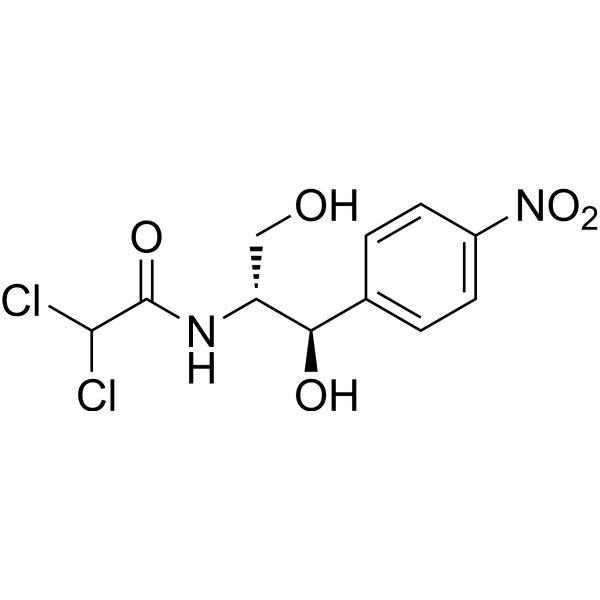
HY-B0239
ChloramphenicolHIF-1α Inhibitor -
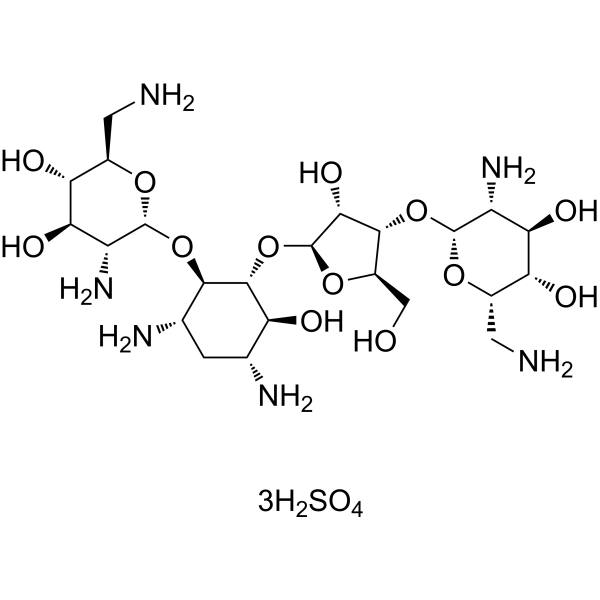
HY-B0470
Neomycin sulfatePhospholipase C Inhibitor, Angiogenesis Modulator -
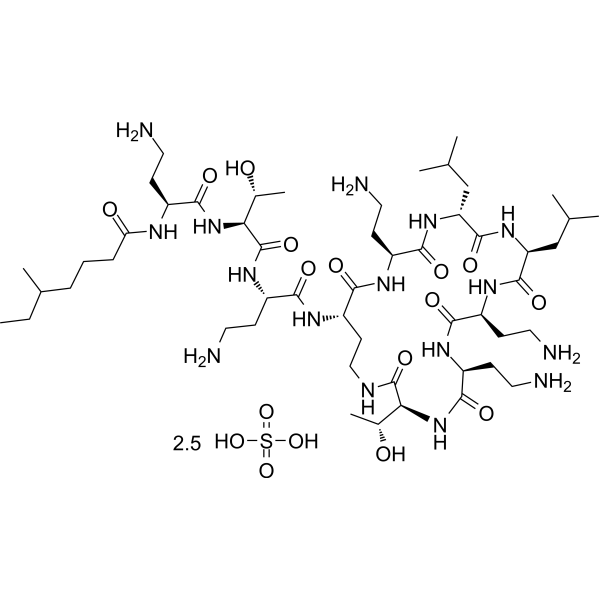
HY-A0089
Colistin sulfateAntibiotic
MedChemExpress(MCE)の使用を引用している文献 Apramycin sulfate
MoreAntibiotic アイソフォーム固有の製品をすべて表示
More

生物活性
製品説明
IC50 & Target
|
Aminoglycoside |
体外実験
Apramycin (4 mg/L) sulfate inhibits 99% of K. pneumoniae and 93% of Enterobacter clinical isolates. Apramycin (8 mg/L) sulfate inhibits 99% of all E. coli, 98% of C. freundii, 96% of Providencia spp., 92% of S. marcescens, 97% of M. morganii and 100% of P. mirabilis clinical isolates, exhibiting significantly better antimicrobial activity than the clinical standard-of-care aminoglycosides Gentamicin and Amikacin sulfate[1].
Apramycin (100 μM, 10 min) sulfate exerts an 11% decrease in cytoplasmic uptake of E.coli when lowering the pH from 7.3 to 5.7 while the amounts of Gentamicin and Amikacin are reduced by 62% and 51%, respectively[3].
MedChemExpress (MCE) has not independently confirmed the accuracy of these methods. They are for reference only. .
体内実験
Apramycin (16, 32, 80 mg/kg, s.c., 24 h) sulfate dose-dependently reduces bacterial burden in the kidneys between 2-5 log10 and in blood between 2-3 log10 for neutropenic model of Staphylococcus aureus septicemia mice[2].
Apramycin (50 mg/kg/d, s.c., 21 d) sulfate induces nephrotoxicity scores comparable to those induced by Gentamicin (10 mg/kg/d)[3].
MedChemExpress (MCE) has not independently confirmed the accuracy of these methods. They are for reference only.
-
Animal Model:M. tuberculosis low-dose aerosol infection model of IFN-γ knockout mice [2]
-
Dosage:200 mg/kg/d
-
Administration:Subcutaneousinjection (s.c.) for 9 d
-
Result:Showed a 2.4-log10 CFU reduction and better antituberculous activity compared to Amikacin (1.8-log10 reduction).


化学情報
-
CAS 番号 65710-07-8
-
性状 Solid
-
分子量 637.66
-
分子式 C21H43N5O15S
-
Color White to yellow
-
SMILES
O[C@H]1[C@](O[C@H](O[C@@]([C@H](C[C@H]2N)N)([H])[C@@H]([C@H]2O)O)[C@H](N)C3)([H])[C@@]3([H])O[C@H](O[C@@]([C@@H]([C@@H](O)[C@@H]4N)O)([H])O[C@@H]4CO)[C@H]1NC.O=S(O)(O)=O
-
別名
Nebramycin II (sulfate); 硫酸アプラマイシン; ネブラマイシン II
-
Structure Classification
-
Initial Source
Streptoalloteichus tenebrarius
-
輸送条件
Room temperature in continental US; may vary elsewhere.
-
保管条件
4°C, sealed storage, away from moisture
* In solvent : -80°C, 6 months; -20°C, 1 month (sealed storage, away from moisture)


Publications (5)
-
Journal Impact Factor
-
Most Recent
-
Nat Microbiol
Prodrug florfenicol amine is activated by intrinsic resistance to target Mycobacterium abscessus. [Abstract]2025 Nov;10(11):2875-2891. PMID: 41168430 -
Nat Microbiol
Characterization of antibiotic resistomes by reprogrammed bacteriophage-enabled functional metagenomics in clinical strains. [Abstract]2023 Mar;8(3):410-423. PMID: 36759752 -
J Adv Res
WTAP/YTHDF1-mediated m6A modification amplifies IFN-γ-induced immunosuppressive properties of human MSCs. [Abstract]2025 May:71:441-455. PMID: 38944238 -
Nucleic Acids Res
PhoP-regulated VirK acts as an accessory factor to maintain virulence in polymyxin-resistant Klebsiella pneumoniae. [Abstract]2026 Apr 23;54(8):gkag290. PMID: 42033226 -
Acta Pharm Sin B
Polymyxin resistance caused by large-scale genomic inversion due to IS 26 intramolecular translocation in Klebsiella pneumoniae. [Abstract]2023 Sep;13(9):3678-3693. PMID: 37719365


溶剤 & 溶解度
体外:
H2O : ≥ 200 mg/mL (313.65 mM)
* "≥" means soluble, but saturation unknown.
Please refer to the solubility information to select the appropriate solvent. Once prepared, please aliquot and store the solution to prevent product inactivation from repeated freeze-thaw cycles.
Storage method and period of stock solution: -80°C, 6 months; -20°C, 1 month (sealed storage, away from moisture). When stored at -80°C, please use it within 6 months. When stored at -20°C, please use it within 1 month.
* Note: If you choose water as the stock solution, please dilute it to the working solution, then filter and sterilize it with a 0.22 μm filter before use.
Please refer to the solubility information to select the appropriate solvent. Once prepared, please aliquot and store the solution to prevent product inactivation from repeated freeze-thaw cycles.
Storage method and period of stock solution: -80°C, 6 months; -20°C, 1 month (sealed storage, away from moisture). When stored at -80°C, please use it within 6 months. When stored at -20°C, please use it within 1 month.
* Note: If you choose water as the stock solution, please dilute it to the working solution, then filter and sterilize it with a 0.22 μm filter before use.
濃度 (開始) × 体積 (開始) = 濃度 (終了) × 体積 (終了)
体内:
For the following dissolution methods, please prepare the working solution directly:
It is recommended to prepare fresh solutions and use them promptly within a short period of time.
The percentages shown for the solvents indicate their volumetric ratio in the final prepared solution. If precipitation or phase separation occurs during preparation, heat and/or sonication can be used to aid dissolution.
Add each solvent one by one: PBS
Solubility: 100 mg/mL (156.82 mM); Clear solution; Need ultrasonic


純度とドキュメンテーション
-
データシート (283 KB)
-
SDS (480 KB)
- English - EN (480 KB)
- Français - FR (480 KB)
- Deutsch - DE (480 KB)
- Norwegian - NO (480 KB)
- Español - ES (480 KB)
- Swedish - SV (480 KB)
- Italian - IT (480 KB)
- Korean - KR (480 KB)
- Portuguese - PT (480 KB)
-
取扱説明書 (2659 KB)
参考文献
[1]. Juhas M, et al. In vitro activity of apramycin against multidrug-, carbapenem- and aminoglycoside-resistant Enterobacteriaceae and Acinetobacter baumannii. J Antimicrob Chemother. 2019;74(4):944-952. [Content Brief]
[2]. Meyer M, et al. In vivo efficacy of apramycin in murine infection models. Antimicrob Agents Chemother. 2014 Nov;58(11):6938-41. [Content Brief]
[3]. Becker K, et al. Antibacterial activity of apramycin at acidic pH warrants wide therapeutic window in the treatment of complicated urinary tract infections and acute pyelonephritis. EBioMedicine. 2021 Nov;73:103652. [Content Brief]


Complete Stock Solution Preparation Table
Please refer to the solubility information to select the appropriate solvent. Once prepared, please aliquot and store the solution to prevent product inactivation from repeated freeze-thaw cycles.
Storage method and period of stock solution: -80°C, 6 months; -20°C, 1 month (sealed storage, away from moisture). When stored at -80°C, please use it within 6 months. When stored at -20°C, please use it within 1 month.
| Optional Solvent | Concentration Solvent Mass | 1 mg | 5 mg | 10 mg | 25 mg |
|---|---|---|---|---|---|
| H2O | 1 mM | 1.5682 mL | 7.8412 mL | 15.6823 mL | 39.2058 mL |
| 5 mM | 0.3136 mL | 1.5682 mL | 3.1365 mL | 7.8412 mL | |
| 10 mM | 0.1568 mL | 0.7841 mL | 1.5682 mL | 3.9206 mL | |
| 15 mM | 0.1045 mL | 0.5227 mL | 1.0455 mL | 2.6137 mL | |
| 20 mM | 0.0784 mL | 0.3921 mL | 0.7841 mL | 1.9603 mL | |
| 25 mM | 0.0627 mL | 0.3136 mL | 0.6273 mL | 1.5682 mL | |
| 30 mM | 0.0523 mL | 0.2614 mL | 0.5227 mL | 1.3069 mL | |
| 40 mM | 0.0392 mL | 0.1960 mL | 0.3921 mL | 0.9801 mL | |
| 50 mM | 0.0314 mL | 0.1568 mL | 0.3136 mL | 0.7841 mL | |
| 60 mM | 0.0261 mL | 0.1307 mL | 0.2614 mL | 0.6534 mL | |
| 80 mM | 0.0196 mL | 0.0980 mL | 0.1960 mL | 0.4901 mL | |
| 100 mM | 0.0157 mL | 0.0784 mL | 0.1568 mL | 0.3921 mL |
* Note: If you choose water as the stock solution, please dilute it to the working solution, then filter and sterilize it with a 0.22 μm filter before use.


Apramycin sulfate 関連分類
HY-B1329 関連分類
 Powered by Bioz