



Hygromycin B
Based on 41 publication(s) in Google Scholar
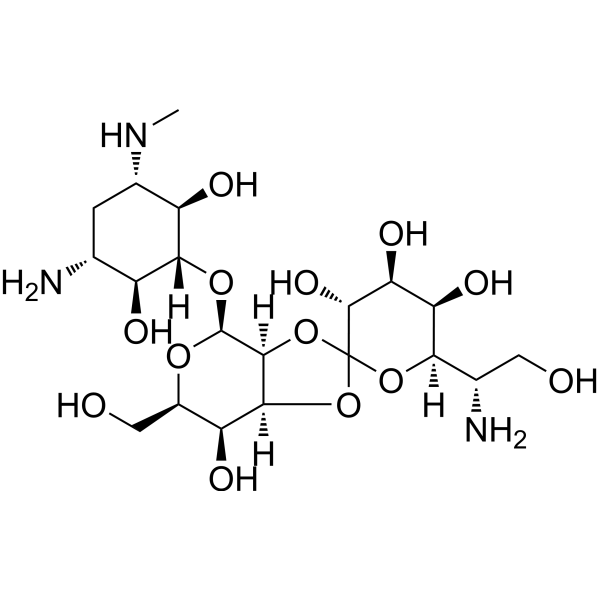
Hygromycin B is an aminoglycoside antibiotic active against prokaryotic and eukaryotic cells.
For research use only. We do not sell to patients.
- Purity : 99.93%
- CAS No.: 31282-04-9
- Formula: C20H37N3O13
- Molecular Weight:527.52
-
Storage:Powder -20°C, 3 years , 4°C, 2 years ; In solvent -80°C, 6 months , -20°C, 1 month

To place orders, for customer services and technical support, please contact: MedChemExpress USA
Tel: 609-228-6898 E-mail: [email protected] [email protected]


-
 Biological Activity
-
Chemical Information
-
Solvent & Solubility
- Purity & Documentation
- References
-
 Help & FAQs


-
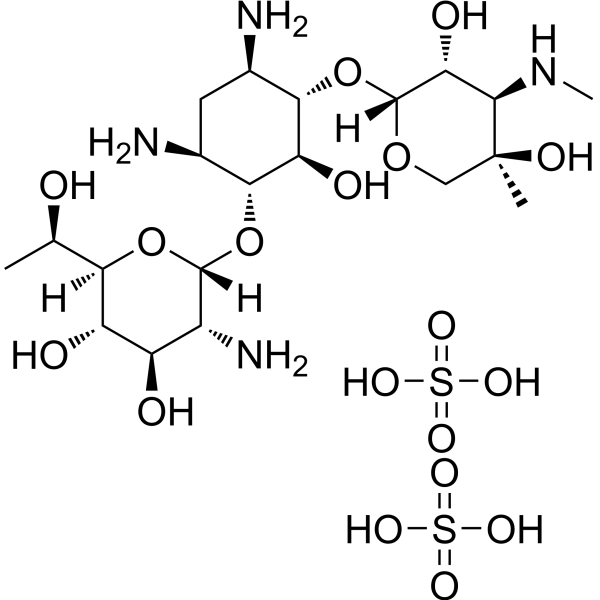
HY-17561
G-418 disulfateAminoglycoside Antibiotic -
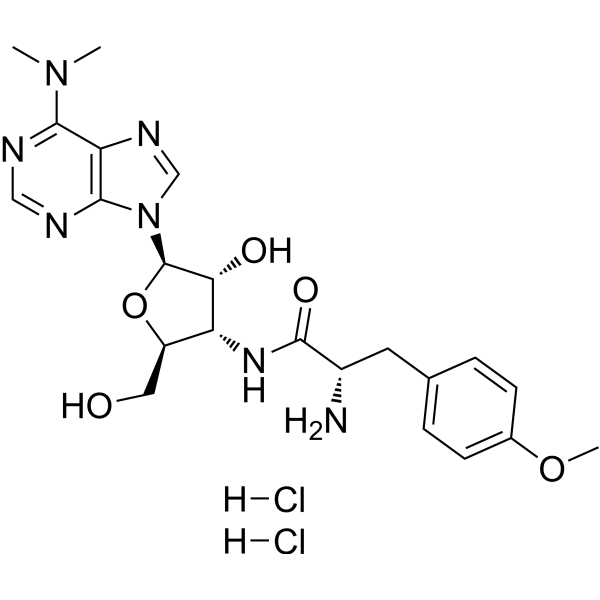
HY-B1743A
Puromycin dihydrochlorideProtein Synthesis Inhibitor -
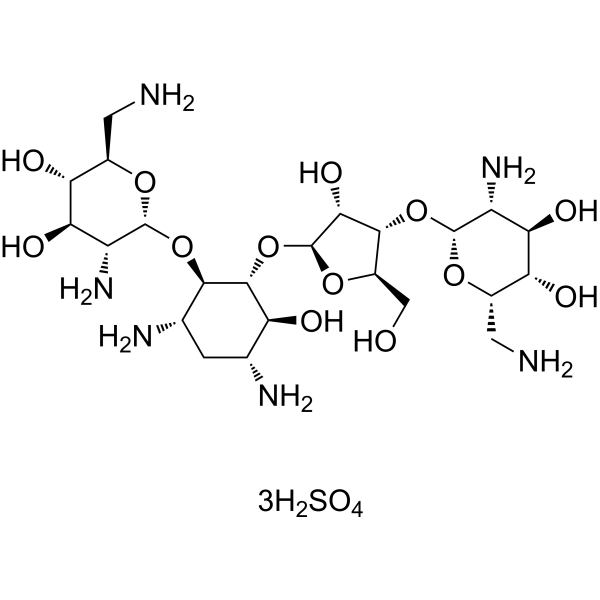
HY-B0470
Neomycin sulfatePhospholipase C Inhibitor, Angiogenesis Modulator -
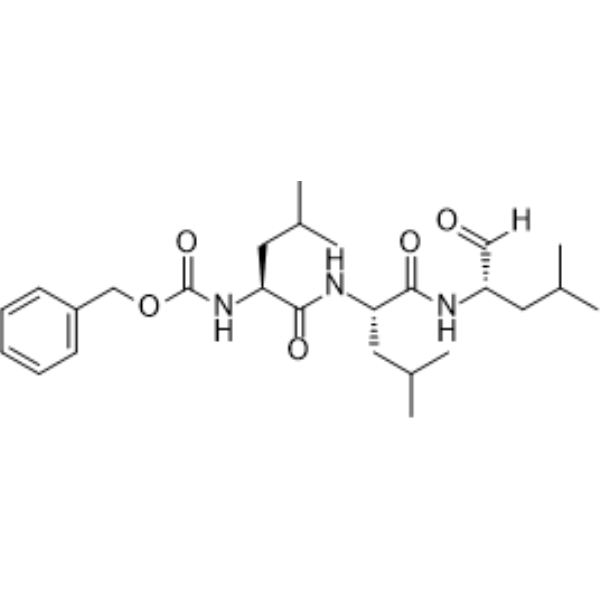
HY-13259
MG-132Proteasome Inhibitor -

HY-B1743
Puromycin -
HY-K1054
Blasticidin S, Sterile -
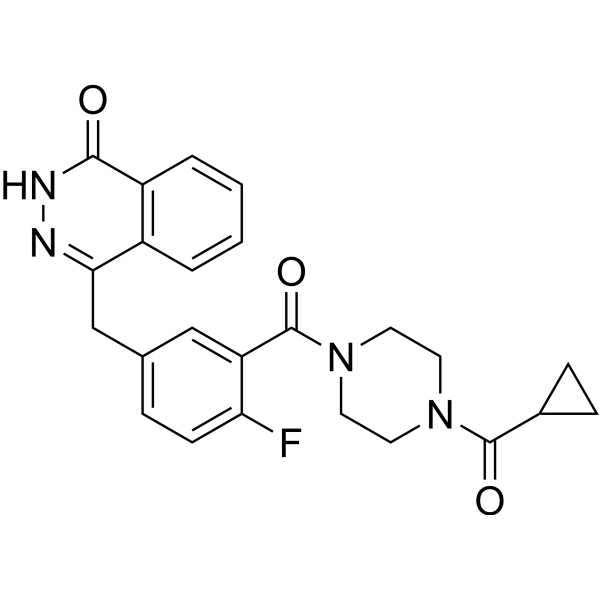
HY-10162
OlaparibPARP Inhibitor -
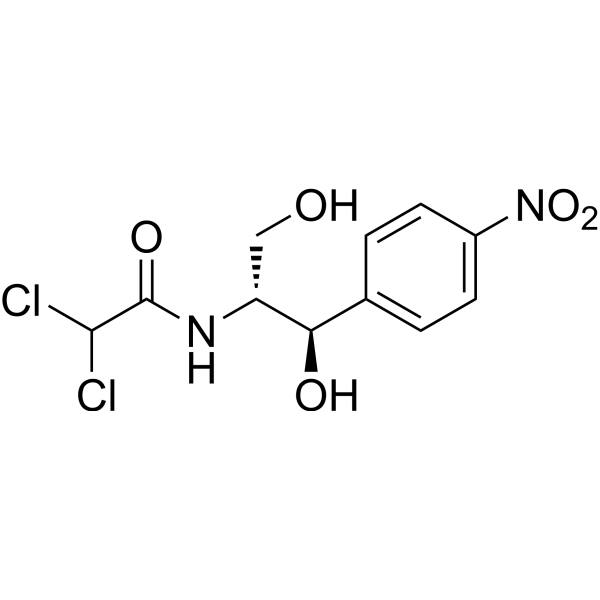
HY-B0239
ChloramphenicolHIF-1α Inhibitor -
HY-100558
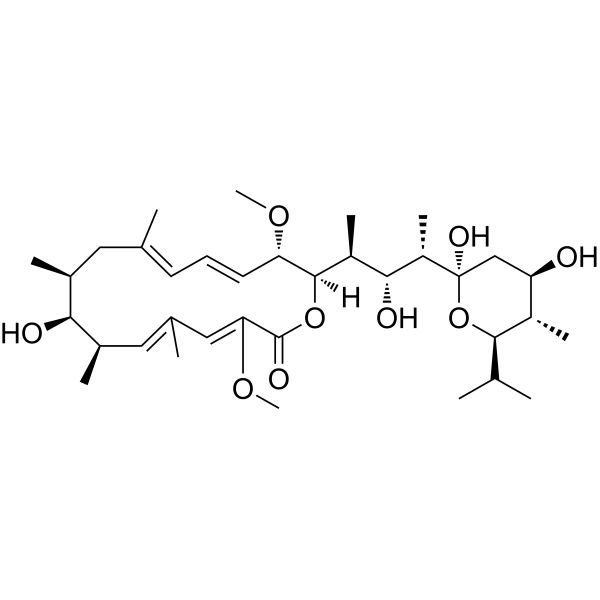
Bafilomycin A1V-ATPase Inhibitor -
HY-18739
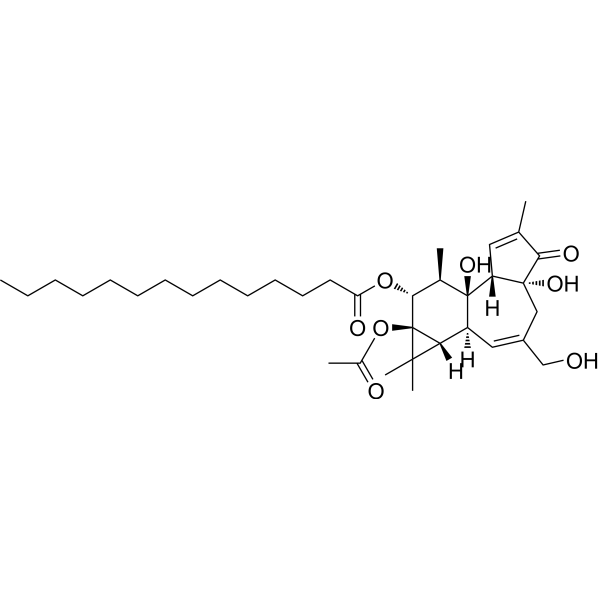
Phorbol 12-myristate 13-acetatePKC Activator -
HY-N0565
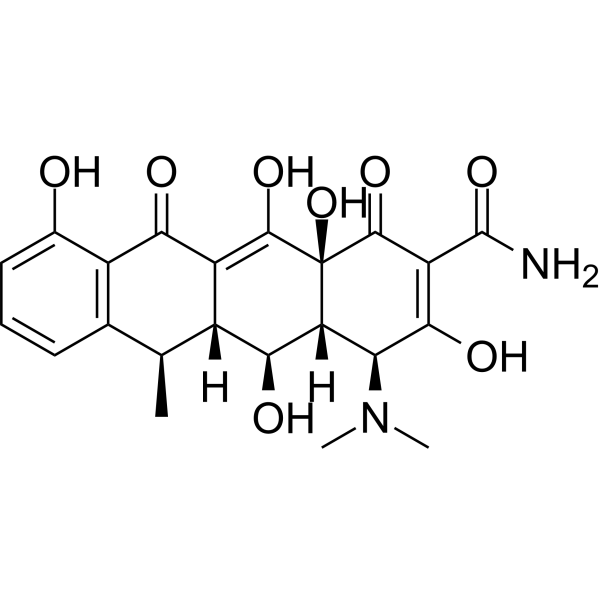
DoxycyclineMMP Inhibitor -
HY-N0565B
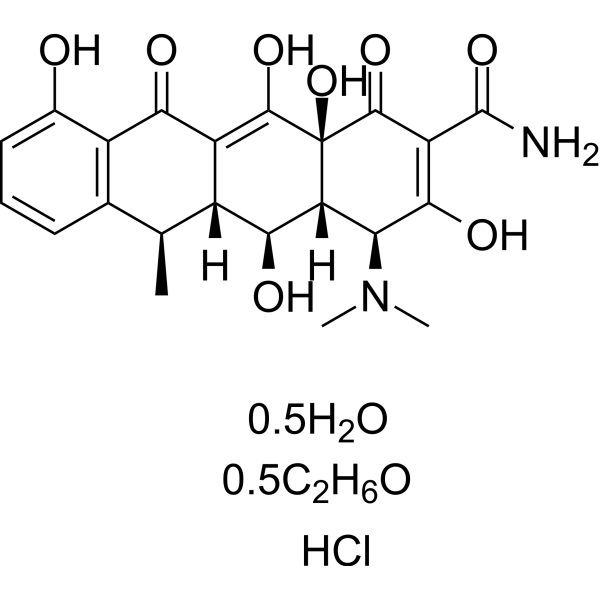
Doxycycline hyclateMMP Inhibitor
Publications Citing Use of MedChemExpress (MCE) Hygromycin B
More- Signal Transduct Target Ther. 2026 Jul 20;11(1):281. [Abstract]
- Cancer Cell. 2026 Feb 9;44(2):306-320.e7. [Abstract]
- Nature. 2023 Jun;618(7966):862-870. [Abstract]
- Science. 2024 Feb 2;383(6682):eadh4859. [Abstract]
- Cell. 2025 Nov 26;188(24):6861-6872.e14. [Abstract]
- Immunity. 2023 Mar 14;56(3):620-634.e11. [Abstract]
- Cancer Res. 2025 Jul 25. [Abstract]
- Cancer Res. 2023 Jul 5;83(13):2187-2207. [Abstract]
- Nat Commun. 2026 Jan 8;17(1):1253. [Abstract]
- Nat Commun. 2025 Aug 4;16(1):7156. [Abstract]
- Nat Commun. 2024 Jul 13;15(1):5891. [Abstract]
- Redox Biol. 2024 Dec:78:103419. [Abstract]
- Mol Cell. 2023 Dec 7;83(23):4370-4385.e9. [Abstract]
- Adv Sci (Weinh). 2026 Jul 28:e20135.
- Cell Death Dis. 2025 Apr 26;16(1):345. [Abstract]
- Mol Ther. 2025 Oct 23:S1525-0016(25)00866-4. [Abstract]
- Acta Pharmacol Sin. 2023 Oct;44(10):2103-2112. [Abstract]
- Proc Natl Acad Sci U S A. 2023 Apr 11;120(15):e2209435120. [Abstract]
- Dev Cell. 2025 Jun 23;60(12):1751-1767.e9. [Abstract]
- Oncogene. 2023 Oct;42(44):3236-3251. [Abstract]
- Cell Rep. 2026 Jun 3;45(6):117495. [Abstract]
- Cell Rep. 2024 Aug 22;43(9):114662. [Abstract]
- Eur J Med Chem. 2024 Jun 5:272:116448. [Abstract]
- mLife. 2023 Dec 26;2(4):438-449. [Abstract]
- Biochem Pharmacol. 2024 Jan:219:115957. [Abstract]
- EMBO Rep. 2025 Sep 22. [Abstract]
- Commun Biol. 2025 Oct 6;8(1):1425. [Abstract]
- Front Microbiol. 2025 Sep 3:16:1648467. [Abstract]
- PLoS Pathog. 2024 Oct 28;20(10):e1012670. [Abstract]
- Antimicrob Agents Chemother. 2022 Dec 20;66(12):e0097722. [Abstract]
- ACS Pharmacol Transl Sci. 2025 Apr 8;8(7):1996-2008. [Abstract]
- J Neurooncol. 2023 Mar;162(1):93-108. [Abstract]
- Biol Reprod. 2026 Jul 31:ioag163.
- Genes (Basel). 2023 Feb 23;14(3):556. [Abstract]
- Biochem Biophys Res Commun. 2022 Oct 15:625:23-30. [Abstract]
- Am J Transl Res. 2021 Apr 15;13(4):2331-2349. [Abstract]
- Uppsala University. 2026.
- bioRxiv. 2026 Feb 14.
- bioRxiv. 2023 May 20:2023.05.19.541497. [Abstract]
- bioRxiv. 2023 Mar 31:2023.03.29.534783. [Abstract]
- Research Square Print. 2023 Feb 21.
 Customer Validation & Images

-
Cell Proliferation/Viability Assay
-
WB
-
IF
All Antibiotic Isoforms
MoreAll Parasite Isoforms
More

Biological Activity
Description
IC50 & Target
|
Aminoglycoside |
In Vitro
Hygromycin B, an aminocyclitol antibiotic that strongly inhibits both 70S and 80S ribosomes, is synthesized by Streptomyces hygroscopicus[1].
Hygromycin B at 0.38 mM concentration completely halts yeast cell growth in rich media, presumably by preventing protein synthesis by cytoplasmic ribosomes. Polypeptide synthesis in cell-free extracts from rabbit reticulocytes, wheat germ and yeast is strongly blocked by low concentrations ofhygromycin B. The antibiotic inhibits peptide chain elongation by yeast polysomes by preventing elongation factor EF-2-dependent translocation. The inhibition of translocation by hygromycin B might result from the stabilization of peptidyl-tRNA bound to the ribosomal acceptor site[2].
MedChemExpress (MCE) has not independently confirmed the accuracy of these methods. They are for reference only.
In Vivo
Constitutive expression of the bacterial hygR gene in transgenic mice in vivo confers resistance to hygromycin B[4].
MedChemExpress (MCE) has not independently confirmed the accuracy of these methods. They are for reference only.


Chemical Information
-
CAS No. 31282-04-9
-
Appearance Solid
-
Molecular Weight 527.52
-
Formula C20H37N3O13
-
Color White to off-white
-
SMILES
O[C@H]([C@H]1O)C2(O[C@@]([C@@H](N)CO)([H])[C@@H]1O)O[C@@]([C@@H](O[C@@H]3CO)O[C@@]([C@H]([C@H](N)C4)O)([H])[C@@H]([C@H]4NC)O)([H])[C@@]([C@H]3O)([H])O2
-
Synonyms
Hygrovetine
-
Initial Source
Escherichia coli
-
Shipping
Room temperature in continental US; may vary elsewhere.
-
Storage
Powder -20°C 3 years 4°C 2 years In solvent -80°C 6 months -20°C 1 month


Publications (41)
-
Journal Impact Factor
-
Most Recent
-
Signal Transduct Target Ther
Dual-targeting pharmacological UFMylation inhibition reprograms tumor and immune microenvironments to achieve long-term glioblastoma regression. [Abstract]2026 Jul 20;11(1):281. PMID: 42472853 -
Cancer Cell
Ubiquitination-directed cytosolic DNA degradation governs cGAS-STING-mediated immune response to DNA damage. [Abstract]2026 Feb 9;44(2):306-320.e7. PMID: 41512867 -
Nature
2023 Jun;618(7966):862-870. PMID: 37286607 -
Science
Hydrolytic endonucleolytic ribozyme (HYER) is programmable for sequence-specific DNA cleavage. [Abstract]2024 Feb 2;383(6682):eadh4859. PMID: 38301022 -
Cell
2025 Nov 26;188(24):6861-6872.e14. PMID: 41138730 -
Immunity
Lipopolysaccharide-binding protein expression is increased by stress and inhibits monoamine synthesis to promote depressive symptoms. [Abstract]2023 Mar 14;56(3):620-634.e11. PMID: 36854305 -
Cancer Res
Mitochondrial Calcium Uniporter Links Acetyl-CoA Metabolism and H3K27 Acetylation to Maintain Glioblastoma Stem Cells. [Abstract]2025 Jul 25. PMID: 40712058 -
Cancer Res
Metabolic reprogramming driven by IGF2BP3 promotes acquired resistance to EGFR inhibitors in non-small cell lung cancer. [Abstract]2023 Jul 5;83(13):2187-2207. PMID: 37061993 -
Nat Commun
2026 Jan 8;17(1):1253. PMID: 41507162 -
Nat Commun
Nucleus-translocated glucokinase functions as a protein kinase to phosphorylate TAZ and promote tumour growth. [Abstract]2025 Aug 4;16(1):7156. PMID: 40759645 -
Nat Commun
Engineering programmable material-to-cell pathways via synthetic notch receptors to spatially control differentiation in multicellular constructs. [Abstract]2024 Jul 13;15(1):5891. PMID: 39003263 -
Redox Biol
Reactivation of MAPK-SOX2 pathway confers ferroptosis sensitivity in KRASG12C inhibitor resistant tumors. [Abstract]2024 Dec:78:103419. PMID: 39527862 -
Mol Cell
CPT1A induction following epigenetic perturbation promotes MAVS palmitoylation and activation to potentiate antitumor immunity. [Abstract]2023 Dec 7;83(23):4370-4385.e9. PMID: 38016475 -
-
Cell Death Dis
Fusion of glioma-associated mesenchymal stem/stromal cells with glioma cells promotes macrophage recruitment and M2 polarization via m6A modification of CSF1. [Abstract]2025 Apr 26;16(1):345. PMID: 40287444 -
Mol Ther
Extracellular vesicle-based bumetanide delivery alleviates depression-like behaviors of male mice by restoring chloride homeostasis. [Abstract]2025 Oct 23:S1525-0016(25)00866-4. PMID: 41137395 -
Acta Pharmacol Sin
Bis(benzonitrile) dichloroplatinum (II) interrupts PD-1/PD-L1 interaction by binding to PD-1. [Abstract]2023 Oct;44(10):2103-2112. PMID: 37193754 -
Proc Natl Acad Sci U S A
The moonlighting function of glycolytic enzyme enolase-1 promotes choline phospholipid metabolism and tumor cell proliferation. [Abstract]2023 Apr 11;120(15):e2209435120. PMID: 37011206 -
Dev Cell
STAT3-controlled CHI3L1/SPP1 positive feedback loop demonstrates the spatial heterogeneity and immune characteristics of glioblastoma. [Abstract]2025 Jun 23;60(12):1751-1767.e9. PMID: 39933531
Hygromycin B purchased from MedChemExpress. Usage Cited in: Dev Cell. 2025 Jun 23;60(12):1751-1767.e9. [Abstract]
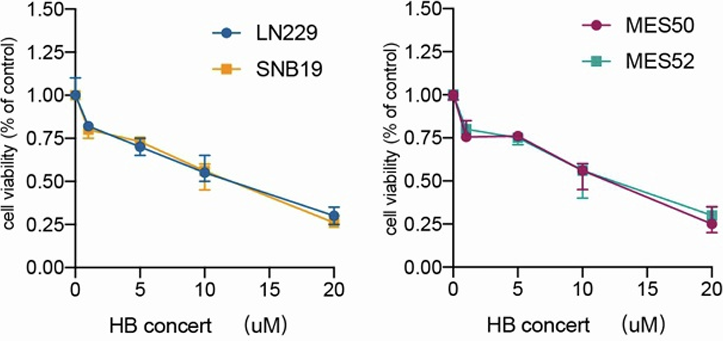
Cell viability assay of LN229, SNB-19, MES50, and MES52 cells treated with different concentrations of HB (Hygromycin B) (5-20 μM) for 24h. Data were shown as mean ± SD (n = 3).
Hygromycin B purchased from MedChemExpress. Usage Cited in: Dev Cell. 2025 Jun 23;60(12):1751-1767.e9. [Abstract]
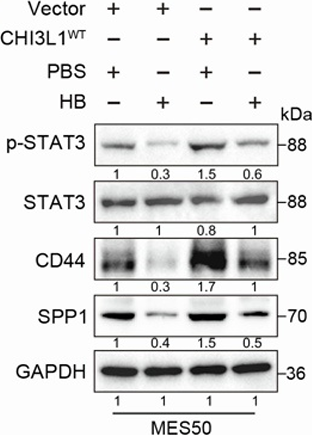
Effect of HB (Hygromycin B) treatment (10 μM) for 24h on the levels of p-STAT3, STAT3, CD44, and SPP1 in MES50 cells transfected with Vector or CHI3L1.
Hygromycin B purchased from MedChemExpress. Usage Cited in: Dev Cell. 2025 Jun 23;60(12):1751-1767.e9. [Abstract]
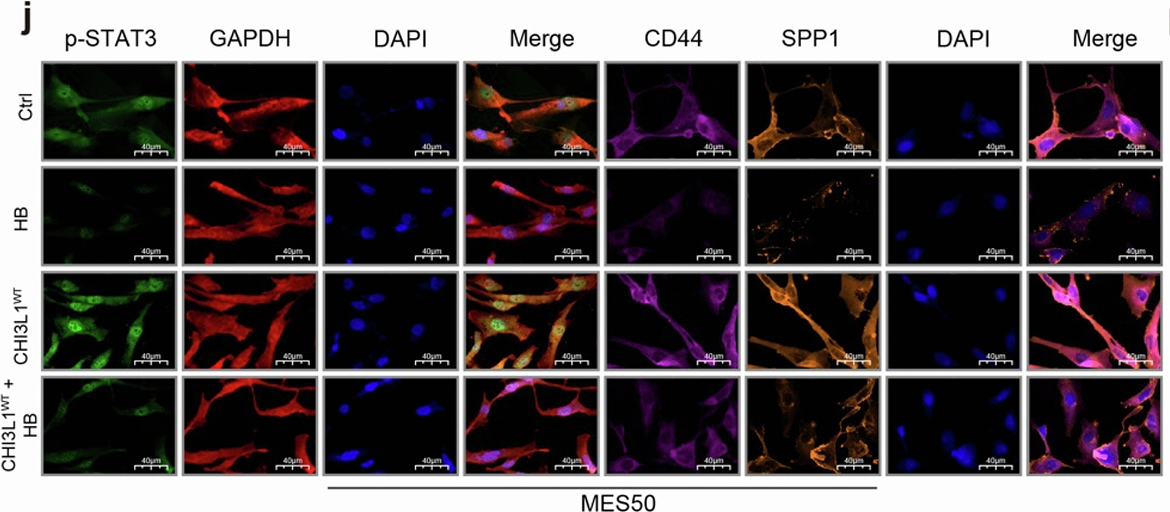
IF analysis of the subcellular localization of p-STAT3, GAPDH, CD44, and SPP1 in MES50 cells after pretreatment with CHI3L1WT along, HB (Hygromycin B) along, or CHI3L1WT+HB. DAPI was used to visualize the nuclei (blue). Scale bars, 40 μm.
-
Oncogene
Downregulated circPOKE promotes breast cancer metastasis through activation of the USP10-Snail axis. [Abstract]2023 Oct;42(44):3236-3251. PMID: 37717099 -
Cell Rep
nsP3-FXR co-condensation enables alphavirus replication and reveals a targetable alphavirus vulnerability. [Abstract]2026 Jun 3;45(6):117495. PMID: 42241276 -
Cell Rep
CRISPR screening identifies PRMT1 as a key pro-ferroptotic gene via a two-layer regulatory mechanism. [Abstract]2024 Aug 22;43(9):114662. PMID: 39178116 -
Eur J Med Chem
Exploration of novel isoxazole-fused quinone derivatives as anti-colorectal cancer agents through inhibiting STAT3 and elevating ROS level. [Abstract]2024 Jun 5:272:116448. PMID: 38704936 -
mLife
The construction and optimization of engineered yeast chassis for efficient biosynthesis of 8-hydroxygeraniol. [Abstract]2023 Dec 26;2(4):438-449. PMID: 38818263 -
Biochem Pharmacol
2024 Jan:219:115957. PMID: 38049007 -
EMBO Rep
UBE2O-mediated ubiquitylation directs cytoplasmic CTNNA1 to promote cell-to-ECM adhesions. [Abstract]2025 Sep 22. PMID: 40983751 -
Commun Biol
The acetyltransferase CysE modulates virulence and drug resistance of Mycobacterium tuberculosis by interfering with oxidative stress responses. [Abstract]2025 Oct 6;8(1):1425. PMID: 41053365 -
Front Microbiol
Ire1 inhibitors attenuate Candida albicans pathogenicity and demonstrate potential for application in antifungal therapy. [Abstract]2025 Sep 3:16:1648467. PMID: 40969430 -
PLoS Pathog
Porcine reproductive and respiratory syndrome virus nonstructural protein 2 promotes the autophagic degradation of adaptor protein SH3KBP1 to antagonize host innate immune responses by enhancing K63-linked polyubiquitination of RIG-I. [Abstract]2024 Oct 28;20(10):e1012670. PMID: 39466846 -
Antimicrob Agents Chemother
Multiple Genes of Candida albicans Influencing Echinocandin Susceptibility in Caspofungin-Adapted Mutants. [Abstract]2022 Dec 20;66(12):e0097722. PMID: 36354349 -
ACS Pharmacol Transl Sci
2025 Apr 8;8(7):1996-2008. PMID: 40672676 -
J Neurooncol
T7 peptide-decorated exosome-based nanocarrier system for delivery of Galectin-9 siRNA to stimulate macrophage repolarization in glioblastoma. [Abstract]2023 Mar;162(1):93-108. PMID: 36854924 -
-
Genes (Basel)
Production and Characterization of K562 Cellular Clones Hyper-Expressing the Gene Encoding α-Globin: Preliminary Analysis of Biomarkers Associated with Autophagy. [Abstract]2023 Feb 23;14(3):556. PMID: 36980829 -
Biochem Biophys Res Commun
TRABID targets DDB2 for deubiquitination to promote proliferation of hepatocellular carcinoma cells. [Abstract]2022 Oct 15:625:23-30. PMID: 35944360 -
Am J Transl Res
Differentiated embryonic chondrocyte-expressed gene 1 promotes temozolomide resistance by modulating the SP1-MGMT axis in glioblastoma. [Abstract]2021 Apr 15;13(4):2331-2349. PMID: 34017393 -
-
-
bioRxiv
Engineering Programmable Material-To-Cell Pathways Via Synthetic Notch Receptors To Spatially Control Cellular Phenotypes In Multi-Cellular Constructs. [Abstract]2023 May 20:2023.05.19.541497. PMID: 37293089 -
bioRxiv
2023 Mar 31:2023.03.29.534783. PMID: 37034813 -


Solvent & Solubility
In Vitro:
H2O : 100 mg/mL (189.57 mM; Need ultrasonic)
DMSO : 66.67 mg/mL (126.38 mM; ultrasonic and warming and heat to 60°C; Hygroscopic DMSO has a significant impact on the solubility of product, please use newly opened DMSO)
Please refer to the solubility information to select the appropriate solvent. Once prepared, please aliquot and store the solution to prevent product inactivation from repeated freeze-thaw cycles.
Storage method and period of stock solution: -80°C, 6 months; -20°C, 1 month. When stored at -80°C, please use it within 6 months. When stored at -20°C, please use it within 1 month.
* Note: If you choose water as the stock solution, please dilute it to the working solution, then filter and sterilize it with a 0.22 μm filter before use.
Please refer to the solubility information to select the appropriate solvent. Once prepared, please aliquot and store the solution to prevent product inactivation from repeated freeze-thaw cycles.
Storage method and period of stock solution: -80°C, 6 months; -20°C, 1 month. When stored at -80°C, please use it within 6 months. When stored at -20°C, please use it within 1 month.
* Note: If you choose water as the stock solution, please dilute it to the working solution, then filter and sterilize it with a 0.22 μm filter before use.
Concentration (start) × Volume (start) = Concentration (final) × Volume (final)
In Vivo:
Select the appropriate dissolution method based on your experimental animal and administration route.
- For the following dissolution methods, please ensure to first prepare a clear stock solution using an In Vitro approach and then sequentially add co-solvents:
- To ensure reliable experimental results, the clarified stock solution can be appropriately stored based on storage conditions. As for the working solution for In Vivo experiments, it is recommended to prepare freshly and use it on the same day.
- The percentages shown for the solvents indicate their volumetric ratio in the final prepared solution. If precipitation or phase separation occurs during preparation, heat and/or sonication can be used to aid dissolution.
Add each solvent one by one: 10% DMSO 40% PEG300 5% Tween-80 45% Saline
Solubility: ≥ 5 mg/mL (9.48 mM); Clear solution
This protocol yields a clear solution of ≥ 5 mg/mL (saturation unknown).
Taking 1 mL working solution as an example, add 100 μL DMSO stock solution (50.0 mg/mL) to 400 μL PEG300, and mix evenly; then add 50 μL Tween-80 and mix evenly; then add 450 μL Saline to adjust the volume to 1 mL.
Preparation of Saline: Dissolve 0.9 g sodium chloride in ddH₂O and dilute to 100 mL to obtain a clear Saline solution.
Add each solvent one by one: 10% DMSO 90% (20% SBE-β-CD in Saline)
Solubility: ≥ 5 mg/mL (9.48 mM); Clear solution
This protocol yields a clear solution of ≥ 5 mg/mL (saturation unknown).
Taking 1 mL working solution as an example, add 100 μL DMSO stock solution (50.0 mg/mL) to 900 μL 20% SBE-β-CD in Saline, and mix evenly.
Preparation of 20% SBE-β-CD in Saline (4°C, storage for one week): 2 g SBE-β-CD powder is dissolved in 10 mL Saline, completely dissolve until clear.
Add each solvent one by one: 1% DMSO 99% Saline
Solubility: ≥ 0.5 mg/mL (0.95 mM); Clear solution
For the following dissolution methods, please prepare the working solution directly:
It is recommended to prepare fresh solutions and use them promptly within a short period of time.
The percentages shown for the solvents indicate their volumetric ratio in the final prepared solution. If precipitation or phase separation occurs during preparation, heat and/or sonication can be used to aid dissolution.
Add each solvent one by one: PBS
Solubility: 100 mg/mL (189.57 mM); Clear solution; Need ultrasonic
In Vivo Dissolution Calculator
Please enter the basic information of animal experiments:
-
-
-
-
Recommended: Prepare an additional quantity of animals to account for potential losses during experiments.
Working solution concentration: 0.22 mg/mL
This product has good water solubility, please refer to the measured solubility data in water/PBS/Saline for details.


Purity & Documentation
-
Data Sheet (282 KB)
-
SDS (748 KB)
- English - EN (748 KB)
- Français - FR (748 KB)
- Deutsch - DE (748 KB)
- Norwegian - NO (748 KB)
- Español - ES (748 KB)
- Swedish - SV (748 KB)
- Italian - IT (748 KB)
- Korean - KR (748 KB)
- Portuguese - PT (748 KB)
-
Handling Instructions (2659 KB)
References
[1]. Pardo JM, et al. Biochemical basis of resistance to hygromycin B in Streptomyces hygroscopicus--the producing organism. J Gen Microbiol. 1985 Jun;131(6):1289-98. [Content Brief]
[2]. González A, et al. Studies on the mode of action of hygromycin B, an inhibitor of translocation in eukaryotes. Biochim Biophys Acta. 1978 Dec 21;521(2):459-69. [Content Brief]
[3]. Pfister P, et al. Role of 16S rRNA Helix 44 in Ribosomal Resistance to Hygromycin B. Antimicrob Agents Chemother. 2003 May;47(5):1496-502. [Content Brief]


Complete Stock Solution Preparation Table
Please refer to the solubility information to select the appropriate solvent. Once prepared, please aliquot and store the solution to prevent product inactivation from repeated freeze-thaw cycles.
Storage method and period of stock solution: -80°C, 6 months; -20°C, 1 month. When stored at -80°C, please use it within 6 months. When stored at -20°C, please use it within 1 month.
| Optional Solvent | Concentration Solvent Mass | 1 mg | 5 mg | 10 mg | 25 mg |
|---|---|---|---|---|---|
| DMSO / H2O | 1 mM | 1.8957 mL | 9.4783 mL | 18.9566 mL | 47.3916 mL |
| 5 mM | 0.3791 mL | 1.8957 mL | 3.7913 mL | 9.4783 mL | |
| 10 mM | 0.1896 mL | 0.9478 mL | 1.8957 mL | 4.7392 mL | |
| 15 mM | 0.1264 mL | 0.6319 mL | 1.2638 mL | 3.1594 mL | |
| 20 mM | 0.0948 mL | 0.4739 mL | 0.9478 mL | 2.3696 mL | |
| 25 mM | 0.0758 mL | 0.3791 mL | 0.7583 mL | 1.8957 mL | |
| 30 mM | 0.0632 mL | 0.3159 mL | 0.6319 mL | 1.5797 mL | |
| 40 mM | 0.0474 mL | 0.2370 mL | 0.4739 mL | 1.1848 mL | |
| 50 mM | 0.0379 mL | 0.1896 mL | 0.3791 mL | 0.9478 mL | |
| 60 mM | 0.0316 mL | 0.1580 mL | 0.3159 mL | 0.7899 mL | |
| 80 mM | 0.0237 mL | 0.1185 mL | 0.2370 mL | 0.5924 mL | |
| 100 mM | 0.0190 mL | 0.0948 mL | 0.1896 mL | 0.4739 mL |
* Note: If you choose water as the stock solution, please dilute it to the working solution, then filter and sterilize it with a 0.22 μm filter before use.


Hygromycin B Related Classifications
HY-B0490 Related Classifications
 Powered by Bioz