



Butylparaben
Based on 2 publication(s) in Google Scholar
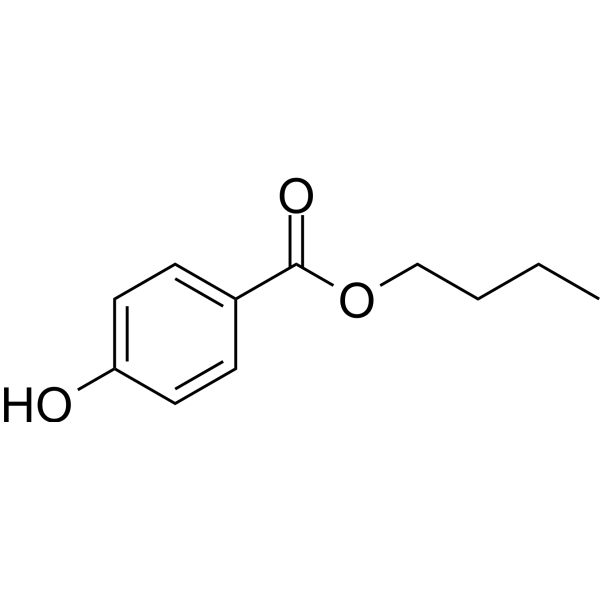
Butylparaben is an organic compound that has proven to be a very successful antimicrobial preservative in cosmetics, can also be used in active molecule suspensions, and as a food flavoring additive.
For research use only. We do not sell to patients.
- Purity : 99.45%
- CAS No.: 94-26-8
- Formula: C11H14O3
- Molecular Weight:194.23
-
Storage:Powder -20°C, 3 years , 4°C, 2 years ; In solvent -80°C, 2 years , -20°C, 1 year

To place orders, for customer services and technical support, please contact: MedChemExpress USA
Tel: 609-228-6898 E-mail: [email protected] [email protected]


-
 Biological Activity
-
Chemical Information
-
Solvent & Solubility
- Protocols
- Purity & Documentation
- References
-
 Help & FAQs


-
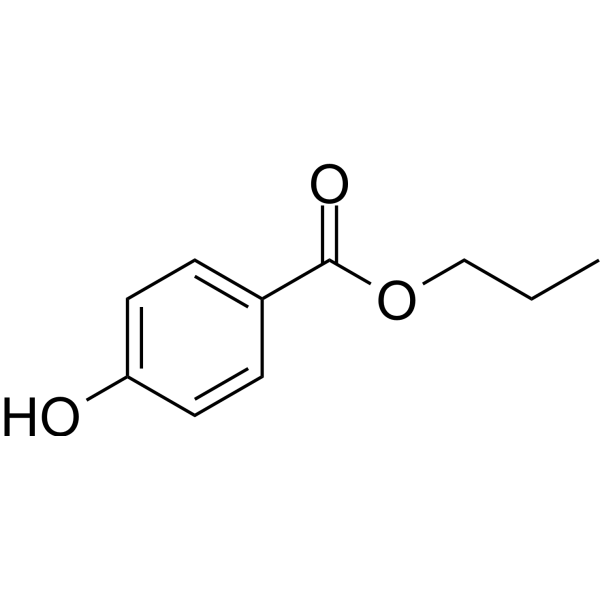
HY-N2026
PropylparabenBacterial Inhibitor -
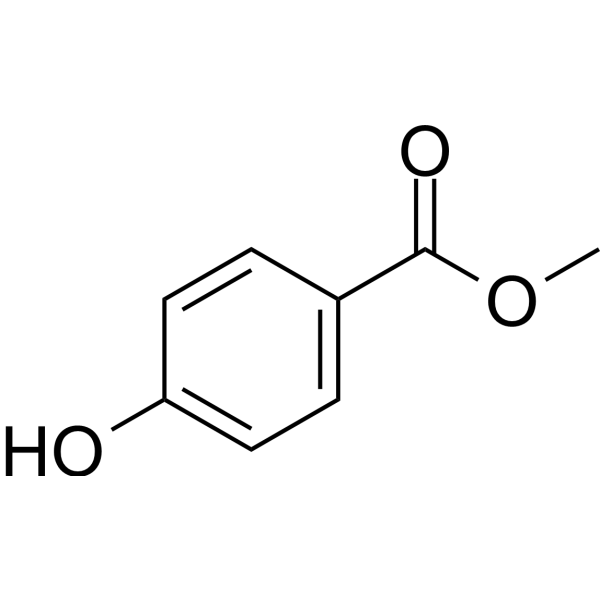
HY-N0349
Methyl parabenBacterial Inhibitor -

HY-B1431R
Butylparaben (Standard)Bacterial Inhibitor -
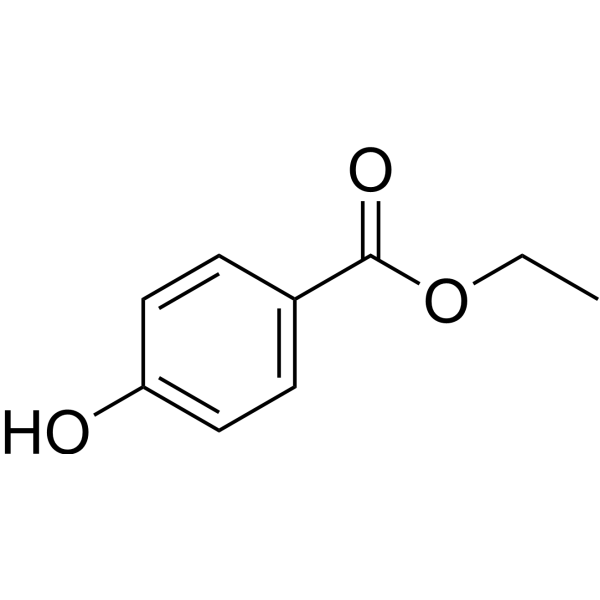
HY-B0934
EthylparabenAntifungal Agent -

HY-B1431B
Butylparaben, ≥99%Preservative -
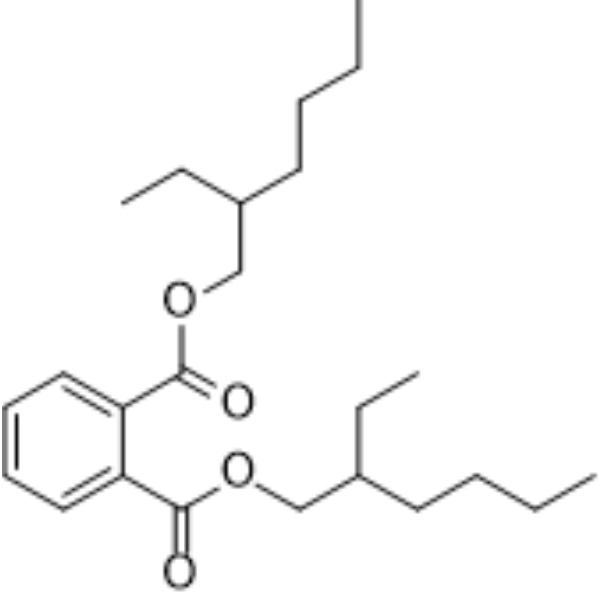
HY-B1945
DEHPEndogenous Metabolite -
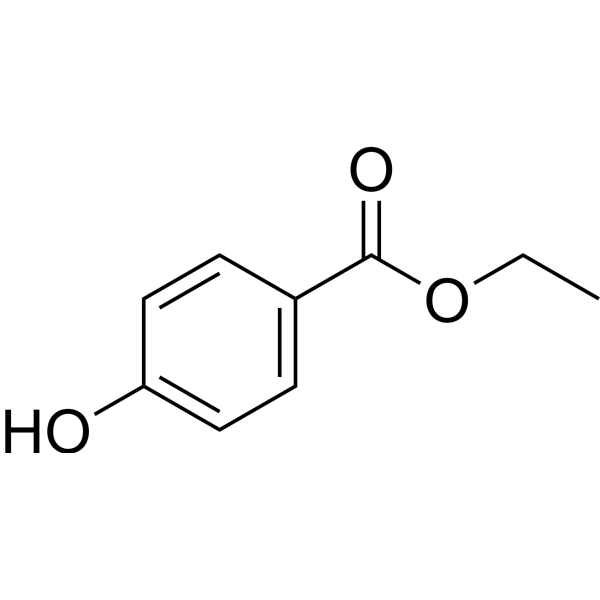
HY-B0934R
Ethylparaben (Standard)Antifungal Agent -
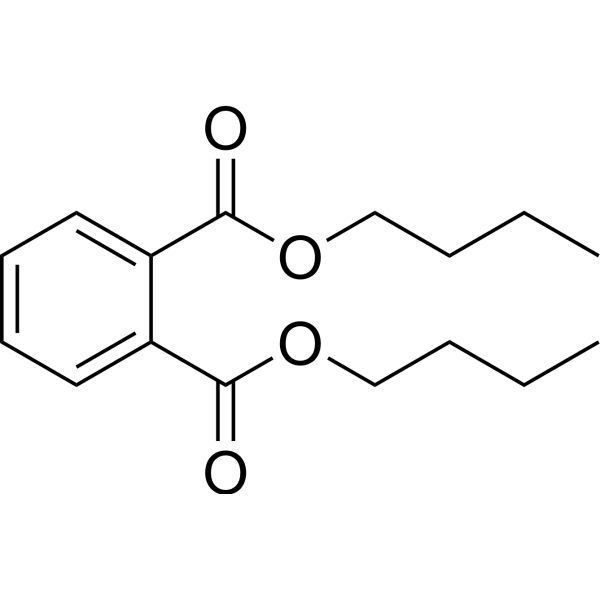
HY-Y0304
Dibutyl phthalatePlasticizer -

HY-Y0284
Diethyl phthalatePlasticizer -

HY-N0349R
Methyl paraben (Standard)Bacterial Inhibitor -

HY-B1945R
DEHP (Standard)Endogenous Metabolite -
![Benzo[a]pyrene](https://file.medchemexpress.com/product_pic/hy-107377.gif)
HY-107377
Benzo[a]pyreneNoxious Pollutant
Publications Citing Use of MedChemExpress (MCE) Butylparaben
MoreAll DNA/RNA Synthesis Isoforms
MoreAll Endogenous Metabolite Isoforms
More

Biological Activity
Description
In Vitro
Butylparaben (0-500 μM, 44 h) inhibits orcine fertilization, cleavage, and blastocyst formation rates[2].
Butylparaben induces DNA Damage, apoptosis, and autophagy in porcine oocytes[2].
MedChemExpress (MCE) has not independently confirmed the accuracy of these methods. They are for reference only. Further protocols information, click here.
In Vivo
MedChemExpress (MCE) has not independently confirmed the accuracy of these methods. They are for reference only.


Chemical Information
-
CAS No. 94-26-8
-
Appearance Solid
-
Molecular Weight 194.23
-
Formula C11H14O3
-
Color White to off-white
-
SMILES
O=C(OCCCC)C1=CC=C(O)C=C1
-
Synonyms
Butyl parahydroxybenzoate; Butyl paraben; Butyl 4-hydroxybenzoate
-
Structure Classification
-
Initial Source
-
Shipping
Room temperature in continental US; may vary elsewhere.
-
Storage
Powder -20°C 3 years 4°C 2 years In solvent -80°C 2 years -20°C 1 year


Publications (2)
-
Journal Impact Factor
-
Most Recent
-
J Hazard Mater
Butylparaben induced zebrafish (Danio rerio) kidney injury by down-regulating the PI3K-AKT pathway. [Abstract]2024 May 15:470:134129. PMID: 38565019 -


Solvent & Solubility
In Vitro:
DMSO : ≥ 2.0 mg/mL (10.30 mM; Hygroscopic DMSO has a significant impact on the solubility of product, please use newly opened DMSO)
* "≥" means soluble, but saturation unknown.
Please refer to the solubility information to select the appropriate solvent. Once prepared, please aliquot and store the solution to prevent product inactivation from repeated freeze-thaw cycles.
Storage method and period of stock solution: -80°C, 2 years; -20°C, 1 year. When stored at -80°C, please use it within 2 years. When stored at -20°C, please use it within 1 year.
Please refer to the solubility information to select the appropriate solvent. Once prepared, please aliquot and store the solution to prevent product inactivation from repeated freeze-thaw cycles.
Storage method and period of stock solution: -80°C, 2 years; -20°C, 1 year. When stored at -80°C, please use it within 2 years. When stored at -20°C, please use it within 1 year.
Concentration (start) × Volume (start) = Concentration (final) × Volume (final)

Protocols
-
Research Protocol for Infectious Diseases
Infectious-disease experiments test how pathogens interact with host barriers, innate immune receptors, inflammatory signaling, pathogen replication, and tissue injury; pattern-recognition receptors such as TLRs, RIG-I-like receptors, NOD-like receptors, and inflammasomes detect microbial molecules and activate NF-κB, interferon, and cytokine responses. The central hypothesis is that infection severity reflects the balance between pathogen burden and host response: protective inflammation restricts pathogen growth, whereas excessive or mislocalized inflammation contributes to tissue damage and disease phenotype. Unresolved questions include which host pathways are protective versus pathogenic, why some infection models fail to translate to human disease, and which combined readouts best predict clinically relevant infection outcomes.


Purity & Documentation
-
Data Sheet (270 KB)
-
SDS (476 KB)
- English - EN (476 KB)
- Français - FR (476 KB)
- Deutsch - DE (476 KB)
- Norwegian - NO (476 KB)
- Español - ES (476 KB)
- Swedish - SV (476 KB)
- Italian - IT (476 KB)
- Korean - KR (476 KB)
- Portuguese - PT (476 KB)
-
Handling Instructions (2659 KB)
References
[1]. Bae JS, et al. Thirteen-week subcutaneous repeated dose toxicity study of butylparaben and its toxicokinetics in rats. Arch Toxicol. 2021 Jun;95(6):2037-2050. [Content Brief]
[2]. Jeong PS, et al. Butylparaben Is Toxic to Porcine Oocyte Maturation and Subsequent Embryonic Development Following In Vitro Fertilization. Int J Mol Sci. 2020 May 24;21(10):3692. [Content Brief]


Complete Stock Solution Preparation Table
Please refer to the solubility information to select the appropriate solvent. Once prepared, please aliquot and store the solution to prevent product inactivation from repeated freeze-thaw cycles.
Storage method and period of stock solution: -80°C, 2 years; -20°C, 1 year. When stored at -80°C, please use it within 2 years. When stored at -20°C, please use it within 1 year.
| Optional Solvent | Concentration Solvent Mass | 1 mg | 5 mg | 10 mg | 25 mg |
|---|---|---|---|---|---|
| DMSO | 1 mM | 5.1485 mL | 25.7427 mL | 51.4854 mL | 128.7134 mL |
| 5 mM | 1.0297 mL | 5.1485 mL | 10.2971 mL | 25.7427 mL | |
| 10 mM | 0.5149 mL | 2.5743 mL | 5.1485 mL | 12.8713 mL |


Butylparaben Related Classifications
HY-B1431 Related Classifications
 Powered by Bioz