



Curcumol
Based on 9 publication(s) in Google Scholar
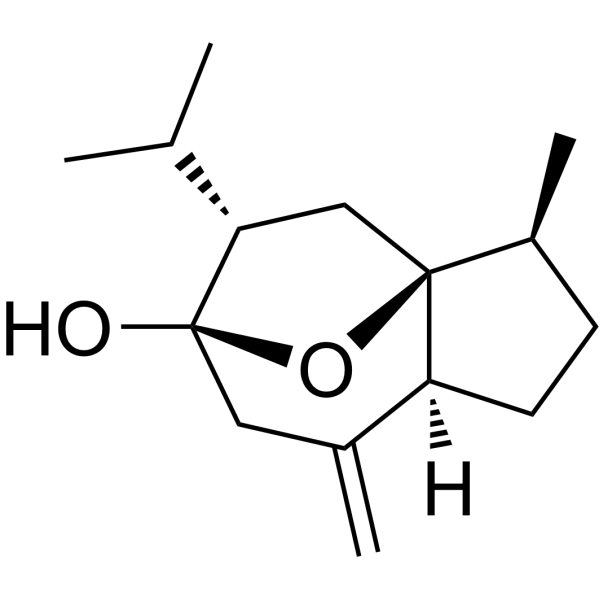
Curcumol ((-)-Curcumol), a bioactive sesquiterpenoid, possesses numerous pharmacological activities like anticancer, antimicrobial, antifungal, antiviral, and antiinflammatory. Curcumol is a potent inducer of apoptosis in numerous cancer cells via targeting key signaling pathways as MAPK/ERK, PI3K/Akt and NF-κB which are generally deregulated in several cancers.
연구목적의 판매만을 진행합니다. 환자를 대상으로 한 판매는 하지 않습니다.
- Purity : 99.50%
- CAS No.: 4871-97-0
- 화학식: C15H24O2
- 분자량:236.35
-
보관:Powder -20°C, 3 years , 4°C, 2 years ; In solvent -80°C, 1 year , -20°C, 6 months

To place orders, for customer services and technical support, please contact: MedChemExpress USA
Tel: 609-228-6898 E-mail: [email protected] [email protected]


-
 Biological Activity
-
Chemical Information
-
용액&용해도
- Protocol
- 순도&문서
- References
-
 Help & FAQs


-
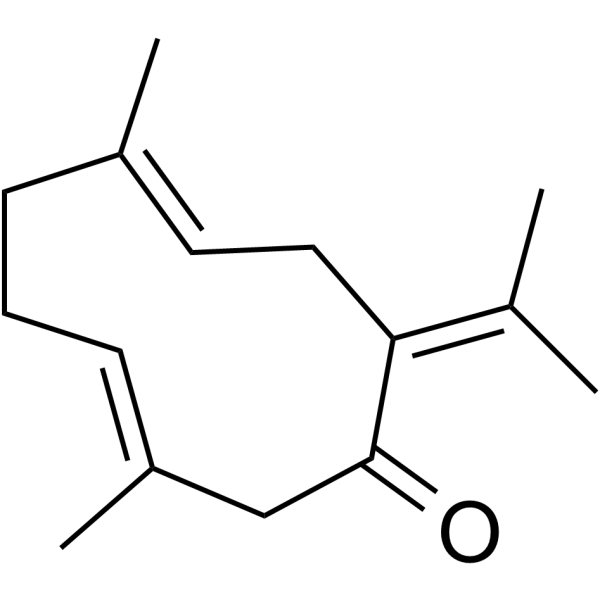
HY-N0440
GermacroneAnti-viral/Cancer/Inflammatory Agent -
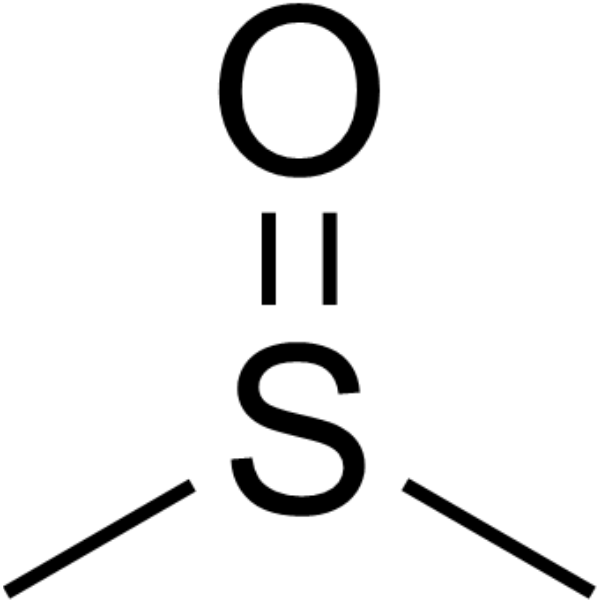
HY-Y0320C
Dimethyl sulfoxideAprotic Solvent -
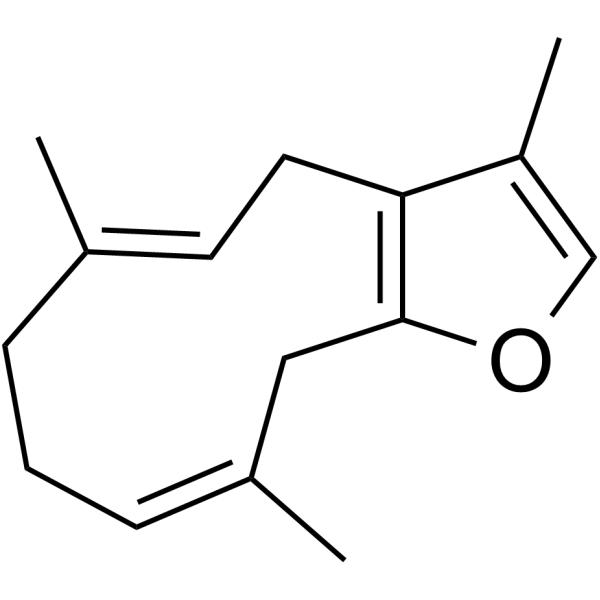
HY-126940
FuranodieneAnti-cancer Agent -
HY-N2259
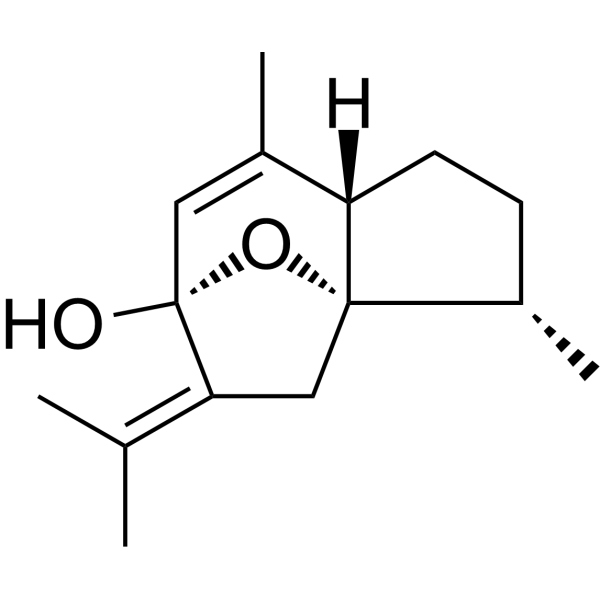
CurcumenolCYP3A4 Inhibitor -
HY-17394
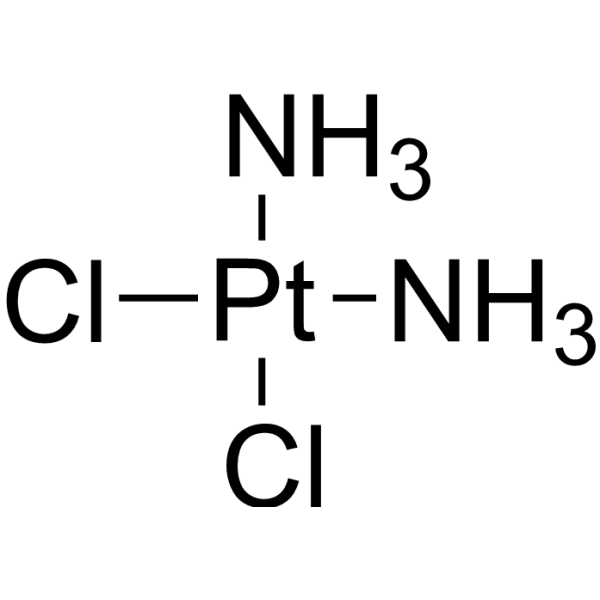
CisplatinDNA Alkylator -
HY-32735
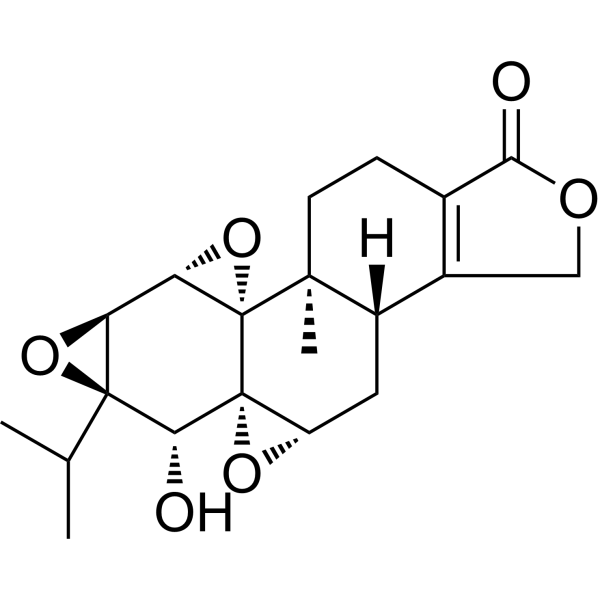
TriptolideImmunosuppressive Agent -
HY-101103
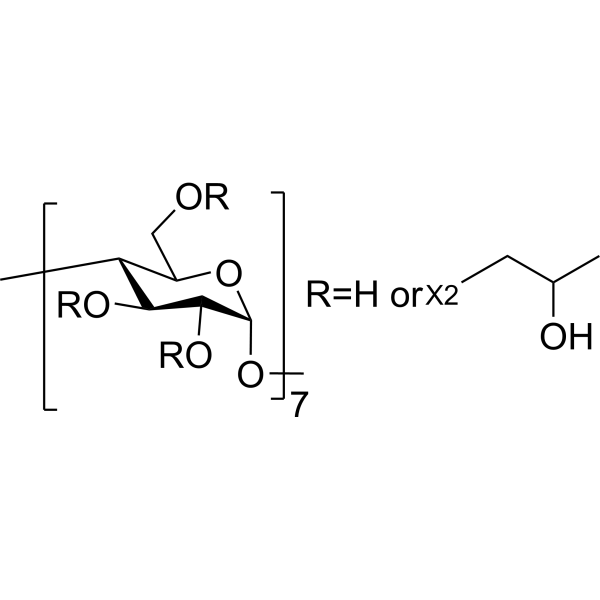
HP-β-CDCo-solvent -
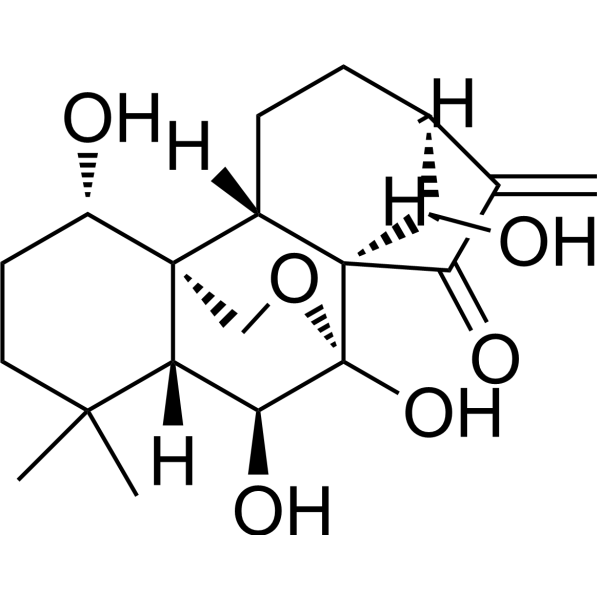
HY-N0004
OridoninBacterial Inhibitor -
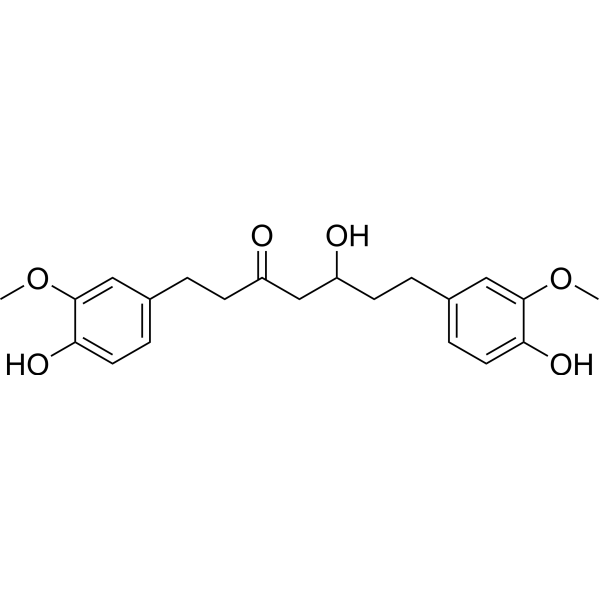
HY-N0929
HexahydrocurcuminCOX-2 Inhibitor -
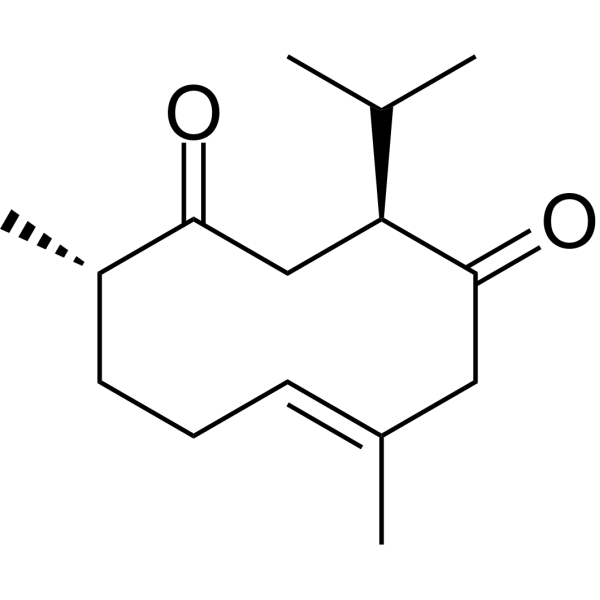
HY-N0353
CurdioneNatural Product -
HY-107324
β-ElemeneApoptosis Activator -
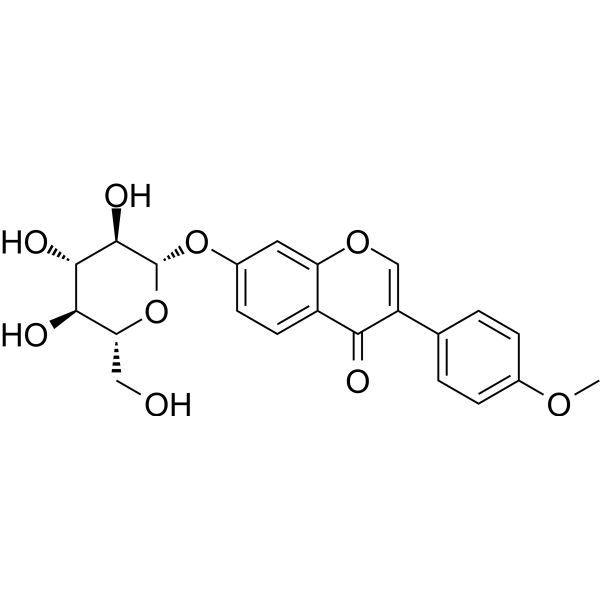
HY-N0270
OnoninIsoflavonoid
Publications Citing Use of MedChemExpress (MCE) Curcumol
More- Phytother Res. 2022 Jun;36(6):2660-2676. [Abstract]
- Phytother Res. 2021 Dec;35(12):7004-7017. [Abstract]
- Int Immunopharmacol. 2023 Sep:122:110527. [Abstract]
- Mol Med Rep. 2018 Jun;17(6):7513-7520. [Abstract]
- Biol Proced Online. 2025 Jun 16;27(1):21. [Abstract]
- Cell Cycle. 2022 Jun;21(12):1249-1266. [Abstract]
- Integr Cancer Ther. 2024 Jan-Dec:23:15347354241294043. [Abstract]
- Aging (Albany NY). 2021 Jul 27;13(14):18392-18403. [Abstract]
- Research Square Preprint. 2021 Apr.
 Customer Validation & Images

-
WB

-
Cell Proliferation/Viability Assay

-
Apoptosis Analysis

-
Cell Migration/Invasion Assay

-
RT-PCR


Biological Activity
제품 설명
In Vitro
Curcumol ((-)-Curcumol) is the major component extracted from root of Rhizoma Curcumae. Curcumol exerts anticancer effect in cholangiocarcinoma cells via down-regulating CDKL3[2]
. Curcumol induces cell cycle arrest in colon cancer cells via reactive oxygen species and Akt/ GSK3β/cyclin D1 pathway[3]
. Curcumol suppresses breast cancer cell metastasis by inhibiting MMP-9 via JNK1/2 and Akt-dependent NF-κB signaling pathways[4].
MedChemExpress (MCE) has not independently confirmed the accuracy of these methods. They are for reference only.
Clinical Trial
| NCT Number | Sponsor | Condition | Start Date |
Phase

|
|---|---|---|---|---|
| NCT01329991 | 2011-05 | PHASE1 |


Chemical Information
-
CAS No. 4871-97-0
-
Appearance Solid
-
분자량 236.35
-
화학식 C15H24O2
-
Color White to off-white
-
SMILES
O[C@@]1(C2)[C@H](C(C)C)C[C@]3(O1)[C@@H](C)CC[C@@]3([H])C2=C
-
Synonyms
(-)-Curcumol
-
Structure Classification
-
Initial Source
-
선적
Room temperature in continental US; may vary elsewhere.
-
보관
Powder -20°C 3 years 4°C 2 years In solvent -80°C 1 year -20°C 6 months


Publications (9)
-
Journal Impact Factor
-
Most Recent
-
Phytother Res
Modification of lysine deacetylation regulates curcumol-induced necroptosis through autophagy in hepatic stellate cells. [Abstract]2022 Jun;36(6):2660-2676. PMID: 35545249 -
Phytother Res
Curcumol simultaneously induces both apoptosis and autophagy in human nasopharyngeal carcinoma cells. [Abstract]2021 Dec;35(12):7004-7017. PMID: 34750896 -
Int Immunopharmacol
2023 Sep:122:110527. PMID: 37392572 -
Mol Med Rep
Curcumol attenuates epithelial-mesenchymal transition of nasopharyngeal carcinoma cells via TGF-β1. [Abstract]2018 Jun;17(6):7513-7520. PMID: 29620189
Curcumol purchased from MedChemExpress. Usage Cited in: Mol Med Rep. 2018 Jun;17(6):7513-7520. [Abstract]
Curcumol alters the expression levels of genes in the EMT pathway. Western blot analysis of the expression of E cadherin protein. Western blot analysis of the expression of N cadherin protein.
Curcumol purchased from MedChemExpress. Usage Cited in: Mol Med Rep. 2018 Jun;17(6):7513-7520. [Abstract]
Curcumol (0, 0.1, 0.2, 0.4 μM) inhibited the viability of NPC cells.
Curcumol purchased from MedChemExpress. Usage Cited in: Mol Med Rep. 2018 Jun;17(6):7513-7520. [Abstract]
Flow cytometry analysis of NPC cell apoptosis treated with Curcumol (0, 0.1, 0.2, 0.4 μM).
Curcumol purchased from MedChemExpress. Usage Cited in: Mol Med Rep. 2018 Jun;17(6):7513-7520. [Abstract]
Migration and Invasion ability of NPC cells treated with Curcumol (0, 0.1, 0.2, 0.4 μM).
Curcumol purchased from MedChemExpress. Usage Cited in: Mol Med Rep. 2018 Jun;17(6):7513-7520. [Abstract]
Expression of E-cadherin and N-cadherin mRNA treated with Curcumol (0, 0.1, 0.2, 0.4 μM).

Curcumol purchased from MedChemExpress. Usage Cited in: Mol Med Rep. 2018 Jun;17(6):7513-7520. [Abstract]
Tumor volume in the Curcumol (0.4 μM) and control groups.
-
Biol Proced Online
Establishment of a mouse lung cancer organoid model and its applications for therapeutic screening. [Abstract]2025 Jun 16;27(1):21. PMID: 40524168 -
Cell Cycle
Curcumol inhibits the growth of xenograft-tumors in mice and the biological activities of pancreatic cancer cells by regulating the miR-21-5p/SMAD7 axis. [Abstract]2022 Jun;21(12):1249-1266. PMID: 35253605 -
Integr Cancer Ther
Curcumol Enhances the Sensitivity of Gastric Cancer to Cisplatin Resistance by Inducing Ferroptosis Through the P62/KEAP1/NRF2 Pathway. [Abstract]2024 Jan-Dec:23:15347354241294043. PMID: 39511708 -
Aging (Albany NY)
Curcumol may alleviate psoriasis-like inflammation by inhibiting keratinocyte proliferation and inflammatory gene expression via JAK1/STAT3 signaling. [Abstract]2021 Jul 27;13(14):18392-18403. PMID: 34314383 -


용액&용해도
In Vitro:
DMSO : ≥ 100 mg/mL (423.10 mM; Hygroscopic DMSO has a significant impact on the solubility of product, please use newly opened DMSO)
* "≥" means soluble, but saturation unknown.
Please refer to the solubility information to select the appropriate solvent. Once prepared, please aliquot and store the solution to prevent product inactivation from repeated freeze-thaw cycles.
Storage method and period of stock solution: -80°C, 1 year; -20°C, 6 months. When stored at -80°C, please use it within 1 year. When stored at -20°C, please use it within 6 months.
Please refer to the solubility information to select the appropriate solvent. Once prepared, please aliquot and store the solution to prevent product inactivation from repeated freeze-thaw cycles.
Storage method and period of stock solution: -80°C, 1 year; -20°C, 6 months. When stored at -80°C, please use it within 1 year. When stored at -20°C, please use it within 6 months.
Concentration (start) × Volume (start) = Concentration (final) × Volume (final)
In Vivo:
Select the appropriate dissolution method based on your experimental animal and administration route.
- For the following dissolution methods, please ensure to first prepare a clear stock solution using an In Vitro approach and then sequentially add co-solvents:
- To ensure reliable experimental results, the clarified stock solution can be appropriately stored based on storage conditions. As for the working solution for In Vivo experiments, it is recommended to prepare freshly and use it on the same day.
- The percentages shown for the solvents indicate their volumetric ratio in the final prepared solution. If precipitation or phase separation occurs during preparation, heat and/or sonication can be used to aid dissolution.
In Vivo Dissolution Calculator
Please enter the basic information of animal experiments:
-
-
-
-
Recommended: Prepare an additional quantity of animals to account for potential losses during experiments.
Please enter your animal formula composition:
-
%DMSO +
Recommended: Keep the proportion of DMSO in working solution below 2% if your animal is weak.
-
%+
-
+%Tween-80 + +
-
%Saline +
The co-solvents required include: DMSO, . All of co-solvents are available by MedChemExpress (MCE). , Tween 80. All of co-solvents are available by MedChemExpress (MCE).
Working solution concentration: 0.22 mg/mL
Method for preparing stock solution: mg drug dissolved in μL DMSO. Stock solution concentration: mg/mL.
1. Take μL DMSO stock solution;
2. Add μL .
μL , mix evenly;
3. Then add μL Tween 80, mix evenly;
4. Then add μL
Please ensure that the stock solution in the first step is dissolved to a clear state, and add co-solvents in sequence. You can use ultrasonic heating (ultrasonic cleaner, recommended frequency 20-40 kHz), vortexing, etc. to assist dissolution.


순도&문서
-
Data Sheet (283 KB)
-
SDS (396 KB)
- English - EN (396 KB)
- Français - FR (396 KB)
- Deutsch - DE (396 KB)
- Norwegian - NO (396 KB)
- Español - ES (396 KB)
- Swedish - SV (396 KB)
- Italian - IT (396 KB)
- Korean - KR (396 KB)
- Portuguese - PT (396 KB)
-
Handling Instructions (2659 KB)
References
[1]. Wei W, et al. Curcumol: From Plant Roots to Cancer Roots. Int J Biol Sci. 2019;15(8):1600-1609. Published 2019 Jun 4. [Content Brief]
[2]. Zhang J, et al. Curcumol Exerts Anticancer Effect in Cholangiocarcinoma Cells via Down-Regulating CDKL3. Front Physiol. 2018;9:234. Published 2018 Mar 20. [Content Brief]
[3]. Wang J, et al. Curcumol induces cell cycle arrest in colon cancer cells via reactive oxygen species and Akt/ GSK3β/cyclin D1 pathway. J Ethnopharmacol. 2018;210:1-9. [Content Brief]
[4]. Ning L, et al. Curcumol Suppresses Breast Cancer Cell Metastasis by Inhibiting MMP-9 Via JNK1/2 and Akt-Dependent NF-κB Signaling Pathways. Integr Cancer Ther. 2016;15(2):216-225. [Content Brief]


Complete Stock Solution Preparation Table
Please refer to the solubility information to select the appropriate solvent. Once prepared, please aliquot and store the solution to prevent product inactivation from repeated freeze-thaw cycles.
Storage method and period of stock solution: -80°C, 1 year; -20°C, 6 months. When stored at -80°C, please use it within 1 year. When stored at -20°C, please use it within 6 months.
| Optional Solvent | Concentration Solvent Mass | 1 mg | 5 mg | 10 mg | 25 mg |
|---|---|---|---|---|---|
| DMSO | 1 mM | 4.2310 mL | 21.1551 mL | 42.3101 mL | 105.7753 mL |
| 5 mM | 0.8462 mL | 4.2310 mL | 8.4620 mL | 21.1551 mL | |
| 10 mM | 0.4231 mL | 2.1155 mL | 4.2310 mL | 10.5775 mL | |
| 15 mM | 0.2821 mL | 1.4103 mL | 2.8207 mL | 7.0517 mL | |
| 20 mM | 0.2116 mL | 1.0578 mL | 2.1155 mL | 5.2888 mL | |
| 25 mM | 0.1692 mL | 0.8462 mL | 1.6924 mL | 4.2310 mL | |
| 30 mM | 0.1410 mL | 0.7052 mL | 1.4103 mL | 3.5258 mL | |
| 40 mM | 0.1058 mL | 0.5289 mL | 1.0578 mL | 2.6444 mL | |
| 50 mM | 0.0846 mL | 0.4231 mL | 0.8462 mL | 2.1155 mL | |
| 60 mM | 0.0705 mL | 0.3526 mL | 0.7052 mL | 1.7629 mL | |
| 80 mM | 0.0529 mL | 0.2644 mL | 0.5289 mL | 1.3222 mL | |
| 100 mM | 0.0423 mL | 0.2116 mL | 0.4231 mL | 1.0578 mL |


Curcumol Related Classifications
HY-N0104 Related Classifications
 Powered by Bioz