



D-Glucose 6-phosphate
Based on 4 publication(s) in Google Scholar
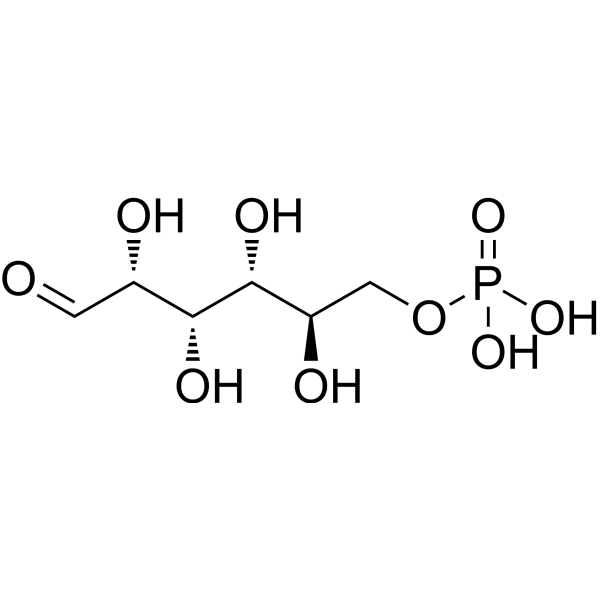
D-Glucose 6-phosphate is a key central node metabolite in glucose metabolism. It serves as the initiating metabolite for glycolysis and the pentose phosphate pathway, as well as a substrate for glycogen synthesis. D-Glucose 6-phosphate acts as a metabolic stress signal, which activates the mTOR pathway to promote protein synthesis, especially when phosphoglucose isomerase (PGI) is inhibited, thereby participating in cardiac remodeling processes. D-Glucose 6-phosphate can be used in research related to non-insulin-dependent diabetes mellitus and heart failure.
For research use only. We do not sell to patients.
- Purity : 99.87%
- CAS No.: 56-73-5
- Formula: C6H13O9P
- Molecular Weight:260.14
-
Storage:
Solution, -20°C, 2 years

To place orders, for customer services and technical support, please contact: MedChemExpress USA
Tel: 609-228-6898 E-mail: [email protected] [email protected]


-
 Biological Activity
-
Chemical Information
- Protocols
- Purity & Documentation
- References
-
 Help & FAQs


-
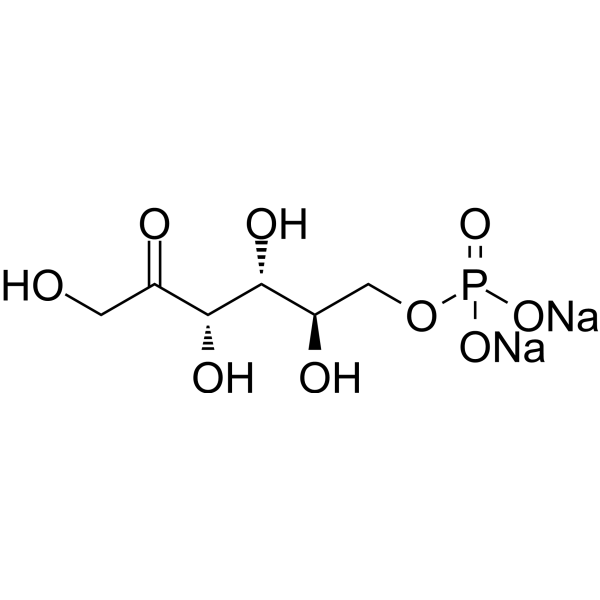
HY-113407A
D-Fructose-6-phosphate disodiumEndogenous Metabolite -
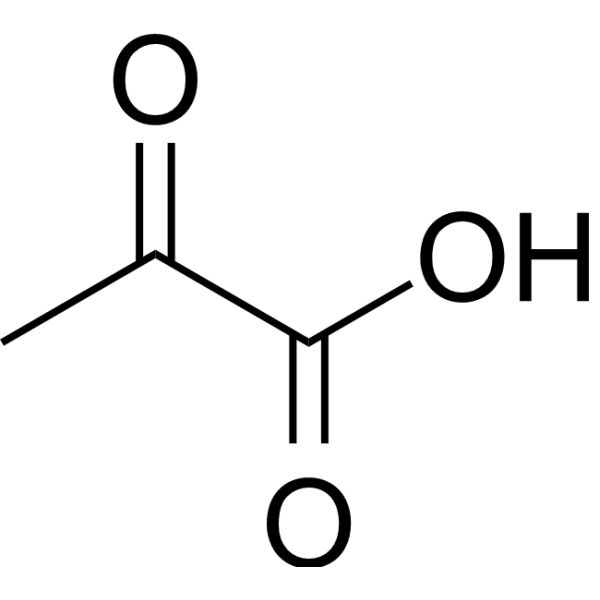
HY-Y0781
Pyruvic acidEndogenous Metabolite -
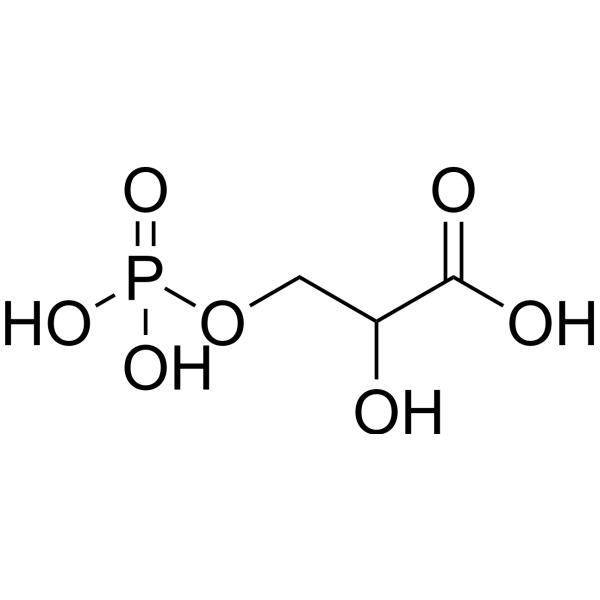
HY-113491
3-Phosphoglyceric acidMetabolic Intermediate -
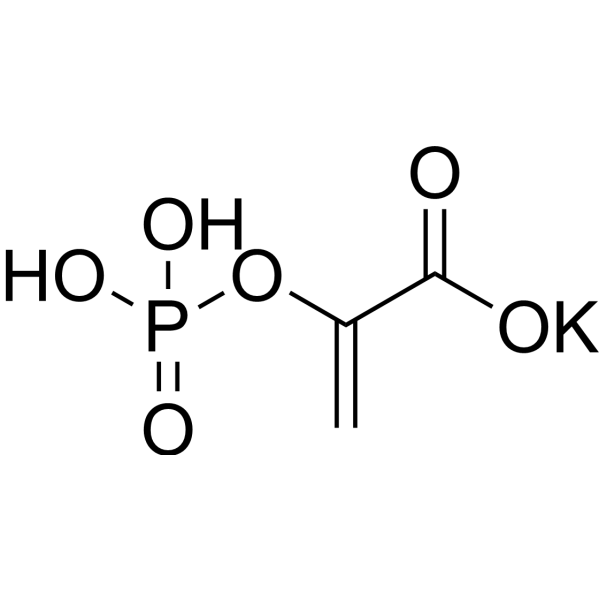
HY-W008807
Phosphoenolpyruvic acid potassiumGlycolysis Metabolite -
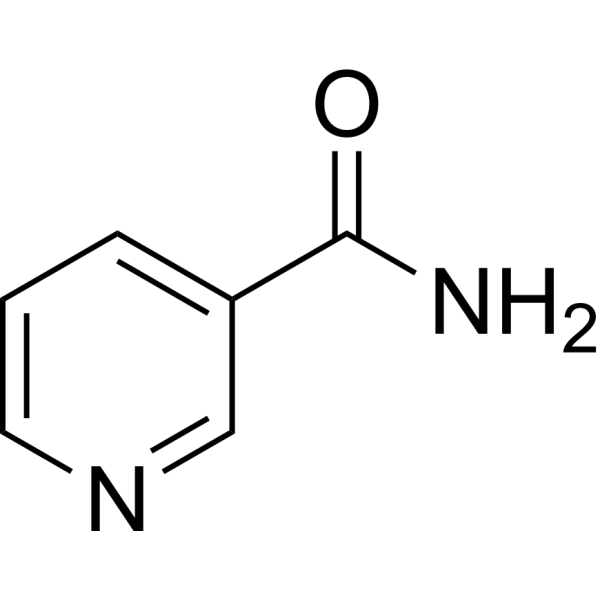
HY-B0150
NicotinamideSIRT Inhibitor -
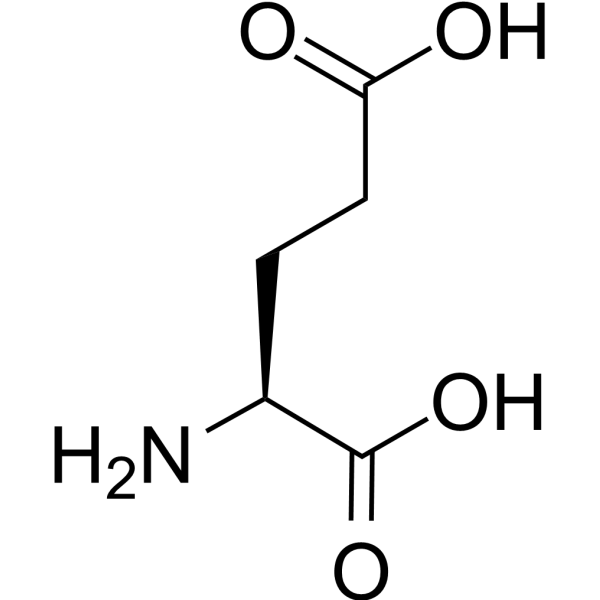
HY-14608
L-Glutamic acidGlutamate Receptors Agonist -
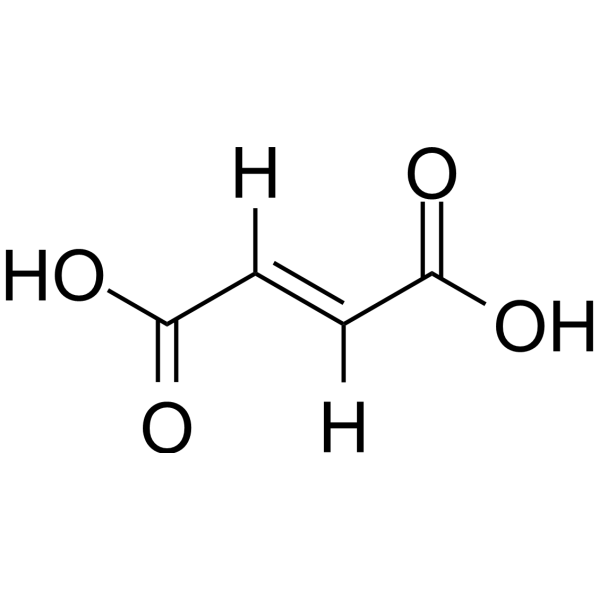
HY-W015883
Fumaric acidAnti-inflammatory agent -
HY-B2176
ATPEndogenous Metabolite -
HY-B0389
D-GlucoseMonosaccharide -
HY-B2227
Lactic acidGlycolysis Production -
HY-W013636
2-Ketoglutaric acidKrebs Cycle Intermediate -
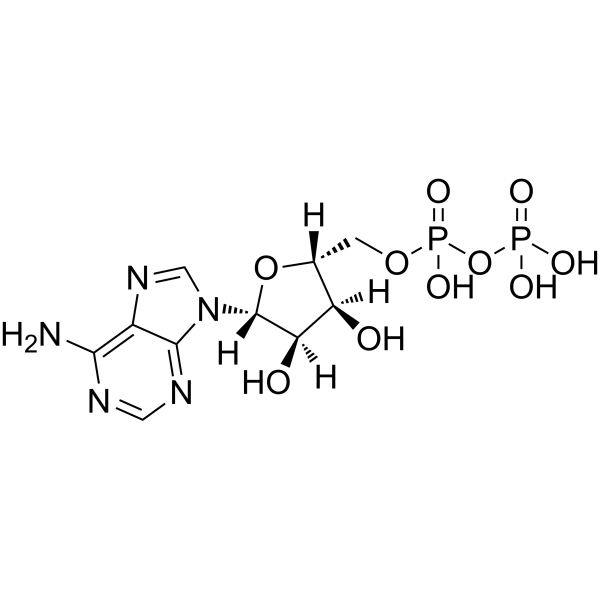
HY-W010918
Adenosine 5'-diphosphate
Publications Citing Use of MedChemExpress (MCE) D-Glucose 6-phosphate
MoreAll Endogenous Metabolite Isoforms
More

Biological Activity
Description
IC50 & Target
|
Human Endogenous Metabolite |
In Vitro
D‑Glucose 6‑phosphate is central to the mechanism by which insulin activates glycogen synthesis. It not only allosterically activates glycogen synthase but, more importantly, promotes its dephosphorylation to achieve covalent and sustained activation, thereby driving glycogen synthesis[1].
D‑Glucose 6‑phosphate accumulates following the inhibition of phosphoglucose isomerase activity, which in turn activates the mTOR pathway and promotes protein synthesis in cardiomyocytes[2].
MedChemExpress (MCE) has not independently confirmed the accuracy of these methods. They are for reference only. Further protocols information, click here.


Chemical Information
-
CAS No. 56-73-5
-
Appearance Liquid
-
Molecular Weight 260.14
-
Formula C6H13O9P
-
Color Colorless to light yellow
-
SMILES
O=C[C@@H]([C@H]([C@@H]([C@@H](COP(O)(O)=O)O)O)O)O
-
Structure Classification
-
Initial Source
-
Shipping
Room temperature in continental US; may vary elsewhere.
-
Storage
Solution, -20°C, 2 years


Publications (4)
-
Journal Impact Factor
-
Most Recent
-
Cell Stem Cell
Amino acid catabolism regulates hematopoietic stem cell proteostasis via a GCN2-eIF2α axis. [Abstract]2022 Jul 7;29(7):1119-1134.e7. PMID: 35803229 -
Nat Commun
Structural basis for transport and inhibition of the human glucose-6-phosphate transporter G6PT. [Abstract]2025 Oct 24;16(1):9420. PMID: 41136424 -
Insect Biochem Mol Biol
Development of an efficient insecticide substrate and inhibitor screening system of insect P450s using fission yeast. [Abstract]2023 Jun:157:103958. PMID: 37182814 -
Microb Pathog
Sub-minimum inhibitory concentrations of fosfomycin enhance Staphylococcus aureus virulence through the agr-PSM pathway. [Abstract]2026 Jan:210:108138. PMID: 41429753

Protocols
-
Research Protocol for Endocrine Diseases
Endocrine diseases often arise from disrupted hormone production, hormone signaling, or target-tissue responsiveness; for diabetes-focused endocrine disease models, insulin signaling regulates glucose uptake, hepatic glucose output, lipid metabolism, and β-cell compensation. Type 2 diabetes develops through interacting defects in insulin resistance, β-cell dysfunction, adipose inflammation, hepatic glucose overproduction, altered incretin signaling, and ectopic lipid metabolism. A major unresolved question is whether endocrine dysfunction is driven primarily by target-tissue insulin resistance, intrinsic β-cell failure, immune/inflammatory stress, or combined multi-organ failure that differs by disease stage.
-
Research Protocol for Cardiovascular Diseases
Cardiovascular disease can be modeled as maladaptive cardiac remodeling, where ischemic injury or pressure overload activates inflammatory signaling, fibroblast activation, extracellular-matrix deposition, cardiomyocyte hypertrophy, vascular remodeling, and progressive ventricular dysfunction. The TGF-β/SMAD axis is a central profibrotic pathway after myocardial injury and pressure overload, while innate immune and cytokine pathways regulate leukocyte recruitment, scar formation, and adverse remodeling. Key unresolved questions include which inflammatory signals are reparative versus harmful, when fibrosis is protective versus maladaptive, and whether pathway inhibition improves function without weakening necessary infarct healing or compensatory remodeling.
-
Research Protocol for Metabolic Diseases
AMP-activated protein kinase, AMPK, is a conserved cellular energy sensor that responds to reduced cellular energy status and coordinates metabolism by increasing ATP-generating catabolic pathways while suppressing ATP-consuming anabolic processes. In metabolic disease research, the AMPK pathway is experimentally relevant because it regulates hepatic lipid synthesis, fatty acid oxidation, glucose production, skeletal-muscle glucose disposal, mTORC1-linked biosynthesis, autophagy, mitochondrial homeostasis, and whole-body energy balance. The central pathway logic is that energy stress, metformin, exercise-like stimulation, or direct AMPK activators increase AMPKα Thr172 phosphorylation and downstream substrate phosphorylation, including ACC and RAPTOR. Phosphorylation of ACC suppresses lipogenesis and supports fatty acid oxidation, whereas phosphorylation of RAPTOR suppresses mTORC1 signaling and links cellular energy status to growth and protein synthesis control. The pathway is linked
-
Cardiac Morphometry
Cardiac morphometry is based on quantitative histological and stereological assessment of myocardial structure, including cardiomyocyte size, number, and extracellular matrix composition, to evaluate cardiac growth and remodeling under physiological or pathological conditions. Design-based stereology is considered a reference framework for obtaining unbiased estimates of structural parameters such as cardiomyocyte number, volume, and tissue architecture, enabling quantitative comparison across experimental groups. Histological image-based morphometry further enables measurement of cardiomyocyte cross-sectional area and collagen deposition using microscopy combined with image analysis software, allowing assessment of hypertrophy and fibrosis in cardiac remodeling models. These morphometric readouts reflect underlying biological processes such as cardiomyocyte hypertrophy, loss, or structural reorganization during disease progression or experimental stress.


Purity & Documentation
-
Data Sheet (272 KB)
-
SDS (477 KB)
- English - EN (477 KB)
- Français - FR (477 KB)
- Deutsch - DE (477 KB)
- Norwegian - NO (477 KB)
- Español - ES (477 KB)
- Swedish - SV (477 KB)
- Italian - IT (477 KB)
- Korean - KR (477 KB)
- Portuguese - PT (477 KB)
-
Handling Instructions (2659 KB)
References
[1]. Villar-Palasí C, et al. The role of glucose 6-phosphate in the control of glycogen synthase. FASEB J. 1997;11(7):544-558. [Content Brief]
[2]. Karlstaedt A, et al. Glucose 6-Phosphate Accumulates via Phosphoglucose Isomerase Inhibition in Heart Muscle. Circ Res. 2020;126(1):60-74. [Content Brief]

Calculators
Concentration (start) × Volume (start) = Concentration (final) × Volume (final)


D-Glucose 6-phosphate Related Classifications
HY-112537 Related Classifications
 Powered by Bioz