



D-Panthenol
Based on 3 publication(s) in Google Scholar
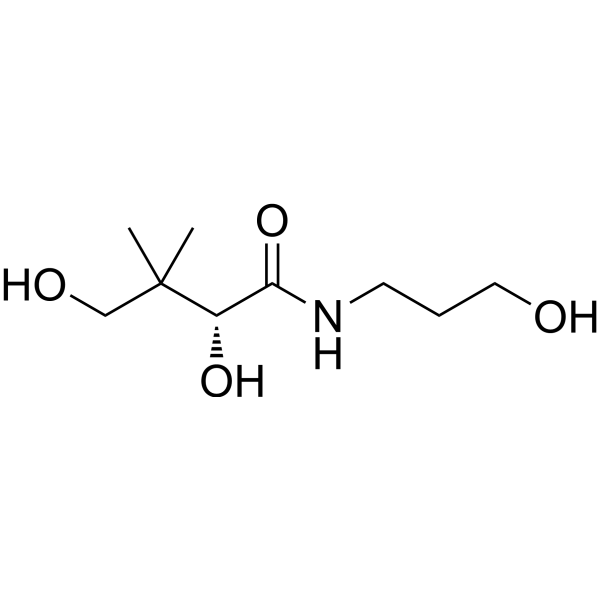
D-Panthenol is the biologically-active alcohol of pantothenic acid, which leads to an elevation in the amount of coenzyme A in the cell. D-panthenol exhibits nephroprotective effect in AKI, promotes tissue repair and regeneration.
연구목적의 판매만을 진행합니다. 환자를 대상으로 한 판매는 하지 않습니다.
- Purity : 99.98%
- CAS No.: 81-13-0
- 화학식: C9H19NO4
- 분자량:205.25
-
보관:Pure form -20°C, 3 years , 4°C, 2 years ; In solvent -80°C, 6 months , -20°C, 1 month

To place orders, for customer services and technical support, please contact: MedChemExpress USA
Tel: 609-228-6898 E-mail: [email protected] [email protected]


-
 Biological Activity
-
Chemical Information
-
용액&용해도
- 순도&문서
- References
-
 Help & FAQs


-
HY-B0511
BiotinVitamin B7 -

HY-P7115
TPO/Thrombopoietin Protein, Human (CHO, His, solution) -

HY-B1391R
D-Panthenol (Standard)Endogenous Metabolite -
HY-76542
Vitamin D2Vitamin D Supplement -
HY-16637
Folic acidB complex -
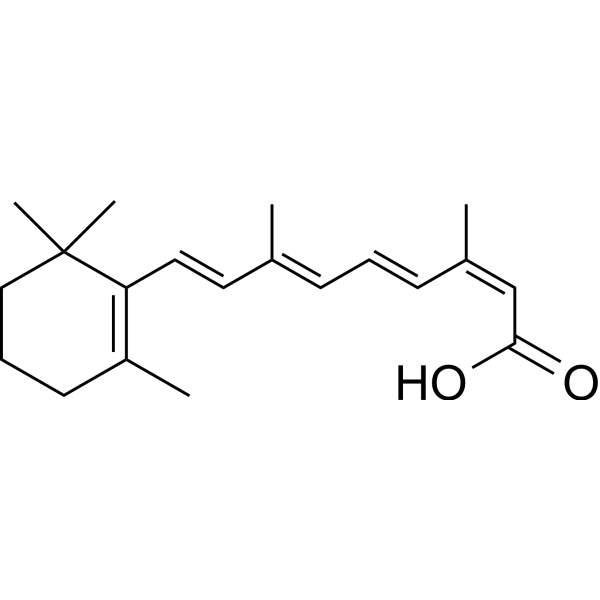
HY-15127
IsotretinoinAnti-acne Agent -
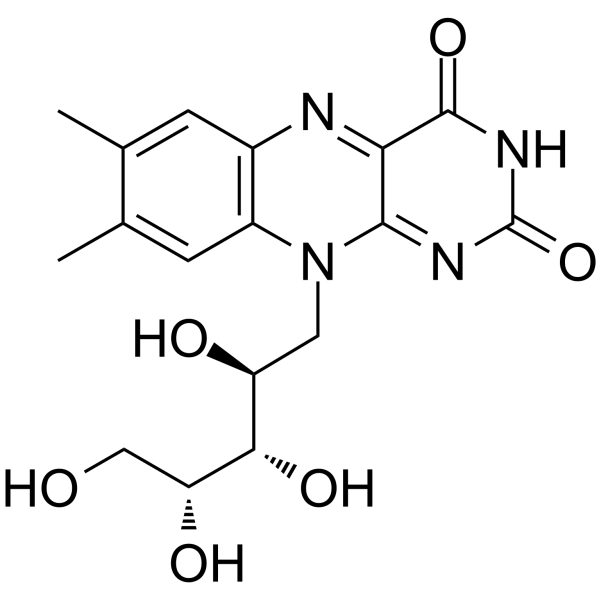
HY-B0456
RiboflavinVitamin B2 -
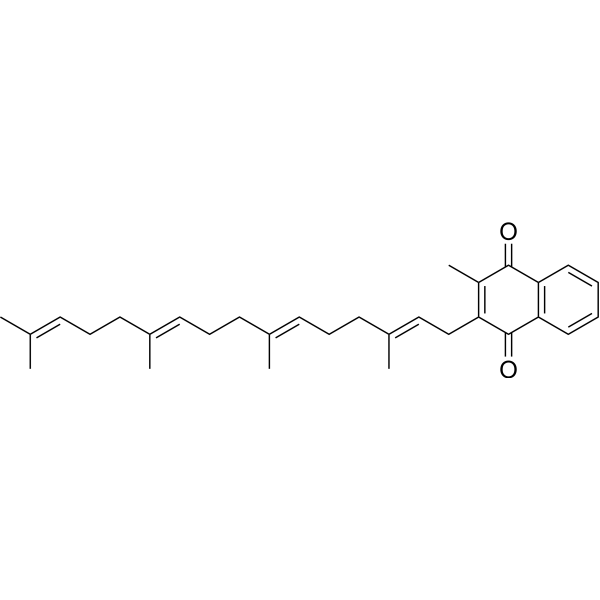
HY-B2156
Menaquinone-4Endogenous Metabolite -
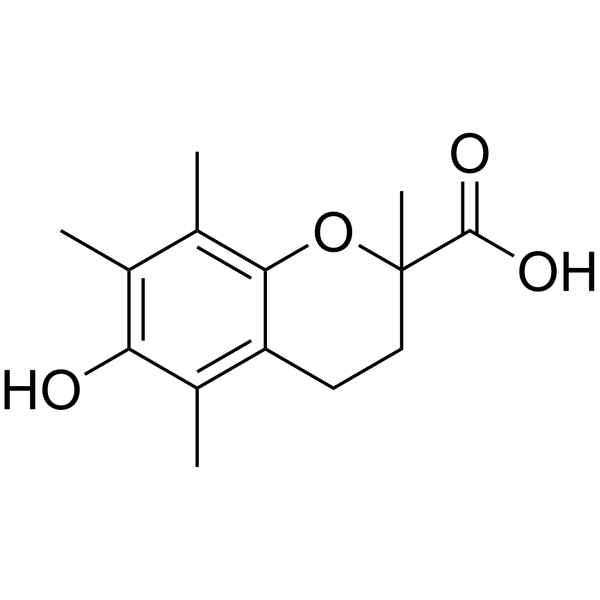
HY-101445
TroloxAntioxidant -

HY-B1342
Vitamin A -
HY-N0684
Vitamin K1Endogenous Metabolite -

HY-16637R
Folic acid (Standard)B complex
Publications Citing Use of MedChemExpress (MCE) D-Panthenol
MoreAll Endogenous Metabolite Isoforms
More

Biological Activity
제품 설명
IC50 & Target
|
Human Endogenous Metabolite |
In Vitro
D-panthenol exhibits neuroprotective activity against tBHP (0-100 μM) and FESO4 (0.5 mM) induced oxidation in mitochondria through inhibiting lipid peroxidation, thereby improves mitochondrial metabolism, reverses redox potential of the glutathione system and decreases the level of S-glutathionylated proteins[4].
MedChemExpress (MCE) has not independently confirmed the accuracy of these methods. They are for reference only.
In Vivo
D-panthenol (200 mg/kg, i.p. for 7 days) exhibits nephroprotective effect through inhibiting inflammatory processes with decreased MPO activity and leukocyte infiltration in Rhabdomyolysis-Induced AKI in Wistar mice [2].
D-panthenol (4 mg as a spray, twice a day for 14 days) promotes wound healing through retaining the environment moisture, promoting tissue repair and regeneration in streptozotocin-induced diabetes mellitus C57BL/6 mice and db/db mice[3].
MedChemExpress (MCE) has not independently confirmed the accuracy of these methods. They are for reference only.
-
Animal Model:Rhabdomyolysis-Induced AKI in Wistar mice[2]
-
Dosage:200 mg/kg
-
Administration:intraperitoneal injection, 7 days
-
Result:Reduced leukocyten infiltration and MPO activity in kidney.
-
Animal Model:streptozotocin-induced DM C57BL/6 mice and db/db (T2D) mice[3]
-
Dosage:4 mg/kg
-
Administration:as a spray, twice a day for 14 days
-
Result:Induced leukocyte prevalence, promoted clearance of necrotic debris from the wound. Induced collagen production from day 10.
Clinical Trial
| NCT Number | Sponsor | Condition | Start Date |
Phase

|
|---|---|---|---|---|
| NCT01329991 | Plexxikon| | 2011-05 | PHASE1 |


Chemical Information
-
CAS No. 81-13-0
-
Appearance Liquid (Density: 1.20 g/cm3)
-
분자량 205.25
-
화학식 C9H19NO4
-
Color Colorless to light yellow
-
SMILES
O=C([C@@H](C(C)(CO)C)O)NCCCO
-
Synonyms
Dexpanthenol
-
Structure Classification
-
Initial Source
-
선적
Room temperature in continental US; may vary elsewhere.
-
보관
Pure form -20°C 3 years 4°C 2 years In solvent -80°C 6 months -20°C 1 month


Publications (3)
-
Journal Impact Factor
-
Most Recent


용액&용해도
In Vitro:
DMSO : 200 mg/mL (974.42 mM; Need ultrasonic; Hygroscopic DMSO has a significant impact on the solubility of product, please use newly opened DMSO)
Ethanol : 110 mg/mL (535.93 mM; Need ultrasonic)
Please refer to the solubility information to select the appropriate solvent. Once prepared, please aliquot and store the solution to prevent product inactivation from repeated freeze-thaw cycles.
Storage method and period of stock solution: -80°C, 6 months; -20°C, 1 month. When stored at -80°C, please use it within 6 months. When stored at -20°C, please use it within 1 month.
Please refer to the solubility information to select the appropriate solvent. Once prepared, please aliquot and store the solution to prevent product inactivation from repeated freeze-thaw cycles.
Storage method and period of stock solution: -80°C, 6 months; -20°C, 1 month. When stored at -80°C, please use it within 6 months. When stored at -20°C, please use it within 1 month.
Concentration (start) × Volume (start) = Concentration (final) × Volume (final)
In Vivo:
Select the appropriate dissolution method based on your experimental animal and administration route.
- For the following dissolution methods, please ensure to first prepare a clear stock solution using an In Vitro approach and then sequentially add co-solvents:
- To ensure reliable experimental results, the clarified stock solution can be appropriately stored based on storage conditions. As for the working solution for In Vivo experiments, it is recommended to prepare freshly and use it on the same day.
- The percentages shown for the solvents indicate their volumetric ratio in the final prepared solution. If precipitation or phase separation occurs during preparation, heat and/or sonication can be used to aid dissolution.
Add each solvent one by one: 10% DMSO 40% PEG300 5% Tween-80 45% Saline
Solubility: ≥ 5 mg/mL (24.36 mM); Clear solution
This protocol yields a clear solution of ≥ 5 mg/mL (saturation unknown).
Taking 1 mL working solution as an example, add 100 μL DMSO stock solution (50.0 mg/mL) to 400 μL PEG300, and mix evenly; then add 50 μL Tween-80 and mix evenly; then add 450 μL Saline to adjust the volume to 1 mL.
Preparation of Saline: Dissolve 0.9 g sodium chloride in ddH₂O and dilute to 100 mL to obtain a clear Saline solution.
Add each solvent one by one: 10% DMSO 90% (20% SBE-β-CD in Saline)
Solubility: ≥ 5 mg/mL (24.36 mM); Clear solution
This protocol yields a clear solution of ≥ 5 mg/mL (saturation unknown).
Taking 1 mL working solution as an example, add 100 μL DMSO stock solution (50.0 mg/mL) to 900 μL 20% SBE-β-CD in Saline, and mix evenly.
Preparation of 20% SBE-β-CD in Saline (4°C, storage for one week): 2 g SBE-β-CD powder is dissolved in 10 mL Saline, completely dissolve until clear.
In Vivo Dissolution Calculator
Please enter the basic information of animal experiments:
-
-
-
-
Recommended: Prepare an additional quantity of animals to account for potential losses during experiments.
Please enter your animal formula composition:
-
%DMSO +
Recommended: Keep the proportion of DMSO in working solution below 2% if your animal is weak.
-
%+
-
+%Tween-80 + +
-
%Saline +
The co-solvents required include: DMSO, . All of co-solvents are available by MedChemExpress (MCE). , Tween 80. All of co-solvents are available by MedChemExpress (MCE).
Working solution concentration: 0.22 mg/mL
Method for preparing stock solution: mg drug dissolved in μL DMSO. Stock solution concentration: mg/mL.
1. Take μL DMSO stock solution;
2. Add μL .
μL , mix evenly;
3. Then add μL Tween 80, mix evenly;
4. Then add μL
Please ensure that the stock solution in the first step is dissolved to a clear state, and add co-solvents in sequence. You can use ultrasonic heating (ultrasonic cleaner, recommended frequency 20-40 kHz), vortexing, etc. to assist dissolution.


순도&문서
-
Data Sheet (275 KB)
-
SDS (254 KB)
- English - EN (254 KB)
- Français - FR (254 KB)
- Deutsch - DE (254 KB)
- Norwegian - NO (254 KB)
- Español - ES (254 KB)
- Swedish - SV (254 KB)
- Italian - IT (254 KB)
- Korean - KR (254 KB)
- Portuguese - PT (254 KB)
-
Handling Instructions (2659 KB)
References
[1]. Oguz A, et al. Topical N-acetylcysteine improves wound healing comparable to dexpanthenol: an experimental study. Int Surg. 2015 Apr;100(4):656-61. [Content Brief]
[2]. Semenovich DS, et al., Protective Effect of D-Panthenol in Rhabdomyolysis-Induced Acute Kidney Injury. Int J Mol Sci. 2022 Oct 14;23(20):12273. [Content Brief]
[3]. linova E, et al., Cerium-Containing N-Acetyl-6-Aminohexanoic Acid Formulation Accelerates Wound Reparation in Diabetic Animals. Biomolecules. 2021 Jun 3;11(6):834. [Content Brief]
[4]. Semenovich DS, et al., Effects of Panthenol and N-Acetylcysteine on Changes in the Redox State of Brain Mitochondria under Oxidative Stress In Vitro. Antioxidants (Basel). 2021 Oct 27;10(11):1699. [Content Brief]


Complete Stock Solution Preparation Table
Please refer to the solubility information to select the appropriate solvent. Once prepared, please aliquot and store the solution to prevent product inactivation from repeated freeze-thaw cycles.
Storage method and period of stock solution: -80°C, 6 months; -20°C, 1 month. When stored at -80°C, please use it within 6 months. When stored at -20°C, please use it within 1 month.
| Optional Solvent | Concentration Solvent Mass | 1 mg | 5 mg | 10 mg | 25 mg |
|---|---|---|---|---|---|
| Ethanol / DMSO | 1 mM | 4.8721 mL | 24.3605 mL | 48.7211 mL | 121.8027 mL |
| 5 mM | 0.9744 mL | 4.8721 mL | 9.7442 mL | 24.3605 mL | |
| 10 mM | 0.4872 mL | 2.4361 mL | 4.8721 mL | 12.1803 mL | |
| 15 mM | 0.3248 mL | 1.6240 mL | 3.2481 mL | 8.1202 mL | |
| 20 mM | 0.2436 mL | 1.2180 mL | 2.4361 mL | 6.0901 mL | |
| 25 mM | 0.1949 mL | 0.9744 mL | 1.9488 mL | 4.8721 mL | |
| 30 mM | 0.1624 mL | 0.8120 mL | 1.6240 mL | 4.0601 mL | |
| 40 mM | 0.1218 mL | 0.6090 mL | 1.2180 mL | 3.0451 mL | |
| 50 mM | 0.0974 mL | 0.4872 mL | 0.9744 mL | 2.4361 mL | |
| 60 mM | 0.0812 mL | 0.4060 mL | 0.8120 mL | 2.0300 mL | |
| 80 mM | 0.0609 mL | 0.3045 mL | 0.6090 mL | 1.5225 mL | |
| 100 mM | 0.0487 mL | 0.2436 mL | 0.4872 mL | 1.2180 mL |


D-Panthenol Related Classifications
HY-B1391 Related Classifications
 Powered by Bioz