



Naphthoquine phosphate

Based on 1 Customer Validation
Naphthoquine phosphate is an orally active antimalarial and antiviral agent. Naphthoquine phosphate exhibits ex vivo activity against multidrug-resistant Plasmodium falciparum and Plasmodium vivax, preferentially targeting ring-stage rather than trophozoite-stage parasites. Naphthoquine phosphate inhibits coronavirus (SARS-CoV-2, HCoV-OC43, HCoV-229E) replication by affecting viral entry and post-entry replication. Naphthoquine phosphate is used for research on malaria and Covid-19.
For research use only. We do not sell to patients.
- Purity : 99.33%
- CAS No.: 173531-58-3
- Formula: C24H34ClN3O9P2
- Molecular Weight:605.94
-
Storage:
4°C, sealed storage, away from moisture
* In solvent : -80°C, 6 months; -20°C, 1 month (sealed storage, away from moisture)

To place orders, for customer services and technical support, please contact: MedChemExpress USA
Tel: 609-228-6898 E-mail: [email protected] [email protected]


-
 Biological Activity
-
Chemical Information
-
Solvent & Solubility
- Protocols
- Purity & Documentation
- References
-
 Help & FAQs


-
HY-117684
CabamiquineAntimalarial Agent -
HY-17437A
Mefloquine hydrochlorideAntimalarial Agent -

HY-17437AR
Mefloquine hydrochloride (Standard)Antimalarial Agent -
HY-N0176
DihydroartemisininAntimalarial Agent -

HY-N0176R
Dihydroartemisinin (Standard)Reference Standard -
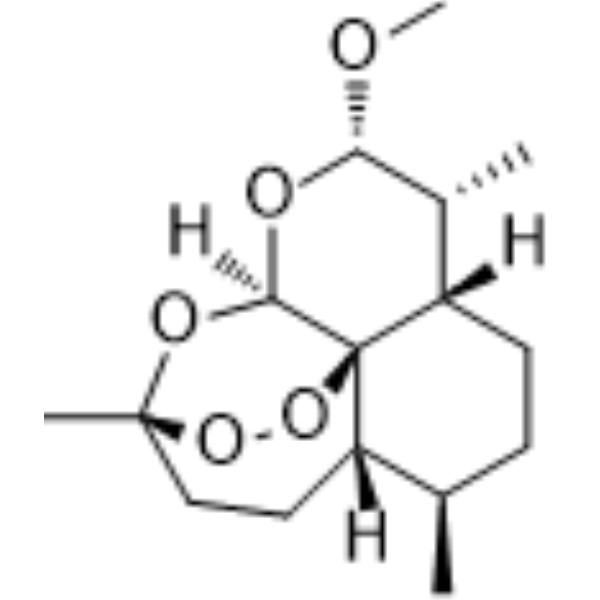
HY-N0402
ArtemetherParasite Inhibitor -
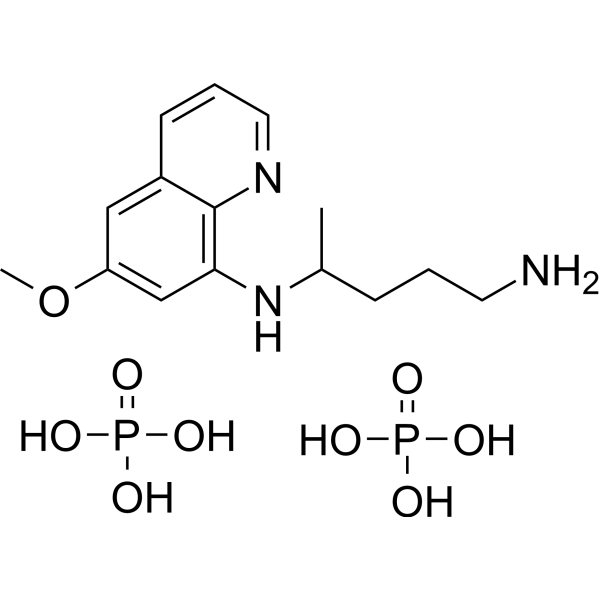
HY-12651
Primaquine diphosphateAntimalarial Agent -
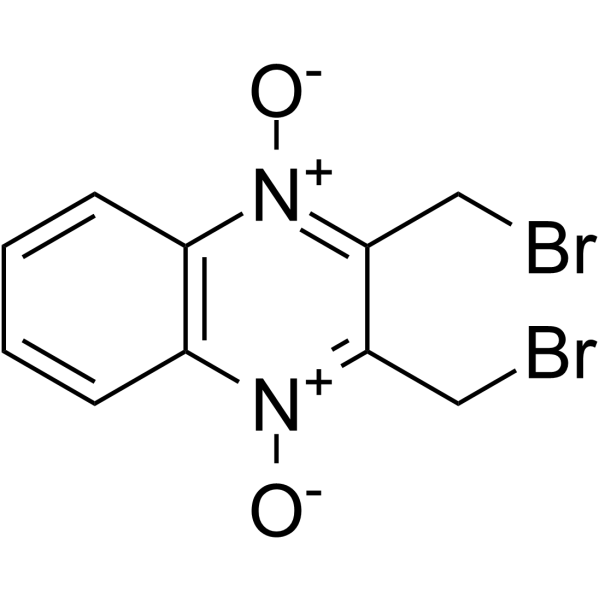
HY-116090
Conoidin ATgPrxII Inhibitor -
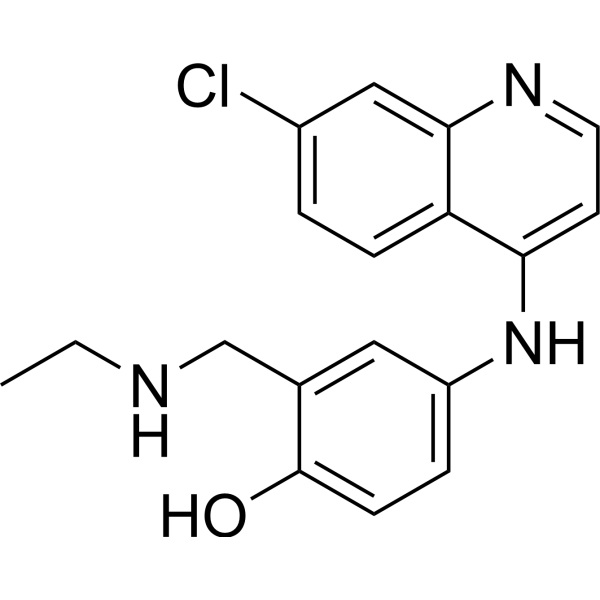
HY-128554
N-Desethyl amodiaquineParasite Inhibitor -
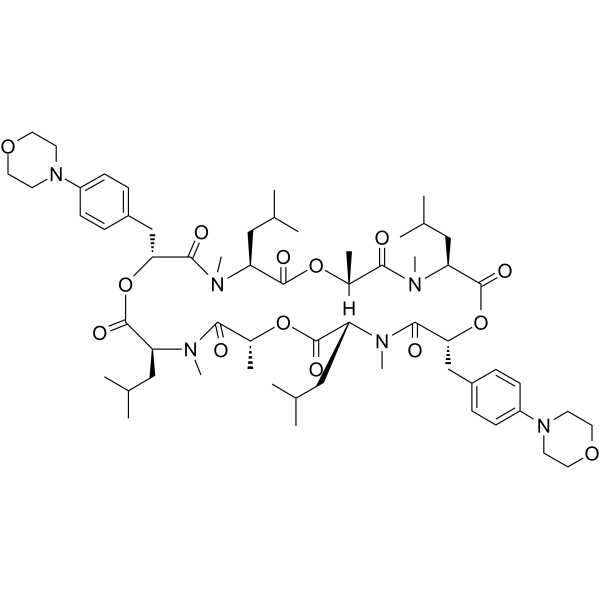
HY-101476
EmodepsideAnthelmintic Agent -
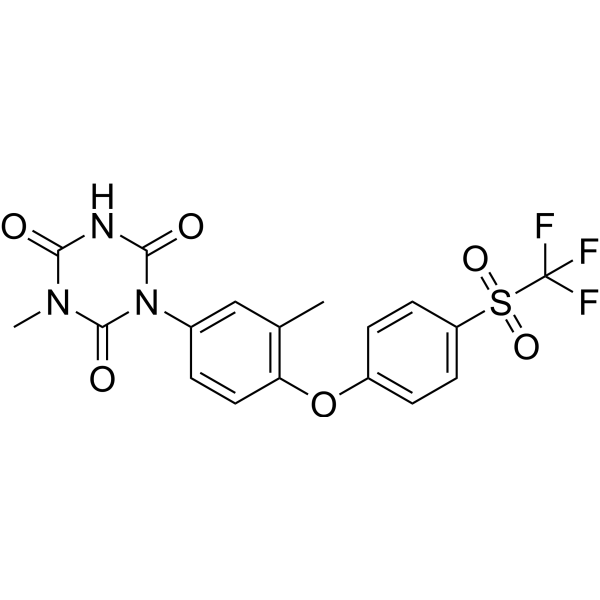
HY-17008
Toltrazuril sulfoneAnticoccidial -
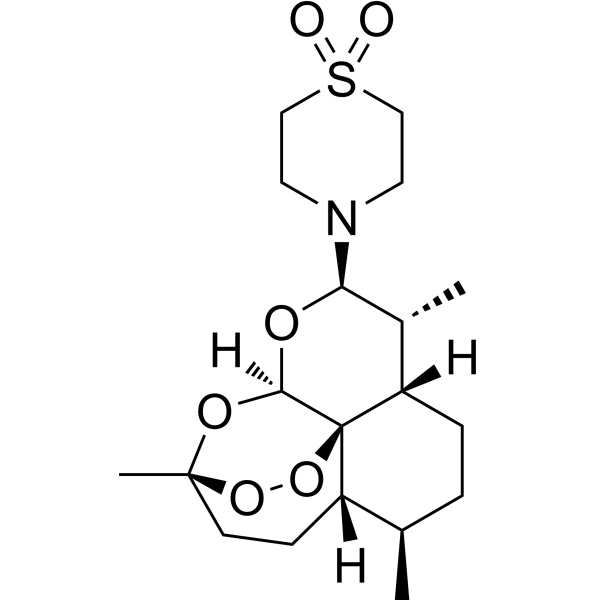
HY-19502
ArtemisoneCMV Inhibitor
All Parasite Isoforms
More

Biological Activity
Description
IC50 & Target
[1]|
Plasmodium |
In Vitro
Naphthoquine (0.1-1.0 μg/mL; 1 h) phosphate exhibits a high plasma protein binding rate (> 80%), which is independent of sex, species, and reagent concentration in mice, rats, and humans[1].
Naphthoquine (10 μM; 60 min) phosphate shows no sex-related differences in metabolic clearance rate in mouse and rat liver microsomes[1].
Naphthoquine (2-fold dilution at concentrations up to 481 nM; 35-56 h) phosphate exhibits potent ex vivo activity against field isolates of Plasmodium falciparum (median IC50, 8.0 nM) and Plasmodium vivax (median IC50, 7.8 nM)[2].
Naphthoquine (2-fold serial dilution, maximum concentration of 481 nM; 24 h) phosphate exhibits stage-specific activity in Plasmodium falciparum (median IC50 of 5.1 nM for rings versus median IC50 of 26.5 nM for trophozoites), as well as in Plasmodium vivax (median IC50 of 6.5 nM for rings versus median IC50 of 341.6 nM for trophozoites)[2].
Naphthoquine (1.02-9.16 μM; 48 h) phosphate inhibits HCoV-229E replication in Huh7 cells with an IC50 of 2.05 μM[3].
Naphthoquine (1.02-9.16 μM; 72 h) phosphate inhibits HCoV-OC43 replication in H460 cells with an IC50 of 5.83 μM[3].
Naphthoquine (12 h (pretreatment); 48 h (post-infection)) phosphate inhibits SARS-CoV-2 replication in Vero cells with an IC50 of 2.01 μM[3].
MedChemExpress (MCE) has not independently confirmed the accuracy of these methods. They are for reference only. Further protocols information, click here.
-
Cell Line:Vero cells infected with SARS-CoV-2
-
Concentration:Different doses
-
Incubation Time:12 h (pretreatment); 48 h (post-infection)
-
Result:Inhibited SARS-CoV-2 replication with an IC50 of 2.01 μM.
Achieved a CC50 of 13.50 μM.
Achieved a selection index of 6.72.
In Vivo
MedChemExpress (MCE) has not independently confirmed the accuracy of these methods. They are for reference only.
-
Animal Model:ICR mice (male and female, 20-25 g)[1]
-
Dosage:0.71-1.67 mg/kg (ED50/ED90); 4.0 mg/kg (single dose efficacy)
-
Administration:p.o.; single dose; 24 h post-infection
-
Result:Achieved an ED50 of 0.71 mg/kg and an ED90 of 1.10 mg/kg in male mice.
Achieved an ED50 of 0.94 mg/kg and an ED90 of 1.67 mg/kg in female mice.
Reduced parasitaemia to less than 1.0% on day 4 post-dosing and resulted in 7 out of 9 mice surviving for at least 28 days without parasitaemia at 4.0 mg/kg.
Showed no toxicity at a dose as high as tenfold the ED50 based on weight and locomotor activity.


Chemical Information
-
CAS No. 173531-58-3
-
Appearance Solid
-
Molecular Weight 605.94
-
Formula C24H34ClN3O9P2
-
Color Light yellow to yellow
-
SMILES
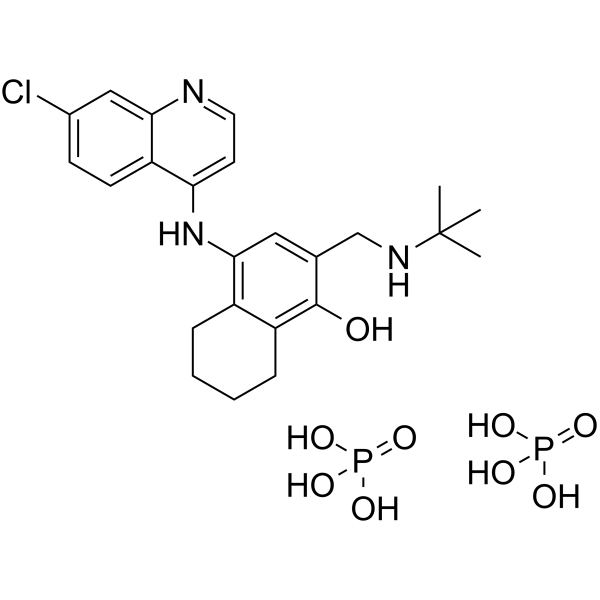
ClC1=CC=C(C(NC2=C(CCCC3)C3=C(O)C(CNC(C)(C)C)=C2)=CC=N4)C4=C1.O=P(O)(O)O.O=P(O)(O)O
-
Shipping
Room temperature in continental US; may vary elsewhere.
-
Storage
4°C, sealed storage, away from moisture
* In solvent : -80°C, 6 months; -20°C, 1 month (sealed storage, away from moisture)


Solvent & Solubility
In Vitro:
H2O : 3.33 mg/mL (5.50 mM; Need ultrasonic)
DMSO : < 1 mg/mL (insoluble or slightly soluble)
Please refer to the solubility information to select the appropriate solvent. Once prepared, please aliquot and store the solution to prevent product inactivation from repeated freeze-thaw cycles.
Storage method and period of stock solution: -80°C, 6 months; -20°C, 1 month (sealed storage, away from moisture). When stored at -80°C, please use it within 6 months. When stored at -20°C, please use it within 1 month.
* Note: If you choose water as the stock solution, please dilute it to the working solution, then filter and sterilize it with a 0.22 μm filter before use.
Please refer to the solubility information to select the appropriate solvent. Once prepared, please aliquot and store the solution to prevent product inactivation from repeated freeze-thaw cycles.
Storage method and period of stock solution: -80°C, 6 months; -20°C, 1 month (sealed storage, away from moisture). When stored at -80°C, please use it within 6 months. When stored at -20°C, please use it within 1 month.
* Note: If you choose water as the stock solution, please dilute it to the working solution, then filter and sterilize it with a 0.22 μm filter before use.
Concentration (start) × Volume (start) = Concentration (final) × Volume (final)

Protocols
-
Research Protocol for Infectious Diseases
Infectious-disease experiments test how pathogens interact with host barriers, innate immune receptors, inflammatory signaling, pathogen replication, and tissue injury; pattern-recognition receptors such as TLRs, RIG-I-like receptors, NOD-like receptors, and inflammasomes detect microbial molecules and activate NF-κB, interferon, and cytokine responses. The central hypothesis is that infection severity reflects the balance between pathogen burden and host response: protective inflammation restricts pathogen growth, whereas excessive or mislocalized inflammation contributes to tissue damage and disease phenotype. Unresolved questions include which host pathways are protective versus pathogenic, why some infection models fail to translate to human disease, and which combined readouts best predict clinically relevant infection outcomes.


Purity & Documentation
-
Data Sheet (278 KB)
-
SDS (252 KB)
- English - EN (252 KB)
- Français - FR (252 KB)
- Deutsch - DE (252 KB)
- Norwegian - NO (252 KB)
- Español - ES (252 KB)
- Swedish - SV (252 KB)
- Italian - IT (252 KB)
- Korean - KR (252 KB)
- Portuguese - PT (252 KB)
-
Handling Instructions (2659 KB)
References


Complete Stock Solution Preparation Table
Please refer to the solubility information to select the appropriate solvent. Once prepared, please aliquot and store the solution to prevent product inactivation from repeated freeze-thaw cycles.
Storage method and period of stock solution: -80°C, 6 months; -20°C, 1 month (sealed storage, away from moisture). When stored at -80°C, please use it within 6 months. When stored at -20°C, please use it within 1 month.
| Optional Solvent | Concentration Solvent Mass | 1 mg | 5 mg | 10 mg | 25 mg |
|---|---|---|---|---|---|
| H2O | 1 mM | 1.6503 mL | 8.2516 mL | 16.5033 mL | 41.2582 mL |
| 5 mM | 0.3301 mL | 1.6503 mL | 3.3007 mL | 8.2516 mL |
* Note: If you choose water as the stock solution, please dilute it to the working solution, then filter and sterilize it with a 0.22 μm filter before use.


Naphthoquine phosphate Related Classifications
HY-17036 Related Classifications
 Powered by Bioz
Keywords
- Naphthoquine
- 173531-58-3
- Parasite
- SARS-CoV
- 4-aminoquinoline antimalarial agent
- coronavirus replication
- CYP2D6-dependent hydroxylation
- blood-stage Plasmodium
- N-oxidation metabolism
- Plasmodium vivax
- Acinetobacter baumannii
- angiotensin-converting enzyme 2
- haemozoin formation
- Plasmodium falciparum
- Inhibitor
- inhibitor
- inhibit