



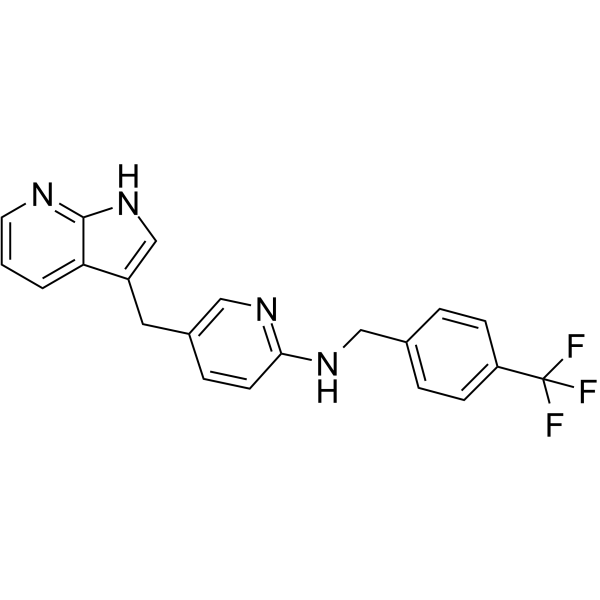
PLX647

Based on 1 Customer Validation
PLX647 is an orally active, highly specific dual FMS and KIT kinase inhibitor, with IC50s of 28 and 16 nM, respectively. PLX647 shows selectivity for FMS and KIT over a panel of 400 kinases at a concentration of 1 μM except FLT3 and KDR (IC50s=91 and 130 nM, respectively).
For research use only. We do not sell to patients.
- Purity : 99.74%
- CAS No.: 873786-09-5
- Formula: C21H17F3N4
- Molecular Weight:382.38
-
Storage:Powder -20°C, 3 years , 4°C, 2 years ; In solvent -80°C, 2 years , -20°C, 1 year

To place orders, for customer services and technical support, please contact: MedChemExpress USA
Tel: 609-228-6898 E-mail: [email protected] [email protected]


-
 Biological Activity
-
Chemical Information
-
Solvent & Solubility
- Purity & Documentation
- References
-
 Help & FAQs


-
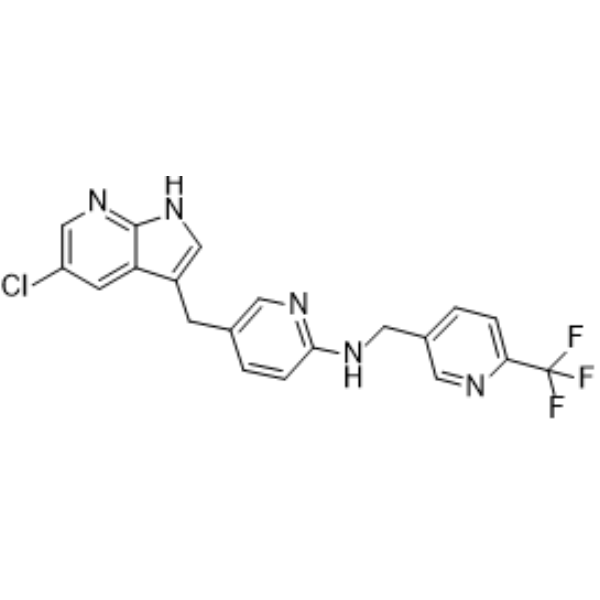
HY-16749
PexidartinibCSF1R/c-Kit Inhibitor -
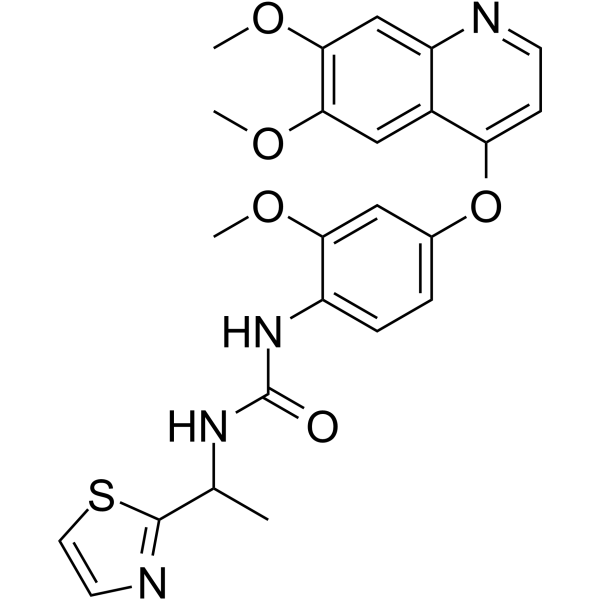
HY-10408
Ki20227CSF1R Inhibitor -
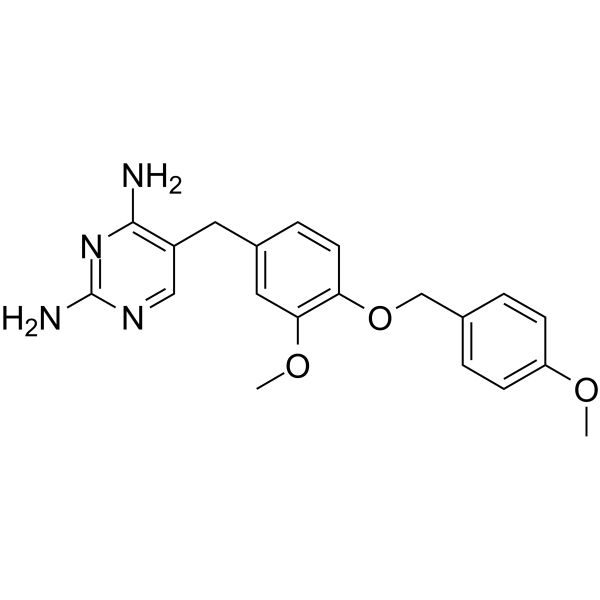
HY-10917
GW2580c-Fms Inhibitor -
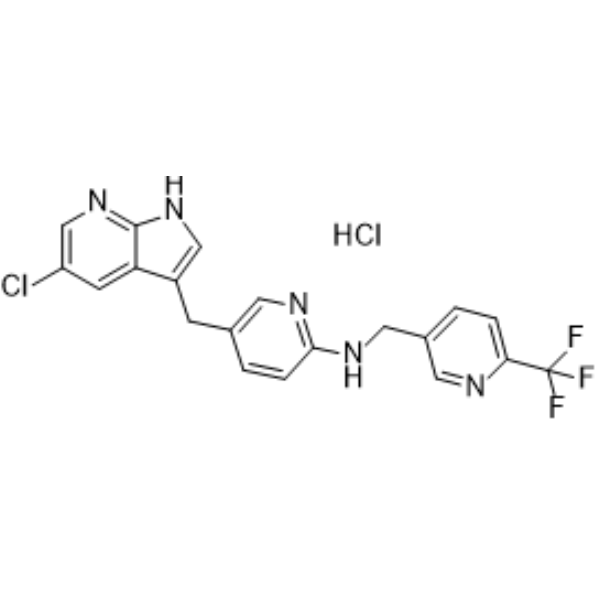
HY-16749A
Pexidartinib hydrochlorideCSF1R/c-Kit Inhibitor -
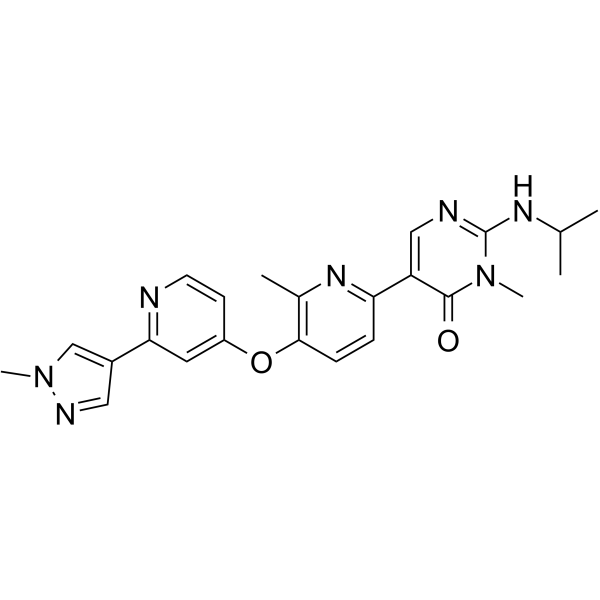
HY-136256
Vimseltinibc-FMS(CSF-IR)/c-Kitdual Inhibitor -

HY-10408R
Ki20227 (Standard)Reference Standard -
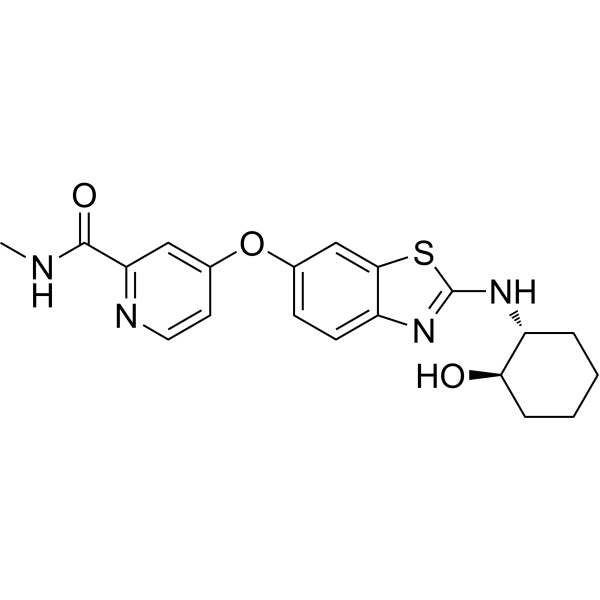
HY-12768
SotuletinibCSF-1R Inhibitor -
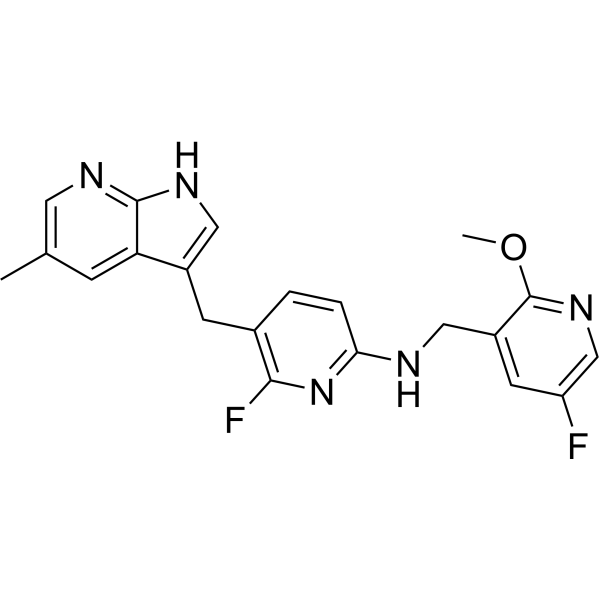
HY-114153C
PLX5622 in AIN-76A Diet (1200 ppm)PLX5622 Microglia Clearance Diet -
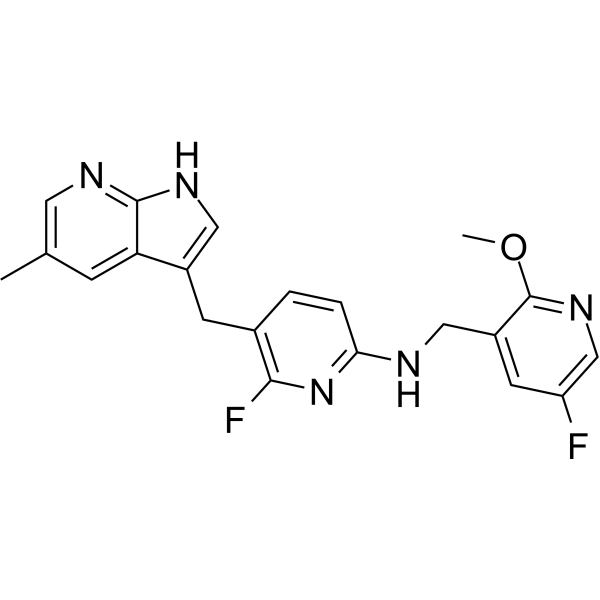
HY-114153
PLX5622CSF1R Inhibitor -
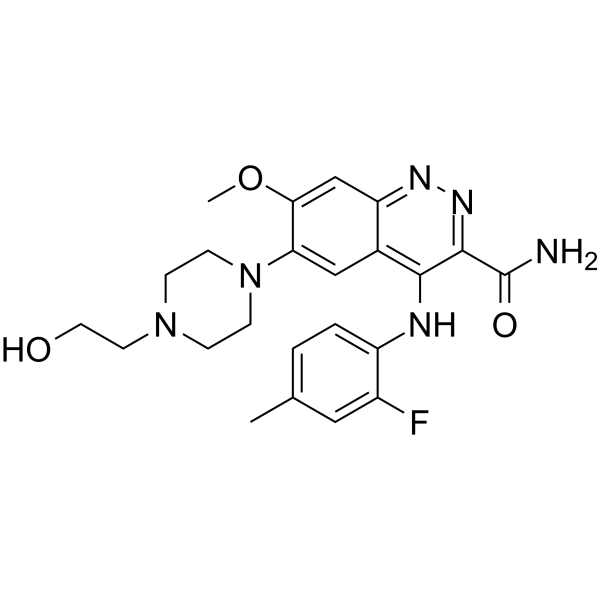
HY-117244
AZD7507c-Fms Inhibitor -
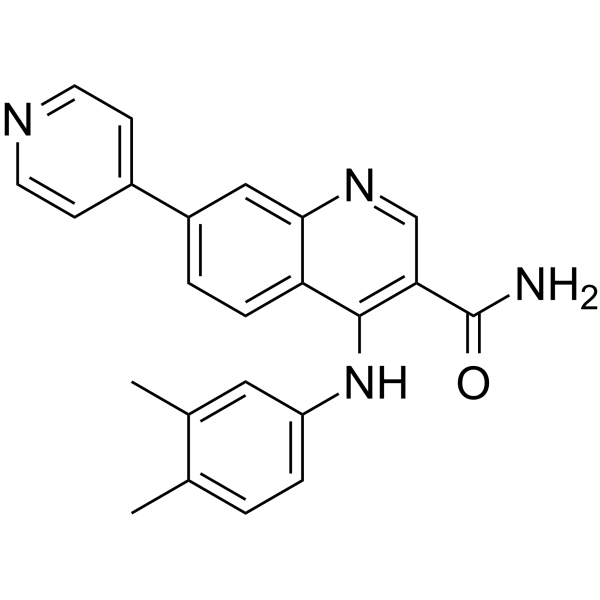
HY-112451
cFMS Receptor Inhibitor IIc-Fms Inhibitor -
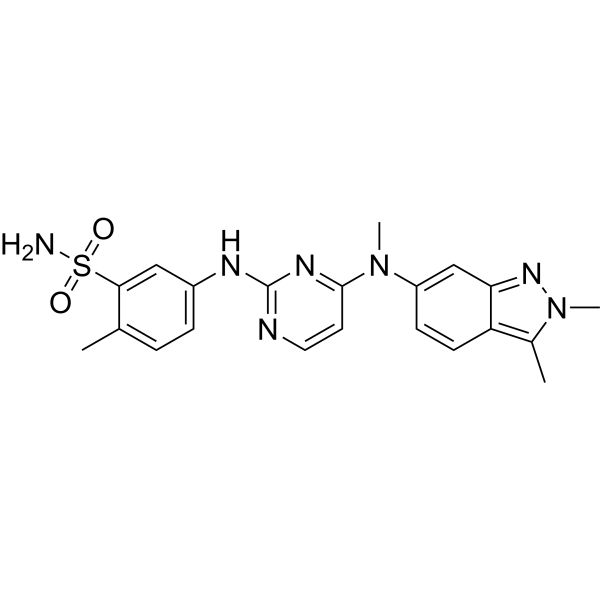
HY-10208
PazopanibVEGFR Inhibitor


Biological Activity
Description
In Vitro
In vitro, PLX647 potently inhibits proliferation of BCR-FMS cells, with an IC50 of 92 nM. A corresponding Ba/F3 cell line expressing BCR-KIT is also quite sensitive to PLX647, with an IC50 of 180 nM. PLX647 also inhibits endogenous FMS and KIT, as demonstrated by inhibition of the ligand-dependent cell lines M-NFS-60 (IC50=380 nM) and M-07e (IC50=230 nM), which express FMS and KIT, respectively[1].
PLX647 potently inhibits the growth of FLT3–ITD-expressing MV4-11 cells (IC50=110 nM). PLX647 displayed minimal inhibition of the proliferation of Ba/F3 cells expressing BCR–KDR (IC50=5 μM). PLX647 inhibits osteoclast differentiation with an IC50 of 0.17 μM[1].
MedChemExpress (MCE) has not independently confirmed the accuracy of these methods. They are for reference only. .
In Vivo
PLX647 (40 mg/kg; p.o.; male Swiss Webster mice) reduces LPS-induced TNF-α and IL-6 release[1].
PLX647 (20-80 mg/kg; p.o.; daily or twice daily from 27-41 days) shows effects on collagen-induced arthritis[1].
PLX647 (30 mg/kg) results in significant inhibition of TRAP5b immunostaining and bone osteolysis. PLX647 (30 mg/kg BID) is able to prevent bone damage by the tumor cells[1].
MedChemExpress (MCE) has not independently confirmed the accuracy of these methods. They are for reference only.
-
Animal Model:Male C57BL/6 mice (mouse unilateral ureter obstruction model)[1]
-
Dosage:40 mg/kg
-
Administration:P.o.; twice daily for 7 days
-
Result:Resulted in reduction in the levels of F4/80+ macrophages by 77%.
-
Animal Model:7-9 wk old Male DBA/1J mice (Mouse collagen-induced arthritis model)[1]
-
Dosage:20 mg/kg, 80 mg/kg
-
Administration:P.o.; daily (20 mg/kg) from 27-41 days, twice daily (80 mg/kg) from 27-41 days
-
Result:20 mg/kg PLX647 had no initial effect on the development of severe arthritis. However, starting on day 33, no further development of disease severity was recorded, and a 30% inhibition of the macroscopic signs of arthritis was evident in clinical score on day 41. Mice treated with 80 mg/kg BID PLX647 initially shows delayed development of severe arthritic signs. Starting on day 33, the signs of arthritis began to decrease in this treatment group, reaching a maximum reversal of 76% on day 41.


Chemical Information
-
CAS No. 873786-09-5
-
Appearance Solid
-
Molecular Weight 382.38
-
Formula C21H17F3N4
-
Color Light yellow to khaki
-
SMILES
FC(C1=CC=C(CNC2=NC=C(CC3=CNC4=NC=CC=C43)C=C2)C=C1)(F)F
-
Shipping
Room temperature in continental US; may vary elsewhere.
-
Storage
Powder -20°C 3 years 4°C 2 years In solvent -80°C 2 years -20°C 1 year


Solvent & Solubility
In Vitro:
DMSO : 25 mg/mL (65.38 mM; Need ultrasonic; Hygroscopic DMSO has a significant impact on the solubility of product, please use newly opened DMSO)
Please refer to the solubility information to select the appropriate solvent. Once prepared, please aliquot and store the solution to prevent product inactivation from repeated freeze-thaw cycles.
Storage method and period of stock solution: -80°C, 2 years; -20°C, 1 year. When stored at -80°C, please use it within 2 years. When stored at -20°C, please use it within 1 year.
Please refer to the solubility information to select the appropriate solvent. Once prepared, please aliquot and store the solution to prevent product inactivation from repeated freeze-thaw cycles.
Storage method and period of stock solution: -80°C, 2 years; -20°C, 1 year. When stored at -80°C, please use it within 2 years. When stored at -20°C, please use it within 1 year.
Concentration (start) × Volume (start) = Concentration (final) × Volume (final)
In Vivo:
Select the appropriate dissolution method based on your experimental animal and administration route.
- For the following dissolution methods, please ensure to first prepare a clear stock solution using an In Vitro approach and then sequentially add co-solvents:
- To ensure reliable experimental results, the clarified stock solution can be appropriately stored based on storage conditions. As for the working solution for In Vivo experiments, it is recommended to prepare freshly and use it on the same day.
- The percentages shown for the solvents indicate their volumetric ratio in the final prepared solution. If precipitation or phase separation occurs during preparation, heat and/or sonication can be used to aid dissolution.
Add each solvent one by one: 10% DMSO 40% PEG300 5% Tween-80 45% Saline
Solubility: ≥ 2.5 mg/mL (6.54 mM); Clear solution
This protocol yields a clear solution of ≥ 2.5 mg/mL (saturation unknown).
Taking 1 mL working solution as an example, add 100 μL DMSO stock solution (25.0 mg/mL) to 400 μL PEG300, and mix evenly; then add 50 μL Tween-80 and mix evenly; then add 450 μL Saline to adjust the volume to 1 mL.
Preparation of Saline: Dissolve 0.9 g sodium chloride in ddH₂O and dilute to 100 mL to obtain a clear Saline solution.
In Vivo Dissolution Calculator
Please enter the basic information of animal experiments:
-
-
-
-
Recommended: Prepare an additional quantity of animals to account for potential losses during experiments.
Please enter your animal formula composition:
-
%DMSO +
Recommended: Keep the proportion of DMSO in working solution below 2% if your animal is weak.
-
%+
-
+%Tween-80 + +
-
%Saline +
The co-solvents required include: DMSO, . All of co-solvents are available by MedChemExpress (MCE). , Tween 80. All of co-solvents are available by MedChemExpress (MCE).
Working solution concentration: 0.22 mg/mL
Method for preparing stock solution: mg drug dissolved in μL DMSO. Stock solution concentration: mg/mL.
1. Take μL DMSO stock solution;
2. Add μL .
μL , mix evenly;
3. Then add μL Tween 80, mix evenly;
4. Then add μL
Please ensure that the stock solution in the first step is dissolved to a clear state, and add co-solvents in sequence. You can use ultrasonic heating (ultrasonic cleaner, recommended frequency 20-40 kHz), vortexing, etc. to assist dissolution.


Purity & Documentation
-
Data Sheet (274 KB)
-
SDS (393 KB)
- English - EN (393 KB)
- Français - FR (393 KB)
- Deutsch - DE (393 KB)
- Norwegian - NO (393 KB)
- Español - ES (393 KB)
- Swedish - SV (393 KB)
- Italian - IT (393 KB)
- Korean - KR (393 KB)
- Portuguese - PT (393 KB)
-
Handling Instructions (2659 KB)
References
[1]. Zhang C, et al. Design and pharmacology of a highly specific dual FMS and KIT kinase inhibitor. Proc Natl Acad Sci U S A. 2013 Apr 2;110(14):5689-94. [Content Brief]
[2]. Louvet C, et al. Tyrosine kinase inhibitors reverse type 1 diabetes in nonobese diabetic mice. Proc Natl Acad Sci U S A. 2008 Dec 2;105(48):18895-900. [Content Brief]


Complete Stock Solution Preparation Table
Please refer to the solubility information to select the appropriate solvent. Once prepared, please aliquot and store the solution to prevent product inactivation from repeated freeze-thaw cycles.
Storage method and period of stock solution: -80°C, 2 years; -20°C, 1 year. When stored at -80°C, please use it within 2 years. When stored at -20°C, please use it within 1 year.
| Optional Solvent | Concentration Solvent Mass | 1 mg | 5 mg | 10 mg | 25 mg |
|---|---|---|---|---|---|
| DMSO | 1 mM | 2.6152 mL | 13.0760 mL | 26.1520 mL | 65.3800 mL |
| 5 mM | 0.5230 mL | 2.6152 mL | 5.2304 mL | 13.0760 mL | |
| 10 mM | 0.2615 mL | 1.3076 mL | 2.6152 mL | 6.5380 mL | |
| 15 mM | 0.1743 mL | 0.8717 mL | 1.7435 mL | 4.3587 mL | |
| 20 mM | 0.1308 mL | 0.6538 mL | 1.3076 mL | 3.2690 mL | |
| 25 mM | 0.1046 mL | 0.5230 mL | 1.0461 mL | 2.6152 mL | |
| 30 mM | 0.0872 mL | 0.4359 mL | 0.8717 mL | 2.1793 mL | |
| 40 mM | 0.0654 mL | 0.3269 mL | 0.6538 mL | 1.6345 mL | |
| 50 mM | 0.0523 mL | 0.2615 mL | 0.5230 mL | 1.3076 mL | |
| 60 mM | 0.0436 mL | 0.2179 mL | 0.4359 mL | 1.0897 mL |


PLX647 Related Classifications
HY-13838 Related Classifications
 Powered by Bioz