



Cancer Immunotherapy
Cancer immunotherapy (CIT) is a type of biological therapy, aiming to improve anti-tumor immune responses with fewer off-target effects than chemotherapy. Several types of immunotherapy include: oncolytic virus therapies, cancer vaccines, cytokine therapies, adoptive cell transfer (ACT), and immune checkpoint inhibitors (ICIs). In particular, ICIs and ACT have obtained immense clinical response, but their efficacy varies from person to person. Immune cells can be harnessed to eliminate tumor cells, such as T cells, B cells, NK cells, and myeloid cells. T cells have potent tumor-killing capability, therefore, a plethora of cancer immunotherapy research have focused on inducing T-cell-mediated anti-tumor responses. CTLA-4 and PD-1 are found on the cell surface of T cells as co-inhibitory receptors. The breakthrough in cancer immunotherapy results from the identification and subsequent targeting of checkpoint mechanisms in T cells with monoclonal antibodies against CTLA-4 and programmed death-ligand 1/programmed death-1 (PD-L1/PD-1).
Several types of cancers (e.g., melanoma, mismatch repair-deficient cancers, bladder cancer, and non-small cell lung cancer) have achieved significant clinical responses in T-cell checkpoint blockade therapies. However, single-mode immunotherapy faces challenges such as low immune response, low tumor infiltration, and complex immunosuppressive tumor microenvironment. Recently, combined therapies based on tumor immunity have received extensive attention in the research of enhancing tumor cells immunogenicity and inhibiting their growth. For example, anti CTLA-4 and PD-1, immune checkpoint blockade (ICB) combined with chemotherapy, anti-angiogenic drugs and kinase inhibitors.
-
SB-T-101141
 0 ImagesCat. No.: HY-106159CAS No.: 186348-05-0
SB-T-101141 is a novel taxane. SB-T-101141 effectively induces a noncanonical ferroptosis to overcome Paclitaxel (HY-B0015) resistance of breast cancer. SB-T-101141 facilitates the production of iron and ferrous ions and ROS. SB-T-101141 stably binds to KHSRP to inhibit the iron-dependent expression of CISD1 related to iron homeostasis. SB-T-101141 synergistically enhances the iron-dependent activation of JNK and PERK pathways via KHSRP. SB-T-101141 suppresses breast tumor growth in MCF-7(PR)/MDA-MB-231(PR) or KHSRP knock-down MCF-7 xenograft mice model.
-
RIP3 activator 1
 0 ImagesCat. No.: HY-168640CAS No.: 1456899-52-7
RIP3 activator 1 (compound C8) is a potent RIP3 activator. RIP3 activator 1 inhibits cell growth. RIP3 activator 1 induces necroptosis through the RIP3/p62/Keap1 signaling pathway. RIP3 activator 1 increases the protein expression of p-MLKL. RIP3 activator 1 induces autophagy. RIP3 activator 1 increases accumulation of LC3-II and p62 protein expression.
-
PARP1-IN-44
 0 ImagesCat. No.: HY-178032
PARP1-IN-44, an Olaparib (HY-10162) derivative, is an orally active PARP1 inhibitor (IC50 = 0.6 nM), and also inhibits PARP2 (IC50 = 1.0 nM) and PARP7 (IC50 = 7.5 nM). PARP1-IN-44 has selective antiproliferative activity against BRCA-deficient cancer cells with minimal toxicity to normal cells. PARP1-IN-44 induces G2/M phase arrest, promotes apoptosis, elevates ROS levels, disrupts mitochondrial membrane potential. PARP1-IN-44 suppresses PARylation while increasing γH2AX accumulation. PARP1-IN-44 activates the cGAS-STING pathway, upregulating IFN-β and CXCL10 expression. PARP1-IN-44 enhancing CD8+ T cell infiltration in a CT26 tumor mouse model, demonstrating robust in vivo antitumor efficacy.
-
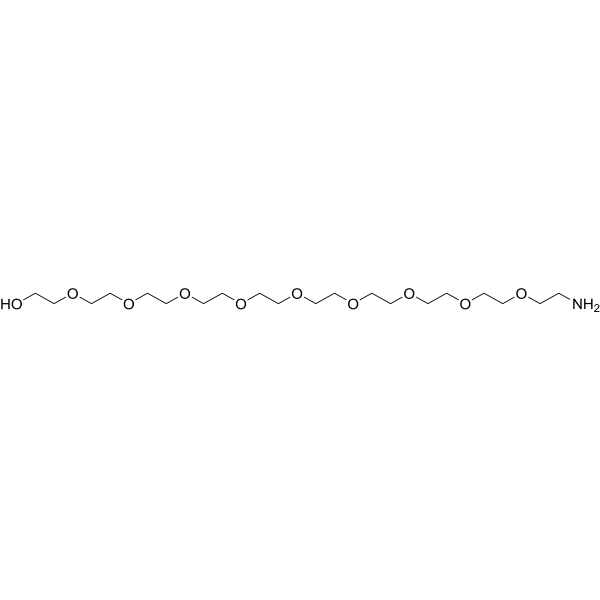
Amino-PEG10-OH
 0 Images
Amino-PEG10-OH is non-cleavable 10 unit PEG ADC linker used in the synthesis of antibody-drug conjugates (ADCs). Amino-PEG10-OH is also a PEG-based PROTAC linker that can be used in the synthesis of PROTACs.
-
H1L1A1B3
 0 ImagesCat. No.: HY-172332CAS No.: 3097638-09-7
H1L1A1B3 is an ionizable cationic lipid used in the formation of lipid nanoparticles (LNPs) for the delivery of circular RNA (circRNA). H1L1A1B3-LNPs demonstrates a fourfold increase in circRNA transfection efficiency in lung cancer cells over ALC-0315 (HY-138170). H1L1A1B3 can activate the NF-κB/IRF immune pathways.
-
PROTAC Tubulin degrader-2
 0 ImagesCat. No.: HY-181143
PROTAC Tubulin degrader-2 is a cereblon (CRBN)-dependent α/β-tubulin PROTAC degrader with DC50 values of 1.73 μM and 1.38 μM. PROTAC Tubulin degrader-2 can inhibit cancer cells proliferation and migration. PROTAC Tubulin degrader-2 can induce G2/M arrest, apoptosis, ROS accumulation. PROTAC Tubulin degrader-2 can be used for the research of cancer, such as non-small-cell lung cancer.
-
DL002
 0 ImagesCat. No.: HY-159668CAS No.: 3049680-91-0
DL002 is a ADC linker that can be used to synthesize antibody-drug conjugates containing BCL-2 family protein degraders, and it's used in tumor research.
-
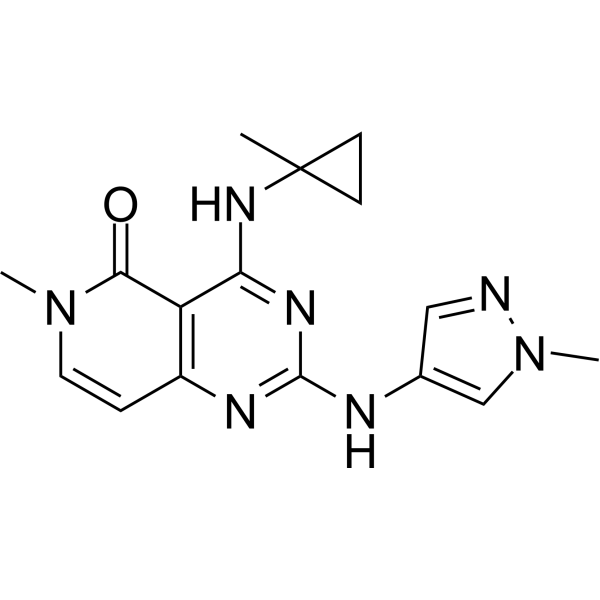
IRAK4-IN-11
 0 ImagesCat. No.: HY-146072CAS No.: 3032742-74-5
IRAK4-IN-11 (compound 6) is a potent IRAK4 inhibitor with an IC50 of 0.008 µM. IRAK4-IN-11 shows cell pIRAK4 potencies with an IC50 of 0.19 µM.
-
DKFZ-633
 0 ImagesCat. No.: HY-124610CAS No.: 2244425-14-5
DKFZ-633 is a potent KLK6 inhibitor and KLK6-specific probe with an IC50 of 250 nM against human KLK6. DKFZ-633 covalently labels active KLK6 in a specific manner, and successfully pulls down and captures endogenous active KLK6 from cell-conditioned media. DKFZ-633 serves as a critical tool for investigating the function of KLK6 and its regulatory mechanisms in head and neck cancer.
-
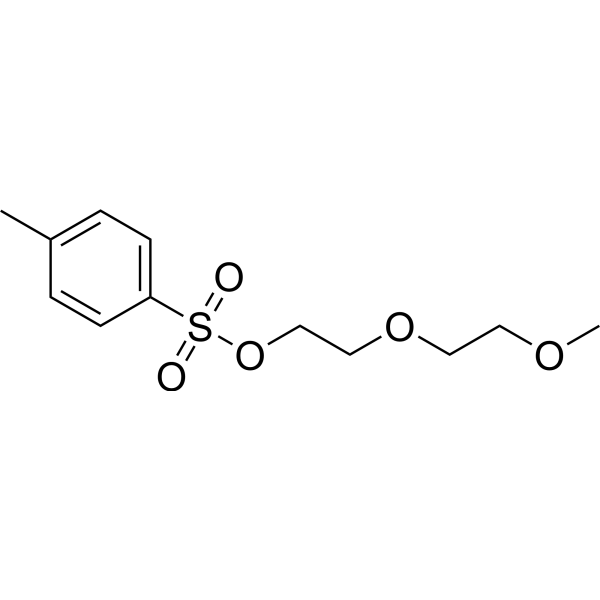
m-PEG2-Tos
 0 Images
m-PEG2-Tos is a uncleavable ADC linker used in the synthesis of antibody-drug conjugates (ADCs). m-PEG2-Tos is also a PEG-based PROTAC linker that can be used in the synthesis of PROTACs.
-
DCAP (Standard)
 0 ImagesSynonyms: VU0607402 (Standard)
Diphenylcyclopropenone (Standard) is the analytical standard of Diphenylcyclopropenone. This product is intended for research and analytical applications. Diphenylcyclopropenone (Diphencyprone) is a topical immunomodulatory agent that can be used for alopecia areata research.
-
KIT V654A Recombinant Human Active Protein Kinase
 0 ImagesCat. No.: HY-E70742
KIT (CD117) is an important cell surface marker used to identify certain types of hematopoietic(blood) progenitors in the bone marrow. KIT is a cytokine receptor expressed on the surface of hematopoietic stem cells as well as other cell types. Altered forms of this receptor may be associated with some types of cancer. KIT V654A is a mutant of KIT. KIT V654A Recombinant Human Active Protein Kinase is a recombinant KIT V654A protein that can be used to study KIT V654A-related functions.
-
Argyrin B
 0 ImagesCat. No.: HY-N13917CAS No.: 174423-36-0
Argyrin B, a natural product cyclic peptide, is a reversible, non-competitive immunoproteasome inhibitor. Argyrin B shows selective inhibition of the β5i and β1i sites of the immunoproteasome over the β5c and β1c sites of the constitutive proteasome with nearly 20-fold selective inhibition of β1i over the homologous β1c. Argyrin B has antibacterial effects.
-
KRAS G12V Peptide
 0 ImagesCat. No.: HY-P11356CAS No.: 1932689-39-8
KRAS G12V Peptide is a polypeptide and epitope derived from KRASG12V. KRAS G12V Peptide forms a stable, high-affinity peptide-HLA class I complex, which is processed and presented by tumor cells and can be recognized by specific TCR. KRAS G12V Peptide is applicable to research related to metastatic lung cancer.
-
Anti-PL2L60 Antibody (KAO3)
 0 ImagesCat. No.: HY-P992291
Anti-PL2L60 Antibody (KAO3) is a PL2L60-targeting antibody. Anti-PL2L60 Antibody (KAO3) binds to PL2L60 expressed on tumor cell surfaces, blocking its tumor-promoting functions. Anti-PL2L60 Antibody (KAO3) arrests tumor cell cycle and induces cancer cell apoptosis. Anti-PL2L60 Antibody (KAO3) activates complement to mediate tumor cell lysis. Anti-PL2L60 Antibody (KAO3) can be used for the research of lymphoma, breast cancer, lung cancer, cervical cancer, colon cancer, and melanoma[1].
-
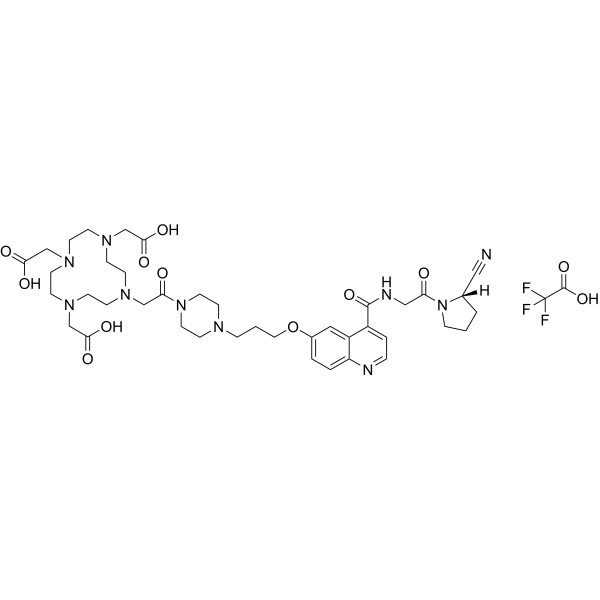
FAPI-2 TFA
 0 ImagesCat. No.: HY-128642APurity: 99.40%
-
Nicotinamide hydrochloride
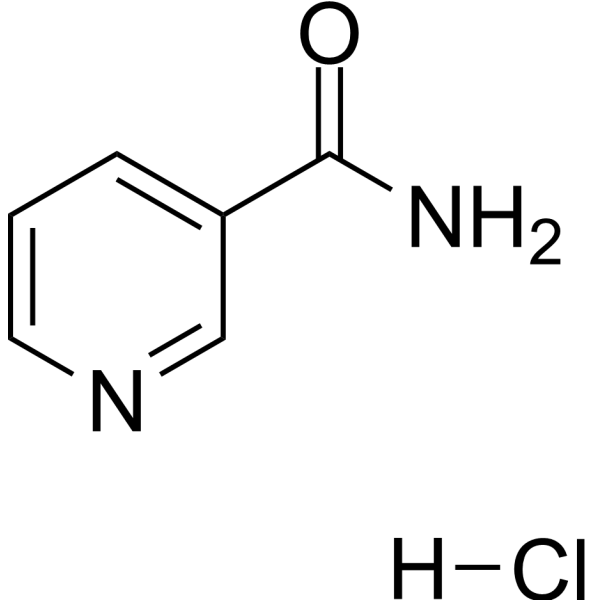 0 ImagesCat. No.: HY-B0150ACAS No.: 25334-23-0Synonyms: Niacinamide hydrochloride; Nicotinic acid amide hydrochloride
Nicotinamide hydrochloride is a form of vitamin B3 or niacin. Nicotinamide hydrochloride inhibits SIRT2 activity (IC50: 2 μM). Nicotinamide hydrochloride also inhibits SIRT1. Nicotinamide hydrochloride increases cellular NAD+, ATP, ROS levels. Nicotinamide hydrochloride inhibits tumor growth and improves survival. Nicotinamide hydrochloride also has anti-HBV activity.
-
Glycybridin C
 0 ImagesCat. No.: HY-N19818CAS No.: 2088505-67-1
Glycybridin C is a Protein tyrosine phosphatase 1B (PTP1B) inhibitor and pregnane X receptor (PXR) ligand. Glycybridin C inhibits insulin and leptin signaling pathway negative regulation, LPS (HY-D1056)-induced NF-κB transcriptional activity. Glycybridin C forms hydrophobic and π-π stacking interactions with Met243, Phe288, Tyr306, and His407 residues of PXR. Glycybridin C can be used for the research of hepatocellular carcinoma, colorectal adenocarcinoma, breast carcinoma.
-
Becotatug (powder)
 0 ImagesCat. No.: HY-P990049ASynonyms: JMT-101 (powder); MRG003 Antibody (powder)
Becotatug (powder) (JMT-101) is a humanized IgG1 monoclonal antibody targeting epidermal growth factor receptor (EGFR), and serves as the antibody component of the antibody-drug conjugate Becotatug vedotin (HY-171265). Becotatug (powder) specifically binds to the extracellular domain of EGFR, induces receptor internalization and degradation, blocks the EGFR signaling pathway, and mediates antibody-dependent cellular cytotoxicity. When conjugated to monomethyl auristatin E (MMAE) (HY-15162) via a valine-citrulline cleavable linker, Becotatug (powder) enables targeted delivery of cytotoxic drugs to EGFR-positive tumor cells. Becotatug (powder) can be used for research related to non-small cell lung cancer, nasopharyngeal carcinoma, and head and neck squamous cell carcinoma.




