



Cancer Targeted Therapy
Cancer targeted therapy is the foundation of precision medicine; it uses drugs or other substances to target specific genes and proteins that control cancer cells’ growth, division and spreading. Compared to traditional chemotherapy drugs, targeted-drugs can specifically act on cancer cells with high efficacy without damaging normal cells. Drugs used in cancer targeted therapy mainly includes small molecules and macromolecules (e.g., monoclonal antibodies), which can target cancer cells and constituents in the tumor microenvironment to activate the immune system. Anti-angiogenesis drugs, such as those targeting vascular endothelial growth factor (VEGF), epidermal growth factor receptor (EGFR), transforming growth factor (TGF)-α, TGF-β, Tumor necrosis factor (TNF)-α, and platelet-derived endothelial growth factor (PDGFR) inhibit the proliferation and metastasis of cancer cells. In recent years, the proportion of antibody drugs in cancer treatment has gradually become prominent. Antibody-drug conjugates (ADCs) are a new type of targeted drugs that are composed of monoclonal antibody, cytotoxic drug and linker. ADCs can deliver drugs to tumor cells and minimize the toxicity to normal tissues. Proteolysis-targeting chimera (PROTAC) is a useful technology for targeted protein degradation. PROTAC exploits the ubiquitin-proteasome system and forms a ternary complex with a hijacked E3 ubiquitin ligase and target protein, leading to polyubiquitination and degradation of the target protein.
Targeted therapy is a useful strategy in treatment of cancer either alone or in combination with standard chemotherapy. At present, targeted therapy has proved significant clinical success in the treatment of many types of cancer, including breast cancer, colorectal cancer, leukemia, ovarian cancer and lung cancer.
-
PRN-371
 0 ImagesCat. No.: HY-124657CAS No.: 1610974-55-4
PRN-371 is a potent and selective JAK3 inhibitor. PRN371 effectively suppresses natural killer/T-cell lymphoma cell proliferation and induces apoptosis through abrogation of the JAK3-STAT signaling. PRN-371 exhibits antitumor activity and can be used for the research of cancer, such as hematological malignancies.
-
6-O-Methyl-2’-O-methylinosine
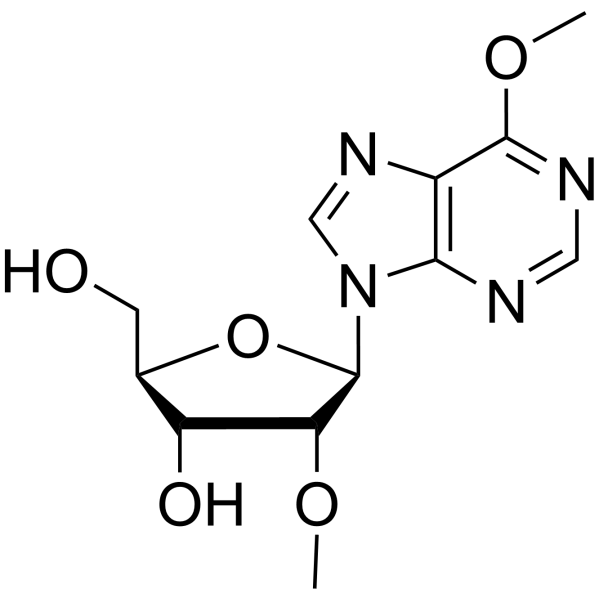 0 ImagesCat. No.: HY-154468
6-O-Methyl-2’-O-methylinosine is a purine nucleoside analog. Purine nucleoside analogs have broad antitumor activity targeting indolent lymphoid malignancies. Anticancer mechanisms in this process rely on inhibition of DNA synthesis, induction of apoptosis, etc.
-
(R,E)-TCO-PEG8-NHS ester
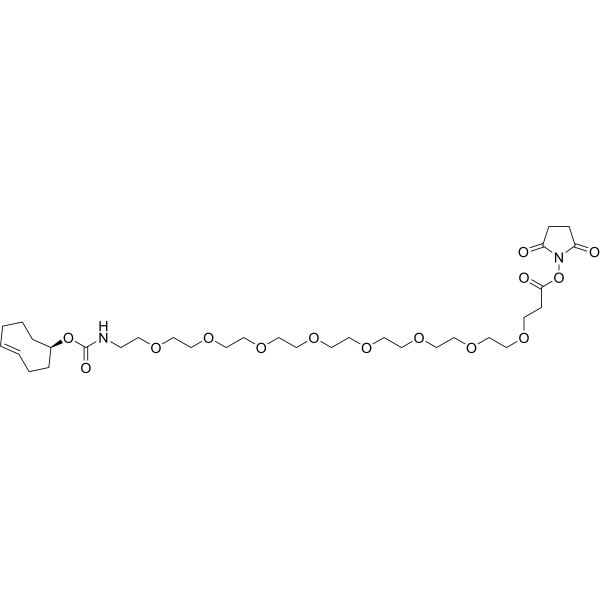 0 ImagesCat. No.: HY-141169B
-
D942
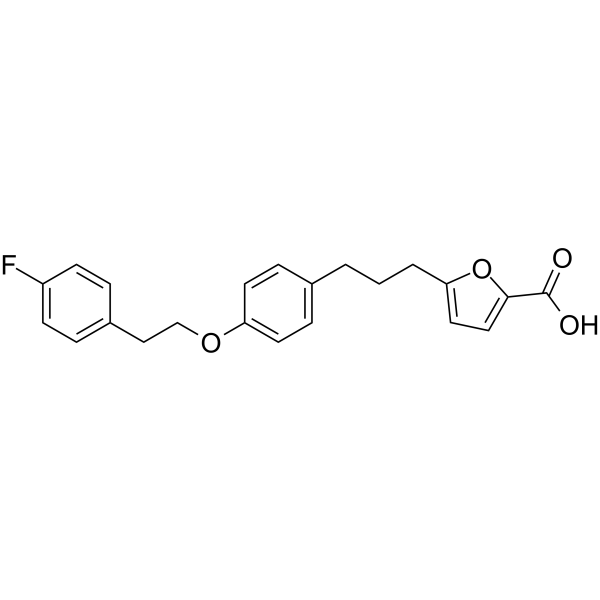 0 ImagesCat. No.: HY-131958CAS No.: 849727-81-7
D942 is a cell penetrant AMPK activator and partially inhibits the mitochondrial complex I. In multiple myeloma cells, D942 inhibits cell growth.
-
mmu-miR-3090-3p inhibitor
 0 ImagesCat. No.: HY-RI02969
mmu-miR-3090-3p inhibitors are chemically-modified oligonucleotides that hybridize with mature miRNAs. The miRNA inhibitors have full-length nucleotide 2'-methoxy modification. The miRNA inhibitors strongly compete with mature miRNAs to prevent the complementary pairing of miRNAs and their target genes, thereby inhibiting miRNAs from functioning.
-
mmu-miR-6935-5p inhibitor
 0 ImagesCat. No.: HY-RI03594
mmu-miR-6935-5p inhibitors are chemically-modified oligonucleotides that hybridize with mature miRNAs. The miRNA inhibitors have full-length nucleotide 2'-methoxy modification. The miRNA inhibitors strongly compete with mature miRNAs to prevent the complementary pairing of miRNAs and their target genes, thereby inhibiting miRNAs from functioning.
-
CDK4/6/BRD4-IN-1
 0 ImagesCat. No.: HY-173237
CDK4/6/BRD4-IN-1 (B15) is an inhibitor of CDK4, CDK6 and BRD4, with IC50 values of 220 nM, 146 nM, 106 nM and 85 nM for BRD4-BD2, BRD4-BD1, CDK6 and CDK4, respectively. CDK4/6/BRD4-IN-1 (B15) can be used in the study of NSCLC (Non-Small Cell Lung Cancer). CDK4/6/BRD4-IN-1 (B15) induces cell cycle arrest and apoptosis.
-
rno-miR-1193-5p inhibitor
 0 ImagesCat. No.: HY-RI04215
rno-miR-1193-5p inhibitors are chemically-modified oligonucleotides that hybridize with mature miRNAs. The miRNA inhibitors have full-length nucleotide 2'-methoxy modification. The miRNA inhibitors strongly compete with mature miRNAs to prevent the complementary pairing of miRNAs and their target genes, thereby inhibiting miRNAs from functioning.
-
MS243
 0 ImagesCat. No.: HY-181728
MS243 is a potent KRASG12D PROTAC degrader with a DC50 of 4.2 nM. MS243 promotes the proximity between KRASG12D and the VHL E3 ubiquitin ligase, drives the ubiquitination and proteasomal degradation of KRASG12D, and inhibits the proliferation of cancer cells harboring KRASG12D. MS243 can be used in the research of KRASG12D-carrying cancers, such as colon cancer and pancreatic cancer.
-
Pheniramine
 0 Images
Pheniramine (Prophenpyridamine;Tripoton) is a first-generation histamine H1 receptor antagonist, acts on the central nervous system (CNS) with sedative and hypnotic effect. Pheniramine displays antitumor effect and induces leukemia cells apoptosis. Pheniramine is also a safe and effective local agent that can suppress or relieve pain, with antipruritic effects.
-
Osunprotafib hydrochloride
 0 ImagesCat. No.: HY-145923BCAS No.: 2986745-48-4Synonyms: ABBV-CLS-484 hydrochloride
Osunprotafib (ABBV-CLS-484) hydrochloride is an orally active and selective active site PTPN1 (IC50: 2.5 nM) and PTPN2(IC50: 1.8 nM) inhibitor. Osunprotafib hydrochloride has 6-8-fold weaker activity on PTPN9 and no detectable activity on SHP-1 or SHP-2. Osunprotafib hydrochloride increases the sensitivity of human cancer cell lines to IFNγ. Osunprotafib hydrochloride generates robust anti-tumor immunity by enhancing JAK-STAT signalling and reducing T cell dysfunction.
-
(Iso)-Z-VAD(OMe)-FMK
 0 ImagesCat. No.: HY-P0110CAS No.: 634911-81-2Synonyms: (Iso)-Z-Val-Ala-Asp(OMe)-FMK
(Iso)-Z-VAD(OMe)-FMK ((Iso)-Z-Val-Ala-Asp(OMe)-FMK) is an isomer of the caspase and UCHL1 inhibitor Z-VAD(OMe)-FMK (HY-16658).
-
DG1
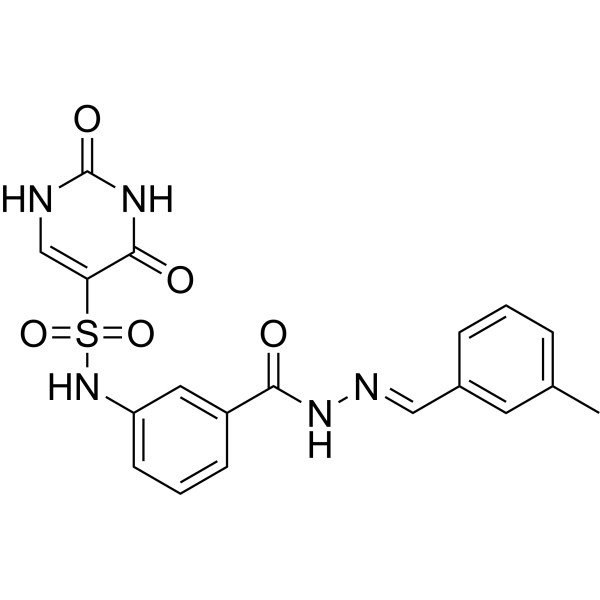 0 ImagesCat. No.: HY-149352
DG1 (Compound 8Nc) is a Thymidylate Synthase (TS) inhibitor that affects cancer angiogenesis and metabolic reprogramming in NSCLC cells. DG1 can effectively inhibit the expression of CD26, ET-1, FGF-1 and EGF. DG1 also effectively inhibits the proliferation of cancer tissue in the A549 xenograft mouse model.
-
REGN-1400
 0 ImagesCat. No.: HY-P991244
REGN-1400 is a humanized monoclonal antibody inhibitor targeting ErbB3. REGN-1400 reduces tumor cell proliferation by inhibiting ErbB3 and blocking related signaling pathways. REGN-1400 is promising for research of solid tumors such as non-small cell lung cancer (NSCLC), colorectal cancer (CRC), and squamous cell carcinoma of the head and neck (SCCHN) .
-
OICR12694
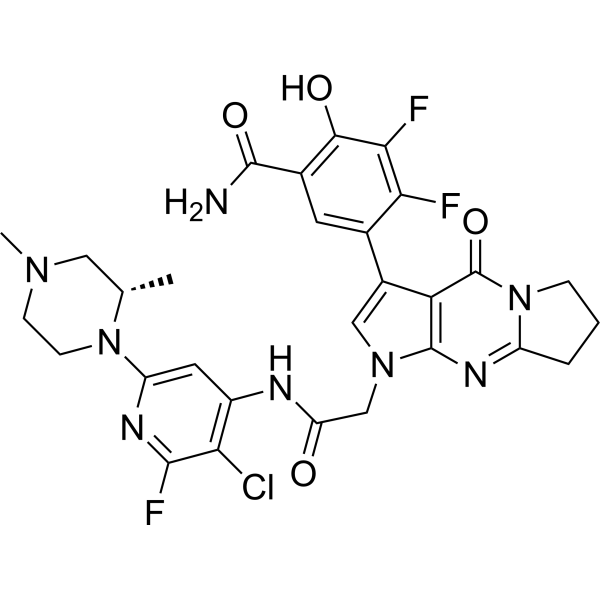 0 ImagesCat. No.: HY-153096CAS No.: 2360625-97-2Synonyms: JNJ-65234637
OICR12694 (JNJ-65234637) is an orally active inhibitor of B cell lymphoma 6 (BCL6).
-
hsa-miR-1226-5p antagomir
 0 ImagesCat. No.: HY-RI00118A
hsa-miR-1226-5p antagomirs are chemically-modified oligonucleotides that hybridize with mature miRNAs. The miRNA antagomirs have 2 phosphorothioates at the 5' end, 4 phosphorothioates at the 3' end, 1 cholesterol group at the 3' end, and full-length nucleotide 2'-methoxy modification. The miRNA antagomirs strongly compete with mature miRNAs to prevent the complementary pairing of miRNAs and their target genes, thereby inhibiting miRNAs from functioning. Stability of miRNA antagomirs appears to be significantly higher than miRNA inhibitors, they exhibits enhanced cellular uptake, stability and regulatory activity in vivo.
-
hsa-miR-3619-5p inhibitor
 0 ImagesCat. No.: HY-RI00741
hsa-miR-3619-5p inhibitors are chemically-modified oligonucleotides that hybridize with mature miRNAs. The miRNA inhibitors have full-length nucleotide 2'-methoxy modification. The miRNA inhibitors strongly compete with mature miRNAs to prevent the complementary pairing of miRNAs and their target genes, thereby inhibiting miRNAs from functioning.
-
hsa-miR-4750-3p inhibitor
 0 ImagesCat. No.: HY-RI01362
hsa-miR-4750-3p inhibitors are chemically-modified oligonucleotides that hybridize with mature miRNAs. The miRNA inhibitors have full-length nucleotide 2'-methoxy modification. The miRNA inhibitors strongly compete with mature miRNAs to prevent the complementary pairing of miRNAs and their target genes, thereby inhibiting miRNAs from functioning.
-
hsa-miR-660-5p antagomir
 0 ImagesCat. No.: HY-RI01982A
hsa-miR-660-5p antagomirs are chemically-modified oligonucleotides that hybridize with mature miRNAs. The miRNA antagomirs have 2 phosphorothioates at the 5' end, 4 phosphorothioates at the 3' end, 1 cholesterol group at the 3' end, and full-length nucleotide 2'-methoxy modification. The miRNA antagomirs strongly compete with mature miRNAs to prevent the complementary pairing of miRNAs and their target genes, thereby inhibiting miRNAs from functioning. Stability of miRNA antagomirs appears to be significantly higher than miRNA inhibitors, they exhibits enhanced cellular uptake, stability and regulatory activity in vivo.



