Others
-
Others Related Products (76622)
Related Products (76622)

-
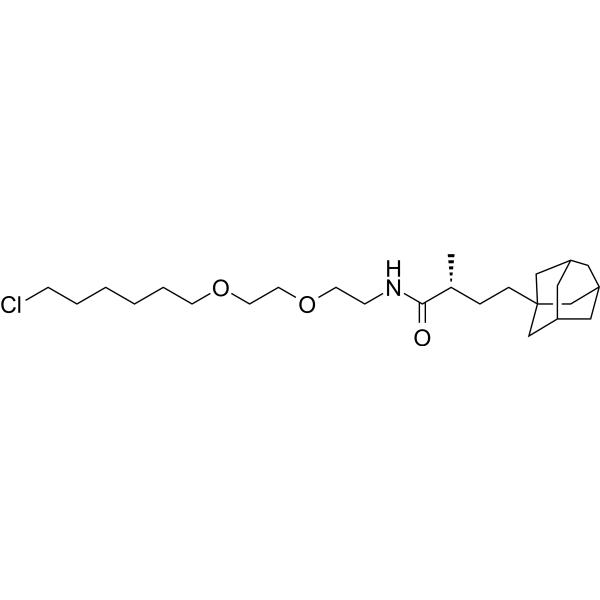
HyT36
 0 ImagesCat. No.: HY-141676CAS No.: 1323151-45-6
HyT36 is a low molecular weight hydrophobic tag that promotes the degradation of fusion protein and pseudokinase Her3.
-
5-Nitrosalicylaldehyde
 0 Images
5-Nitrosalicylaldehyde is a chemical intermediate that can be used in pharmaceutical synthesis and the synthesis of photochromic compounds. 5-Nitrosalicylaldehyde serves as an important raw material for the synthesis of Dronedarone hydrochloride (HY-75839), and can also be used to prepare spirobenzopyran-based fluorescence switch materials. 5-Nitrosalicylaldehyde is applicable to pharmaceutical synthesis, photochromic material synthesis, and separation and purification research.
-
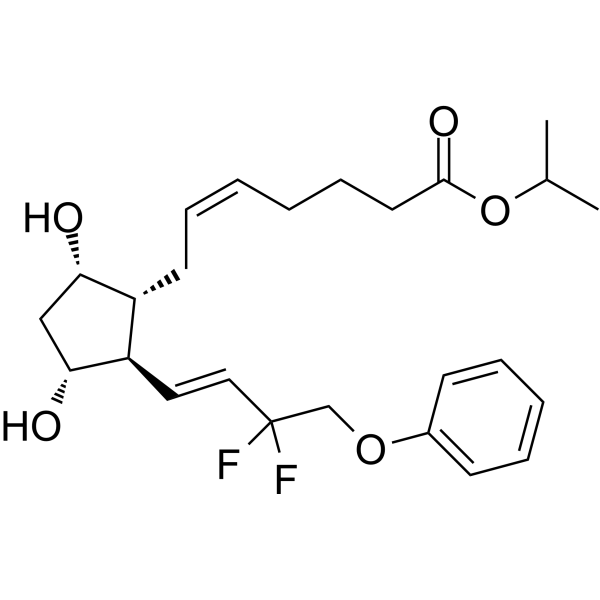
Tafluprost
 0 ImagesSynonyms: AFP-168; MK2452
Tafluprost (AFP-168) is an anti-glaucoma prostaglandin (PG) analog. Tafluprost can inhibit the apoptosis of retinal ganglion cells (RGCs) and rat RGCs cells. Tafluprost promotes axon regeneration by regulating Zn2+-mTORpathway, inhibits intracellular lipid accumulation in human preorbital adipocytes. Tafluprost can be used in the study of optic nerve injury in glaucoma.
-
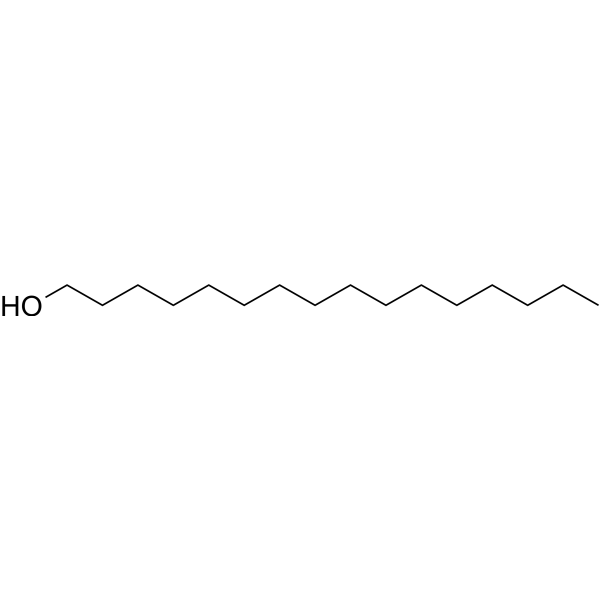
1-Hexadecanol
 0 ImagesSynonyms: Palmityl alcohol
1-Hexadecanol is a fatty alcohol, a lipophilic substrate. 1-Hexadecanol can be used for the research of ferroptosis.
-
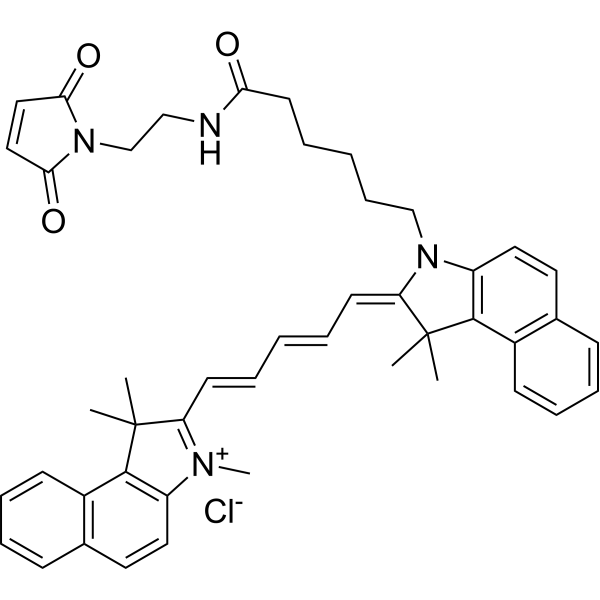
Cyanine5.5 maleimide chloride
 0 ImagesSynonyms: Cy5.5 maleimide chloride
Cyanine5.5 maleimide chloride is a CY dye. CY, short for Cyanine, is a compound consisting of two nitrogen atoms connected by an odd number of methyl units. Cyanine compounds have the characteristics of long wavelength, adjustable absorption and emission, high extinction coefficient, good water solubility and relatively simple synthesis. CY dyes are of en used for the labeling of proteins, antibodies and small molecular compounds. For the labeling of protein antibodies, the combination can be completed through a simple mixing reaction. Below, we introduce the labeling method of protein antibody labeling, which has certain reference significance.
-
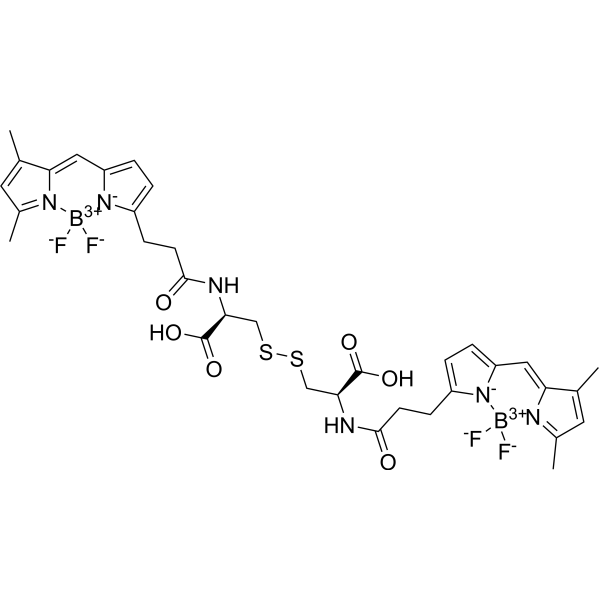
BODIPY FL L-Cystine
 0 Images
BODIPY FL L-Cystine is a thiol-reactive, green-fluorescent dye. BODIPY FL L-Cystine can be the labeling of membrane proteins, proteins with hydrophobic binding sites, or hydrophobic ligands. (λex=504 nm, λem=511 nm).
-
Vari Fluor 620 TSA (200×)
 0 ImagesCat. No.: HY-D1831Synonyms: VF 620 Tyramide
Vari Fluor 620 TSA (200×) (VF 620 Tyramide) is a fluorescent probe belonging to the Vari Fluor TSA series. Vari Fluor TSA series fluorescent probes can be used for high-density in situ labeling of target antigens using horseradish peroxidase (HRP) assays, which are widely used in ELISA, IF, IHC and other techniques with high detection sensitivity.
-
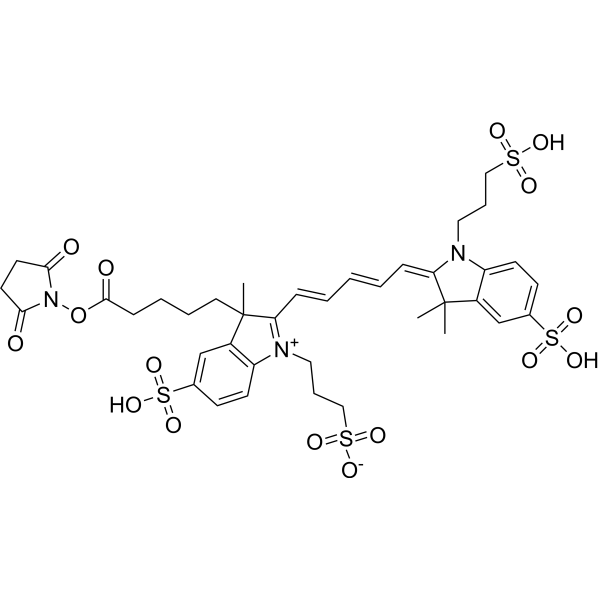
Alexa fluor 647 NHS ester
 0 ImagesCat. No.: HY-D2096CAS No.: 1620475-28-6
Alexa fluor 647 NHS ester can be used to label Alexa fluor 647 to the primary amines (R-NH2) of proteins, amine-modified oligonucleotides, and other amine-containing molecules.
-
SYTM Green
 0 ImagesCat. No.: HY-D2208
SYTM Green is a cell impermeant DNA dye that fluoresces green by binding to dsDNA (Ex/Em=503/530 nm). SYTM Green can also be used to stain bacteria, including Gram-positive and Gram-negative bacteria. Note: SYTM Green cannot penetrate living cells, and this product is equivalent to (Ex/Em=488/530 nm).

-
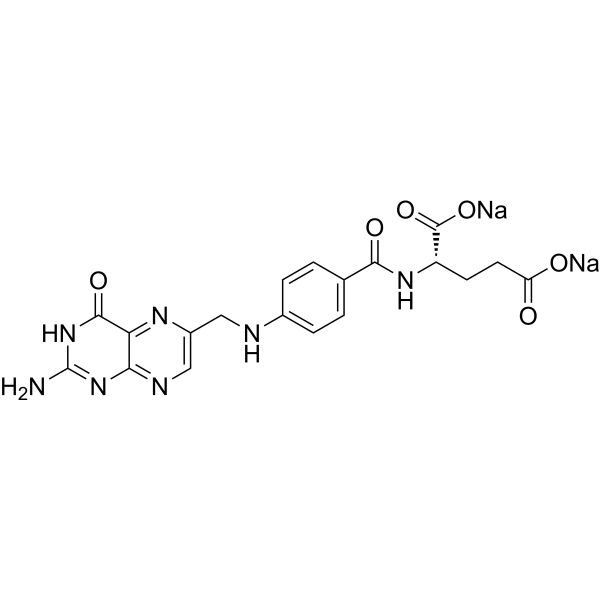
Folic acid disodium
 0 ImagesSynonyms: Vitamin B9 disodium; Vitamin M disodium
Folic acid disodium (Vitamin B9 disodium; Vitamin M disodium) is an orally active disodium salt form of Folic acid (HY-16637) with an intrinsic dissolution rate (IDR) of 4.96·105 g/s. Folic acid disodium serves as cofactor in single-carbon transfer reactions and exhibits protective effects against neural tube defects, ischemic events, and cancer. Folate acid disodium overload leads to impaired brain development in embryogenesis and promotes growth of precancerous altered cells. Folic acid deficiency leads to megaloblastic anemia.

-
Control Liposomes(PBS)
 0 ImagesCat. No.: HY-172202A
Control Liposomes (PBS) can be used as control liposomes for Clodronate liposomes (HY-172202) without clodronate.
-
Oxalate Oxidase
 0 Images
Oxalate Oxidase, or oxalate oxidase, catalyzes the oxidation of oxalic acid to hydrogen peroxide and carbon dioxide in the presence of oxygen. Oxalate Oxidase can be found in a variety of plants (such as barley) and microorganisms and can be used to treat wastewater and filtrates containing oxalic acid.
-
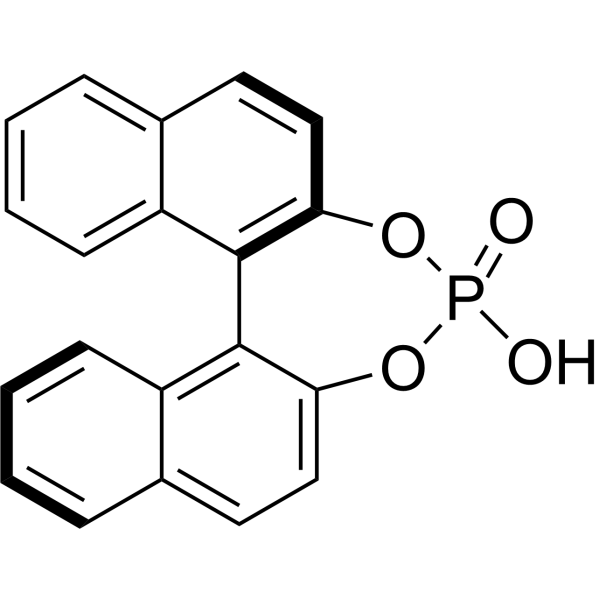
(R)-1,1'-Binaphthyl-2,2'-diyl hydrogenphosphate
 0 Images
(R)-(-)-1,1'-Binaphthyl-2,2'-diyl Hydrogenphosphate is a biochemical reagent that can be used as a biological material or organic compound for life science related research.
-
Boc-L-Leu-OH
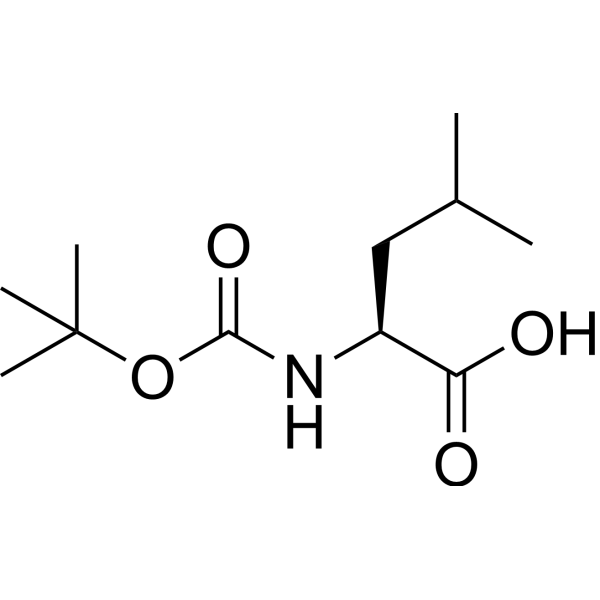 0 ImagesCat. No.: HY-I0931CAS No.: 13139-15-6
Boc-L-Leu-OH is a leucine derivative.
-
Herbacetin 3,8-O-diglucoside
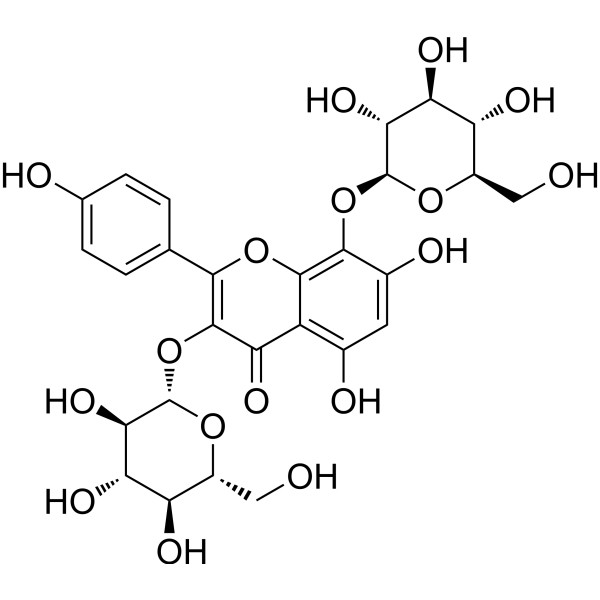 0 ImagesSynonyms: Herbacetin di-glucoside
Herbacetin 3,8-O-diglucoside (Herbacetin di-glucoside) is a flavonol compound that can be found in flax seeds.
-
1-(3-Methyl-1-phenyl-5-pyrazolyl)Piperazine
 0 Images
1-(3-Methyl-1-phenyl-5-pyrazolyl)Piperazine is a drug intermediate for synthesis of various active compounds.
-
8-Amino-2-naphthol
 0 Images
8-Amino-2-naphthol is a photoactive charge transfer compounds, which can be used as fluorescent probe. 8-Amino-2-naphthol undergoes excited-state proton transfer (ESPT) to form a zwitterion under acidic conditions, where the photoacidity of its hydroxyl group is regulated by the protonation state of the amino group, enabling pH to act as an on/off switch for photoacidity. 8-Amino-2-naphthol is also utilized as chiral organocatalyst.
-
CW 008
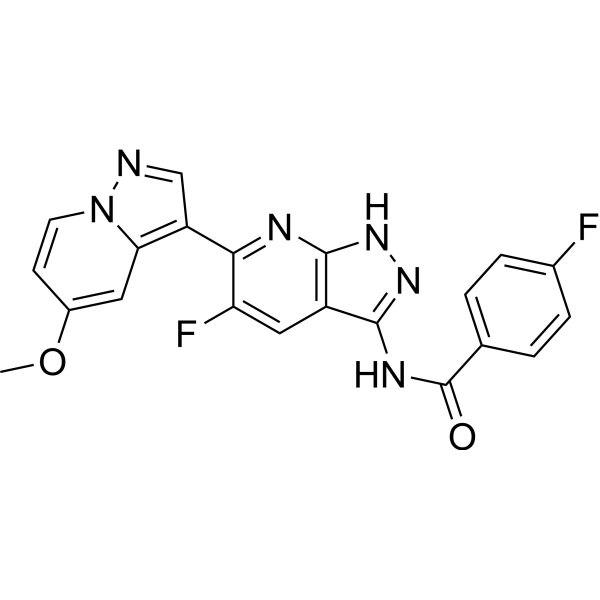 0 Images
CW 008, a derivative of pyrazole-pyridine, is a CREB or PKA pathway agonist. CW 008 also is a stem cell differentiating agent. CW 008 stimulates osteoblast differentiation of human MSCs and increases bone formation in ovariectomized mice. CW008 promotes osteogenesis by activating cAMP/PKA/CREB signaling pathway and inhibiting leptin secretion.