



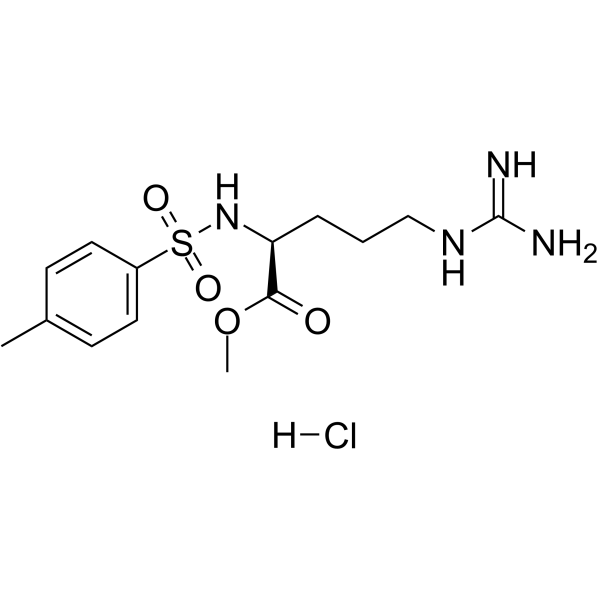
TAME hydrochloride
Based on 1 publication(s) in Google Scholar
TAME hydrochloride is an inhibitor of anaphase-promoting complex/cyclosome (APC/C or APC), which binds to APC/C and prevents its activation by Cdc20 and Cdh1, produces mitotic arrest. TAME hydrochloride is not cell permeable.
Nos produits utilisent uniquement pour la recherche. Nous ne vendons pas aux patients.
- Pureté : 98.14%
- CAS No.: 1784-03-8
- Formule: C14H23ClN4O4S
- Masse moléculaire:378.87
-
Stockage:
-20°C, sealed storage, away from moisture
* In solvent : -80°C, 6 months; -20°C, 1 month (sealed storage, away from moisture)

To place orders, for customer services and technical support, please contact: MedChemExpress USA
Tel: 609-228-6898 E-mail: [email protected] [email protected]


-
 Activité biologique
-
Chemical Information
-
Solvant et solubilité
- Pureté et documentation
- Références
-
 Help & FAQs


-
HY-110287
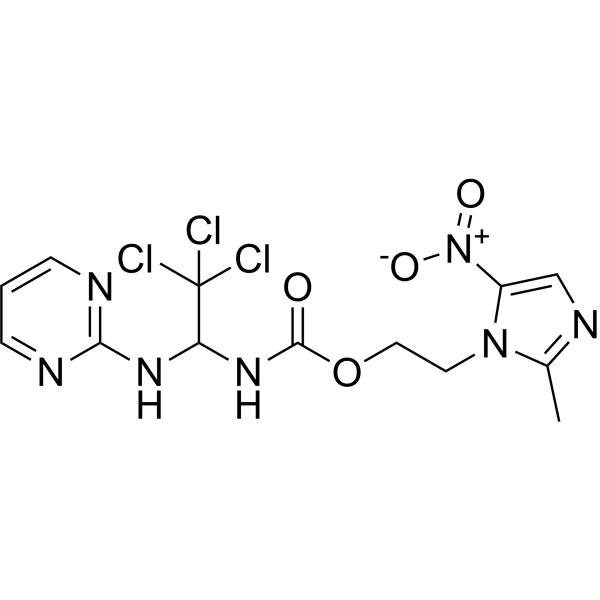
ApcinAPC/C Inhibitor -
HY-13255
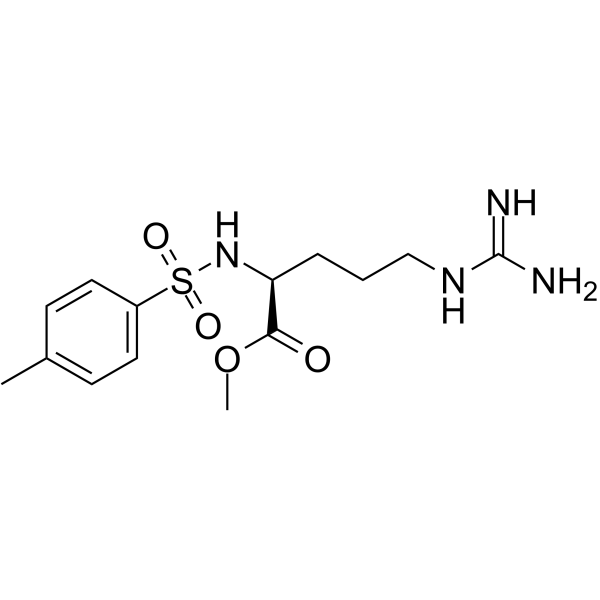
TAMEAPC Inhibitor -
HY-124955
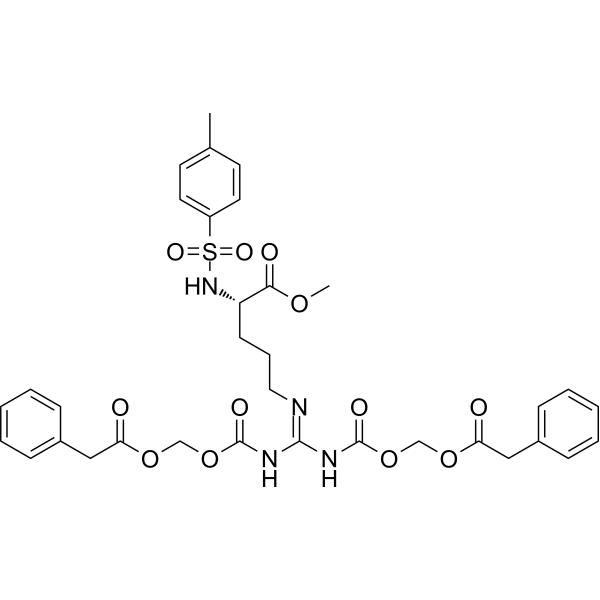
proTAMEAPC Inhibitor -
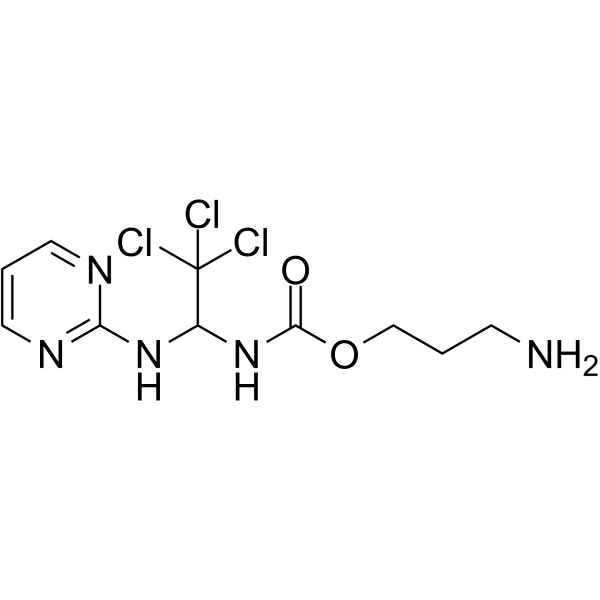
HY-130841
Apcin-AAPC Inhibitor -
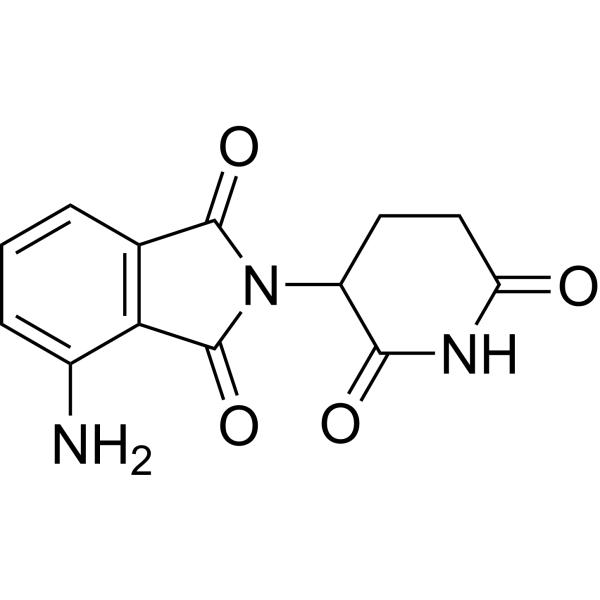
HY-10984
PomalidomideImmunomodulatory Agent -
HY-N0455A
L-Arginine hydrochlorideNitrogen Donor -
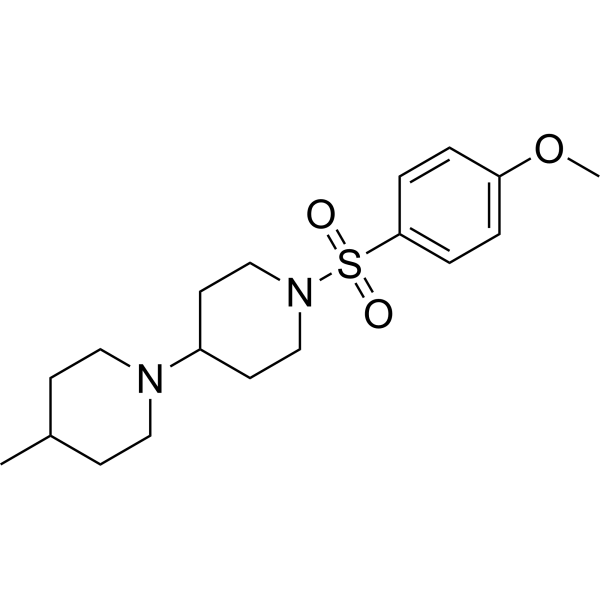
HY-116572A
TASIN-1APC(TR) Inhibitor -
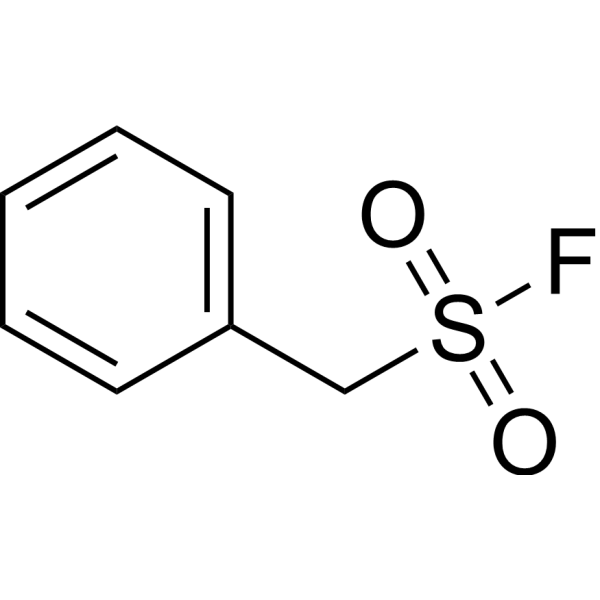
HY-B0496
PMSFCathepsin Inhibitor -
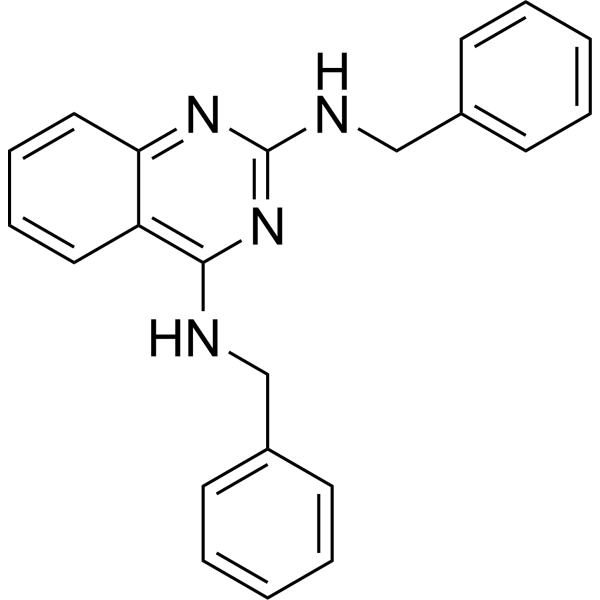
HY-15945
DBeQp97 Inhibitor -

HY-N0455AR
L-Arginine hydrochloride (Standard)Nitrogen Donor -
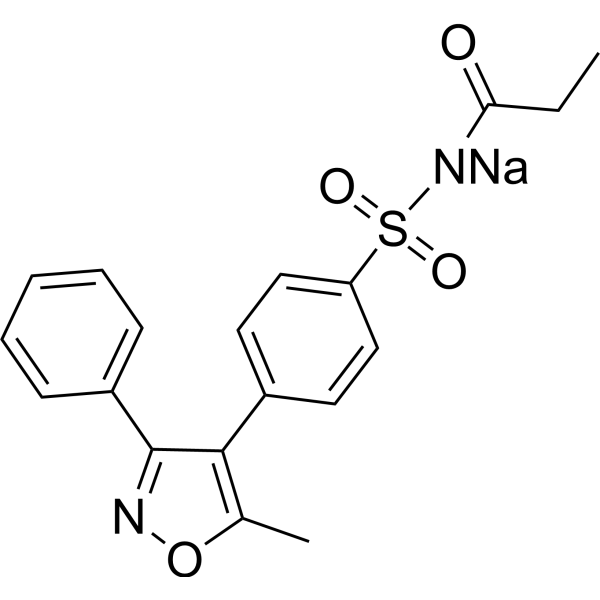
HY-17474A
Parecoxib SodiumCOX-2 Inhibitor -
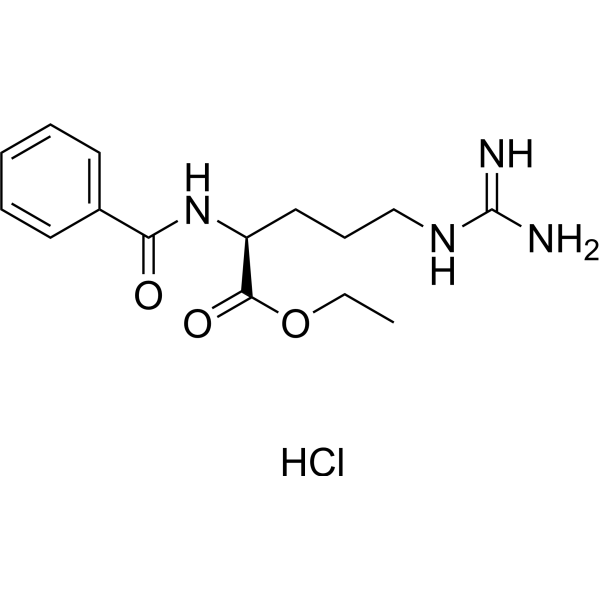
HY-W008694
N-Benzoyl-L-arginine ethyl ester hydrochlorideAmino Acid Derivative
Publications Citing Use of MedChemExpress (MCE) TAME hydrochloride
More

Activité biologique
Description
IC50 & Target
Anaphase-promoting complex (APC)[1]
In Vitro
The absence of APC substrates, TAME hydrochloride ejects Cdc20 from the APC by promoting Cdc20 auto-ubiquitination in its N-terminal region. Cyclin B1 antagonizes TAME hydrochloride's effect by promoting binding of free Cdc20 to the APC and suppressing Cdc20 auto-ubiquitination[2].
TAME hydrochloride stabilizes cyclin B1 in Xenopus extract by two mechanisms. First, it reduces the kcat of the APCCdc20/cyclin B1 complex without affecting the Km, slowing the initial ubiquitination of unmodified cyclin B1. Second, as cyclin B1 becomes ubiquitinated, it loses its ability to promote Cdc20 binding to the APC in the presence of TAME hydrochloride. As a result, cyclin B1 ubiquitination terminates before reaching the threshold necessary for proteolysis[2].
MedChemExpress (MCE) has not independently confirmed the accuracy of these methods. They are for reference only.


Chemical Information
-
CAS No. 1784-03-8
-
Appearance Solid
-
Masse moléculaire 378.87
-
Formule C14H23ClN4O4S
-
Color White to off-white
-
SMILES
CC1=CC=C(C=C1)S(N[C@H](C(OC)=O)CCCNC(N)=N)(=O)=O.[H]Cl
-
Livraison
Room temperature in continental US; may vary elsewhere.
-
Stockage
-20°C, sealed storage, away from moisture
* In solvent : -80°C, 6 months; -20°C, 1 month (sealed storage, away from moisture)


Publications (1)
-
Journal Impact Factor
-
Most Recent
-
bioRxiv
A parent-of-origin effect on embryonic telomere elongation determines telomere length inheritance. [Abstract]2025 Jan 29:2025.01.28.635226. PMID: 39975089


Solvant et solubilité
In Vitro:
DMSO : 155 mg/mL (409.11 mM; Need ultrasonic; Hygroscopic DMSO has a significant impact on the solubility of product, please use newly opened DMSO)
H2O : ≥ 100 mg/mL (263.94 mM)
* "≥" means soluble, but saturation unknown.
Please refer to the solubility information to select the appropriate solvent. Once prepared, please aliquot and store the solution to prevent product inactivation from repeated freeze-thaw cycles.
Storage method and period of stock solution: -80°C, 6 months; -20°C, 1 month (sealed storage, away from moisture). When stored at -80°C, please use it within 6 months. When stored at -20°C, please use it within 1 month.
* Note: If you choose water as the stock solution, please dilute it to the working solution, then filter and sterilize it with a 0.22 μm filter before use.
Please refer to the solubility information to select the appropriate solvent. Once prepared, please aliquot and store the solution to prevent product inactivation from repeated freeze-thaw cycles.
Storage method and period of stock solution: -80°C, 6 months; -20°C, 1 month (sealed storage, away from moisture). When stored at -80°C, please use it within 6 months. When stored at -20°C, please use it within 1 month.
* Note: If you choose water as the stock solution, please dilute it to the working solution, then filter and sterilize it with a 0.22 μm filter before use.
Concentration (start) × Volume (start) = Concentration (final) × Volume (final)
In Vivo:
Select the appropriate dissolution method based on your experimental animal and administration route.
- For the following dissolution methods, please ensure to first prepare a clear stock solution using an In Vitro approach and then sequentially add co-solvents:
- To ensure reliable experimental results, the clarified stock solution can be appropriately stored based on storage conditions. As for the working solution for In Vivo experiments, it is recommended to prepare freshly and use it on the same day.
- The percentages shown for the solvents indicate their volumetric ratio in the final prepared solution. If precipitation or phase separation occurs during preparation, heat and/or sonication can be used to aid dissolution.
Add each solvent one by one: 10% DMSO 40% PEG300 5% Tween-80 45% Saline
Solubility: ≥ 2.58 mg/mL (6.81 mM); Clear solution
This protocol yields a clear solution of ≥ 2.58 mg/mL (saturation unknown).
Taking 1 mL working solution as an example, add 100 μL DMSO stock solution (25.8 mg/mL) to 400 μL PEG300, and mix evenly; then add 50 μL Tween-80 and mix evenly; then add 450 μL Saline to adjust the volume to 1 mL.
Preparation of Saline: Dissolve 0.9 g sodium chloride in ddH₂O and dilute to 100 mL to obtain a clear Saline solution.
Add each solvent one by one: 10% DMSO 90% (20% SBE-β-CD in Saline)
Solubility: ≥ 2.58 mg/mL (6.81 mM); Clear solution
This protocol yields a clear solution of ≥ 2.58 mg/mL (saturation unknown).
Taking 1 mL working solution as an example, add 100 μL DMSO stock solution (25.8 mg/mL) to 900 μL 20% SBE-β-CD in Saline, and mix evenly.
Preparation of 20% SBE-β-CD in Saline (4°C, storage for one week): 2 g SBE-β-CD powder is dissolved in 10 mL Saline, completely dissolve until clear.
For the following dissolution methods, please prepare the working solution directly:
It is recommended to prepare fresh solutions and use them promptly within a short period of time.
The percentages shown for the solvents indicate their volumetric ratio in the final prepared solution. If precipitation or phase separation occurs during preparation, heat and/or sonication can be used to aid dissolution.
Add each solvent one by one: PBS
Solubility: 100 mg/mL (263.94 mM); Clear solution; Need ultrasonic
In Vivo Dissolution Calculator
Please enter the basic information of animal experiments:
-
-
-
-
Recommended: Prepare an additional quantity of animals to account for potential losses during experiments.
Working solution concentration: 0.22 mg/mL
This product has good water solubility, please refer to the measured solubility data in water/PBS/Saline for details.


Pureté et documentation
-
Fiche technique (274 KB)
-
SDS (394 KB)
- English - EN (394 KB)
- Français - FR (394 KB)
- Deutsch - DE (394 KB)
- Norwegian - NO (394 KB)
- Español - ES (394 KB)
- Swedish - SV (394 KB)
- Italian - IT (394 KB)
- Korean - KR (394 KB)
- Portuguese - PT (394 KB)
-
Instruction de manipulation (2659 KB)
Références
[1]. Zeng X, et al. Pharmacologic inhibition of the anaphase-promoting complex induces a spindle checkpoint-dependent mitotic arrest in the absence of spindle damage. Cancer Cell. 2010 Oct 19;18(4):382-95. [Content Brief]
[2]. Zeng X, et al. An APC/C inhibitor stabilizes cyclin B1 by prematurely terminating ubiquitination. Nat Chem Biol. 2012 Feb 26;8(4):383-92. [Content Brief]


Complete Stock Solution Preparation Table
Please refer to the solubility information to select the appropriate solvent. Once prepared, please aliquot and store the solution to prevent product inactivation from repeated freeze-thaw cycles.
Storage method and period of stock solution: -80°C, 6 months; -20°C, 1 month (sealed storage, away from moisture). When stored at -80°C, please use it within 6 months. When stored at -20°C, please use it within 1 month.
| Optional Solvent | Concentration Solvent Mass | 1 mg | 5 mg | 10 mg | 25 mg |
|---|---|---|---|---|---|
| H2O / DMSO | 1 mM | 2.6394 mL | 13.1971 mL | 26.3943 mL | 65.9857 mL |
| 5 mM | 0.5279 mL | 2.6394 mL | 5.2789 mL | 13.1971 mL | |
| 10 mM | 0.2639 mL | 1.3197 mL | 2.6394 mL | 6.5986 mL | |
| 15 mM | 0.1760 mL | 0.8798 mL | 1.7596 mL | 4.3990 mL | |
| 20 mM | 0.1320 mL | 0.6599 mL | 1.3197 mL | 3.2993 mL | |
| 25 mM | 0.1056 mL | 0.5279 mL | 1.0558 mL | 2.6394 mL | |
| 30 mM | 0.0880 mL | 0.4399 mL | 0.8798 mL | 2.1995 mL | |
| 40 mM | 0.0660 mL | 0.3299 mL | 0.6599 mL | 1.6496 mL | |
| 50 mM | 0.0528 mL | 0.2639 mL | 0.5279 mL | 1.3197 mL | |
| 60 mM | 0.0440 mL | 0.2200 mL | 0.4399 mL | 1.0998 mL | |
| 80 mM | 0.0330 mL | 0.1650 mL | 0.3299 mL | 0.8248 mL | |
| 100 mM | 0.0264 mL | 0.1320 mL | 0.2639 mL | 0.6599 mL |
* Note: If you choose water as the stock solution, please dilute it to the working solution, then filter and sterilize it with a 0.22 μm filter before use.


TAME hydrochloride Related Classifications
HY-13255A Related Classifications
 Powered by Bioz