



Akt1 Inhibitor
- 1
- 2
-
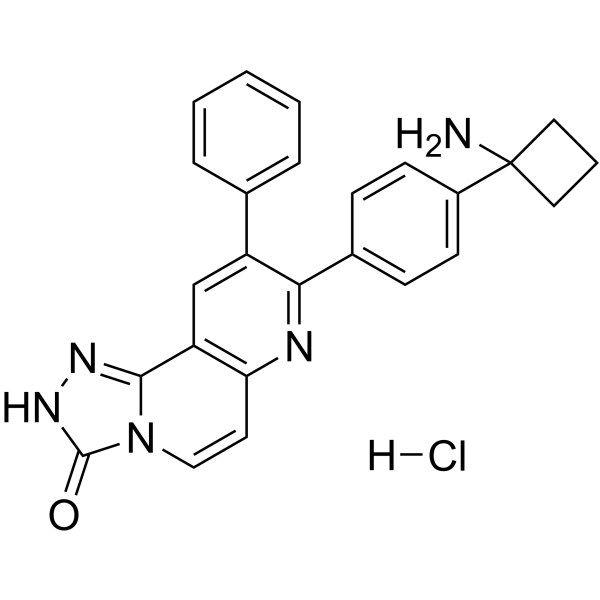
MK-2206
 0 Images
MK-2206 is an orally active pan-AKT inhibitor, with IC50 values of 8 nM, 12 nM and 65 nM against AKT1, AKT2 and AKT3, respectively. MK-2206 inhibits the Akt/mTOR signaling pathway and reduces the levels of downstream GSK3β and Mcl-1 via proteasomal degradation. MK-2206 induces G1-phase cell cycle arrest, apoptosis, epithelial-mesenchymal transition, fibroblast activation and extracellular matrix deposition. MK-2206 causes transient hyperglycemia and hyperinsulinemia in animals. MK-2206 can be used in research related to solid tumors, renal fibrosis and hypercholesterolemia.
-
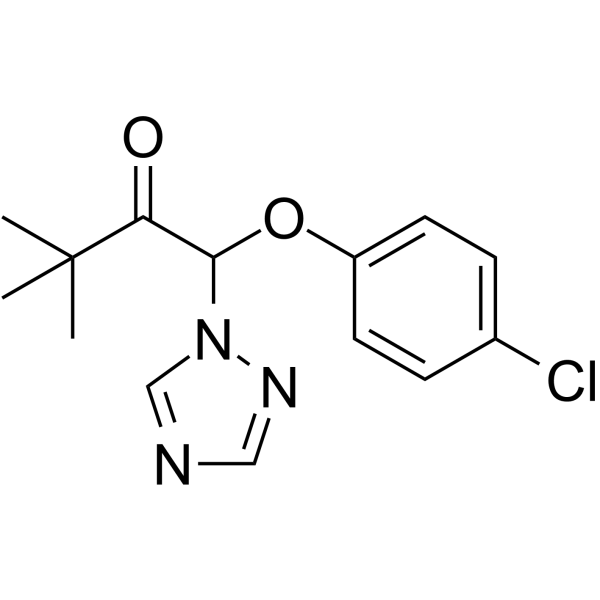
Triadimefon
 0 Images
Triadimefon is an orally active fungicide. Triadimefon significantly reduces the phosphorylation of AKT1 and ERK1/2. Triadimefon significantly increases pAMPK levels, but does not affect total AMPK levels. Triadimefon inhibits the growth of Saccharomyces cerevisiae, disrupts hormone homeostasis (affecting the synthesis of testosterone, etc.), inhibits fetal adrenal development in rats, induces metabolic shifts in hepatocytes, and impairs spatial learning and memory.
-
MS98
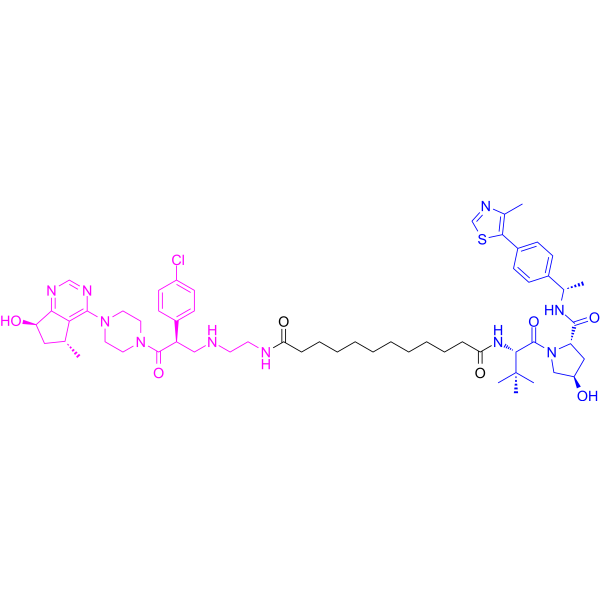 0 ImagesCat. No.: HY-145281CAS No.: 2376137-31-2
MS98 is a AKT PROTAC degrader with a DC50 of 78 nM in BT474 cells. MS98 binds to purified AKT1, AKT2 and AKT3 isoforms with Kd values of 4 nM, 140 nM and 8 nM, respectively. MS98 recruits the VHL E3 ligase to induce polyubiquitination and proteasomal degradation of AKT. MS98 inhibits downstream signal transduction of the PI3K/AKT/m-TOR pathway. MS98 suppresses cancer cell proliferation. MS98 can be used for the research of prostate cancer and breast cancer.
-
INY-03-041 trihydrochloride
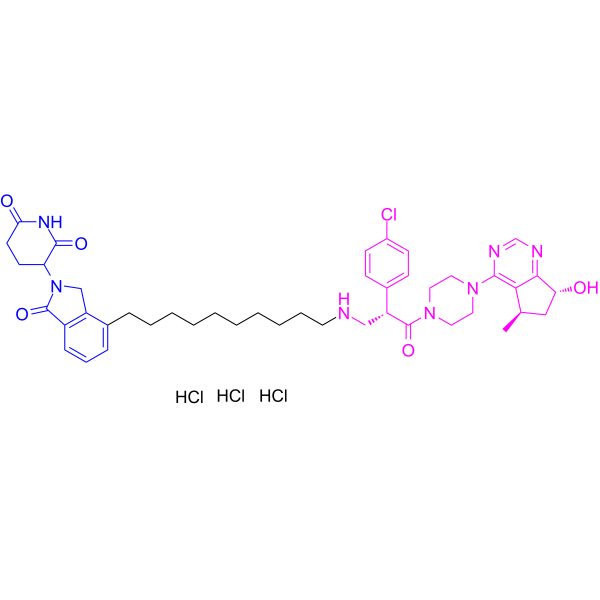 0 ImagesCat. No.: HY-133120A
INY-03-041 trihydrochloride is a potent, highly selective and PROTAC-based pan-AKT degrader consisting of the ATP-competitive AKT inhibitor Ipatasertib (HY-15186) conjugated to Lenalidomide (HY-A0003). INY-03-041 trihydrochloride inhibits AKT1, AKT2 and AKT3 with IC50s of 2.0, 6.8 and 3.5 nM, respectively.

-
20(R)-Ginsenoside Rh2
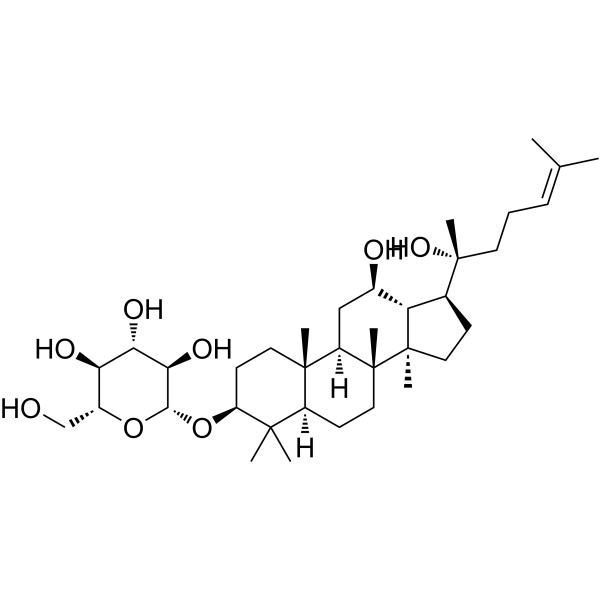 0 Images
20(R)-Ginsenoside Rh2 is an orally active protopanaxadiol-type saponin with multiple biological activities. 20(R)-Ginsenoside Rh2 exerts a significant inhibitory effect on non-small cell lung cancer and liver cancer by inducing cell cycle arrest and promoting apoptosis. 20(R)-Ginsenoside Rh2 exerts anti-γ-herpesvirus effects by inhibiting viral DNA replication. 20(R)-Ginsenoside Rh2 inhibits inflammatory mediators by reducing the levels of NO, PGE2, and ROS; it can delay skin photoaging by reducing ROS and inhibiting MMP-9/2 activity. 20(R)-Ginsenoside Rh2 accelerates the recovery after muscle injury by activating the Akt1/PKB signaling pathway. 20(R)-Ginsenoside Rh2 can inhibit osteoclast formation and exert an anti-osteoporosis effect.
-
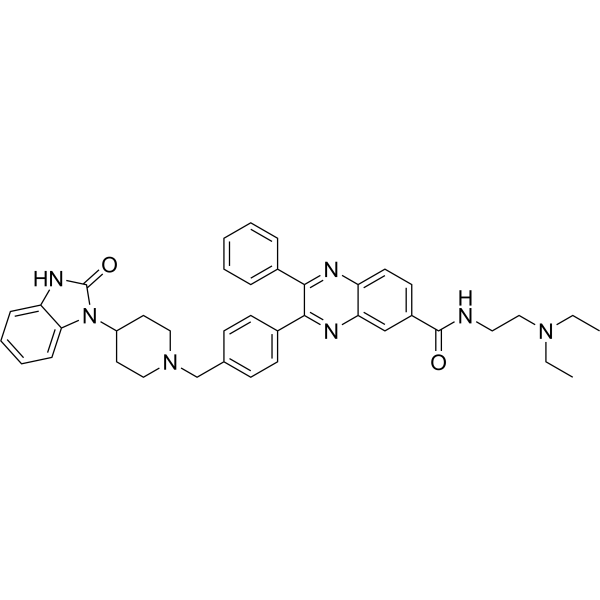
Gamendazole
 0 Images
Gamendazole, an indazole carboxylic acid (ICA), is an orally active, selective HSP90AB1 (HSP90BETA) and EEF1A1 (eEF1A) inhibitor. Gamendazole binds to the C-terminal nucleotide binding pocket of HSP90 and cause downregulation of clients AKT1 and ERBB2, but stabilizes the HSP90 heterocomplex. Gamendazole specifically inhibits the actin bundling function of EEF1A1, but does not bind to the nucleotide docking pocket nor inhibits the ribosome charging or protein translation functions of EEF1A1. Gamendazole, an antispermatogenic compound with antifertility effects, has the potential for reversible non-hormonal male contraceptive agent research.

-
Akt1&PKA-IN-2
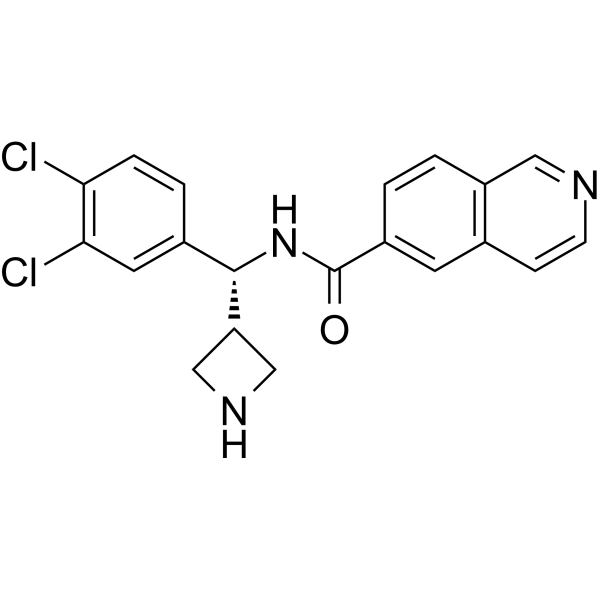 0 ImagesCat. No.: HY-148868ACAS No.: 1334108-00-7
-
Triadimefon (Standard)
 0 Images
Triadimefon (Standard) is the analytical standard of Triadimefon (HY-123037). This product is intended for research and analytical applications. Triadimefon is an orally active fungicide. Triadimefon significantly reduces the phosphorylation of AKT1 and ERK1/2. Triadimefon significantly increases pAMPK levels, but does not affect total AMPK levels. Triadimefon inhibits the growth of Saccharomyces cerevisiae, disrupts hormone homeostasis (affecting the synthesis of testosterone, etc.), inhibits fetal adrenal development in rats, induces metabolic shifts in hepatocytes, and impairs spatial learning and memory.
-
MK-2206 free base
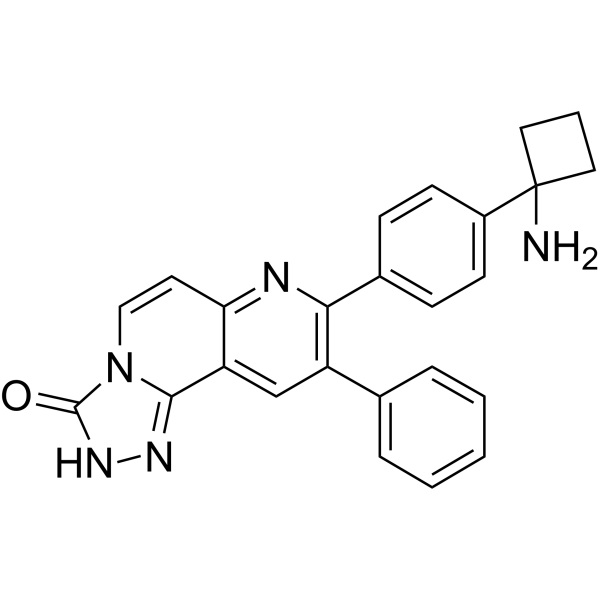 0 ImagesCat. No.: HY-10357CAS No.: 1032349-93-1
MK-2206 free base is an orally active pan-AKT inhibitor, with IC50 values of 8 nM, 12 nM and 65 nM against AKT1, AKT2 and AKT3, respectively. MK-2206 free base inhibits the Akt/mTOR signaling pathway and reduces the levels of downstream GSK3β and Mcl-1 via proteasomal degradation. MK-2206 free base induces G1-phase cell cycle arrest, apoptosis, epithelial-mesenchymal transition, fibroblast activation and extracellular matrix deposition. MK-2206 free base causes transient hyperglycemia and hyperinsulinemia in animals. MK-2206 free base can be used in research related to solid tumors, renal fibrosis and hypercholesterolemia.
-
Moracin G
 0 ImagesCat. No.: HY-N17632CAS No.: 73338-86-0
Moracin G is a plant-derived kinase modulator and receptor ligand that forms stable bindings with multiple key proteins (AKT1, COX2 and Estrogen receptor 1) and competitively inhibits the activity of specific kinases. By binding to MELK to disrupt cell cycle regulation, Moracin G impairs the survival and proliferation of cancer cells, induces cancer cell apoptosis, and thereby exerts anti-tumor potential. Moracin G can be used in research related to periodontitis and breast cancer.
-
AKT1-IN-10
 0 ImagesCat. No.: HY-175716CAS No.: 3077847-90-3
AKT1-IN-10 (Compound I-118) is a non-covalent allosteric AKT1 inhibitor with an IC50 of < 500 μM. AKT1-IN-10 has oral bioavailability.AKT1-IN-10 can be used in cancer.
-
AKT1-IN-13
 0 ImagesCat. No.: HY-184145
AKT1-IN-13 is an orally active AKT1 inhibitor with an IC50 of 5.17 μM. AKT1-IN-13 also exhibits high inhibitory activity against PAK1, PKA, MAP2K1 (MEK1 / MAPKK1) and MAPK1 (ERK2). AKT1-IN-13 induces cell apoptosis, activates the pro-apoptotic protein BAX, inhibits the anti-apoptotic protein Bcl-2, and activates caspase 3 simultaneously. As a cytotoxic agent, AKT1-IN-13 exerts a killing effect on orthotopically transplanted liver cancer in an AKT1-dependent manner. AKT1-IN-13 can be used in studies related to hepatocellular carcinoma.
-
Akt1-IN-5
 0 ImagesCat. No.: HY-163577CAS No.: 3034252-53-1
Akt1-IN-5 (Compound 115) is an Akt1 inhibitor (IC50: <15 nM)
-
CK2-TN03
 0 Images
CK2-TN03 is an ATP-competitive casein kinase 2 (CK2) inhibitor, with an IC50 of 165 nM and a Ki of 20 nM. CK2-TN03 inhibits CK2-mediated survivin activation and reduces CK2-dependent phosphorylation levels of BRD4/MYCN and AKT1. CK2-TN03 exerts anti-neuroblastoma effects by inhibiting survivin, leading to mitotic catastrophe and apoptosis of cancer cells. CK2-TN03 can be used in studies related to neuroblastoma.
-
Ipatasertib tosylate
 0 ImagesCat. No.: HY-15186CCAS No.: 1491138-24-9Synonyms: GDC-0068 tosylate; RG7440 tosylate
Ipatasertib (GDC-0068) tosylate is an orally active, highly selective and ATP-competitive pan-Akt inhibitor with IC50 values of 5, 18, 8 nM for Akt1/2/3, respectively. Ipatasertib tosylate synchronously activates FoxO3a and NF-κB through inhibition of Akt leading to p53-independent activation of PUMA. Ipatasertib tosylate also induces apoptosis in cancer cells and inhibits tumor growth in xenograft mouse models.
-
Multi-kinase-IN-7
 0 ImagesCat. No.: HY-178142
Multi-kinase-IN-7 is a multikinase inhibitor with IC50s of 2.19, 2.95, 3.59 and 9.31 μM against EGFR, VEGFR2, TrKA and CDK2, respectively. Multi-kinase-IN-7 shows moderate and weaker activity against FAK, AKT1, GSK3β and CDK5 with IC50 values of 6.3, 9.2, 11.7 and 23.4 μM, respectively. Multi-kinase-IN-7 displays broad spectrum antiproliferative potential against NCI cancer cell lines. Multi-kinase-IN-7 induces cell cycle arrest, apoptosis and necrosis. Multi-kinase-IN-7 Inhibitor can be used for the study of breast cancer.
- 1
- 2



