



Autophagy
Autophagy is a conserved cellular degradation and recycling process in the lysosome. In mammalian cells, there are three primary types of autophagy: microautophagy, macroautophagy, and chaperone-mediated autophagy (CMA). Microphagy captures cargoes by means of invaginations or protrusions of the lysosomal membrane directly, CMA uses chaperones to identify cargo proteins and then unfolds and transfers them into the lysosomal, while macroautophagy sequesters cargo by autophagosomes-de novo synthesized of double-membrane vesicles-and subsequently transport it to the lysosome.
Macroautophagy is the best studied and it occurs at a low level constitutively and can also be further induced under stress conditions, such as nutrient or energy starvation with a salient feature of autophagy protein degradation. Stress-induced macrophagy plays an important role in protein catabolism with another key protein degradation pathway, the ubiquitin–proteasome system (UPS).
As the study progressed, autophagy gains its importance under basal, nutrient-rich conditions, and is now recognized as a critical housekeeping pathway in catabolism of diverse cellular constituents, such as protein aggregates (aggrephagy), lipid droplets (lipophagy), iron complex (Ferritinophagy) and carbohydrate. Except for macromolecules, autophagy can also target several organelles and structures, such as mitochondria (mitophagy), peroxisome (pexophagy), endoplasmic reticulum (reticulophagy or ER-phagy), ribosome (ribophagy), spermatozoon-inherited organelles following fertilization (allophagy), secretory granules within pancreatic cells (zymophagy) and intracellular pathogens (xenophagy).
Autophagy and its dysfunction are associated with a variety of human pathologies, including ageing, cancer, neurodegenerative disease, heart disease and metabolic diseases, such as diabetes. Plenty of drugs and natural products are involved in autophagy modulation through multiple signaling pathways. Small molecules that can regulate autophagy seem to have great potential to intervene such diseases in animal models or clinical courses.
All Product Categories
-
Autophagy Inhibitors
(484)
View all products
-
Autophagy Agonists
(6)
View all products
-
Autophagy Activators
(124)
View all products
-
Autophagy Modulators
(59)
View all products
-
Autophagy Chemicals
(2)
View all products
-
Autophagy Inducers
(2199)
View all products
-
Autophagy Controls
(5)
View all products
-
Autophagy Ligand
(1)
View all products
-
Autophagy Related Products (3415)
Related Products (3415)

-
Antibodies (31)
-
Autophagy Signaling Pathway
-
Trifluoperazine dimaleate
 0 ImagesTrifluoperazine dimaleate, an antipsychotic agent, acts by blocking central dopamine receptors. Trifluoperazine dimaleate is a potent α1-adrenergic receptor antagonist. Trifluoperazine dimaleate is a potent NUPR1 inhibitor exerting anticancer activity. Trifluoperazine dimaleate is a calmodulin inhibitor, and also inhibits P-glycoprotein. Trifluoperazine dimaleate can be used for the research of schizophrenia. Trifluoperazine dimaleate acts as a reversible inhibitor of influenza virus morphogenesis.
-
Indomethacin-d4 Methyl Ester
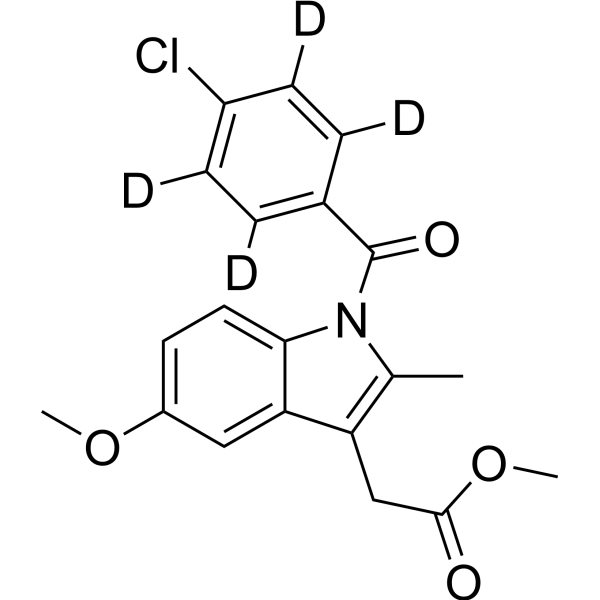 0 ImagesIndomethacin-d4 Methyl Ester is the deuterium labeled Indomethacin. Indomethacin (Indometacin) is a potent, blood-brain permeable and nonselective inhibitor of COX1 and COX2, with IC50s of 18 nM and 26 nM for human COX-1 and COX-2, respectively, in CHO cells. Indomethacin disrupts autophagic flux by disturbing the normal functioning of lysosomes.
-
Desethyl chloroquine-d4
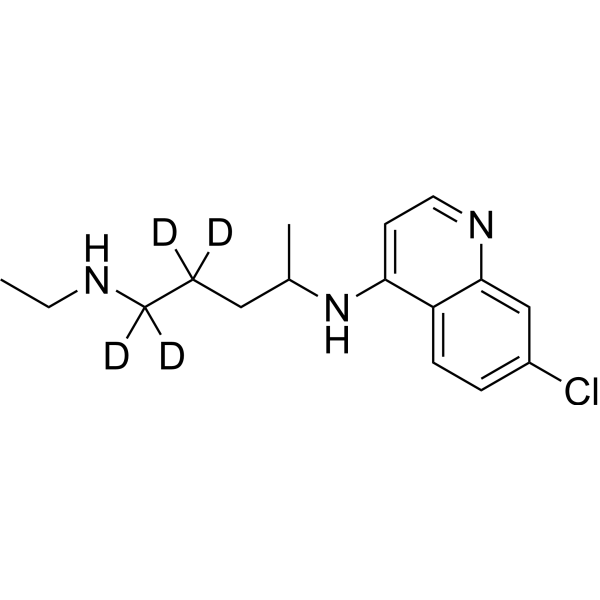 0 ImagesCat. No.: HY-135811SCAS No.: 1189971-72-9Desethyl chloroquine-d4 is the deuterium labeled Desethyl chloroquine. Desethyl chloroquine is a major desethyl metabolite of Chloroquine. Chloroquine diphosphate is an inhibitor of autophagy and toll-like receptors (TLRs). Desethyl chloroquine possesses antiplasmodic activity.
-
Megestrol acetate-d3
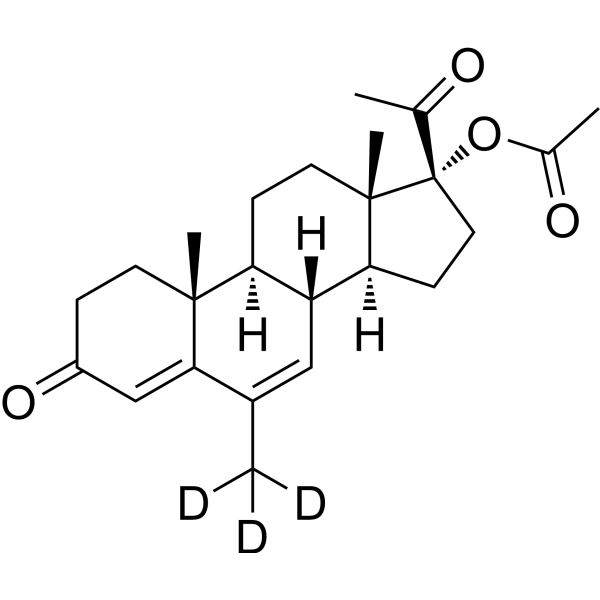 0 ImagesCat. No.: HY-13676SCAS No.: 162462-72-8Megestrol acetate-d3 is the deuterium labeled Megestrol acetate. Megestrol acetate is a synthetic and orally active progesteronal agent. Megestrol acetate is effective as an appetite stimulant for wasting syndromes such as cachexia. Megestrol acetate decreases nuclear and cytosol androgen receptors human BPH tissue. Megestrol acetate has the potential for HIV study and downregulates autophagic catabolic pathway.
-
6-Mercaptopurine-d2
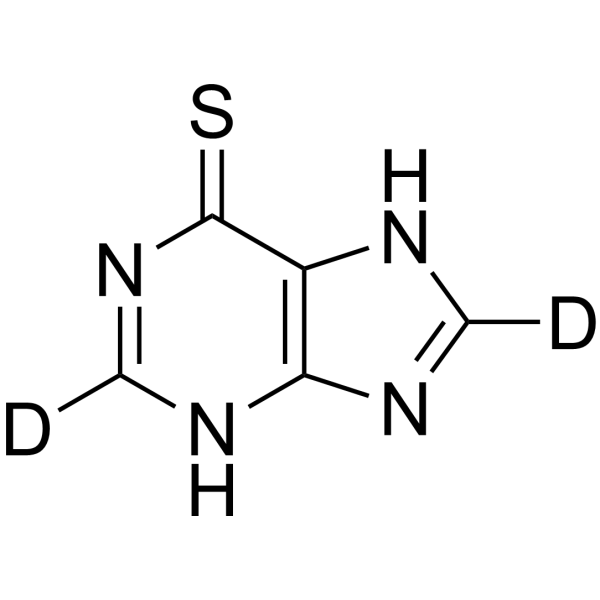 0 ImagesCat. No.: HY-13677SCAS No.: 82677-93-8Synonyms: Mercaptopurine-d2; 6-MP-d26-Mercaptopurine-d2 is the deuterium labeled 6-Mercaptopurine. 6-Mercaptopurine is a purine analogue which acts as an antagonist of the endogenous purines and has been widely used as antileukemic agent and immunosuppressive agent.
-
Emodin-d4
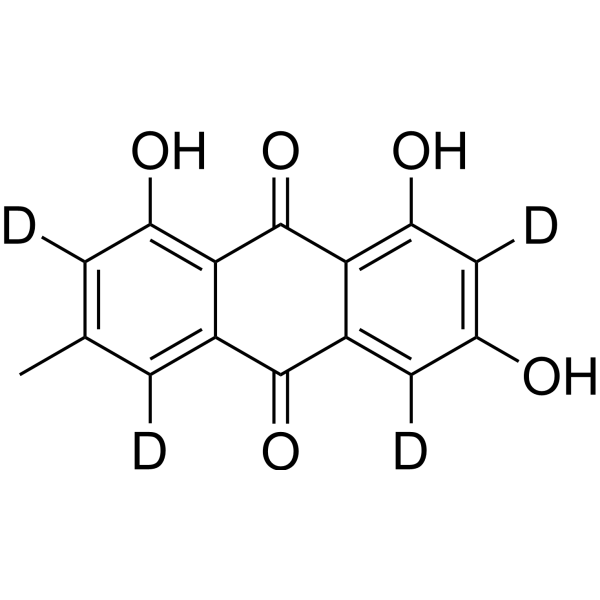 0 ImagesCat. No.: HY-14393SCAS No.: 132796-52-2Synonyms: Frangula emodin-d4Emodin-d4 is the deuterium labeled Emodin. Emodin (Frangula emodin), an anthraquinone derivative, is an anti-SARS-CoV compound. Emodin blocks the SARS coronavirus spike protein and angiotensin-converting enzyme 2 (ACE2) interaction. Emodin inhibits casein kinase-2 (CK2). Anti-inflammatory and anticancer effects. Emodin is a potent selective 11β-HSD1 inhibitor with the IC50 of 186 and 86 nM for human and mouse 11β-HSD1, respectively. Emodin ameliorates metabolic disorder in diet-induced obese mice.
-
(Z/E)-GW406108X
 0 ImagesCat. No.: HY-115570ACAS No.: 265098-01-9Synonyms: (Z/E)-GW108X(Z/E)-GW406108X is a mixture of different configurations of GW406108X (HY-115570). GW406108X is a specific Kif15 (Kinesin-12) inhibitor with an IC50 of 0.82 uM.
-
Autophagy-IN-9
 0 ImagesCat. No.: HY-183833CAS No.: 2841473-77-4Autophagy-IN-9 is a ATG5 inhibitor with an IC50 of 21.29 μM against ATG5-TECAIR. Autophagy-IN-9 blocks the binding of ATG5 to the hot-spot amino acid residues of TECAIR protein, disrupts the assembly of ATG5-related ternary complexes, inhibits autophagosome formation, and thereby downregulates cellular autophagy levels. Autophagy-IN-9 can be used in autophagy-related research, such as studies on infection.
-
Pantoprazole-d6
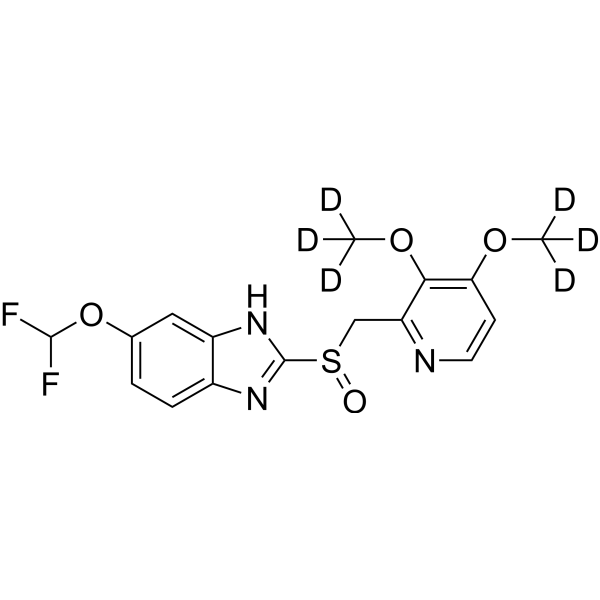 0 ImagesCat. No.: HY-17507SCAS No.: 922727-65-9Synonyms: BY1023-d6; SKF96022-d6Pantoprazole-d6 is deuterium labeled Pantoprazole. Pantoprazole (BY10232) is an orally active and potent proton pump inhibitor (PPI). Pantoprazole, a substituted benzimidazole, is a potent H+/K+-ATPase inhibitor with an IC50 of 6.8 μM. Pantoprazole improves pH stability and has anti-secretory, anti-ulcer activities. Pantoprazole significantly increased tumor growth delay combined with Doxorubicin (HY-15142).
-
(S)-Sitagliptin phosphate
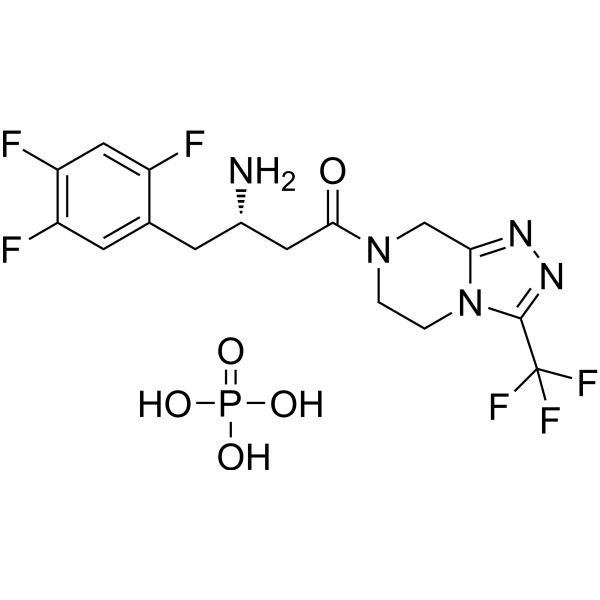 0 ImagesCat. No.: HY-13749CCAS No.: 823817-58-9Synonyms: (S)-MK-0431 phosphate(S)-Sitagliptin phosphate is the less active S-enantiomer of Sitagliptin phosphate. Sitagliptin phosphate (MK-0431 phosphate) is a potent inhibitor of DPP4 with an IC50 of 19 nM in Caco-2 cell extracts.
-
ATI-1
 0 ImagesCat. No.: HY-183257CAS No.: 1242983-93-2ATI-1 is an autophagy initiation inhibitor. ATI-1 targets valosin-containing protein (VCP/p97, disrupts its interaction with UFL1, impairs UFMylation homeostasis associated with VCP, promotes polyubiquitination and degradation of Beclin1, and blocks the formation of early autophagosomes. ATI-1 induces synergistic death of autophagy-dependent malignant tumor cells under nutrient deprivation conditions, accompanied by decreased mitochondrial membrane potential, reduced ROS levels and lysosomal stress. ATI-1 exhibits anti-tumor efficacy in a pancreatic adenocarcinoma xenograft mouse model. ATI-1 can be used for the research of pancreatic adenocarcinoma and lung cancer.
-
Dexpramipexole dihydrochloride (Standard)
 0 ImagesSynonyms: (R)-Pramipexole dihydrochloride (Standard); R-(+)-Pramipexole dihydrochloride (Standard); KNS-760704 dihydrochloride (Standard)Dexpramipexole ((R)-Pramipexole) dihydrochloride (Standard) is the analytical standard of Dexpramipexole (dihydrochloride). This product is intended for research and analytical applications. Dexpramipexole dihydrochloride is an orally active, blood-brain barrier permeable mitochondrial protective agent. Dexpramipexole dihydrochloride upregulates the expression of Parkin, PINK1, GPX4 and FSP1; binds to mitochondrial F1/Fo-ATP synthase; blocks the Nav1.8 sodium channel; and inhibits the activation of the NLRP3 inflammasome. Dexpramipexole dihydrochloride induces mitophagy, inhibits ferroptosis, pyroptosis, apoptosis, neuroinflammation and eosinophilopoiesis; maintains mitochondrial function and redox homeostasis; reduces reactive oxygen species production; and decreases myocardial infarct size. Dexpramipexole dihydrochloride is applicable to studies on eosinophilic asthma, myocardial ischemia/reperfusion injury, sepsis-associated encephalopathy, analgesia, and more.
-
AICAR-13C2,15N
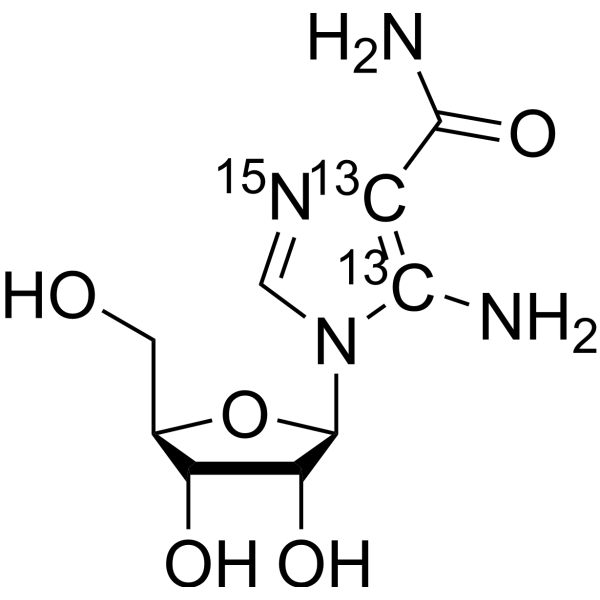 0 ImagesCat. No.: HY-13417SCAS No.: 1609374-70-0Synonyms: Acadesine-13C2,15N; AICA Riboside-13C2,15NAICAR-13C2,15N (Acadesine-13C2,15N; AICA Riboside-13C2,15N) is the 13C and 15N labeled AICAR (HY-13417). AICAR (Acadesine) is an adenosine analog and a AMPK activator. AICAR regulates the glucose and lipid metabolism, and inhibits proinflammatory cytokines and iNOS production. AICAR is also an autophagy, YAP and mitophagy inhibitor.
-
RK-682 hemicalcium
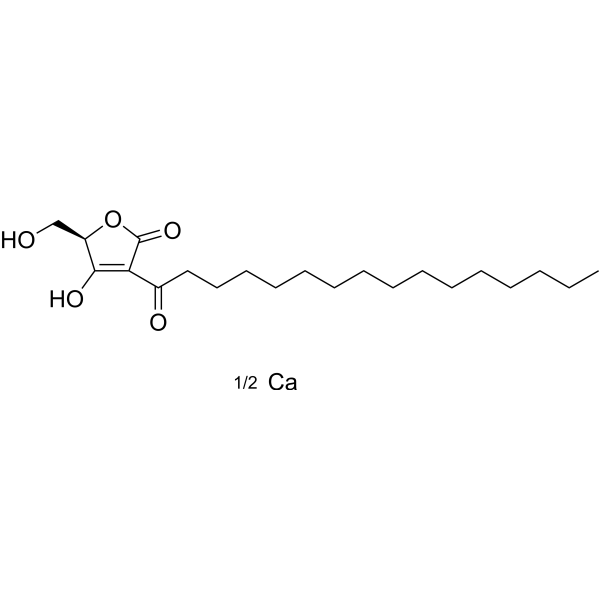 0 ImagesCat. No.: HY-135564CAS No.: 332131-32-5RK-682 hemicalcium is the hemicalcium salt form of RK-682 (HY-135564A). RK-682 hemicalcium is the inhibitor for protein tyrosine phosphatase (PTPase), heparanase, phospholipase A2 and HIV-1 protease. RK-682 hemicalcium inhibits the dephosphorylation of CD45 (IC50 is 54 μM) and VHR (IC50 is 2.0 μM), and thereby inhibits the ERK signaling pathway. RK-682 hemicalcium inhibits the cell viability of cancer cell MGH-U3, T24 and UROtsa with IC50s of 78.2, 43.2 and 145 nM, respectively, arrests the cell cycle at G1/S phase, inhibits the cell migration and autophagy in MGH-U3 and T24[2].
-
Pepstatin (Standard)
 0 ImagesCat. No.: HY-P0018RCAS No.: 26305-03-3Synonyms: Pepstatin A (Standard)Pepstatin (Standard) is the analytical standard of Pepstatin. This product is intended for research and analytical applications. Pepstatin (Pepstatin A) is a specific, orally active aspartic protease inhibitor produced by actinomycetes, with IC50s of 4.5 nM, 6.2 nM, 150 nM, 290 nM, 520 nM and 260 nM for hemoglobin-pepsin, hemoglobin-proctase, casein-pepsin, casein-proctase, casein-acid protease and hemoglobin-acid protease, respectively. Pepstatin also inhibits HIV protease[1][2].
-
DCAP (Standard)
 0 ImagesSynonyms: VU0607402 (Standard)Diphenylcyclopropenone (Standard) is the analytical standard of Diphenylcyclopropenone. This product is intended for research and analytical applications. Diphenylcyclopropenone (Diphencyprone) is a topical immunomodulatory agent that can be used for alopecia areata research.
-
MAAAHR
 0 ImagesCat. No.: HY-P12279MAAAHR is a neuroprotective agent. MAAAHR is isolated and purified from C-phycocyanin of Spirulina platensis. MAAAHR induces antioxidant gene expression through activating the Nrf2 signaling pathway. MAAAHR inhibits excessive Autophagy by reducing the expression of proteins such as α-Syn and Parkin. MAAAHR inhibits Apoptosis. MAAAHR scavenges excessive ROS, enhances SOD, CAT, and GSH-Px activities, and reduces protein carbonyl content. MAAAHR inhibits Acetylcholinesterase. MAAAHR protects zebrafish against MPTP (HY-15608)-induced dopaminergic neuronal and neurovascular loss and alleviates motor impairment. MAAAHR can be used for research on Parkinson's disease.
-
ATG5 PPI-IN-5
 0 ImagesCat. No.: HY-183827CAS No.: 2841473-97-8ATG5 PPI-IN-5 is a Autophagy-Related ATG5 protein-protein interaction inhibitor and autophagy inhibitor. The IC50 values of ATG5 PPI-IN-5 for the interactions of ATG5-ATG16L1 and ATG5-TECAIR are >33 μM.
-
Amorphigenin
 0 ImagesAmorphigenin is a trothotenone compound. Amorphigenin inhibits osteoclast differentiation by suppressing the expression of c-Fos and NFATc1 in activated T cells. Amorphigenin degrades melanosome proteins by activating the AMPK-dependent autophagy pathway, but not in dependence of the mTOR pathway. Amorphigenin significantly protects bone mass and reduces bone erosion in a mouse model of inflammatory bone loss. Amorphigenin can be used to study inflammatory bone diseases, postmenopausal osteoporosis, and skin pigmentation disorders.
-
Cinchonine (Standard)
 0 ImagesSynonyms: (8R,9S)-Cinchonine (Standard); LA40221 (Standard)Cinchonine (Standard) is the analytical standard of Cinchonine. This product is intended for research and analytical applications. Cinchonine is a natural compound present in Cinchona bark with antimalarial, antitumor, anti-inflammatory, anti platelet-aggregation and anti-obesity properties. Cinchonine inhibits cells proliferation and autophagy and induces apoptosis through activation of Caspase-3. Cinchonine activates endoplasmic reticulum stress-induced apoptosis in human liver cancer cells.




