



Bacterial
Anything that destroys bacteria or suppresses their growth or their ability to reproduce. Heat, chemicals such as chlorine, and antibiotic drugs all have antibacterial properties. Many antibacterial products for cleaning and handwashing are sold today. Such products do not reduce the risk for symptoms of viral infectious diseases in otherwise healthy persons. This does not preclude the potential contribution of antibacterial products to reducing symptoms of bacterial diseases in the home.
All Product Categories
-
Bacterial Inhibitors
(7553)
View all products
-
Bacterial Agonists
(3)
View all products
-
Bacterial Antagonists
(9)
View all products
-
Bacterial Activators
(25)
View all products
-
Bacterial Modulators
(27)
View all products
-
Bacterial Chemicals
(2)
View all products
-
Bacterial Inducers
(6)
View all products
-
Bacterial Controls
(14)
View all products
-
Bacterial Substrates
(2)
View all products
-
Bacterial Ligand
(1)
View all products
-
Bacterial Related Products (8893)
Related Products (8893)

-
Antibodies (14)
-
Related Compound Screening Libraries (1)
-
Sissotrin
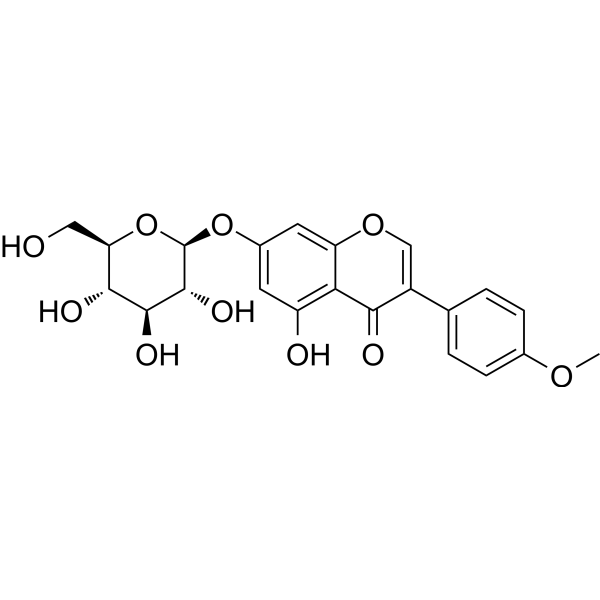 0 ImagesSissotrin (Biochanin A 7-glucoside; Sissonin) is an orally active isoflavone glycoside natural product found in Leguminosae plants, with weak antibacterial activity. Sissotrin exacerbates the increase in blood glucose after glucose loading. Sissotrin is used in studies related to glucose metabolism.
-
Cyclosporin C
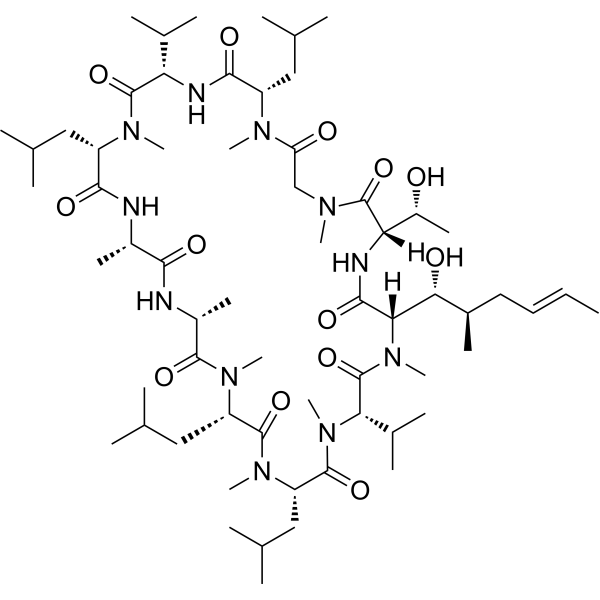 0 ImagesCyclosporin C is a fungal metabolite that has been found in T. inflatum and has diverse biological activities, including antifungal, antiviral, and immunosuppressant properties. Cyclosporin C shows no activity against bacteria or yeasts.
-
Acetaminophen-13C2,15N
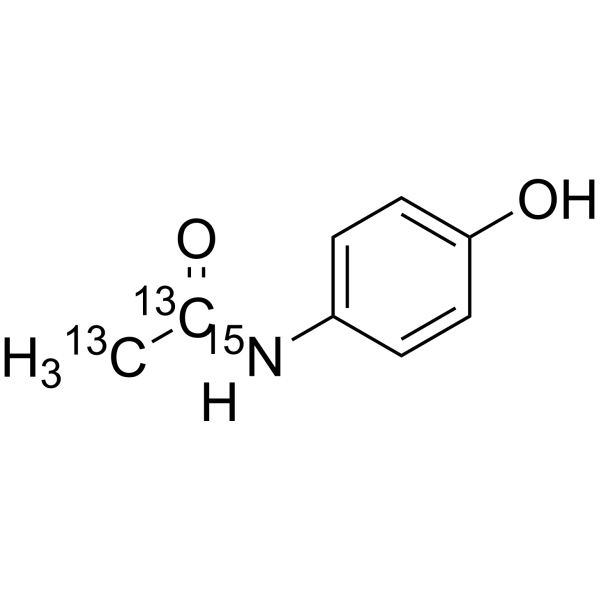 0 ImagesSynonyms: Paracetamol-13C2,15N; 4-Acetamidophenol-13C2,15N; 4'-Hydroxyacetanilide-13C2,15NAcetaminophen-13C2,15N is the 13C and 15N labeled Acetaminophen. Acetaminophen (Paracetamol) is a selective cyclooxygenase-2 (COX-2) inhibitor with an IC50 of 25.8 μM;is a widely used antipyretic and analgesic agent. Acetaminophen is a potent hepatic N-acetyltransferase 2 (NAT2) inhibitor.
-
Silver chloride
 0 ImagesSynonyms: Silver(Ⅰ) ChlorideSilver chloride (Silver (Ⅰ) Chloride) is an inorganic salt with antibacterial activity and the property of regulating alcohol oxidase. Silver chloride destabilizes alcohol oxidase and reduces its activity over time. Silver chloride exhibits antibacterial activity against human pathogenic Escherichia coli and Candida albicans. Silver chloride can be used in studies related to bacterial infections and fungal infections.

-
NITD-916
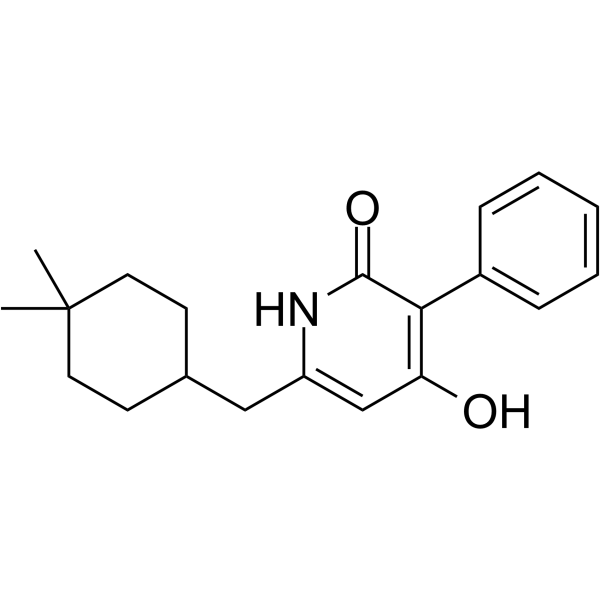 0 ImagesNITD-916, a 4-hydroxy-2-pyridone derivative, is an orally active mycobacterial enoyl reductase InhA inhibitor with an IC50 of 570 nM. NITD-916 forms a ternary complex with InhA and NADH to block access to the fatty acyl substrate binding pocket. NITD-916 inhibition of InhA reduces the synthesis of mycolic acids and results in cell death. NITD-916 has potent anti-tuberculosis effects.
-
Cefoperazone sodium salt (Standard)
 0 ImagesSynonyms: CP 52640-2 (Standard)Cefoperazone (sodium salt) (Standard) is the analytical standard of Cefoperazone (sodium salt). This product is intended for research and analytical applications. Cefoperazone sodium salt (CP 52640-2), a semisynthetic cephalosporin, has a broad spectrum of antibacterial activity.
-
FA-Gly-Leu-NH2
 0 ImagesSynonyms: FAGLAFA-Gly-Leu-NH2 (FAGLA) is a dipeptide substrate for proteases that can be hydrolyzed by thermophilic proteases and neutral proteases, showing pH-dependent variations in kcat/Km.

-
Humic acid
 0 ImagesHumic acid is an important component of organic matter in soil and water, and serves as a plant regulator. Humic acid has multiple reactive activities such as surface adsorption, ion exchange, and complexation. Humic acid can enhance pyrene degradation by Mycobacterium NJS-1. Humic acid can inhibit the activity of superoxide dismutase and scavenge hydroxyl radicals. Humic acid is also toxic to CEM cells.
-
Citric acid-d4-1
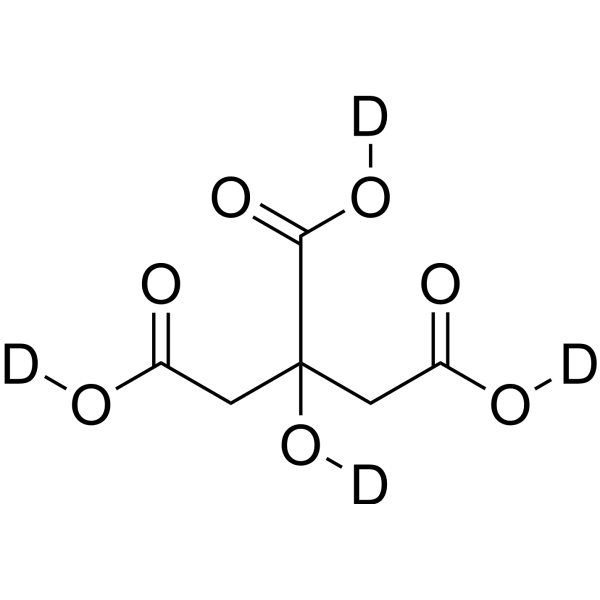 0 ImagesCat. No.: HY-N1428S6Citric acid-d4-1 is deuterated labeled Citric acid (HY-N1428). Citric acid is a natural preservative and food tartness enhancer. Citric acid induces apoptosis and cell cycle arrest at G2/M phase and S phase in HaCaT cells. Citric acid cause oxidative damage of the liver by means of the decrease of antioxidative enzyme activities. Citric acid is also an acidulant, emulsifier, sequestrant and buffering agent widely used across many industries.
-
Ronidazole (Standard)
 0 ImagesRonidazole (Standard) is the analytical standard of Ronidazole. This product is intended for research and analytical applications. Ronidazole is a potent and orally active antiprotozoal and anti-microbial agent. Ronidazole acts as a veterinary agent against Tritrichomonas foetus?in cats models. Ronidazole can be used the research of forhistomoniasis?and?swine?dysentery.
-
1,2-Dihydroxynaphthalene
 0 Images1,2-Dihydroxynaphthalene is an intermediate isolated from the metabolism of naphthalene and has been shown to be a precursor to the formation of naphthoquinones. 1,2-Dihydroxynaphthalene can be further metabolized by some bacteria (such as Pseudomonas) to compounds such as coumarins and salicylic acid.
-
Dehydroacetic acid
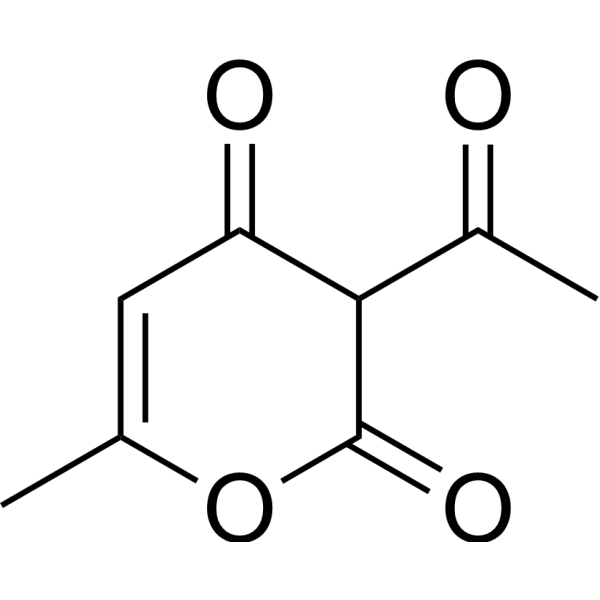 0 ImagesDehydroacetic acid (Biocide 470F) is a pyrone derivative. Dehydroacetic acid has antibacterial, antifungal and phytotoxic activities. Dehydroacetic acid can be added to cosmetics, food and beverages for preservation and other purposes. Dehydroacetic acid can also be used to synthesize various heterocycles and cycloaddition products.
-
Caspofungin-d4 diacetate
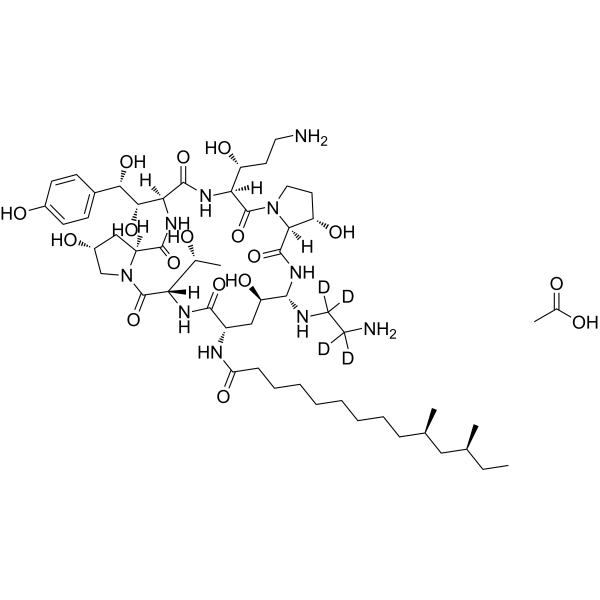 0 ImagesCat. No.: HY-17006SSynonyms: MK-0991-d4 diacetate; L-743872-d4 diacetateCaspofungin-d4 (acetate) is the deuterium labeled Caspofungin diacetate. Caspofungin (MK-0991) diacetate is a potent antifungal agent. Caspofungin diacetate inhibits the synthesis of the fungal cell wall component β-(l,3)-D-glucan.
-
Isoeugenol-d3
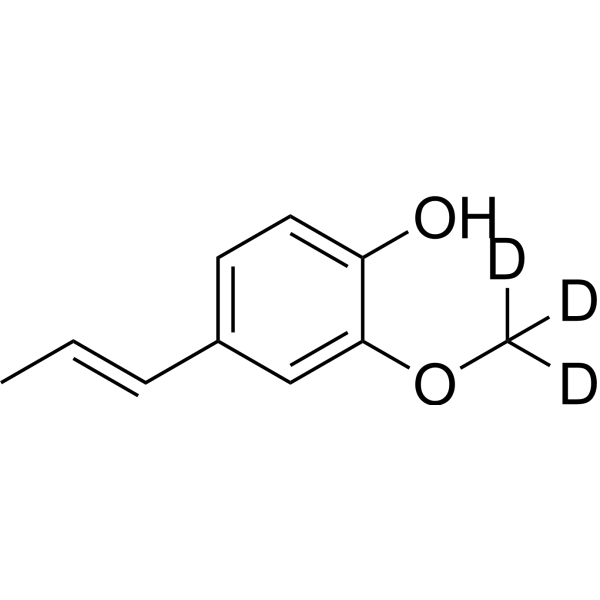 0 ImagesCat. No.: HY-N1952SSynonyms: iso-Eugenol-d3Isoeugenol-d3 is deuterated labeled Isoeugenol (HY-N1952). Isoeugenol is an essential oil constituent of nutmeg, clove, and cinnamon. Isoeugenol inhibits growth of Escherichia coli and Listeria innocua with MICs of 0.6 mg/mL and 1 mg/mL, respectively.
-
3-Bromo-1H-pyrrole-2,5-dione
 0 ImagesCat. No.: HY-W076794CAS No.: 98026-79-03-Bromo-1H-pyrrole-2,5-dione (compound 2c) is a 3-substituted pyrrole-2,5-dione compound with antibacterial activity. 3-Bromo-1H-pyrrole-2,5-dione inhibits pathogenic strains of S. aureus ATCC 25923, E. coli ATCC 25922, P. aeruginosa ATCC 27853, with MIC values of 32 μg/mL, 32 μg/mL, and 64 μg/mL, respectively.




