



Bacterial
Anything that destroys bacteria or suppresses their growth or their ability to reproduce. Heat, chemicals such as chlorine, and antibiotic drugs all have antibacterial properties. Many antibacterial products for cleaning and handwashing are sold today. Such products do not reduce the risk for symptoms of viral infectious diseases in otherwise healthy persons. This does not preclude the potential contribution of antibacterial products to reducing symptoms of bacterial diseases in the home.
All Product Categories
-
Bacterial Inhibitors
(7521)
View all products
-
Bacterial Agonists
(3)
View all products
-
Bacterial Antagonists
(9)
View all products
-
Bacterial Activators
(24)
View all products
-
Bacterial Modulators
(27)
View all products
-
Bacterial Chemicals
(2)
View all products
-
Bacterial Inducers
(7)
View all products
-
Bacterial Controls
(14)
View all products
-
Bacterial Substrates
(2)
View all products
-
Bacterial Ligand
(1)
View all products
-
Bacterial Related Products (8852)
Related Products (8852)

-
Antibodies (14)
-
Related Compound Screening Libraries (1)
-
4-Methylbenzohydrazide
 0 ImagesCat. No.: HY-W038767CAS No.: 3619-22-5Synonyms: p-Toluoylhydrazine4-Methylbenzohydrazide (p-ToluoylHYdrazine) (Compound 5) is an antibacterial agent. 4-Methylbenzohydrazide shows a pMIC value of 1.38 against Staphylococcus aureus, Bacillus subtilis, Escherichia coli, and Aspergillus niger.
-
Conimine
 0 ImagesConimine is a steroidal alkaloid, antibacterial agent and potentiator. Conimine is isolated from the seeds of Holarrhena antidysenteriaca Wall.ex A.DC. Conimine exhibits intrinsic antibacterial activity against methicillin-sensitive Staphylococcus aureus and methicillin-resistant Staphylococcus aureus. When combined with Penicillin, Conimine shows synergistic antibacterial effects against methicillin-resistant Staphylococcus aureus; when combined with Vancomycin (HY-B0671), it exerts synergistic antibacterial effects against both methicillin-sensitive and methicillin-resistant Staphylococcus aureus.
-
Ethylenediaminetetraacetic acid sodium hydrate
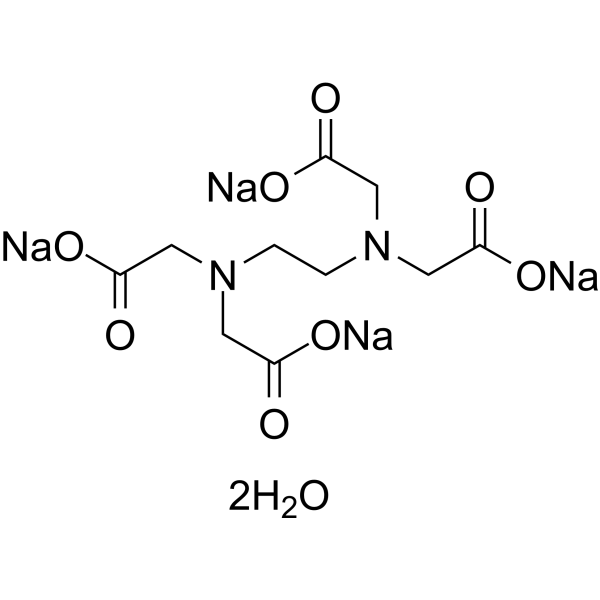 0 ImagesSynonyms: EDTA sodium hydrateEthylenediaminetetraacetic acid (EDTA) sodium hydrate is a kind of metal chelating agent (binds to bivalent and trivalent metal cations, including calcium). Ethylenediaminetetraacetic acid sodium hydrate has antibacterial, anti-inflammatory, antioxidant, anti-hypercalcemia and anticoagulant activities. Ethylenediaminetetraacetic acid sodium hydrate decreases the metal ion-catalyzed oxidative damage to proteins, and allows maintenance of reducing environment during protein purification. Ethylenediaminetetraacetic acid sodium hydrate can alleviate the liver fibrosis. Ethylenediaminetetraacetic acid sodium hydrate can be used for coronary artery disease and neural system disease research.
-
Diethyl terephthalate
 0 ImagesSynonyms: Terephthalic acid, diethyl esterDiethyl terephthalate (Terephthalic acid, diethyl ester) is a synthetic monomer for the production of polyethylene terephthalate (PET) and also a substrate for biodegradation. Diethyl terephthalate serves as a carbon source for the growth of Delftia sp. WL-3 and can be biodegraded by Delftia sp. WL-3.
-
Pinobanksin 5-methyl ether
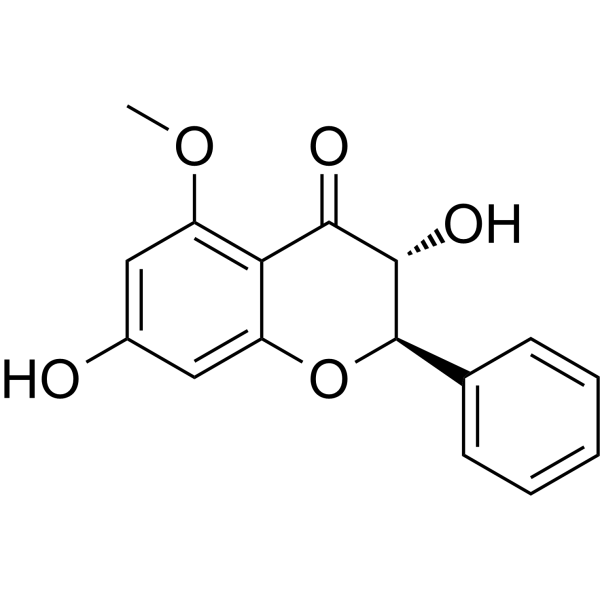 0 ImagesPinobanksin 5-methyl ether can be isolated from Georgian Propolises. Pinobanksin 5-methyl ether has anti-helicobacter activity. Pinobanksin 5-methyl ether is effective inducer of CYP9Q enzyme.
-
Fostriecin
 0 ImagesCat. No.: HY-106702ACAS No.: 87810-56-8Synonyms: PD 110161; CL 1565A; CI-920Fostriecin is a triene antibiotic. Fostriecin is a topoisomerase II and protein phosphatase PP2A inhibitor.
-
Dodecyl gallate (Standard)
 0 ImagesSynonyms: Lauryl gallate (Standard)Dodecyl gallate (Standard) is the analytical standard of Dodecyl gallate. This product is intended for research and analytical applications. Dodecyl gallate (Lauryl gallate) has been widely used as an antioxidant in food manufacturing, as well as in the pharmaceutical and cosmetic industries. Dodecyl gallate also is active against a highly relevant animal virus such as African swine fever virus (ASFV).
-
Sulfapyridine-d4
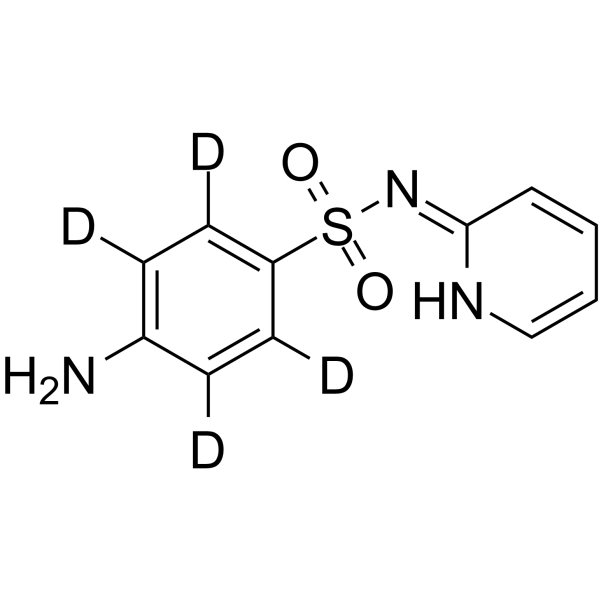 0 ImagesSulfapyridine-d4 is the deuterated-labeled Sulfapyridine (HY-B0212). Sulfapyridine, a major metabolite of Sulfasalazine, is a sulfonamide antibiotic agent. Sulfapyridine inhibits recombinant P. carinii dihydropteroate synthetase (DHPS) with an IC50 of 0.18 μM. Sulfapyridine has antibacterial, anti-inflammatory and anti-rheumatic activities.
-
Showdomycin
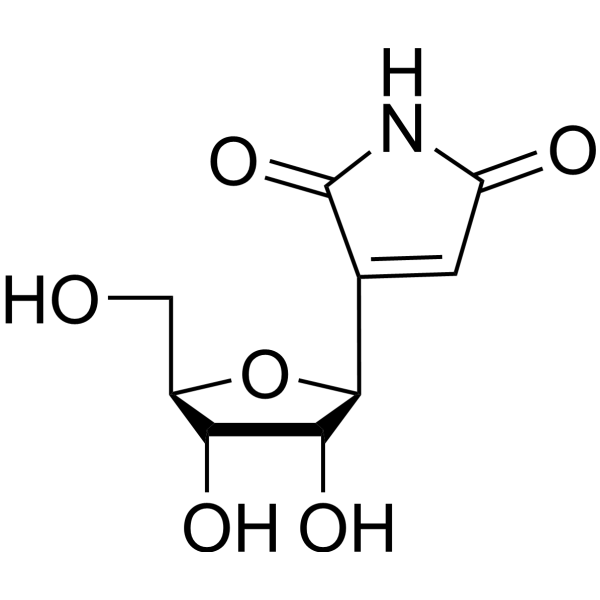 0 ImagesShowdomycin is an antibiotic produced by IM-2-induced in Streptomyces.
-
1-Naphthalenemethanol
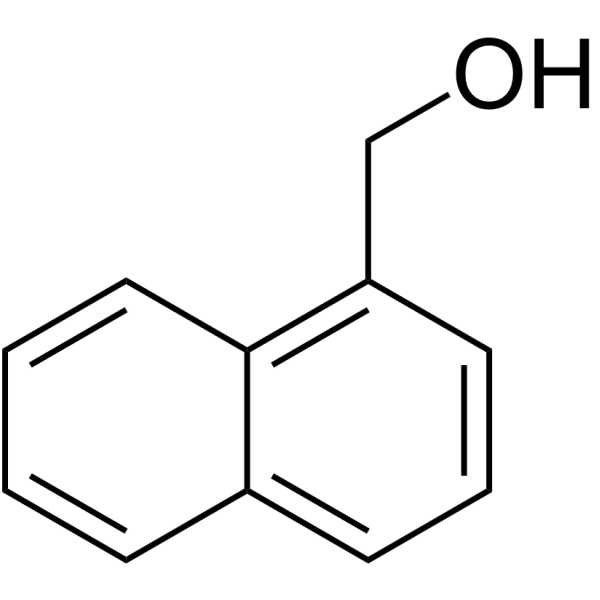 0 ImagesSynonyms: 1-Hydroxymethylnaphthalene1-Naphthalenemethanol is a hydroxyl-substituted naphthalene derivative. 1-Naphthalenemethanol can be extracted from the root of Annona senegalensis. 1-Naphthalenemethanol is a photolysis product of 1-napthaleneacetic acid. 1-Naphthalenemethanol, together with PAPS, provides some protection against the irreversible inactivation of AST IV caused by N-OH-2AF. 1-Naphthalenemethanol can be used in antibacterial research.
-
α-Thujene
 0 ImagesCat. No.: HY-W712028CAS No.: 2867-05-2α-Thujene is a hydrogenated monoterpene hydrocarbon. α-Thujene exists in the essential oils of fresh leaves of Crassocephalum rubens and leaves of Photinia serrulata. The essential oil from fresh Crassocephalum rubens leaves containing α-Thujene exhibits potent antibacterial activity. α-Thujene is used in studies on infections caused by Escherichia coli and Staphylococcus aureus.
-
6-epi Doxycycline
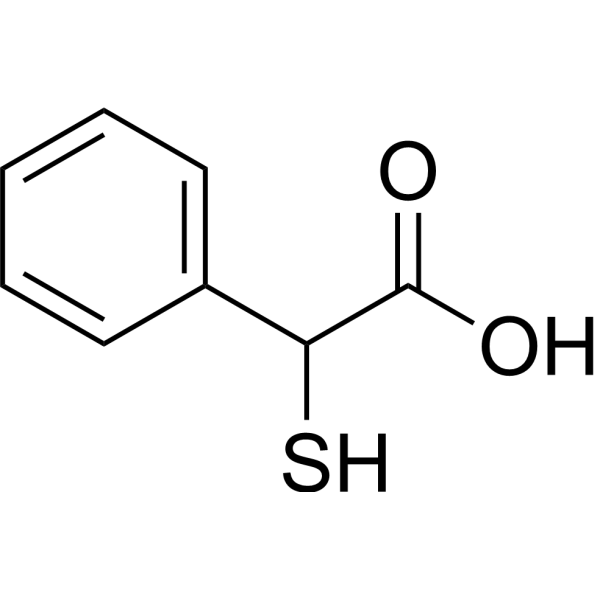
 0 Images6-Epi-doxycycline is the C-6 epimer of Doxycycline (HY-N0565), formed as a degradation impurity through epimerization of Doxycycline under abnormal conditions (e.g., high temperature, pH changes, or humidity). 6-Epi-doxycycline is commonly used for the detection and analysis of impurity levels in pharmaceutical formulations.
-
1-Acetyl-β-carboline
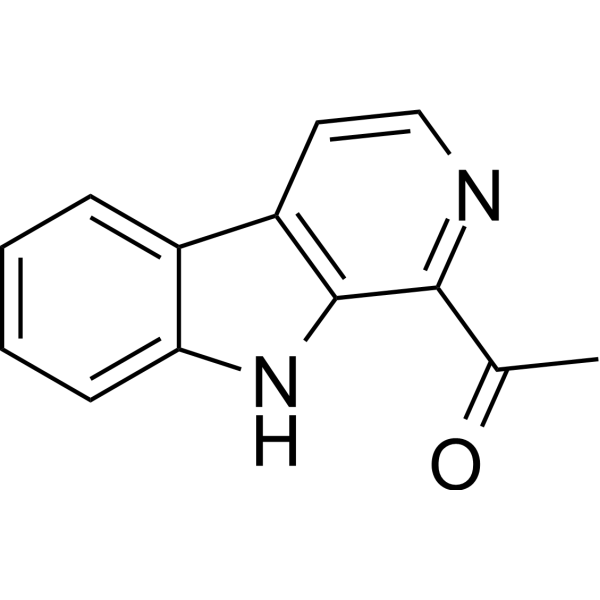 0 ImagesCat. No.: HY-W060074CAS No.: 50892-83-61-Acetyl-β-carboline is a metabolite of Streptomyces kasugaensis and antibacterial agent. 1-Acetyl-β-carboline increases tyrosinase activity, reduces ERK phosphorylation. 1-Acetyl-β-carboline exhibits antibacterial activity against methicillin-resistant Staphylococcus aureus (MRSA) strains with MICs ranging from 128 to 256 ug/mL. 1-Acetyl-β-carboline increases the melanin.
-
77PD-Q
 0 ImagesCat. No.: HY-175045CAS No.: 3078541-61-177PD-Q is a p-phenylenediamine (PPD) derivative. 77PD-Q exhibits toxic to the aquatic bacterium V. fischeri. 77PD-Q can be used as an exposure biomarker in environmental monitoring.
-
1,3-Dihydroxyacetone (Standard)
 0 Images1,3-Dihydroxyacetone (Standard) is the analytical standard of 1,3-Dihydroxyacetone. This product is intended for research and analytical applications. 1,3-Dihydroxyacetone (DHA), the main active ingredient in sunless tanning skin-care preparations and an important precursor for the synthesis of various fine chemicals, is produced on an industrial scale by microbial fermentation of glycerol (HY-B1659) in Gluconobacter oxydans. 1,3-Dihydroxyacetone is also used for synthesis of new biodegradable polymers by combining with lactic acid (HY-B2227).
-
Uralsaponin B
 0 ImagesUralsaponin B is classified as an oleanane-type triterpenoid saponin. Uralsaponin B exhibits potential anti-inflammatory and anti-infective activities.
-
Sideroxylonal A
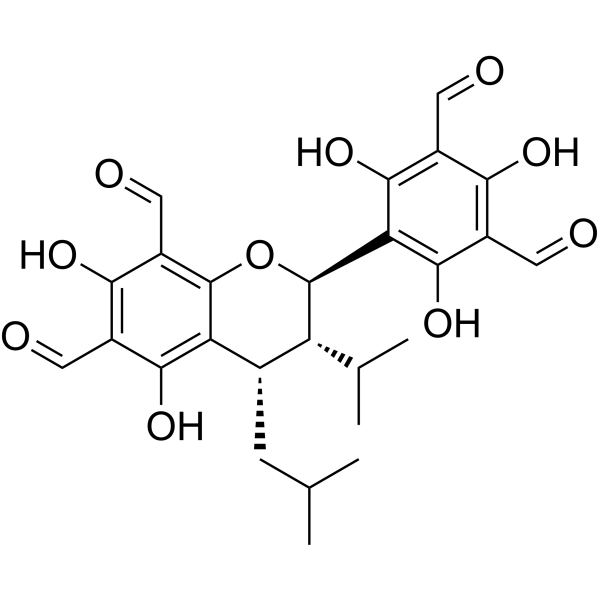 0 ImagesCat. No.: HY-N1307CAS No.: 145382-68-9Sideroxylonal A is an effective marine antifouling agent isolated from Eucalyptus jensenii. Sideroxylonal A has antibacterial activity against the Gram-positive bacteria Staphylococcus aureus and Bacilus subtilis.
-
Patulin (Standard)
 0 ImagesPatulin (Standard) is the analytical standard of Patulin. This product is intended for research and analytical applications. Patulin (Terinin) is a mycotoxin produced by fungi including the Aspergillus, Penicillium, and Byssochlamys species, causes chromosome breakage, mutation, teratogenic and cytotoxic. Patulin induces autophagy-dependent apoptosis through lysosomal-mitochondrial axis, and causes DNA damage.
-
Cefetamet pivoxil hydrochloride
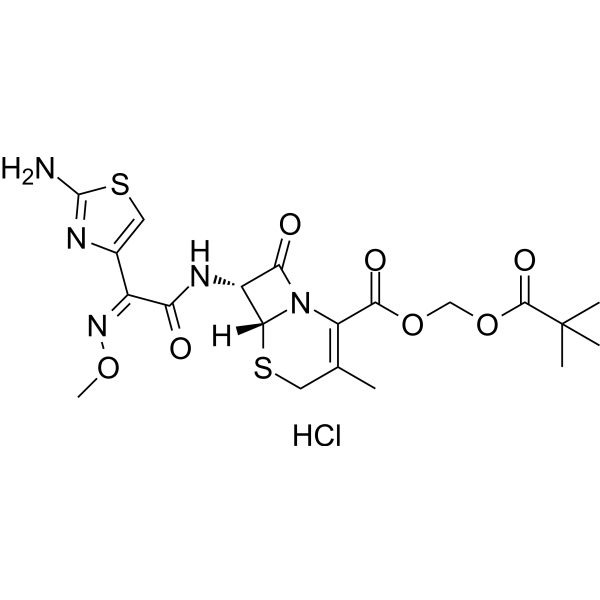 0 ImagesSynonyms: Ro 15-8075Cefetamet pivoxyl hydrochloride (Ro 15-8075) is an orally active cephalosporin Antibiotic and a prodrug of Cefetamet (HY-A0111). After ingestion, Cefetamet pivoxyl hydrochloride is hydrolyzed by gastrointestinal esterases to form Cefetamet. Cefetamet pivoxyl hydrochloride is primarily active against aerobic Gram-negative bacteria (such as Enterobacteriaceae, Neisseria, Haemophilus) and some Gram-positive bacteria (such as non-enterococcal streptococci). Cefetamet pivoxyl hydrochloride exhibits potent in vivo antibacterial activity against strains of Gram-positive bacteria (S. pyogenes) and Gram-negative bacteria (E. coli, K. pneumoniae, S. marcescens, P. vulgaris, P. mirabilis, H. influenzae).




