



Bacterial
Anything that destroys bacteria or suppresses their growth or their ability to reproduce. Heat, chemicals such as chlorine, and antibiotic drugs all have antibacterial properties. Many antibacterial products for cleaning and handwashing are sold today. Such products do not reduce the risk for symptoms of viral infectious diseases in otherwise healthy persons. This does not preclude the potential contribution of antibacterial products to reducing symptoms of bacterial diseases in the home.
All Product Categories
-
Bacterial Inhibitors
(7553)
View all products
-
Bacterial Agonists
(3)
View all products
-
Bacterial Antagonists
(9)
View all products
-
Bacterial Activators
(25)
View all products
-
Bacterial Modulators
(27)
View all products
-
Bacterial Chemicals
(2)
View all products
-
Bacterial Inducers
(6)
View all products
-
Bacterial Controls
(14)
View all products
-
Bacterial Substrates
(2)
View all products
-
Bacterial Ligand
(1)
View all products
-
Bacterial Related Products (8893)
Related Products (8893)

-
Antibodies (14)
-
Related Compound Screening Libraries (1)
-
γ-Terpinene (Standard)
 0 ImagesCat. No.: HY-W020183RCAS No.: 99-85-4γ-Terpinene (Standard) is the analytical standard of γ-Terpinene. This product is intended for research and analytical applications. γ-Terpinene, a monoterpene, is an orally active antioxidant compound which can scavenge radicals directly. γ-Terpinene has potent antinociception activity. γ-Terpinene exhibits antimicrobial efficacy against various bacteria and fungi.
-
Amifloxacin
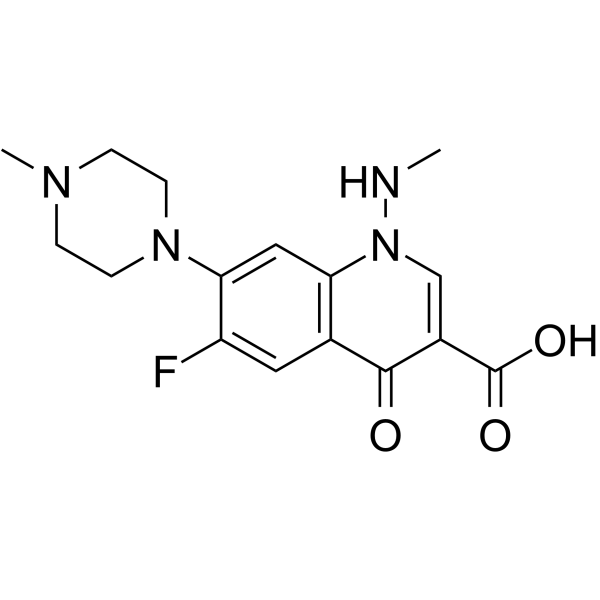 0 ImagesSynonyms: Win49375Amifloxacin (Win49375) is a synthetic antibacterial agent of the quinolone class.
-
Lavendamycin
 0 ImagesCat. No.: HY-121873CAS No.: 81645-09-2Lavendamycin is a quinolinedione that can be extracted from bacteria and has potent antibacterial and antitumor properties.
-
Polistes mastoparan
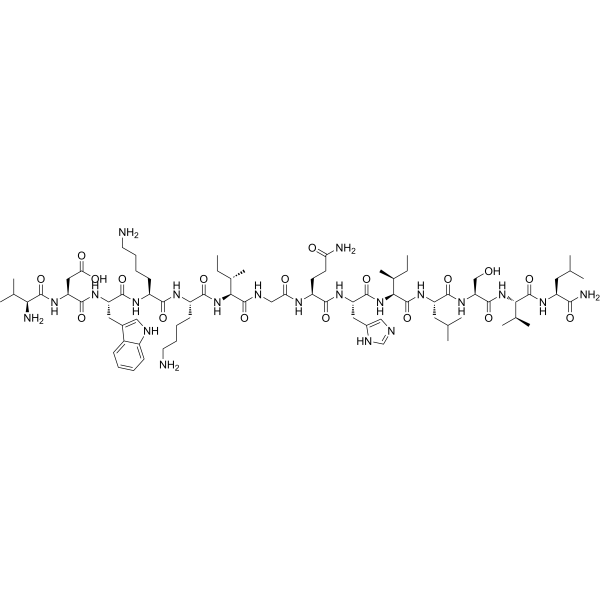 0 ImagesPolistes mastoparan is an antimicrobial peptide. Polistes mastoparan increases S. aureus cell K+ efflux and inhibits cell viability with EC50 of 5 μM.
-
Andrographiside
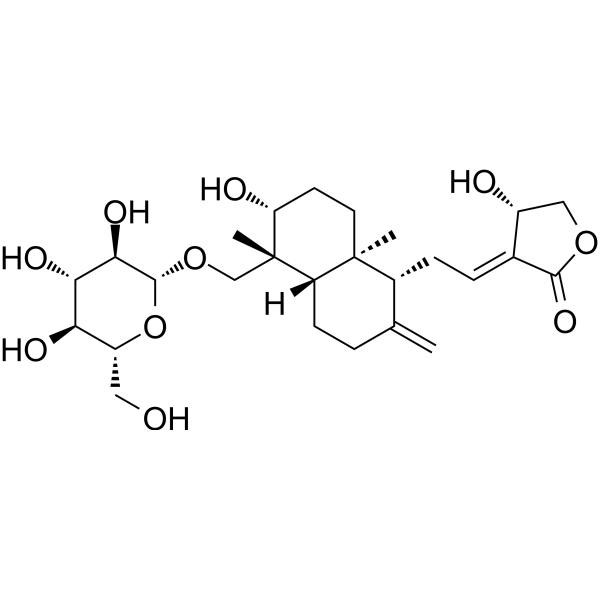 0 ImagesCat. No.: HY-N2867CAS No.: 82209-76-5Andrographiside is a labdane diterpenoid glucoside that can be isolated from the leaves of Andrographis paniculata Nees. Andrographiside has antihepatotoxic and antioxidative effects. Andrographiside shows protective effects on mice with hepatotoxicity induced by carbon tetrachloride or tert-butylhydroperoxide (tBHP). Andrographiside is a novel biofilm inhibitor of Pseudomonas aeruginosa PAO1 by modulating quorum-sensing proteins.
-
Glycozolidal
 0 ImagesGlycozolidal (compound 12) is a carbazole alkaloid with antibacterial activity against P. gingivalis. Glycozolidal is cytotoxic against human gingival fibroblasts (HGFs) and monocytes (U937) in vitro with IC50 values of 120.86 µg/mL and 97.74 µg/mL, respectively.
-
RNPA1000
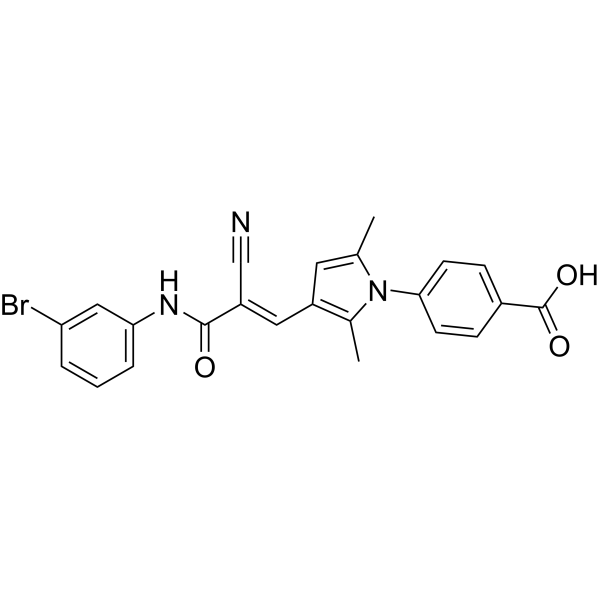 0 ImagesRNPA1000, an antibiotic, is a potent RnpA inhibitor and inhibits RnpA-mediated cellular RNA degradation. RNPA1000 inhibits tRNA maturation with an IC50 of 175 μM. RNPA1000 displays broad-spectrum antimicrobial activities and inhibits staphylococcal and all Gram-positive bacterial pathogens activity.
-
Selenosemicarbazide
 0 ImagesCat. No.: HY-128222CAS No.: 21198-79-8Synonyms: HydrazinecarboselenoamideSelenosemicarbazide (Hydrazinecarboselenoamide) exhibits antimicrobial activity, that inhibits B. subtilis, S. aureus, Klebsiella pneumoniae, Sarcina lutea and Mycobacterium tuberculosis. Selenosemicarbazide forms complex with metal ions, and exhibits antitumor efficacy against cancer cells
-
AMG 837 sodium salt
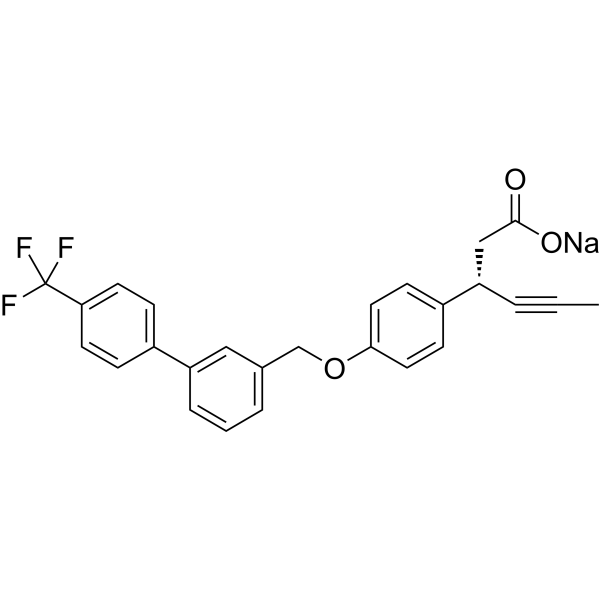 0 ImagesCat. No.: HY-13967ACAS No.: 865231-45-4AMG 837 sodium salt is an orally active, selective GPR40/FFA1 agonist with an EC50 of 1.5 nM against human GPR40. AMG 837 sodium salt stimulates insulin secretion in a glucose-dependent manner, and effectively improves glycemic control in both normal and diabetic rodent models. AMG 837 sodium salt binds to the BacA protein and impairs the survival and replication of Brucella. AMG 837 sodium salt can be used in research related to type 2 diabetes and brucellosis.
-
Phthalylsulfacetamide
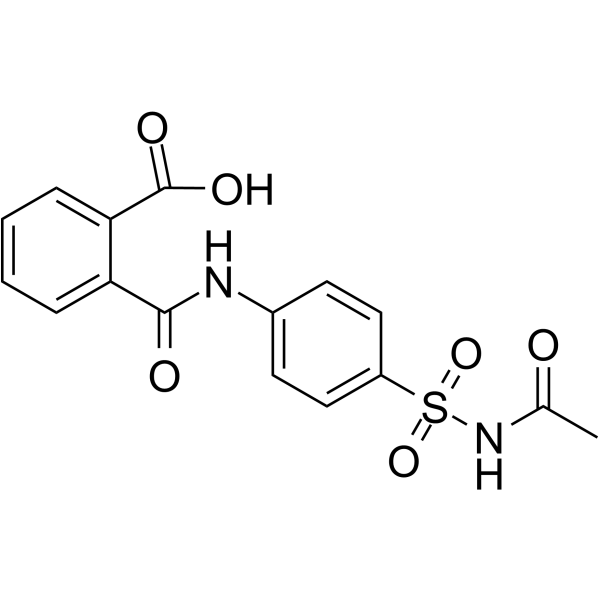 0 ImagesPhthalylsulfacetamide is an orally active sulfonamide antibiotic and New Delhi metallo-β-lactamase-1 (NDM-1) inhibitor with an IC50 of 15.4 μM. Phthalylsulfacetamide stably binds to the active hydrolysis center of NDM-1, interacts with Zn2+, and interacts with key amino acid residues Val73 and His122 to inhibit enzyme activity. Phthalylsulfacetamide can be used for the research of Escherichia coli infection.

-
Nitroxoline (Standard)
 0 ImagesSynonyms: 8-Hydroxy-5-nitroquinoline (Standard); 5-Nitro-8-quinolinol (Standard)Nitroxoline (Standard) is the analytical standard of Nitroxoline. This product is intended for research and analytical applications. Nitroxoline (8-Hydroxy-5-nitroquinoline), an antibiotic, is an orally active antibiofilm agent. Nitroxoline reduces the formation and induces the dispersal of Pseudomonas aeruginosa biofilms by chelation of iron and zinc. Nitroxoline can be used for the urinary tract infections and cancer research.
-
Garenoxacin
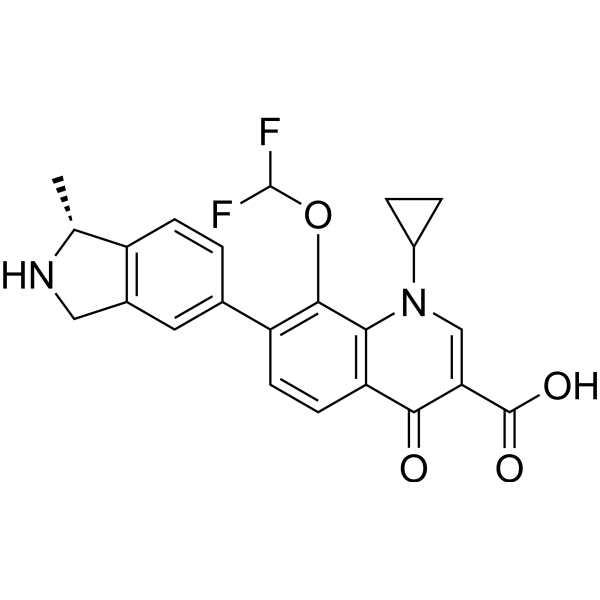 0 ImagesSynonyms: BMS284756Garenoxacin (BMS284756) is an orally active quinolone antibiotic and has a broad spectrum of activity against a wide array of gram-positive and gram-negative bacteria, anaerobes, and fastidious organisms.
-
Lansoprazole sodium
 0 ImagesSynonyms: AG-1749 sodiumLansoprazole sodium (AG 1749 sodium) is an orally active proton pump inhibitor which prevents the stomach from producing acid. Lansoprazole sodium (AG 1749 sodium) is a potent brain penetrant neutral sphingomyelinase (N-SMase) inhibitor (exosome inhibitor).
-
Calcium hydroxide, ACS, 95%
 0 ImagesCalcium hydroxide, ACS, 95% has high bactericidal activity and high pH. Calcium hydroxide, ACS, 95% has ability to induce hard tissue formation. Calcium hydroxide, ACS, 95% can dissociate into calcium (Ca) and hydroxyl ions (OH). Calcium hydroxide, ACS, 95% has the potential for intra-canal medicament research.
-
Fosfomycin sodium (Standard)
 0 ImagesSynonyms: MK-0955 sodium (Standard)Pulchinenoside C (Standard) is the analytical standard of Pulchinenoside C. This product is intended for research and analytical applications. Pulchinenoside C (Anemoside B4) is a natural compound of the herbaceous peony saponin B4, which has many biological effects, such as antitumor, neuroprotective, and anti-angiogenic activities.
-
Thiocillin I
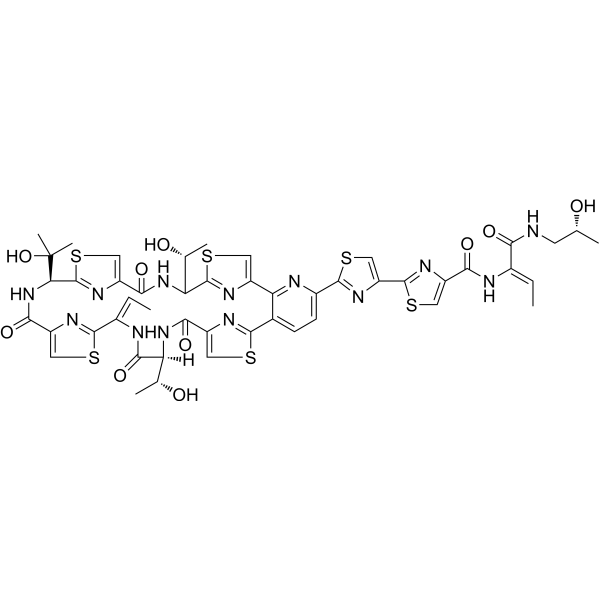 0 ImagesCat. No.: HY-125733CAS No.: 59979-01-0Thiocillin I is a thiopeptide antibiotic and has in vitro antibacterial activity against Gram-positive bacterial strains. The MIC values of Thiocillin I against S. aureus 1974149, E. faecalis 1674621, B. subtilis ATCC 6633 and S. pyogenes 1744264 are 2 μg/mL, 0.5 μg/mL, 4 μg/mL and 0.5 μg/mL, respectively.
-
Levulinic acid (Standard)
 0 ImagesSynonyms: 4-Oxovaleric acid (Standard); NSC 3716 (Standard); (Standard)Levulinic acid (Standard) is the analytical standard of Levulinic acid. This product is intended for research and analytical applications. Levulinic acid is a precursor for the synthesis of biofuels, such as ethyl levulinate.
-
(-)-Isoledene
 0 ImagesCat. No.: HY-N10608CAS No.: 95910-36-4(-)-Isoledene is a natural organic compound with antibacterial and anti-inflammatory activities. (-)-Isoledene has also been studied for the synthesis of a variety of compound intermediates, demonstrating its potential application in compound development.




