



Bacterial
Anything that destroys bacteria or suppresses their growth or their ability to reproduce. Heat, chemicals such as chlorine, and antibiotic drugs all have antibacterial properties. Many antibacterial products for cleaning and handwashing are sold today. Such products do not reduce the risk for symptoms of viral infectious diseases in otherwise healthy persons. This does not preclude the potential contribution of antibacterial products to reducing symptoms of bacterial diseases in the home.
All Product Categories
-
Bacterial Inhibitors
(7553)
View all products
-
Bacterial Agonists
(3)
View all products
-
Bacterial Antagonists
(9)
View all products
-
Bacterial Activators
(25)
View all products
-
Bacterial Modulators
(27)
View all products
-
Bacterial Chemicals
(2)
View all products
-
Bacterial Inducers
(6)
View all products
-
Bacterial Controls
(14)
View all products
-
Bacterial Substrates
(2)
View all products
-
Bacterial Ligand
(1)
View all products
-
Bacterial Related Products (8893)
Related Products (8893)

-
Antibodies (14)
-
Related Compound Screening Libraries (1)
-
Polymyxin P1
 0 ImagesCat. No.: HY-N15117CAS No.: 37331-24-1Polymyxin P1 is a lipopeptide antibiotic belonging to the Polymyxin family, and it is a secondary metabolite produced by the rhizosphere bacterium Paenibacillus polymyxa M-1. Polymyxin P1 binds to bacterial outer membrane lipopolysaccharides, permeabilizes cell membranes, and induces dense protrusions on the cell surface of phytopathogenic Erwinia strains. Polymyxin P1 inhibits the growth of phytopathogenic Erwinia amylovora and E. carotovora. Polymyxin P1 can be used for the research of fire blight and soft rot.
-
Rosuvastatin-13C,d3 sodium
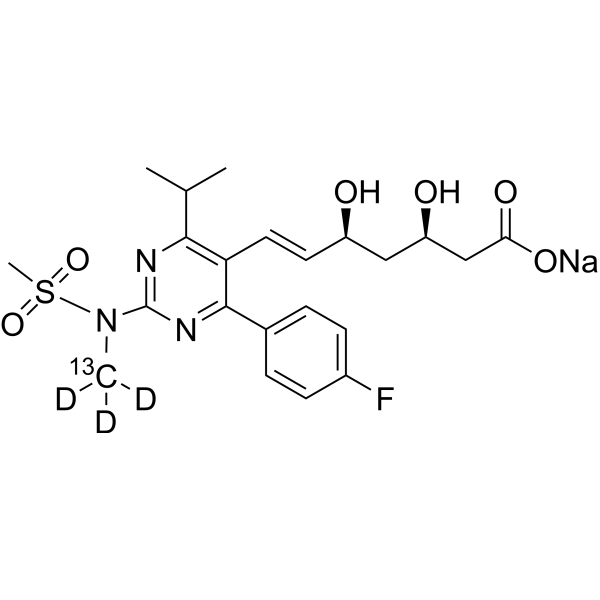 0 ImagesCat. No.: HY-17504BS2Purity: 98.31%Synonyms: ZD 4522-13C,d3 sodium; X-Plended-13C,d3 sodium; Crestor-13C,d3 sodiumRosuvastatin-13C,d3 sodium is 13C and deuterated labeled Rosuvastatin sodium (HY-17504B). Rosuvastatin Sodium is a competitive HMG-CoA reductase (HMGCR) inhibitor, with an IC50 of 11 nM. Rosuvastatin Sodium potently blocks hERG current with an IC50 of 195 nM. Rosuvastatin Sodium reduces the expression of the mature hERG and the interaction of heat shock protein 70 (Hsp70) with the hERG protein. Rosuvastatin Sodium effectively lowers low-density lipoprotein (LDL) cholesterol, triglycerides, and C-reactive protein levels.
-
Tetrahydrorhombifoline
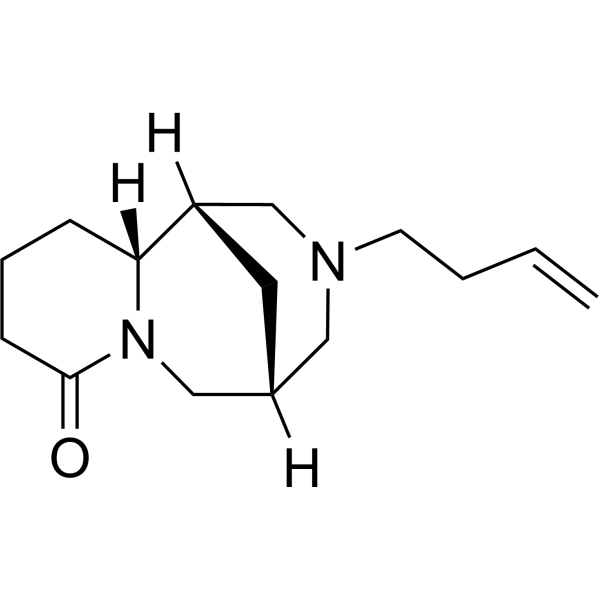 0 ImagesTetrahydrorhombifoline is one of quinolizidine alkaloids in the aerial parts of Genista vuralii A. Duran & H. Dural (Fabaceae). The alkaloid extract of G. vuralii has antibacterial and antifungal activities.
-
DL-Syringaresinol
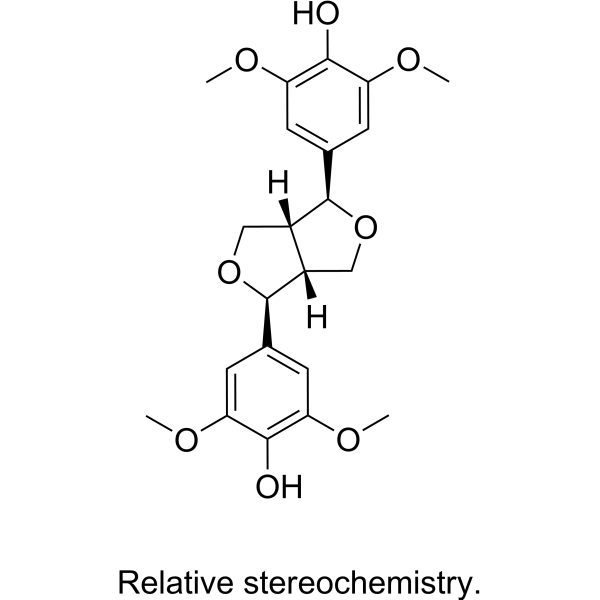 0 ImagesDL-Syringaresinol ((±)-Syringaresinol), a lignin, inhibits UVA-induced upregulation of MMP-1 by suppressing MAPK/AP-1 signaling in human HaCaT keratinocytes and dermal fibroblasts (HDFs). DL-Syringaresinol has antiphotoaging properties against UVA-induced skin aging. DL-Syringaresinol exhibits weak antimycobacterial activity against Mycobacterium tuberculosis H37Rv.
-
Sitafloxacin hydrate (Standard)
 0 ImagesSynonyms: DU6859a hydrate (Standard)Sitafloxacin (hydrate) (Standard) is the analytical standard of Sitafloxacin (hydrate). This product is intended for research and analytical applications. Sitafloxacin (DU6859a) hydrate is an orally active fluoroquinolone antibiotic (antibiotic) with in vitro activity against a wide range of Gram-positive and -negative bacteria, including anaerobic bacteria, as well as atypical pathogens. Sitafloxacin is used in the study of respiratory tract infections and urinary tract infections.
-
Antibacterial agent 350
 0 ImagesCat. No.: HY-185699CAS No.: 1394833-44-3Antibacterial agent 350 is a membrane stabilizer/disruptor with antibacterial activity. Antibacterial agent 350 reduces glucose-induced efflux efficiency and slightly impairs outer membrane stability. Antibacterial agent 350 significantly decreases the bacteriostatic MIC50 of Ceftazidime (HY-B0593) or Ciprofloxacin (HY-B0356), but increases the MIC50 of Amikacin (HY-B0509A). Antibacterial agent 350 can be used for the research of Pseudomonas aeruginosa infections.
-
Antibacterial agent 224
 0 ImagesCat. No.: HY-161752CAS No.: 16371-55-4Antibacterial agent 224 is a potent and selective synthetic hydrazone inhibitor against the Salmonella PhoP/PhoQ system.
-
Gilvocarcin V
 0 ImagesGilvocarcin V is an antibiotic with antibacterial activity and can be isolated from Actinomycete. Gilvocarcin V also has anti-tumor activity and can be used in cancer research.
-
Nalidixic acid (Standard)
 0 ImagesNalidixic acid (Standard) is the analytical standard of Nalidixic acid. This product is intended for research and analytical applications. Nalidixic acid, a quinolone antibiotic, is effective against both gram-positive and gram-negative bacteria. Nalidixic acid acts in a bacteriostatic manner in lower concentrations and is bactericidal in higher concentrations. Nalidixic acid inhibits a subunit of DNA gyrase and topoisomerase IV and reversibly blocks DNA replication in susceptible bacteria.
-
Clovibactin
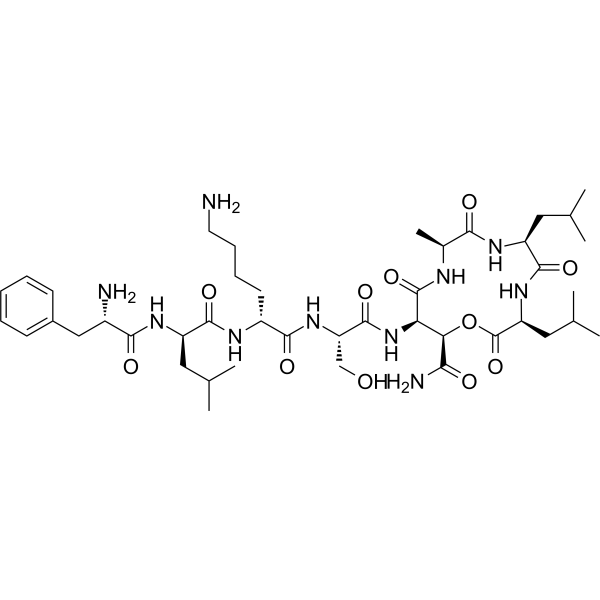 0 ImagesCat. No.: HY-P10027CAS No.: 2247194-77-8Clovibactin is an antibiotic for drug-resistant bacterial pathogens without detectable resistance. Clovibactin TFA inihibits cell wall synthesis by targeting pyrophosphate of peptidoglycan precursors.
-
Butylparaben (Standard)
 0 ImagesSynonyms: Butyl parahydroxybenzoate (Standard); Butyl paraben (Standard); Butyl 4-hydroxybenzoate (Standard)Butylparaben (Standard) is the analytical standard of Butylparaben. This product is intended for research and analytical applications. Butylparaben is an organic compound that has proven to be a very successful antimicrobial preservative in cosmetics, can also be used in active molecule suspensions, and as a food flavoring additive.
-
Sulfamethazine (Standard)
 0 ImagesSynonyms: Sulfadimidine (Standard); Sulfadimerazine (Standard)Sulfamethazine (Standard) is the analytical standard of Sulfamethazine (HY-B0035). This product is intended for research and analytical applications. Sulfamethazine (Sulfadimidine) is a brain-penetrant sulfonamide antibiotic. Sulfamethazine inhibits bacterial growth by blocking the synthesis of folic acid. Sulfamethazine can be used for research on bacterial infections.
-
Pyrocatechol sulfate
 0 ImagesPyrocatechol sulfate is a dietary phenolic metabolite and uremic toxin. Pyrocatechol sulfate can be derived from diet and gut Bacterial metabolism. Plasma levels of Pyrocatechol sulfate are sensitive to alcohol exposure and withdrawal, and are negatively correlated with anxiety, depression, and craving for alcohol in severe alcohol use disorder. Pyrocatechol sulfate can be used in studies related to chronic kidney disease and severe alcohol use disorder.
-
1-Kestose (Standard)
 0 Images1-Kestose (Standard) is the analytical standard of 1-Kestose. This product is intended for research and analytical applications. 1-Kestose, the smallest fructooligosaccharide component, which efficiently stimulates Faecalibacterium prausnitzii as well as Bifidobacteria.
-
Potassium silicate
 0 ImagesPotassium silicate acts as a silicon-containing foliar fertilizer and an inhibitor of rice blast. Foliar application of Potassium silicate to the susceptible rice cultivar 'Metica 1' reduces the incidence of rice blast caused by Pyricularia oryzae. Potassium silicate does not enhance silicon uptake or accumulation in rice plants. Potassium silicate can be used in studies related to rice blast.
-
DL-2-Aminopimelic Acid
 0 ImagesDL-2-Aminopimelic Acid is a weak agonist of glutamate receptors and also reduces the sensitivity of leech glutamate receptors to glutamate.
-
Brilacidin
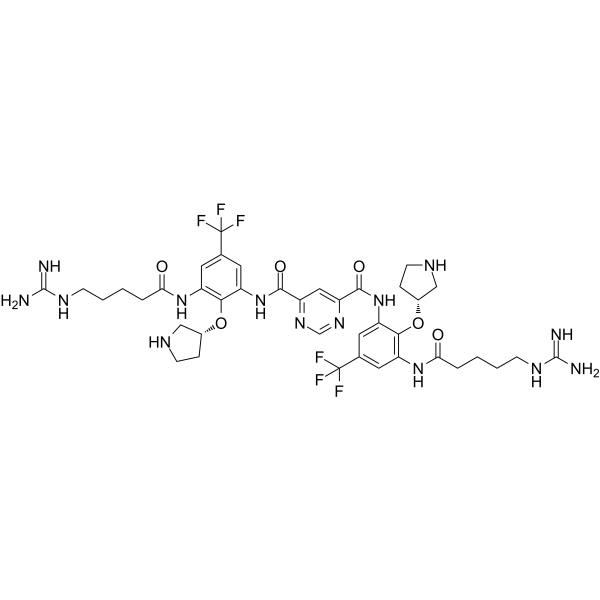 0 ImagesCat. No.: HY-19892CAS No.: 1224095-98-0Synonyms: PMX 30063Brilacidin (PMX 30063) is an anti-infective antimicrobial with MIC90s of 1 and 8 μg/mL for Gram-positive bacteria Streptococcus pneumonia and Streptococcus viridans, and MIC90 of 8 and 4 μg/mL for Gram-negative bacteria Haemophilus influenza and Pseudomonas aeruginosa. Brilacidin is a defensin mimetic antibiotic compound.
-
Methyl 3-hydroxydodecanoate
 0 ImagesMethyl 3-hydroxydodecanoate is a poly (3-hydroxyalkanoate) monomer. Methyl 3-hydroxydodecanoate can be produced with the involvement of Pseudomonas putida Bet001.
-
Ofloxacin (Standard)
 0 ImagesSynonyms: Hoe-280 (Standard)Ofloxacin (Standard) is the analytical standard of Ofloxacin. This product is intended for research and analytical applications. Ofloxacin (Hoe-280) is a fluoroquinolone whose primary mechanism of action is inhibition of bacterial DNA gyrase. Ofloxacin shows inhibitory activity against vaccinia virus (VV).




