



Bacterial
Anything that destroys bacteria or suppresses their growth or their ability to reproduce. Heat, chemicals such as chlorine, and antibiotic drugs all have antibacterial properties. Many antibacterial products for cleaning and handwashing are sold today. Such products do not reduce the risk for symptoms of viral infectious diseases in otherwise healthy persons. This does not preclude the potential contribution of antibacterial products to reducing symptoms of bacterial diseases in the home.
All Product Categories
-
Bacterial Inhibitors
(7553)
View all products
-
Bacterial Agonists
(3)
View all products
-
Bacterial Antagonists
(9)
View all products
-
Bacterial Activators
(25)
View all products
-
Bacterial Modulators
(27)
View all products
-
Bacterial Chemicals
(2)
View all products
-
Bacterial Inducers
(6)
View all products
-
Bacterial Controls
(14)
View all products
-
Bacterial Substrates
(2)
View all products
-
Bacterial Ligand
(1)
View all products
-
Bacterial Related Products (8893)
Related Products (8893)

-
Antibodies (14)
-
Related Compound Screening Libraries (1)
-
FTI-277
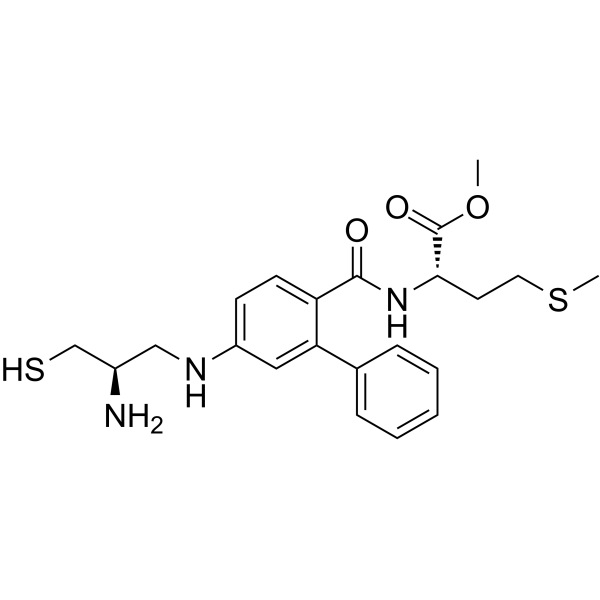 0 ImagesCat. No.: HY-15872CAS No.: 170006-73-2FTI-277 is a farnesyltransferase (FTase) inhibitor. FTI-277 inhibits Ras farnesylation, blocks the phosphorylation of downstream ERK1/2 and mTOR, and reduces membrane-bound active N-ras protein. FTI-277 activates caspase 3, upregulates Bim expression, induces cell apoptosis, suppresses regulatory T cell expansion, enhances macrophage phagocytosis, and improves bacterial clearance. FTI-277 activates the PI3K/Akt signaling pathway, inhibits osteoblast differentiation, and reduces the proliferation ability of neuroblastoma cells. FTI-277 can be used in research related to head and neck squamous cell carcinoma, neuroblastoma, sepsis, and vascular calcification.
-
Beauveriolide I
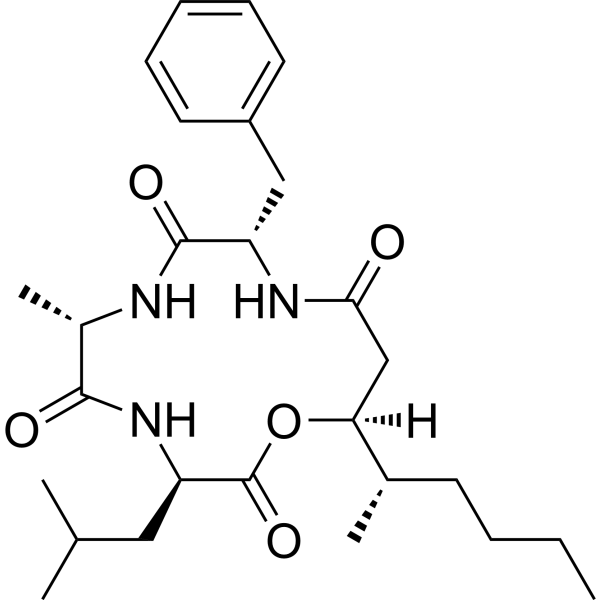 0 ImagesBeauveriolide I is an ACAT/SOAT inhibitor. Beauveriolide I selectively inhibits macrophage cholesteryl ester synthesis, blocks cholesteryl ester recycling, reduces cholesterol concentration, lipid droplet accumulation, and post-lysosomal cholesterol metabolism, and promotes the degradation of cholesteryl esters preferentially over triglycerides. Beauveriolide I reduces amyloid β peptide secretion. Beauveriolide I exhibits insecticidal and weak antibacterial activities. Beauveriolide I can be used in research on atherosclerosis, Alzheimer's disease, and cancer.
-
Methyl Paraben-13C6
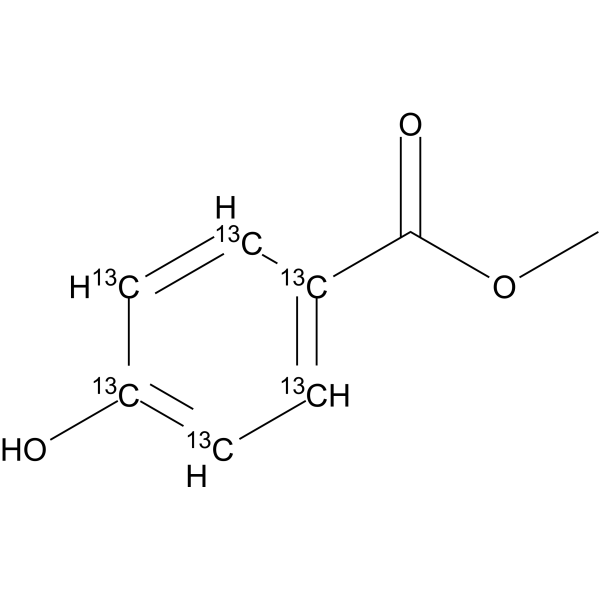 0 ImagesCat. No.: HY-N0349S1CAS No.: 1581694-95-2Synonyms: Methyl 4-hydroxybenzoate-13C6Methyl Paraben-13C6 (Methyl 4-hydroxybenzoate-13C6) is a 13C labeled Methyl Paraben (HY-N0349). Methyl Paraben, isolated from the barks of Tsuga dumosa the methyl ester of p-hydroxybenzoic acid, is a standardized chemical allergen. Methyl Paraben is a stable, non-volatile compound used as an antimicrobial preservative in foods, agents and cosmetics. The physiologic effect of Methyl Paraben is by means of increased histamine release, and cell-mediated immunity.
-
UDP-3-O-acyl-GlcNAc Tris
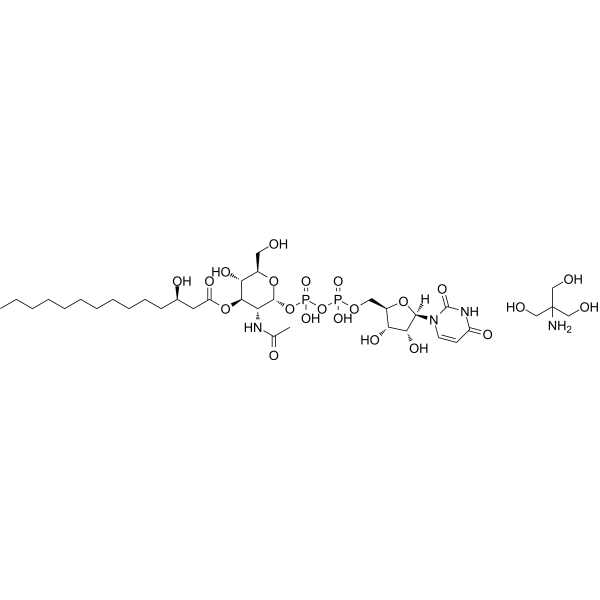 0 ImagesCat. No.: HY-W585865CAS No.: 112710-84-6Synonyms: UDP-3-O-(3-hydroxytetradecanoyl)-N-acetylglucosamine TrisUDP-3-O-acyl-GlcNAc Tris (UDP-3-O-(3-hydroxytetradecanoyl)-N-acetylglucosamine Tris) serves as a deacetylation substrate and biosynthetic intermediate in the biosynthetic pathways of lipid A and Kdo2-lipid A in Escherichia coli. UDP-3-O-acyl-GlcNAc Tris undergoes enzymatic deacetylation via LpxC to produce UDP-3-O-[(R)-3-hydroxymyristoyl]glucosamine and release acetate. UDP-3-O-acyl-GlcNAc Tris accumulates in Escherichia coli extracts in the absence of [(R)-3-hydroxymyristoyl]-acyl carrier protein. UDP-3-O-acyl-GlcNAc Tris can be used in studies related to Gram-negative shock.
-
Penicillin G benzathine tetrahydrate (Standard)
 0 ImagesSynonyms: Benzathine benzylpenicillin tetrahydrate (Standard)Penicillin G benzathine (tetrahydrate) (Standard) is the analytical standard of Penicillin G benzathine (tetrahydrate). This product is intended for research and analytical applications. Penicillin G benzathine tetrahydrate (Benzathine benzylpenicillin tetrahydrate) is an antibiotic against many bacterial infections.
-
3-(1-Carboxyvinyloxy)benzoic acid
 0 ImagesCat. No.: HY-169942CAS No.: 16929-37-63-(1-Carboxyvinyloxy)benzoic acid is an inhibitor of MbtI (Mycobacterium tuberculosis salicylate synthase) and AS (Serratia marcescens arginine synthase), with Ki values of 500 and 3.2 µM, respectively. 3-(1-Carboxyvinyloxy)benzoic acid has antibacterial activity and can be used in anti-infection research.
-
Myramistin
 0 ImagesSynonyms: MiramistinMyramistin (Miramistin) is a cationic surfactant and disinfectant preservative. Myramistin exhibits high bactericidal activity against Staphylococcus aureus and Escherichia coli, shows lower activity against yeasts and fungi, and is active against HIV, measles virus, mumps virus, as well as influenza viruses of the H3N2 and H5N1 subtypes. Myramistin adsorbs to the negatively charged microbial cell membrane, leading to increased membrane permeability and disruption of membrane integrity, which ultimately results in leakage of intracellular contents, enzyme inactivation, and the death of bacteria/fungi/enveloped viruses.
-
Zinc Pyrithione (Standard)
 0 ImagesZinc Pyrithione (Standard) is the analytical standard of Zinc Pyrithione. This product is intended for research and analytical applications. Zinc Pyrithione is an antifungal and antibacterial agent disrupting membrane transport by blocking the proton pump. Zinc Pyrithione is also a copper ionophore that delivers copper into cells and is a useful tool for studying cuproptosis.
-
7-(Carboxymethoxy)-4-methylcoumarin
 0 Images7-(Carboxymethoxy)-4-methylcoumarin (Compound VIIIa) is the antibacterial and antifungal agent that exhibits inhibitory activity against S. aureus, B. cereus, S. lutea, C. albicans, C. glabrata, and C. parapsilosis.
-
Tigecycline mesylate
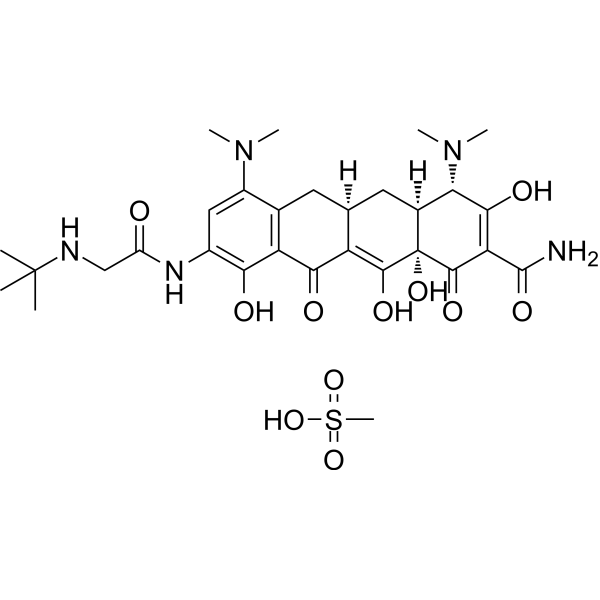 0 ImagesCat. No.: HY-B0117BCAS No.: 1135871-27-0Synonyms: GAR-936 mesylateTigecycline mesylate (GAR-936 mesylate) is a broad-spectrum glycylcycline antibiotic. The mean inhibitory concentration (MIC) of Tigecycline for E. coli (MG1655 strain) is approximately 125 ng/mL. MIC50 and MIC90 are 1 and 2 mg/L for Acinetobacter baumannii (A. baumannii), respectively.
-
Mandelic Acid-13C8
 0 ImagesSynonyms: (±)-Mandelic acid-13C8; DL-Mandelic acid-13C8Mandelic Acid-13C8 ((±)-Mandelic acid-13C8) is the 13C-labeled Mandelic acid (HY-W015591). Mandelic acid ((±)-Mandelic acid), an alpha-hydroxycarboxylic acid, has been widely used as an intermediate of pharmaceutical and fine chemicals. Mandelic acid shows antimicrobial activity and has been used for the research of urinary tract infections and vaginal trichomoniasis. Mandelic acid exhibits high sperm-immobilizing activity and low vaginal irritation.

-
Cefoselis
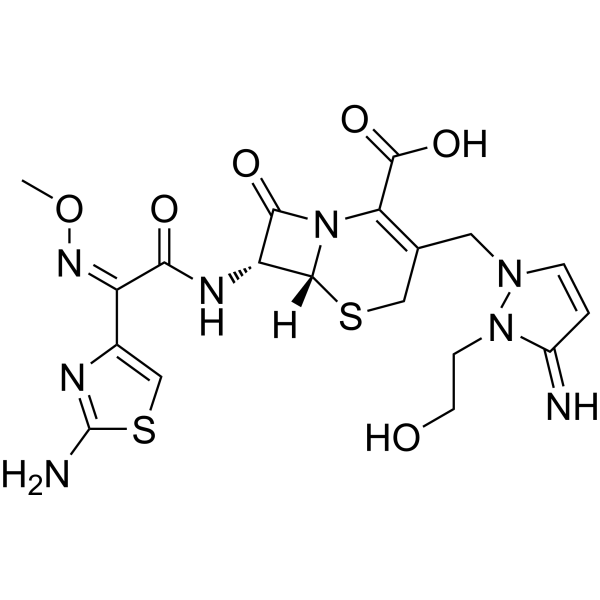 0 ImagesCat. No.: HY-B0186CAS No.: 122841-10-5Cefoselis, the fourth gen-eration of cephalosporin, is a β-lactam antibiotic. Cefoselis exhibits good activity against a wide range of Gram-positive and Gram-negative organisms. Cefoselis penetrates the blood-brain barrier.
-
Dienone B
 0 ImagesCat. No.: HY-121922CAS No.: 17194-81-9Synonyms: DibromoverongiaquinolDienone B is a marine algicide with antibiotic activity against both Gram-positive and Gram-negative marine bacteria.
-
Protionamide-d7
 0 ImagesCat. No.: HY-W654329CAS No.: 2468639-68-9Protionamide-d7 is deuterium labeled Prothionamide. Protionamide (prothionamide) acts on tuberculosis and leprosy.
-
Methylprednisolone-d3-1
 0 ImagesCat. No.: HY-B0260S6CAS No.: 2280940-15-8Synonyms: U 7532-d3-1Methylprednisolone-d3-1 (U 7532-d3-1) is the deuterium labeled Methylprednisolone (HY-B0260). Methylprednisolone (U 7532) is a synthetic corticosteroid with anti-inflammatory and immunomodulating properties. Methylprednisolone improve severe or critical COVID-19 by activating ACE2 and reducing IL-6 levels.
-
Oleuropeic acid 8-O-glucoside
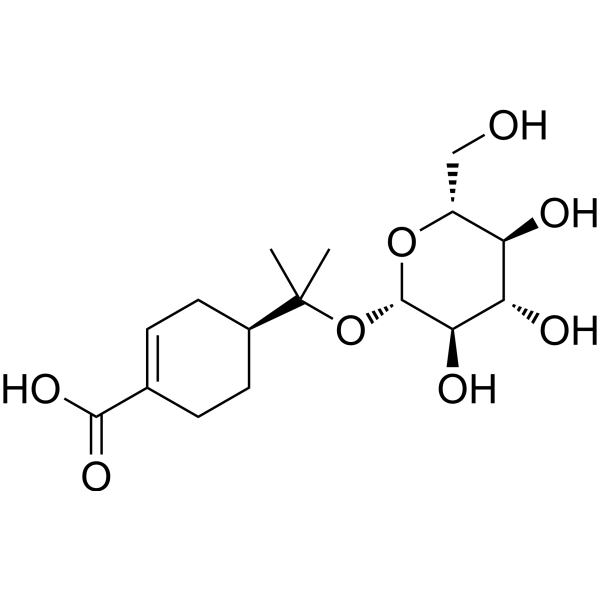 0 ImagesCat. No.: HY-N3142CAS No.: 865887-46-3Oleuropeic acid 8-O-glucoside is a terpenic compound, that can be isolated from twigs with leaves of Juniperus communis var. depressa. Oleuropeic acid 8-O-glucoside shows antibacterial activity against three strains of Helicobacter pylori (NCTC11637, NCTC11916, and OCO1), with MIC of 100 μg/mL all.
-
Anticaries agent-1
 0 ImagesCat. No.: HY-401757CAS No.: 198649-97-7Anticaries agent-1 (Compound 21b) is an anticaries agent. Anticaries agent-1 inhibits biofilm formation (IC50: 77 μM) and S. mutans growth.
-
Bacampicillin
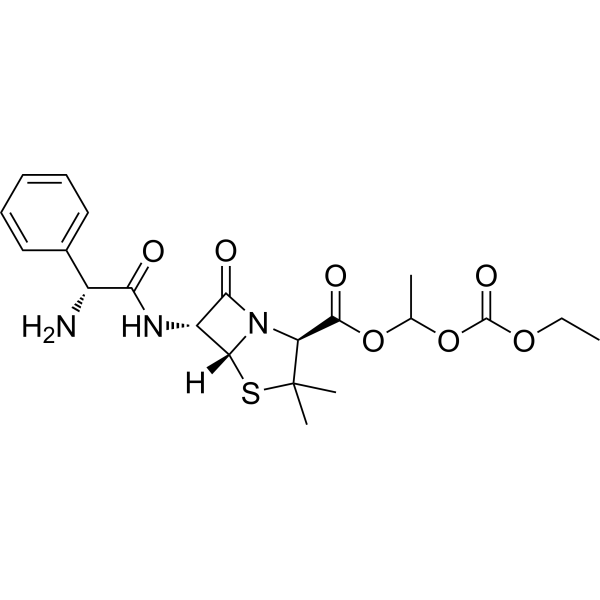 0 ImagesCat. No.: HY-B1149CAS No.: 50972-17-3Bacampicillin is an orally active semi-synthetic aminopenicillin derivative, prodrug and bactericide that is readily inactivated by β-lactamases. Bacampicillin is hydrolyzed by carboxylester hydrolases and non-specific esterases in the gastrointestinal wall and plasma to form Ampicillin (HY-B0522), and produces higher levels of Ampicillin in rodents in vivo. Bacampicillin exhibits bactericidal activity against Gram-positive and Gram-negative bacteria. Bacampicillin can be used in studies related to bacterial infections.
-
Polymyxin B1-d7 TFA
 0 ImagesCat. No.: HY-A0248ASPurity: 98.18%Polymyxin B1-d7 TFA is the deuterium labeled Polymyxin B1 TFA (HY-A0248A). Polymyxin B1 is a potent antimicrobial lipopeptide first derived from Bacilus polymyxa. Polymyxin B1 is the major component in Polymyxin B (HY-A0248). Polymyxin B1 can induce lysis of bacterial cells through interaction with their membranes. Polymyxin B1 has the potential for multidrug-resistant Gram-negative bacterial infections treatment.




