



Bacterial
Anything that destroys bacteria or suppresses their growth or their ability to reproduce. Heat, chemicals such as chlorine, and antibiotic drugs all have antibacterial properties. Many antibacterial products for cleaning and handwashing are sold today. Such products do not reduce the risk for symptoms of viral infectious diseases in otherwise healthy persons. This does not preclude the potential contribution of antibacterial products to reducing symptoms of bacterial diseases in the home.
All Product Categories
-
Bacterial Inhibitors
(7553)
View all products
-
Bacterial Agonists
(3)
View all products
-
Bacterial Antagonists
(9)
View all products
-
Bacterial Activators
(25)
View all products
-
Bacterial Modulators
(27)
View all products
-
Bacterial Chemicals
(2)
View all products
-
Bacterial Inducers
(6)
View all products
-
Bacterial Controls
(14)
View all products
-
Bacterial Substrates
(2)
View all products
-
Bacterial Ligand
(1)
View all products
-
Bacterial Related Products (8893)
Related Products (8893)

-
Antibodies (14)
-
Related Compound Screening Libraries (1)
-
3-Oxo-C16:1
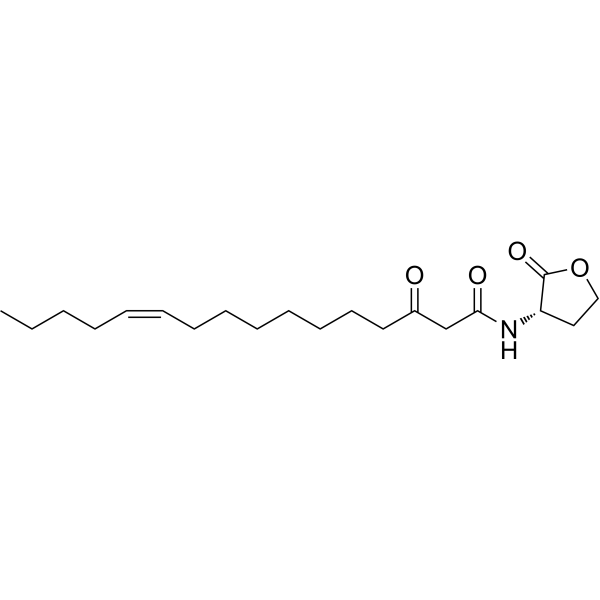 0 Images3-Oxo-C16:1 could induce changes in root protein production in the model legume Medicago truncatula. 3-Oxo-C16:1 is an unsaturated 16-carbon AHL utilized by species such as S. meliloti and Agrobacterium vitus.
-
Arsenobetaine
 0 ImagesArsenobetaine is an organoarsenical and a compatible solute that has been found in various marine animals, such as lobsters and crabs, as well as terrestrial organisms, including earthworms and lichens. Arsenobetaine is protective against B. subtilis cell death induced by high osmolarity or extreme temperatures when used at a concentration of 1 mM.
-
AZD5099
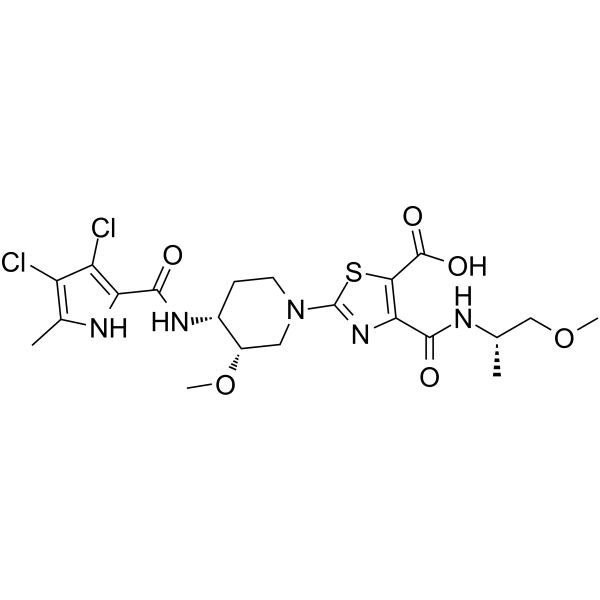 0 ImagesAZD5099 is an orally effective pyrrole amide inhibitor and antibacterial agent. AZD5099 shows over 10000-fold higher selectivity for bacterial type II topoisomerases than for human topoisomerase IIα, with a IC50 value of 0.032 μmol/L against Staphylococcus aureus GyrB, a IC50 of 0.760 μmol/L against Escherichia coli GyrB, a IC50 of 73 nM against Escherichia coli ParE, a Kd of 83.8 nmol/L for Staphylococcus aureus GyrB, and a IC50 of >50 μM against human topoisomerase IIα. AZD5099 inhibits rat Mrp2 ATPase activity, competitively binds to the ATP-binding site of bacterial type II topoisomerases, blocks enzyme activity, reduces bacterial DNA and RNA synthesis, disrupts DNA replication and transcription processes, and induces mitochondrial toxicity. AZD5099 exhibits activity against Gram-positive bacteria, fastidious Gram-negative bacteria and drug-resistant strains, reduces bacterial loads in mouse infection models, and has a low spontaneous resistance frequency. AZD5099 can be used in studies related to infections caused by Gram-positive bacteria and fastidious Gram-negative bacteria, methicillin-resistant Staphylococcus aureus infections, Streptococcus pneumoniae pulmonary infections, as well as Staphylococcus aureus and Escherichia coli infections.
-
4,5,6,7-Tetrahydroindazole
 0 ImagesCat. No.: HY-W066579CAS No.: 2305-79-54,5,6,7-Tetrahydroindazole acts as an Antimicrobial agent, an interleukin-2-induced T-cell kinase inhibitor, a positive allosteric modulator of AMPA receptors, and a ligand for CYP2E1, with a Kd1 value of 0.023 μM for its binding to rabbit-derived CYP2E1. 4,5,6,7-Tetrahydroindazole scavenges DPPH free radicals. It exhibits anti-tumor, anti-tuberculosis, and anti-inflammatory activities.
-
BacPROTAC-1
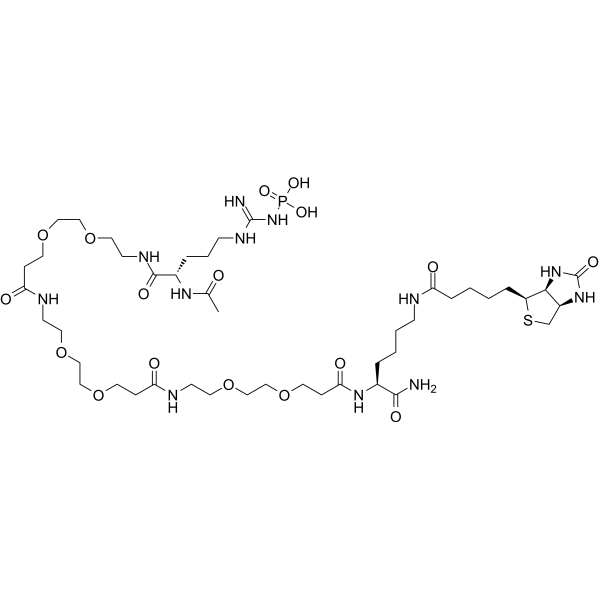 0 ImagesCat. No.: HY-153575BacPROTAC-1 is a BacPROTAC degrader that induces the degradation of the target protein mSA by recruiting ClpC/ClpC1. BacPROTAC-1 binds to mSA, Bacillus subtilis ClpCNTD and Mycobacterium smegmatis ClpC1NTD with Kd values of 3.9, 2.8 and 0.69 μM, respectively. BacPROTAC-1 forms a ternary complex between the substrate and ClpC, promotes ClpC reassembly and activation, and induces ATP-dependent degradation of mSA and mSA fusion model substrates via the ClpCP or ClpC1P1P2 protease system. BacPROTAC-1 can be used in studies on bacterial targeted protein degradation, bacterial protein homeostasis and antibacterial target discovery.
-
Bicyclomycin
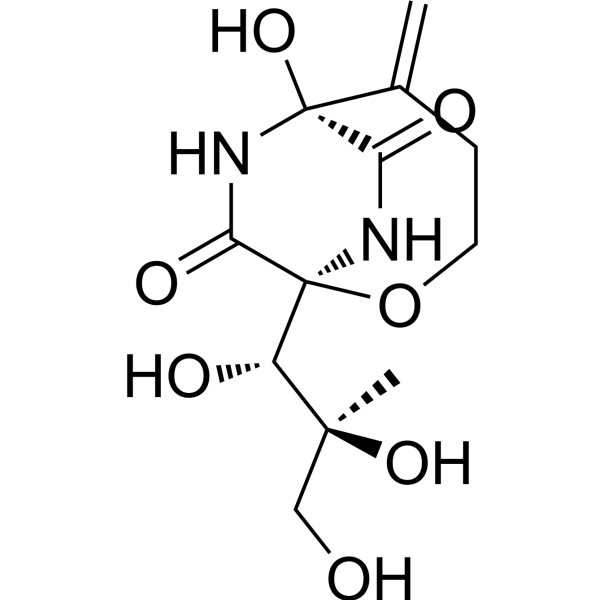 0 ImagesCat. No.: HY-122071CAS No.: 38129-37-2Bicyclomycin is an antibiotic. Bicyclomycin exhibits selective antibacterial activity against Gram-negative bacteria such as Escherichia coli and Klebsiella spp., with no cross-resistance. Bicyclomycin is applicable to the research of infectious diseases.
-
Doripenem monohydrate (Standard)
 0 ImagesSynonyms: S 4661 monohydrate (Standard)Doripenem (monohydrate) (Standard) is the analytical standard of Doripenem (monohydrate). This product is intended for research and analytical applications. Doripenem (S 4661) monohydrate, a 1β-methyl parenteral carbapenem, has very broad-spectrum activity against Gram-positive and Gram-negative aerobic bacteria.
-
BMAP-18
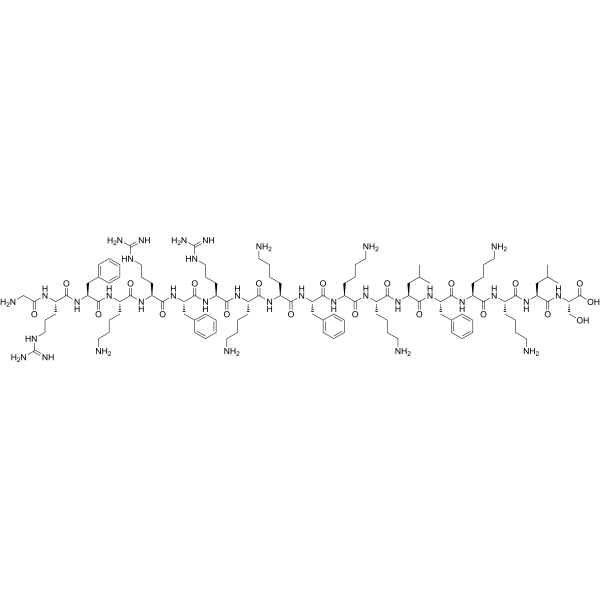 0 ImagesBMAP-18 is a biological active peptide. (BMAP-18 is a truncated form of the antimicrobial peptide BMAP-27. Bovine myeloid antimicrobial peptide-27 (BMAP-27) belongs to the Cathelicidin family of peptides which displays rapid bactericidal activity against Staphylococcus aureus, Streptococcus uberis, and Escherichia coli. BMAP-27 is cytotoxic to human erythrocytes and neutrophils, although at higher than microbicidal concentrations. BMAP-18 displays much higher cell selectivity as compared to parental BMAP-27 because of its decreased hemolytic activity and retained antimicrobial activity.)
-
D-Homoserine lactone
 0 ImagesCat. No.: HY-W554514CAS No.: 51744-82-2D-Homoserine lactone is a signaling molecule with the activity of regulating bacterial quorum sensing. The chemical structure of D-Homoserine lactone makes it a potential regulator of the AHL synthase RhlI. D-Homoserine lactone has been shown to inhibit the activity of RhlI, thereby affecting the bacterial quorum sensing signaling pathway. D-Homoserine lactone is also an enantiomer of L-homoserine lactone and is used as an inhibitor of serine hydroxymethyltransferase.
-
Propyl paraben-13C6
 0 ImagesCat. No.: HY-W654020CAS No.: 2075718-26-0Synonyms: Propyl parahydroxybenzoate-13C6; Propyl 4-hydroxybenzoate-13C6Propyl paraben-13C6 (Propyl parahydroxybenzoate-13C6) is 13C labeled Propylparaben. Propylparaben (Propyl parahydroxybenzoate) is an antibacterial preservative that can be produced by plants and bacteria. Propylparaben is commonly used in cosmetics, pharmaceuticals and foods. Propylparaben disrupts follicular growth and steroidogenic function by altering cell cycle, apoptosis and steroidogenic pathways. Propylparaben also reduced sperm count and motility in rats.
-
Berberine chloride (Standard)
 0 ImagesSynonyms: Natural Yellow 18 chloride (Standard)Berberine (chloride) (Standard) is the analytical standard of Berberine (chloride). This product is intended for research and analytical applications. Berberine chloride is an alkaloid that acts as an antibiotic. Berberine chloride induces reactive oxygen species (ROS) generation and inhibits DNA topoisomerase. Antineoplastic properties.
-
(±)15-HEPE
 0 ImagesCat. No.: HY-130675CAS No.: 88852-33-9Synonyms: (±)15-hydroxyeicosapentaenoic acid; 15-OHEPA(±)15-HEPE is a racemic mixture of the monohydroxy fatty acids 15(R)-HEPE and 15(S)-HEPE (HY-130675A). (±)15-HEPE is active against P. acnes and S. aureus (MICs = 128 and 512 mg/L, respectively). It inhibits aggregation of isolated rat neutrophils induced by the formyl peptide receptor agonist fMLP (IC50 = 4.7 µM). Bronchoalveolar lavage fluid (BALF) levels of (±)15-HEPE are increased in patients with allergic asthma or COVID-19.
-
Sapindoside B
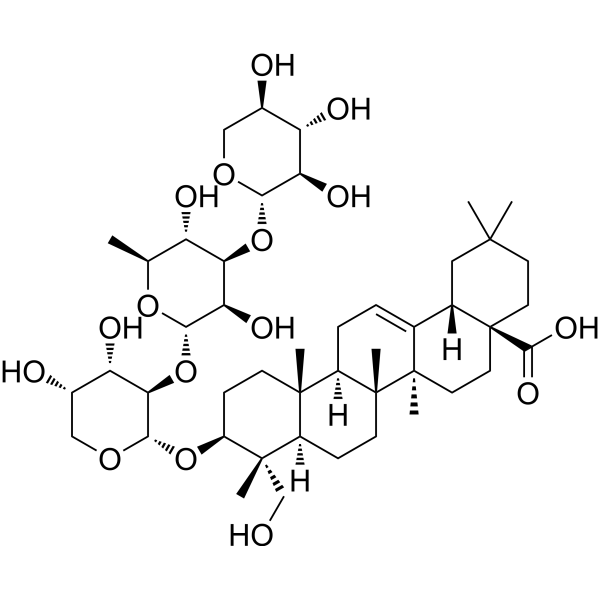 0 ImagesCat. No.: HY-N11546CAS No.: 30994-75-3Sapindoside B is a substance with hepatoprotective activity, and also acts as a cytochrome P-450 (cytochrome P-450) inhibitor, antibacterial agent and membrane-disrupting agent. Sapindoside B reversibly inhibits the content of cytochrome P-450 in liver microsomes, suppresses the phenobarbital-induced increase in enzyme content, reduces the production of active metabolites mediated by cytochrome P-450, and alleviates hepatotoxic injury. Sapindoside B binds to Cutibacterium acnes lipase, reduces lipase activity, inhibits biofilm formation, and decreases bacterial adhesion. Sapindoside B exhibits cytotoxicity against human cancer, liver cancer, leukemia and glioblastoma cells. Sapindoside B inhibits mycelial growth of phytopathogenic fungal strains, possesses antibacterial activity against dermatophytes, and also has hemolytic/membrane-lytic activity. Sapindoside B can be used in research related to liver injury, Cutibacterium acnes biofilm-associated infections, gastric cancer, carcinoma, promyelocytic leukemia, glioblastoma, apple scab and grape gray mold.
-
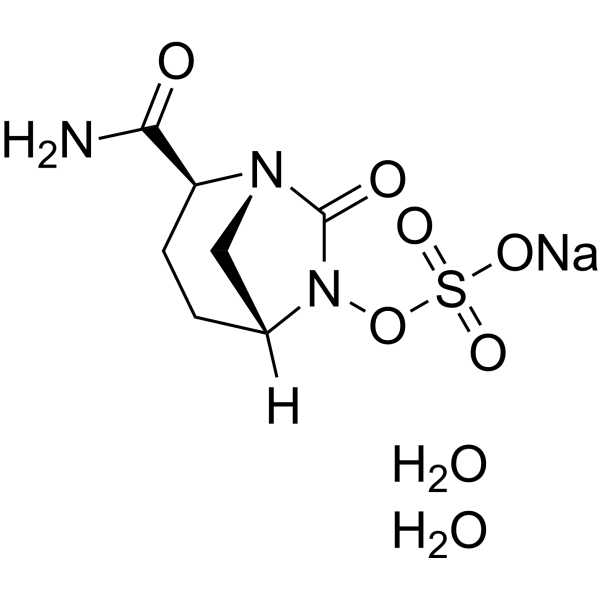
Ornidazole diol
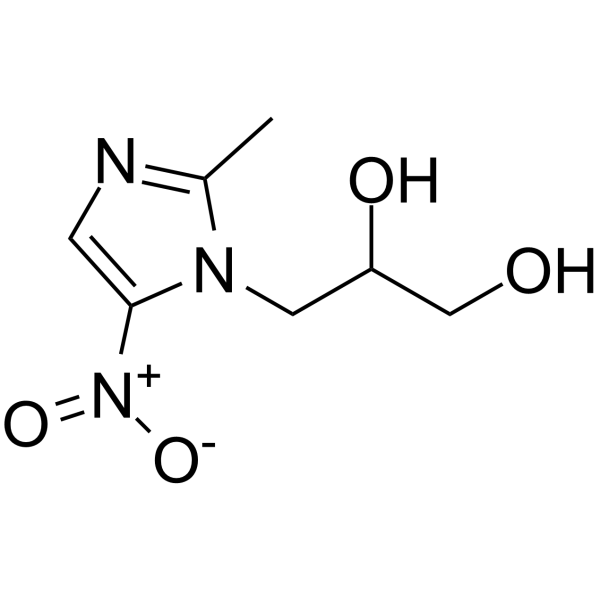 0 ImagesSynonyms: Ro 11-2616Ornidazole diol (Ro 11-2616) is the diol of Ornidazole (HY-B0508) which is rapidly hydrolyzed in alkaline solution. Ornidazole (Ro 7-0207) is a 5-nitroimidazole derivative that is antiprotozoan and anaerobic.
-
Itraconazole solution
 0 ImagesCat. No.: HY-FL17514CAS No.: 84625-61-6Synonyms: R51211 solutionItraconazole solution is mainly composed of Itraconazole (HY-17514). Itraconazole (R51211) is a triazole antifungal agent and a potent and orally active Hedgehog (Hh) signaling pathway antagonist with an IC50 of ~800 nM. Itraconazole potently inhibits lanosterol 14α-demethylase (cytochrome P450 enzyme), thereby inhibits the oxidative conversion of lanosterol to ergosterol. Itraconazole has anticancer and antiangiogenic effects. Itraconazole is a oxysterol-binding protein (OSBP) inhibitor.
-
OX11
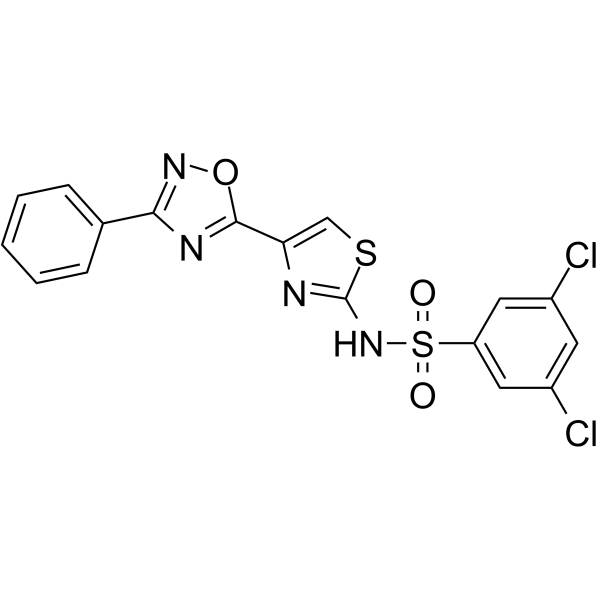 0 ImagesCat. No.: HY-139982CAS No.: 2414598-74-4OX11 is a selective inhibitor of S. pneumoniae, P. aeruginosa, and E. coli bacterial strains.
-
Amikacin liposome
 0 ImagesCat. No.: HY-185398Synonyms: Amikacin disulfate liposome; Liposomal amikacinAmikacin liposome is a liposome-encapsulated form of Amikacin disulfate (HY-B0509B), an aminoglycoside antibiotic with antibactericidal avtivity. Amikacin liposome prolongs the release of amikacin in the lungs and reduces systemic exposure, thereby lowering systemic toxicity.
-
4-Aminosalicylic acid hemicalcium
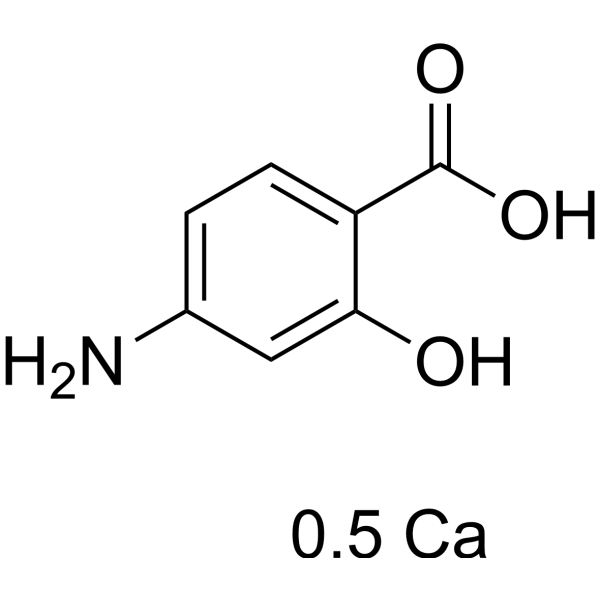 0 Images4-Aminosalicylic acid hemicalcium is an inhibitor for dihydrofolate reductase (DHFR) and an antituberculous agent. 4-Aminosalicylic acid hemicalcium exhibits anti-inflammatory activity and can be used in research of inflammatory bowel disease (IBD). 4-Aminosalicylic acid hemicalcium is orally active.




