



Discoidin Domain Receptor
Discoidin domain receptors (DDRs) are members of the transmembrane receptor tyrosine kinase (RTK) superfamily which are distinguished from others by the presence of a discoidin motif in the extracellular domain and their utilization of collagens as internal ligands. Two types of DDRs, DDR1 and DDR2, have been identified with distinct expression profiles and ligand specificities.
Upon collagen binding, DDRs transduce cellular signaling involved in various cell functions, including cell adhesion, proliferation, differentiation, migration, and matrix homeostasis. Altered DDR function resulting from either mutations or overexpression has been implicated in several types of disease, including atherosclerosis, inflammation, cancer, and tissue fibrosis. DDRs have been considered as novel potential molecular targets for drug discovery and increasing efforts are being devoted to the identification of new small molecule inhibitors targeting the receptors.
Discoidin Domain Receptor Isoform Specific Products
All Product Categories
-
Discoidin Domain Receptor Inhibitors
(45)
View all products
-
Discoidin Domain Receptor Activator
(1)
View all products
-
Discoidin Domain Receptor Modulators
(2)
View all products
-
Discoidin Domain Receptor Degraders
(2)
View all products
-
Discoidin Domain Receptor Ligands
(3)
View all products
-
DDR1/CD167a Proteins
(12)
View all products
-
DDR2 Proteins
(10)
View all products
-
Discoidin Domain Receptor Related Products (58)
Related Products (58)

-
Recombinant Proteins (22)
-
Antibodies (1)
-
Discoidin Domain Receptor Isoform Comparison
-
LLC355
 0 ImagesCat. No.: HY-162540Purity: 99.71%LLC355 is a discoidin domain receptor 1 (DDR1) ATTEC degrader with a DC50 of 150.8 nM. LLC355 induces DDR1 protein degradation via lysosome-mediated autophagy. LLC355 inhibits the tumorigenicity, migration and invasion abilities of cancer cells, and induces apoptosis. LLC355 is applicable to research related to non-small cell lung cancer and pancreatic cancer.
-
Merestinib dihydrochloride
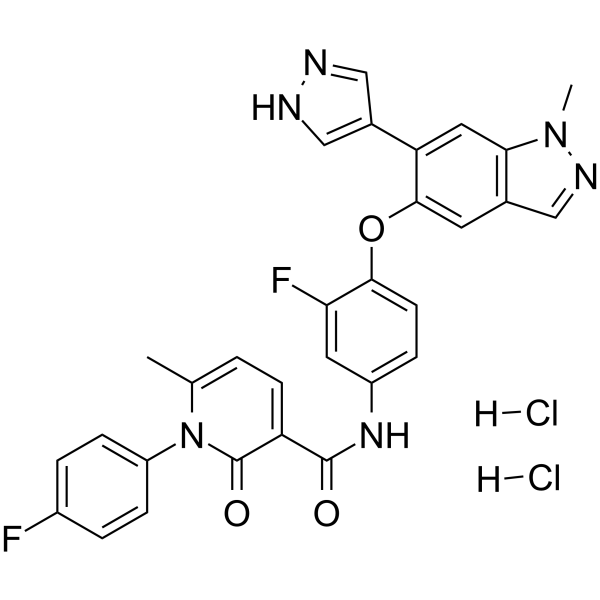 0 ImagesSynonyms: LY2801653 dihydrochlorideMerestinib dihydrochloride (LY2801653 dihydrochloride) is a potent, orally bioavailable c-Met inhibitor (Ki=2 nM) with anti-tumor activities. Merestinib dihydrochloride also has potent activity against MST1R (IC50=11 nM), FLT3 (IC50=7 nM), AXL (IC50=2 nM), MERTK (IC50=10 nM), TEK (IC50=63 nM), ROS1, DDR1/2 (IC50=0.1/7 nM) and MKNK1/2 (IC50=7 nM).
-
DDR1-IN-5
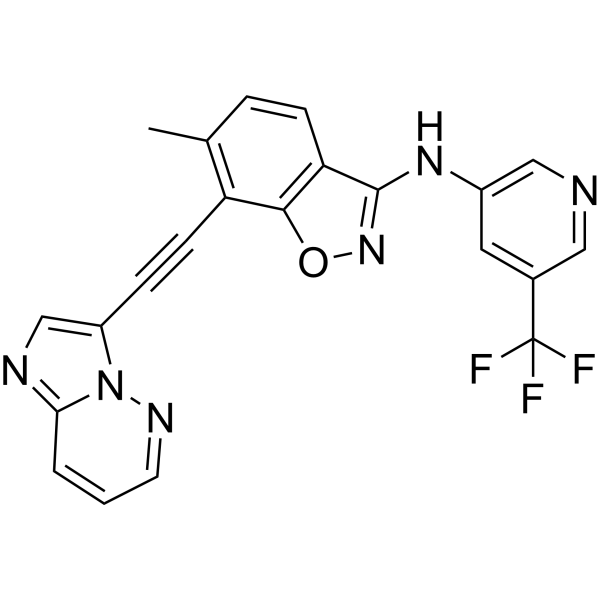 0 ImagesDDR1-IN-5 is a selective Discoidin Domain Receptor family, member 1 (DDR1) inhibitor with an IC50 of 7.36 nM. DDR1-IN-5 inhibits auto-phosphorylation DDR1b (Y513) with an IC50 of 4.1 nM. DDR1-IN-5 has anti-cancer activity. DDR1-IN-5 is a click chemistry reagent, it contains an Alkyne group and can undergo copper-catalyzed azide-alkyne cycloaddition (CuAAc) with molecules containing Azide groups.
-
PROTAC DDR1 degrader-1
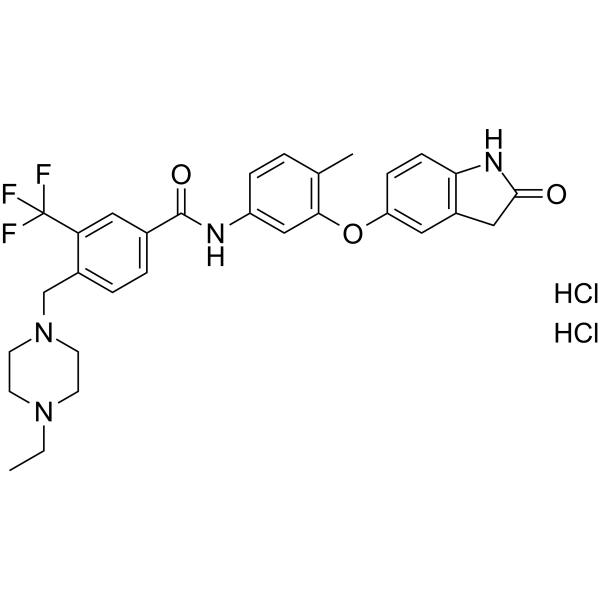
 0 ImagesPROTAC DDR1 degrader-1 is a potent and selective DDR1-targeting PROTAC degrader. PROTAC DDR1 degrader-1 selectively induces full-length DDR1 degradation via the ubiquitin proteasome system, blocking downstream signaling pathways. PROTAC DDR1 degrader-1 inhibits tumor cell migration and invasion. PROTAC DDR1 degrader-1 exhibits anti-tumor activity in mice. PROTAC DDR1 degrader-1 can be used for the research of DDR1-driven cancers.
-
SR-302
 0 ImagesSR-302, a chemical probe, is a potent and selectivity DDR/p38 inhibitor, with IC50 values of 0.125, 0.023 and 0.018 μM for p38α, DDR1 and DDR2, respectively. SR-302 can be used for the research of fibrotic disorders, such as renal and pulmonary fibrosis, atherosclerosis, and various forms of cancer.
-
DDR-TRK-1
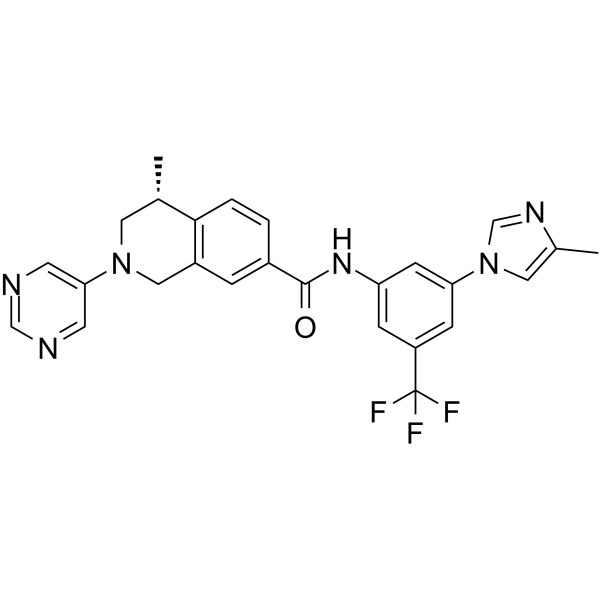 0 ImagesDDR-TRK-1, a chemical probe, is a selective Discoidin Domain Receptor 1 (DDR1) inhibitor, with an IC50 value of 9.4 nM. DDR-TRK-1 also inhibits TRK family.


-
CIDD-8633
 0 ImagesCat. No.: HY-175202CAS No.: 1428356-95-9CIDD-8633 is a potent DDR2 inhibitor with an IC50 of 6.105 μM. CIDD-8633 inhibits cell migration and halts the cell cycle and induces apoptosis, significantly suppressing pancreatic ductal adenocarcinoma (PDAC) tumor growth. CIDD-8633 can be used for the study of pancreatic cancer such as PDAC.
-
DDR1-IN-9
 0 ImagesDDR1-IN-9 is a selective inhibitor of DDR1 with significant kinase activity suppression, exhibiting a Kd value of 4.7 nM and an IC50 value of 9.4 nM. DDR1-IN-9 demonstrates reduced potency against a diverse panel of 400 nonmutated kinases, indicating its specificity. Additionally, DDR1-IN-9 shows favorable pharmacokinetic properties and potential therapeutic effects in a model of pulmonary fibrosis.
-
Sitravatinib malate
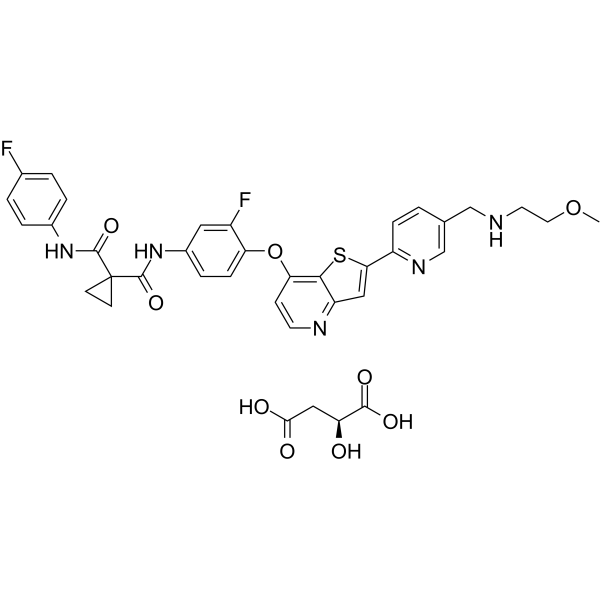 0 ImagesCat. No.: HY-16961ACAS No.: 2244864-88-6Synonyms: MGCD516 malate; MG-516 malateSitravatinib malate (MGCD516 malate) is an orally bioavailable receptor tyrosine kinase (RTK) inhibitor with IC50s of 1.5 nM, 2 nM, 2 nM, 5 nM, 6 nM, 6 nM, 8 nM, 0.5 nM, 29 nM, 5 nM, and 9 nM for Axl, MER, VEGFR3, VEGFR2, VEGFR1, KIT, FLT3, DDR2, DDR1, TRKA, TRKB, respectively. Sitravatinib malate shows potent single-agent antitumor efficacy and enhances the activity of PD-1 blockade through promoting an antitumor immune microenvironment.
-
CHMFL-ABL/KIT-155
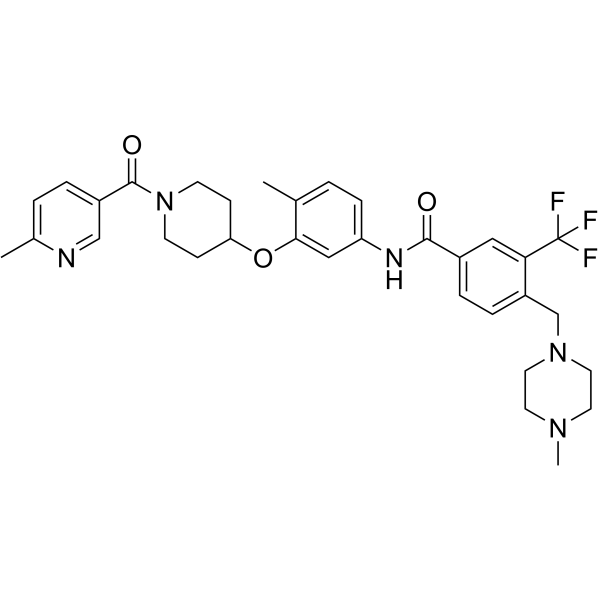 0 ImagesCat. No.: HY-101034CAS No.: 2081093-21-0Synonyms: CHMFL-ABL-KIT-155CHMFL-ABL/KIT-155 (CHMFL-ABL-KIT-155; compound 34) is a highly potent and orally active type II ABL/c-KIT dual kinase inhibitor (IC50s of 46 nM and 75 nM, respectively), and it also presents significant inhibitory activities to BLK (IC50=81 nM), CSF1R (IC50=227 nM), DDR1 (IC50=116 nM), DDR2 (IC50=325 nM), LCK (IC50=12 nM) and PDGFRβ (IC50=80 nM) kinases. CHMFL-ABL/KIT-155 (CHMFL-ABL-KIT-155) arrests cell cycle progression and induces apoptosis.
-
DDR2 T654M Recombinant Human Active Protein Kinase
 0 ImagesCat. No.: HY-E70694Discoidin domain receptor 2 (DDR2) is a sensor for collagen and by participating in migration, proliferation, and extracellular matrix remodeling. DDR2 T654M is a DDR2 mutation. DDR2 T654M Recombinant Human Active Protein Kinase is a recombinant DDR2 T654M protein that can be used to study DDR2 T654M-related functions.
-
DDR1-IN-10
 0 ImagesCat. No.: HY-169741CAS No.: 3038810-90-8DDR1-IN-10 (compound 7q) is a DDR1 inhibitor. DDR1-IN-10 can be used in the study of pancreatic cancer, non-small cell lung cancer, and gastric carcinoma.
-
Anti-Mouse DDR2 Antibody (DAB0065)
 0 ImagesCat. No.: HY-P992066Anti-Mouse DDR2 Antibody (DAB0065) is a mAb that specifically targets mouse discoidin domain receptor DDR2 without cross-reacting with DDR1. Anti-Mouse DDR2 Antibody (DAB0065) binds to the extracellular domain of native mouse DDR2, induces endocytosis and lysosomal degradation of DDR2, and this process is independent of collagen binding. Anti-Mouse DDR2 Antibody (DAB0065) exhibits significant therapeutic effects in both the unilateral ureteral obstruction (UUO) mouse model of renal fibrosis and the bleomycin (HY-108345)-induced mouse model of pulmonary fibrosis, effectively downregulating the mRNA expression of type I collagen Col1a1 and fibronectin Fn1. Anti-Mouse DDR2 Antibody (DAB0065) can be humanized and has the potential to be developed as a targeted agent for diseases such as idiopathic pulmonary fibrosis and renal fibrosis.
-
CDK4/6/BRD4-IN-2
 0 ImagesCat. No.: HY-174088CDK4/6/BRD4-IN-2 (Compound PJ2) is a dual inhibitor of CDK4/6 and BRD4 with IC50 values for CDK4, CDK6, BRD4 (BD1), and BRD4 (BD2) of 168.75, 292.45, 23.17, and 3.12 nM respectively. CDK4/6/BRD4-IN-2 has a strong inhibitory effect on non-small cell lung cancer (NSCLC) cell lines. CDK4/6/BRD4-IN-2 induces cell cycle arrest, senescence and apoptosis through ROS-mediated DNA damage. CDK4/6/BRD4-IN-2 can also effectively inhibit the migration and invasion of NCI-H358 cells. CDK4/6-IN-2 can be used for the study of KRAS-mutated NSCLC.
-
PHI-501
 0 ImagesCat. No.: HY-153858CAS No.: 2470433-36-2PHI-501 is a dual inhibitor targeting RAF/DDR. PHI-501 exhibits significant anti-proliferative effects in melanoma cell lines and significantly inhibits the colony formation of drug-resistant cells. PHI-501 strongly inhibits ERK and AKT phosphorylation. PHI-501 downregulates the gene sets in drug-resistant cells of TNFA-NFKB, IL6-JAK-STAT3, and KRAS signaling pathways as well as the epithelial-mesenchymal transition (EMT) signaling pathways. PHI-501 demonstrates significant anti-tumor effects in the SK-MEL3DR xenograft model. PHI-501 can be used for research on the problem of drug resistance in melanoma.




