



Glycosidase
Glycosidase
Glycosidase are a class of enzymes which catalyze the hydrolysis of glycosidic bonds. In living organisms, Glycosidase are involved in carbohydrate metabolism. They can degrade polysaccharides such as starch and glycogen into monosaccharides, providing energy for cells. Glycosidase also participate in the synthesis and modification of biological macromolecules such as glycoproteins and glycolipids, playing a crucial role in cell recognition and signal transduction. Additionally, in plants and microorganisms, Glycosidase are involved in the metabolism of cell wall polysaccharide components, affecting cell growth, differentiation, and morphogenesis. Gene mutations of Glycosidase can trigger genetic diseases, leading to abnormal metabolism in the body and damage to organ functions. Changes in their activity are associated with various diseases such as diabetes, infectious diseases, and tumors, and can influence the occurrence and development of diseases[1][2].
References:
- [1]. Wang X, et al. Metabolites extracted from microorganisms as potential inhibitors of glycosidases (α-glucosidase and α-amylase): A review. Front Microbiol. 2022 Nov 17;13:1050869.
- [2]. Ohtsubo K, et al. Glycosylation in cellular mechanisms of health and disease. Cell. 2006 Sep 8;126(5):855-67. [Content Brief]
All Product Categories
-
Glycosidase Inhibitors
(448)
View all products
-
Glycosidase Antagonist
(1)
View all products
-
Glycosidase Activators
(20)
View all products
-
Glycosidase Modulators
(8)
View all products
-
Glycosidase Chemical
(1)
View all products
-
Glycosidase Inducers
(2)
View all products
-
Glycosidase Degrader
(1)
View all products
-
Glycosidase Controls
(5)
View all products
-
Glycosidase Substrates
(23)
View all products
-
Glycosidase Ligands
(3)
View all products
-
Glycosidase Related Products (688)
Related Products (688)

-
Antibodies (3)
-
EB-0176
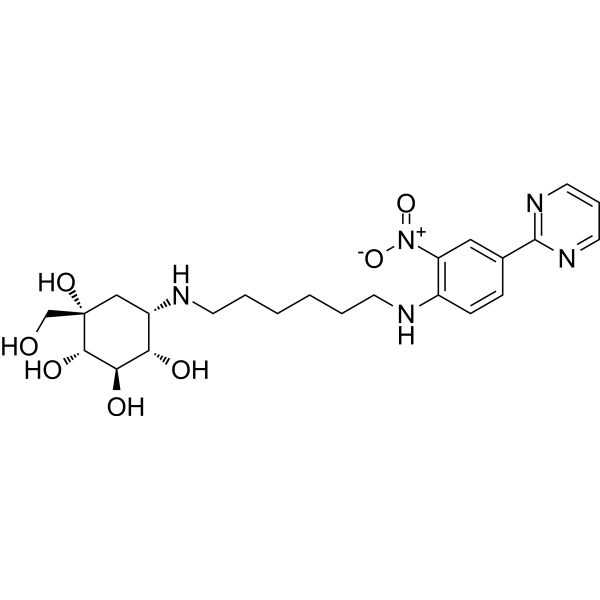 0 ImagesCat. No.: HY-145275CAS No.: 2758314-64-4EB-0176 is a potent inhibitor of ER α-glucosidases (α-Glu) Iand II with IC50s of 0.6439 and 0.0011 μM, respectively. EB-0176 is a N-substituted derivative of valiolamine with broad-spectrum antiviral. EB-0176 has the potential for the reseach of broad-spectrum agent against the existing and emerging viruses.
-
β-Glucosidase 1A, Thermus thermophilus
 0 ImagesCat. No.: HY-E71305Kβ-Glucosidase 1A, Thermus thermophilus (EC 3.2.1.21) is a glucosidase enzyme that acts upon β1->4 bonds linking two glucose or glucose-substituted molecules (i.e., the disaccharide cellobiose) . β-Glucosidase is one of the cellulases, enzymes involved in the decomposition of cellulose and related polysaccharides; more specifically, an exocellulase with specificity for a variety of beta-D-glycoside substrates. It catalyzes the hydrolysis of terminal non-reducing residues in beta-D-glucosides with release of glucose.
-
PBI-6DNJ
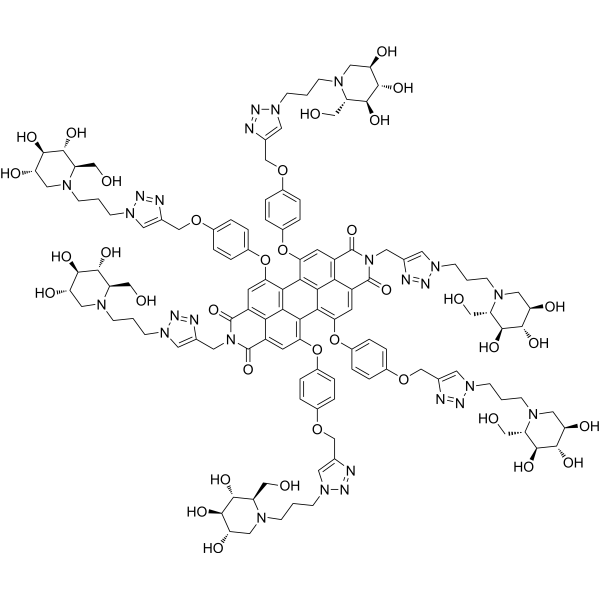 0 ImagesCat. No.: HY-150723CAS No.: 2857098-72-5PBI-6DNJ is an orally active and potent multivalent glycosidase inhibitor. PBI-6DNJ exhibits good inhibition activity against α-glucosidase from mice, with a Ki of 0.14 μM. PBI-6DNJ exhibits good hypoglycemic activity. PBI-6DNJ can be used for type 2 diabetes research.
-
α-Glucosidase-IN-57
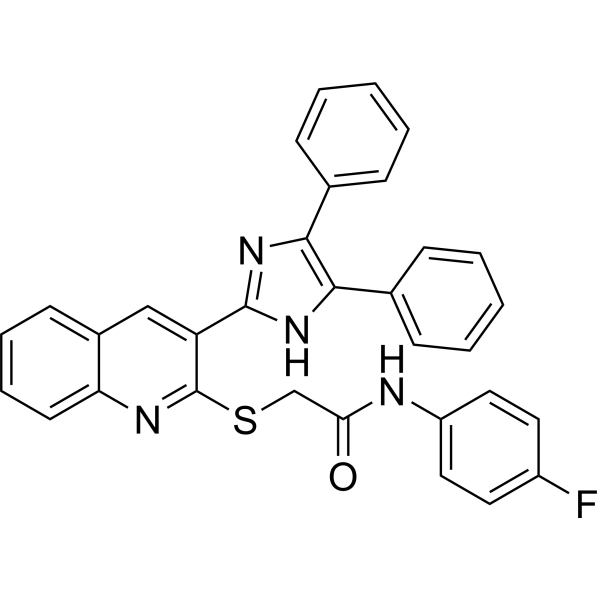 0 ImagesCat. No.: HY-163433CAS No.: 3034302-49-0α-Glucosidase-IN-57 (Compound 10c) is a competitive and orally active α-glucosidase inhibitor with an IC50 value of 0.180 μM and a Ki of 0.15 μM. α-Glucosidase-IN-57 can reduce fasting and overall blood glucose levels in mice, and can be used for anti-diabetes research.
-
Theophylline-triazole-estrone
 0 ImagesCat. No.: HY-187715Theophylline-triazole-estrone is an α-glucosidase inhibitor with an IC50 of 123.9 μM. Theophylline-triazole-estrone interacts with the catalytic site of α-glucosidase and binds to the anti-apoptotic protein BCL-2. Theophylline-triazole-estrone reduces cancer cell viability and can be used in research related to type 2 diabetes and breast cancer.
-
α1-3,4 Fucosidase, Sweet almond
 0 ImagesCat. No.: HY-132177Jα1-3,4 Fucosidase, Sweet almond is an enzyme that breaks down fucose. Fucosidosis is an autosomal recessive lysosomal storage disease caused by defective alpha-L-fucosidase with accumulation of fucose in the tissues.
-
ABCB1-IN-4
 0 ImagesCat. No.: HY-168944CAS No.: 1500779-21-4ABCB1-IN-4 (Compound C6z) is an orally active and potent dual α-amylase and α-glucosidase inhibitor with IC50 values of 1.63 μM and 0.14 μM, respectively. ABCB1-IN-4 is promising for research of diabetes.
-
G721-0282
 0 ImagesG721-0282 is an orally active CHI3L1 inhibitor. G721-0282 can reduce the expression of inflammatory proteins and cytokines. G721-0282 inhibits the activation of the NF-κB signaling pathway. G721-0282 inhibits neuroinflammation and reduces anxious behavior. G721-0282 significantly inhibits the proliferation of osteosarcoma (OS) cells by suppressing the STAT3 signaling pathway. G721-0282 induces OS cell apoptosis by upregulating pro-apoptotic protein levels and downregulating anti-apoptotic protein levels. G721-0282 can be used for researches on neuroinflammatory conditions and cancer.
-
Panaxjapyne A
 0 ImagesCat. No.: HY-N22020CAS No.: 1242413-82-6Panaxjapyne A is a baker's yeast α-glucosidase inhibitor with an IC50 of 71.82 μM. Panaxjapyne A can be used in diabetes-related research.
-
Antibacterial agent 207
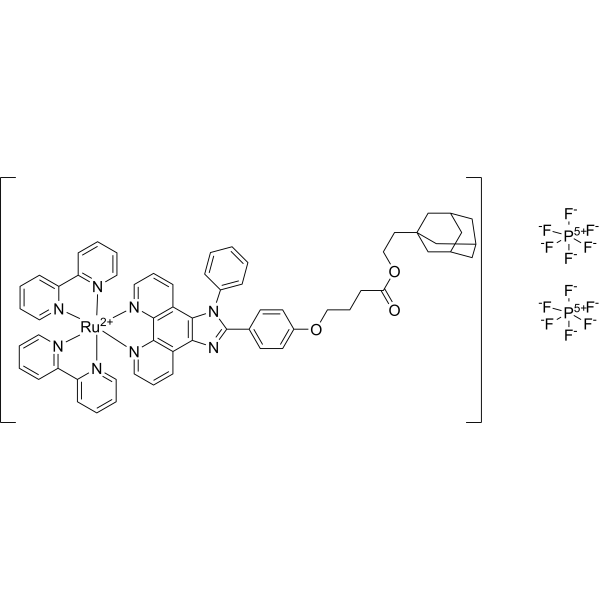 0 ImagesCat. No.: HY-162451Antibacterial agent 207 (Compound Ru1) has antibacterial activity against S. aureus (MIC: 1 μg/mL), and low resistance frequencies. Antibacterial agent 207 destroys the bacterial cell membrane, promote production of ROS in bacteria.

-
16-Oxoserratenediol
 0 ImagesCat. No.: HY-N16575CAS No.: 24513-52-816-Oxoserratenediol (Compound 11) is a serratene-type triterpenoid found in Lycopodium cernuum L.. 16-Oxoserratenediol is a α-glucosidase inhibitor with inhibition rate of 43.93% at 100 μM. 16-Oxoserratenediol can be used for the research of diabetes.
-
Deacylhericene
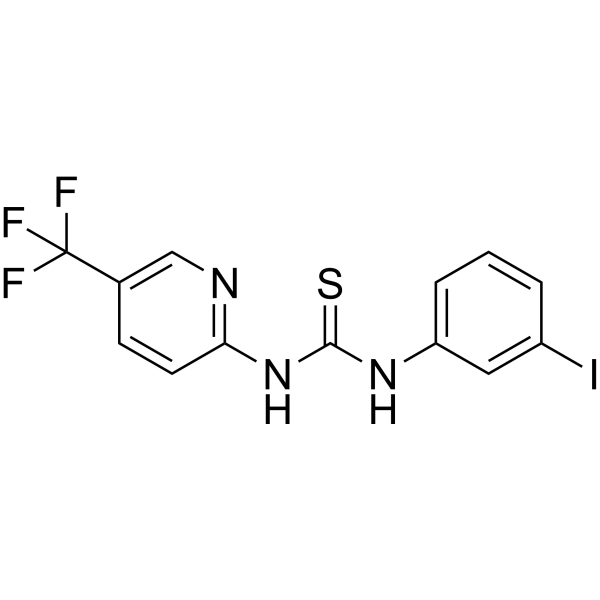
 0 ImagesCat. No.: HY-N18381CAS No.: 158314-36-4Deacylhericene is an α-glucosidase inhibitor with an IC50 of 12.5 μM. Deacylhericene functionally inhibits the activity of α-glucosidase.
-
Quinoline-2-carboxylic acid-d6
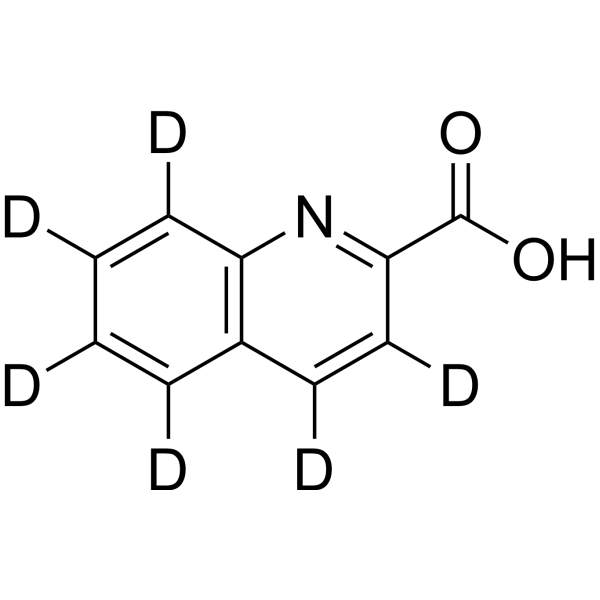 0 ImagesCat. No.: HY-W002011SCAS No.: 1219802-18-2Quinoline-2-carboxylic acid-d6 is the deuterium labeled Quinoline-2-carboxylic acid (HY-W002011). Quinoline-2-carboxylic acid exhibits antidiabetic activity. Quinoline-2-carboxylic acid can be used as drug intermediate for synthesis of various active compounds.
-
α-Amylase/α-Glucosidase-IN-18
 0 ImagesCat. No.: HY-168961α-Amylase/α-Glucosidase-IN-18 (Compound 9g) is the inhibitor for α-Amylase and α-Glucosidase with IC50 of 49.17 nM and 10.71 nM. α-Amylase/α-Glucosidase-IN-18 can be used in research of type 2 diabetes mellitus.
-
Antidiabetic agent 2
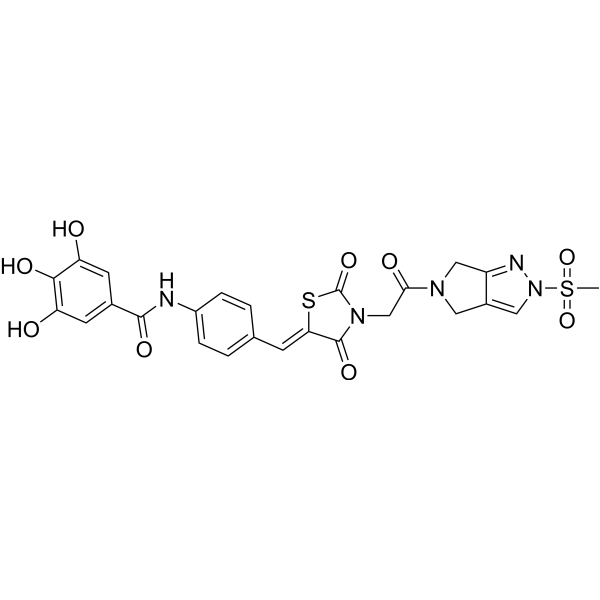 0 ImagesCat. No.: HY-155961CAS No.: 3052242-32-4Antidiabetic agent 2 (Compound 56) is a glucose-uptake promoter. Antidiabetic agent 2 inhibits DPP-4, PTP-1B, α-amylase, and α-glucosidase with IC50s of 0.036, 0.042, 0.241, 0.185 μM. Antidiabetic agent 2 decreases blood glucose levels.
-
(3R,4R)-4-(Hydroxymethyl)pyrrolidin-3-ol
 0 ImagesCat. No.: HY-W385597CAS No.: 267421-93-2(3R,4R)-4-(Hydroxymethyl)pyrrolidin-3-ol (Compound 1) is a glycosidase inhibitor. (3R,4R)-4-(Hydroxymethyl)pyrrolidin-3-ol is an intermediate for many active molecules.
-
Guavinoside B
 0 ImagesCat. No.: HY-N17855CAS No.: 372955-18-5Guavinoside B is an orally active α-glucosidase inhibitor with an IC50 of 0.21 mM. Guavinoside B upregulates the expressions of Nrf2, GCLC and NQO1 induced by Acetaminophen (HY-66005), downregulates the expression of p-JNK, and reduces intracellular ROS levels. Guavinoside B decreases serum TNF-α levels induced by Acetaminophen, alleviates hepatocellular infiltration and necrosis, and improves liver-related biochemical parameters. Guavinoside B is applicable to the research of diabetes and Acetaminophen-induced liver injury.
-
2,3-Indolobetulonic acid
 0 ImagesCat. No.: HY-134960CAS No.: 905837-93-62,3-Indolobetulonic acid (compound 2), a triterpenoid, is α-glucosidase inhibitor with an IC50 of 1.8 µM.




