



HDAC
Histone deacetylases
HDAC (Histone deacetylases) are a class of enzymes that remove acetyl groups (O=C-CH3) from an ε-N-acetyl lysine amino acid on ahistone, allowing the histones to wrap the DNA more tightly. This is important because DNA is wrapped around histones, and DNA expression is regulated by acetylation and de-acetylation. Its action is opposite to that of histone acetyltransferase. HDAC proteins are now also called lysine deacetylases (KDAC), to describe their function rather than their target, which also includes non-histone proteins. Together with the acetylpolyamine amidohydrolases and the acetoin utilization proteins, the histone deacetylases form an ancient protein superfamily known as the histone deacetylase superfamily.
HDAC Isoform Specific Products
-
HDAC
(387)
View all products
-
HDAC1
(312)
View all products
-
HDAC2
(208)
View all products
-
HDAC3
(200)
View all products
-
HDAC4
(71)
View all products
-
HDAC5
(56)
View all products
-
HDAC6
(327)
View all products
-
HDAC7
(53)
View all products
-
HDAC8
(185)
View all products
-
HDAC9
(41)
View all products
-
HDAC10
(66)
View all products
-
HDAC11
(70)
View all products
-
HD1
(3)
View all products
-
HD2
(4)
View all products
All Product Categories
-
HDAC Inhibitors
(771)
View all products
-
HDAC Antagonists
(3)
View all products
-
HDAC Activators
(14)
View all products
-
HDAC Modulators
(4)
View all products
-
HDAC MDM2 Inhibitor
(1)
View all products
-
HDAC Degraders
(41)
View all products
-
HDAC Controls
(3)
View all products
-
HDAC Substrates
(3)
View all products
-
HDAC Ligands
(10)
View all products
-
HDAC Related Products (900)
Related Products (900)

-
Antibodies (16)
-
HDAC Signaling Pathway
-
HDAC Isoform Comparison
-
Tubastatin A (GMP)
 0 ImagesCat. No.: HY-13271AGCAS No.: 1252003-15-8Tubastatin A (GMP) is the Tubastatin A (HY-13271A) produced by using GMP guidelines. GMP small molecules work appropriately as an auxiliary reagent for cell therapy manufacture. Tubastatin A is a potent and selective HDAC6 inhibitor with an IC50 of 15 nM in a cell-free assay, and is selective (1000-fold more) against all other isozymes except HDAC8 (57-fold more). Tubastatin A also inhibits HDAC10 and metallo-β-lactamase domain-containing protein 2 (MBLAC2).


-
HDAC-IN-98
 0 ImagesHDAC-IN-98 is a HDAC1, HDAC2, HDAC3 inhibitor (one of the most selective class I HDAC inhibitors) with human IC50 values of 41.2 nM, 52.5 nM, and 74.3 nM respectively. HDAC-IN-98 induces H3K9 acetylation, p21 upregulation, G2/M arrest, cell apoptosis, has strong antiproliferative effects in colorectal cancer cells, low toxicity in healthy colon epithelium, modulates short-term in vitro effects via autophagy, and shows strong antitumor efficacy in vivo in the chorioallantoic membrane model (CAM) assay. HDAC-IN-98 can be used for the research of colorectal cancer.
-
HDAC/HSP90-IN-3
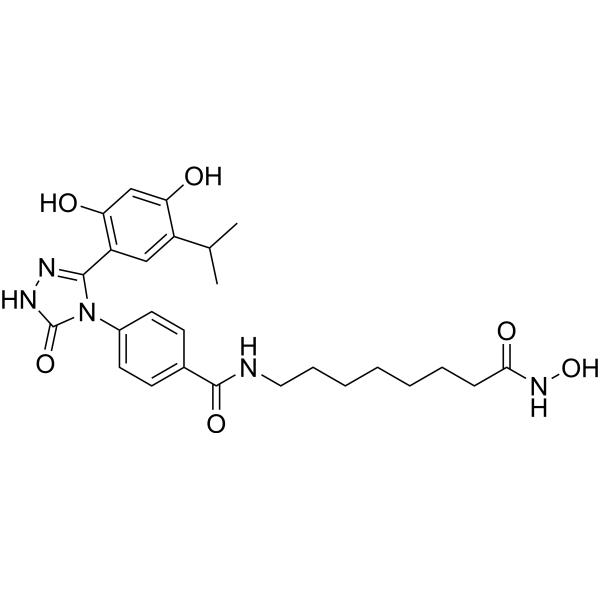 0 ImagesCat. No.: HY-144694CAS No.: 2700035-54-5HDAC/HSP90-IN-3 (compound J5) is a potent and selective fungal Hsp90 and HDAC dual inhibitor, with IC50 values of 0.83 and 0.91 μM, respectively. HDAC/HSP90-IN-3 shows antifungal activity against azole resistant C. albicans. HDAC/HSP90-IN-3 can suppress important virulence factors and down-regulate drug-resistant genes ERG11 and CDR1.
-
HDAC6-IN-42
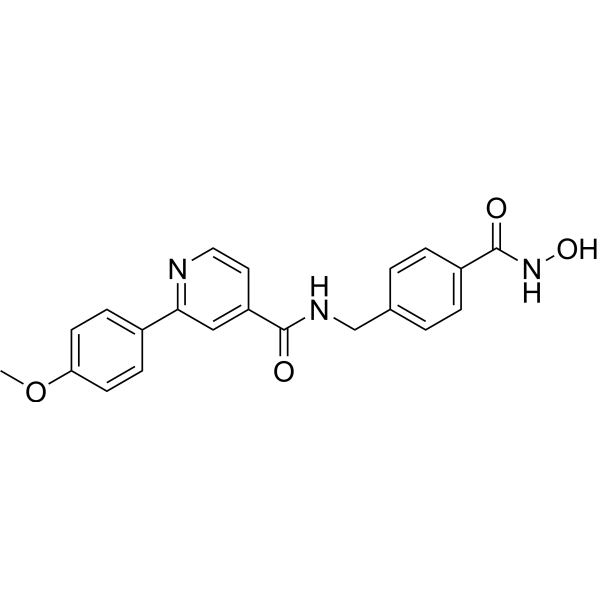
 0 ImagesCat. No.: HY-161516HDAC6-IN-42 (compound 2b) is an HDAC6 inhibitor (IC50=0.009 μM). HDAC6-IN-42 shows significant anti-leukemia activity and synergistic effect with Decitabine (HY-A0004). HDAC6-IN-42 can be used for the AML research.
-
KH-259
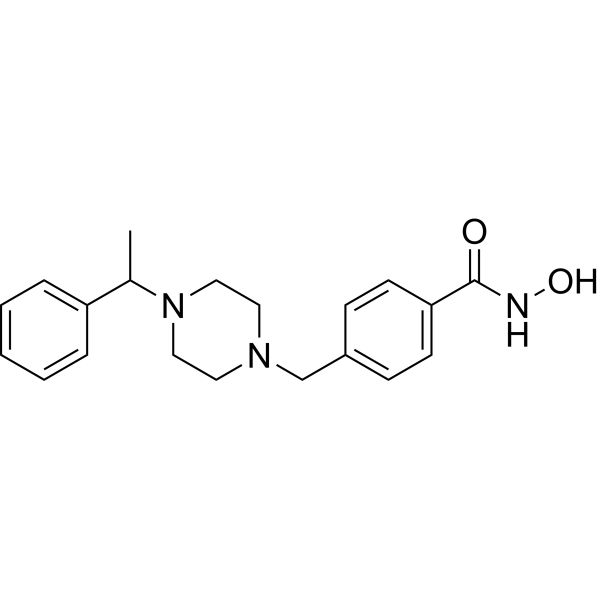 0 ImagesCat. No.: HY-150503CAS No.: 3023019-93-1

-
PIM-1/HDAC-IN-2
 0 ImagesCat. No.: HY-174302CAS No.: 3103925-33-0PIM-1/HDAC-IN-2 is a robust PIM/HDAC inhibitor (IC50 = 0.11 μM in MV4-11cells), which exerts a synergistic antiproliferative effect through a dual mechanism of inhibiting PIM1 kinase and selectively inhibiting HDAC6. PIM-1/HDAC-IN-2 induces cell apoptosis. PIM-1/HDAC-IN-2 remarkably induces the cleavage of PARP, thereby initiating the arrest of the cell cycle in G1 phase and a reduction in S phase. PIM-1/HDAC-IN-2 demonstrates significant anticancer efficacyin the MV4-11 xenograft model without notable toxicity[1].
-
Pimelic Diphenylamide 106 analog
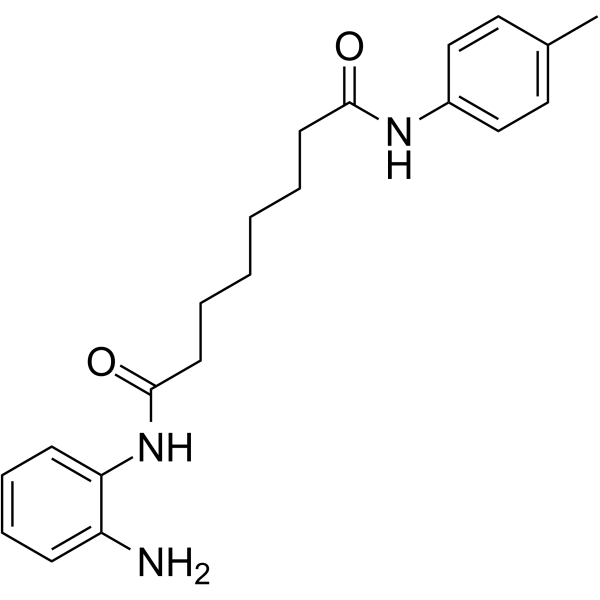 0 ImagesCat. No.: HY-19430CAS No.: 2070015-24-4Synonyms: RGFA-8 analog; TC-H 106 analogPimelic Diphenylamide 106 analog is the analog of Pimelic Diphenylamide 106, with unknown activity.
-
Tinostamustine hydrochloride
 0 ImagesCat. No.: HY-101780ACAS No.: 1793059-58-1Synonyms: EDO-S101 hydrochloride; NL-101 hydrochlorideTinostamustine hydrochloride (EDO-S101 hydrochloride) is a compound with anti-multiple myeloma activity and the ability to promote CD38 expression. Tinostamustine hydrochloride enhances the sensitivity of tumor cells to the anti-CD38 monoclonal antibody daratumumab by increasing the acetylation level of histone H3. Tinostamustine hydrochloride can increase the expression of MICA and MICB, thereby activating NK cells. Tinostamustine hydrochloride can significantly delay tumor growth and improve the survival rate of mice.

-
HDAC6-IN-8
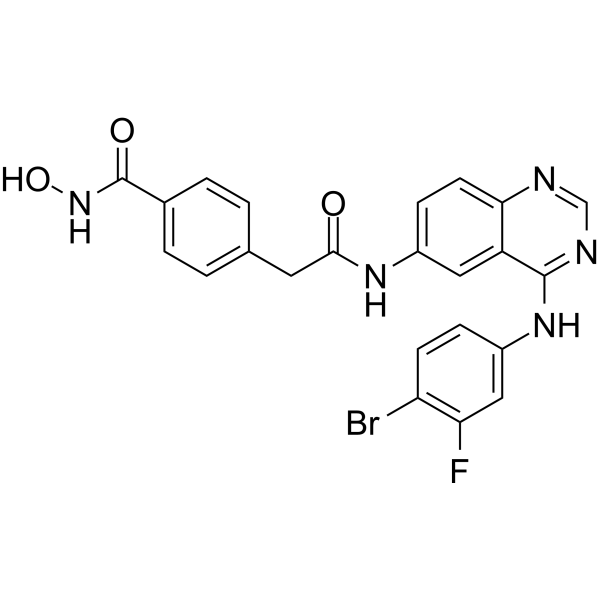 0 ImagesCat. No.: HY-147730CAS No.: 2796282-49-8A variety of compounds were designed and synthesized by modifying cap groups. The enzyme inhibition test showed that compound 12C had broad-spectrum enzyme inhibitory activity, and compounds 9m and 9q were more inclined to inhibit HDAC6, showing a certain selective inhibitory activity among the representative subtypes.
-
HDAC6-IN-83
 0 ImagesCat. No.: HY-184304CAS No.: 3053098-60-2HDAC6-IN-83 is a selective histone deacetylase 6 (HDAC6) inhibitor with an IC50 value of 11.49 nM. HDAC6-IN-83 selectively increases the acetylation level of α-tubulin without affecting histone H3. HDAC6-IN-83 induces cell apoptosis, induces cell cycle arrest, inhibits cancer cell proliferation, suppresses cancer cell invasion and inhibits angiogenesis. HDAC6-IN-83 can be used in non-small cell lung cancer research.
-
NN-390
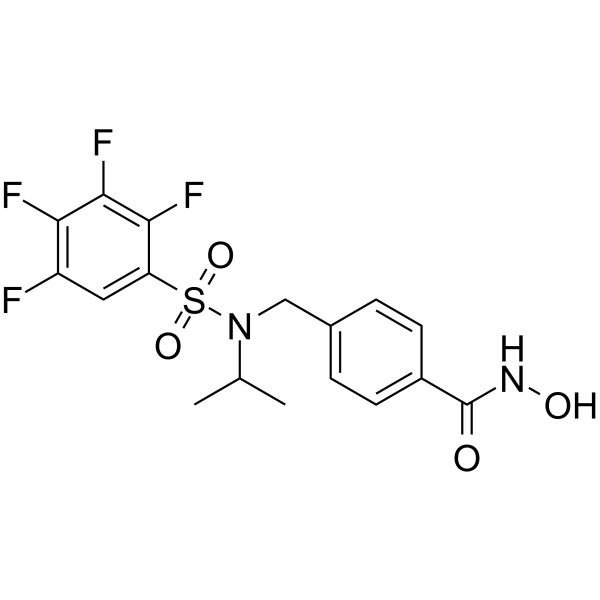 0 ImagesCat. No.: HY-143877CAS No.: 2490284-25-6NN-390 is a potent and selective HDAC6 inhibitor, with an IC50 of 9.8 nM. NN-390 penetrates the blood-brain barrier (BBB). NN-390 shows study potential in metastatic Group 3 MB (medulloblastoma).
-
Curcuphenol
 0 ImagesCat. No.: HY-119505CAS No.: 69301-27-5Curcuphenol is a compound with histone deacetylase enhancing activity and has the activity of reversing immune escape. Curcuphenol can reverse the immune escape of tumors by restoring the expression of antigen presentation machinery. Its two synthetic analogs have histone deacetylase enhancing activity and play an important role in the immune recognition of metastatic tumors.

-
HDAC-IN-104
 0 ImagesCat. No.: HY-184574HDAC-IN-104 is a potent and selective class I Histone deacetylases (HDAC) inhibitor with an IC50 of 25 nM. HDAC-IN-104 exerts potent antiproliferative and antitumor effects by inhibiting glycolysis and OXPHOS via blockade of the PI3K/AKT signaling pathway, and these effects are synergistically enhanced when combined with the FMS-like tyrosine kinase 3 (FLT3) inhibitor Quizartinib (AC220) (HY-13001). HDAC-IN-104 induces significant early and late apoptosis. HDAC-IN-104 can be used for acute myeloid leukemia (AML) research.
-
G4/HDAC-IN-1
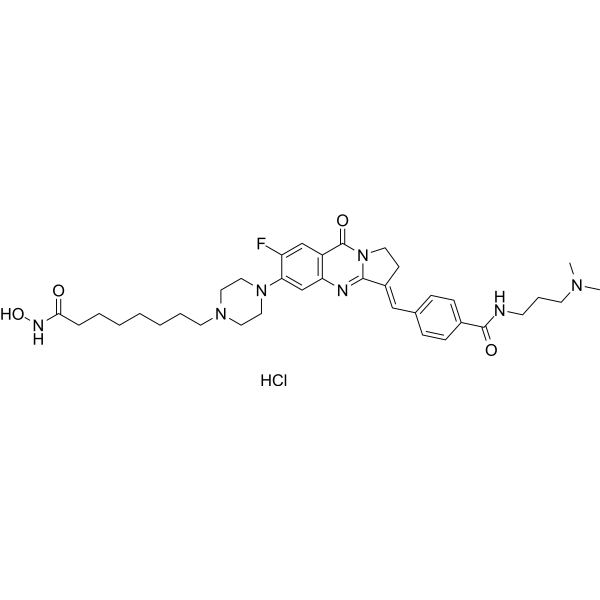 0 ImagesCat. No.: HY-151263CAS No.: 3031784-60-5G4/HDAC-IN-1 (compound a6) is a G4/HDAC dual-targeting compound. G4/HDAC-IN-1 inhibits intracellular HDAC activity with an IC50 value of 1.1 μM, and induces G4 formation. G4/HDAC-IN-1 inhibits TNBC proliferation and tumor growth in TNBC xenograft model. G4/HDAC-IN-1 can be used for the research of cancer.




