



HIV
Human immunodeficiency virus
HIV (Human immunodeficiency virus) is a lentivirus (a subgroup of retrovirus) that causes the acquired immunodeficiency syndrome (AIDS), a condition in humans in which progressive failure of the immune system allows life-threatening opportunistic infections and cancers to thrive. Infection with HIV occurs by the transfer of blood, semen, vaginal fluid, pre-ejaculate, or breast milk. Within these bodily fluids, HIV is present as both free virus particles and virus within infected immune cells. HIV infects vital cells in the human immune system such as helper T cells (specifically CD4+ T cells), macrophages, and dendritic cells. HIV infection leads to low levels of CD4+ T cells through a number of mechanisms, including apoptosis of uninfected bystander cells, direct viral killing of infected cells, and killing of infected CD4+ T cells by CD8 cytotoxic lymphocytes that recognize infected cells. When CD4+ T cell numbers decline below a critical level, cell-mediated immunity is lost, and the body becomes progressively more susceptible to opportunistic infections.
HIV Isoform Specific Products
All Product Categories
-
HIV Inhibitors
(1223)
View all products
-
HIV Antagonists
(4)
View all products
-
HIV Activators
(19)
View all products
-
HIV Modulator
(1)
View all products
-
HIV Inducers
(2)
View all products
-
HIV Degrader
(1)
View all products
-
HIV Controls
(4)
View all products
-
HIV Ligand
(1)
View all products
-
HIV Proteins
(27)
View all products
-
HIV Related Products (1395)
Related Products (1395)

-
Recombinant Proteins (27)
-
Antibodies (6)
-
HIV Isoform Comparison
-
HIV RT-IN-2
 0 ImagesCat. No.: HY-185449CAS No.: 1909302-89-1HIV RT-IN-2 is a HIV reverse transcriptase inhibitor with an IC50 value of 1.2 μM for HIV-1 RT RNA-dependent DNA polymerase. HIV RT-IN-2 potently inhibits all three modes of HIV-1 RT-associated RNase H activity (internal, 3'-DNA directed, 5'-RNA directed cleavage) and inhibits HIV-1 replication. HIV RT-IN-2 can be used for the research of HIV-1 infection.
-
ASF-006 sodium
 0 ImagesCat. No.: HY-179634ASF-006 sodium, a tetrapodal tryptophan derivative, is a potent viral invasion inhibitor. ASF-006 sodium shows potent antiviral activity against different SARS-CoV-2 Omicron variants but not against the ancestral SARS-CoV.2 strain (Wuhan-Hu-1). ASF-006 sodium competitively inhibits receptor-binding domain (RBD)-ACE2 binding via an allosteric mechanism. ASF-006 sodium inhibits Omicron BA.1, Omicron XBB.1.5, respiratory syncytial virus (RSV) and Ebola virus infection with IC50s of 0.02 μM, 0.3 μM, 1.52 μM and 0.2 μM, respectively. ASF-006 sodium inhibits cell entry of both HIV and enterovirus A71[1].
-
HBV Seq2 aa:179-186
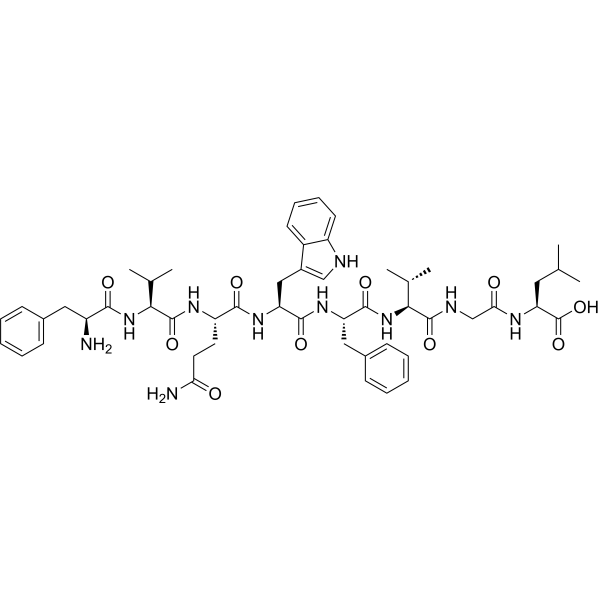 0 ImagesCat. No.: HY-P4046CAS No.: 337464-42-3
-
12-Oxocalanolide A
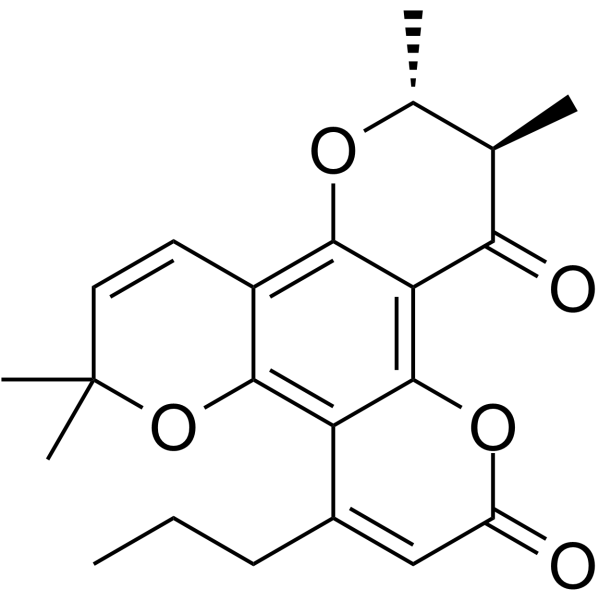 0 ImagesCat. No.: HY-N1034CAS No.: 161753-49-7Synonyms: (±)-12-Oxocalanolide A12-Oxocalanolide A (compound 6) is a potent inhibitor of reverse transcriptase from human immunodeficiency virus type 1 (HIV-1) with an IC50 and EC50 of 2.8 and 12 μM, respectively. 12-Oxocalanolide A is the analogue of Calanolide.

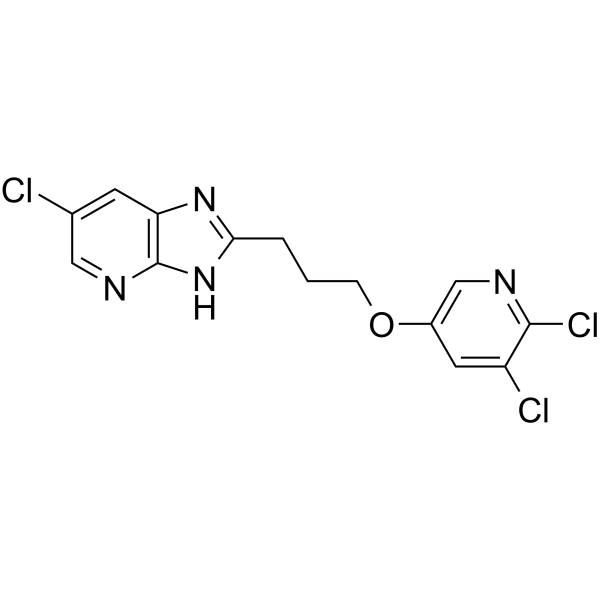
-
I-XW-053 sodium
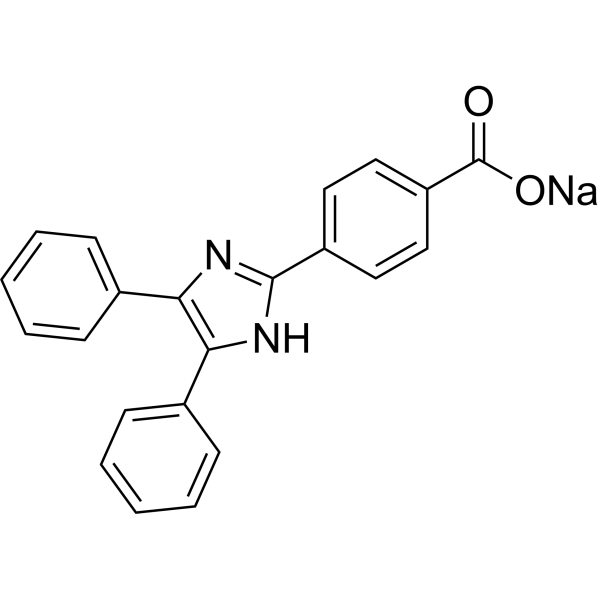 0 ImagesCat. No.: HY-103078ACAS No.: 1644644-89-2I-XW-053 sodium is a specific anti-HIV-1 capsid inhibitor (IC50=164.2 μM). By binding to the CA NTD-NTD hexamerization interface and the R173 region of CTD (Kd=66.3 μM), I-XW-053 sodium disrupts capsid function and reduces polymerization levels. I-XW-053 sodium effectively blocks HIV-1 uncoating, inhibits reverse transcription and early replication, and exhibits broad-spectrum activity against primary HIV-1 isolates in peripheral blood mononuclear cells. I-XW-053 sodium can be widely used in studies related to HIV-1 infection.
-
TAT-GluR23A Fusion Peptide
 0 ImagesCat. No.: HY-P5395TAT-GluR23A Fusion Peptide is a biological active peptide. (This is the GluR23A sequence, a control inactive peptide used as a mutant counterpart to glutamate receptor endocytosis inhibitor (GluR23Y), connected to an 11 amino acid cell permeable HIV Trans-Activator of Transcription (TAT) protein transduction domain (PTD). GluR23A is derived from GluR23Y amino acids 869 to 877, with Ala substituted for Tyr, and thus lacking essential phosphorylation sites.Control peptide of HY-P2259)
-
NNRT-IN-16
 0 ImagesCat. No.: HY-182916NNRT-IN-16, Rilpivirin (HY-10574) analogue, is a non-nucleoside reverse transcriptase inhibitor (NNRTI). NNRT-IN-16 inhibits recombinant WT HIV-1 RT with an IC50 of 0.07 μM. NNRT-IN-16 exerts antiviral activity against wild-type and drug-resistant HIV-1 mutants, shows attenuated CYP isoenzyme and hERG inhibition, reduced cytotoxicity, and improved metabolic stability in human liver microsomes. NNRT-IN-16 can be used for the research of HIV-1 infection.
-
GCA-186
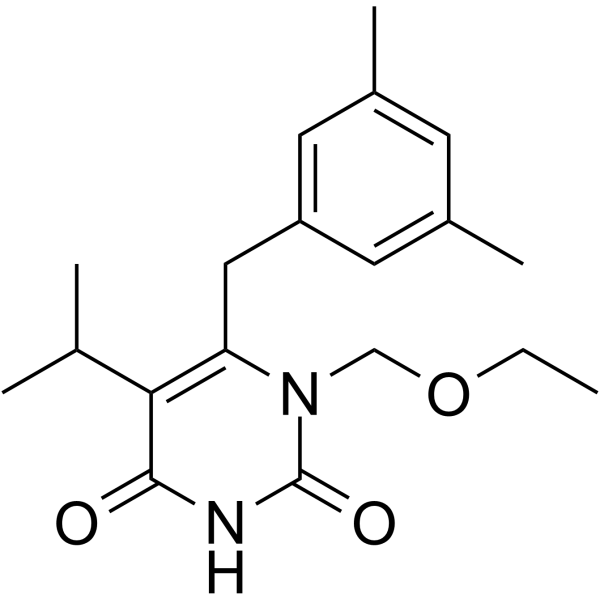 0 ImagesCat. No.: HY-116528CAS No.: 149950-61-8
-
Nelfinavir-d4
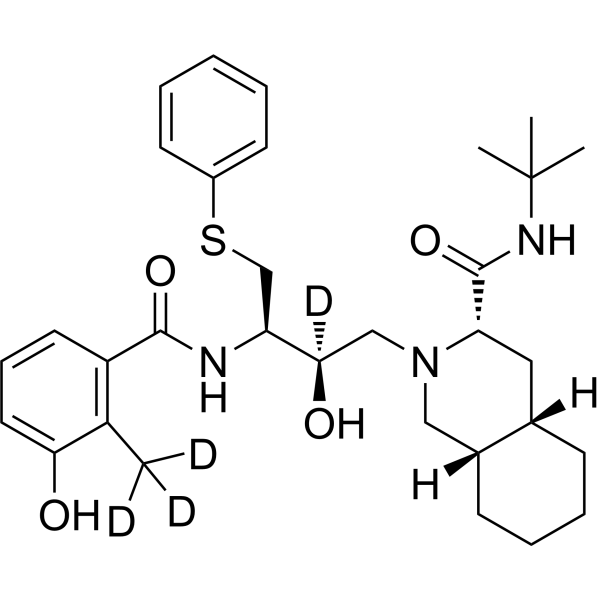 0 ImagesCat. No.: HY-15287S1Nelfinavir-d4 is deuterated labeled Nelfinavir (HY-15287). Nelfinavir (AG-1341) is a potent and orally bioavailable HIV-1 protease inhibitor (Ki=2 nM) for HIV infection. Nelfinavir is a broad-spectrum, anticancer agent.
-
InteriotherinA
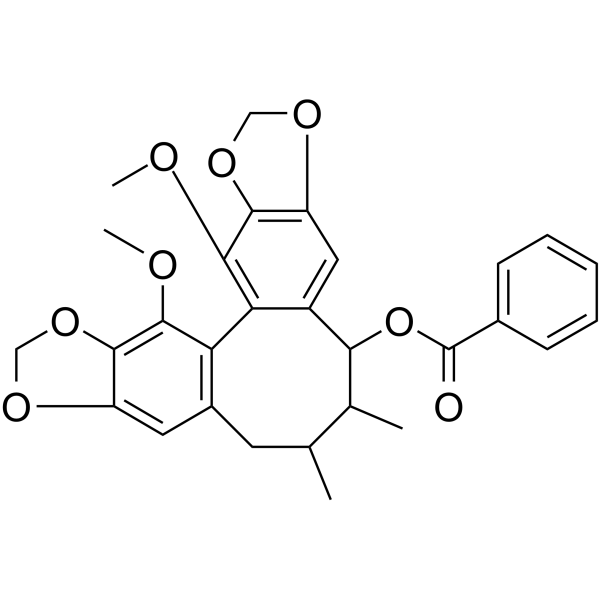 0 ImagesCat. No.: HY-N6849CAS No.: 181701-06-4Interiotherin A is a lignan with a dibenzocyclooctadiene skeleton isolated from Kadsura interior. Interiotherin A inhibits HIV replication to exhibit anti-HIV activity, it has a role as a metabolite and an anti-HIV agent.

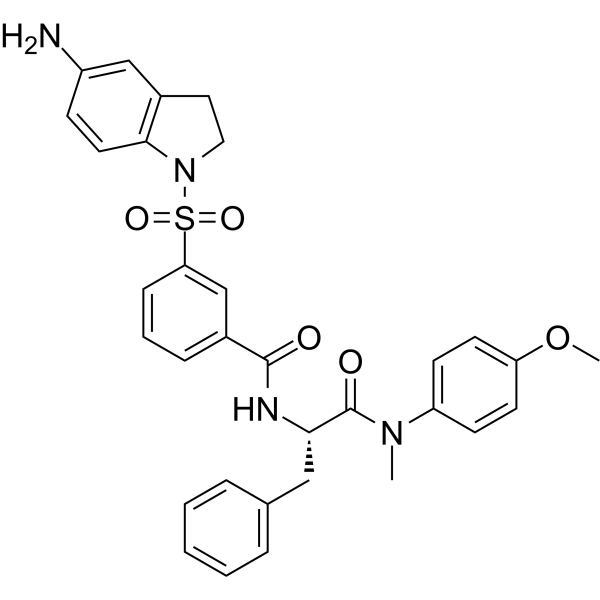
-
PNU-103657
 0 ImagesCat. No.: HY-105372CAS No.: 179556-43-5PNU-103657 (Compound 13) is an orally active reverse transcriptase inhibitor (IC50 = 0.51 μM (WT)). PNU-103657 has antiviral activity. PNU-103657 can be used in research on infections and immune system diseases such as HIV infection.
-
GUT-70
 0 ImagesCat. No.: HY-120923CAS No.: 161633-75-6GUT-70, a tricyclic coumarin, is a Hsp90 inhibitor. GUT-70 activates the caspase 2, 3, 8 and 9, and induces the apoptosis in leukemic cells. GUT-70 inhibits HIV-1 replication in chronically infected cells via suppression of the NF-κB pathway. GUT-70 can be used for the study of leukemic, mantle cell lymphoma (MCL) and HIV-1 infection.
-
Atazanavir sulfate (Standard)
 0 ImagesSynonyms: BMS-232632 sulfate (Standard)Atazanavir (sulfate) (Standard) is the analytical standard of Atazanavir (sulfate). This product is intended for research and analytical applications. Atazanavir (BMS-232632) sulfate, a highly selective HIV-1 protease inhibitor, is the first protease inhibitor approved for once-daily administration. Atazanavir sulfate is a substrate and inhibitor of CYP3A4, and an inhibitor and inducer of P-glycoprotein (P-gp). Atazanavir sulfate is also a SARS-CoV 3CLpro inhibitor with an IC50 of 3.49 μM.
-
DPC-082
 0 ImagesCat. No.: HY-167135CAS No.: 214287-98-6DPC-082 is a potent non-nucleoside reverse transcriptase inhibitor (NNRTI) of HIV-1. DPC-082 inhibits wild-type RF virus with an IC90 of 2.0 nM. DPC-082 inhibits various single and many multiple amino acid substituted HIV-1 mutant viruses.
-
Pentoxifylline (Standard)
 0 ImagesSynonyms: BL-191 (Standard); Oxpentifylline (Standard)Pentoxifylline (Standard) is the analytical standard of Pentoxifylline. This product is intended for research and analytical applications. Pentoxifylline (BL-191), a haemorheological agent, is an orally active non-selective phosphodiesterase (PDE) inhibitor, with immune modulation, anti-inflammatory, hemorheological, anti-fibrinolytic and anti-proliferation effects. Pentoxifylline can be used for the research of peripheral vascular disease, cerebrovascular disease and a number of other conditions involving a defective regional microcirculation.
-
Fostemsavir sodium
 0 ImagesCat. No.: HY-W725955CAS No.: 864953-31-1Synonyms: BMS-663068 sodium




