



Topoisomerase
Topoisomerases are enzymes that regulate the overwinding or underwinding of DNA. The winding problem of DNA arises due to the intertwined nature of its double-helical structure. Topoisomerases are isomerase enzymes that act on the topology of DNA. Type I topoisomerase cuts one strand of a DNA double helix, relaxation occurs, and then the cut strand is reannealed. Type I topoisomerases are subdivided into two subclasses: type IA topoisomerases, which share many structural and mechanistic features with the type II topoisomerases, and type IB topoisomerases, which utilize a controlled rotary mechanism. Type II topoisomerase cuts both strands of one DNA double helix, pass another unbroken DNA helix through it, and then reanneal the cut strands. This class is also split into two subclasses: type IIA and type IIB topoisomerases, which possess similar structure and mechanisms.
Topoisomerase Isoform Specific Products
All Product Categories
-
Topoisomerase Inhibitors
(751)
View all products
-
Topoisomerase Agonists
(2)
View all products
-
Topoisomerase Modulator
(1)
View all products
-
Topoisomerase Inducer
(1)
View all products
-
Topoisomerase Degraders
(3)
View all products
-
Topoisomerase Controls
(3)
View all products
-
Topoisomerase Ligands
(2)
View all products
-
Topoisomerase Proteins
(1)
View all products
-
DNA topoisomerase II Proteins
(1)
View all products
-
Topoisomerase Related Products (827)
Related Products (827)

-
Recombinant Proteins (1)
-
Antibodies (4)
-
Topoisomerase Isoform Comparison
-
Bimolane
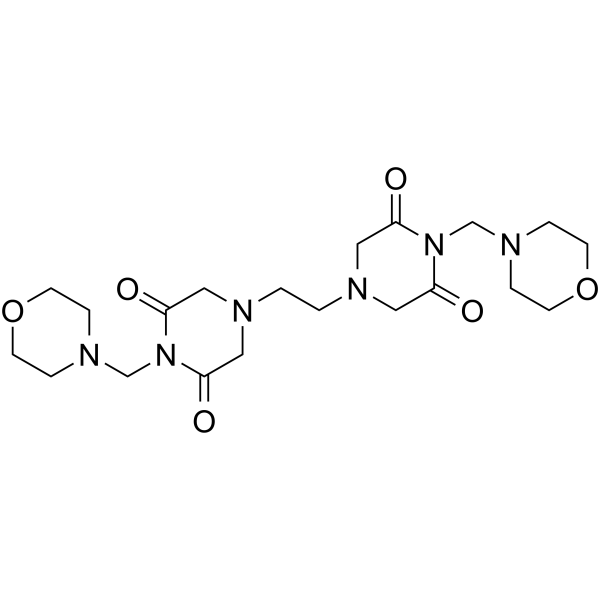 0 ImagesCat. No.: HY-19437CAS No.: 74550-97-3Synonyms: AT-1727Bimolane (AT-1727), a human topoisomerase II inhibitor, can be used as an anti-neoplastic agent and for the research of psoriasis. Bimolane shows leukemogenic activity and induces multiple types of chromosomal aberrations in human lymphocytes.
-
TOP3B-IN-1
 0 ImagesCat. No.: HY-176762CAS No.: 67047-17-0TOP3B-IN-1 (NSC-260610) is a Topoisomerase IIIβ (TOP3B) inhibitor. TOP3B-IN-1 fails to induce the formation of TOP3B cleavage complexes (TOP3Bccs) with both DNA and RNA, and destabilizes TOP3Bccs. TOP3B-IN-1 can be used as a control compound for the development of inhibitors targeting TOP3B.
-
T-2513 hydrochloride
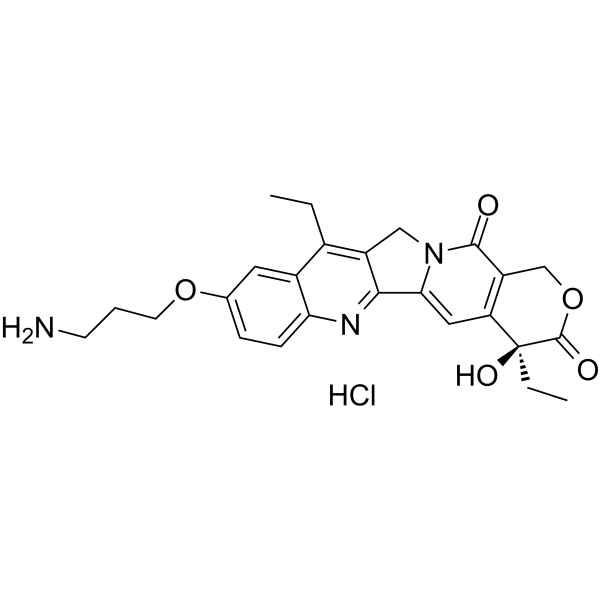 0 ImagesCat. No.: HY-125930ACAS No.: 187793-52-8T-2513 hydrochloride is a selective topoisomerase I inhibitor. T-2513 hydrochloride binds covalently to and stabilizes the topoisomerase I-DNA complex and inhibits DNA replication and RNA synthesis, ultimately leading to cell death.
-
TOPOI/PARP-1-IN-2
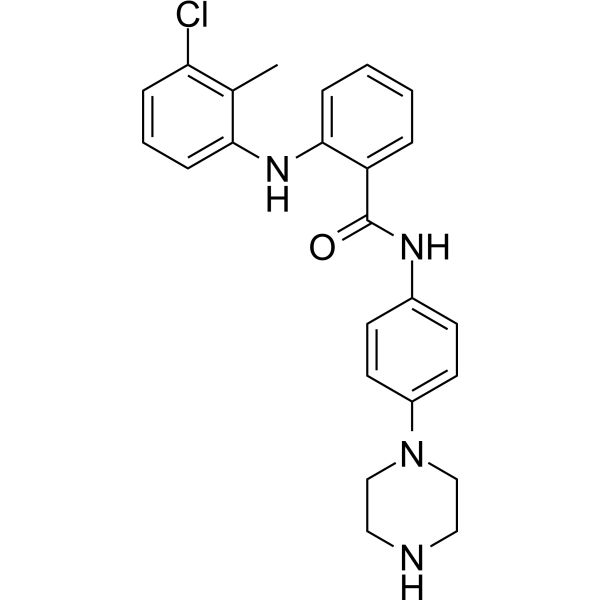
 0 ImagesCat. No.: HY-169299TOPOI/PARP-1-IN-2 (compound 6c) is a dual PARP-1 and topoisomerase 1 (TOPO-1) inhibitor with IC50s of 32.2 nM and 46.2 nM, respectively. TOPOI/PARP-1-IN-2 shows a selectivity for PARP-1 over PARP-2. TOPOI/PARP-1-IN-2 disrupts the cell cycle at the S phase and induces apoptosis in NCI-60 cancer cell lines.
-
Topoisomerase II inhibitor 1
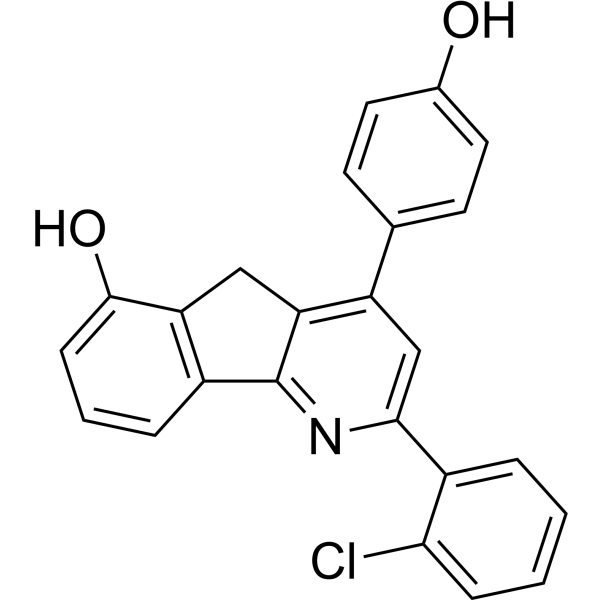 0 ImagesTopoisomerase II inhibitor 1 (compound 89) is a highly efficient and selective topoisomerase IIα inhibitor.
-
Pefloxacin (Standard)
 0 ImagesCat. No.: HY-B0147RCAS No.: 70458-92-3Synonyms: Pefloxacinium (Standard)Pefloxacin (Standard) (Pefloxacinium (Standard)) is the analytical standard of Pefloxacin (HY-B0147). This product is intended for research and analytical applications. Pefloxacin (Pefloxacinium) is a broad spectrum antibiotic. Pefloxacin blocks DNA replication by inhibiting DNA gyrase. Pefloxacin inhibits DNA relaxation catalyzed by topoisomerase I with an IC50 of 45 μg/mL. Pefloxacin exhibits antibacterial activity against Escherichia coli, Pseudomonas aeruginosa, and Bacteroides fragilis with MIC90s of 0.12, 4, and 16 mg/L, respectively. Pefloxacin has anti-Plasmodium yoelii infection activity. Pefloxacin increase UVA-induced edema and immunesuppression. Pefloxacin can be used for infection studies.
-
DK 507k
 0 ImagesCat. No.: HY-107044CAS No.: 364069-14-7DK 507k is an orally active 8-methoxyquinolone Antibacterial agent. DK 507k targets DNA gyrase subunit A (GyrA) and modulates the function of GyrA. DK 507k inhibits the growth of various Gram-positive and Gram-negative bacteria, including Pseudomonas aeruginosa and Methicillin (HY-121544)-resistant Staphylococcus aureus. DK 507k eliminates Penicillin-tolerant Streptococcus pneumoniae from the lungs of mice. DK 507k can be used in research related to sepsis and *Streptococcus pneumoniae* pneumonia.
-
Topoisomerase IV, Streptococcus pneumoniae
 0 ImagesCat. No.: HY-E70899Topoisomerase IV, Streptococcus pneumoniae (EC 5.99.1.) is prepared by overexpressing the subunits in E. coli.
-
Topoisomerase II inhibitor 11
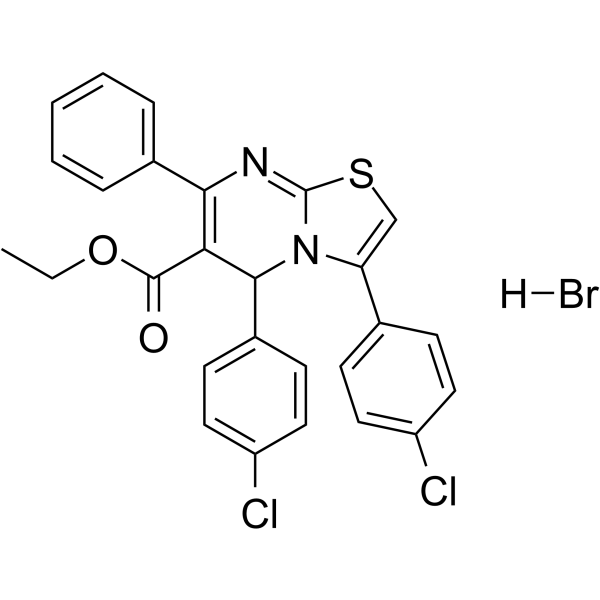 0 ImagesCat. No.: HY-147861CAS No.: 2476559-00-7Topoisomerase II inhibitor 11 (compound 3d) is a potent Topoisomerase II inhibitor, with an IC50 of 2.89 μM. Topoisomerase II inhibitor 11 shows 92.46% inhibition on renal cancer cell line A498 with an IC50 of 3.5 μM. Topoisomerase II inhibitor 11 causes cell cycle arrest at the G2/M phase leading to cell proliferation inhibition and pro-apoptotic activity.
-
Moflomycin
 0 ImagesCat. No.: HY-119827CAS No.: 107430-03-5Synonyms: F 860191Moflomycin (F 860191) is a compound with strong anti-leukemic activity and low mutagenicity. Moflomycin has an antiproliferative effect on the leukemic cell line HL60 in vitro (IC50=2.9 nM). Moflomycin enhances topoisomerase II-induced DNA breaks and free radical production.
-
CS1
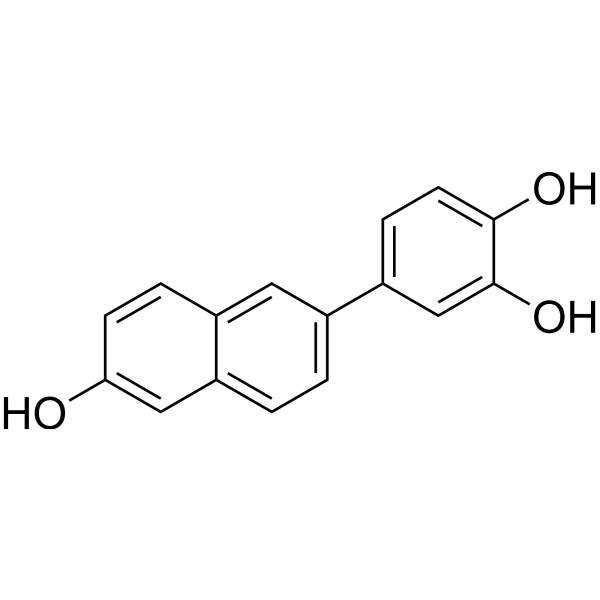 0 ImagesCat. No.: HY-137005CAS No.: 1448009-94-6
-
Mc-Lys(PEG12)-Cap-Ala-Ala-PABC-exatecan
 0 ImagesCat. No.: HY-178145CAS No.: 3067680-81-0Mc-Lys(PEG12)-Cap-Ala-Ala-PABC-exatecan (compound 12) is a Drug-Linker Conjugate for ADC. Mc-Lys(PEG12)-Cap-Ala-Ala-PABC-exatecan contains the ADC linker (Mc-Lys(PEG12)-Cap-Ala-Ala-PABC) (HY-178146) and a DNA topoisomerase I inhibitor Exatecan (HY-13631). Mc-Lys(PEG12)-Cap-Ala-Ala-PABC-exatecan can be used for the development of ADC targeting HER2-positive breast cancer.
-
(1R,9S)-Exatecan
 0 ImagesCat. No.: HY-13631TCAS No.: 2231666-57-0Synonyms: (1R,9S)-DX-8951(1R,9S)-Exatecan (DX8951) is the (1R,9S) stereoisomer of Exatecan (HY-13631). Exatecan (DX-8951) is a DNA topoisomerase I inhibitor, with an IC50 of 2.2 μM (0.975 μg/mL), and can be used in cancer research.
-
Proscillaridin A (Standard)
 0 ImagesProscillaridin A (Standard) is the analytical standard of Proscillaridin A. This product is intended for research and analytical applications. Proscillaridin A is a potent poison of topoisomerase I/II activity with IC50 values of 30 nM and 100 nM, respectively.
-
NK-611
 0 ImagesCat. No.: HY-106122CAS No.: 105655-99-0Synonyms: VP 19NK-611 (VP 19) is an epipodophyllotoxin derivative. NK-611 induces DNA double-strand breaks by inhibiting topoisomerase II (IC50 = 56 μM). NK-611 does not inhibit microtubule polymerization, thus avoiding the side effects of the parent compound, Podofilox (HY-15552). NK-611 exhibits broad-spectrum antitumor activity and demonstrates potent efficacy in in vivo models of leukemia. NK-611 can be used in cancer research.
-
T-2513
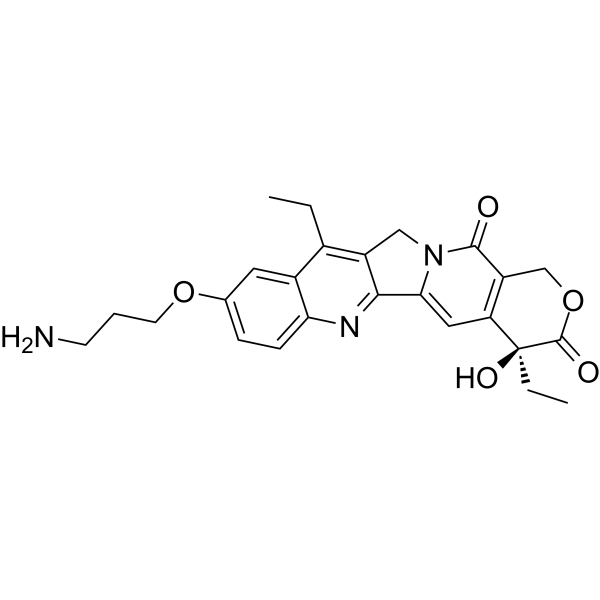 0 ImagesCat. No.: HY-125930CAS No.: 288247-87-0T-2513 is a selective topoisomerase I inhibitor. T-2513 binds covalently to and stabilizes the topoisomerase I-DNA complex and inhibits DNA replication and RNA synthesis, ultimately leading to cell death.
-
Antibacterial agent 187
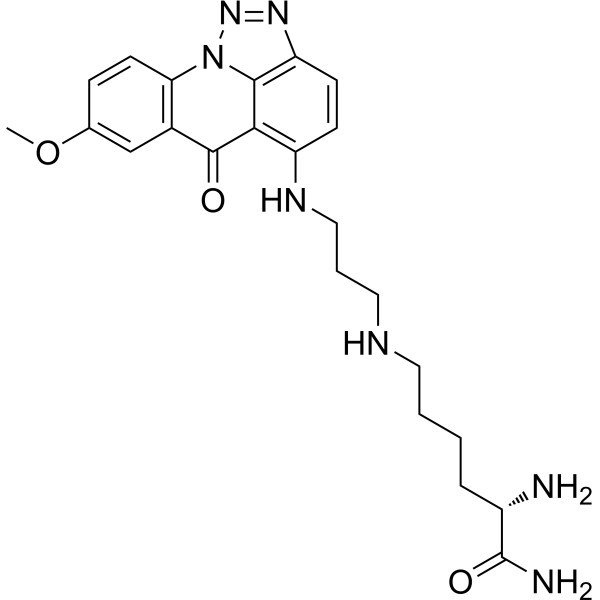 0 ImagesCat. No.: HY-162271Antibacterial agent 187 (IKE7) is a derivative containing imidazole and triazolacridone structures that target yeast topoisomerase II. Antibacterial agent 187 has antifungal activity and MIC value of resistance to fluconazole (HY-B0101) is 32-64 μg/mL.
-
Topoisomerase I-IN-18
 0 ImagesCat. No.: HY-178373Topoisomerase I-IN-18, a derivative of Thiosemicarbazide (HY-Y0032), is a Topoisomerase I inhibitor. Topoisomerase I-IN-18 can disrupt DNA synthesis and transcription. Topoisomerase I-IN-18 inhibits tumor cell proliferation by inducing S-phase cell cycle arrest. Topoisomerase I-IN-18 can enhance mitochondria-mediated apoptosis, suppress cell migration, and increase intracellular Reactive Oxygen Species (ROS) levels. Topoisomerase I-IN-18 can increase p53 protein expression, γH2AX phosphorylation, upregulate Bax expression, downregulate Bcl-2 expression, and activate the caspase cascade. Topoisomerase I-IN-18 can be used for the study of lung cancer.
-
10-Nitrocamptothecin
 0 ImagesCat. No.: HY-N2062CAS No.: 86639-62-510-Nitrocamptothecin is a topoisomerase I inhibitor with an IC50 of 0.64 μM. 10-Nitrocamptothecin interferes with the formation of cleavable complexes, thereby inhibiting the activity of Topoisomerase I. 10-Nitrocamptothecin is applicable for cancer research.




