



Necroptosis Inducer
-
Bcl-2-IN-23
 0 ImagesCat. No.: HY-176219
Bcl-2-IN-23 (compound 5) is a selective inhibitor targeting Bcl-2. The IC50 of Bcl-2-IN-23 in HTB-140, HeLa and SW620 cells is 25.7-33.7 μM. Bcl-2-IN-23 can non-covalently competitively bind to Bcl-2 protein, significantly reduce its expression, and induce late apoptosis and necroptosis of cancer cells. Bcl-2-IN-23 enhances the sensitivity of cancer cells to apoptosis and reduces the release of IL-6 inflammatory factors by disrupting the Bcl-2-mediated mitochondrial apoptosis inhibition pathway. Bcl-2-IN-23 can be used for anti-apoptosis research of malignant tumors such as melanoma, cervical cancer, and colorectal cancer.
-
PROTAC IKKβ/NR4A1 degrader-1
 0 ImagesCat. No.: HY-179112CAS No.: 2826215-20-5
PROTAC IKKβ/NR4A1 degrader-1 is a highly efficient and effective dual-PROTAC degrader targeting IKKβ and NR4A1. PROTAC IKKβ/NR4A1 degrader-1 can increase the levels of caspase 3 and cleaved caspase 3 proteins, while the necroptosis marker RIP kinase remained unchanged, indicating that it can induce apoptosis. PROTAC IKKβ/NR4A1 degrader-1 can be used for the study of Acute myeloid leukemia (AML). Red: IKKβ/NR4A1 ligand (HY-13067); Blue: E3 ligase CRBN ligand (HY-14658); Black: Linker (HY-79577).
-
Apoptosis/necroptosis inducer 1
 0 ImagesCat. No.: HY-181073
Apoptosis/necroptosis inducer 1 is an orally active and brain-penetrant apoptosis and necroptosis inducer. Apoptosis/necroptosis inducer 1 induces mitochondria-dependent (intrinsic pathway) apoptosis. Apoptosis/necroptosis inducer 1 induces necroptosis by activating the TNF-α/NF-κB/MAPK signaling pathway. Apoptosis/necroptosis inducer 1 exhibits antiproliferative activity in glioblastoma cell lines and multiple solid tumor types. Apoptosis/necroptosis inducer 1 inhibits growth of orthotopic glioblastoma in animal models and improves survival rate. Apoptosis/necroptosis inducer 1 can be used for the research of glioblastoma.
-
PARP1/EZH2-IN-1
 0 ImagesCat. No.: HY-179386
PARP1/EZH2-IN-1 is a selective PARP1 and EZH2 dual inhibitor. PARP1/EZH2-IN-1 has IC50s of 28 nM, 414 nM and 74 nM for PARP1, PARP2 and EZH2, respectively. PARP1/EZH2-IN-1 inhibits the proliferation and migration of TNBC cells (triple-negative breast Cancer cells). PARP1/EZH2-IN-1 induces PANoptosis (Apoptosis, Pyroptosis and Necroptosis), increases the level of reactive oxygen species (ROS), and activates related inflammatory pathways. PARP1/EZH2-IN-1 can be used in triple-negative breast cancer research.
-
TNI-97
 0 ImagesCat. No.: HY-175030CAS No.: 2790425-52-2
TNI-97 is a selective and orally active HDAC6 inhibitor, with an IC50 of 0.2 nM. TNI-97 potently inhibited TNBC cell MDA-MB-453 growth and clonogenicity. TNI-97 induces PANoptosis including apoptosis, necroptosis and pyroptosis in MDA-MB-453 cells. TNI-97 shows antitumor activity in the mice carrying the MDA-MB-453 xenograft or carrying murine-derived TNBC cell allografts. TNI-97 can be used for the study of triple-negative breast cancer.
-
p,p'-DDD-d8
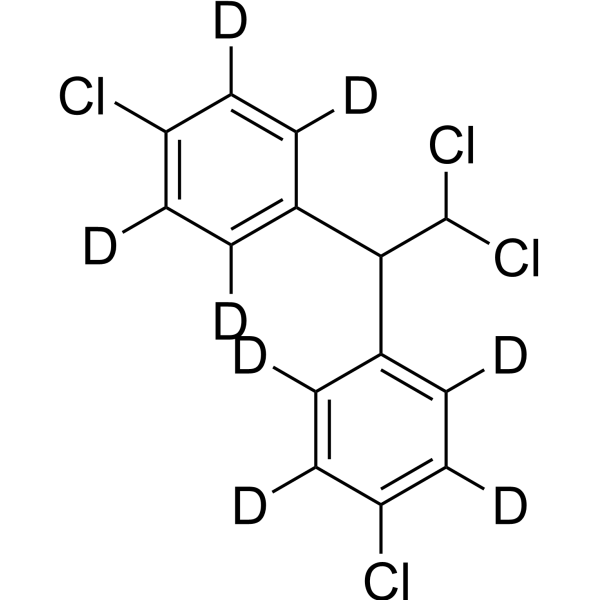 0 ImagesCat. No.: HY-B1984SCAS No.: 93952-20-6Synonyms: 4,4'-DDD-d8; p,p'-Dichlorodiphenyl dichloroethane-d8
p,p'-DDD-d8 is the deuterium labeled p,p'-DDD[1]. p,p'-DDD (4,4’-DDD) is an organochlorine insecticide, a major metabolite of p,p'-DDT. p,p'-DDD is an agonist at estrogen receptor α(ERα) and ERβ. p,p'-DDD increases DNA damage, apoptosis and necrosis in peripheral blood. p,p'-DDD stimulates cell proliferation in SKBR3 cells. p,p'-DDD activates the AP-1 transcription factor. p,p'-DDD decreases sleep times of barbiturates and steroids in rats.
-
MCC1019
 0 ImagesCat. No.: HY-W162436CAS No.: 29115-34-2
MCC1019 is a selective PLK1 PBD inhibitor with an IC50 of 16.4 μmol/L. MCC1019 inactivates the AKT signaling pathway in cancer cells, and induces Apoptosis, Necroptosis and Autophagy. MCC1019 exhibits anticancer activity against lung cancer and prostate cancer.
-
AG311
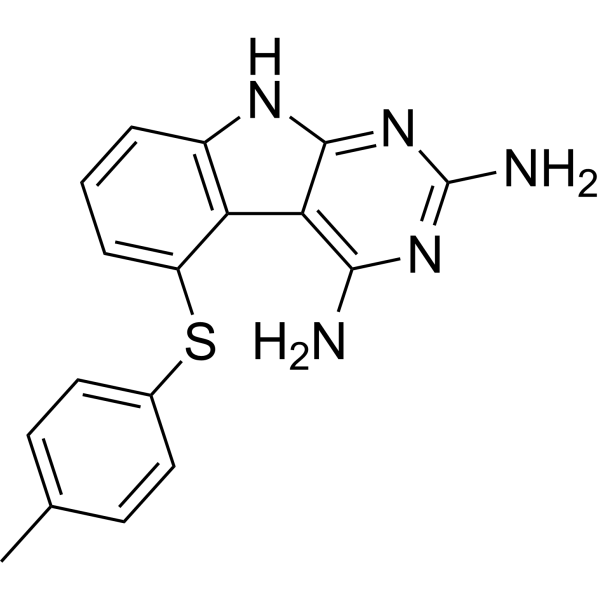 0 ImagesCat. No.: HY-116107CAS No.: 1126602-42-3
AG311 is an anticancer and antimetastatic agent. AG311 induces rapid necrosis in numerous cancer cell lines.
-
VDX-111
 0 ImagesCat. No.: HY-156920CAS No.: 158983-23-4
VDX-111 is an analog of vitamin D. VDX-111 exhibits cytotoxicity in ovarian cancer cells through upregulation of RIPK1/RIPK3 pathway and induction of necroptosis. VDX-111 promotes expressions of cytokines and exhibits antitumor activity in mouse model.
-
Antitumor agent-218
 0 ImagesCat. No.: HY-183797CAS No.: 3094774-72-5
Antitumor agent-218 is an aggregation-induced emission (AIE)-based photosensitizer. Antitumor agent-218 selectively accumulates in the endoplasmic reticulum, and generates ROS within the endoplasmic reticulum upon irradiation to induce necroptosis of tumor cells. Antitumor agent-218 can be used in cancer-related research.
-
Cholicamideβ
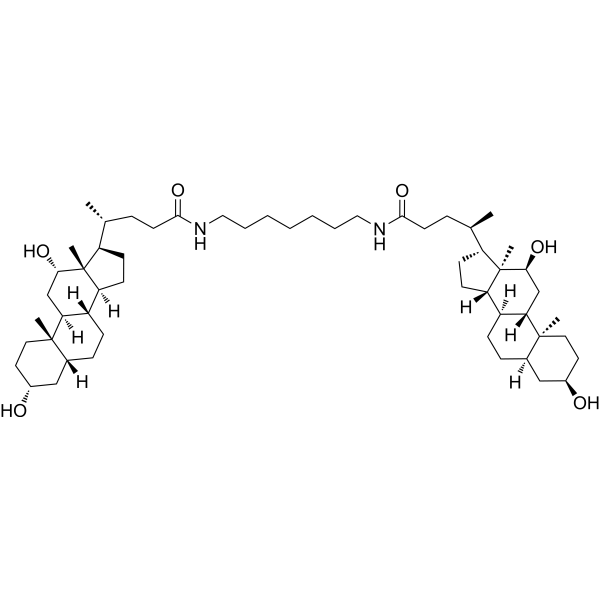 0 ImagesCat. No.: HY-156087CAS No.: 3036578-71-6
Cholicamideβ (GMP) is a GMP grade of Cholicamideβ. Cholicamideβ (compound 6) is a self-assembling, small molecule, cancer vaccine adjuvant. Cholicamideβ can form virus-like particles with low cytotoxicity. Cholicamideβ, upon binding to peptide antigens, enhances antigen presentation by dendritic cells and induces antigen-specific T cells. Cholicamideβ can induce apoptosis and necrosis.
-
Artepillin C (Standard)
 0 ImagesCat. No.: HY-N10319RCAS No.: 72944-19-5
Artepillin C (Standard) is the analytical standard of Artepillin C (HY-N10319). This product is intended for research and analytical applications. Artepillin C is an orally active CREB/CRTC2 inhibitor and TRPA1 covalent agonist (EC50=1.8 μM). Artepillin C inhibits CREB/CRTC2-mediated gene transcription and downregulates BMAL1 expression to regulate glucose and lipid metabolism. Artepillin C can also activate TRPA1 channels to induce spicy taste signals. Artepillin C can inhibit tumor cell proliferation, induce apoptosis, improve insulin resistance and inhibit liver lipid synthesis. Artepillin C can be used in the study of metabolic syndrome, tumor prevention and treatment, and inflammation.
-
LJ-2698
 0 ImagesCat. No.: HY-153149CAS No.: 945457-84-1Synonyms: FM101
LJ-2698 (FM101) is an orally active adenosine A3 receptor (Adenosine A3 Receptor) antagonist. LJ-2698 blocks adenosine A3 receptor-dependent pro-inflammatory JNK, ERK, and NF-κB signaling pathways. LJ-2698 prevents alveolar cavity enlargement, restores pulmonary function, and inhibits matrix metalloproteinase activity and pulmonary cell apoptosis (apoptosis) in mice. LJ-2698 induces mitochondrial dysfunction, necroptosis, and intrinsic apoptosis. LJ-2698 ameliorates renal injury in mice with diabetic nephropathy, and alleviates diet-induced hepatic inflammation and fibrosis. LJ-2698 can be used in the research of emphysema, diabetic nephropathy, and metabolic dysfunction-associated steatotic liver disease.
-
(rel)-Salcolin A
 0 ImagesCat. No.: HY-N16764CAS No.: 1977557-69-9
(rel)-Salcolin A is a flavonoid lignan compound with anticancer, anti-inflammatory, and neuroprotective activities. (rel)-Salcolin A has IC50 values ??of 66.69 μM and 56.12 μM against anaplastic thyroid carcinoma cells (HTH83) and papillary thyroid carcinoma cells (TPC1), respectively. (rel)-Salcolin A also inhibits LPS-induced NO production with an IC50 of 14.65 μM. (rel)-Salcolin A exerts its effects by inducing necroptosis in thyroid cancer cells, inhibiting the production of the inflammatory factor NO, and protecting against glutamate-induced neuronal cell damage, with a neuroprotective E50 of 47.44 μM. (rel)-Salcolin A can be used in research related to thyroid cancer, anti-inflammation, and neuroprotection. (rel)-Salcolin A can be naturally extracted from the leaves of Casearia arborea and the stems of Zea mays (corn).
-
SRS6-11
 0 ImagesCat. No.: HY-183232
SRS6-11 is an iron death-independent necrotic cell death (Necrosis) inducer. SRS6-11 retains significant lethality in the presence of α-tocopherol (HY-W020044). SRS6-11 can be used in fibrosarcoma research.
-
Tetrachlorohydroquinone (Standard)
 0 ImagesCat. No.: HY-W144308RCAS No.: 87-87-6Synonyms: TCHQ (Standard); Tetrachloroquinol (Standard)
Tetrachlorohydroquinone (Standard) is the analytical standard of Tetrachlorohydroquinone (HY-W144308). This product is intended for research and analytical applications. Tetrachlorohydroquinone (TCHQ) is a metabolite of Pentachlorophenol. Tetrachlorohydroquinone induces reactive oxidant stress (ROS), inhibits apoptosis and induces necrosis in primary mouse splenocytes. Tetrachlorohydroquinone increases DNA lesions and induces oxidative stress in rodents.
-
Chlorhexidine diacetate (Standard)
 0 Images
Chlorhexidine diacetate (Standard) is the analytical standard of Chlorhexidine diacetate (HY-W013699). This product is intended for research and analytical applications. Chlorhexidine diacetate is a orally active cationic antimicrobial agent that targets microbial cell membranes. Chlorhexidine diacetate binds to cell membrane phospholipids non-specifically, destroys membrane structure and induces leakage of cell contents. Chlorhexidine diacetate has broad-spectrum bactericidal activity against both Gram-positive and Gram-negative bacteria. Chlorhexidine diacetate can interfere with membrane permeability, cause protein precipitation and energy metabolism disorders, such as rapid inhibition of microbial growth and induction of cell death (necrosis or apoptosis).
-
Necroptosis inducer 2
 0 ImagesCat. No.: HY-183538
Necroptosis inducer 2 is a necroptosis inducer and copper chelator. Necroptosis inducer 2 chelates intracellular free copper ions, disrupts redox homeostasis, elevates ROS levels, disrupts mitochondrial membrane potential, and induces cancer cell necroptosis. Necroptosis inducer 2 upregulates the necroptosis markers p-MLKL and p-RIP3 expression. Necroptosis inducer 2 exhibits anti-tumor activity in mice. Necroptosis inducer 2 can be used for the research of cancer, such as triple-negative breast cancer.
-
Anticancer agent 178
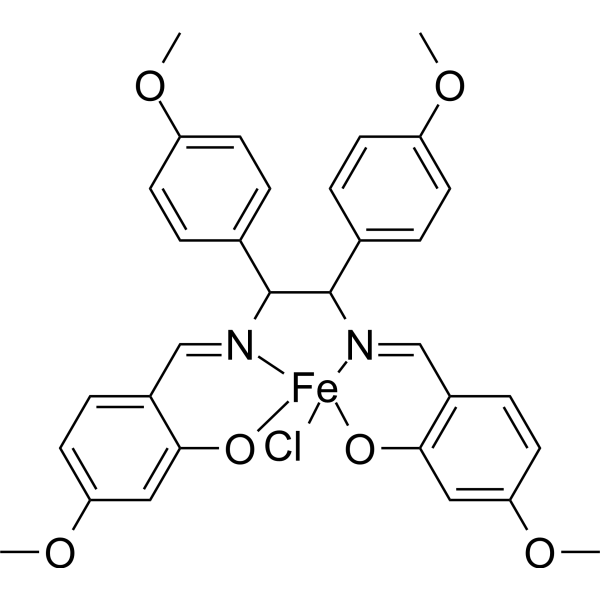 0 ImagesCat. No.: HY-162046
Anticancer agent 178 (compound C2) is a potent anticancer agent. Anticancer agent 178 inhibits MDA-MB 231 cells proliferation and metabolic activity with IC50s of 1.1 and 4.2 μM. Anticancer agent 178 induces ferroptosis and necroptosis in cells.
-
RIP3 activator 1
 0 ImagesCat. No.: HY-168640CAS No.: 1456899-52-7
RIP3 activator 1 (compound C8) is a potent RIP3 activator. RIP3 activator 1 inhibits cell growth. RIP3 activator 1 induces necroptosis through the RIP3/p62/Keap1 signaling pathway. RIP3 activator 1 increases the protein expression of p-MLKL. RIP3 activator 1 induces autophagy. RIP3 activator 1 increases accumulation of LC3-II and p62 protein expression.



