



Necroptosis Inducer
-
Chlorhexidine acetate hydrate
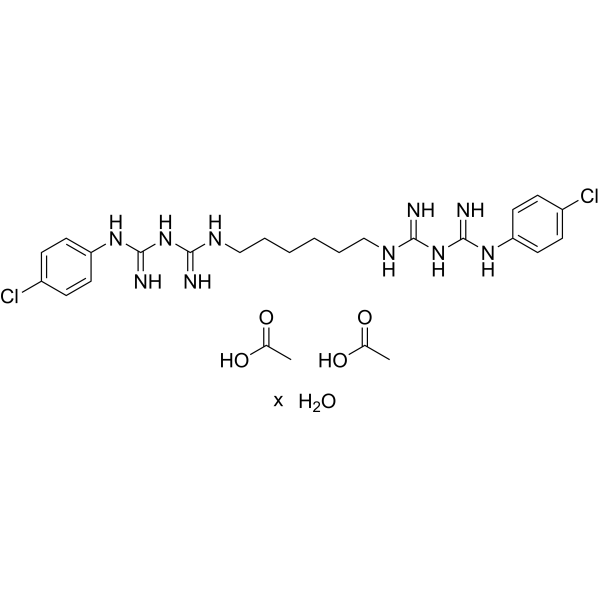 0 ImagesCat. No.: HY-B1248ACAS No.: 206986-79-0
Chlorhexidine acetate hydrate is a orally active cationic antimicrobial agent that targets microbial cell membranes. Chlorhexidine acetate hydrate binds to cell membrane phospholipids non-specifically, destroys membrane structure and induces leakage of cell contents. Chlorhexidine acetate hydrate has broad-spectrum bactericidal activity against both Gram-positive and Gram-negative bacteria. Chlorhexidine acetate hydrate can interfere with membrane permeability, cause protein precipitation and energy metabolism disorders, such as rapid inhibition of microbial growth and induction of cell death (necrosis or apoptosis).
-
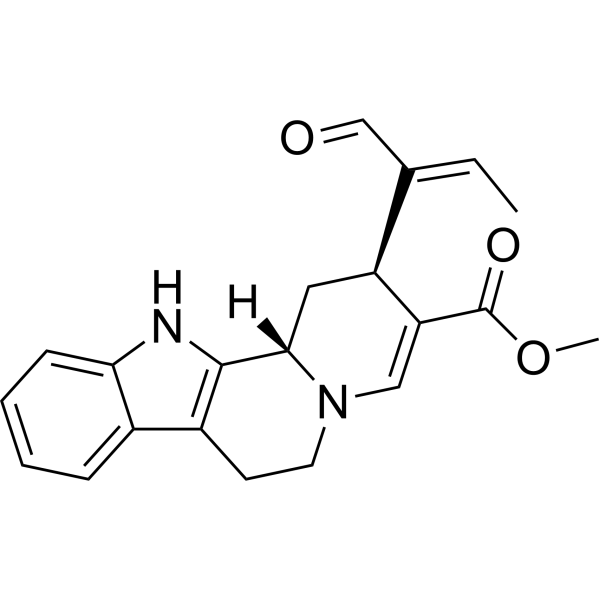
EGFR-IN-134
 0 ImagesCat. No.: HY-168623
EGFR-IN-134 (compound 3f), a triazolo[3,4-a]isoquinoline derivative, is a potent EGFR inhibitor with an IC50 of 0.023 µM. EGFR-IN-134 induces apoptosis and necrosis. EGFR-IN-134 initiates cell cycle arrest at the G2/M and pre-G1 phases, downregulates anti-apoptotic protein Bcl2 and upregulates pro-apoptotic proteins: p53, Bax, and caspases 3, 8, and 9. EGFR-IN-134 shows antiproliferative and anticancer activity.
-
Anticancer agent 118
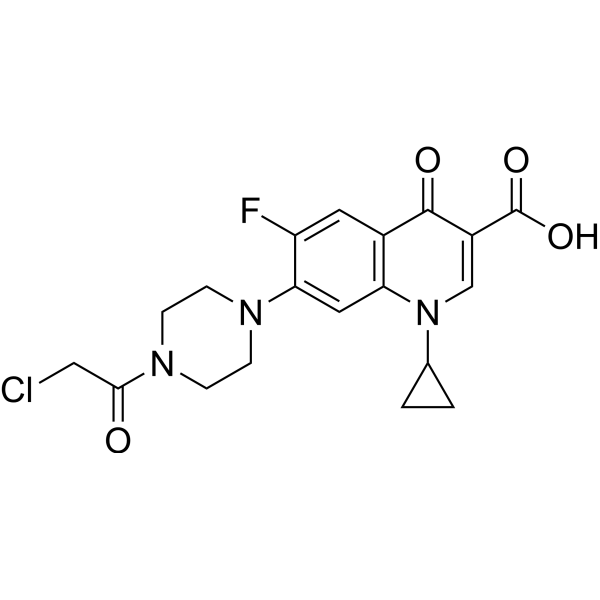 0 ImagesCat. No.: HY-154861CAS No.: 864443-43-6
Anticancer agent 118, a N‑acylated ciprofloxacin derivative, has anti-bacterial and anticancer activities. Anticancer agent 118 shows high activity against Gram-positive strains and antiproliferative activities against prostate PC3 cells. Anticancer agent 118 can be used for antitumor research.
-
Antiparasitic agent-15
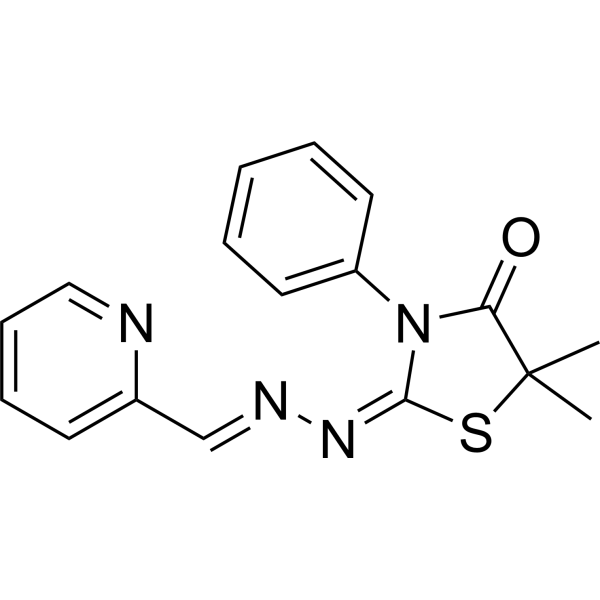 0 ImagesCat. No.: HY-149079CAS No.: 3046451-91-3
Antiparasitic agent-15, a pyridine-thiazolidinone, has anti-Trypanosoma cruzi and leishmanicidal activities. Antiparasitic agent-15 has IC50s of 0.9 μM and 0.64 μM against trypomastigote and amastigote forms of T. cruzi. Antiparasitic agent-15 has IC50s of 42.2 μM and 9.58 μM against trypomastigote and amastigote forms of L. amazonensis. Antiparasitic agent-15 induces parasite cell death through necrosis induction. Antiparasitic agent-15 induces morphological changes such as shortening, retraction and curvature of the parasite body and leakage of internal content with T. cruzi trypomastigotes.
-
Chlorhexidine-d8
 0 ImagesCat. No.: HY-W738281CAS No.: 1246816-96-5
Chlorhexidine-d8 is deuterium-labeled Chlorhexidine (HY-B1248). Chlorhexidine is a orally active cationic antimicrobial agent that targets microbial cell membranes. Chlorhexidine binds to cell membrane phospholipids non-specifically, destroys membrane structure and induces leakage of cell contents. Chlorhexidine has broad-spectrum bactericidal activity against both Gram-positive and Gram-negative bacteria. Chlorhexidine can interfere with membrane permeability, cause protein precipitation and energy metabolism disorders, such as rapid inhibition of microbial growth and induction of cell death (necrosis or apoptosis).
-
Gypsogenin (Standard)
 0 ImagesCat. No.: HY-121382RCAS No.: 639-14-5
Cinosulfuron (Standard) is the analytical standard of Cinosulfuron. This product is intended for research and analytical applications. Gypsogenin is a selective mixed-type BChE inhibitor (Ki=19.99 μM) that also exhibits significant cytotoxicity against various human cancer cell lines. Gypsogenin inhibits tumor growth by inducing cell cycle arrest and triggering apoptosis. Gypsogenin displays antibacterial activity against bacteria such as Bacillus subtilis and Bacillus thuringiensis, and often serves as a key parent nucleus for the synthesis of anticancer compounds. Gypsogenin is widely used in research on Alzheimer's disease and various cancers including colon cancer, melanoma, and leukemia.
-
EGFR-IN-191
 0 ImagesCat. No.: HY-181093
EGFR-IN-191 is an anti-tumor agent targeting both EGFR and AKT. EGFR-IN-191 exerts its anti-tumor activity by inducing DNA damage, apoptosis, cell cycle arrest, and inhibition of the PI3K/AKT-EGFR signaling pathway in tumor cells. EGFR-IN-191 can be used in the study of tumors such as triple-negative breast cancer.
-
Anticancer agent 267
 0 ImagesCat. No.: HY-173075
Anticancer agent 267 (Compound 5q) is the activator for RIPK3 and MLKL. Anticancer agent 267 inhibits the proliferation in a variety of cancer cell lines (IC50 for MDA-MB-231, MDA-MB-486 and MCF-7 is 9.79, 10.77 and 5.94 μM, respectively), arrests cell cycle at subG1 phase, and induces necroptosis in cell MDA-MB-231. Anticancer agent 267 exhibits antitumor activity in mouse xenograft models.
-
Tetrachlorohydroquinone
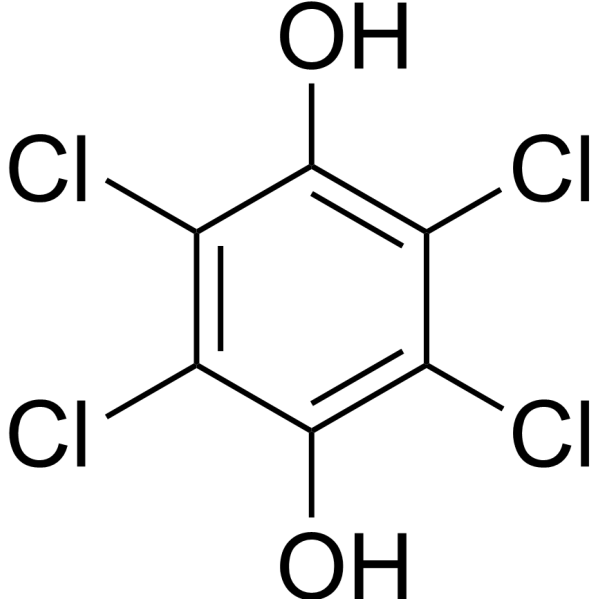 0 ImagesSynonyms: TCHQ; Tetrachloroquinol
Tetrachlorohydroquinone (TCHQ) is a metabolite of Pentachlorophenol. Tetrachlorohydroquinone induces reactive oxidant stress (ROS), inhibits apoptosis and induces necrosis in primary mouse splenocytes. Tetrachlorohydroquinone increases DNA lesions and induces oxidative stress in rodents.

-
Anticancer agent 146
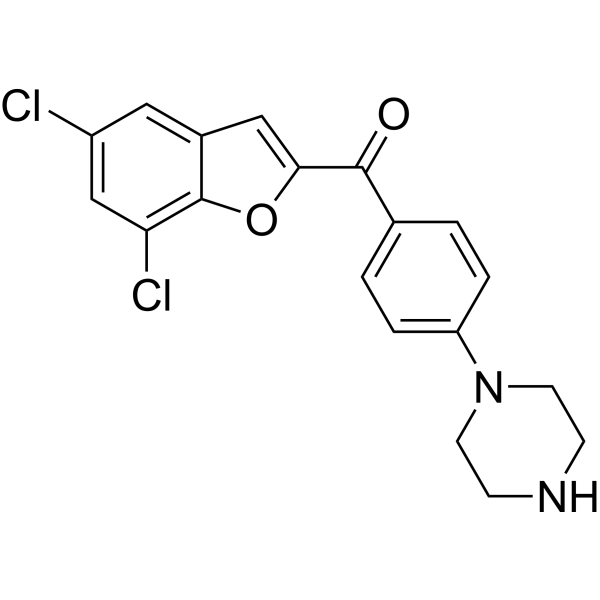 0 ImagesCat. No.: HY-155146
Anticancer agent 146 (compound 1.19) is a necroptosis inducer. Anticancer agent 146 has anti-tumor efficacy in the mouse MDA-MB-231 xenograft model.
-
Antiparasitic agent-16
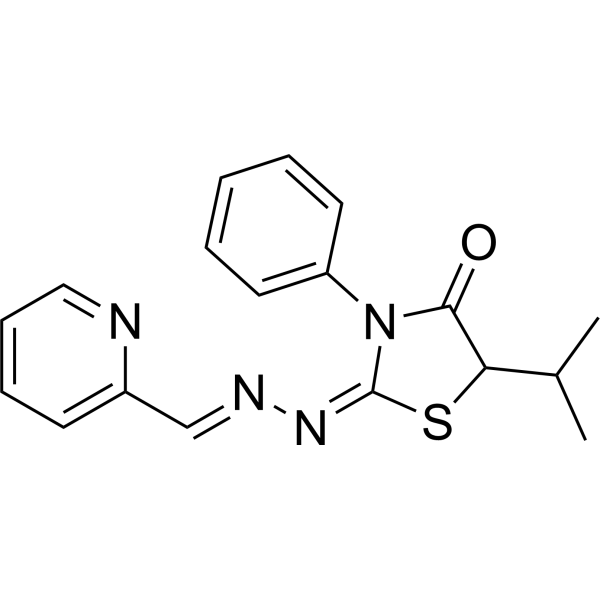 0 ImagesCat. No.: HY-149080CAS No.: 3046451-89-9
Antiparasitic agent-16, a pyridine-thiazolidinone, has anti-Trypanosoma cruzi and leishmanicidal activities. Antiparasitic agent-16 has IC50s of 1.0 μM and 0.6 μM against trypomastigote and amastigote forms of T. cruzi. Antiparasitic agent-16 has IC50s of 150.2 μM and 16.75 μM against trypomastigote and amastigote forms of L. amazonensis. Antiparasitic agent-16 induces parasite cell death through necrosis induction. Antiparasitic agent-16 induces morphological changes such as shortening, retraction and curvature of the parasite body and leakage of internal content with T. cruzi trypomastigotes.
-
AMP423
 0 ImagesCat. No.: HY-119289CAS No.: 219501-57-2
AMP423 is an oxidation inducer and cell cycle regulator. AMP423 induces necrosis, apoptosis, and reactive oxygen species production. AMP423 induces inhibition of protein synthesis, reduction of thiol levels, and S-phase cell accumulation, and exhibits antitumor activity. AMP423 can be used in research related to multiple myeloma and follicular B-cell lymphoma.
-
(-)-Latifolin
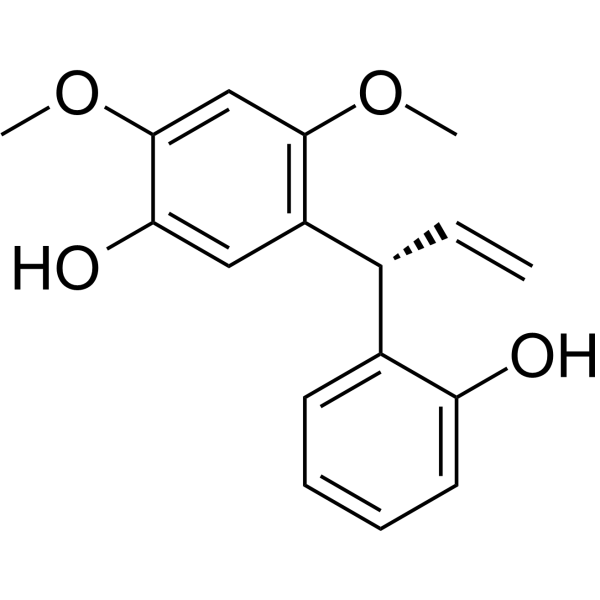 0 ImagesCat. No.: HY-N8380CAS No.: 10154-42-4
(-)-Latifolin, a flavonoid, induces apoptotic cell death by targeting PI3K/AKT/mTOR/p70S6K signaling. (-)-Latifolin significantly inhibits the cell proliferation of oral squamous cell carcinoma (OSCC), and causes the anti-metastatic activities by effectively blocking cell migration, invasion, and adhesion via the inactivation of FAK/Src. (-)-Latifolin suppresses autophagic-related proteins and autophagosome formation. (-)-Latifolin inhibits necroptosis by dephosphorylating necroptosis-regulatory proteins (RIP1, RIP3, and MLKL). (-)-Latifolin has beneficial effects on anti-aging, anti-carcinogenic, anti-inflammatory, and cardio-protective activities.
-
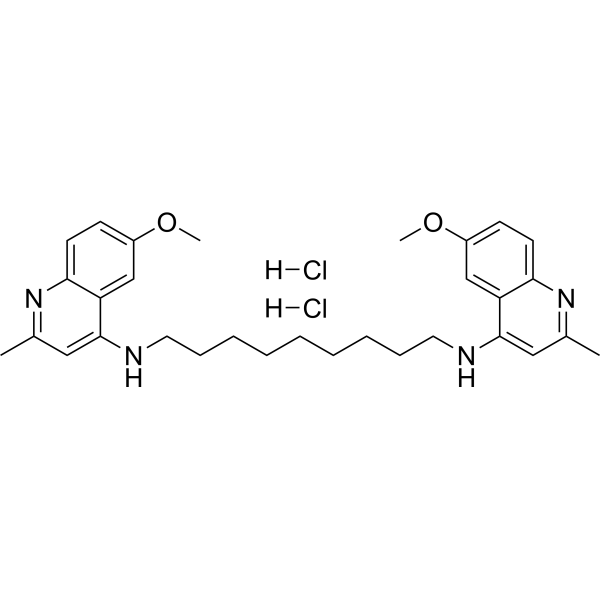
NSC10010 hydrochloride
 0 Images
NSC10010 hydrochloride inhibits gammaherpesvirus associated B-lymphomas growth through activation of NF-kB and c-Myc-mediated signaling pathways. NSC10010 hydrochloride induces necrotic cell death in gammaherpesvirus infected B-cells. NSC10010 hydrochloride is also an inhibitor of Mtb ClpC1 ATPase.
-
Chlorhexidine dihydrochloride (Standard)
 0 Images
Chlorhexidine dihydrochloride (Standard) is the analytical standard of Chlorhexidine dihydrochloride (HY-B1145). This product is intended for research and analytical applications. Chlorhexidine dihydrochloride is a orally active cationic antimicrobial agent that targets microbial cell membranes. Chlorhexidine dihydrochloride binds to cell membrane phospholipids non-specifically, destroys membrane structure and induces leakage of cell contents. Chlorhexidine dihydrochloride has broad-spectrum bactericidal activity against both Gram-positive and Gram-negative bacteria. Chlorhexidine dihydrochloride can interfere with membrane permeability, cause protein precipitation and energy metabolism disorders, such as rapid inhibition of microbial growth and induction of cell death (necrosis or apoptosis).
-
Antineoplastic agent-1
 0 Images
Antineoplastic agent-1 is an alkylating agent and a genotoxic agent that can induce DNA damage. Antineoplastic agent-1 can lead to irreversible damage and progressive death of liver cells due to necroptosis and apoptosis. Antineoplastic agent-1 can cause alkylation damage to hematopoietic cells and stromal cells in the bone marrow. Antineoplastic agent-1 can be used in tumor research.
-
p,p'-DDD (Standard)
 0 ImagesSynonyms: 4,4'-DDD (Standard); p,p'-Dichlorodiphenyl dichloroethane (Standard)
p,p'-DDD (Standard) is the analytical standard of p,p'-DDD (HY-B1984) . This product is intended for research and analytical applications. p,p'-DDD (4,4’-DDD) is an organochlorine insecticide, a major metabolite of p,p'-DDT. p,p'-DDD is an agonist at estrogen receptor α(ERα) and ERβ. p,p'-DDD increases DNA damage, apoptosis and necrosis in peripheral blood. p,p'-DDD stimulates cell proliferation in SKBR3 cells. p,p'-DDD activates the AP-1 transcription factor. p,p'-DDD decreases sleep times of barbiturates and steroids in rats.
-
Periplogenin (Standard)
 0 Images
Periplogenin (Standard) is the analytical standard of Periplogenin (HY-N2414). Periplogenin is an orally active cardiac glycoside found in Cortex periplocae. Periplogenin can induce ROS production and necroptosis and cause G0/G1 phase arrest. Periplogenin can inhibit pyroptosis by regulating the NLRP3/Caspase-1/GSDMD signaling. Periplogenin suppresses growth of prostate carcinoma cells by docking to an ATP1A1 protein pocket and forming a hydrogen bond with T804. Periplogenin can be used for the researches of cancer, inflammation and immunology, such as prostate carcinoma, rheumatoid arthritis and psoriasis.



