



NEK9
NEK9 (NIMA-related kinase 9) is a serine/threonine kinase that functions as a central regulator of mitotic progression by coordinating centrosome dynamics, spindle assembly, and chromosome segregation through a conserved NEK9-NEK6/NEK7 signaling module[1][2]. Mechanistically, NEK9 is activated during early mitosis through sequential regulation by CDK1 and PLK1, enabling downstream activation of NEK6 and NEK7 and promoting proper spindle organization and centrosome separation[1]. NEK9 further contributes to centrosome maturation through direct regulation of NEDD1 and recruitment of γ-tubulin-associated microtubule nucleation machinery, linking centrosome function with efficient bipolar spindle formation[2]. As a result, disruption of NEK9 activity causes defects in spindle assembly, mitotic progression, and chromosome segregation in cellular and experimental systems[1][2]. In disease-relevant contexts, human NEK9 mutations have been associated with developmental abnormalities and abnormal embryonic outcomes, supporting an essential role in organismal development and genome stability[2]. Compared with the closely related kinases NEK6 and NEK7, which act primarily as downstream effectors, NEK9 occupies the upstream position of the signaling cascade and also performs functions that are independent of NEK6/NEK7 activation, particularly in centrosome maturation through NEDD1 regulation[2]. Therefore, NEK9 serves as a valuable experimental target for studies of mitotic control, centrosome biology, spindle assembly, and chromosome stability mechanisms[1][2].
References:
All Product Categories
-
NEK9 Related Products (2)
Related Products (2)

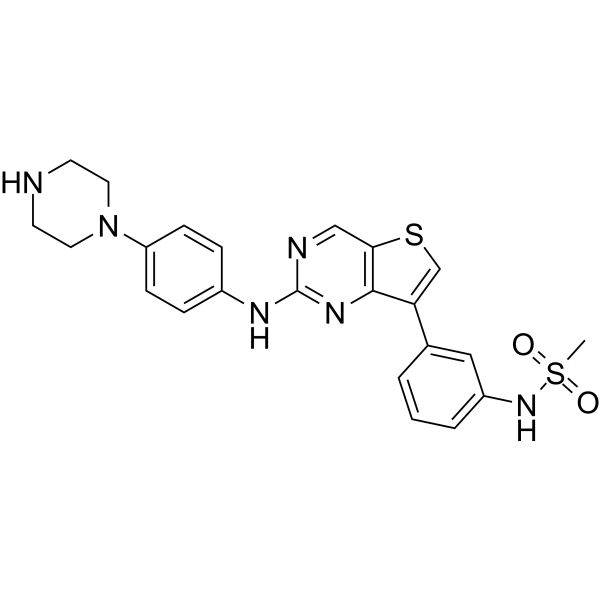
-
DB0614
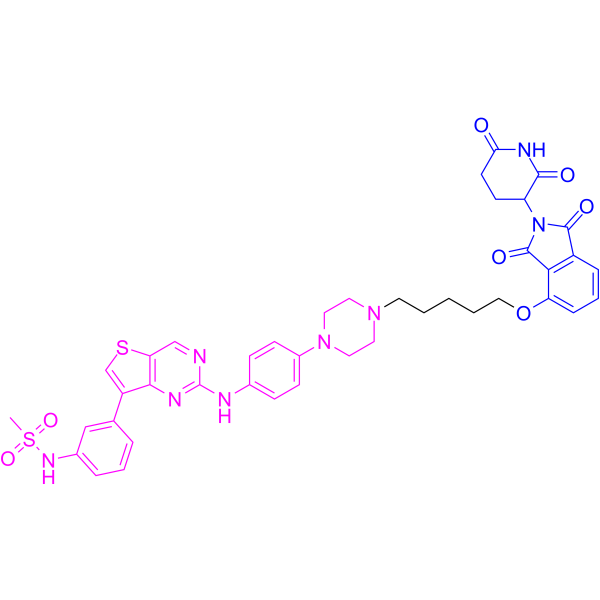 0 ImagesDB0614 is a PROTAC based on Cereblon ligand, which is a selective and potent targeted protein degrader of NEK9 inhibitor. DB0614 can degrade ABL1, ABL2, BLK, CDK11B, CDK4, CSK, EPHA3, FER, GAK, LIMK1, MAP3K20, MAP4K1, MAP4K2, MAP4K3, MAP4K5, MAPK14, MAPK7, MAPK8, MAPK9, MAPKAPK2, MAPKAPK3, NLK, PDIK1L, PTK2B, RIPK1, RPS6KA1, RPS6KA3, SIK2, SIK3, STK35, TNK2 and ULK1. DB0614 can be used for research of disease or disorder mediated by aberrant kinase activity.



