



-
PACAP Receptor Related Products (29)
Related Products (29)

- 1
- 2
-
PACAP (1-38), human, ovine, rat
 0 ImagesSynonyms: Pituitary Adenylate Cyclase Activating Polypeptide 38PACAP (1-38), human, ovine, rat is a PAC1 receptor agonist. PACAP (1-38), human, ovine, rat binds to PACAP type I receptor, PACAP type II receptor VIP1, and PACAP type II receptor VIP2 with IC50s of 4 nM, 2 nM, and 1 nM, respectively. PACAP (1-38), human, ovine, rat increases the α-secretase activity. PACAP (1-38), human, ovine, rat elevates cytosolic Ca2+, increases proliferation and increases phosphorylation of extracellular regulates kinase (ERK) and the epidermal growth factor receptor (EGFR). PACAP (1-38), human, ovine, rat demonstrates potent, efficacious, and sustained stimulatory effects on sympathetic neuronal NPY and catecholamine production. PACAP (1-38), human, ovine, rat can be used for neurotrophic and neuroprotective research.
-
PACAP (6-38), human, ovine, rat TFA
 0 ImagesCat. No.: HY-P0220APurity: 99.89%PACAP (6-38), human, ovine, rat TFA is a potent PACAP receptor antagonist with IC50s of 30, 600, and 40 nM for PACAP type I receptor, PACAP type II receptor VIP1, and PACAP type II receptor VIP2, respectively.
-
PACAP (1-27), human, ovine, rat
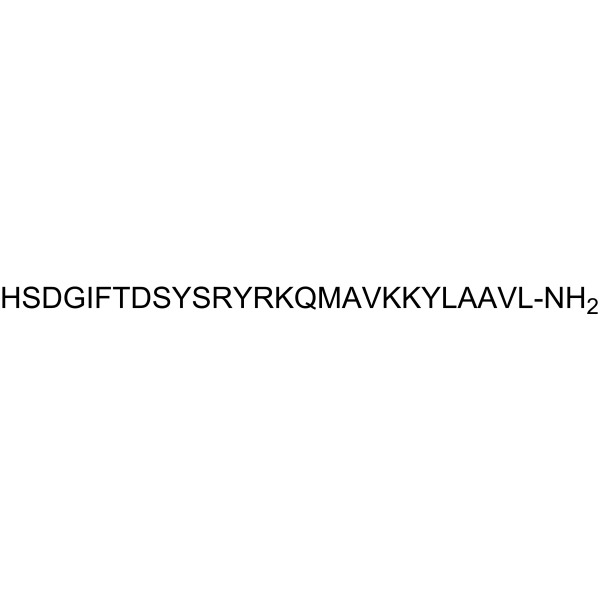 0 ImagesSynonyms: PACAP 1-27PACAP (1-27), human, ovine, rat (PACAP 1-27) is the N-terminal fragment of PACAP-38, and is a potent PACAP receptor agonist with IC50s of 3 nM, 2 nM and 5 nM for rat PAC1, rat VPAC1 and human VPAC2, respectively.
-
PACAP (1-38) free acid
 0 ImagesPACAP (1-38) free acid is a desamido-PACAP (1-38), human, ovine, rat (HY-P0221). PACAP (1-38) free acid can activate the human PAC1 receptor. PACAP (1-38) free acid induces cyclic AMP (cAMP) generation in both NS-1 neuroendocrine cells and non-neuroendocrine HEK293 cells.
-
KS-133 TFA
 0 ImagesCat. No.: HY-P6292APurity: 98.95%KS-133 TFA is a highly selective and potent antagonist of the vascular active enteropeptide receptor 2 (VIPR2) with IC50 values for Ca influx measurement and cAMP measurement of 24.8 nM and 500 nM, respectively. KS-133 TFA reverses the tumor-promoting M2 phenotype of tumor-associated macrophages to the anti-tumor M1 phenotype, alters the tumor immune microenvironment, and inhibits tumor growth. KS-133 TFA can be used for research on schizophrenia and cancer immune regulation.
-
Ro 25-1553 acetate
 0 ImagesCat. No.: HY-P10768BPurity: 98.17%Ro 25-1553 acetate is a selective VIP2 receptor (VPAC2 receptor) agonist. Ro 25-1553 acetate exhibits bronchodilatory effects on tracheal smooth muscle contractions induced by nerve stimulation or Carbachol (HY-B1208). Ro 25-1553 acetate produces a superimposed effect when combined with Formoterol and Salmeterol (HY-14302). Ro 25-1553 acetate can be used for the study of bronchoconstriction.
-
PACAP (1-38), human, ovine, rat-13C5,15N TFA
 0 ImagesCat. No.: HY-P0221SSynonyms: Pituitary Adenylate Cyclase Activating Polypeptide 38-13C5,15N TFAPACAP (1-38), human, ovine, rat-13C5,15N (Pituitary Adenylate Cyclase Activating Polypeptide 38-13C5,15N) TFA is the 13C, 15N-labeled PACAP (1-38), human, ovine, rat (TFA) (HY-P0221A). PACAP (1-38), human, ovine, rat TFA is a PAC1 receptor agonist. PACAP (1-38), human, ovine, rat TFA binds to PACAP type I receptor, PACAP type II receptor VIP1, and PACAP type II receptor VIP2 with IC50s of 4 nM, 2 nM, and 1 nM, respectively. PACAP (1-38), human, ovine, rat TFA increases the α-secretase activity. PACAP (1-38), human, ovine, rat TFA elevates cytosolic Ca2+, increases proliferation and increases phosphorylation of extracellular regulates kinase (ERK) and the epidermal growth factor receptor (EGFR). PACAP (1-38), human, ovine, rat TFA demonstrates potent, efficacious, and sustained stimulatory effects on sympathetic neuronal NPY and catecholamine production. PACAP (1-38), human, ovine, rat TFA can be used for neurotrophic and neuroprotective research.
-
PACAP-38 (16-38), human, mouse, rat acetate
 0 ImagesCat. No.: HY-P1817APACAP-38 (16-38), human, mouse, rat acetate is a peptide fragment encompassing the C-terminal 16-38 segment of PACAP (1-38), human, ovine, rat (HY-P0221). PACAP-38 (16-38), human, mouse, rat acetate lacks the N-terminal 1-15 receptor activation core, but retains the ability to bind to the PAC/VPAC receptor family (PAC1/VPAC1/VPAC2 receptor). PACAP-38 (16-38), human, mouse, rat acetate promotes histamine release and exerts a certain degree of hypotensive effect.
-
PA-8
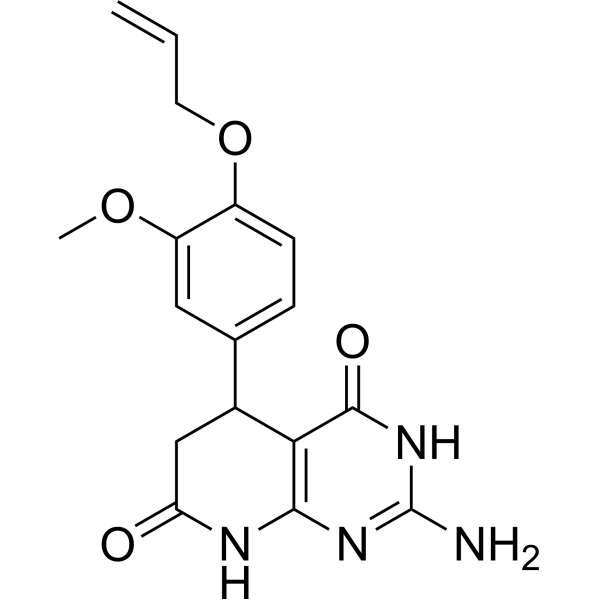 0 ImagesCat. No.: HY-133529CAS No.: 878437-15-1PA-8 is a potent, selective and orally active PACAP type I (PAC1) receptor antagonist. PA-8 inhibits the phosphorylation of CREB induced by PACAP in PAC1-, but not VPAC1- or VPAC2-receptor. PA-8 also inhibits PACAP-induced cAMP elevation with an IC50 of 2 nM.
-
PACAP (6-38), human, ovine, rat
 0 ImagesPACAP (6-38), human, ovine, rat is a potent PACAP receptor antagonist with IC50s of 30, 600, and 40 nM for PACAP type I receptor, PACAP type II receptor VIP1, and PACAP type II receptor VIP2, respectively.


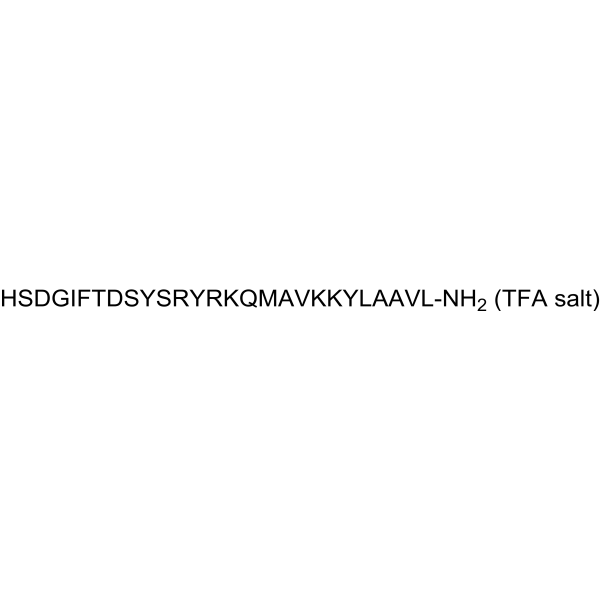
![[D-p-Cl-Phe6,Leu17]-VIP TFA](https://file.medchemexpress.com/product_pic/hy-p1159a.gif "Click to View [D-p-Cl-Phe6,Leu17]-VIP TFA Product Detail")
-
VIP(Guinea pig)
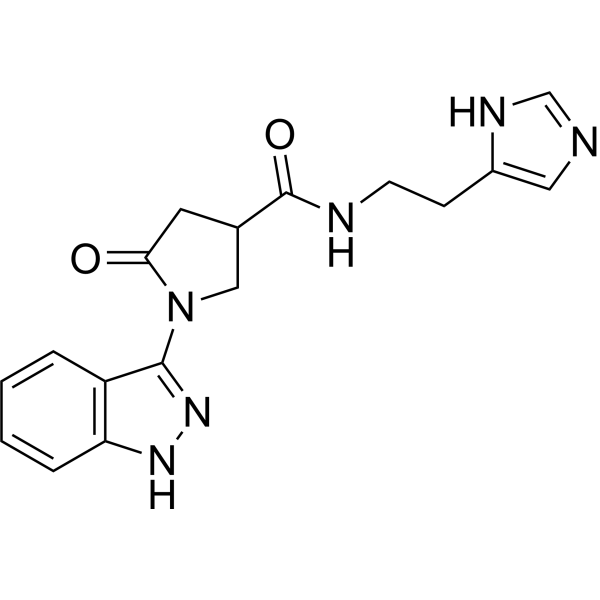
 0 ImagesSynonyms: Vasoactive Intestinal Peptide, guinea pigVIP Guinea pig (Vasoactive intestinal peptide), a trophic and mitogenic factor, stimulates growth in whole cultured embryos. VIP Guinea pig functions as a simple gastrointestinal hormone and suggest a possible neurotransmitter function.
-
ANT308 TFA
 0 ImagesCat. No.: HY-P11288APurity: 99.57%ANT308 TFA is a vasoactive intestinal polypeptide (VIP receptor) antagonist. ANT308 TFA significantly enhances the activation and proliferation of T cells. ANT308 TFA inhibits the migration and metastasis, induces apoptosis of melanoma tumor cells by inhibiting VIP-VPAC2 signaling and reducing the expression of MCAM and N-cadherin. ANT308 TFA can be used for the study of acute myeloid leukemia (AML) and uveal melanoma (UVM).
-
KS-133
 0 ImagesKS-133 is a bicyclic peptide with VIPR2 antagonistic activity that can cross the blood-brain barrier. KS-133 selectively blocks VIPR2-mediated Gq/Ca, Gs/cAMP, cAMP/PKA/ERK and PI3K/AKT/GSK3β signaling pathways. KS-133 inhibits VIPR2 agonist-induced CREB phosphorylation in the prefrontal cortex of mice. KS-133 shifts the polarization direction of macrophages toward M1. KS-133 attenuates cancer cell proliferation and reduces the cell cycle distribution level at the S-M phase. KS-133 exerts antitumor effects in a mouse model of colorectal cancer. KS-133 reverses cognitive decline in mouse models of psychiatric disorders. KS-133 can be used for research related to schizophrenia, colorectal cancer and breast cancer.
-
Anti-PACAP38 Antibody
 0 ImagesCat. No.: HY-P990481Anti-PACAP38 Antibody is a human antibody expressed in CHO cells, targeting PACAP38. The Anti-PACAP38 Antibody has a huIgG4SP type heavy chain and a huκ type light chain, with a predicted molecular weight (MW) of 150 kDa. The isotype control for Anti-PACAP38 Antibody can refer to Human IgG4 kappa, Isotype Control (HY-P99003).
-
PACAP (1-38), human, ovine, rat TFA
 0 ImagesCat. No.: HY-P0221ASynonyms: Pituitary Adenylate Cyclase Activating Polypeptide 38 TFAPACAP (1-38), human, ovine, rat TFA is a PAC1 receptor agonist. PACAP (1-38), human, ovine, rat TFA binds to PACAP type I receptor, PACAP type II receptor VIP1, and PACAP type II receptor VIP2 with IC50s of 4 nM, 2 nM, and 1 nM, respectively. PACAP (1-38), human, ovine, rat TFA increases the α-secretase activity. PACAP (1-38), human, ovine, rat TFA elevates cytosolic Ca2+, increases proliferation and increases phosphorylation of extracellular regulates kinase (ERK) and the epidermal growth factor receptor (EGFR). PACAP (1-38), human, ovine, rat TFA demonstrates potent, efficacious, and sustained stimulatory effects on sympathetic neuronal NPY and catecholamine production. PACAP (1-38), human, ovine, rat TFA can be used for neurotrophic and neuroprotective research.
- 1
- 2



