



β-Carotene
Based on 3 publication(s) in Google Scholar
β-Carotene (Provitamin A), a carotenoid compound, is a naturally-occurring vitamin A precursor. β-Carotene is a modulator of reactive oxygen species (ROS), with antioxidant and antiinflammatory activities. β-Carotene may serve as an antioxidant or as a prooxidant, depending on its intrinsic properties as well as on the redox potential of the biological environment in which it acts. β-Carotene induces breast cancer cells apoptosis, with anticancer activities.
For research use only. We do not sell to patients.
- Purity : 99.25%
- CAS No.: 7235-40-7
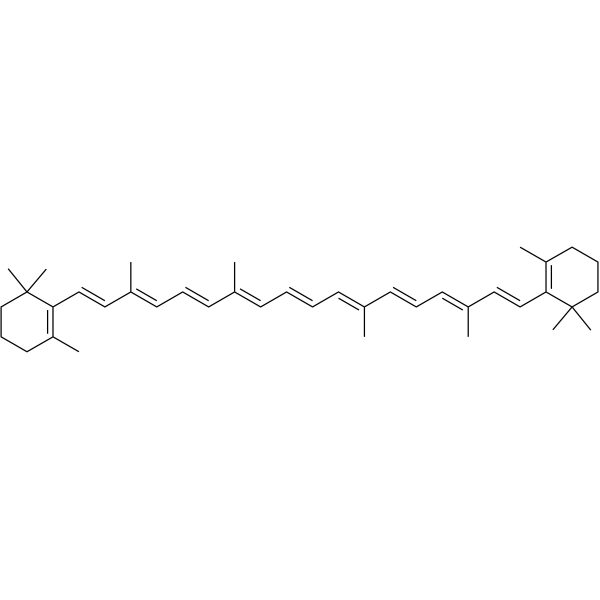
- Formula: C40H56
- Molecular Weight:536.87
-
Storage:
-20°C, protect from light, stored under nitrogen
* In solvent : -80°C, 6 months; -20°C, 1 month (protect from light, stored under nitrogen)

To place orders, for customer services and technical support, please contact: MedChemExpress USA
Tel: 609-228-6898 E-mail: [email protected] [email protected]


-
 Biological Activity
-
Chemical Information
-
Solvent & Solubility
- Protocols
- Purity & Documentation
- References
-
 Help & FAQs


-
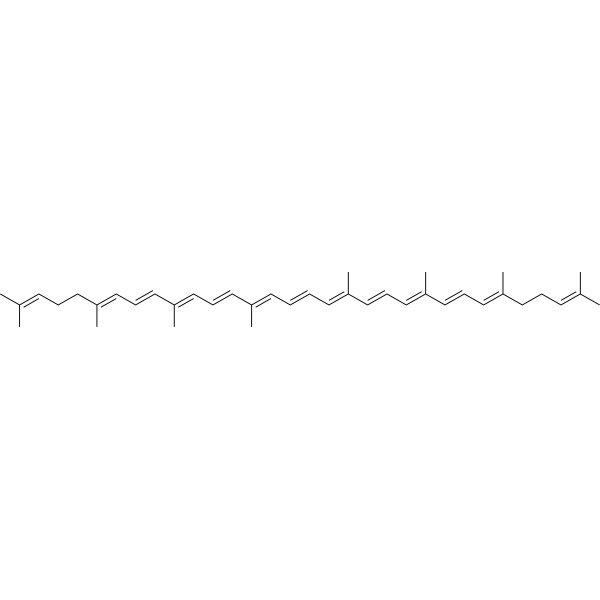
HY-N0287
LycopeneAntioxidant -
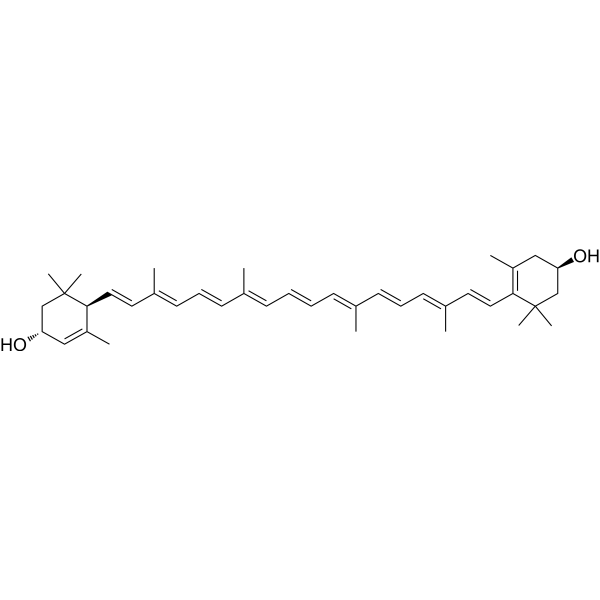
HY-N6947
LuteinAnti-inflammatory Agent -
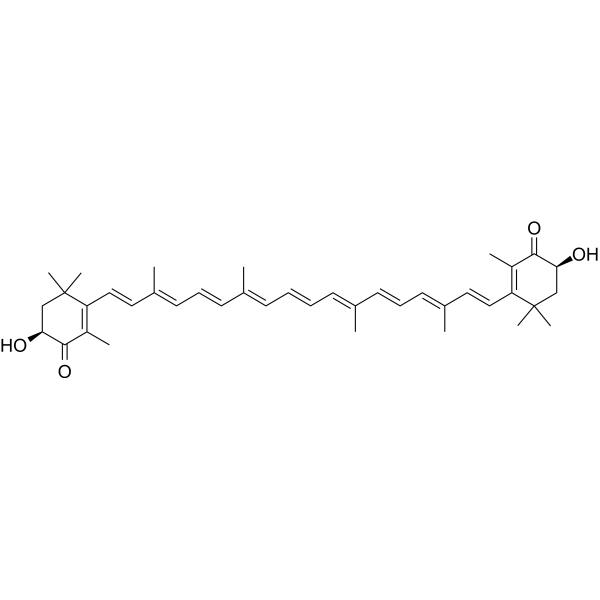
HY-B2163
AstaxanthinAntioxidant -
HY-120318
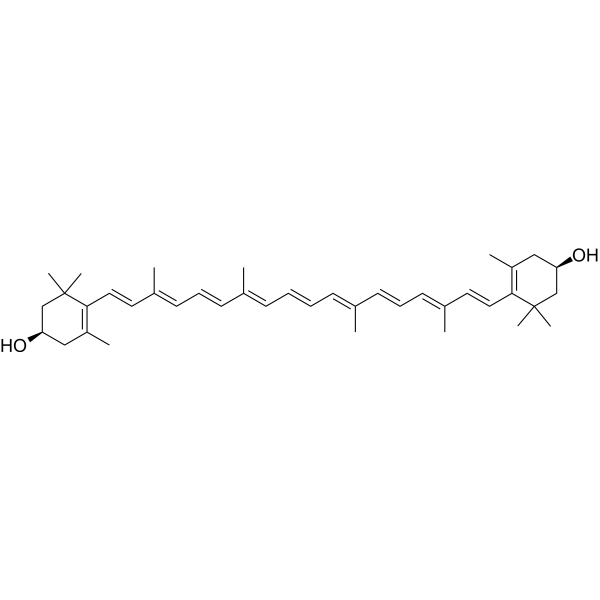
ZeaxanthinDiet-obtained Carotenoid -
HY-B0150
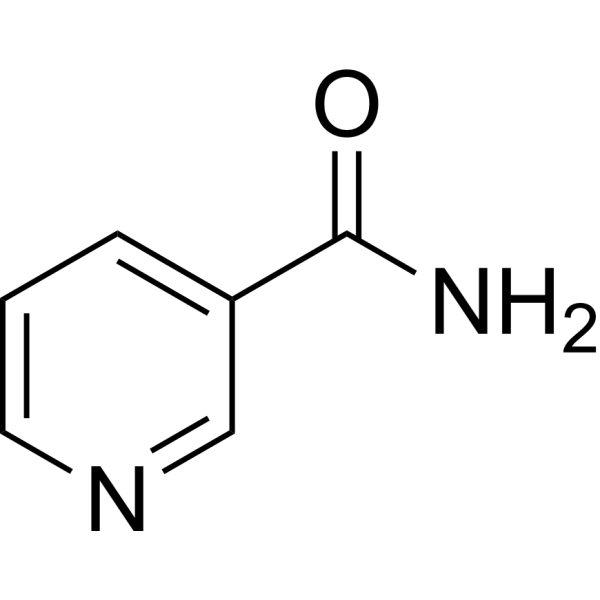
NicotinamideSIRT Inhibitor -
HY-18085
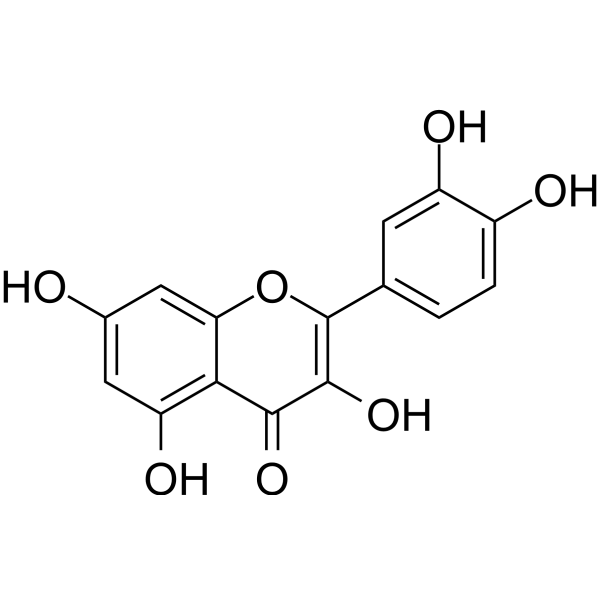
QuercetinFlavonoid Antioxidant -

HY-N0411R
β-Carotene (Standard)Carotenoid compound -
HY-15398
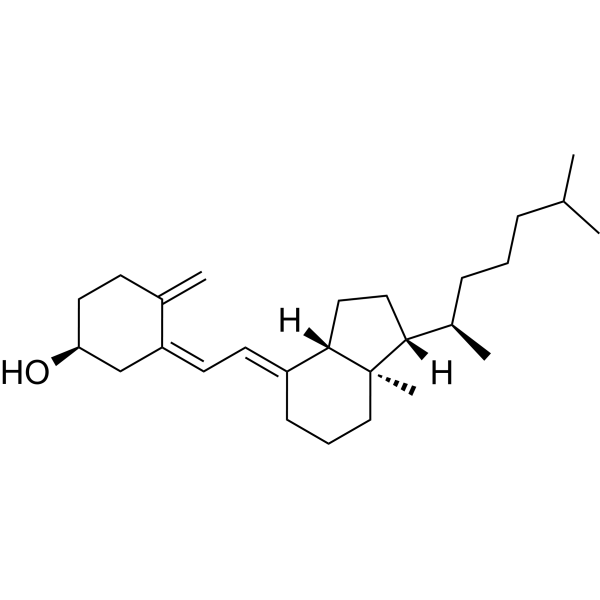
Vitamin D3Vitamin -
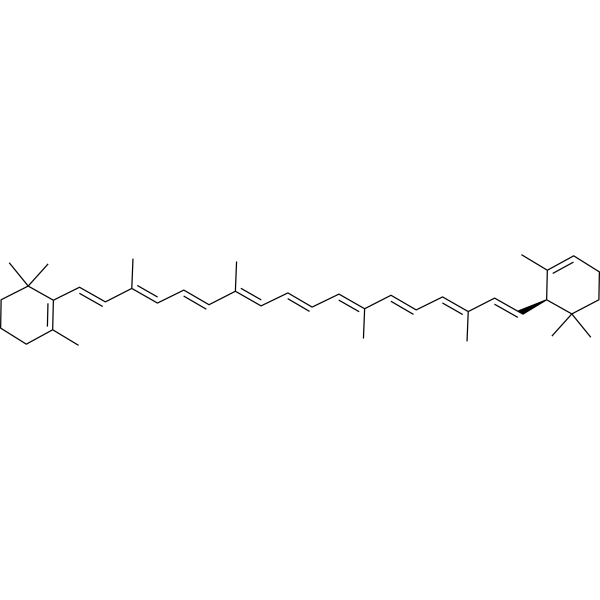
HY-113462
α-CaroteneVitamin A Precursor -
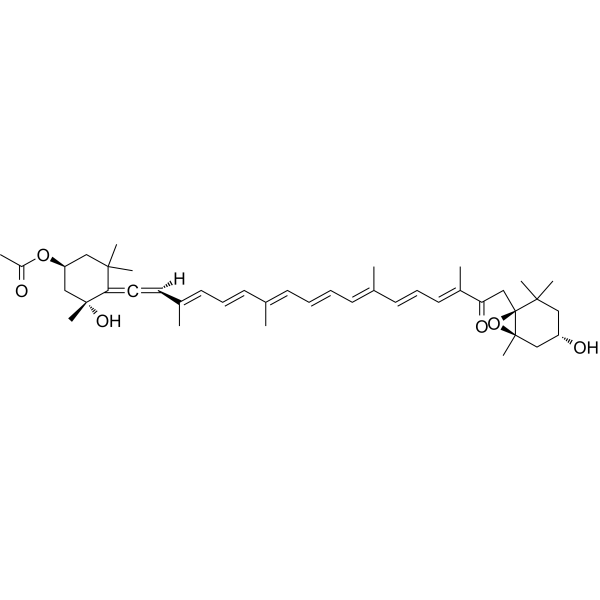
HY-N2302
FucoxanthinMarine Carotenoid -
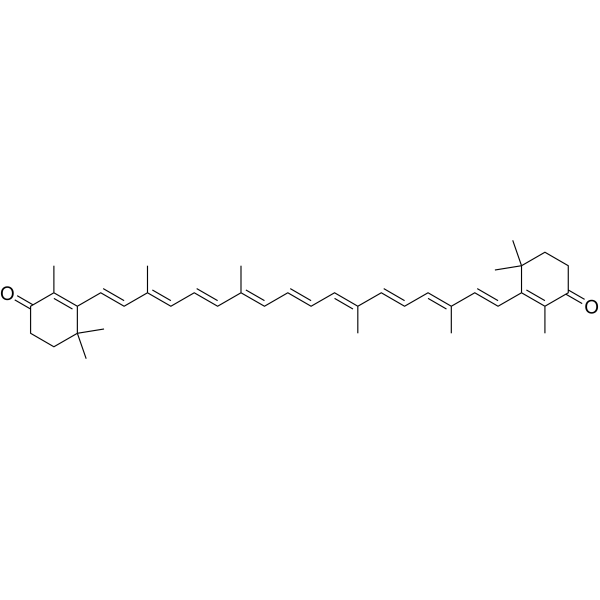
HY-B1960
CanthaxanthinAntioxidant -
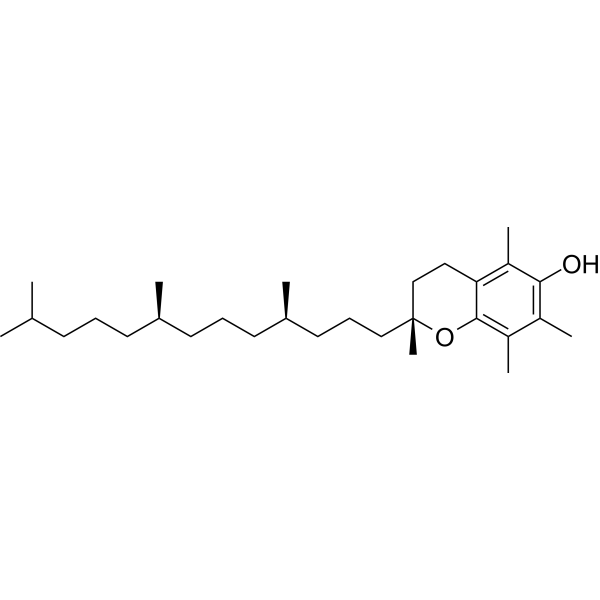
HY-N0683
α-Vitamin EAntioxidant
Publications Citing Use of MedChemExpress (MCE) β-Carotene
More Customer Validation & Images

-
Cell Proliferation/Viability Assay
-
Flow Cytometry
-
WB
-
IF
-
Cell Proliferation/Viability Assay
All Endogenous Metabolite Isoforms
More

Biological Activity
Description
IC50 & Target
[3]|
Human Endogenous Metabolite |
apoptosis |
Cellular Effect
|
Cell Line

|
Type | Value | Description | References |
|---|---|---|---|---|
| Raji | IC50 |
12.7 nM
Compound: beta-carotene
|
Inhibition of TPA-induced Epstein-Barr virus early antigen activation in Raji cells after 48 hrs
Inhibition of TPA-induced Epstein-Barr virus early antigen activation in Raji cells after 48 hrs
|
[PMID: 17503850] |
| Raji | IC50 |
397 molar ratio
Compound: beta-carotene
|
Inhibition of TPA-induced EBV-early antigen activation in human Raji cells relative to TPA
Inhibition of TPA-induced EBV-early antigen activation in human Raji cells relative to TPA
|
[PMID: 17190444] |
| Raji | IC50 |
397 molar ratio
Compound: Beta-carotene
|
Inhibition of TPA-induced EBV early antigen activation in human Raji cells relative to TPA
Inhibition of TPA-induced EBV early antigen activation in human Raji cells relative to TPA
|
[PMID: 19746919] |
| Raji | IC50 |
400 molar ratio
Compound: beta-carotene
|
Inhibition of 12-O-tetradecanoylphorbol-13-acetate-induced EBV-early antigen activation in human Raji cells assessed as EA activation per 32 pmol TPA after 48 hrs
Inhibition of 12-O-tetradecanoylphorbol-13-acetate-induced EBV-early antigen activation in human Raji cells assessed as EA activation per 32 pmol TPA after 48 hrs
|
[PMID: 11429990] |
| Raji | IC50 |
400 molar ratio
Compound: beta-carotene
|
Inhibition of TPA-induced EBV-early antigen activation in human Raji cells per 32 pmol TPA after 48 hrs
Inhibition of TPA-induced EBV-early antigen activation in human Raji cells per 32 pmol TPA after 48 hrs
|
[PMID: 12608849] |
| Raji | IC50 |
400 molar ratio
Compound: beta-carotene
|
Inhibition of TPA-induced EBV-early antigen activation in human Raji cells assessed as early antigen activation after 48 hrs relative to control
Inhibition of TPA-induced EBV-early antigen activation in human Raji cells assessed as early antigen activation after 48 hrs relative to control
|
[PMID: 12662094] |
| Raji | IC50 |
400 molar ratio
Compound: Beta-Carotene
|
Inhibition of 12-O-tetradecanoylphorbol-13-acetate-induced EBV-early antigen activation in human Raji cells assessed per 32 pmol TPA
Inhibition of 12-O-tetradecanoylphorbol-13-acetate-induced EBV-early antigen activation in human Raji cells assessed per 32 pmol TPA
|
[PMID: 14695799] |
| Raji | IC50 |
400 molar ratio
Compound: Beta-carotene
|
Inhibition of 12-O-tetradecanoylphorbol-13-acetate-induced EBV-early antigen activation in human Raji cells assessed per 32 pmol TPA by immunofluorescence technique
Inhibition of 12-O-tetradecanoylphorbol-13-acetate-induced EBV-early antigen activation in human Raji cells assessed per 32 pmol TPA by immunofluorescence technique
|
[PMID: 14695801] |
In Vitro
β-Carotene up-regulates PPAR-γ expression and ROS production in MCF-7 cancer cells[3].
β-Carotene (1-100 μM; 72 hours) remarkably decreases the survival of MCF-7 cells in a dose-dependent manner[3].
β-Carotene (50 μM; 24-72 hours) significantly enhances the expression levels of PPAR-γ mRNA and protein in a time-dependent manner[3].
β-Carotene down-regulates the COX-2 but up-regulates the p21 mRNA level and protein expression in a time dependent manner[3].
β-Carotene significantly increases the percentage of early apoptosis and the effect was partly attenuated by pre-incubation with GW9662 (HY-16578) or GSH (HY-D0187)[3].
β-Carotene induces cytochrome C release[3].
MedChemExpress (MCE) has not independently confirmed the accuracy of these methods. They are for reference only. Further protocols information, click here.
-
Cell Line:MCF-7 cells
-
Concentration:1 μM, 10 μM, 20 μM, 50 μM, 100 μM
-
Incubation Time:72 hours
-
Result:Decreased the numbers of viable cells to 70% and 50% at 20 μM and 50 μM, respectively.
-
Cell Line:MCF-7 cells
-
Concentration:50 μM
-
Incubation Time:24 hours, 48 hours, 72 hours
-
Result:Up-regulated the PPAR-γ mRNA.
-
Cell Line:MCF-7 cells
-
Concentration:50 μM
-
Incubation Time:24 hours, 48 hours, 72 hours
-
Result:Up-regulated PPAR-γ protein expression levels.
-
Cell Line:MCF-7 cells
-
Concentration:50 μM
-
Incubation Time:72 hours
-
Result:Induced MCF-7 cells apoptosis.
Clinical Trial
| NCT Number | Sponsor | Condition | Start Date |
Phase
|
|---|---|---|---|---|
| NCT01329991 | Plexxikon| | 2011-05 | PHASE1 |


Chemical Information
-
CAS No. 7235-40-7
-
Appearance Solid
-
Molecular Weight 536.87
-
Formula C40H56
-
Color Brown to red
-
SMILES
CC1(C)C(/C=C/C(C)=C/C=C/C(C)=C/C=C/C=C(C)/C=C/C=C(C)/C=C/C2=C(C)CCCC2(C)C)=C(C)CCC1
-
Synonyms
Provitamin A; beta-Carotene
-
Structure Classification
-
Shipping
Room temperature in continental US; may vary elsewhere.
-
Storage
-20°C, protect from light, stored under nitrogen
* In solvent : -80°C, 6 months; -20°C, 1 month (protect from light, stored under nitrogen)


Publications (3)
-
Journal Impact Factor
-
Most Recent
-
Redox Biol
2025 Feb 21:81:103561. PMID: 40020452 -
-
Evid Based Complement Alternat Med
β-Carotene Attenuates Apoptosis and Autophagy via PI3K/AKT/mTOR Signaling Pathway in Necrotizing Enterocolitis Model Cells IEC-6. [Abstract]2022 Jun 17:2022:2502263. PMID: 35754683
β-Carotene purchased from MedChemExpress. Usage Cited in: Evid Based Complement Alternat Med. 2022 Jun 17:2022:2502263. [Abstract]
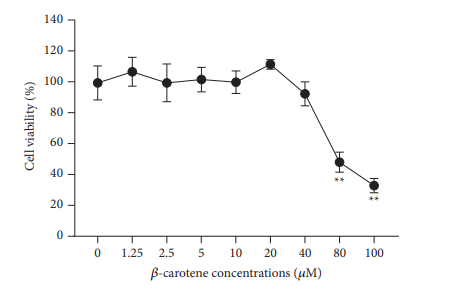
The CCK-8 assay was used to measure the viability of IEC-6 cells. IEC-6 cells were treated with β-Carotene at the indicated doses (0, 1.25, 2.5, 5, 10, 20, 40, 80, and 100 μM) for 24 h.
β-Carotene purchased from MedChemExpress. Usage Cited in: Evid Based Complement Alternat Med. 2022 Jun 17:2022:2502263. [Abstract]
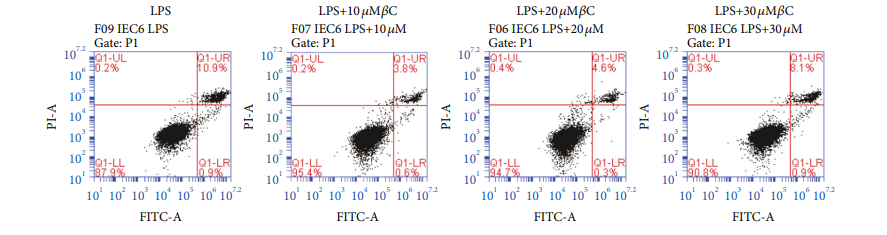
Cells were first treated with LPS (100 μM) for 3 hours, and then with β-Carotene (10, 20, and 30 μM) for 24 hours. Apoptosis was quantitatively analyzed by flow cytometry.
β-Carotene purchased from MedChemExpress. Usage Cited in: Evid Based Complement Alternat Med. 2022 Jun 17:2022:2502263. [Abstract]
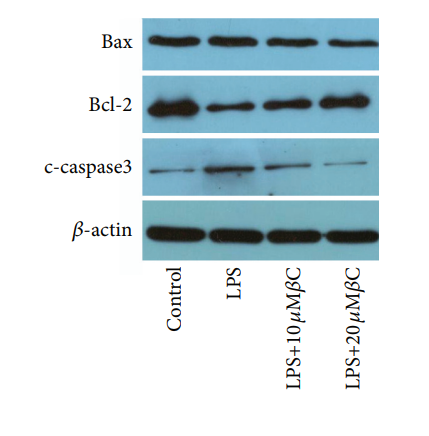
Cells were first treated with LPS (100 μM) for 3 hours, and then with β-Carotene (10, 20, and 30 μM) for 24 hours. The expression of Bax, Bcl-2, and cleaved caspase-3 was detected by Western blot.
β-Carotene purchased from MedChemExpress. Usage Cited in: Evid Based Complement Alternat Med. 2022 Jun 17:2022:2502263. [Abstract]
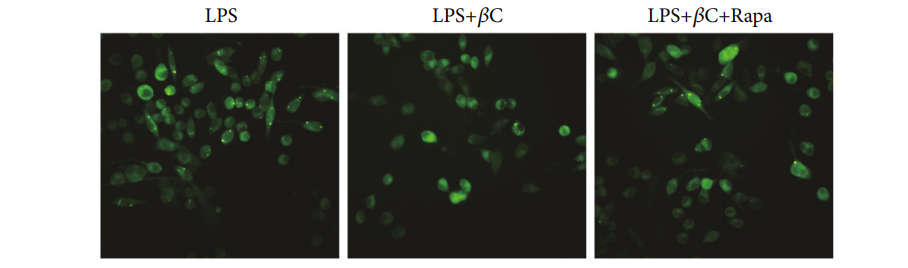
Cells were exposed to LPS (100 μM) for 3 hours, then treated with β-Carotene (10 μM) and incubated for 24 hours with or without rapamycin (RAPA, 10 μM). Immunofluorescence was used to detect the formation of GFP-LC3 spots.
β-Carotene purchased from MedChemExpress. Usage Cited in: Evid Based Complement Alternat Med. 2022 Jun 17:2022:2502263. [Abstract]
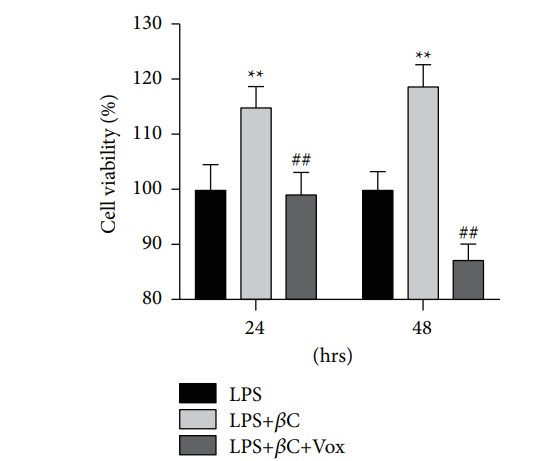
Cells were pretreated with LPS (100 μM) for 3 hours, then with β-Carotene (10 μM), and cultured for another 24 hours with or without voxtalisib (5 μM). Cell viability was assessed using the CCK-8 assay.


Solvent & Solubility
In Vitro:
THF : 10 mg/mL (18.63 mM; ultrasonic and warming and heat to 60°C)
Please refer to the solubility information to select the appropriate solvent. Once prepared, please aliquot and store the solution to prevent product inactivation from repeated freeze-thaw cycles.
Storage method and period of stock solution: -80°C, 6 months; -20°C, 1 month (protect from light, stored under nitrogen). When stored at -80°C, please use it within 6 months. When stored at -20°C, please use it within 1 month.
Please refer to the solubility information to select the appropriate solvent. Once prepared, please aliquot and store the solution to prevent product inactivation from repeated freeze-thaw cycles.
Storage method and period of stock solution: -80°C, 6 months; -20°C, 1 month (protect from light, stored under nitrogen). When stored at -80°C, please use it within 6 months. When stored at -20°C, please use it within 1 month.
Concentration (start) × Volume (start) = Concentration (final) × Volume (final)

Protocols
-
Apoptosis
Apoptosis, also called programmed cell death, is generally characterized by distinct morphological characteristics.
-
TUNEL staining for apoptotic DNA fragmentation
TUNEL staining detects DNA strand breaks by using terminal deoxynucleotidyl transferase to add labeled nucleotides to exposed 3′-OH DNA termini, generating either microscopic staining in fixed cells or tissue sections, or fluorescence/cytometric signal in cell suspensions. TUNEL positivity reflects DNA fragmentation but should not be interpreted alone as definitive apoptosis, because TUNEL can also label necrotic, autolytic, mechanically damaged, or DNA-repair-associated DNA breaks.
-
Annexin V plus membrane-impermeant dye apoptosis staining
Annexin V-based apoptosis assays rely on the detection of phosphatidylserine (PS) externalization from the inner leaflet of the plasma membrane to the outer leaflet, an early biochemical hallmark of apoptosis. Fluorescently labeled Annexin V binds PS in a calcium-dependent manner, enabling identification of early apoptotic cells by flow cytometry or fluorescence microscopy. When combined with a membrane-impermeant DNA-binding dye (e. g. , propidium iodide), this approach allows discrimination between viable (Annexin V−/dye−), early apoptotic (Annexin V+/dye−), and late apoptotic or necrotic (Annexin V+/dye+) cell populations by assessing membrane integrity and PS exposure.
-
ROS/oxidative-stress fluorescent staining
ROS/oxidative-stress fluorescent staining uses cell-permeant fluorogenic probes that become fluorescent after oxidation inside cells or tissues; commonly used examples include DCFH-DA/DCFDA for broad cellular oxidant detection, DHE for superoxide-related signal detection, MitoSOX for mitochondrial superoxide-related signal detection, and CellROX probes for oxidative-stress-associated fluorescence readouts. The assay detects probe oxidation rather than a single ROS species unless the probe and analysis method have been chemically validated for that species. DCFH-DA enters cells, is deacetylated by intracellular esterases to DCFH, and produces fluorescent DCF after oxidation, so the readout is used as an operational measure of total cellular oxidative stress rather than a species-specific ROS measurement. DHE and MitoSOX can report superoxide-related oxidation, but red fluorescence alone can include non-specific ethidium-like oxidation products; HPLC or optimized spectral approaches are
-
Apoptosis Solutions
Apoptosis is a regulated, generally non-lytic cell-death pathway that removes unwanted, damaged, infected, or abnormal cells through coordinated morphological changes, caspase activation, DNA fragmentation, and membrane remodeling. The intrinsic apoptosis pathway is controlled mainly by mitochondrial outer membrane permeabilization, BCL-2 family proteins, cytochrome c release, apoptosome formation, caspase-9 activation, and downstream executioner caspase-3/7 activation. The extrinsic apoptosis pathway is initiated by death receptors such as Fas, TNFR, and TRAIL receptors, which recruit adaptor proteins and activate caspase-8 before engaging executioner caspases or mitochondrial amplification through BID cleavage. Apoptosis is linked to many phenotypes, including cancer cell killing, tissue homeostasis, immune regulation, neurodegeneration, infection response, and treatment-induced cytotoxicity; unresolved questions include how apoptosis interacts with necroptosis, pyroptosis, ferroptos
-
Breast Cancer Modeling
Breast cancer is a heterogeneous cancer, and it has been distinguished into four subtypes: luminal A, luminal B, HER2-positive and basal-like. Molecular mutations, epigenetic alterations, hormone exposure and immune microenvironment are related to the progression of breast cancer.


Purity & Documentation
-
Data Sheet (275 KB)
-
SDS (393 KB)
- English - EN (393 KB)
- Français - FR (393 KB)
- Deutsch - DE (393 KB)
- Norwegian - NO (393 KB)
- Español - ES (393 KB)
- Swedish - SV (393 KB)
- Italian - IT (393 KB)
- Korean - KR (393 KB)
- Portuguese - PT (393 KB)
-
Handling Instructions (2659 KB)
References
[1]. Tanumihardjo, S.A., Factors influencing the conversion of carotenoids to retinol: bioavailability to bioconversion to bioefficacy. Int J Vitam Nutr Res, 2002. 72(1): p. 40-5. [Content Brief]
[2]. Leo, M.A., et al. Alcohol, vitamin A, and beta-carotene: adverse interactions, including hepatotoxicity and carcinogenicity. Am J Clin Nutr, 1999. 69(6): p. 1071-85. [Content Brief]
[3]. Yanhong Cui, et al. beta-Carotene induces apoptosis and up-regulates peroxisome proliferator-activated receptor gamma expression and reactive oxygen species production in MCF-7 cancer cells. Eur J Cancer. 2007 Nov;43(17):2590-601. [Content Brief]
[4]. AKIFUMI KAWATA, et al. Anti-inflammatory Activity of β-Carotene, Lycopene and Tri-n-butylborane, a Scavenger of Reactive Oxygen Species. In Vivo. 2018 Mar-Apr; 32(2): 255-264. [Content Brief]
[5]. Paola Palozza, et al. Prooxidant effects of beta-carotene in cultured cells. Mol Aspects Med. 2003 Dec;24(6):353-62. [Content Brief]


Complete Stock Solution Preparation Table
Please refer to the solubility information to select the appropriate solvent. Once prepared, please aliquot and store the solution to prevent product inactivation from repeated freeze-thaw cycles.
Storage method and period of stock solution: -80°C, 6 months; -20°C, 1 month (protect from light, stored under nitrogen). When stored at -80°C, please use it within 6 months. When stored at -20°C, please use it within 1 month.
| Optional Solvent | Concentration Solvent Mass | 1 mg | 5 mg | 10 mg | 25 mg |
|---|---|---|---|---|---|
| THF | 1 mM | 1.8626 mL | 9.3132 mL | 18.6265 mL | 46.5662 mL |
| 5 mM | 0.3725 mL | 1.8626 mL | 3.7253 mL | 9.3132 mL | |
| 10 mM | 0.1863 mL | 0.9313 mL | 1.8626 mL | 4.6566 mL | |
| 15 mM | 0.1242 mL | 0.6209 mL | 1.2418 mL | 3.1044 mL |


β-Carotene Related Classifications
HY-N0411 Related Classifications
 Powered by Bioz