



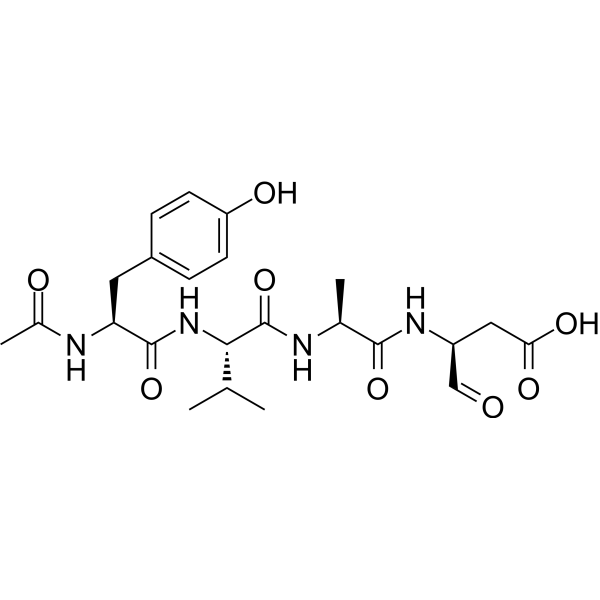
Ac-YVAD-CHO

Based on 1 Customer Validation
Ac-YVAD-CHO (L-709049) is a potent, reversible, specific tetrapeptide interleukin-lβ converting enzyme (ICE) inhibitor with mouse and human Ki values of 3.0 and 0.76 nM. Ac-YVAD-CHO is also a caspase-1 inhibitor. Ac-YVAD-CHO can suppress the production of mature IL-lβ.
For research use only. We do not sell to patients.
- Purity : 98.99%
- CAS No.: 143313-51-3
- Formula: C23H32N4O8
- Molecular Weight:492.52
-
Storage:
Sealed storage, away from moisture.
Powder -80°C, 2 years , -20°C, 1 year* In solvent : -80°C, 6 months; -20°C, 1 month (sealed storage, away from moisture)

To place orders, for customer services and technical support, please contact: MedChemExpress USA
Tel: 609-228-6898 E-mail: [email protected] [email protected]


-
 Biological Activity
-
Chemical Information
-
Solvent & Solubility
- Protocols
- Purity & Documentation
- References
-
 Help & FAQs


-
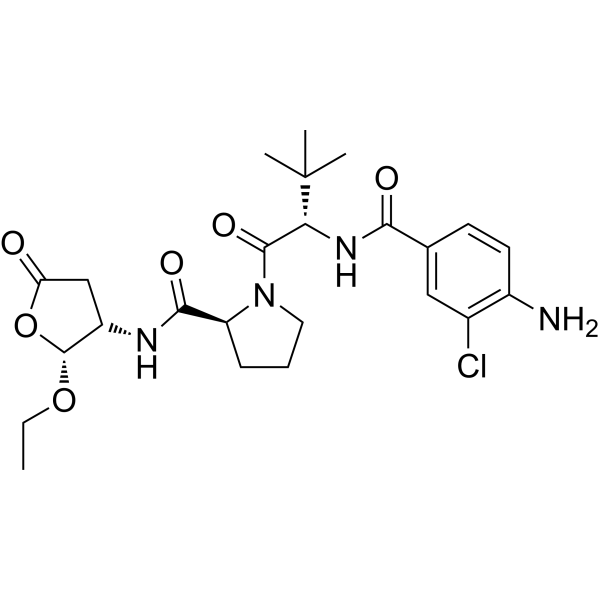
HY-13205
BelnacasanCaspase-1 Inhibitor -
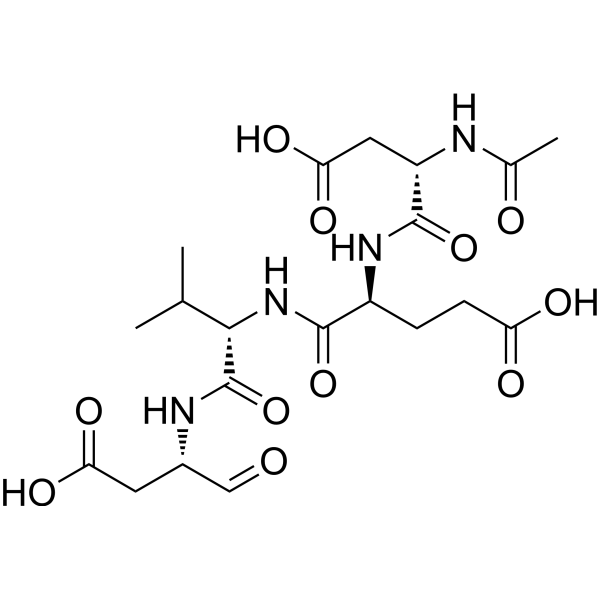
HY-P1001
Ac-DEVD-CHOCaspase-3 Inhibitor -
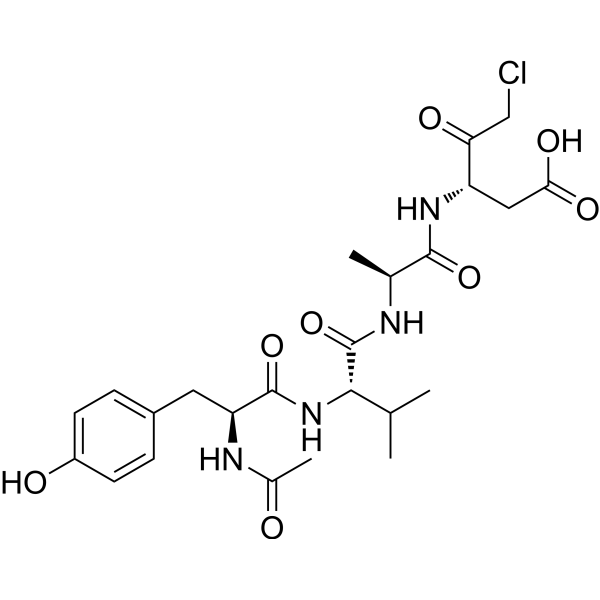
HY-16990
Ac-YVAD-cmkCaspase-1 Inhibitor -
HY-111675
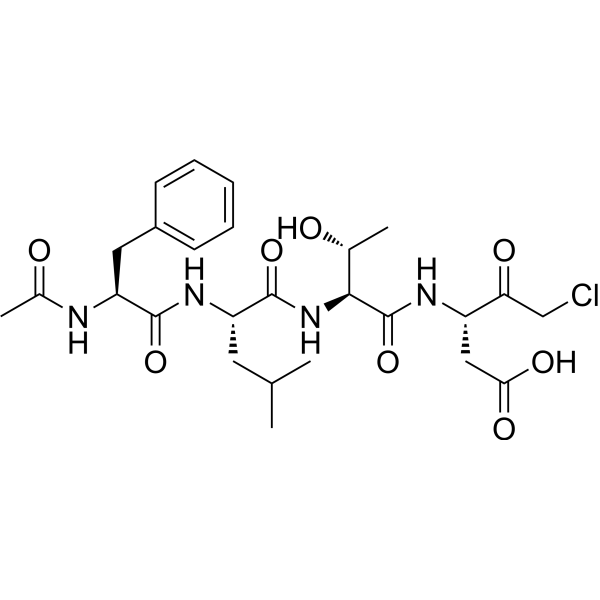
Ac-FLTD-CMKCaspase Inhibitor -
HY-P0034
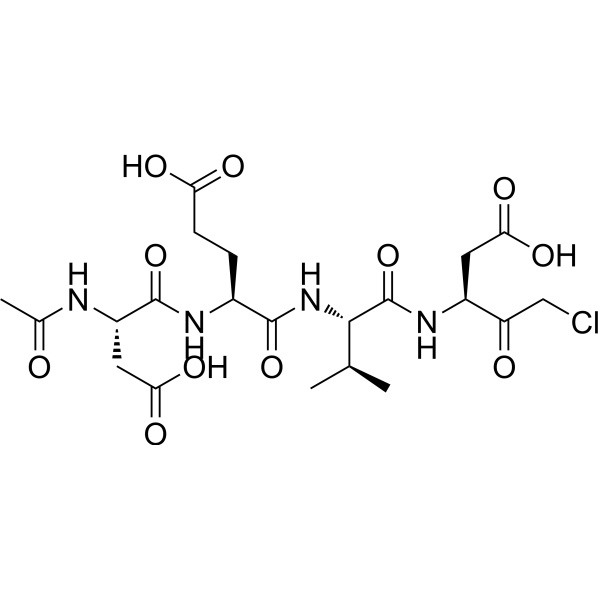
Ac-DEVD-CMKCaspase-3 Inhibitor -
HY-10396
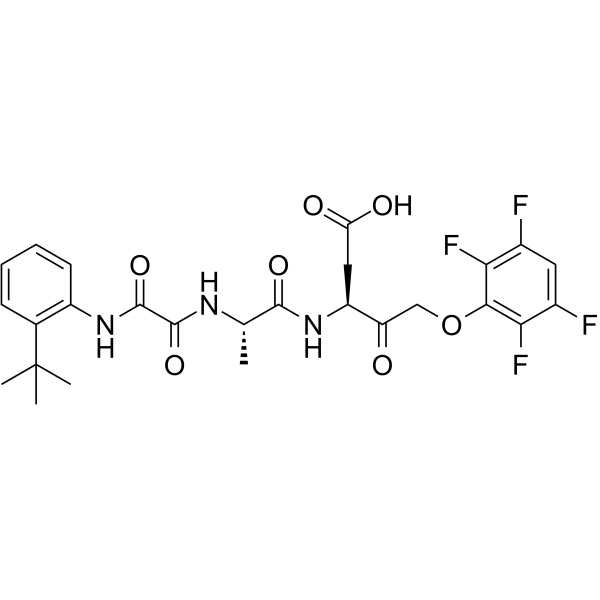
Emricasanpan-Caspase Inhibitor -
HY-101872
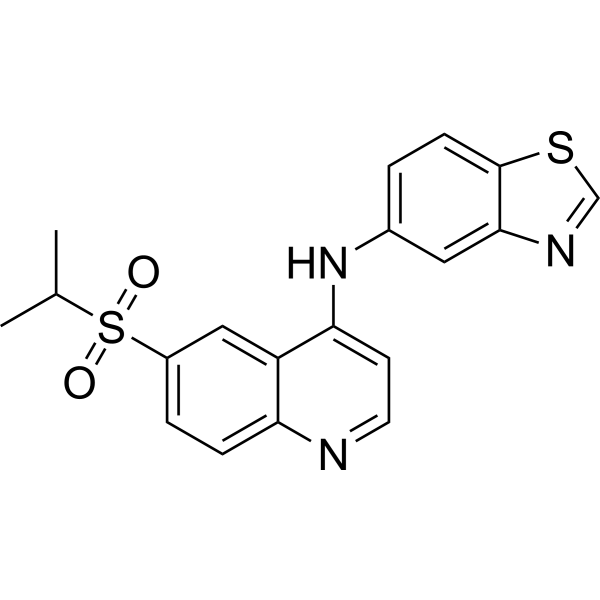
GSK-872RIPK3 Inhibitor -
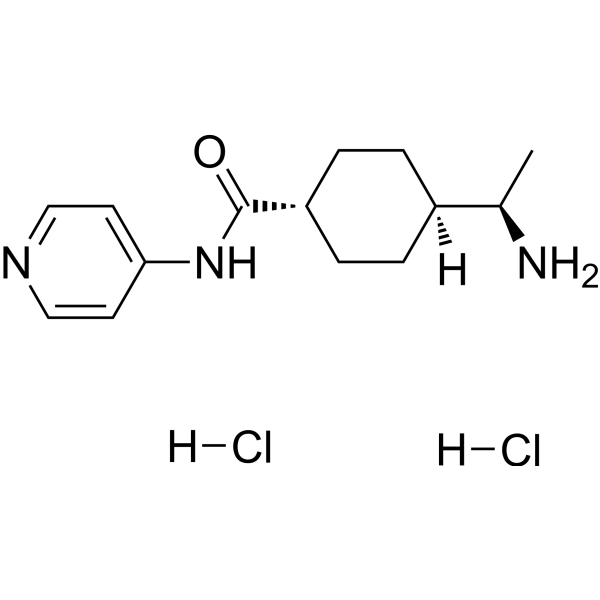
HY-10583
Y-27632 dihydrochlorideROCK Inhibitor -
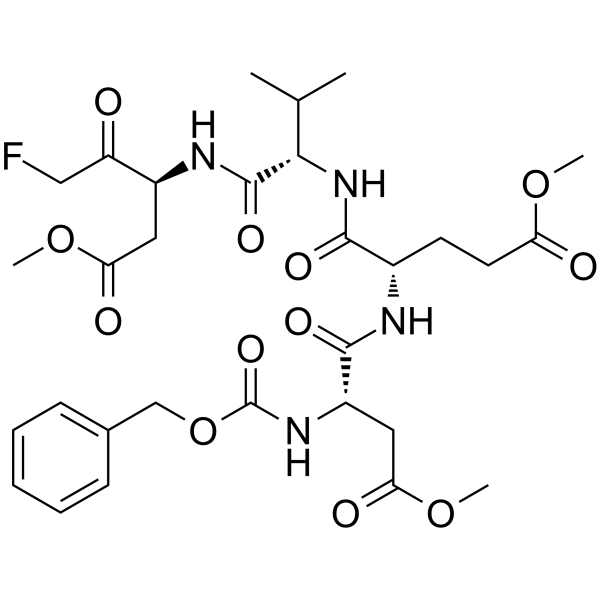
HY-12466
Z-DEVD-FMKCaspase-3 Inhibitor -
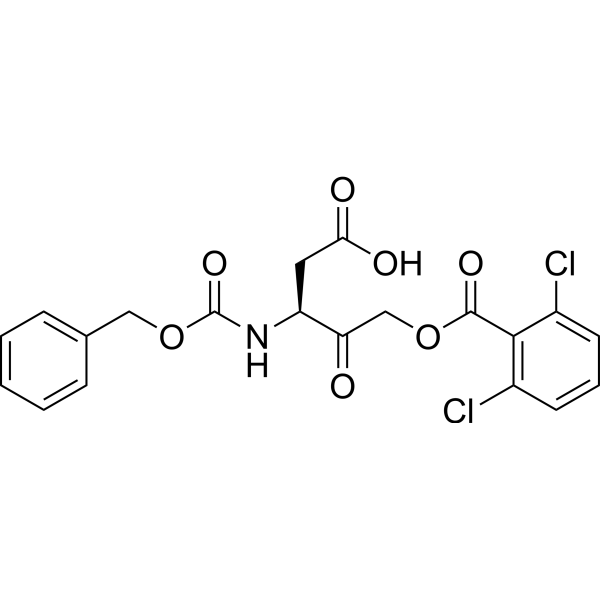
HY-113953
Z-Asp-CH2-DCBCaspase Inhibitor -
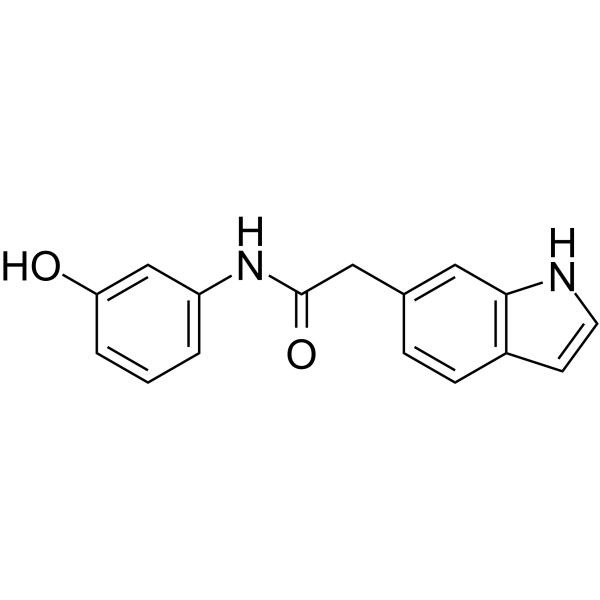
HY-144226
NLRP3/AIM2-IN-3NLRP3/AIM2 Inhibitor -
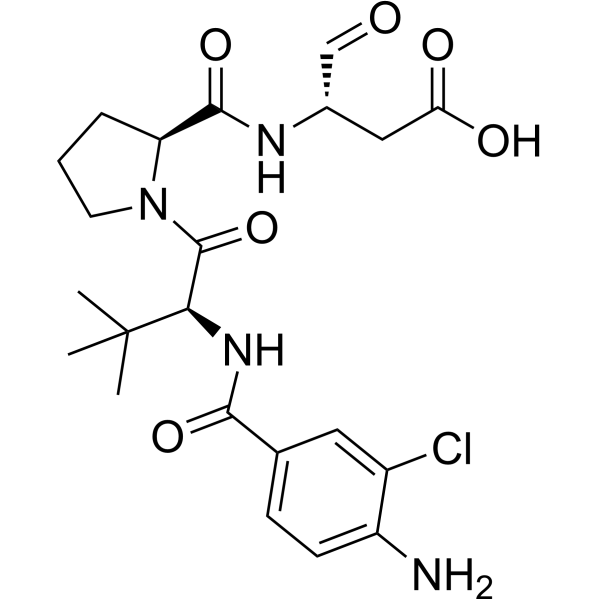
HY-112226
VRT-043198Caspase-1/4 Inhibitor
All Caspase Isoforms
More

Biological Activity
Description
|
IL-1β |
Caspase-1 |
Cellular Effect
|
Cell Line

|
Type | Value | Description | References |
|---|---|---|---|---|
| PBMC | IC50 |
1.2 μM
Compound: 1
|
Inhibition of LPS-induced IL1-beta production in human PBMC by ELISA
Inhibition of LPS-induced IL1-beta production in human PBMC by ELISA
|
[PMID: 20656488] |
| THP-1 | IC50 |
2 μM
Compound: Ac-YVAD-CHO
|
Induction of IL-1 beta production in LPS-induced human THP-1 cells by ELISA
Induction of IL-1 beta production in LPS-induced human THP-1 cells by ELISA
|
[PMID: 21916432] |
| THP-1 | IC50 |
6.8 x 10⁻⁵ M
Compound: 1a
|
Amidolytic activity of THP.1 cell lysate against IL-1 beta converting enzyme using C1-Asp-AMC as a substrate
Amidolytic activity of THP.1 cell lysate against IL-1 beta converting enzyme using C1-Asp-AMC as a substrate
|
[PMID: 9873373] |
| THP-1 | IC50 |
0.00019 M
Compound: 1a
|
Amidolytic activity of THP.1 cell lysate against Caspase-3 using C3-Asp-AMC as a substrate
Amidolytic activity of THP.1 cell lysate against Caspase-3 using C3-Asp-AMC as a substrate
|
[PMID: 9873373] |
| THP-1 | IC50 |
0.19 mM
Compound: 1a
|
Amidolytic activity of THP.1 cell lysate against Caspase-3 using C3-Asp-AMC as a substrate
Amidolytic activity of THP.1 cell lysate against Caspase-3 using C3-Asp-AMC as a substrate
|
[PMID: 9873373] |
In Vitro
Ac-YVAD-CHO inhibits mouse and human IL-1β with IC50 values of 2.5 and 0.7 μM respectively[1].
Ac-YVAD-CHO (0.01-100 μM) reduces the elevations of IL-lβ in the plasma and peritoneal fluid treated with LPS[1].
Ac-YVAD-CHO (15.6 μM) reduces NO-induced thymocyte apoptosis[3].
Ac-YVAD-CHO (15.6 μM, 12 h) inhibits NO-induced PARP cleavage in SNAP-treated thymocytes[3].
MedChemExpress (MCE) has not independently confirmed the accuracy of these methods. They are for reference only.
-
Cell Line:SNAP-treated thymocytes
-
Concentration:15.6 μM
-
Incubation Time:12 h
-
Result:Reduced PARP cleavage.
In Vivo
Ac-YVAD-CHO (2-8 μg, intrastriatal infusion) attenuates Quinolinic acid (QA)-induced apoptosis in rat striatum[2].
Ac-YVAD-CHO (10 and 50 mg/kg; i.p.; 1 hour) is cleared from the blood rapidly, and drops precipitously to approximately 1 and 0.2 μM at 30 and 60 minutes after injection[1].
MedChemExpress (MCE) has not independently confirmed the accuracy of these methods. They are for reference only.
-
Animal Model:P. acnes-sensitized mice[1]
-
Dosage:50 mg/kg
-
Administration:I.p.;
-
Result:Suppressed IL-1β levels in blood.
-
Animal Model:Quinolinic acid-treated Rats[2]
-
Dosage:2-8 μg
-
Administration:Intrastriatal infusion.
-
Result:Attenuated Quinolinic acid (QA)-induced increases in p53 and apoptosis in rat striatum.
Inhibited QA-induced increases in caspase-1 activity and p53 protein levels, with no effect on QA-induced IκB-α degradation, NF-κB or AP-1 activation.


Chemical Information
-
CAS No. 143313-51-3
-
Appearance Solid
-
Molecular Weight 492.52
-
Formula C23H32N4O8
-
Color White to off-white
-
Synonyms
L-709049
-
Sequence Shortening
Ac-YVAD-CHO
-
Shipping
Room temperature in continental US; may vary elsewhere.
-
Storage
Sealed storage, away from moisture
Powder -80°C 2 years -20°C 1 year * In solvent : -80°C, 6 months; -20°C, 1 month (sealed storage, away from moisture)


Solvent & Solubility
In Vitro:
H2O : ≥ 50 mg/mL (101.52 mM)
* "≥" means soluble, but saturation unknown.
Please refer to the solubility information to select the appropriate solvent. Once prepared, please aliquot and store the solution to prevent product inactivation from repeated freeze-thaw cycles.
Storage method and period of stock solution: -80°C, 6 months; -20°C, 1 month (sealed storage, away from moisture). When stored at -80°C, please use it within 6 months. When stored at -20°C, please use it within 1 month.
* Note: If you choose water as the stock solution, please dilute it to the working solution, then filter and sterilize it with a 0.22 μm filter before use.
Please refer to the solubility information to select the appropriate solvent. Once prepared, please aliquot and store the solution to prevent product inactivation from repeated freeze-thaw cycles.
Storage method and period of stock solution: -80°C, 6 months; -20°C, 1 month (sealed storage, away from moisture). When stored at -80°C, please use it within 6 months. When stored at -20°C, please use it within 1 month.
* Note: If you choose water as the stock solution, please dilute it to the working solution, then filter and sterilize it with a 0.22 μm filter before use.
Concentration (start) × Volume (start) = Concentration (final) × Volume (final)


Purity & Documentation
-
Data Sheet (277 KB)
-
SDS (254 KB)
- English - EN (254 KB)
- Français - FR (254 KB)
- Deutsch - DE (254 KB)
- Norwegian - NO (254 KB)
- Español - ES (254 KB)
- Swedish - SV (254 KB)
- Italian - IT (254 KB)
- Korean - KR (254 KB)
- Portuguese - PT (254 KB)
-
Handling Instructions (2659 KB)
References
[1]. Fletcher DS, et al. A synthetic inhibitor of interleukin-1 beta converting enzyme prevents endotoxin-induced interleukin-1 beta production in vitro and in vivo. J Interferon Cytokine Res. 1995;15(3):243-248. [Content Brief]
[2]. Cao Y, et al. Caspase-1 inhibitor Ac-YVAD-CHO attenuates quinolinic acid-induced increases in p53 and apoptosis in rat striatum. Acta Pharmacol Sin. 2005 Feb;26(2):150-4. [Content Brief]
[3]. Zhou X, et al. Nitric oxide induces thymocyte apoptosis via a caspase-1-dependent mechanism. J Immunol. 2000 Aug 1;165(3):1252-8. [Content Brief]


Complete Stock Solution Preparation Table
Please refer to the solubility information to select the appropriate solvent. Once prepared, please aliquot and store the solution to prevent product inactivation from repeated freeze-thaw cycles.
Storage method and period of stock solution: -80°C, 6 months; -20°C, 1 month (sealed storage, away from moisture). When stored at -80°C, please use it within 6 months. When stored at -20°C, please use it within 1 month.
| Optional Solvent | Concentration Solvent Mass | 1 mg | 5 mg | 10 mg | 25 mg |
|---|---|---|---|---|---|
| H2O | 1 mM | 2.0304 mL | 10.1519 mL | 20.3037 mL | 50.7594 mL |
| 5 mM | 0.4061 mL | 2.0304 mL | 4.0607 mL | 10.1519 mL | |
| 10 mM | 0.2030 mL | 1.0152 mL | 2.0304 mL | 5.0759 mL | |
| 15 mM | 0.1354 mL | 0.6768 mL | 1.3536 mL | 3.3840 mL | |
| 20 mM | 0.1015 mL | 0.5076 mL | 1.0152 mL | 2.5380 mL | |
| 25 mM | 0.0812 mL | 0.4061 mL | 0.8121 mL | 2.0304 mL | |
| 30 mM | 0.0677 mL | 0.3384 mL | 0.6768 mL | 1.6920 mL | |
| 40 mM | 0.0508 mL | 0.2538 mL | 0.5076 mL | 1.2690 mL | |
| 50 mM | 0.0406 mL | 0.2030 mL | 0.4061 mL | 1.0152 mL | |
| 60 mM | 0.0338 mL | 0.1692 mL | 0.3384 mL | 0.8460 mL | |
| 80 mM | 0.0254 mL | 0.1269 mL | 0.2538 mL | 0.6345 mL | |
| 100 mM | 0.0203 mL | 0.1015 mL | 0.2030 mL | 0.5076 mL |
* Note: If you choose water as the stock solution, please dilute it to the working solution, then filter and sterilize it with a 0.22 μm filter before use.


Ac-YVAD-CHO Related Classifications
HY-120019 Related Classifications
 Powered by Bioz