



Acreozast
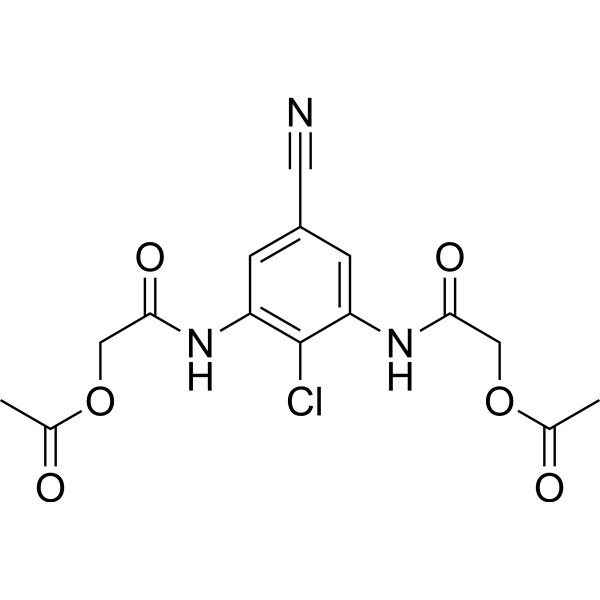
Acreozast (TYB-2285) is a histamine release inhibitor. Acreozast inhibits the histamine release primed with IL-3. Acreozast might regulate allergic inflammation in vivo by the suppression of mediator release primed with IL-3.
For research use only. We do not sell to patients.
- CAS No.: 123548-56-1
- Formula: C15H14ClN3O6
- Molecular Weight:367.74
-
Storage:
Please store the product under the recommended conditions in the Certificate of Analysis.

To place orders, for customer services and technical support, please contact: MedChemExpress USA
Tel: 609-228-6898 E-mail: [email protected] [email protected]


-
 Biological Activity
-
Chemical Information
- Protocols
- Purity & Documentation
- References
-
 Help & FAQs


All Histamine Receptor Isoforms
More

Biological Activity
Description


Chemical Information
-
CAS No. 123548-56-1
-
Molecular Weight 367.74
-
Formula C15H14ClN3O6
-
SMILES
O=C(NC1=C(C(NC(COC(C)=O)=O)=CC(C#N)=C1)Cl)COC(C)=O
-
Synonyms
TYB-2285
-
Shipping
Room temperature in continental US; may vary elsewhere.
-
Storage
Please store the product under the recommended conditions in the Certificate of Analysis.


Purity & Documentation
References

Calculators
Concentration (start) × Volume (start) = Concentration (final) × Volume (final)


Acreozast Related Classifications
HY-14271 Related Classifications
 Powered by Bioz