



MC1568
Based on 9 publication(s) in Google Scholar
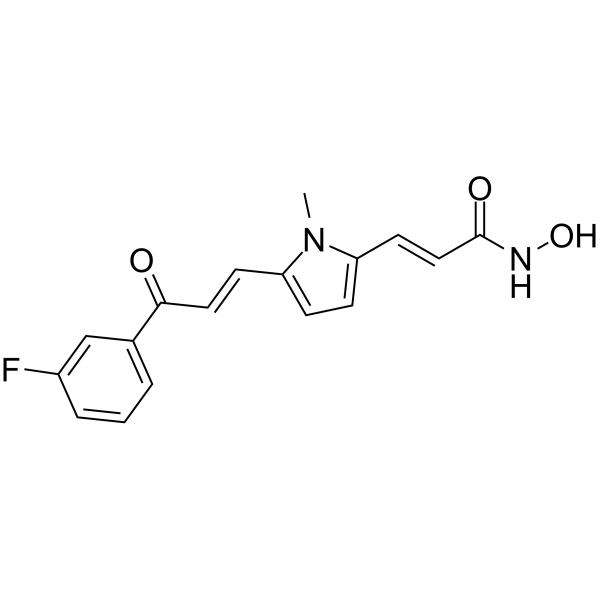
MC1568 is a selective class II (IIa) histone deacetylas (HDAC II) inhibitor, used for cancer research.
Nur für Forschungszwecke. Wir verkaufen nicht an Patienten.
- Reinheit : 97.08%
- CAS. Nr.: 852475-26-4
- Formel: C17H15FN2O3
- Molecular Weight:314.31
-
Speicherung:Powder -20°C, 3 years , 4°C, 2 years ; In solvent -80°C, 2 years , -20°C, 1 year

To place orders, for customer services and technical support, please contact: MedChemExpress USA
Tel: 609-228-6898 E-mail: [email protected] [email protected]


-
 Biologische Aktivität
-
Chemical Information
-
Lösungsmittel & Löslichkeit
- Reinheit & Dokumentation
- Verweise
-
 Help & FAQs


-
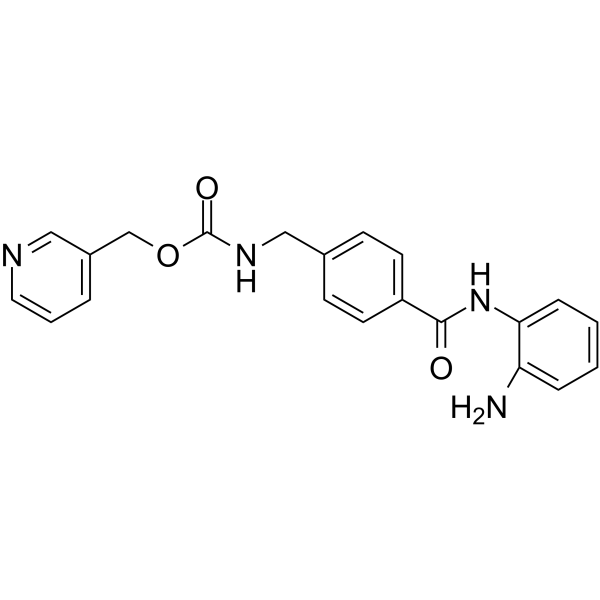
HY-12163
EntinostatHDAC Class I Inhibitor -
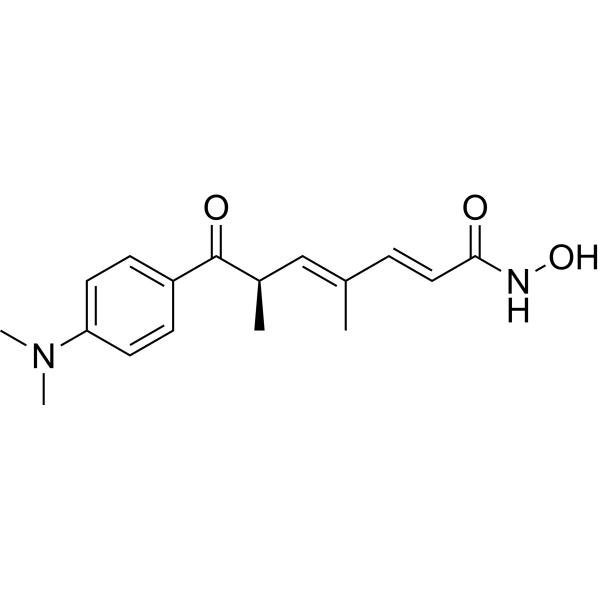
HY-15144
Trichostatin AHDAC Class I/II Inhibitor -
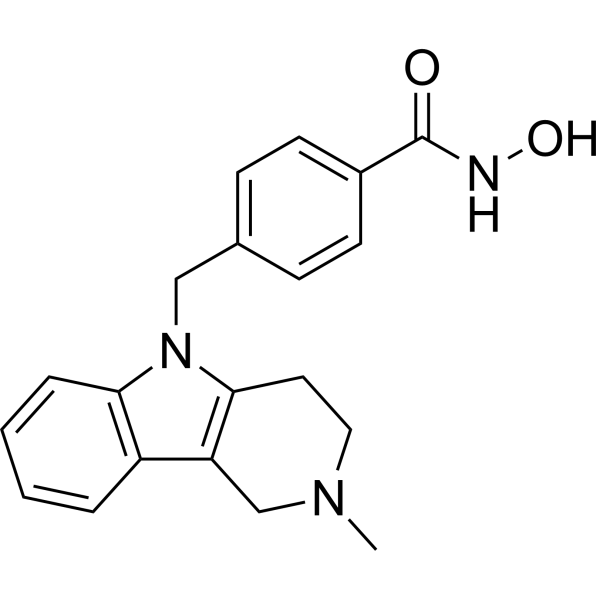
HY-13271A
Tubastatin AHDAC6 Inhibitor -
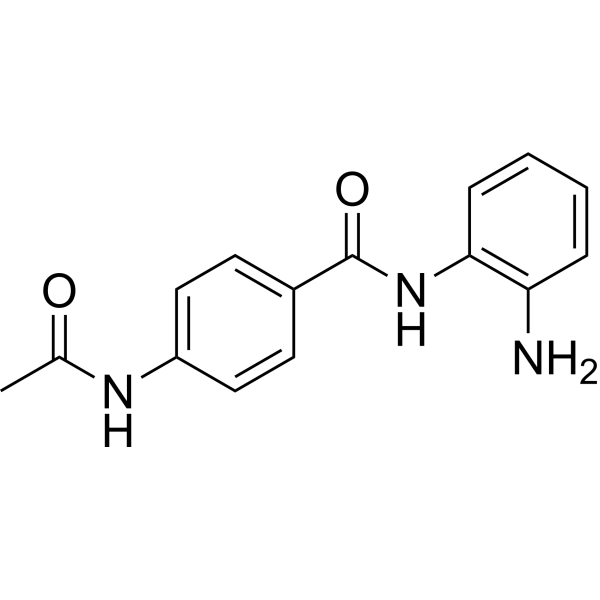
HY-50934
TacedinalineHDAC Inhibitor -
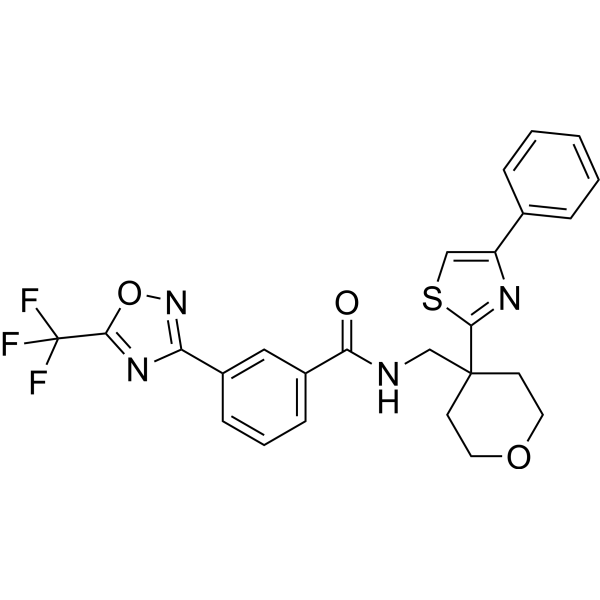
HY-18360
TMP269HDACIIa Inhibitor -
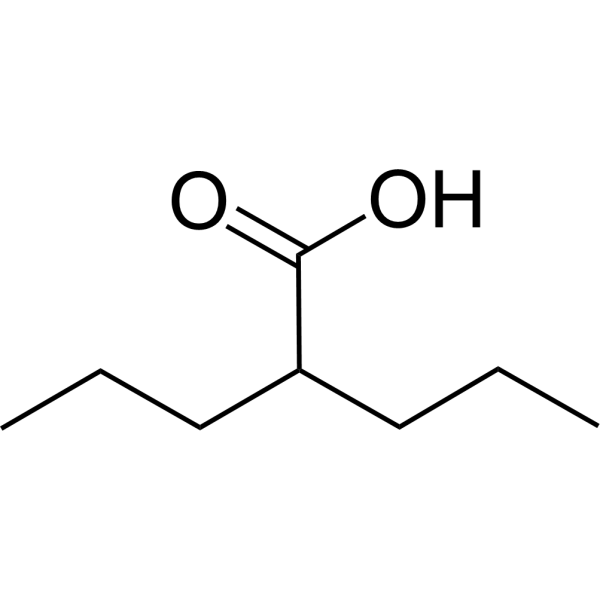
HY-10585
Valproic acidHDAC Inhibitor -
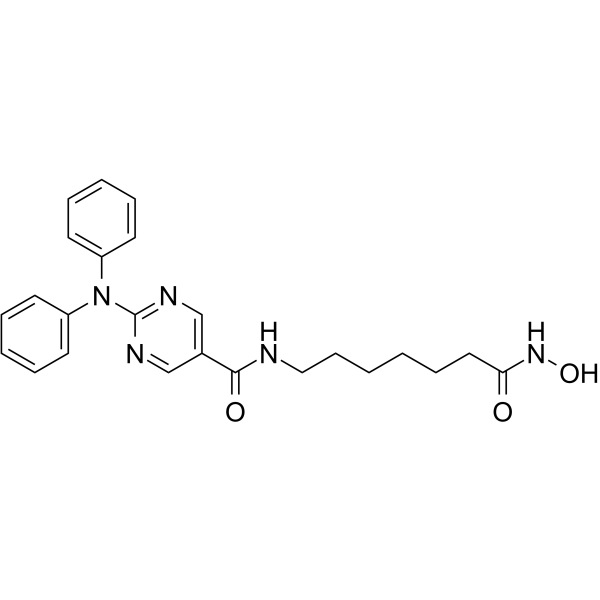
HY-16026
RicolinostatHDAC6 Inhibitor -
HY-15149
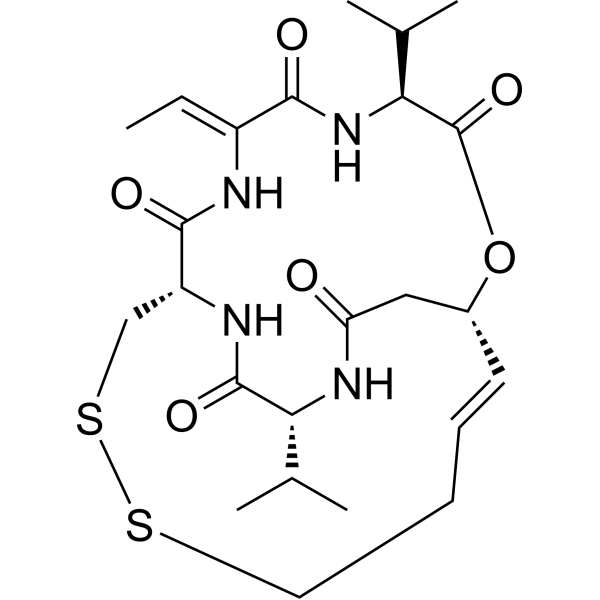
RomidepsinHDAC Inhibitor -
HY-12164
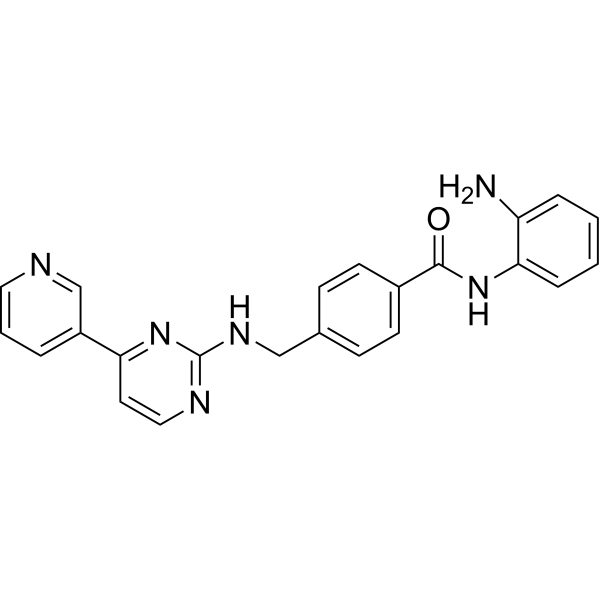
MocetinostatAutophagy Inducer -
HY-18998
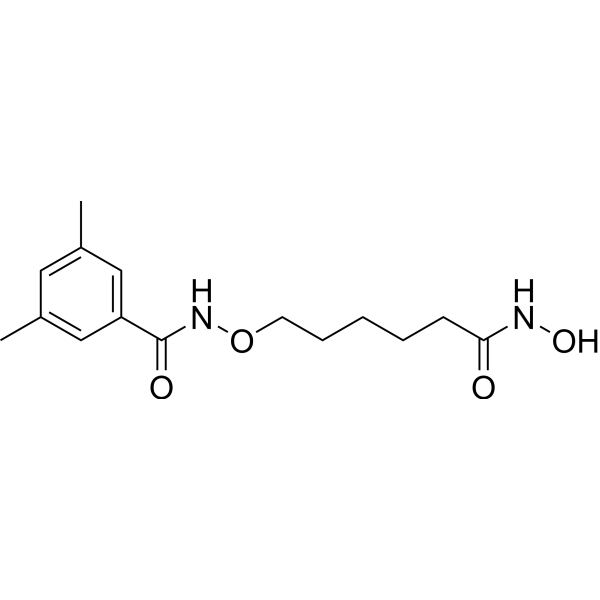
LMK-235HDAC4/5 Inhibitor -
HY-15489
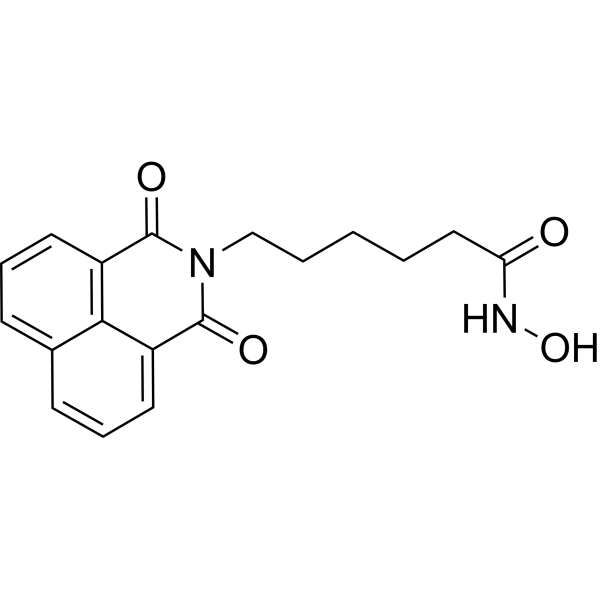
ScriptaidAutophagy Inducer -
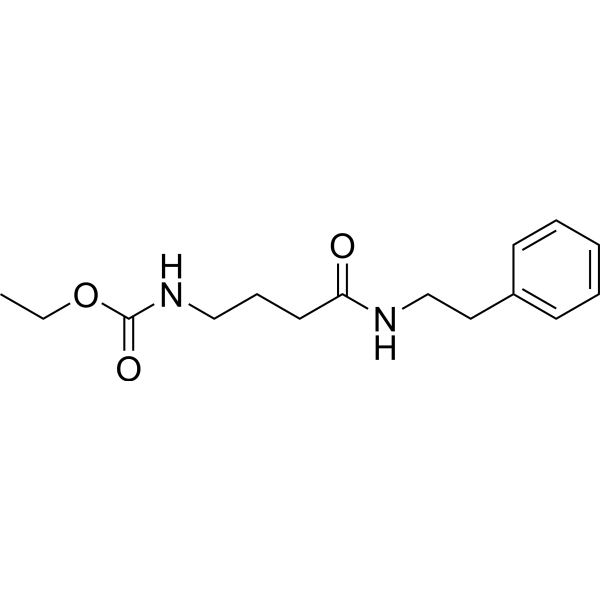
HY-N0931
Santacruzamate AHDAC2 Inhibitor
Publications Citing Use of MedChemExpress (MCE) MC1568
More- Cancer Cell. 2024 Oct 14;42(10):1729-1746.e8. [Abstract]
- Int J Biol Macromol. 2025 May;306(Pt 3):141678. [Abstract]
- J Ethnopharmacol. 2023 May 10:307:116240. [Abstract]
- Commun Biol. 2024 Oct 4;7(1):1257. [Abstract]
- J Mol Med (Berl). 2019 Aug;97(8):1183-1193. [Abstract]
- Cell Signal. 2020 Dec:76:109786. [Abstract]
- J Cell Physiol. 2018 Jan;233(1):673-687. [Abstract]
- Tissue Barriers. 2021 Jul 3;9(3):1911195. [Abstract]
- bioRxiv. 2025 Apr 26:2025.04.23.650241. [Abstract]
 Customer Validation & Images

-
IF


Biologische Aktivität
Beschreibung
IC50 & Target
[1]|
HDAC |
In Vitro
MC1568 arrests myogenesis by decreasing myocyte enhancer factor 2D (MEF2D) expression, by stabilizing the HDAC4–HDAC3–MEF2D complex, and paradoxically, by inhibiting differentiation-induced MEF2D acetylation[1]. MC1568 and MC1575 inhibits IL-8 levels and cell proliferation in either unstimulated or PMA-stimulated melanoma cells. They acts by suppressing c-Jun binding to the IL-8 promoter, recruitment of histones 3 and 4, RNA polymerase II and TFIIB to the c-Jun promoter, and c-Jun expression[2].? MC1568 interferes with the RAR- and PPARγ-mediated differentiation-inducing signaling pathways. In F9 cells, this inhibitor specifically blocks endodermal differentiation. In 3T3-L1 cells, MC1568 attenuates PPARγ-induced adipogenesis[3].
MedChemExpress (MCE) has not independently confirmed the accuracy of these methods. They are for reference only. .
In Vivo
MedChemExpress (MCE) has not independently confirmed the accuracy of these methods. They are for reference only.


Chemical Information
-
CAS. Nr. 852475-26-4
-
Appearance Solid
-
Molecular Weight 314.31
-
Formel C17H15FN2O3
-
Color Pink to red
-
SMILES
O=C(NO)/C=C/C1=CC=C(/C=C/C(C2=CC=CC(F)=C2)=O)N1C
-
Versand
Room temperature in continental US; may vary elsewhere.
-
Speicherung
Powder -20°C 3 years 4°C 2 years In solvent -80°C 2 years -20°C 1 year


Publications (9)
-
Journal Impact Factor
-
Most Recent
-
Cancer Cell
Fusobacterium nucleatum facilitates anti-PD-1 therapy in microsatellite stable colorectal cancer. [Abstract]2024 Oct 14;42(10):1729-1746.e8. PMID: 39303724 -
Int J Biol Macromol
Histone acetylation activated-IGF2BP3 regulates cyclin D1 mRNA stability to drive cell cycle transition and tumor progression of hepatocellular carcinoma. [Abstract]2025 May;306(Pt 3):141678. PMID: 40037458 -
J Ethnopharmacol
The activation of histone deacetylases 4 prevented endothelial dysfunction: A crucial mechanism of HuangqiGuizhiWuwu Decoction in improving microcirculation dysfunction in diabetes. [Abstract]2023 May 10:307:116240. PMID: 36764560 -
Commun Biol
Selective inhibition of HDAC class IIA as therapeutic intervention for KMT2A-rearranged acute lymphoblastic leukemia. [Abstract]2024 Oct 4;7(1):1257. PMID: 39362994 -
J Mol Med (Berl)
2019 Aug;97(8):1183-1193. PMID: 31201471 -
Cell Signal
JUP/plakoglobin is regulated by salt-inducible kinase 2, and is required for insulin-induced signalling and glucose uptake in adipocytes. [Abstract]2020 Dec:76:109786. PMID: 32966883 -
J Cell Physiol
miR-124 and miR-9 mediated downregulation of HDAC5 promotes neurite development through activating MEF2C-GPM6A pathway. [Abstract]2018 Jan;233(1):673-687. PMID: 28332716
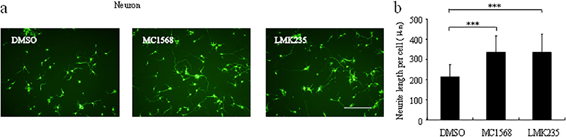
MC1568 purchased from MedChemExpress. Usage Cited in: J Cell Physiol. 2018 Jan;233(1):673-687. [Abstract]
The morphology of primary neurons treated with MC1568 or LMK235 is analyzed after staining for Tuj1. Scale bar, 200 μm. Inhibition of HDAC5 activity promotes neurite elongation of primary neurons.
-
Tissue Barriers
HDAC inhibitor, MS-275, increases vascular permeability by suppressing Robo4 expression in endothelial cells. [Abstract]2021 Jul 3;9(3):1911195. PMID: 33955828 -
bioRxiv
A nuclear branched-chain amino acid catabolism pathway controls histone propionylation in pancreatic cancer. [Abstract]2025 Apr 26:2025.04.23.650241. PMID: 40568091


Lösungsmittel & Löslichkeit
In Vitro:
DMSO : 18.5 mg/mL (58.86 mM; Need ultrasonic and warming; Hygroscopic DMSO has a significant impact on the solubility of product, please use newly opened DMSO)
Please refer to the solubility information to select the appropriate solvent. Once prepared, please aliquot and store the solution to prevent product inactivation from repeated freeze-thaw cycles.
Storage method and period of stock solution: -80°C, 2 years; -20°C, 1 year. When stored at -80°C, please use it within 2 years. When stored at -20°C, please use it within 1 year.
Please refer to the solubility information to select the appropriate solvent. Once prepared, please aliquot and store the solution to prevent product inactivation from repeated freeze-thaw cycles.
Storage method and period of stock solution: -80°C, 2 years; -20°C, 1 year. When stored at -80°C, please use it within 2 years. When stored at -20°C, please use it within 1 year.
Konzentration (Stammlösung) × Volumen (Stammlösung) = Konzentration (Ziellösung) × Volumen (Ziellösung)
In Vivo:
Select the appropriate dissolution method based on your experimental animal and administration route.
- For the following dissolution methods, please ensure to first prepare a clear stock solution using an In Vitro approach and then sequentially add co-solvents:
- To ensure reliable experimental results, the clarified stock solution can be appropriately stored based on storage conditions. As for the working solution for In Vivo experiments, it is recommended to prepare freshly and use it on the same day.
- The percentages shown for the solvents indicate their volumetric ratio in the final prepared solution. If precipitation or phase separation occurs during preparation, heat and/or sonication can be used to aid dissolution.
Add each solvent one by one: 10% DMSO 40% PEG300 5% Tween-80 45% Saline
Solubility: 1 mg/mL (3.18 mM); Suspended solution; Need ultrasonic
This protocol yields a suspended solution of 1 mg/mL. Suspended solution can be used for oral and intraperitoneal injection.
Taking 1 mL working solution as an example, add 100 μL DMSO stock solution (10.0 mg/mL) to 400 μL PEG300, and mix evenly; then add 50 μL Tween-80 and mix evenly; then add 450 μL Saline to adjust the volume to 1 mL.
Preparation of Saline: Dissolve 0.9 g sodium chloride in ddH₂O and dilute to 100 mL to obtain a clear Saline solution.
For the following dissolution methods, please prepare the working solution directly:
It is recommended to prepare fresh solutions and use them promptly within a short period of time.
The percentages shown for the solvents indicate their volumetric ratio in the final prepared solution. If precipitation or phase separation occurs during preparation, heat and/or sonication can be used to aid dissolution.
Add each solvent one by one: 50% PEG300 50% Saline
Solubility: 5 mg/mL (15.91 mM); Suspended solution; Need ultrasonic
In Vivo Dissolution Calculator
Please enter the basic information of animal experiments:
-
-
-
-
Recommended: Prepare an additional quantity of animals to account for potential losses during experiments.
Please enter your animal formula composition:
-
%DMSO +
Recommended: Keep the proportion of DMSO in working solution below 2% if your animal is weak.
-
%+
-
+%Tween-80 + +
-
%Saline +
The co-solvents required include: DMSO, . All of co-solvents are available by MedChemExpress (MCE). , Tween 80. All of co-solvents are available by MedChemExpress (MCE).
Working solution concentration: 0.22 mg/mL
Method for preparing stock solution: mg drug dissolved in μL DMSO. Stock solution concentration: mg/mL.
1. Take μL DMSO stock solution;
2. Add μL .
μL , mix evenly;
3. Then add μL Tween 80, mix evenly;
4. Then add μL
Please ensure that the stock solution in the first step is dissolved to a clear state, and add co-solvents in sequence. You can use ultrasonic heating (ultrasonic cleaner, recommended frequency 20-40 kHz), vortexing, etc. to assist dissolution.


Reinheit & Dokumentation
-
Data Sheet (277 KB)
-
SDS (393 KB)
- English - EN (393 KB)
- Français - FR (393 KB)
- Deutsch - DE (393 KB)
- Norwegian - NO (393 KB)
- Español - ES (393 KB)
- Swedish - SV (393 KB)
- Italian - IT (393 KB)
- Korean - KR (393 KB)
- Portuguese - PT (393 KB)
-
Handling Instructions (2659 KB)
Verweise
[1]. Nebbioso A, et al. Selective class II HDAC inhibitors impair myogenesis by modulating the stability and activity ofHDAC-MEF2 complexes. EMBO Rep. 2009 Jul;10(7):776-82. [Content Brief]
[2]. Venza I, et al. Class II-specific histone deacetylase inhibitors MC1568 and MC1575 suppress IL-8 expression in human melanoma cells. Pigment Cell Melanoma Res. 2013 Mar;26(2):193-204. [Content Brief]
[3]. Nebbioso A, et al. HDACs class II-selective inhibition alters nuclear receptor-dependent differentiation. J Mol Endocrinol. 2010 Oct;45(4):219-28. [Content Brief]
[4]. Kassis H, et al. Class IIa histone deacetylases affect neuronal remodeling and functional outcome after stroke. Neurochem Int. 2016 Jun;96:24-31. [Content Brief]


Complete Stock Solution Preparation Table
Please refer to the solubility information to select the appropriate solvent. Once prepared, please aliquot and store the solution to prevent product inactivation from repeated freeze-thaw cycles.
Storage method and period of stock solution: -80°C, 2 years; -20°C, 1 year. When stored at -80°C, please use it within 2 years. When stored at -20°C, please use it within 1 year.
| Optional Solvent | Concentration Solvent Mass | 1 mg | 5 mg | 10 mg | 25 mg |
|---|---|---|---|---|---|
| DMSO | 1 mM | 3.1816 mL | 15.9079 mL | 31.8157 mL | 79.5393 mL |
| 5 mM | 0.6363 mL | 3.1816 mL | 6.3631 mL | 15.9079 mL | |
| 10 mM | 0.3182 mL | 1.5908 mL | 3.1816 mL | 7.9539 mL | |
| 15 mM | 0.2121 mL | 1.0605 mL | 2.1210 mL | 5.3026 mL | |
| 20 mM | 0.1591 mL | 0.7954 mL | 1.5908 mL | 3.9770 mL | |
| 25 mM | 0.1273 mL | 0.6363 mL | 1.2726 mL | 3.1816 mL | |
| 30 mM | 0.1061 mL | 0.5303 mL | 1.0605 mL | 2.6513 mL | |
| 40 mM | 0.0795 mL | 0.3977 mL | 0.7954 mL | 1.9885 mL | |
| 50 mM | 0.0636 mL | 0.3182 mL | 0.6363 mL | 1.5908 mL |


MC1568 Related Classifications
HY-16914 Related Classifications
 Powered by Bioz