



Piribedil (Standard)
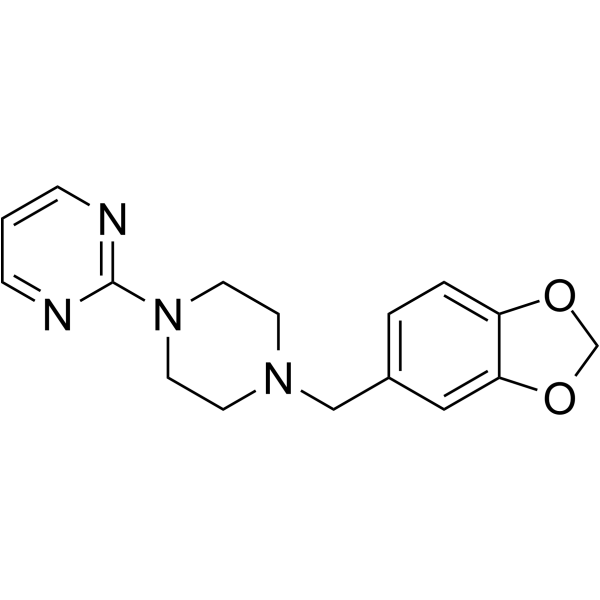
Piribedil (Standard) is the analytical standard of Piribedil. This product is intended for research and analytical applications. Piribedil is a potent and orally active dopamine D2 and dopamine D3 agonist. Piribedil is also a α2-adrenoceptors antagonist. Piribedil can inhibit MLL1 methyltransferase activity (EC50: 0.18 μM). Piribedil has the potential for the research of parkinson's disease, circulatory disorders, cancers.
Nur für Forschungszwecke. Wir verkaufen nicht an Patienten.
- Reinheit : 98%
- CAS. Nr.: 3605-01-4
- Formel: C16H18N4O2
- Molecular Weight:298.34
-
Speicherung:
Please store the product under the recommended conditions in the Certificate of Analysis.


To place orders, for customer services and technical support, please contact: MedChemExpress USA
Tel: 609-228-6898 E-mail: [email protected] [email protected]


-
 Product Information
-
Chemical Information
- Reinheit & Dokumentation
-
 Help & FAQs


-
HY-12707
PiribedilDopamine D2/D3 Agonist -
HY-14546
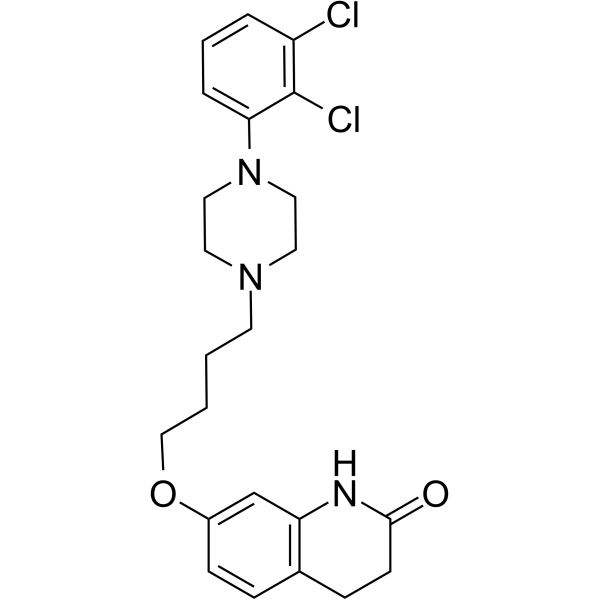
AripiprazoleD2/5-HT1A Agonist -
HY-14538
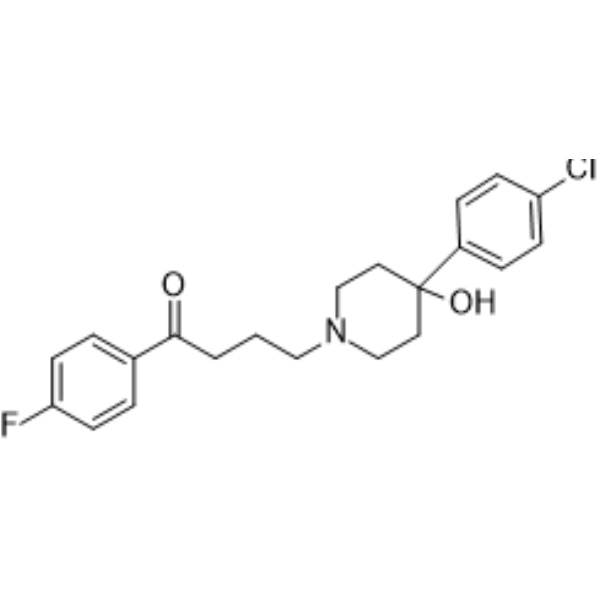
HaloperidolDopamine Receptor Antagonist -
HY-14542
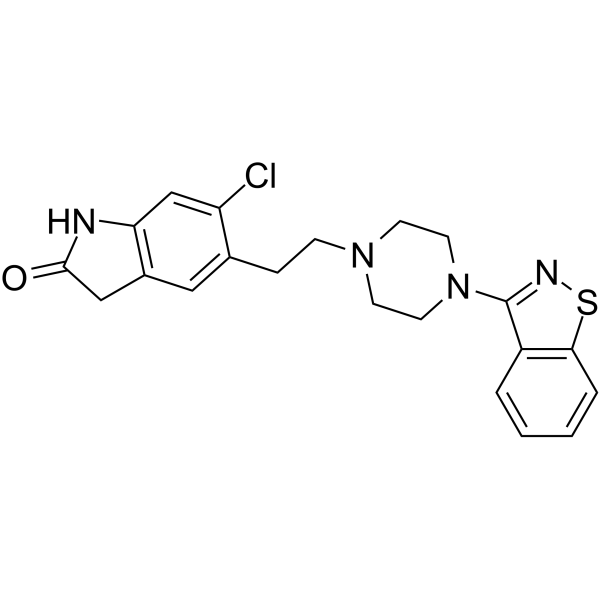
Ziprasidone5-HT/DA Receptor Antagonist -
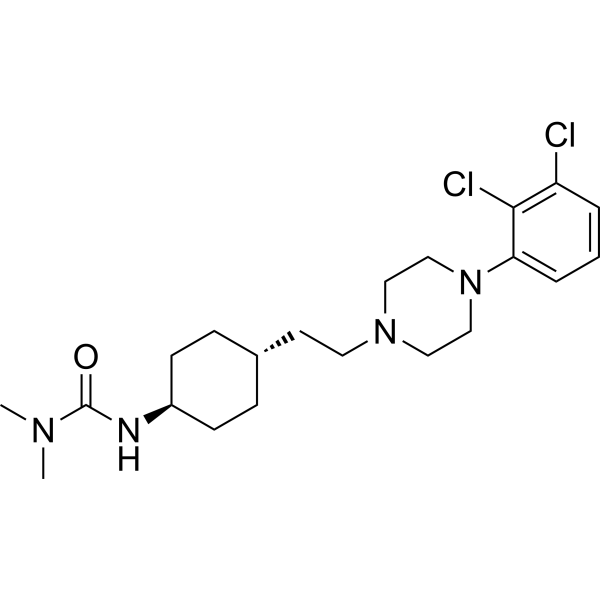
HY-14763
CariprazineD3/D2/5-HT Modulator -
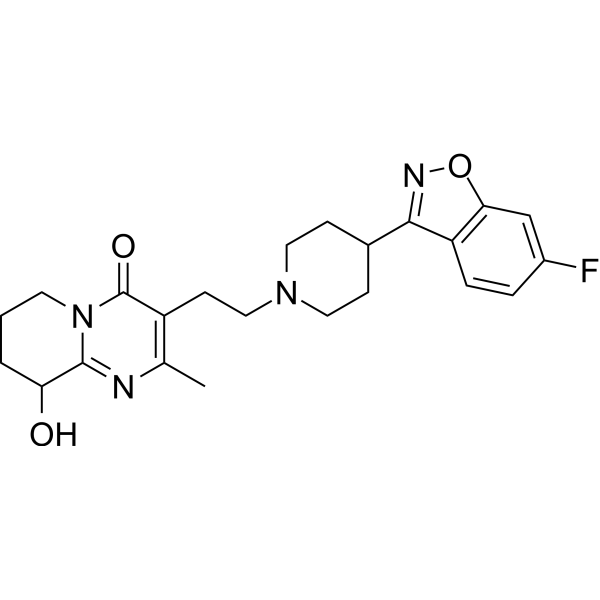
HY-A0019
PaliperidoneDopamine D2/5-HT2A Antagonist -
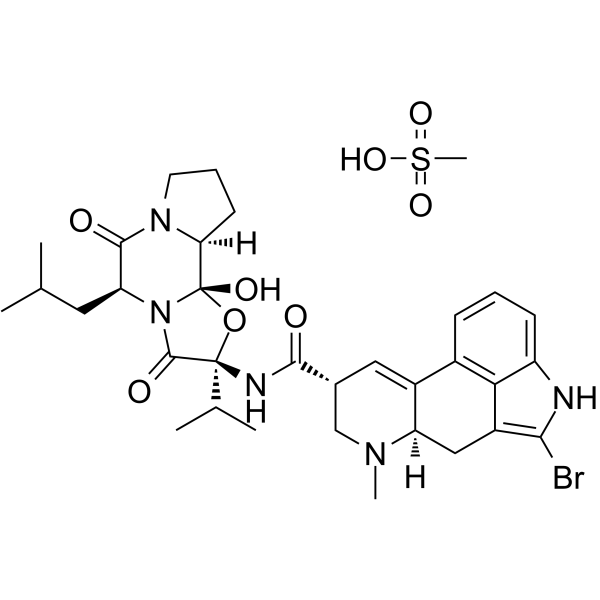
HY-12705A
Bromocriptine mesylate -
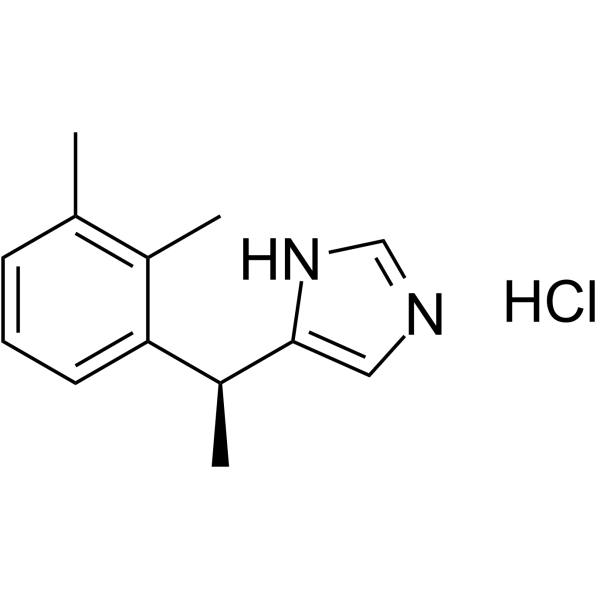
HY-17034A
Dexmedetomidine hydrochlorideα2-adrenoceptor Agonist -
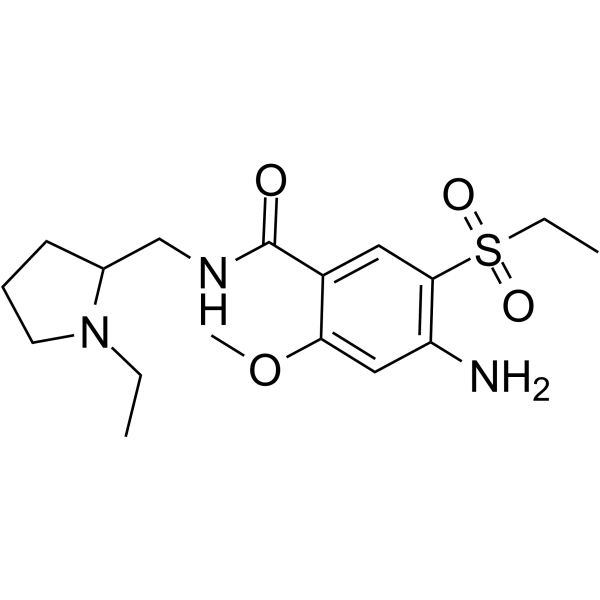
HY-14545
AmisulprideDopamine Receptor Antagonist -
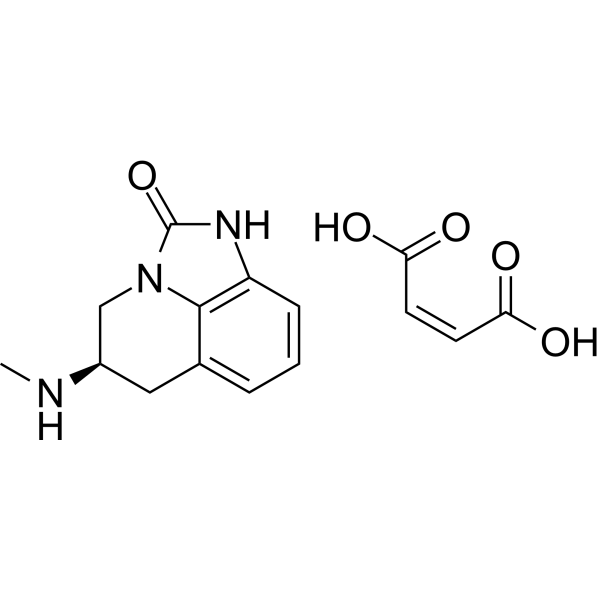
HY-70081A
Sumanirole maleateD2 Receptor Agonist -
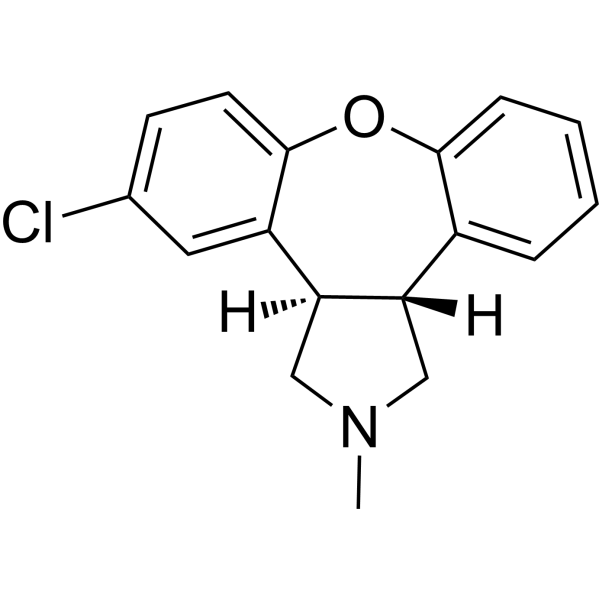
HY-10121
Asenapine5-HT/Dopamine/Histamine/Adrenergic Receptors Antagonist -
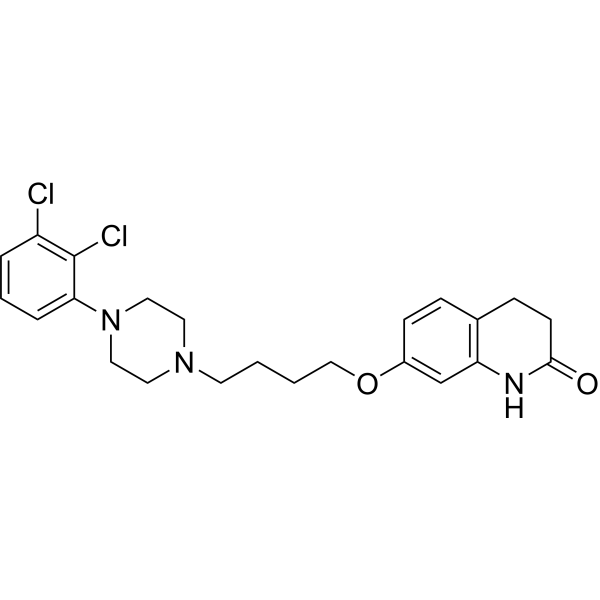
HY-14546R
Aripiprazole (Standard)D2/5-HT1A Agonist


Product Information
Information
Anwendung
The compound is the grade of analytical standard, which is the reference standard supplied assay. It is commonly used in qualitative, quantitative and methodological research experiments in HPLC, GC and MS.


Chemical Information
-
CAS. Nr. 3605-01-4
-
Molecular Weight 298.34
-
Formel C16H18N4O2
-
SMILES
C1(N2CCN(CC3=CC=C(OCO4)C4=C3)CC2)=NC=CC=N1
-
Versand
Room temperature in continental US; may vary elsewhere.
-
Speicherung
Please store the product under the recommended conditions in the Certificate of Analysis.


Reinheit & Dokumentation
Verweise
[1]. Sweet RD, et al. Piribedil, a dopamine agonist, in Parkinson's disease. Clin Pharmacol Ther. 1974 Dec;16(6):1077-82. [Content Brief]
[2]. Gerlach M, et al. The effect of piribedil on L-DOPA-induced dyskinesias in a rat model of Parkinson's disease: differential role of α(2) adrenergic mechanisms. J Neural Transm (Vienna). 2013 Jan;120(1):31-6. [Content Brief]
[3]. Smith LA, Tet al. Repeated administration of piribedil induces less dyskinesia than L-dopa in MPTP-treated common marmosets: a behavioural and biochemical investigation. Mov Disord. 2002 Sep;17(5):887-901. [Content Brief]
[4]. Xiong Zhang, et al. Piribedil disrupts the MLL1-WDR5 interaction and sensitizes MLL-rearranged acute myeloid leukemia (AML) to doxorubicin-induced apoptosis. Cancer Lett. 2018 Sep 1;431:150-160. [Content Brief]

Calculators
Konzentration (Stammlösung) × Volumen (Stammlösung) = Konzentration (Ziellösung) × Volumen (Ziellösung)


Piribedil (Standard) Related Classifications
HY-12707R Related Classifications
 Powered by Bioz