



Gatsuciclib
Based on 1 publication(s) in Google Scholar
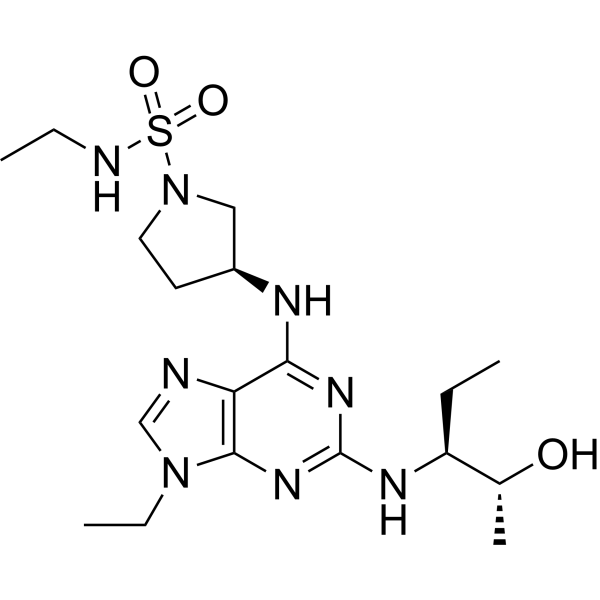
Gatsuciclib (AZD8421) is a selective CDK2 inhibitor (IC50 = 9 nM) as well as achieving CDK family selectivity in cells versus key off-targets (CDK1, CDK4/6, CDK9). Gatsuciclib has no significant kinase inhibition outside the CDK family. Gatsuciclib inhibits cancer cell proliferation by inhibiting pRB phosphorylation, inducing cell cycle arrest in G1/S phase and senescence. Gatsuciclib can be studied in research for breast cancer and ovarian cancer.
For research use only. We do not sell to patients.
- Purity: 99.60%
- CAS No.: 3047321-53-6
- Formula: C18H32N8O3S
- Molecular Weight:440.56
-
Storage:Powder -20°C, 3 years , 4°C, 2 years ; In solvent -80°C, 6 months , -20°C, 1 month

To place orders, for customer services and technical support, please contact: MedChemExpress USA
Tel: 609-228-6898 E-mail: [email protected] [email protected]


-
 Biological Activity
-
Chemical Information
-
Solvent & Solubility
- Purity & Documentation
- References
-
 Help & FAQs


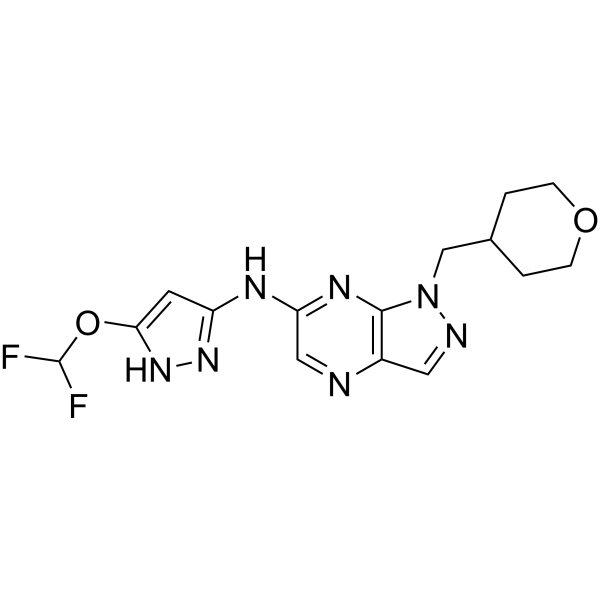
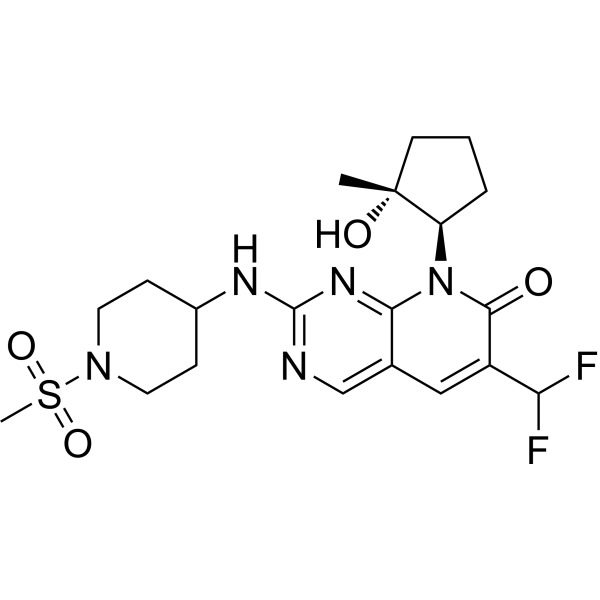
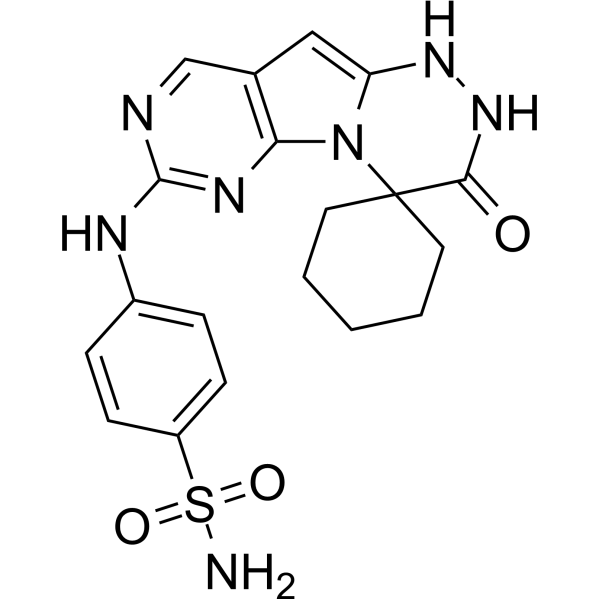
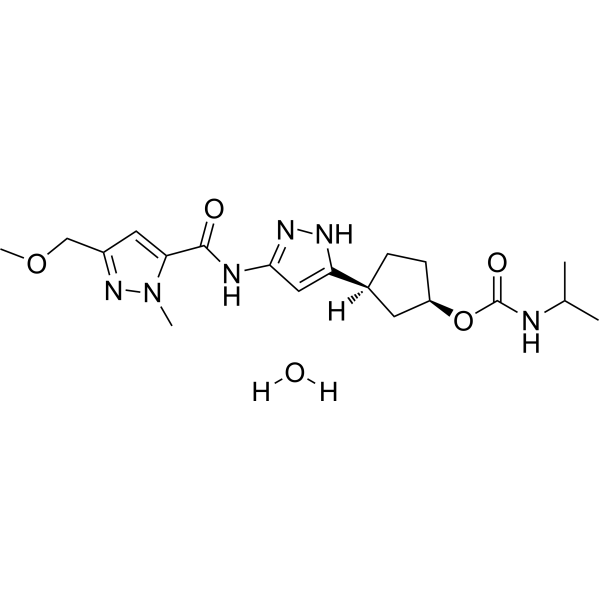
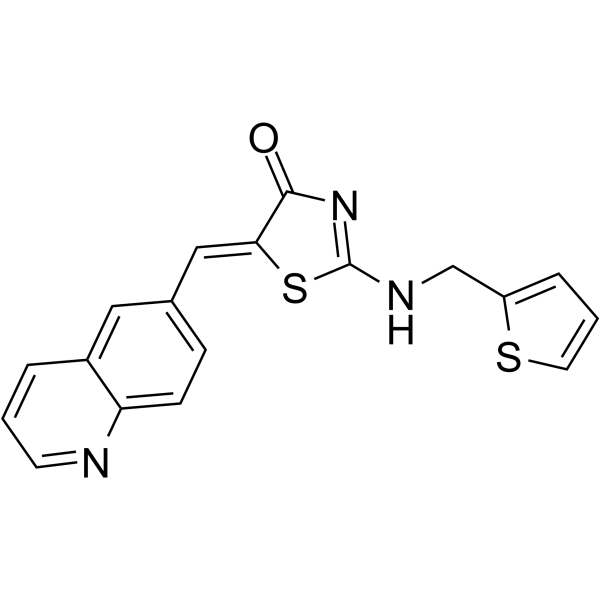
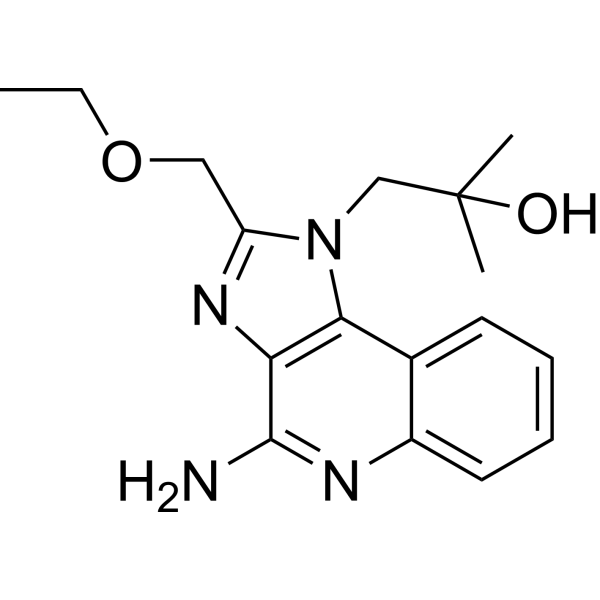
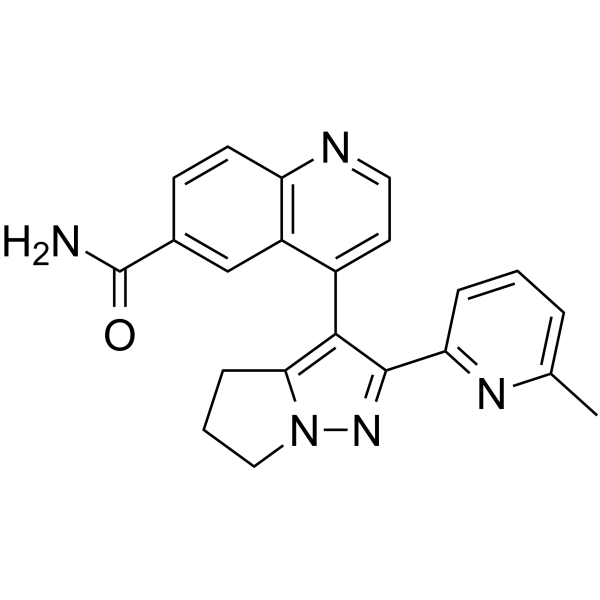
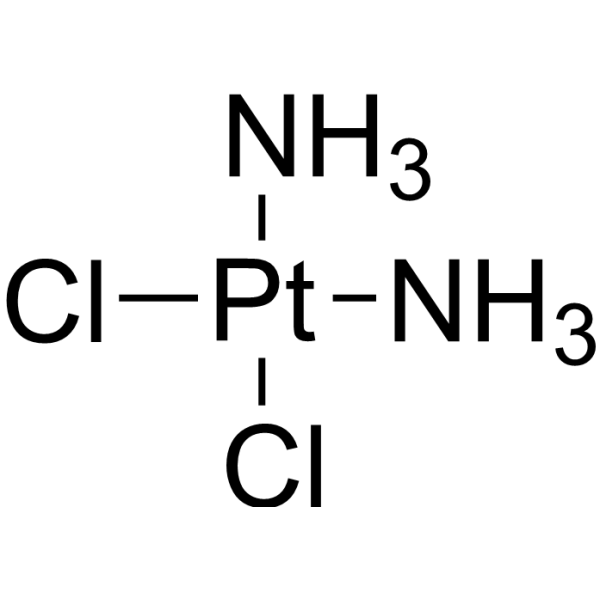
Publications Citing Use of MedChemExpress (MCE) Gatsuciclib
More

Biological Activity
Description
IC50 & Target
CDK2[1]
In Vitro
Gatsuciclib (AZD8421) inhibits endogenous phospho-substrate at 58nM with >327-fold selectivity over CDK9 phospho-substrate pSer2 of RNAPIl (>19.2 μM)[1].
Gatsuciclib potently inhibites cell proliferation (69nM, OVCAR3), correlates with inhibition of pRB, arrest in G1/S phase of the cell cycle and induction of senescence in a CCNE1 amplified cell line[1].
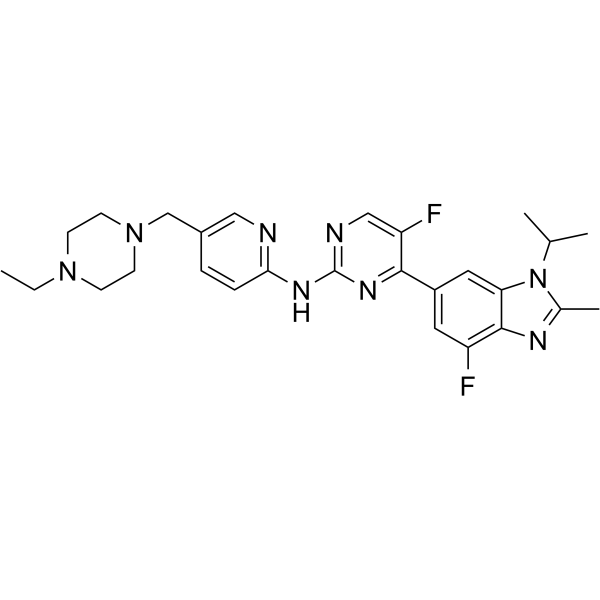
Gatsuciclib (AZD8421) (Compound CDK2i) (500 nM, 72 h) effectively downregulates p130 in combination with Abemaciclib (HY-16297) (50 nM) in p53KO cells[2].
Gatsuciclib (500 nM, 8 d) blocks cell-cycle re-entry upon drug withdrawal in combination with Abemaciclib in p53KO cells[2].
Gatsuciclib (500 nM, 10 d) enables long-term growth suppression of p53KO cells when combined with Abemaciclib, which is associated with potent induction of SA-β-Gal expression[2].
Gatsuciclib (500 nM, 6 d) suppresses the phosphorylation of both Rb and p130, long-term growth, growth after withdrawal of the drug, and induces SA-β-Gal activity when combined with Abemaciclib in HR+/HER2- p53 mutant primary breast cancer cell line and PD BC line #5[2].
MedChemExpress (MCE) has not independently confirmed the accuracy of these methods. They are for reference only.
In Vivo
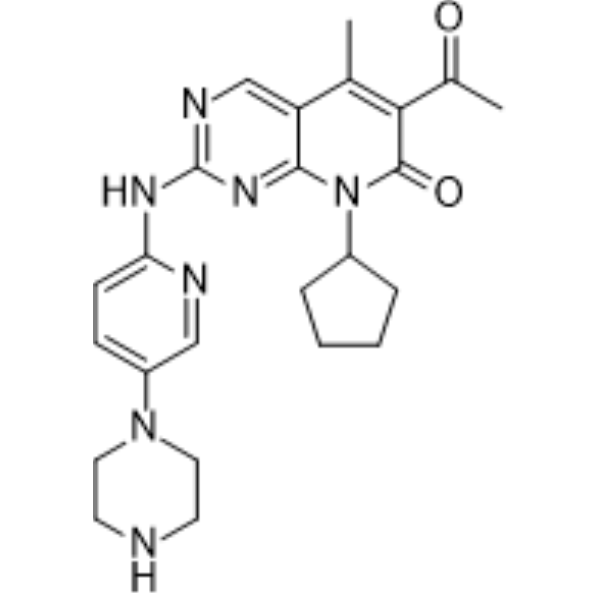
Gatsuciclib shows robust monotherapy activity in a CCNE1 amplified ovarian model OVCAR3 with regressions seen with monotherapy and in combination with Palbociclib (HY-50767)[1].
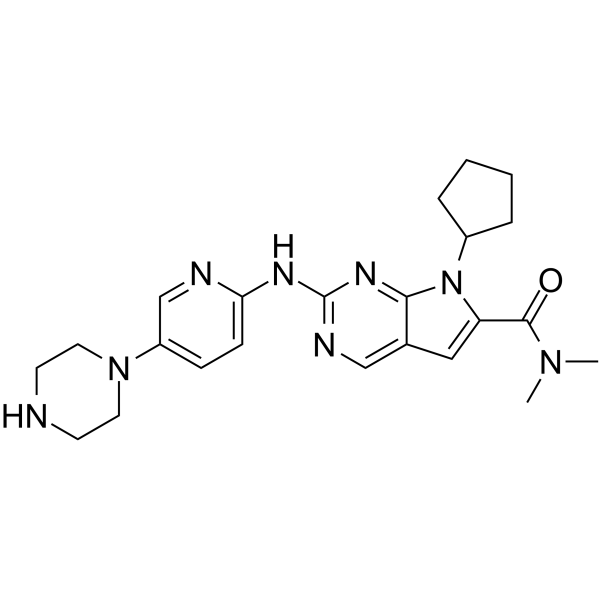
Gatsuciclib (AZD8421) (100 mg/kg, p.o., 5 d) markedly reduces MKI67, p130 phosphorylation, E2F1, and cyclin A2 levels in combination with Ribociclib (HY-15777) (25 mg/kg) compared to single agents[2].
MedChemExpress (MCE) has not independently confirmed the accuracy of these methods. They are for reference only.
Clinical Trial
| NCT Number | Sponsor | Condition | Start Date |
Phase

|
|---|---|---|---|---|
| NCT01329991 | Plexxikon| | 2011-05 | PHASE1 |


Chemical Information
-
CAS No. 3047321-53-6
-
Appearance Solid
-
Molecular Weight 440.56
-
Formula C18H32N8O3S
-
Color White to off-white
-
SMILES
CCN1C=NC2=C1N=C(N[C@@H](CC)[C@@H](C)O)N=C2N[C@@H]3CN(S(=O)(NCC)=O)CC3
-
Synonyms
AZD8421
-
Shipping
Room temperature in continental US; may vary elsewhere.
-
Storage
Powder -20°C 3 years 4°C 2 years In solvent -80°C 6 months -20°C 1 month


Publications (1)
-
Journal Impact Factor
-
Most Recent
-
Sci Signal
p16 expression confers sensitivity to CDK2 inhibitors in cyclin E1-driven ovarian cancers. [Abstract]2025 Nov 25;18(914):eadv0415. PMID: 41289358


Solvent & Solubility
In Vitro:
DMSO : 100 mg/mL (226.98 mM; Need ultrasonic; Hygroscopic DMSO has a significant impact on the solubility of product, please use newly opened DMSO)
Please refer to the solubility information to select the appropriate solvent. Once prepared, please aliquot and store the solution to prevent product inactivation from repeated freeze-thaw cycles.
Storage method and period of stock solution: -80°C, 6 months; -20°C, 1 month. When stored at -80°C, please use it within 6 months. When stored at -20°C, please use it within 1 month.
Please refer to the solubility information to select the appropriate solvent. Once prepared, please aliquot and store the solution to prevent product inactivation from repeated freeze-thaw cycles.
Storage method and period of stock solution: -80°C, 6 months; -20°C, 1 month. When stored at -80°C, please use it within 6 months. When stored at -20°C, please use it within 1 month.
Concentration (start) × Volume (start) = Concentration (final) × Volume (final)
In Vivo:
Select the appropriate dissolution method based on your experimental animal and administration route.
- For the following dissolution methods, please ensure to first prepare a clear stock solution using an In Vitro approach and then sequentially add co-solvents:
- To ensure reliable experimental results, the clarified stock solution can be appropriately stored based on storage conditions. As for the working solution for In Vivo experiments, it is recommended to prepare freshly and use it on the same day.
- The percentages shown for the solvents indicate their volumetric ratio in the final prepared solution. If precipitation or phase separation occurs during preparation, heat and/or sonication can be used to aid dissolution.
Add each solvent one by one: 10% DMSO 40% PEG300 5% Tween-80 45% Saline
Solubility: ≥ 2.5 mg/mL (5.67 mM); Clear solution
This protocol yields a clear solution of ≥ 2.5 mg/mL (saturation unknown).
Taking 1 mL working solution as an example, add 100 μL DMSO stock solution (25.0 mg/mL) to 400 μL PEG300, and mix evenly; then add 50 μL Tween-80 and mix evenly; then add 450 μL Saline to adjust the volume to 1 mL.
Preparation of Saline: Dissolve 0.9 g sodium chloride in ddH₂O and dilute to 100 mL to obtain a clear Saline solution.
Add each solvent one by one: 10% DMSO 90% (20% SBE-β-CD in Saline)
Solubility: ≥ 2.5 mg/mL (5.67 mM); Clear solution
This protocol yields a clear solution of ≥ 2.5 mg/mL (saturation unknown).
Taking 1 mL working solution as an example, add 100 μL DMSO stock solution (25.0 mg/mL) to 900 μL 20% SBE-β-CD in Saline, and mix evenly.
Preparation of 20% SBE-β-CD in Saline (4°C, storage for one week): 2 g SBE-β-CD powder is dissolved in 10 mL Saline, completely dissolve until clear.
In Vivo Dissolution Calculator
Please enter the basic information of animal experiments:
-
-
-
-
Recommended: Prepare an additional quantity of animals to account for potential losses during experiments.
Please enter your animal formula composition:
-
%DMSO +
Recommended: Keep the proportion of DMSO in working solution below 2% if your animal is weak.
-
%+
-
+%Tween-80 + +
-
%Saline +
The co-solvents required include: DMSO, . All of co-solvents are available by MedChemExpress (MCE). , Tween 80. All of co-solvents are available by MedChemExpress (MCE).
Working solution concentration: 0.22 mg/mL
Method for preparing stock solution: mg drug dissolved in μL DMSO. Stock solution concentration: mg/mL.
1. Take μL DMSO stock solution;
2. Add μL .
μL , mix evenly;
3. Then add μL Tween 80, mix evenly;
4. Then add μL
Please ensure that the stock solution in the first step is dissolved to a clear state, and add co-solvents in sequence. You can use ultrasonic heating (ultrasonic cleaner, recommended frequency 20-40 kHz), vortexing, etc. to assist dissolution.


Purity & Documentation
-
Data Sheet (278 KB)
-
SDS (251 KB)
- English - EN (251 KB)
- Français - FR (251 KB)
- Deutsch - DE (251 KB)
- Norwegian - NO (251 KB)
- Español - ES (251 KB)
- Swedish - SV (251 KB)
- Italian - IT (251 KB)
- Korean - KR (251 KB)
- Portuguese - PT (251 KB)
-
Handling Instructions (2659 KB)
References


Complete Stock Solution Preparation Table
Please refer to the solubility information to select the appropriate solvent. Once prepared, please aliquot and store the solution to prevent product inactivation from repeated freeze-thaw cycles.
Storage method and period of stock solution: -80°C, 6 months; -20°C, 1 month. When stored at -80°C, please use it within 6 months. When stored at -20°C, please use it within 1 month.
| Optional Solvent | Concentration Solvent Mass | 1 mg | 5 mg | 10 mg | 25 mg |
|---|---|---|---|---|---|
| DMSO | 1 mM | 2.2698 mL | 11.3492 mL | 22.6984 mL | 56.7460 mL |
| 5 mM | 0.4540 mL | 2.2698 mL | 4.5397 mL | 11.3492 mL | |
| 10 mM | 0.2270 mL | 1.1349 mL | 2.2698 mL | 5.6746 mL | |
| 15 mM | 0.1513 mL | 0.7566 mL | 1.5132 mL | 3.7831 mL | |
| 20 mM | 0.1135 mL | 0.5675 mL | 1.1349 mL | 2.8373 mL | |
| 25 mM | 0.0908 mL | 0.4540 mL | 0.9079 mL | 2.2698 mL | |
| 30 mM | 0.0757 mL | 0.3783 mL | 0.7566 mL | 1.8915 mL | |
| 40 mM | 0.0567 mL | 0.2837 mL | 0.5675 mL | 1.4186 mL | |
| 50 mM | 0.0454 mL | 0.2270 mL | 0.4540 mL | 1.1349 mL | |
| 60 mM | 0.0378 mL | 0.1892 mL | 0.3783 mL | 0.9458 mL | |
| 80 mM | 0.0284 mL | 0.1419 mL | 0.2837 mL | 0.7093 mL | |
| 100 mM | 0.0227 mL | 0.1135 mL | 0.2270 mL | 0.5675 mL |


Gatsuciclib Related Classifications
HY-158106 Related Classifications
 Powered by Bioz