



Ranolazine
Based on 6 publication(s) in Google Scholar
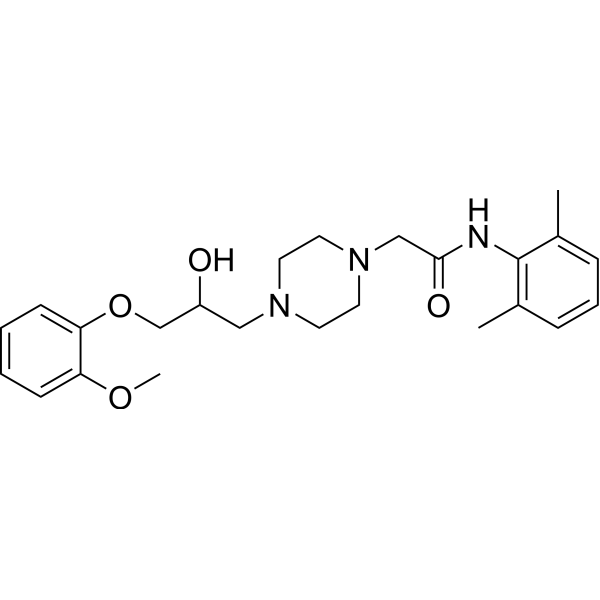
Ranolazine (CVT 303) is an anti-angina drug that achieves its effects by inhibiting the late phase of inward sodium current (INa and IKr with IC50 values of 6 μM and 12 μM, respectively) without affecting heart rate or blood pressure (BP). Ranolazine is also a partial fatty acid oxidation (FAO) inhibitor. Antianginal agent.
For research use only. We do not sell to patients.
- Purity : 99.57%
- CAS No.: 95635-55-5
- Formula: C24H33N3O4
- Molecular Weight:427.54
-
Storage:Powder -20°C, 3 years , 4°C, 2 years ; In solvent -80°C, 2 years , -20°C, 1 year

To place orders, for customer services and technical support, please contact: MedChemExpress USA
Tel: 609-228-6898 E-mail: [email protected] [email protected]


-
 Biological Activity
-
Chemical Information
-
Solvent & Solubility
- Purity & Documentation
- References
-
 Help & FAQs


-
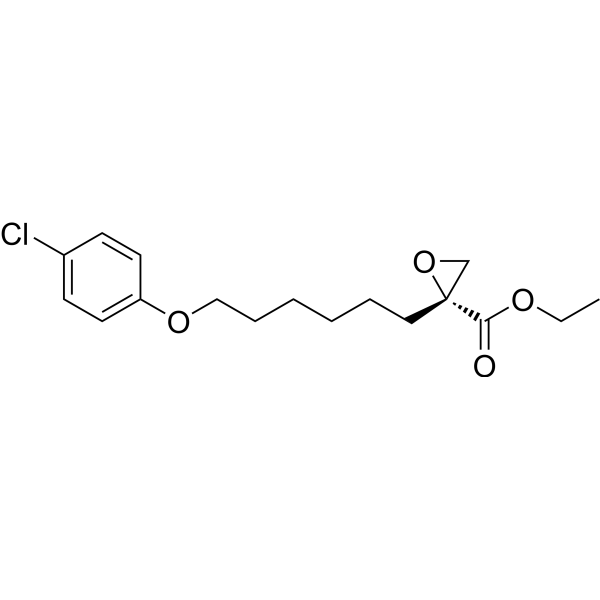
HY-50202
EtomoxirCPT1a Inhibitor -
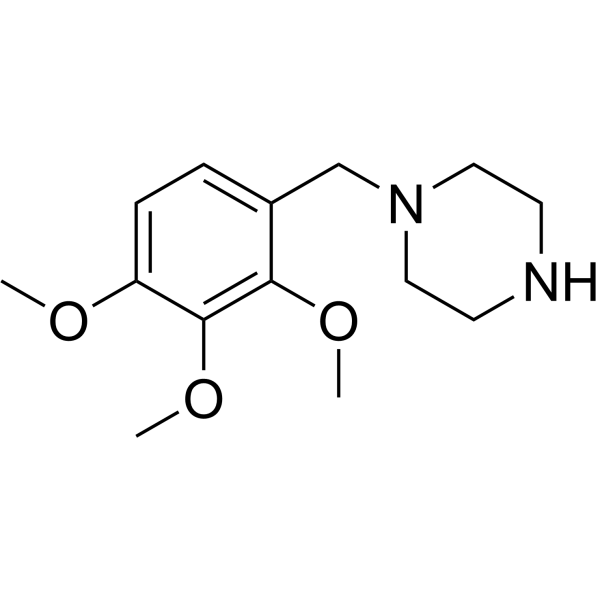
HY-B0968A
TrimetazidineAntianginal Agent -
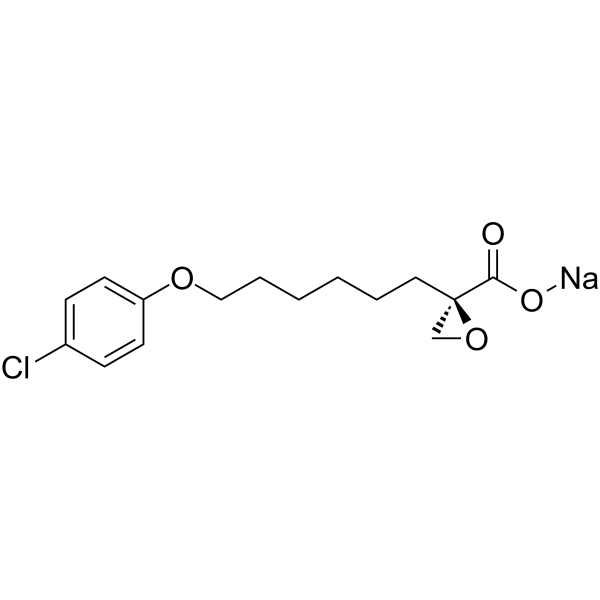
HY-50202A
Etomoxir sodium saltCPT1a Inhibitor -
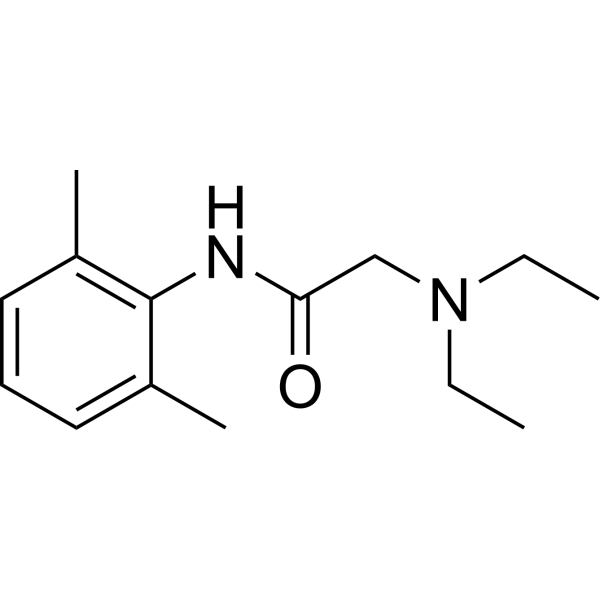
HY-B0185
LidocaineNa+ Channel Blocker -
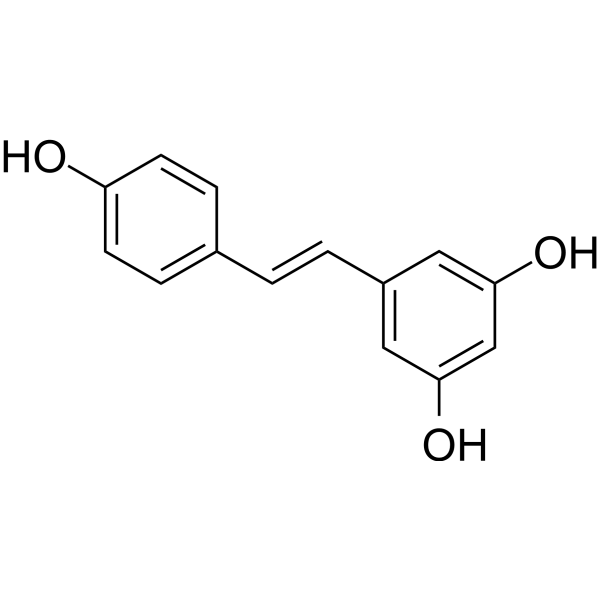
HY-16561
ResveratrolPolyphenolic Phytoalexin -
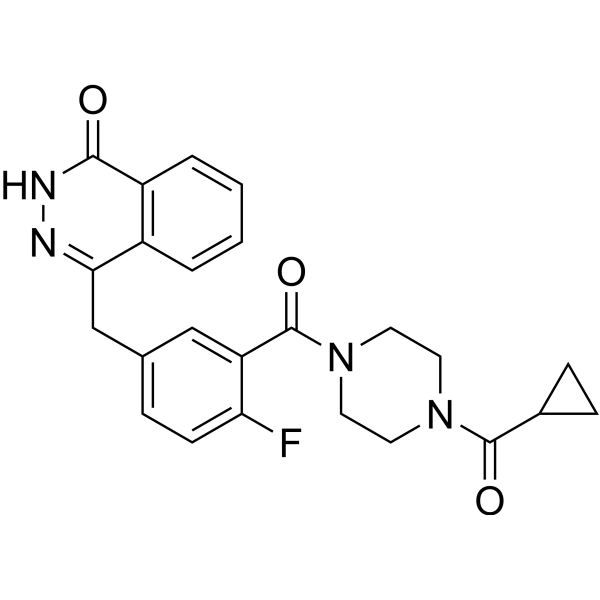
HY-10162
OlaparibPARP Inhibitor -
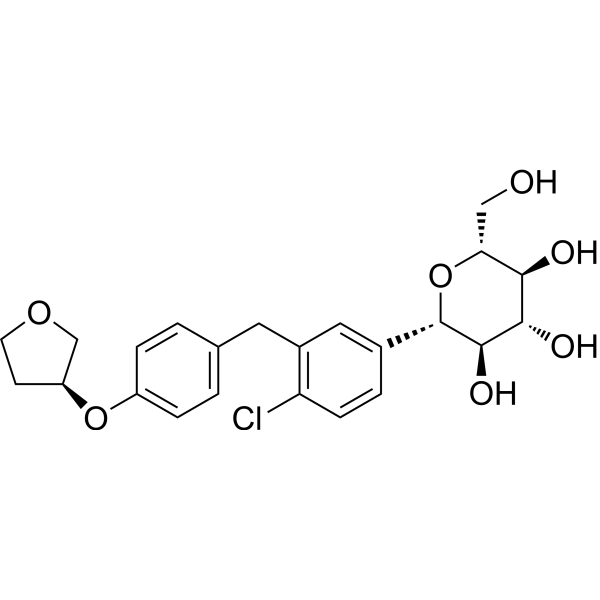
HY-15409
EmpagliflozinSGLT2 Inhibitor -
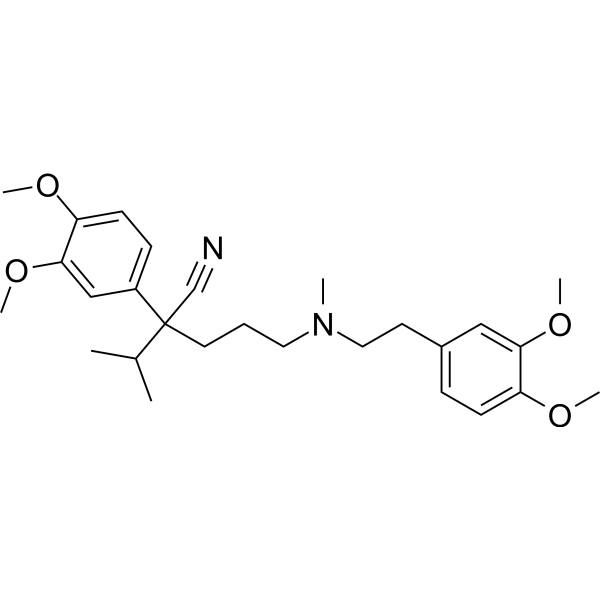
HY-14275
VerapamilCalcium Channel Blocker -
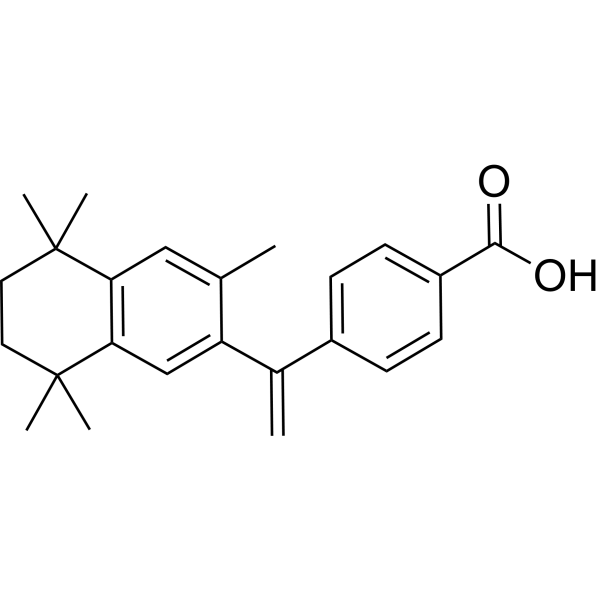
HY-14171
BexaroteneRXR Agonist -
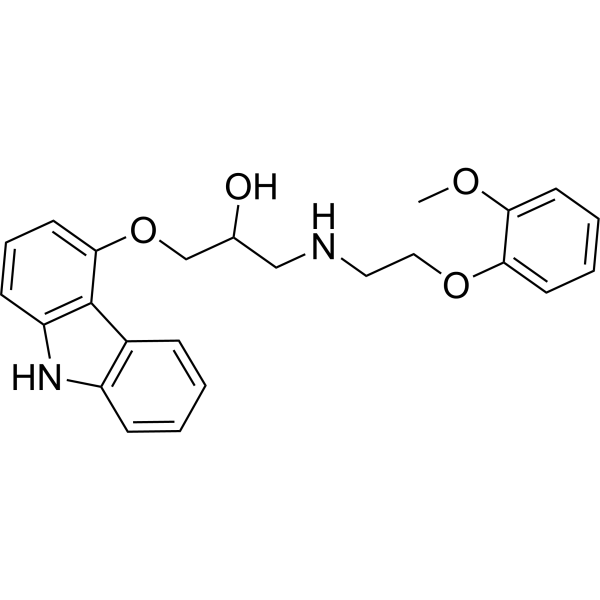
HY-B0006
Carvedilolβ/α-1 Blocker -
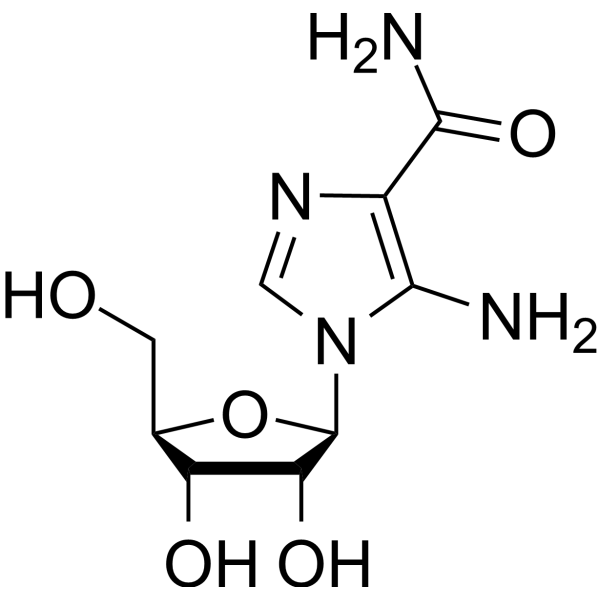
HY-13417
AICARAMPK Activator -
HY-14187
AmiodaroneAntiarrhythmic Compound
Publications Citing Use of MedChemExpress (MCE) Ranolazine
More- Cancer Res. 2026 Apr 29:10.1158/0008-5472.CAN-24-1984. [Abstract]
- Theranostics. 2018 Oct 29;8(19):5452-5468. [Abstract]
- J Invest Dermatol. 2023 Feb;143(2):305-316.e5. [Abstract]
- Pharmaceutics. 2024 May 29;16(6):728. [Abstract]
- Philos Trans R Soc Lond B Biol Sci. 2023 Jun 19;378(1879):20220163. [Abstract]
- Public University of Navarre. 2026.
 Customer Validation & Images

-
WB
All Calcium Channel Isoforms
More

Biological Activity
Description
IC50 & Target
IC50: 6 μM (INa), 12 μM (IKr)[1]
Cellular Effect
|
Cell Line

|
Type | Value | Description | References |
|---|---|---|---|---|
| Ventricular myocyte | IC50 |
6.9 μM
Compound: 1
|
Inhibition of Nav1.5 in canine ventricular myocytes assessed as inhibition of ATX2-induced late sodium current by single cell manual patch clamp assay
Inhibition of Nav1.5 in canine ventricular myocytes assessed as inhibition of ATX2-induced late sodium current by single cell manual patch clamp assay
|
[PMID: 27038498] |
| Ventricular myocyte | IC50 |
6.9 μM
Compound: 1
|
Inhibition of canine ventricular myocytes Nav 1.5 assessed as reduction in ATX-2 induced late channel current by manual single-patch clamp assay
Inhibition of canine ventricular myocytes Nav 1.5 assessed as reduction in ATX-2 induced late channel current by manual single-patch clamp assay
|
[PMID: 27080178] |
| Vero C1008 | EC50 |
>40 μM
Compound: Ranolazine
|
Antiviral efficacy against SARS-CoV-2 (strain BavPat1) in Vero E6 cells assessed by inhibition of viral RNA replication measured by RT-PCR after 2 days
Antiviral efficacy against SARS-CoV-2 (strain BavPat1) in Vero E6 cells assessed by inhibition of viral RNA replication measured by RT-PCR after 2 days
|
10.1101/2020.04.03.023846 |
In Vivo
MedChemExpress (MCE) has not independently confirmed the accuracy of these methods. They are for reference only.
-
Animal Model:Male Wistar rats (240-350 g)[3]
-
Dosage:Bolus injection 10 mg/kg and infusion (9.6 mg/kg/h)
-
Administration:Bolus injection; for 145 minutes
-
Result:Significantly reduced infarct size and cardiac troponin T release in rats subjected to left anterior descending coronary artery occlusion-reperfusion.
Clinical Trial
| NCT Number | Sponsor | Condition | Start Date |
Phase
|
|---|---|---|---|---|
| NCT01329991 | Plexxikon| | 2011-05 | PHASE1 |


Chemical Information
-
CAS No. 95635-55-5
-
Appearance Solid
-
Molecular Weight 427.54
-
Formula C24H33N3O4
-
Color White to off-white
-
SMILES
O=C(NC1=C(C)C=CC=C1C)CN2CCN(CC(O)COC3=CC=CC=C3OC)CC2
-
Synonyms
CVT 303; RS 43285-003
-
Shipping
Room temperature in continental US; may vary elsewhere.
-
Storage
Powder -20°C 3 years 4°C 2 years In solvent -80°C 2 years -20°C 1 year


Publications (6)
-
Journal Impact Factor
-
Most Recent
-
Cancer Res
KRAS Signaling Inhibition Induces a Targetable Metabolic Dependency on Lipophagy-Dependent Fatty Acid Oxidation in Pancreatic Cancer. [Abstract]2026 Apr 29:10.1158/0008-5472.CAN-24-1984. PMID: 42054558 -
Theranostics
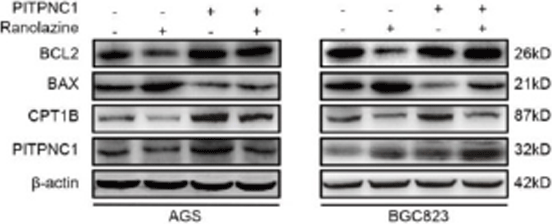
Adipocytes fuel gastric cancer omental metastasis via PITPNC1-mediated fatty acid metabolic reprogramming. [Abstract]2018 Oct 29;8(19):5452-5468. PMID: 30555557
Ranolazine purchased from MedChemExpress. Usage Cited in: Theranostics. 2018 Oct 29;8(19):5452-5468. [Abstract]
Western Blot analysis of vector or PITPNC1 overexpressing BGC823 and AGS which are seeded and treated with Ranolazine.
-
J Invest Dermatol
The regulators of peroxisomal acyl-carnitine shuttle CROT and CRAT promote metastasis in melanoma. [Abstract]2023 Feb;143(2):305-316.e5. PMID: 36058299 -
Pharmaceutics
Drug-Induced Reorganisation of Lipid Metabolism Limits the Therapeutic Efficacy of Ponatinib in Glioma Stem Cells. [Abstract]2024 May 29;16(6):728. PMID: 38931850 -
Philos Trans R Soc Lond B Biol Sci
Late sodium current in synergism with Ca2+/calmodulin-dependent protein kinase II contributes to β-adrenergic activation-induced atrial fibrillation. [Abstract]2023 Jun 19;378(1879):20220163. PMID: 37122215 -


Solvent & Solubility
In Vitro:
DMSO : 100 mg/mL (233.90 mM; Need ultrasonic; Hygroscopic DMSO has a significant impact on the solubility of product, please use newly opened DMSO)
Please refer to the solubility information to select the appropriate solvent. Once prepared, please aliquot and store the solution to prevent product inactivation from repeated freeze-thaw cycles.
Storage method and period of stock solution: -80°C, 2 years; -20°C, 1 year. When stored at -80°C, please use it within 2 years. When stored at -20°C, please use it within 1 year.
Please refer to the solubility information to select the appropriate solvent. Once prepared, please aliquot and store the solution to prevent product inactivation from repeated freeze-thaw cycles.
Storage method and period of stock solution: -80°C, 2 years; -20°C, 1 year. When stored at -80°C, please use it within 2 years. When stored at -20°C, please use it within 1 year.
Concentration (start) × Volume (start) = Concentration (final) × Volume (final)
In Vivo:
Select the appropriate dissolution method based on your experimental animal and administration route.
- For the following dissolution methods, please ensure to first prepare a clear stock solution using an In Vitro approach and then sequentially add co-solvents:
- To ensure reliable experimental results, the clarified stock solution can be appropriately stored based on storage conditions. As for the working solution for In Vivo experiments, it is recommended to prepare freshly and use it on the same day.
- The percentages shown for the solvents indicate their volumetric ratio in the final prepared solution. If precipitation or phase separation occurs during preparation, heat and/or sonication can be used to aid dissolution.
Add each solvent one by one: 10% DMSO 40% PEG300 5% Tween-80 45% Saline
Solubility: ≥ 2.08 mg/mL (4.87 mM); Clear solution
This protocol yields a clear solution of ≥ 2.08 mg/mL (saturation unknown).
Taking 1 mL working solution as an example, add 100 μL DMSO stock solution (20.8 mg/mL) to 400 μL PEG300, and mix evenly; then add 50 μL Tween-80 and mix evenly; then add 450 μL Saline to adjust the volume to 1 mL.
Preparation of Saline: Dissolve 0.9 g sodium chloride in ddH₂O and dilute to 100 mL to obtain a clear Saline solution.
Add each solvent one by one: 10% DMSO 90% (20% SBE-β-CD in Saline)
Solubility: ≥ 2.08 mg/mL (4.87 mM); Clear solution
This protocol yields a clear solution of ≥ 2.08 mg/mL (saturation unknown).
Taking 1 mL working solution as an example, add 100 μL DMSO stock solution (20.8 mg/mL) to 900 μL 20% SBE-β-CD in Saline, and mix evenly.
Preparation of 20% SBE-β-CD in Saline (4°C, storage for one week): 2 g SBE-β-CD powder is dissolved in 10 mL Saline, completely dissolve until clear.
In Vivo Dissolution Calculator
Please enter the basic information of animal experiments:
-
-
-
-
Recommended: Prepare an additional quantity of animals to account for potential losses during experiments.
Please enter your animal formula composition:
-
%DMSO +
Recommended: Keep the proportion of DMSO in working solution below 2% if your animal is weak.
-
%+
-
+%Tween-80 + +
-
%Saline +
The co-solvents required include: DMSO, . All of co-solvents are available by MedChemExpress (MCE). , Tween 80. All of co-solvents are available by MedChemExpress (MCE).
Working solution concentration: 0.22 mg/mL
Method for preparing stock solution: mg drug dissolved in μL DMSO. Stock solution concentration: mg/mL.
1. Take μL DMSO stock solution;
2. Add μL .
μL , mix evenly;
3. Then add μL Tween 80, mix evenly;
4. Then add μL
Please ensure that the stock solution in the first step is dissolved to a clear state, and add co-solvents in sequence. You can use ultrasonic heating (ultrasonic cleaner, recommended frequency 20-40 kHz), vortexing, etc. to assist dissolution.


Purity & Documentation
-
Data Sheet (275 KB)
-
SDS (393 KB)
- English - EN (393 KB)
- Français - FR (393 KB)
- Deutsch - DE (393 KB)
- Norwegian - NO (393 KB)
- Español - ES (393 KB)
- Swedish - SV (393 KB)
- Italian - IT (393 KB)
- Korean - KR (393 KB)
- Portuguese - PT (393 KB)
-
Handling Instructions (2659 KB)
References
[1]. Keating GM. Ranolazine: a review of its use as add-on therapy in patients with chronic stable angina pectoris. Drugs. 2013 Jan;73(1):55-73. [Content Brief]
[2]. Wang WQ, et al. Antitorsadogenic effects of ({+/-})-N-(2,6-dimethyl-phenyl)-(4[2-hydroxy-3-(2-methoxyphenoxy)propyl]-1-piperazine (ranolazine) in anesthetized rabbits. J Pharmacol Exp Ther. 2008 Jun;325(3):875-81. [Content Brief]
[3]. Zacharowski K, et al. Ranolazine, a partial fatty acid oxidation inhibitor, reduces myocardial infarct size and cardiac troponin T release in the rat. Eur J Pharmacol. 2001 Apr 20;418(1-2):105-10. [Content Brief]


Complete Stock Solution Preparation Table
Please refer to the solubility information to select the appropriate solvent. Once prepared, please aliquot and store the solution to prevent product inactivation from repeated freeze-thaw cycles.
Storage method and period of stock solution: -80°C, 2 years; -20°C, 1 year. When stored at -80°C, please use it within 2 years. When stored at -20°C, please use it within 1 year.
| Optional Solvent | Concentration Solvent Mass | 1 mg | 5 mg | 10 mg | 25 mg |
|---|---|---|---|---|---|
| DMSO | 1 mM | 2.3390 mL | 11.6948 mL | 23.3896 mL | 58.4741 mL |
| 5 mM | 0.4678 mL | 2.3390 mL | 4.6779 mL | 11.6948 mL | |
| 10 mM | 0.2339 mL | 1.1695 mL | 2.3390 mL | 5.8474 mL | |
| 15 mM | 0.1559 mL | 0.7797 mL | 1.5593 mL | 3.8983 mL | |
| 20 mM | 0.1169 mL | 0.5847 mL | 1.1695 mL | 2.9237 mL | |
| 25 mM | 0.0936 mL | 0.4678 mL | 0.9356 mL | 2.3390 mL | |
| 30 mM | 0.0780 mL | 0.3898 mL | 0.7797 mL | 1.9491 mL | |
| 40 mM | 0.0585 mL | 0.2924 mL | 0.5847 mL | 1.4619 mL | |
| 50 mM | 0.0468 mL | 0.2339 mL | 0.4678 mL | 1.1695 mL | |
| 60 mM | 0.0390 mL | 0.1949 mL | 0.3898 mL | 0.9746 mL | |
| 80 mM | 0.0292 mL | 0.1462 mL | 0.2924 mL | 0.7309 mL | |
| 100 mM | 0.0234 mL | 0.1169 mL | 0.2339 mL | 0.5847 mL |


Ranolazine Related Classifications
HY-B0280 Related Classifications
 Powered by Bioz